Andyroo!
Members
-
Joined
-
Last visited
Everything posted by Andyroo!
-
I sold the car last summer to guy in Ireland, who is currently continuing with the restoration I began, but was forced to stop, owing to my health problems. He keeps me informed of the restoration as things move along and I'll post any significant developments here. As the saying goes: "them's the breaks". I'm disappointed that I was unable to carry on with the work myself, but I'm confident the car's new owner will be able to do so.
-
Progress has been slow, owing mainly to my energy levels being so low after my medical problems. My doctor's told me these will eventually return, but I'm not very good at being a patient, and so want to be up and running now, but this can't be at the moment. I've removed the manifold, carburettor and associated linkages, and regularly turn the engine over, to prevent seizure, but beyond that, I haven't managed much. I WILL get on to it when then weather warms up. I should love to see your combi in the flesh!
-
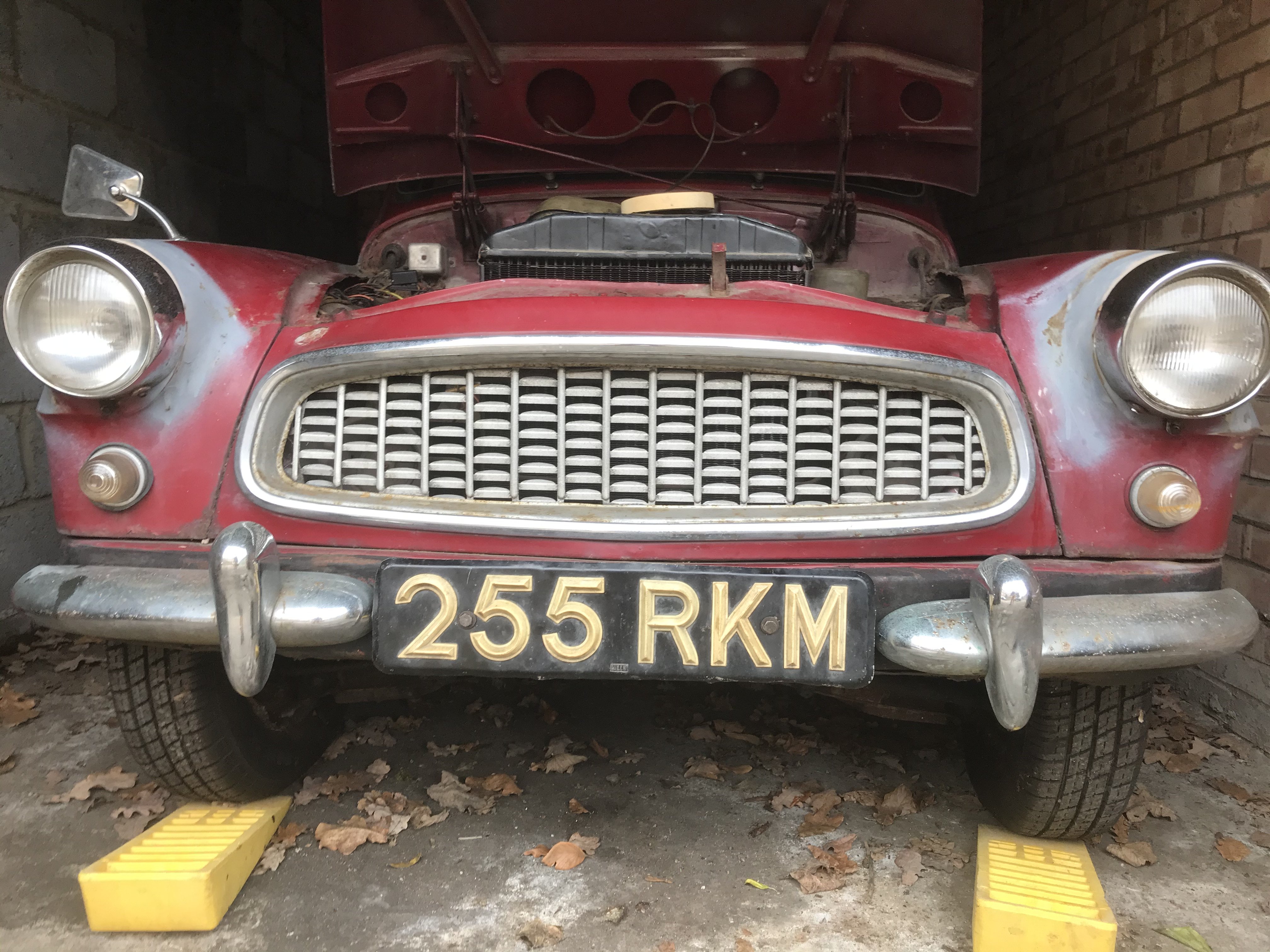
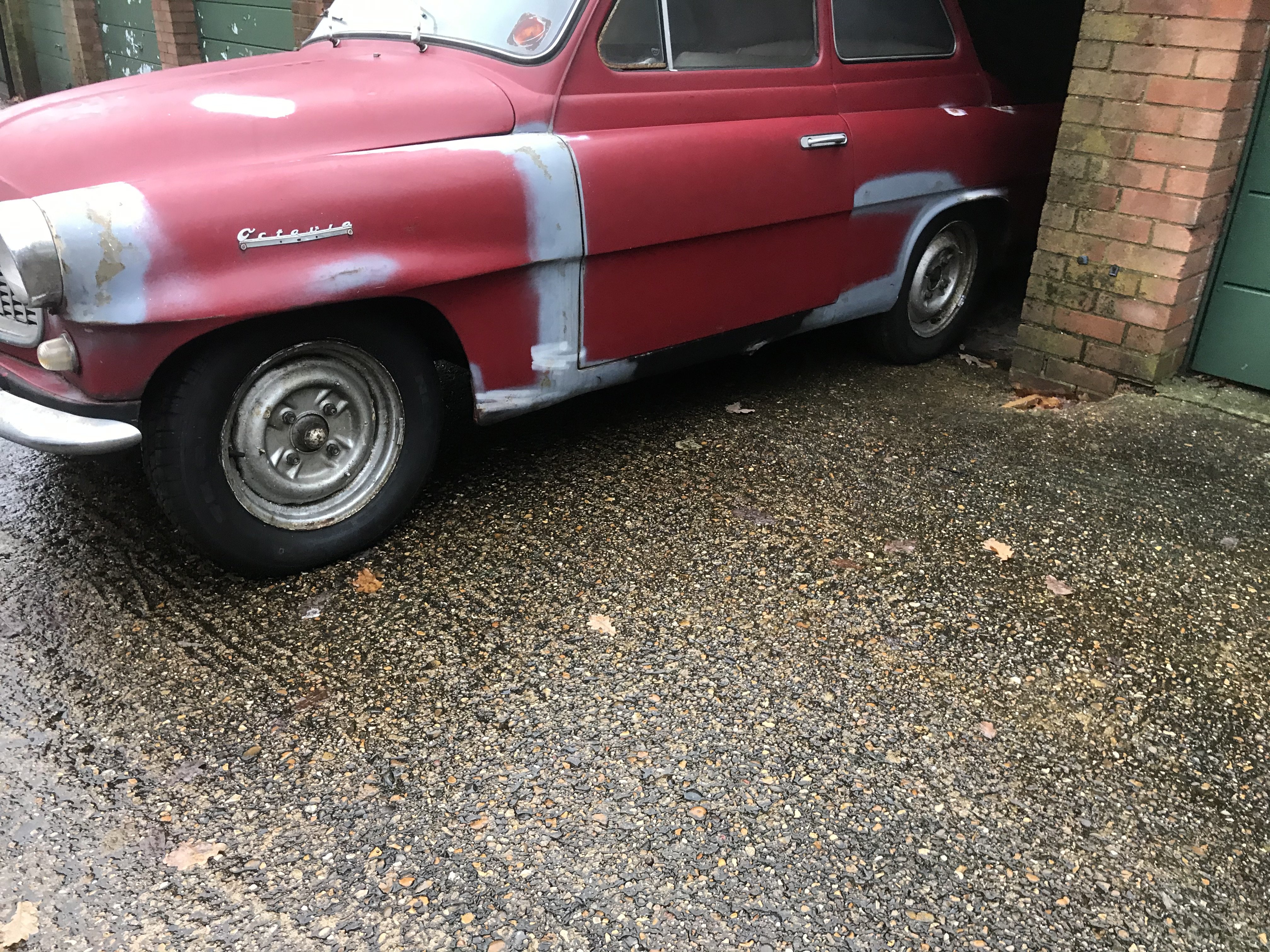
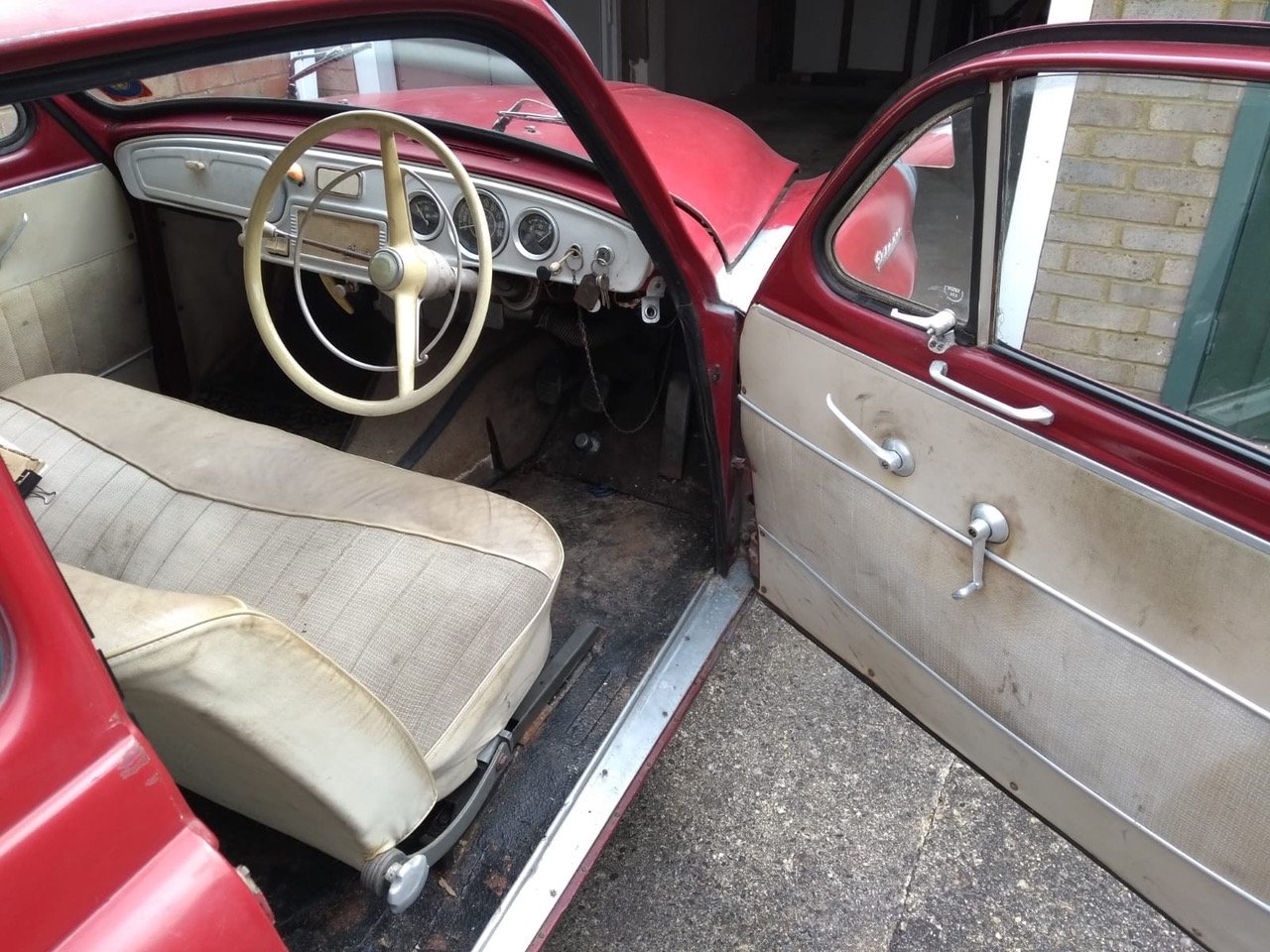
As requested, here's my Octavia, now bearing its original Kent Council registration number and associated paperwork. Progress in bringing this one back to life continues apace......
-
It was the original Skoda Octavia (like mine) that really started sales for Skodas in the U.K. Imports began in the late 1950s, with an Octavia looking slightly different to mine; the distinction being a horizontal line along the radiator grille and a number of other cosmetic differences. By the early 1960s Skodas were selling in steady, although small numbers, based mostly on their low initial price and the host of "extras" included in the price (radiator blind, heater, seats with adjustable squabs, headlamp flasher & several others) The estate version, called a "Combi" was a good load lugger and with a fold-down tailgate, ladders & other long items could be carried with ease. The "dated" points included the pull starter, as opposed to a solenoid one, 12 (yes, TWELVE!) greasing points every 1,000 miles at a time when they were being phased out by most manufacturers, and it had tiny pathetic headlamps- they were rated at 35 watts on both main and dipped beam when most cars were using 45/50 watt bulbs. The heating system was inefficient and the handling in wet weather, with the Barum cross-ply tyres, with which the car was supplied, was described as "interesting". No doubt changing to a decent set of radials would help! BUT it was cheap, tough and practically indestructible if regularly serviced!
-
Things have preceded "at pace" and I've managed to do a few odd jobs around the car, including changing the drivers side door lock with a new (old stock) one and I've removed the washer pump and replaced it with a switch, which operates when the pump is slightly depressed (I.E., pushed in towards the dashboard, not prescribed a course of Prozac!) I'll connect the feed from the pump to the "ignition live" side of the power supply, so the pump will only function when the ignition is on, and position the pump adjacent to the washer bottle. The original Skoda washer pump was ineffective and took several pumps to get some water on the screen; an electric pump will greatly assist washing the screen. Over two years ago I removed the brake shoes from the off-side front wheel. I removed the drum followed by the shoes, taking careful note of the position of the springs, which were really tight. No doubt this was the reason why the brake pressures were criticised in numerous reports for being too high. I've since tried to replace them, without success, but I shall battle on and will report back later.......
-
To bring things back on track, I'm pleased to announce that the Skoda was NOT sold, and is still in the process of being restored, albeit slowly! During 2023 I was diagnosed with a serious medical problem which I'm glad to say that I've almost fully recovered. It was this medical scare that prompted my initial decision to sell the car, although I'm now glad I didn't do so. I had fitted a new starter motor to the engine block a year or so ago and I've now reconnected the wiring. The starter motor now spins the block over with no problems, so I'm moving on to reconnecting the rest of the car. The gear linkage is back in place and I've taken the opportunity to remove the engine block water pipe & the rubber hose connecting it to the pump. I've cleaned these areas and replaced the 2 Jubilee clips as well. I had had to unscrew the bolts between the exhaust manifold and the down pipe, in order to drop the down pipe to exchange the starter motors, but in doing so I'd damaged the threads. To sort this I've now removed the exhaust and inlet manifolds, together with the Jikov carburettor, which in turn involved disconnecting the choke, distributor vacuum and accelerator linkages. Not too difficult, but the damaged bolts on the exhaust manifold are stuck fast. I think I'll have to ask a local garage to re-thread the existing bolts, so I can fit new nuts. On a happier note I've fitted the new ignition key switch and have moved the driver's door skin, prior to fitting the new lock. More news anon......
-
In my endeavours to put things back together I've come across a problem...Blimey, ownership of these cars can be a pain in the proverbial backside sometimes! The gear linkage went back together fine, but the exhaust manifold to down pipe bolts have had it. I've four holes in the down pipe, but only two holes in the exhaust manifold; the other two are blocked by two bolts, which I'm certain are the original ones put there when the car was built. I've tried the trick of putting 2 nuts on the thread and using one to remove the bolt, but all this did was strip the thread. After some consideration I reckon the only way to remove the offending bolts will be to remove the exhaust manifold from the engine block and drill them out. On a more positive note I've bought a new set of new (old stock) door and ignition locks. The original ones fitted to the car were fine, but I some 3 years ago I sent the keys off to a specialist locksmith for an extra set, only to lose them as a result of a postal error! But, thanks to Skoparts I've both a new door lock and key, and a new ignition switch and key. Incidentally, in the 1965 "Motoring Which" report on then Skoda Octavia Super, they noted the "stout double lock" on the driver's door, but of the 5 cars being tested with it, the Skoda was by far the easiest for their "thief" to break into.....
-
You lucky guy! Although left-hand-drive, it'll be a real eye-turner!
-
Having removed the starter motor I confirmed the problem was that the pin on which the staring lever pivoted had, indeed, somehow become detached. I attempted to find a similar pin that might fit, but to no avail and I eventually decided to bite the bullet and buy a new starter motor. At this stage I made contact with www.pragos.cz who are just brilliant when it comes to finding parts for the really old Skodas. They sell the starter motors on an exchange basis, so I posted my non-working one and awaited my new one, which was duly returned quite quickly. Incidentally, the Czech Republic is now a member of the E.U., and the United Kingdom isn’t, but this made no difference whatsoever to the delivery of both my old starter to the Czech Republic or my new one to the United Kingdom! Right then, now let’s fit it to the engine…… It slotted into the place where the old one had been without a problem, but the tightening of the nuts proved every bit as difficult as they had been when I removed them. I could only tighten them a few degrees at a time, which was somewhat frustrating, and rather like cycling to Pluto, but over time I could feel the nut going onto the thread. I took a breather when I saw the stub of the bolt come through the other end of the nut-phew-and I subsequently just kept going. It took for ever, but eventually it started to become tighter and finally it became tight against the engine block. Once I was happy they were as tight as I could make them I clipped the wire over the lever and wired the car to a spare battery. I confirmed the ignition system in the car was working and tested the lights, indicators and fan before pulling on the starter wire……AND IT TURNED OVER! I knew it wouldn’t start, but I was reassured the block hadn’t seized over the year the car hadn’t been touched. I then tightened the securing nuts still further, as the action of operating the starter had shaken the bolts a little. I’ve ordered a complete gasket set and will be replacing the exhaust and lower water pipe gaskets before reconnecting the various items I disconnected or removed in order to remove the starter, before topping up the cooling system again and connecting the fuel system to a 5 litre plastic container, as there’s still a problem with the fuel line. But that’s a battle for another day……
-
Right then... over two years have passed since I added to this thread, during which I've dealt with a serious medical problem, almost all of which I'm relieved to say is behind me now! Back to the Skoda Octavia..... I didn't have the opportunity to explain how I removed the starter before, for the reasons above, but I can now do so, if this helps any other owners. 1/ In the engine bay, remove the split pin from the gear linkage on the steering column & detach the linking rod, tucking the rod safely out of the way. 2/ Unscrew the vacuum pipe from the carburettor to the distributor at the carburettor & tuck this away too. 3/ Remove the metal heater pipe running from the lower radiator hose to the rubber connection to the heater matrix at the bulkhead (2 Jubilee clips) 4/ Unscrew the nuts and bolts holding the exhaust manifold to the down pipe, allowing the down pipe to be pushed lower, to assist in the starter's removal. The two 17 mm nuts are now more accessible, at 1 & 7 pm positions. The lower one's just about accessible from under the car using a short reach spanner and the higher one's best removed by an open spanner, lowered between the bulkhead and the engine block. I eventually managed to loosen it a little and then used a 17mm (with two extensions!) to allow me to slowly unscrew the nut. Once the nuts are off I tapped the starter motor with. rubber mallet & it detached from the block. I was the able to wiggle it out. In a day or so I'll continue the saga of obtaining a new starter & fitting it. It's all good news!
-
This vehicle has now been sold to someone who will be able to continue the restoration.
-
Given that this Forum prevents email addresses being added, I shall keep an eye on this Forum if anyone leaves a message. My mobile 'phone number IS displayed, so call or text if you wish!
-
Ladies and Gents, Owing to a drastic increase in the rental charge for my lock-up, and an inability to find another one nearby at an acceptable rental I'm having to consider moving my Skoda Octavia on. I should very much like it to go to a fellow enthusiast, who would appreciate its quirkiness and its odd-ball character. In addition I have a strong aversion to disposing of cars such as these via E-Bay, so that will be a last resort. Although the car has to go, the lock-up rental increase is not for a couple of months, so I do have some breathing space. Should any readers of this Forum be interested in the car I'm happy to supply more information on request. Contact me on email at: *****@*****.tld or call me on (removed) if you have any questions. The car is in Southgate, North London and would need trailering away. Sensible offers accepted!
-
I spent the afternoon removing the brake cylinder from the off-side front wheel, as I've decided to have them refurbished before going any further with the brakes. It's a matter of safety and I'm not prepared to compromise, as (to quote the workshop manual) "Not only the life of the car, but human lives depend on the sound condition of the brake system." Now I've removed the drum I've examined it in detail and there's no "lip" on the inside, as I've seen on many brake drums in the past. In fact, the opposite's true; the drum's internal rubbing surface, against which the shoes grip when the brakes are applied is slightly smaller than the diameter at the edge of the drum. Onwards and upwards-Removing the brake cylinder from the backplate was not as difficult as I'd envisaged; two 10mm bolts holding it in place and a 17mm open spanner to disconnect the flexible brake hose. There's a firm in Ipswich I've used before to refurbish wheel cylinders and I'll contact them regarding prices and timings. I'll also check the prigos.cz website regarding the cost of new ones. Mine are the earlier ones, with wheels at each end, that are adjusted through the gaps in the drum.
-
Taking advice from another contributor I've bought a set of "obstruction" spanners; basically spanners that go round corners, I expect they'll help quite a lot!
-
I've removed the front brake drum using a two armed puller with the arms inserted into the holes in the drum through which the brakes are adjusted. Having removed it I've now fitted the shoes, complete with the three springs (blimey, who thought up that way of doing things?) and the two rather primitive steady posts. That was fairly simple, once I'd realised just how much strength was needed to lever them into place! Now the drum won't go back on! I should add at this stage that as a retired V.W. mechanic I'm familiar with all the usual "tricks" to "persuade" the drum back onto the hub, but this one's having none of it....I've retired to contemplate my next move, over a glass or 12 of something chilled, and will report more soon. The shoes are the ones removed by the previous owner and ARE the front ones, the rear ones having a bar joining the shoes to accept the handbrake connection, so I know they're the front shoes. Referring once again to the Motoring Which report from April 1965, the Skoda's brakes were described as being heavy in normal use and as having "an extremely heavy return spring"; a fact to which I can now attest!
-
I've successfully fitted a new air filter and housing to the top of the engine, so that's another job done! I'm moving onto the brakes now, and I've removed the off-side front wheel with a view to refitting the brakes. The previous owner had removed the brake shoes and informed me of this, leaving the brakes in the boot. My job is now to re-fit them and I need a little advice before I go in with a heavy hand. Having studied both the workshop manual AND the instruction booklet I'm no clearer how to remove the drum. The instruction booklet explains both how to bleed and adjust the brakes, but not how to access the shoes themselves. Having removed the wheel the brake drum looks like it simply "pops off" with the aid of some judicial lateral tapping to the rear. However, some enthusiastic tapping has not resulted in any movement of the drum. Does the hub nut have to be removed first? I hope not, as that'll involve a great deal more work! Any thoughts?
-
Yes, I'm aware of the "back-to-front" gearbox arrangement, which was commented upon by "Motoring Which" when they tested the car in 1965. Their testers quickly became used to it, though. The report went on to say that, although the Skoda Octavia Super was over £100 less to buy than a Ford Cortina or B.M.C. 1100, the apparent saving was wiped out by higher fuel costs (the Skoda did 29 M.P.G., compared to the Cortina's 34) MUCH higher servicing costs (The Skoda had 12 greasing points & servicing every 1,000 miles whereas the Cortina had NONE, and servicing intervals of 5,000 miles) and bigger depreciation. All in all, NOT a good buy! The huge positive camber was a problem with the car when it was lightly loaded and caused some handling problems if driven hard. Some reports suggested the suspension setup was designed for the poor roads of eastern Europe and not the smoother ones in the west, and one specific report said that dealers would remove a leaf or two from the rear suspension, to give the car a softer ride and better handling.
-
I'll post a few more here when I have. chance, although describing the car as "glorious" is overplaying it a bit!
-
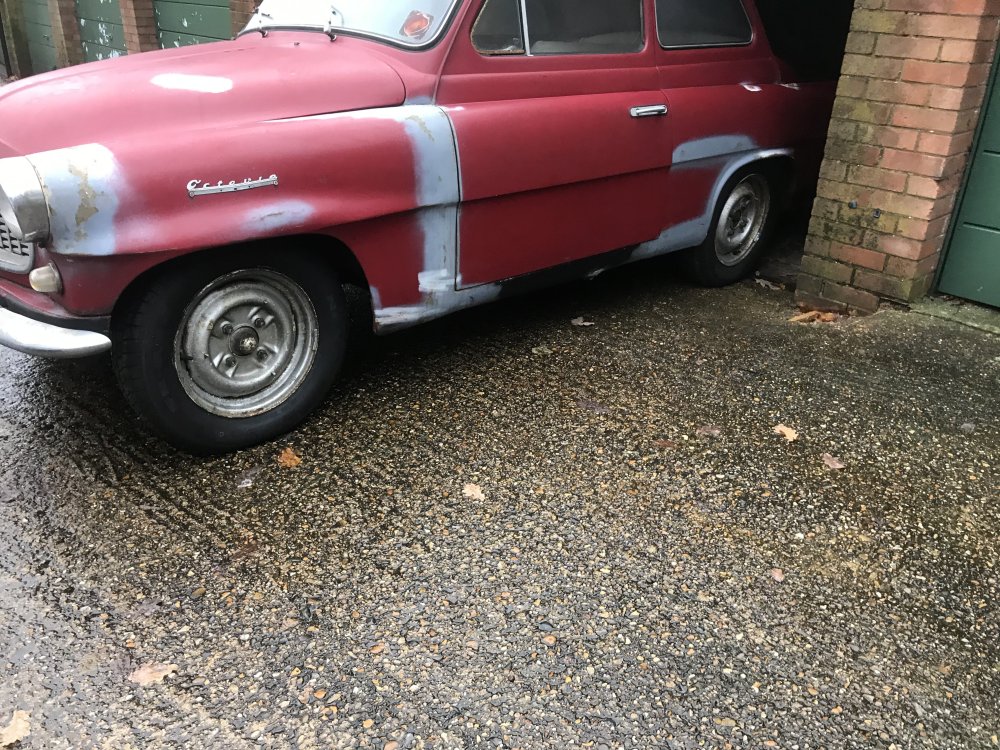
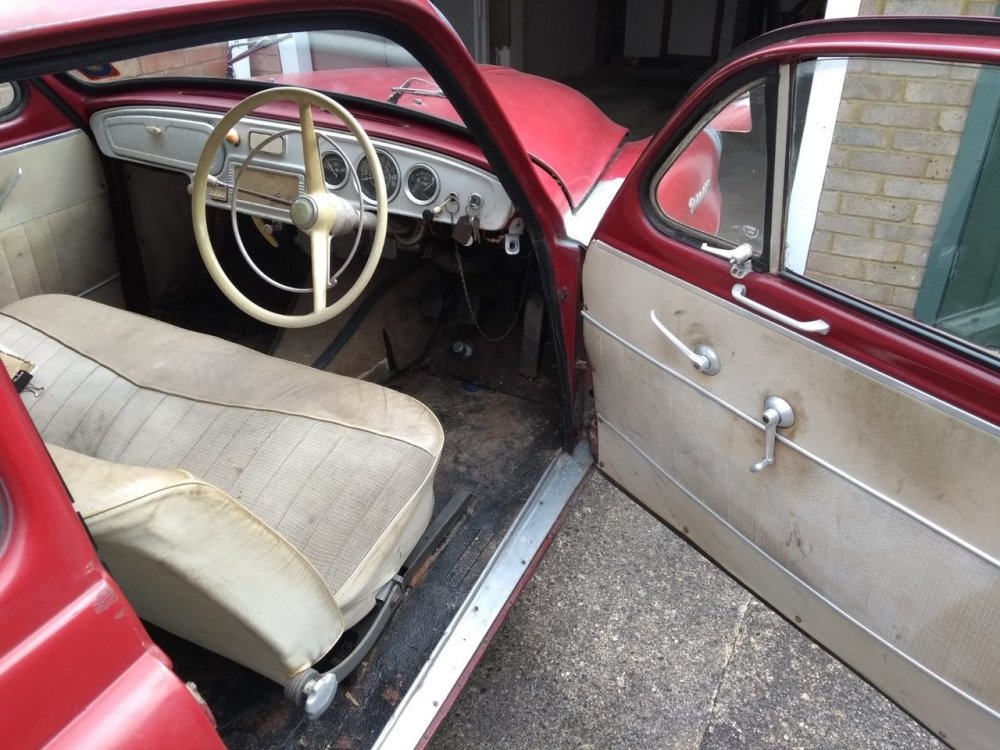
Having been piggy-backing on an Antipodean thread about a 1964 Skoda Octavia until now, I thought it only fair that I should start my own, and so I'll summarise what's happened with the car so far: I acquired the car in December 2020, from a guy in Kent, in whose family it had been since it was new. I bought it "sight unseen" and, while appreciating the risks this might involve, I had long conversations with the owner and felt comfortable with things, not least because the cars are so rare I'd be lucky to ever see another one! The car was delivered by transporter to a lock-up I'd rented in Whetstone, north London, exclusively for storing the car and I quickly realised what a great car I had! The boot was crammed with parts, the engine turned over happily and the bodywork looked pretty good. In addition, the previous owner handed me an ENORMOUS file, including the original bill of sale, numerous M.O.T.s and associated documents-brilliant! The boot contained the car's original number-plates, although the car sported a newer registration. The previous owner had already explained that the car had "slid off the radar" of the D.V.L.A. & so had received a new number. Fortunately I managed to re-register the car with its original number, with the assistance of the the Skoda Owners Club, and sort out another anomaly in the car's details at the same time-result! The entire process took less than a fortnight and, as this was over the Christmas and New Year festivities, I was most impressed with the speed of the service! All the engine needed was a battery & new plugs and I had it running in no time, albeit from a 5 litre can. Later I changed the fuel pump, to assist the fuel delivery, but there was (and still is!) a problem with the fuel line, but that's for another day! The car had no brakes at all, a fact of which I was aware, so progress up and down the road adjacent to the lock-up was, of necessity, limited. The intervention of more stringent Covid restrictions meant very little could be done for several months, and when I did have a chance to work on the car again, the starter motor had failed! To describe the removal of the starter motor from a Skoda Octavia as "difficult" would be an understatement of a magnitude unimaginable! Oddly, there's a trailer for a new series of "Bangers and Cash Restorations" on T.V. at the moment, in which a restoration mechanic says that it's possible to spend 4 hours just undoing one nut........I know how he feels! The starter is held in by two 17mm nuts, one of which it's just possible to get at, with the aid of extreme dexterity. The other one-forget it! The workshop manual says 2 specific spanners are needed and lists the part numbers......some hope! No-one had them, or had even heard of them. But this morning, I "bit the bullet" and e-v-e-n-t-u-a-l-l-y I removed it! I suspect the right-hand drive cars had several design problems, not least being the removal of said starter motor. I removed the gearbox link from the steering column, the metal heater pipe linking the front lower hose to the heater matrix, the vacuum pipe from the carburettor to the distributor and this allowed me to get a 17mm spanner onto the inner nut, between the engine block and the starter motor. I "cracked" it and, once cracked, the 17mm socket slowly shifted it & the starter came free..... Removing it from the engine bay meant unscrewing the 4 nuts holding the down pipe to the exhaust manifold, and, once shifted, I extracted the starter motor. By now it was 3pm on a sunny Saturday, so I adjourned to a "local hostelry" for several "cold ones". On Monday I'll take the starter to Unit Exchange in Borehamwood, for a refurbish.
-
Dear Skoda brains! My Octavia's starter motor has stopped working! My investigations have so far taught me several things, including: 1/ The starter motor is in an almost inaccessible place. 2/ The Skoda workshop manual says you need 2 special spanners in order to remove it. 3/ I don't have these spanners! 4/ I'm not as agile or as young as I once was..... However, all is not lost..... I initially though the problem was merely a flat battery-it wasn't-so I dug further..... The headlights (such as they are; 35 watt bulbs are not that bright....) weren't going dim when the starter wire was pulled, so I deduced no current was reaching the starter. Closer examination revealed the split pin, on which the arm that swings the live feed pivots, had fallen out of the motor, and couldn't be found on the garage floor. At this point I decided to remove the starter motor, and managed to remove the 17mm nut from the off-side of the starter, using a socket and a very long extension, but the one sandwiched between the starter and the engine block has yet to surrender. Has anyone ever tackled this job is there any advice out there as to how I ought to proceed?
-
In appreciate it's a year later, but at last things are on the move, in both senses of the word! The restoration is continuing, although I now need to remove the starter motor, as it's not functioning properly. However, its removal is not quite as simple as one would imagine. The workshop manual lists 2 special spanners necessary to undo the nuts required to remove it. I have managed to undo the lower one without these special tools, but the top one is proving impossible. The spanners have the part numbers Ac Eca 897 and 896 in the manual, and an internet search for them has proved unhelpful. The problem is that the nut is tucked in tightly next to the engine block and no socket can go over the nut, as the water pipe's in the way. One really has to wonder at the thinking behind designing something as awkward as this!
-
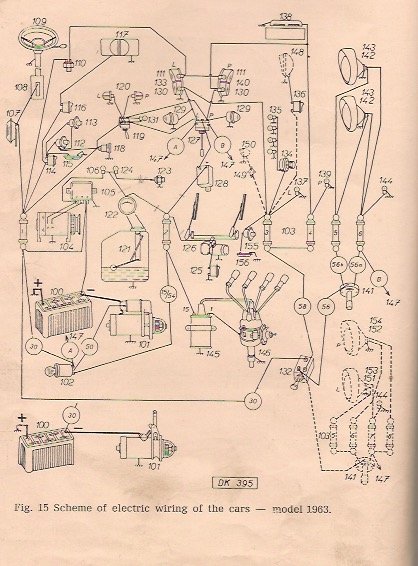
A belated update on my classic Octavia. The Coronavirus has really slowed things down, and coupled with TWO moves of garage means I've not really had much chance to do much, although it is still able to run (but not yet stop....) under its own steam (well, petrol!) I'm planning to convert it to negative earth, to permit the future fitting of a decent stereo. The dynamo has been converted by a local experienced auto electrical company and I'll reverse the coil's connections. Beyond that I ought to be O.K.... I've discovered that the temperature gauge isn't really a temperature gauge, as there's no electrical connection whatsoever; it's what's called a tele thermometer, which records the engine temperature and displays it remotely on the dashboard, so it should show the temperature regardless of whether the ignition is on or off. The other odd thing is the fuel tank wiring: I can't fathom out why there are two feeds from the gauge to the tank! Every fuel gauge I've ever worked on has a simple feed from the gauge to the tank and the float acts as a variable rheostat, passing less or more current as the level rises and falls. But not the Skoda Octavia...... Has anyone else noticed this? I've attached a wiring diagram, to show what I mean:
-
Latest update: The ignition key barrel and key have been returned to me, and I've fitted the barrel back into the car's dashboard. Pragos have supplied a new fuel pump, which I've fitted and confirmed that it works properly. I've also disconnected the electric fuel pump that the previous owner had mounted on the engine bay inner wing, although I've yet to remove it. The car now runs happily with petrol being pumped from a 5 litre can, via the new pump, to the carburettor. What's more....I've driven the car, under its own steam, up and down the access road to my lock-up, in first and reverse gear. The fuel line to the tank is not blocked, as I confirmed by using a piece of rubber hose to connect my tyre pump blowing compressed air into the line, removing the tank filler cap and hearing loads of bubbling! I still want to remove the entire contents of the tank, both old and new petrol, muck and associated crud. I'll do this by removing the tank from the boot (it's only held in by a couple of bolts & the hose to the engine bay) and flushing it out in the open air, carefully...... Once done, I'll re-fit and confirm the new pump can draw fuel from the tank correctly. The headlamp re-chroming has been postponed sine die as I've now rebuilt both headlamp units using rubber parts from Pragos and will fit these back onto the car very soon. I still find it incredible that Skoda supplied these cars with pathetic 35/35 watt headlamp bulbs! Continuing on the electrical theme, my shenanigans with the wiring have prompted the windscreen wipers and heater fan back to life! Previously these items were dead, but, perhaps as a result of my tightening of the screw terminals on the back of the ignitions switch, these now work! Another few jobs ticked off the "to do" list.... Onwards and upwards! I hope the originator of this thread doesn't mind my "hijacking" it. If so, I'm happy to start an alternative one!
-
I've spoken to authorities greater than I, who have informed me the "flashing" of the dynamo is all that's needed, apart from the coil connections being reversed. In fact, the car will run without reversing the coil's wiring, but the spark will leap from the adjustable pin to the central electrode, thus reducing the efficiency by about 50%. The guy refurbishing and re-polarising the dynamo tells me the starter, wiper and fan motors should all operate normally when the polarity is reversed. Here's hoping.....