
imart143
Members
-
Joined
-
Last visited
-
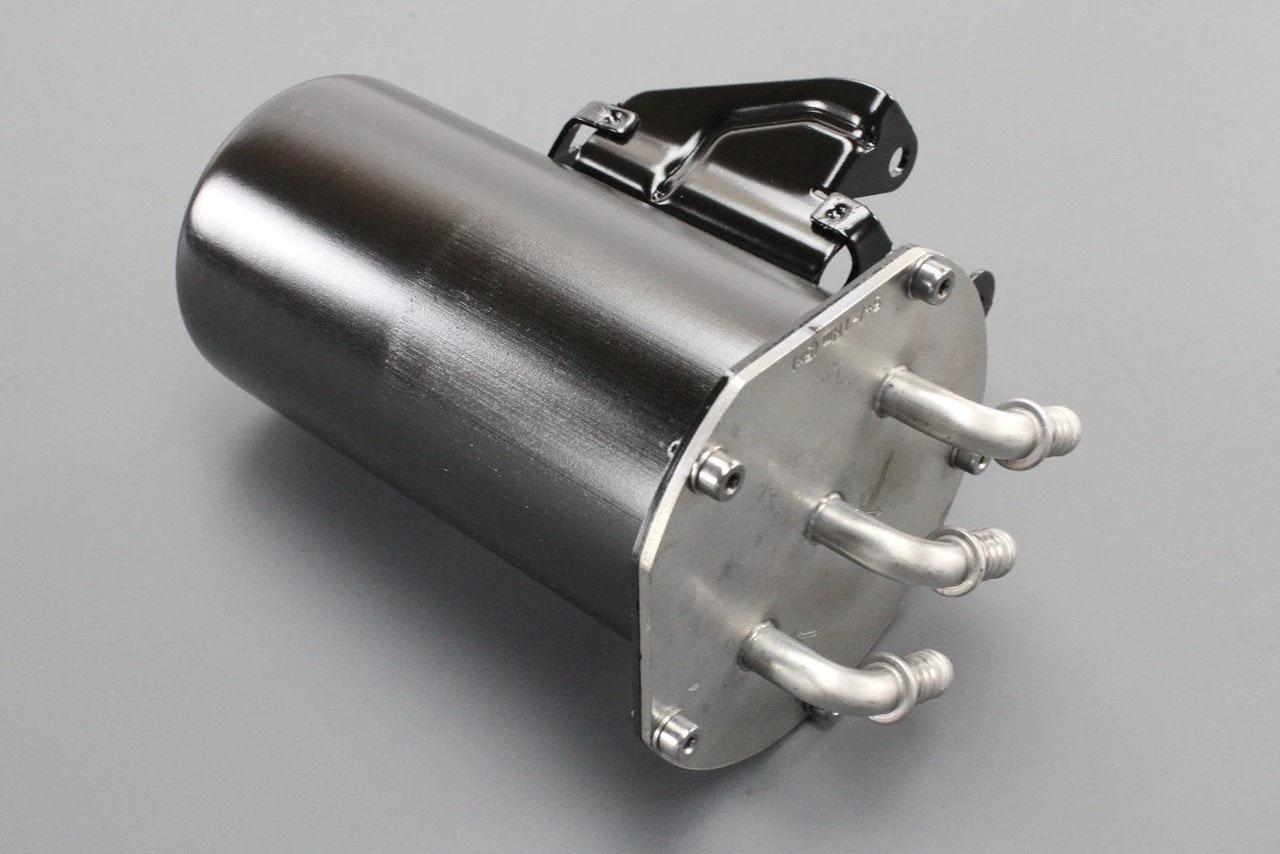
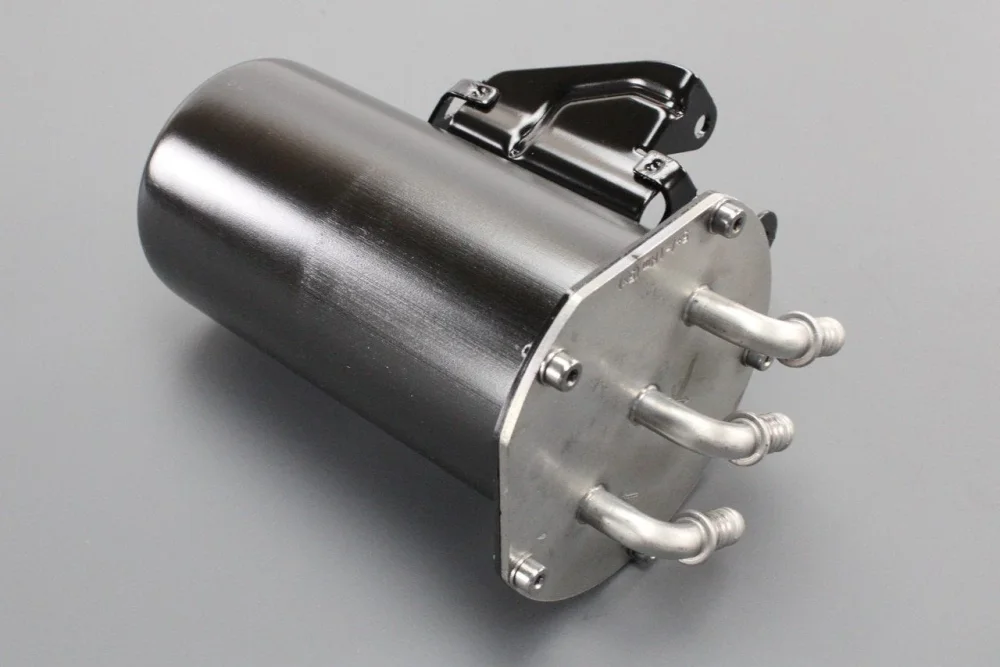
probably without, if it looks like this, you dont have connection for water sensor.
-
If they were changing the chain at the service, they had to remove the spark plug wires. These wires eventually get burnt, and mechanics often pull them by the wire itself instead of the metal connector, which irreversibly damages the inner core of the wire. Also, the third wire (on the 3rd cylinder) runs close to the turbine and suffers from overheating at the factory and often breaks.
-
little AI but you will get a point This engine features what is known as a "floating" camshaft sprocket. This means the sprocket does not have a keyway, dowel pin, or slot to lock it into a fixed position on the shaft. As long as the center bolt is loose, the sprocket can rotate freely 360 degrees around the camshaft. The factory procedure for setting the engine to TDC (timing alignment) looks exactly like this: Locking the engine: The crankshaft is set to Top Dead Center (TDC) and locked using a special timing pin screwed into the engine block. The camshaft is locked from the rear end (near the vacuum pump) using a specialized flat alignment plate tool to keep it perfectly horizontal. Installing the chain with loose bolts: The new chain and guides are mounted onto the engine. At this point, the center bolt of the camshaft sprocket must be loose. This allows the sprocket to rotate independently and adapt to the teeth of the chain as it's being installed, without moving the actual camshaft, which remains firmly locked by the tool. Activating the tensioner: The pin is pulled from the new hydraulic chain tensioner so it can extend and fully tension the chain. Only when the tensioner takes up all the slack does everything sit in its ideal position. Torquing down at true zero: While both the crankshaft and camshaft are still 100% locked in place, and the chain is fully tensioned, the mechanic must use a counter-hold tool on the sprocket and torque the new camshaft center bolt to the exact factory specification (torque plus angle). Where did the mechanic most likely make a mistake? If the mechanic did not loosen the sprocket bolt when installing the new chain, or if they torqued the bolt down without using a proper counter-hold tool (relying solely on the locking tools inside the engine block/head to resist the tightening force), the locking tools flexed or bent slightly under the heavy pressure. At the exact moment the bolt was torqued, the sprocket "pulled" the camshaft a degree or two out of alignment. The result is exactly what you are experiencing—an engine that seems to run, but suffers from "incorrect timing" under load because the ECU detects a mismatch between the crankshaft sensor and the camshaft sensor.
-
yeah gates or dayco, for example, OE timing belt for 1.5 tsi engine is made by Dayco. For the Volkswagen Group's 1.5 TSI engine (brands such as DADA, DPCA), Dayco produces the main camshaft timing belt (catalog number 941060, 20 mm wide and 163 teeth) and the smaller oil pump or water pump belt/belt (catalog number 941160, 81 teeth). It is about Dayco HT (High Tenacity) patented technology, better known in the automotive world as "White Belt". The white layer on the inside of the teeth is a special film of PTFE (Teflon) patented by Dayco and bonded to the basic nylon-aramid (Kevlar) fabric that covers the belt teeth. Extreme friction reduction: When the teeth of the belt fit into the grooves of the pulleys, friction occurs that over time "peels" ordinary rubber belts. Teflon dramatically reduces this friction. The belt slides smoothly and almost completely eliminates wear on the fabric of the teeth. Protection against lateral wear: The belt moves slightly left and right during operation and hits the edges (flanges) of the pulleys. The white PTFE layer also covers the lateral parts of the teeth, protecting the belt from lateral "backlash" and cracking at the edges. Modern 1.5 TSI engines have high direct injection pressures and develop enormous temperatures under the hood (over 120°C). Classic rubber would harden and crack over time. The Teflon and advanced HNBR rubber from which the belt is made remains elastic and stable for years Internal structure (fiberglass): Behind that white layer and the rubber, inside the belt are strands of high-modulus fiberglass woven into a spiral. These ensure that the belt does not stretch at all over the years and kilometers, thus keeping the engine's timinge perfectly accurate. you dont need that for alternator belt, but i read this on Autoteile.
-
it was, but not any more. go for INA, Gates ... In the original OE (Original Equipment) box under the catalog number 03C145299Q, there is an automatic tensioner (spanner) which for the Volkswagen Group (VAG) first installation is usually produced by Gates or Litens (which closely cooperates with the INA / Schaeffler groups). this pump on photo is produced by NIDEC GPM, Germany producer for OE VAG engines.. now produced in Jiaxing, Zhejiang, China.
-
my car had some issue, on half empty road, warn of colision popped and car itself braked to the floor, driver behind me avoid collision in inches. why is it doing? luckily it happened only 2-3 times in 2 years, no matter of weather or dirt. car decelerate and brake itself without reason, dangerous. i wanted to turn off all assistant stuff (i can do it in settings, its 2019), because i have 35 years of driving experience on motorbikes and cars, never caused a car crash, but it is helpful sometimes.. help to avoid car crash.
-
for best performance and security, whole car must be checked, low milege but also low year of production, shocks and rubber parts gone with time. brakes, brake fluids etc.. check everything, for your own sake and for sake of others. when ii tuned my 1.5 tsi from 150 to 180 ks, my first ride after warm up was pretty dangerous.. :-D
-
coolant also can get mixed with oil, not entering combustion chamber. not visible oil in coolant, but coolant in oil.
-
change oil no matter what, high quality oil and filter, intake air filter..
-
i have ottocast, but flat one. sometimes it wont self connect, then i manually tapping on display few times and after few times it connects, in settings i choose to connect when phone is off, so when i enter in the car, start engine, i dont turn of multimedia till 1 minute pass. then it connects itself good, sometimes about 2 of 100 connections fails, then manually reconnection fix problem.
-
Bad maintenance and high mileage, sport driving style increase wear of piston and rings and engine consumes oil. too much oil in exhaust dpf cant burn and get clogged. EGR also have lifetime, and egr pipes get clogged. i hope you didnt pay car much.
-
tipical on many VAG vehicles..

-
i never had ones. but sure stiffer than stock.
-
if 88 in xour nick suggest you are born in 1988, than you are to aged to have stiff car suspension. it will become unconfortable. if you like it, go on, aif not, stay with basic B4 which are like OEM.
-
VW Specification: VW 508 00 (petrol/diesel dual standard for 0W-20) or traditional VW 507 00 for long-life 5W-30/0W-30. if you living ih cold climate zone use 0w20, if you live in hot climate, than 0w30. manufacturer, i like Shell (Shell Helix Ultra Professional AV-L 0W-30) Shell, Castrol, Aral, Liqui moly...