Avocet
Members
-
Joined
-
Last visited
Everything posted by Avocet
-
Electric starter motors... that's when the rot really set in...😉
-
Just because it's "legal" doesn't mean it's the kindest thing to do. Farting in your face isn't illegal, but it's not nice. I do find sitting behind someone with their brake lights on for a long period in the dark, "less pleasant" than sitting behind someone without their brake lights on.
-
I asked about the DSG oil at the start of October (the car was 4 years old then, but only had 27,000 miles on it), and got the following back from Skoda Customer Services: Re: ŠKODA KODIAQ – TMBMJ7NS0JXXXXX Dear Mr XXXX Thank you for your recent contact with ŠKODA Customer Services. I apologise for the delay in my response. I refer to your questions below which I have highlighted. a) which gearbox we have and; – The gearbox is a DQ500 (b) whether the DSG oil and filter change recommendation is time or mileage-based? – DSG oil and filter change is mileage based so it is required at 40,000miles I hope this information proves to be of use. If you have any further questions, please do not hesitate to contact me and I will be happy to assist you. Thank you for contacting ŠKODA UK. Kind regards XXX XXXXX Customer Relations Advisor ŠKODA UK | Selectapost 34 | Sheffield | S97 3FA Tel: 0333 0037504 [email protected] | www.skoda.co.uk | www.skoda-auto.com"
-
No, we haven't, but the conversation then moved on to the driving of vehicles with some old MOT left, that had recently failed an MOT.
-
Yes, but that's not really the point I'm making. The point is that if the car fails for something that isn't immediately dangerous, then you can still drive it on what's left of its previous MOT, but you run the risk of being stopped for whatever "the thing" is that it failed on (doesn't have to be lights or wipers).
-
Well if it comes to that, I've never been stupid enough to actually present a car for MOT with a failed bulb. It was simply an example. If you prefer, I could just as easily have said "...if I'd failed an MOT on CO at idle...."🙄
-
With regard to the OP's post. I also think he's being taken for a ride. Others have already mentioned that there is no connection between rusty discs and water in the brake fluid. With regard to the missing cap, they are NOT hermetically sealed. (They can't be, because the system has to cope with fluid level changes as the brake pads wear). Moisture will therefore enter the system whether there's a cap on the reservoir or not. The cap is simply to prevent spillage. I therefore feel the garage are talking rubbish when they mention water ingress, and agree that he should just get a new cap and change the brake fluid (Which should be done every few years anyway). I find that threatening to appeal against the decision to DVSA usually puts the fear of God into testers who are taking the proverbial. With regard to driving a car with some remaining MOT but which has just failed, I think the government website is fairly clear, but perhaps not clear enough: 1. You can't drive it if the defect is in the "dangerous" category; 2. You CAN drive it if the defect ISN'T in the "dangerous" category; 3. You can drive on the road provided it is "roadworthy" (i.e. "meets the minimum standards of roadworthiness"). It seems that Points 2 and 3 are contradictory - which they are, but Point 3 applies even if the vehicle has 11 months of MOT left to run and hasn't just failed an MOT. I think it's one of those situations where the government cannot possibly issue advice that says "you can drive an unroadworthy vehicle", so the only pragmatic solution, is to take a "light touch" approach to enforcement. If, for example, I'd failed an MOT on a number plate light and drove it, that's technically illegal, but in the unlikely event of getting stopped, the penalty would be much less than paying for the vehicle to be trailered from one place to another, so it's an easy choice for me to make.
-
I think discs are usually made of cast iron? But yeah, they do all rust. They can't easily be protected from it because they get hot in use. And yes, I agree they need a certain amount of use to stop the rust forming a skin. As soon as that happens, the oxide layer is harder than the pad material, so the pads just end up "polishing" the rusty skin that forms on the friction surface.
-
We have a 2017 (67 plate) 4x4 DSG diesel just coming up to 30,000 miles and it's still on its original discs and pads all round. It had a service a couple of weeks ago and in the "free health check" the front pads were recorded as still having 7mm left on them and the rears have 5mm left on them - i.e. barely half worn! All the discs have surface rust on the non-friction surfaces (which is pretty normal) but the friction surfaces themselves are fine. Frankly, unless you park yours on the beach each night (below the high tide line!), I can't believe that any well-manufactured disc should have experienced serious corrosion by now. Either your dealer is trying to "play" you, or you have a car with defective discs, probably made from recycled manhole covers... As Kodiaqsportline suggests, it might be worth you speaking to Skoda Customer Services about this...
-
I think I could probably have done it. Perhaps getting that first bit of carpet in, ahead of the big steel top hat bracket, would have been the hardest bit if I hadn't. And yes, much better now thanks. Despite two vaccinations, I got Covid and a month or so later, thought I hadn't got rid of it, because I was still experiencing breathing difficulties. Eventually, it got bad enough to put me in hospital. There, they found out that I was over the Covid infection, but the breathing difficulties were actually down to a couple of bloody big blood clots in my lungs! Was in there for a few days while they sorted me out but am feeling much better now, thanks.
-
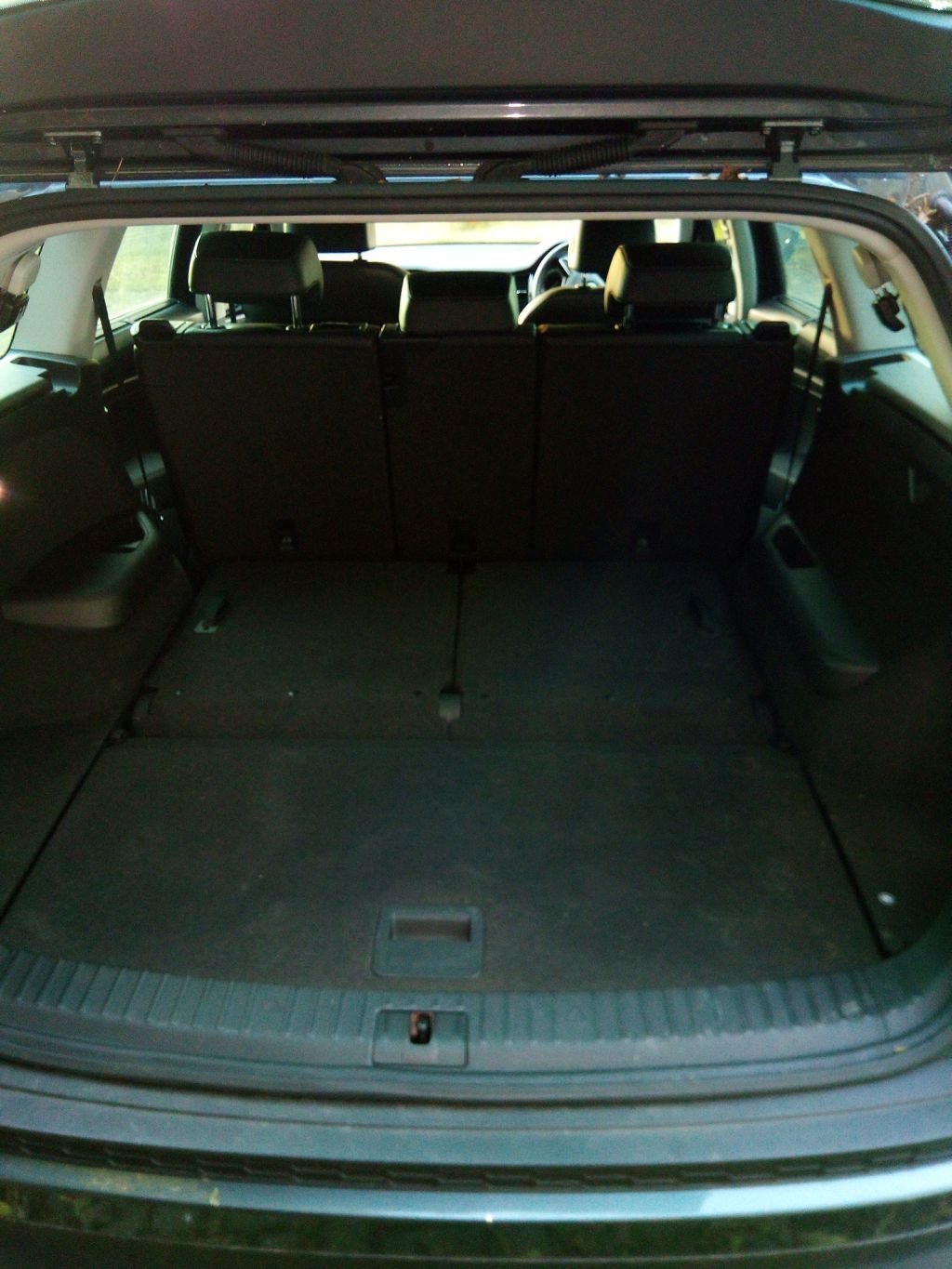
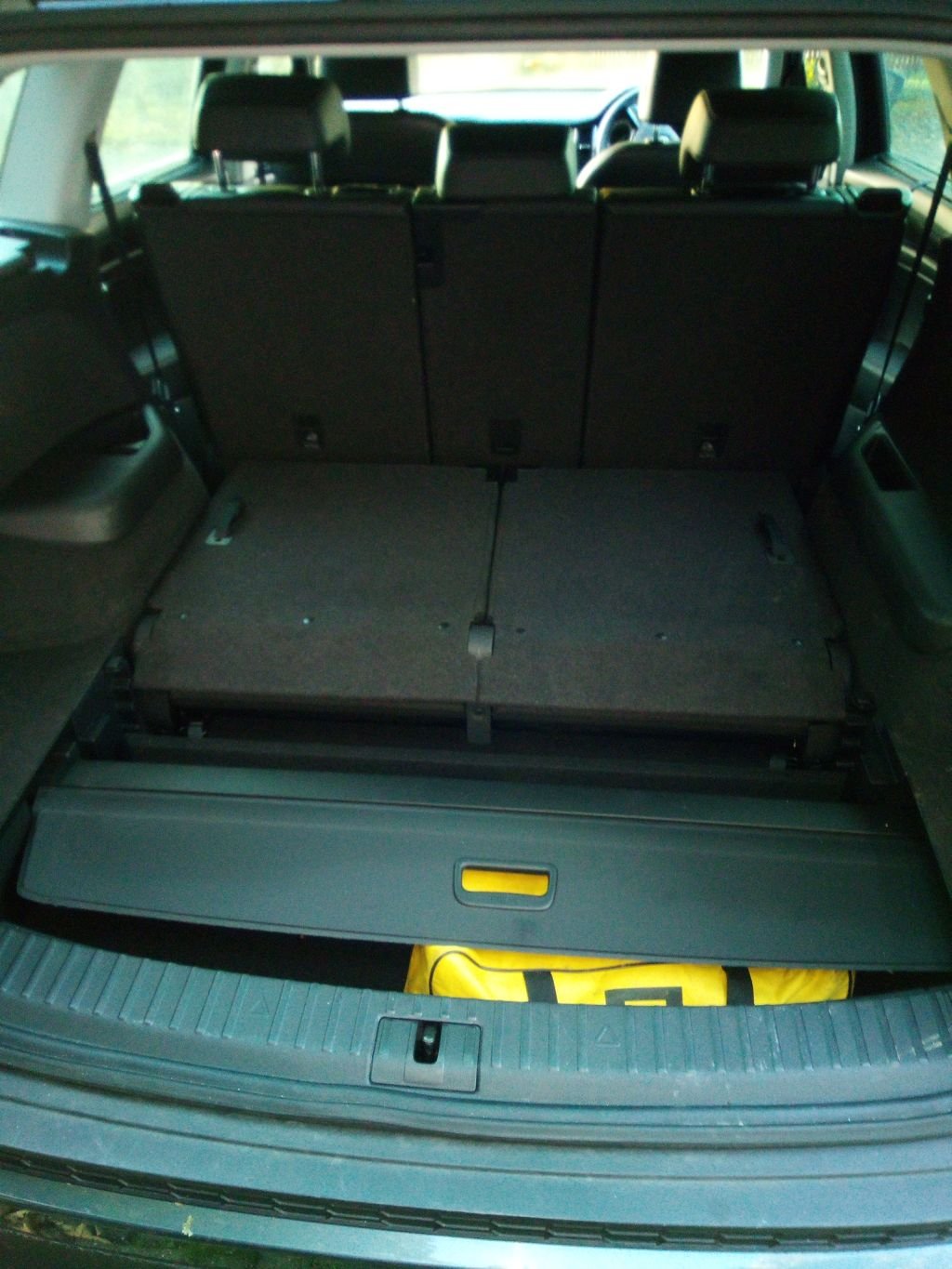
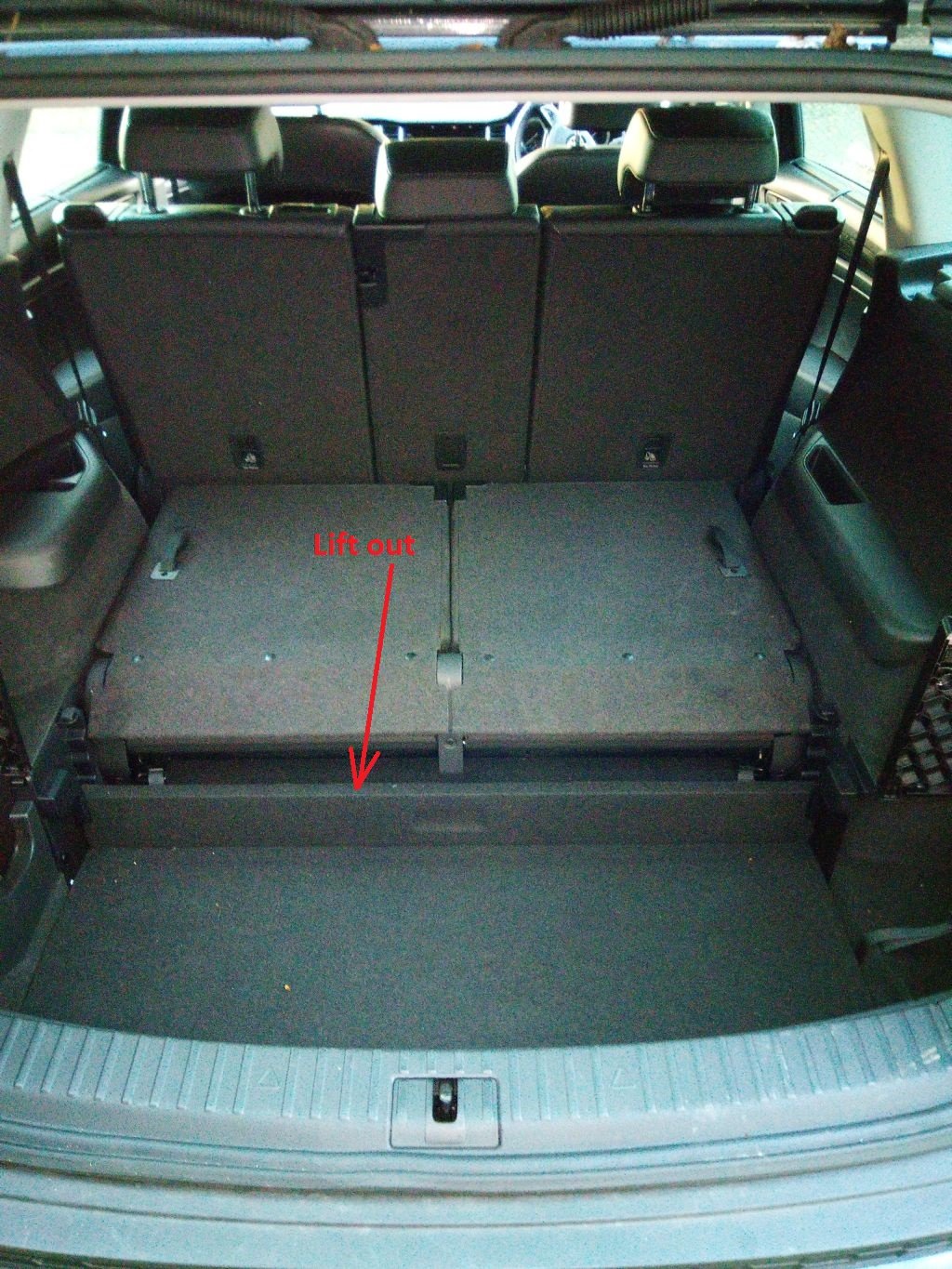
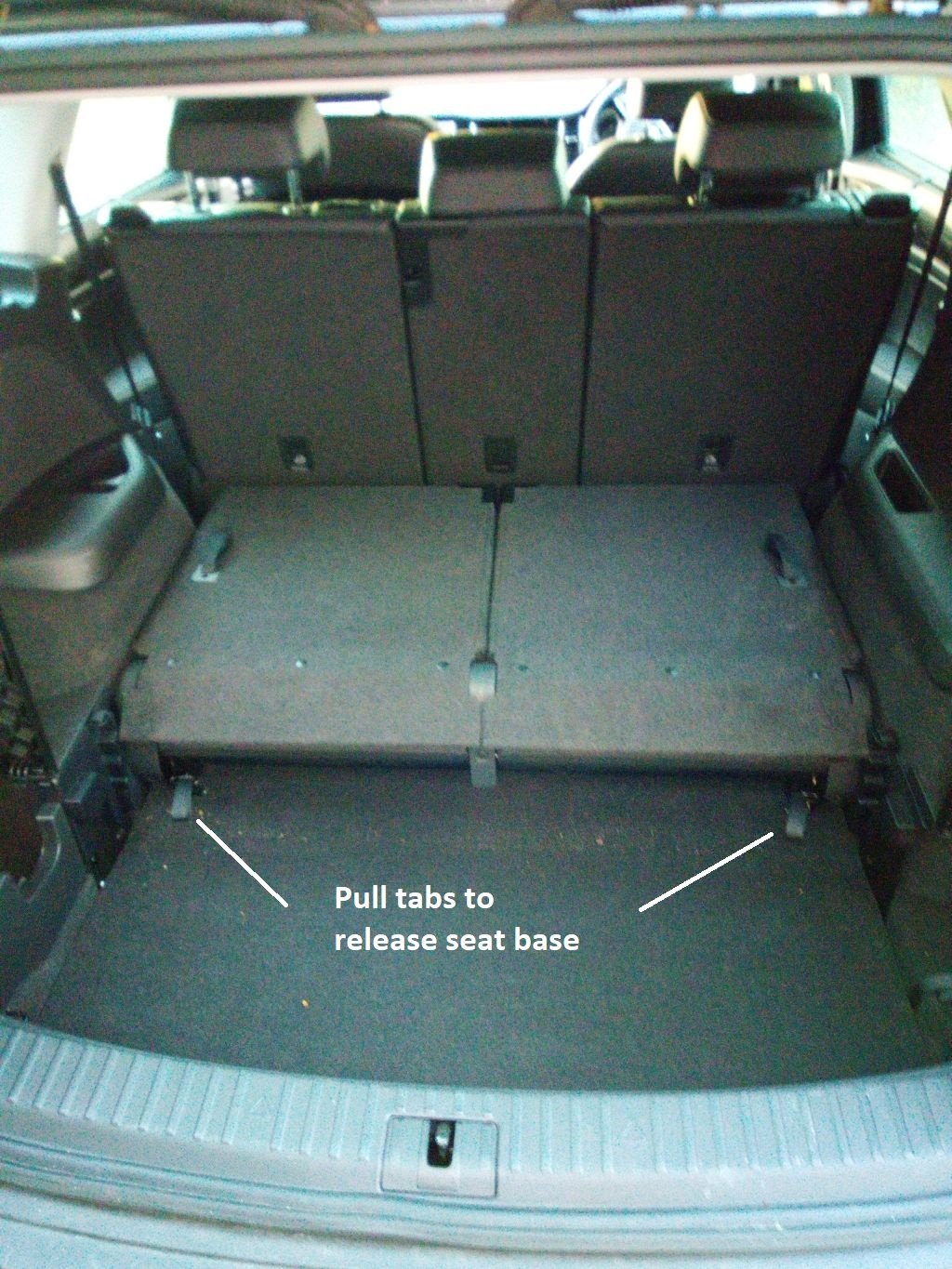
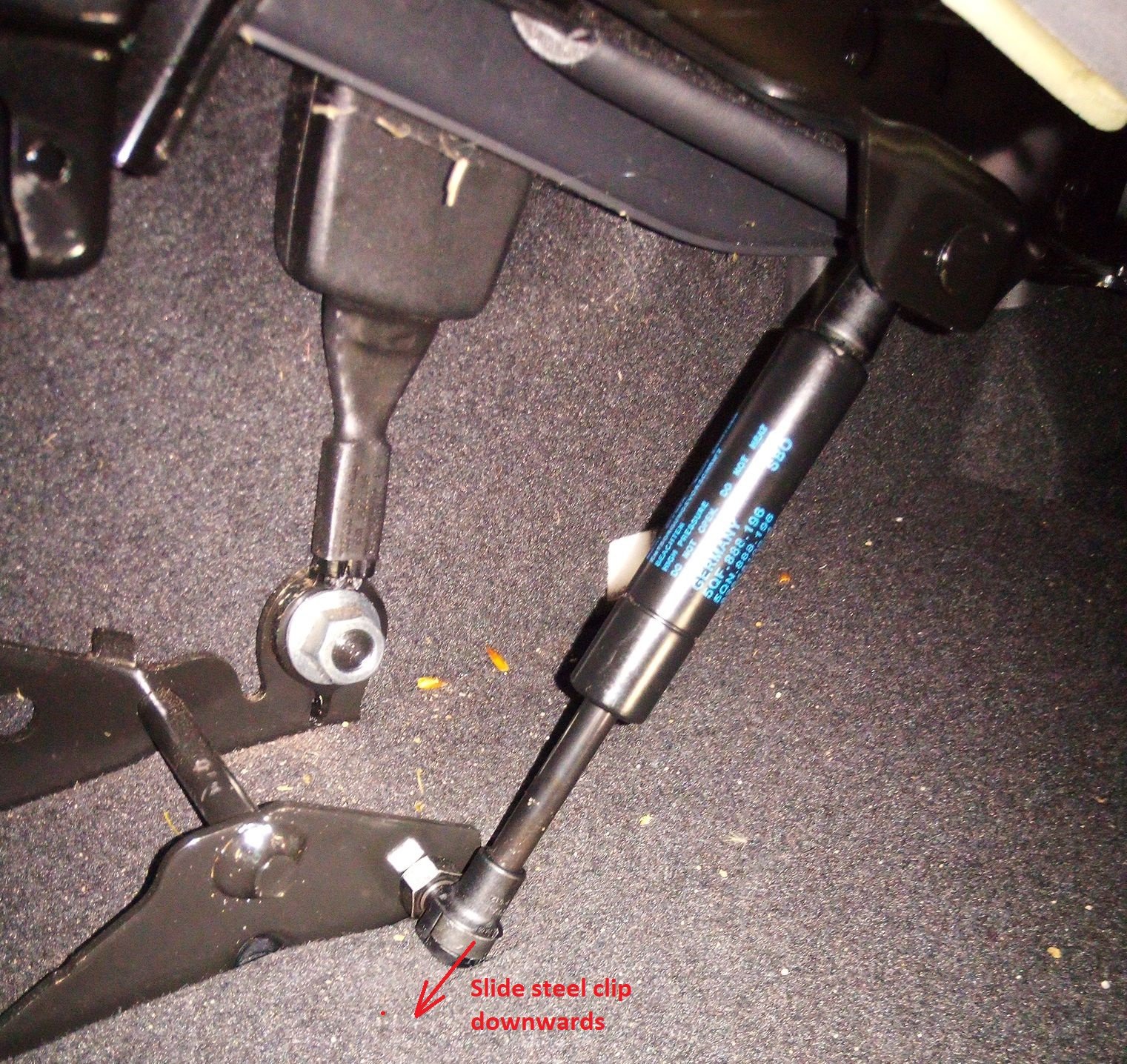
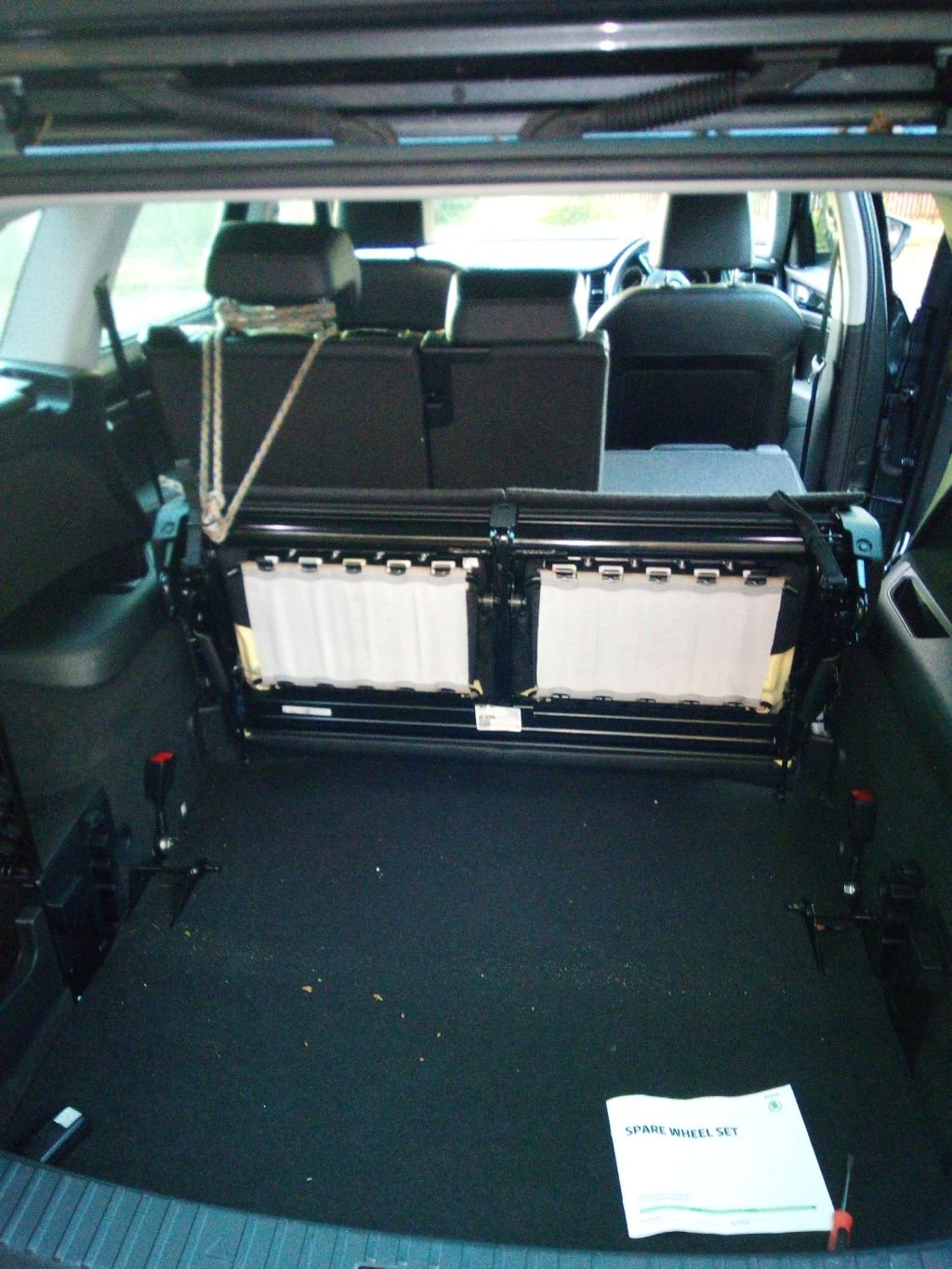
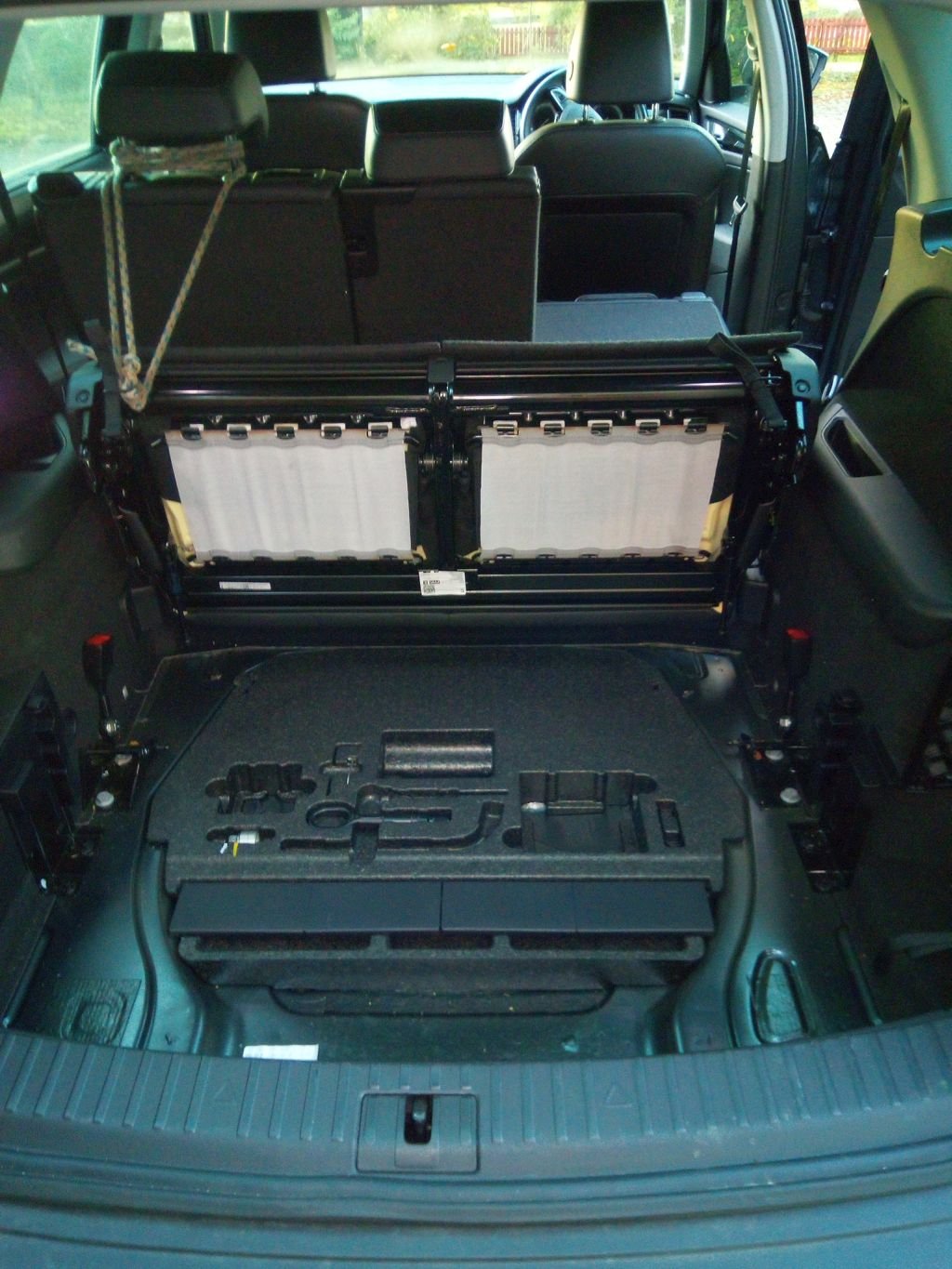
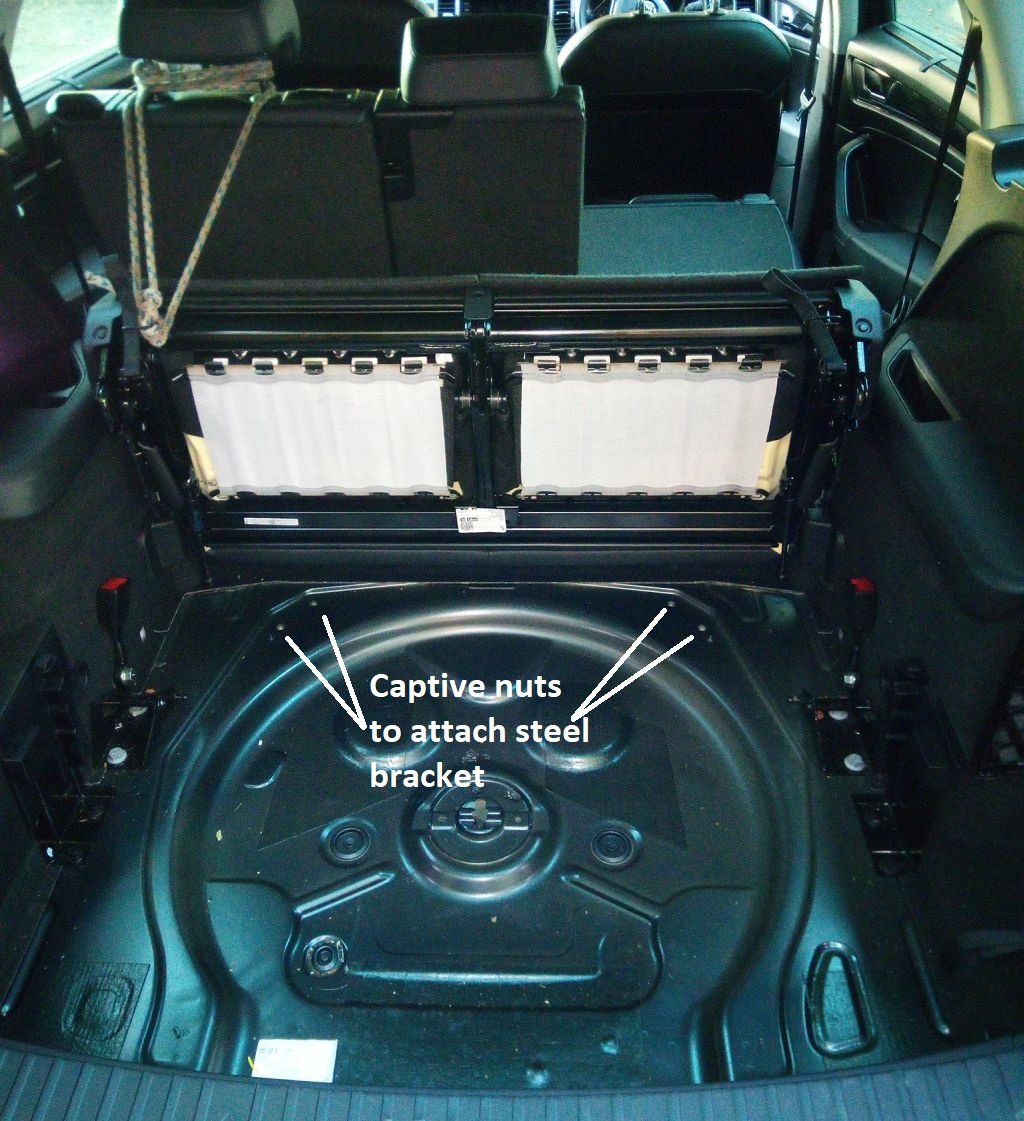
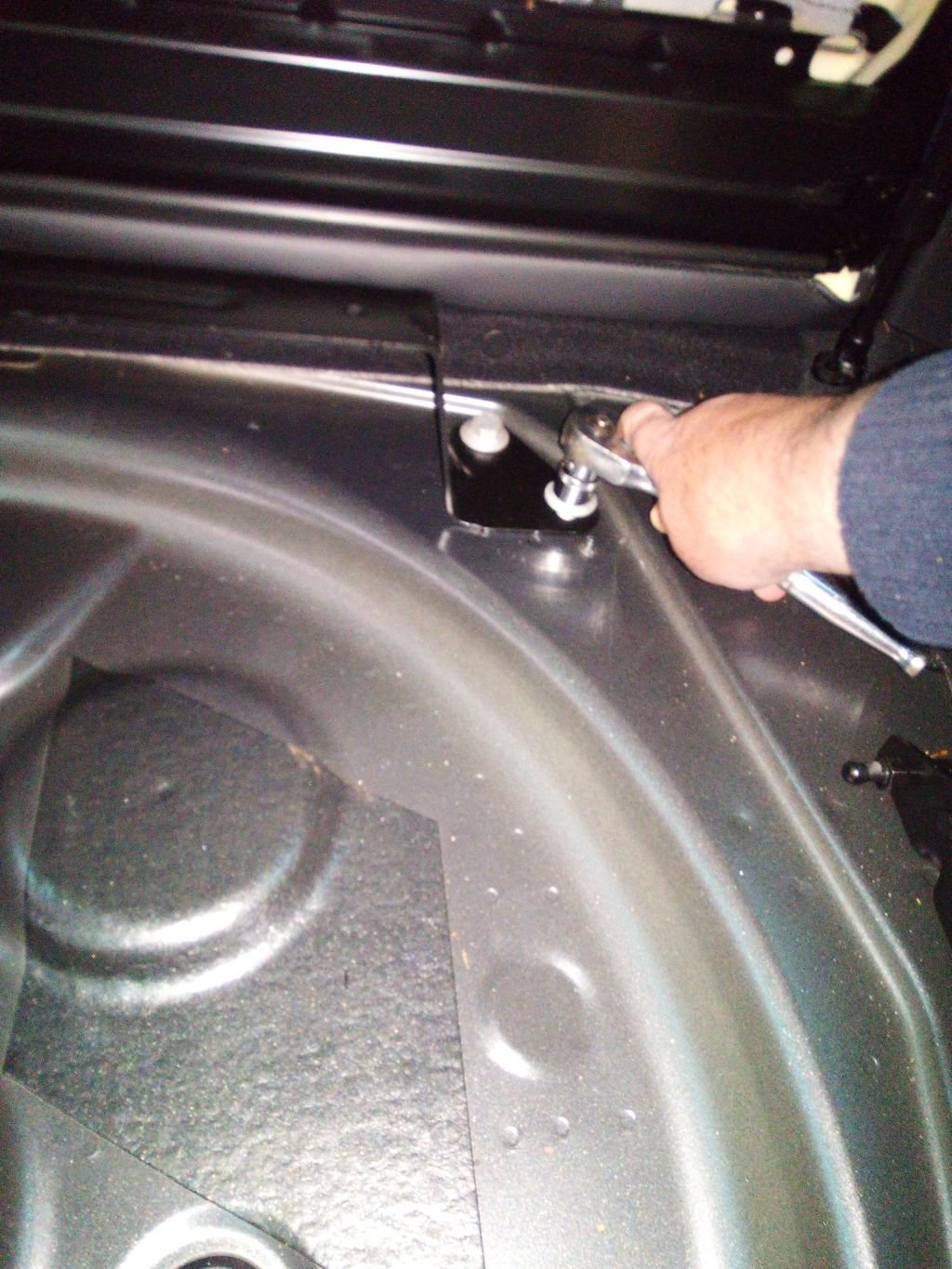
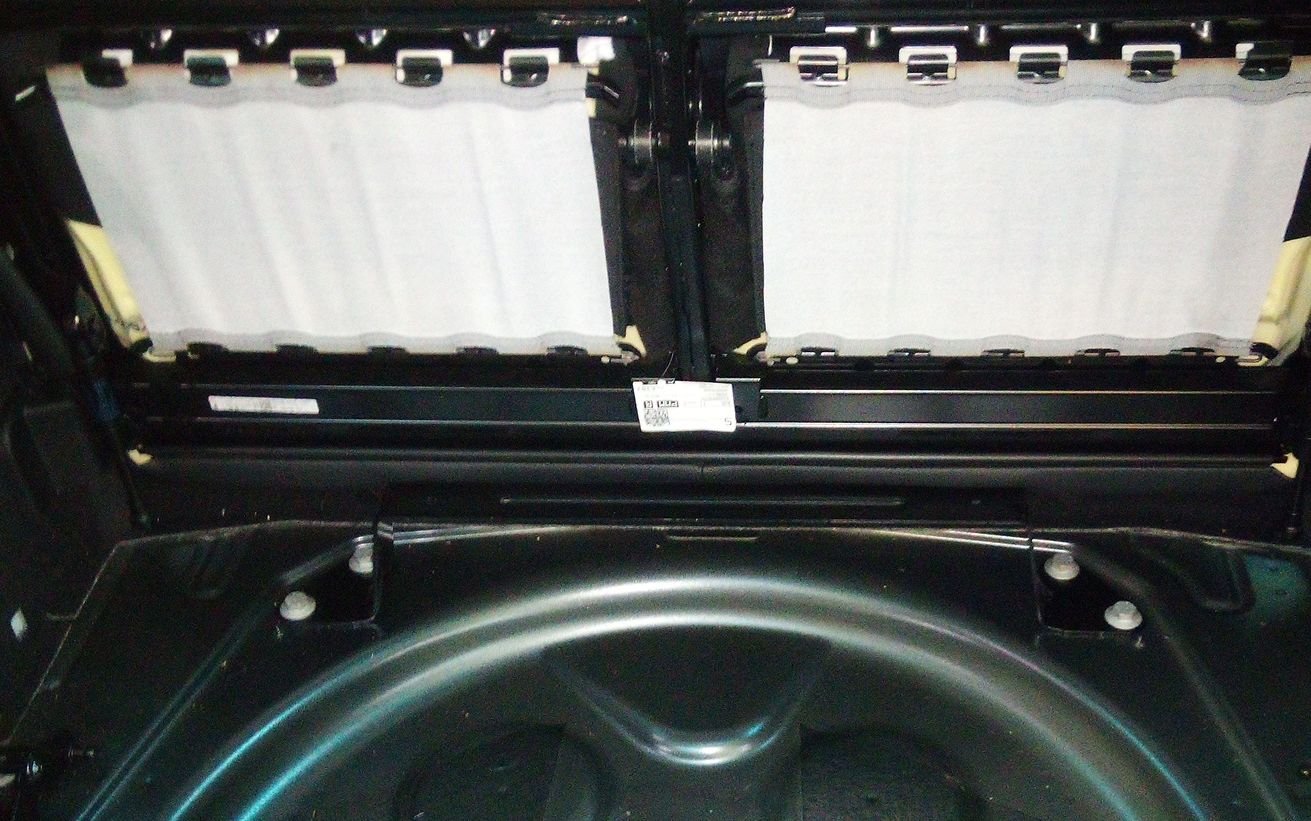
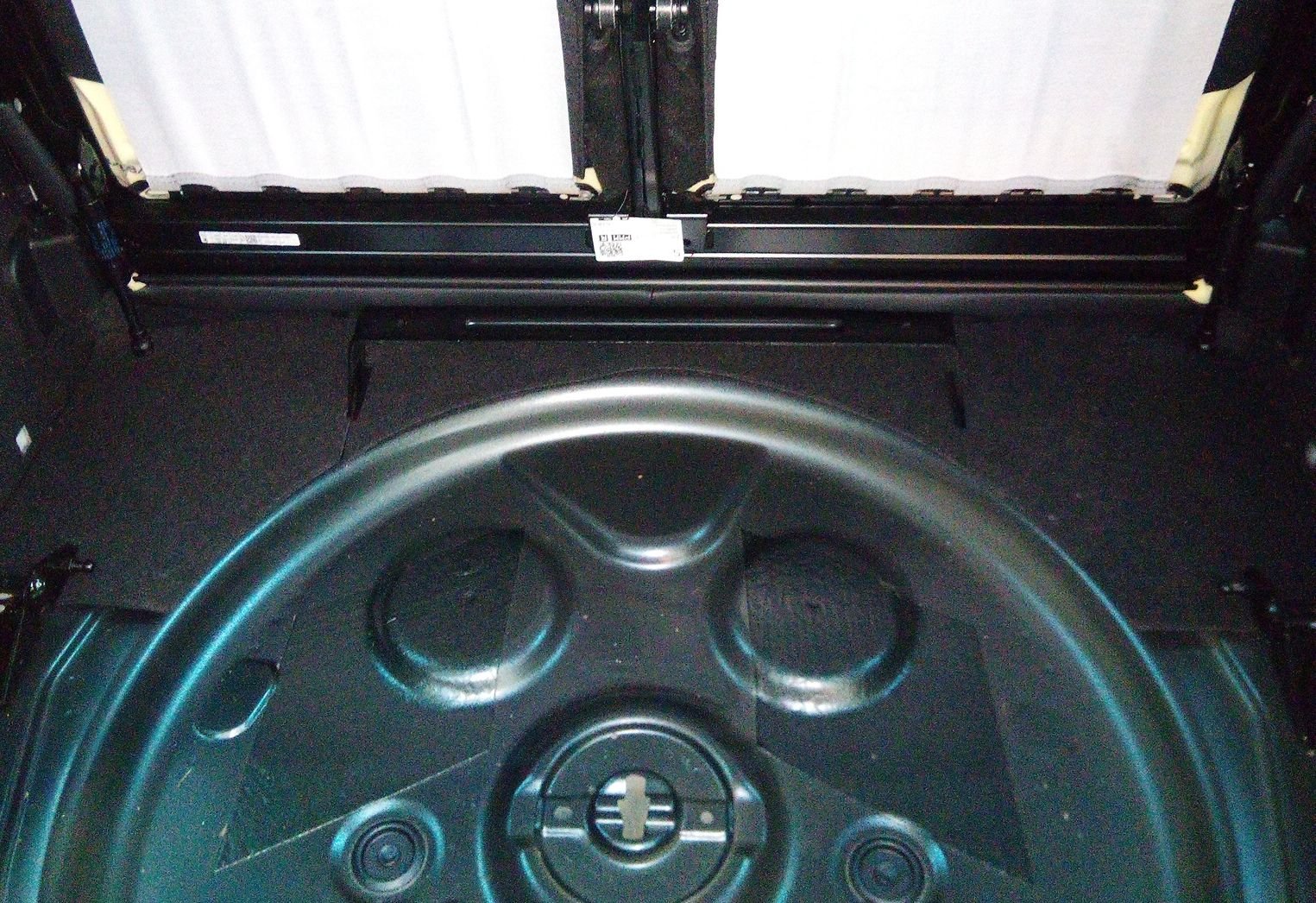
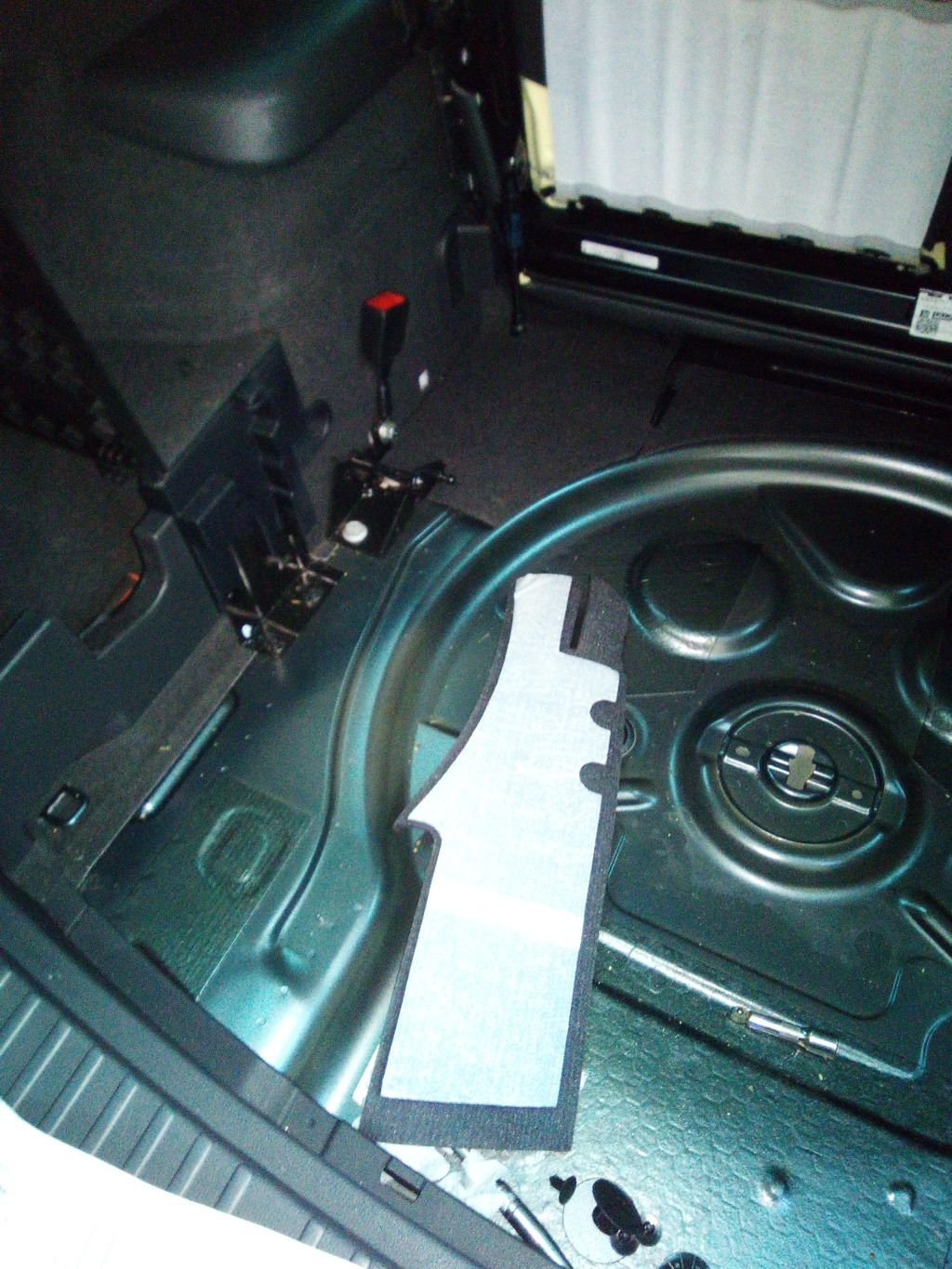
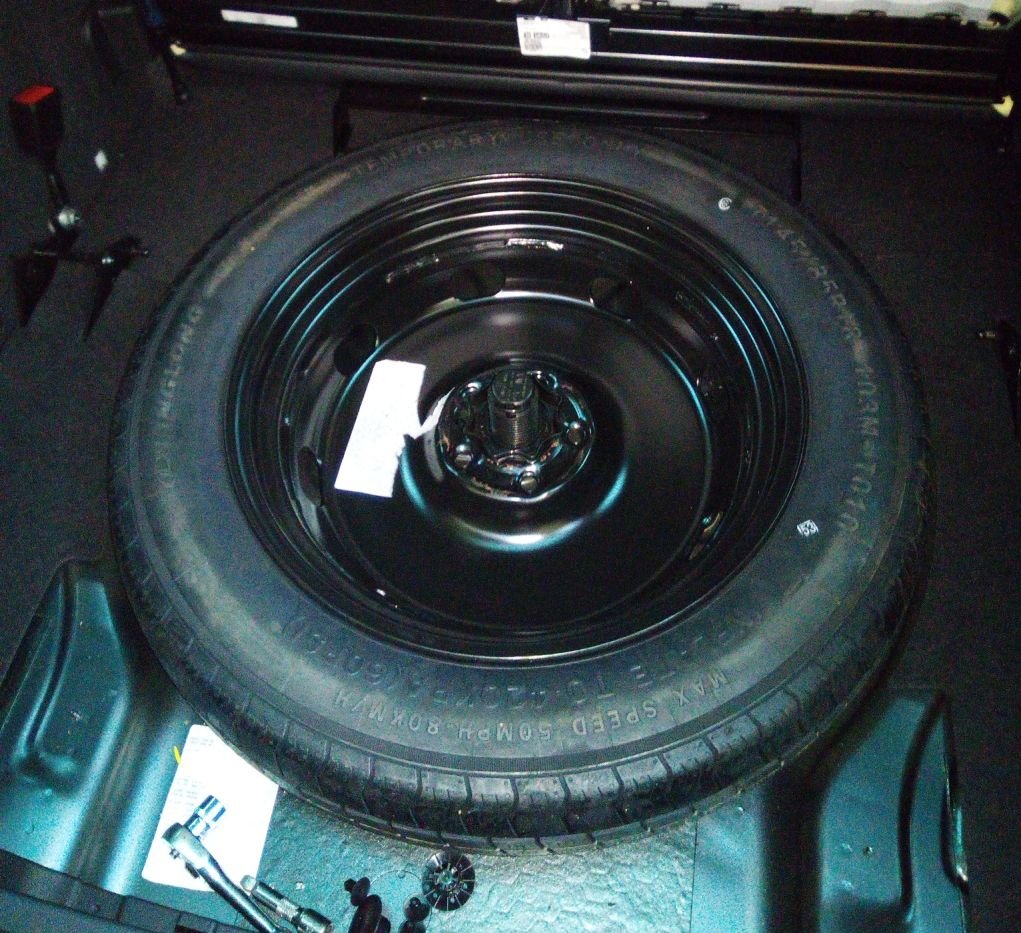
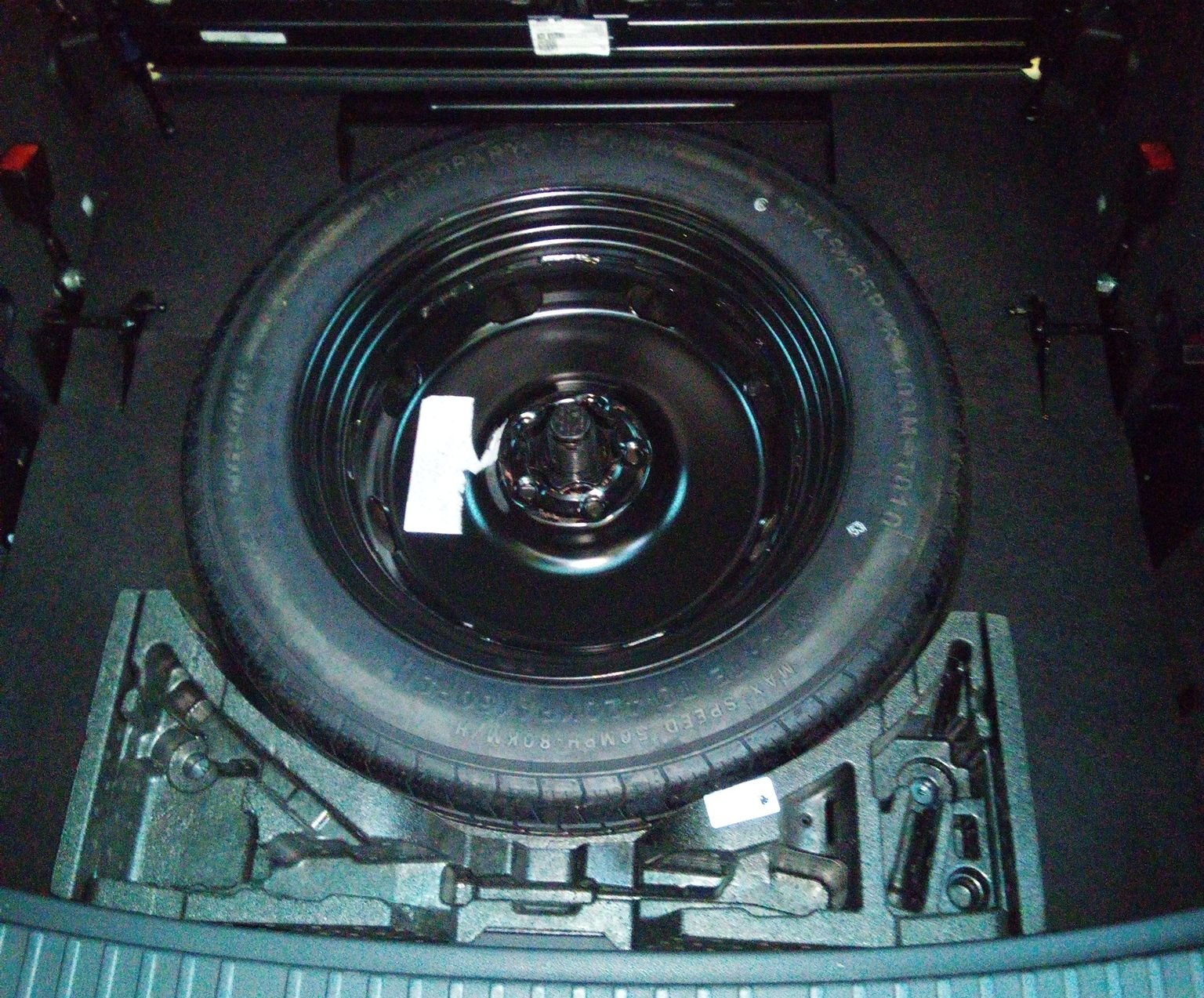
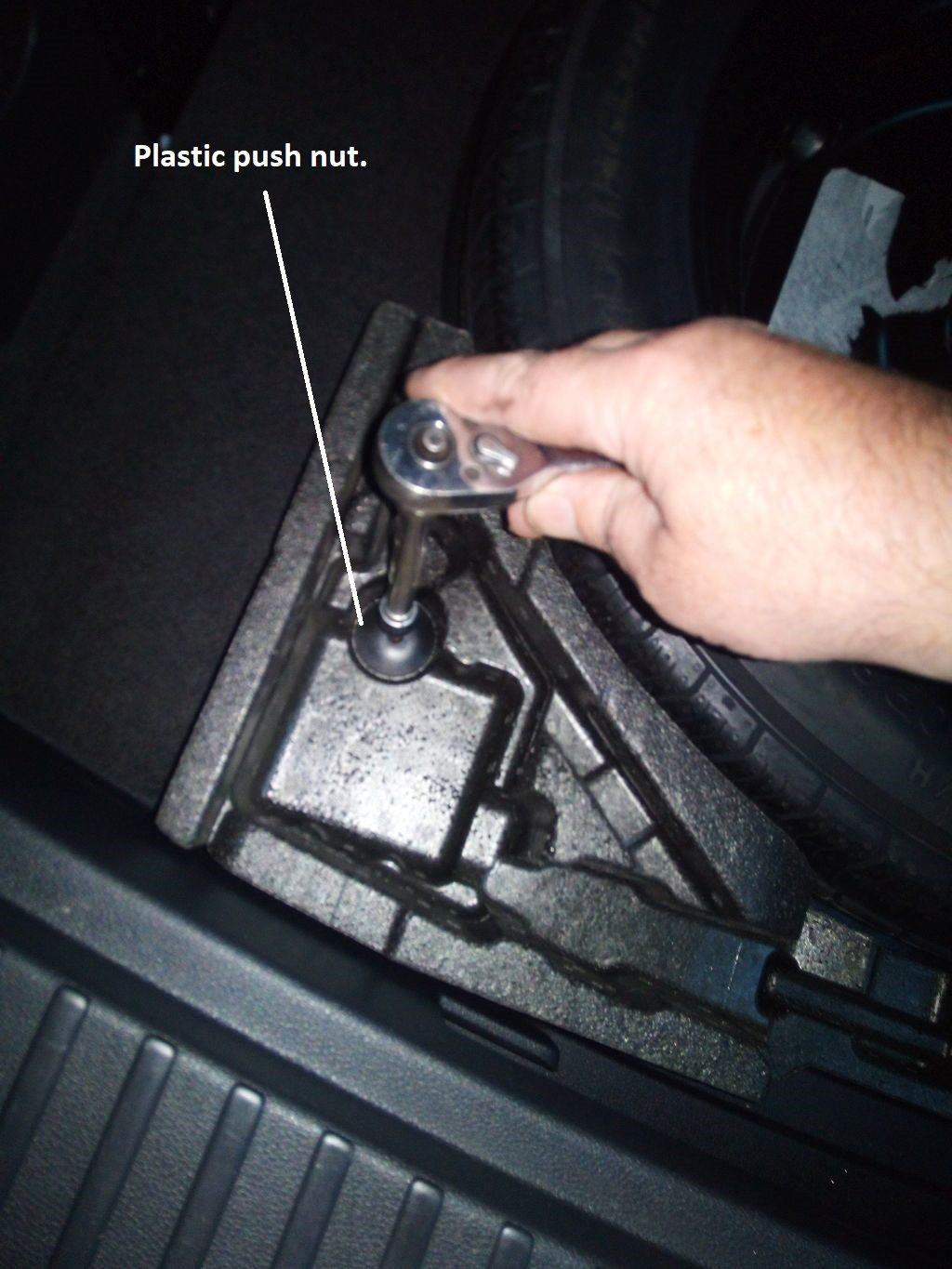
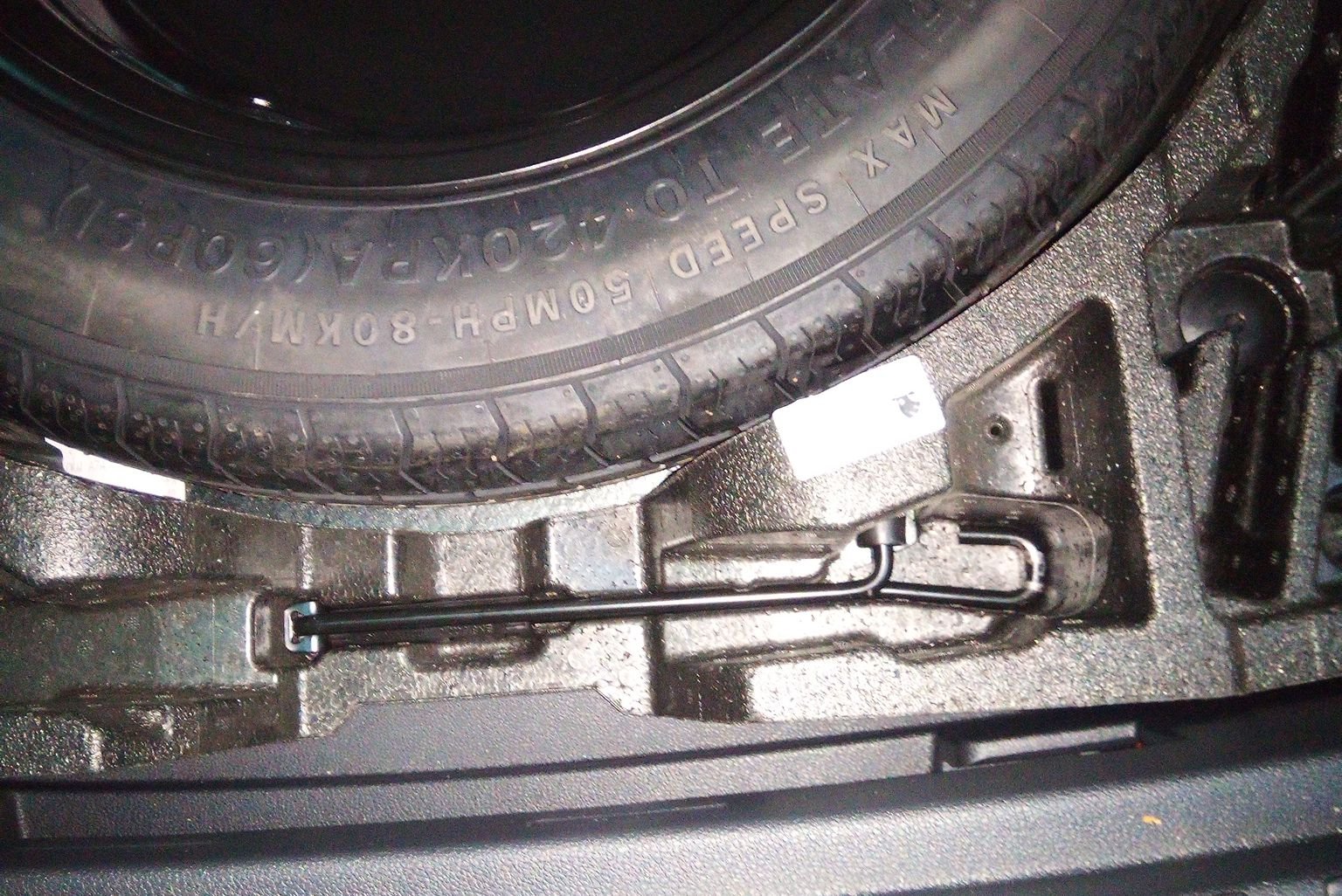
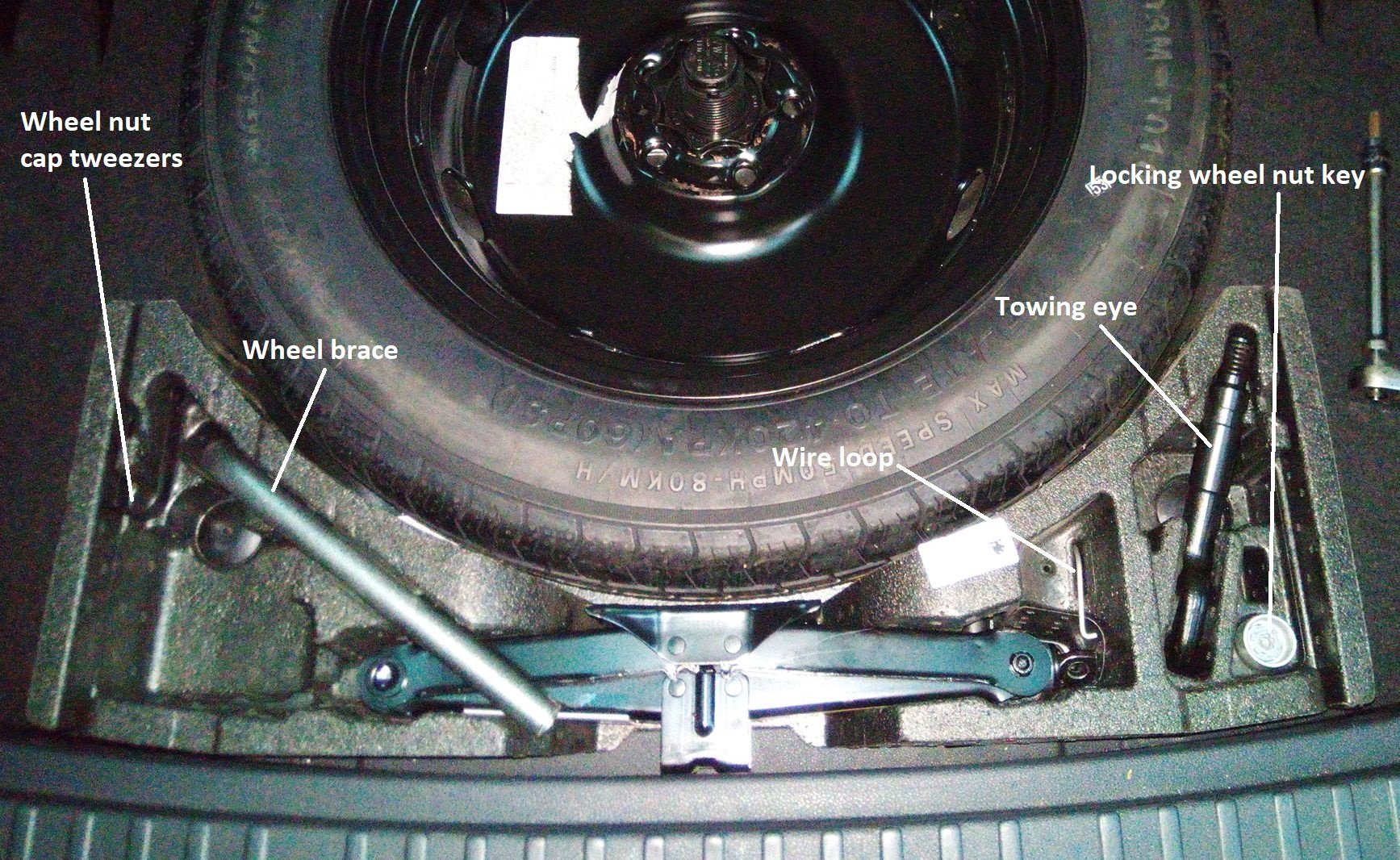
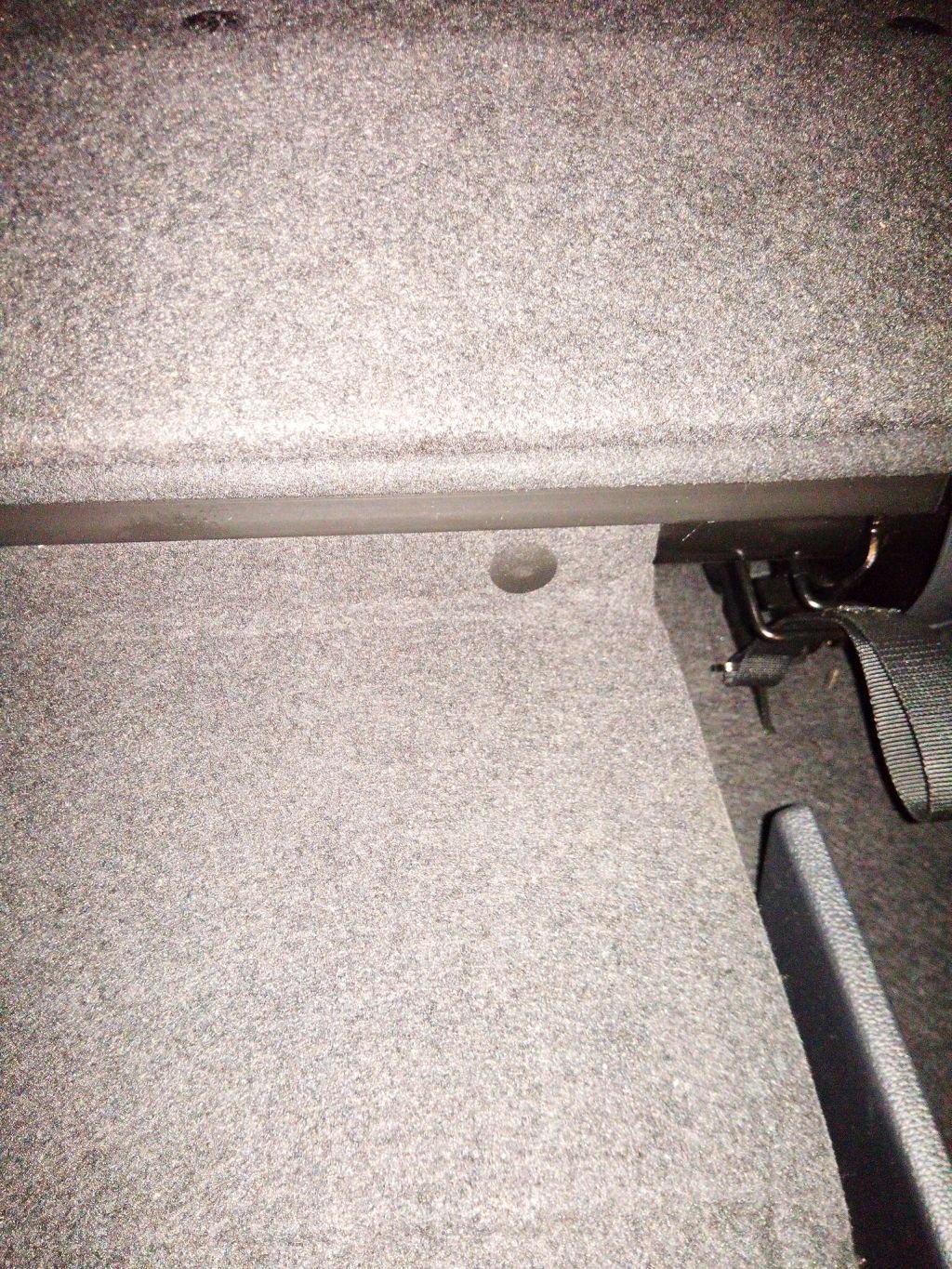
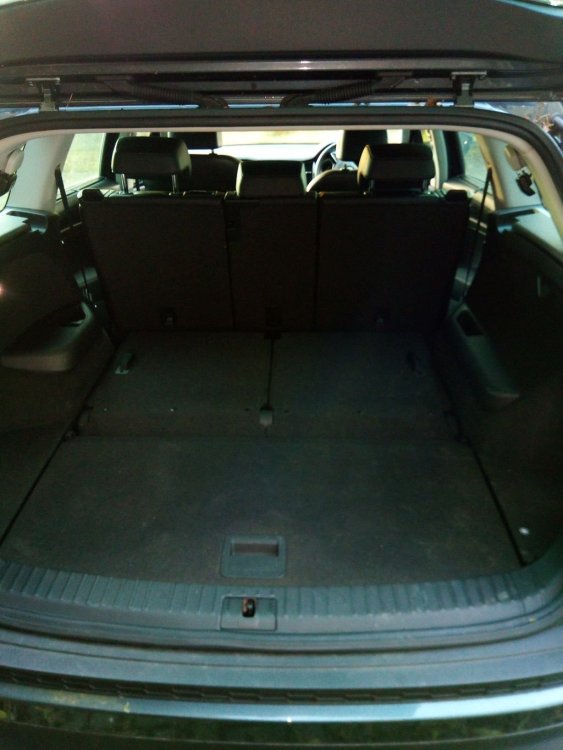
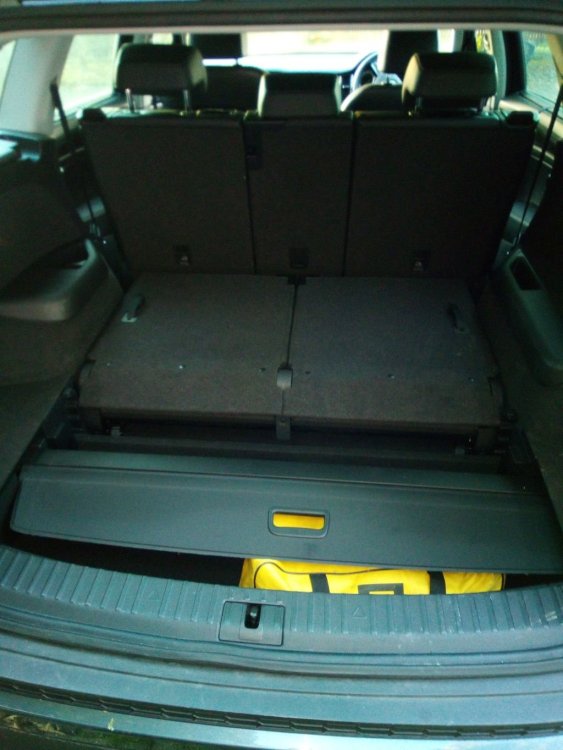
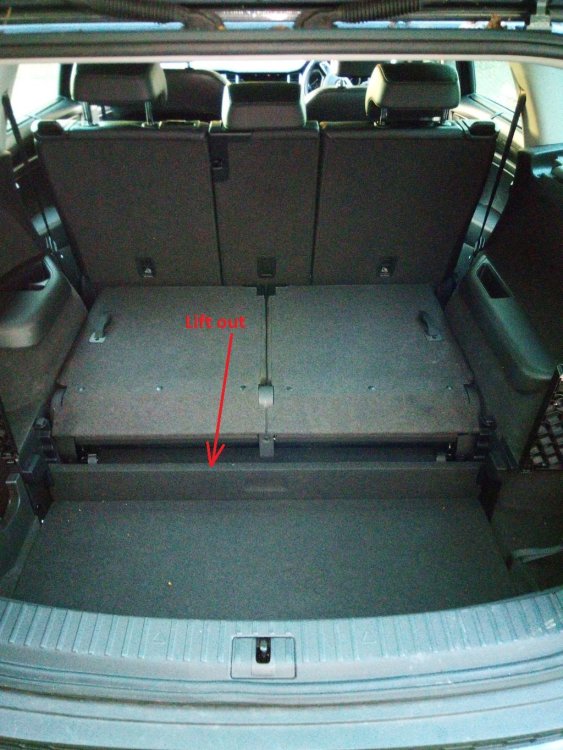
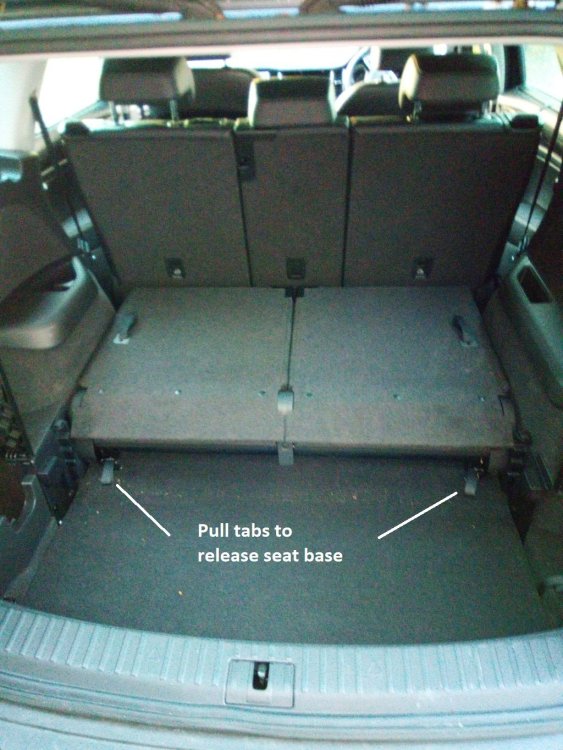
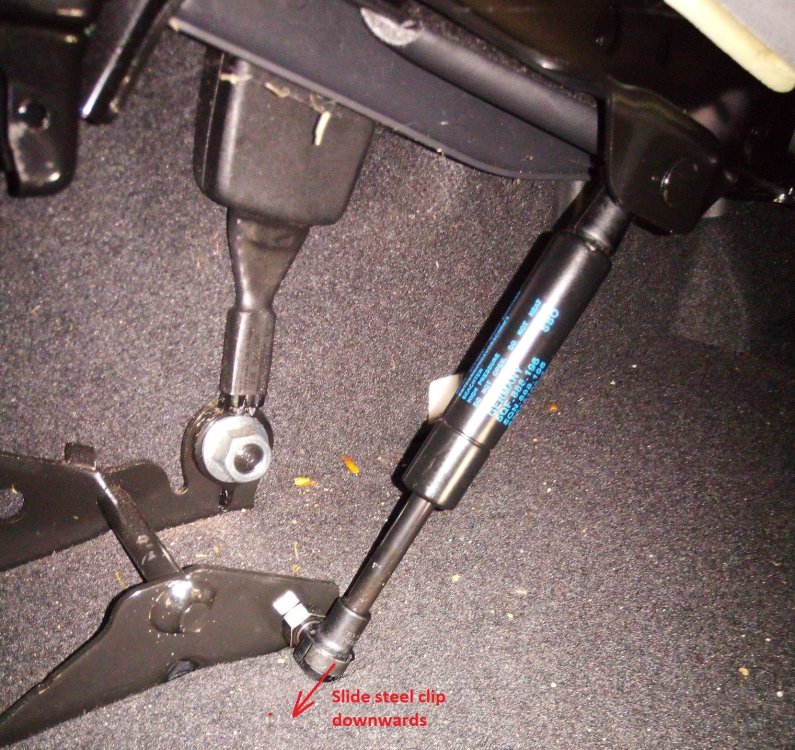
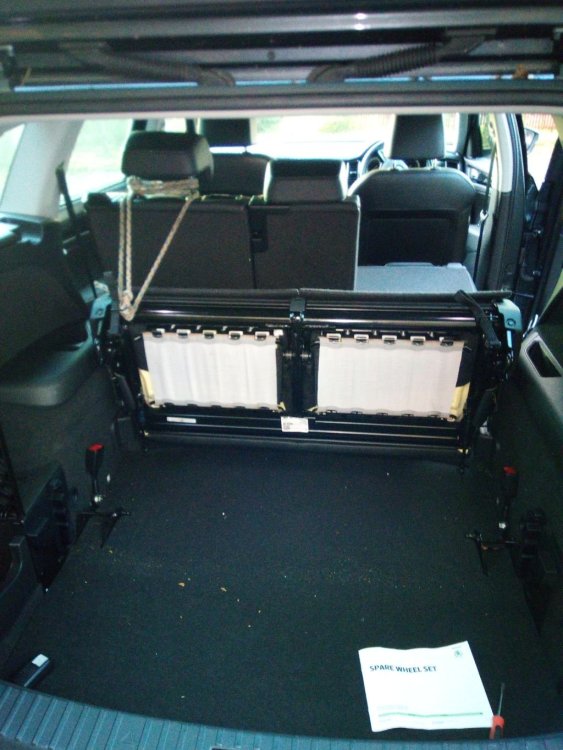
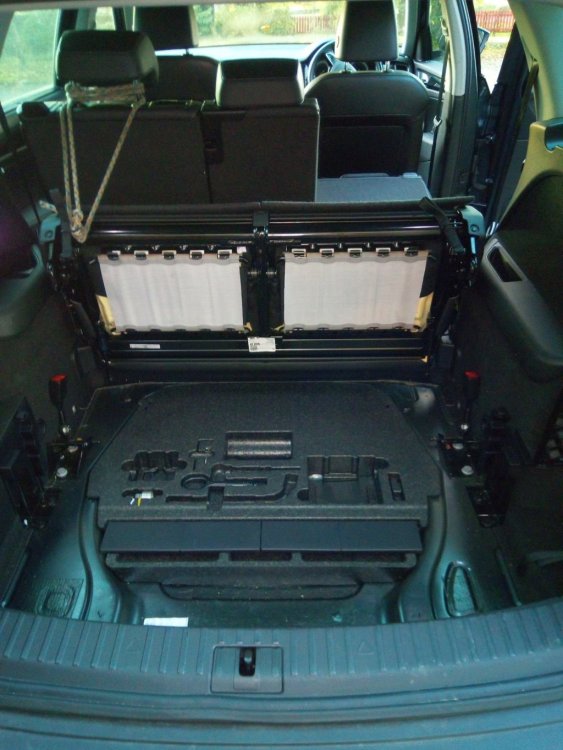
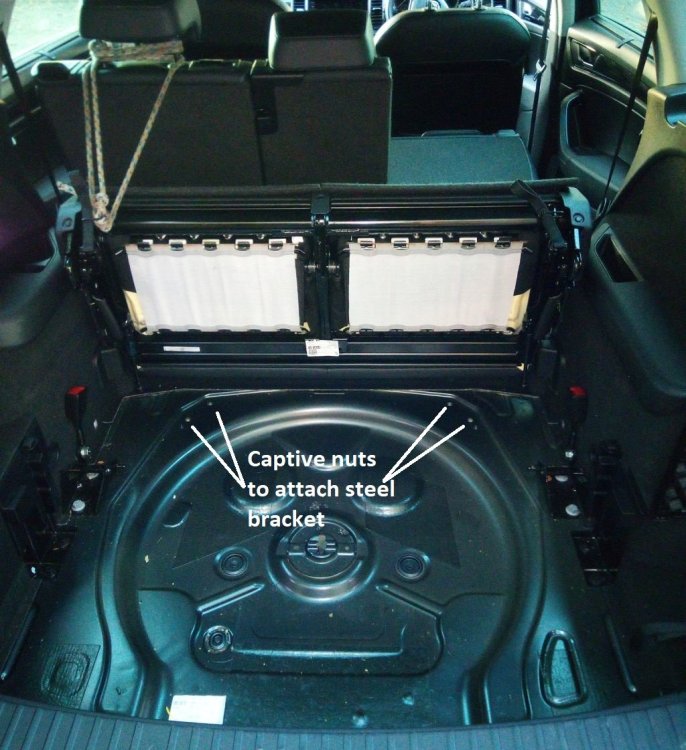
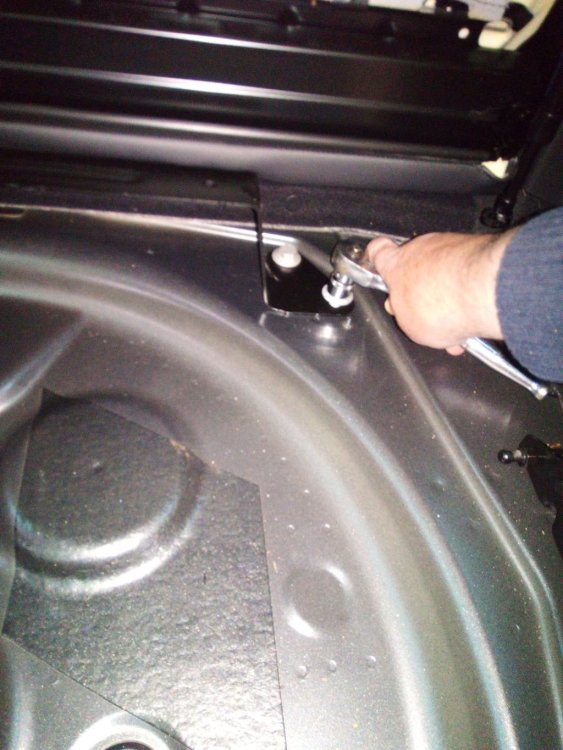
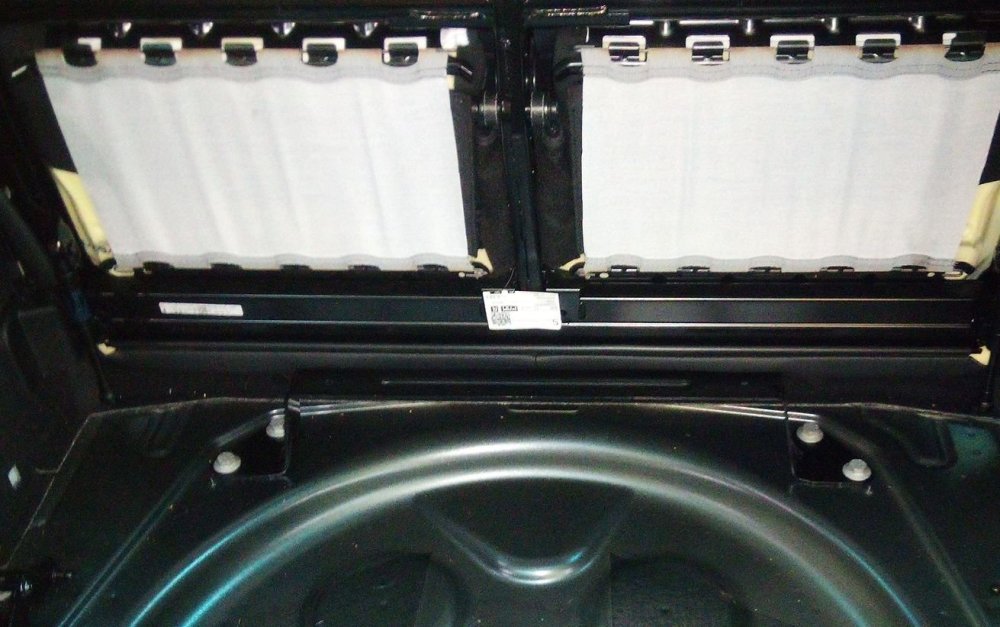
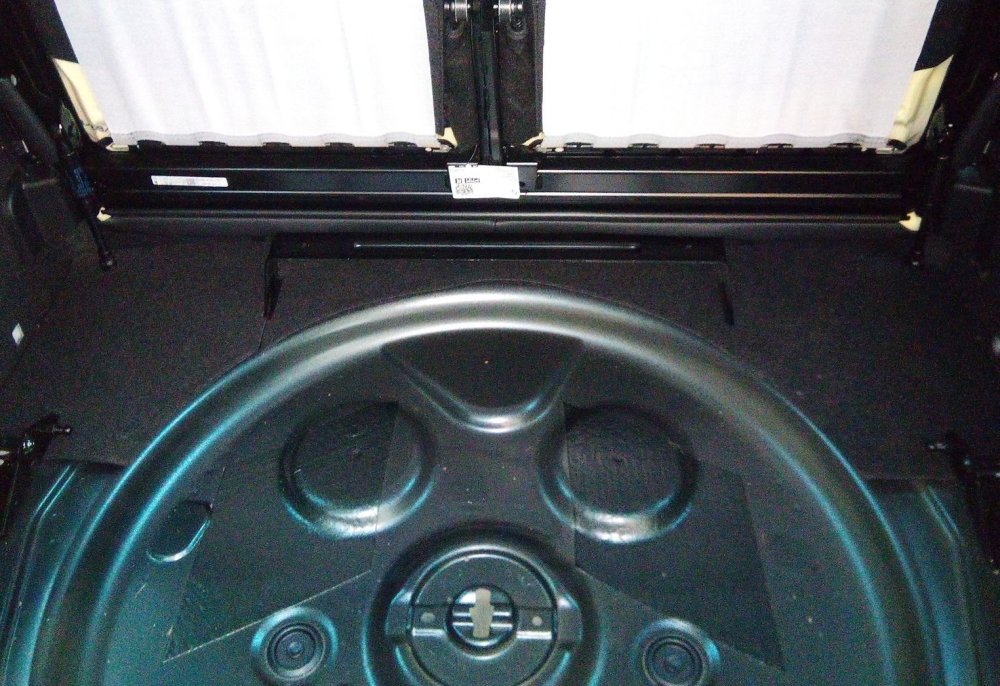
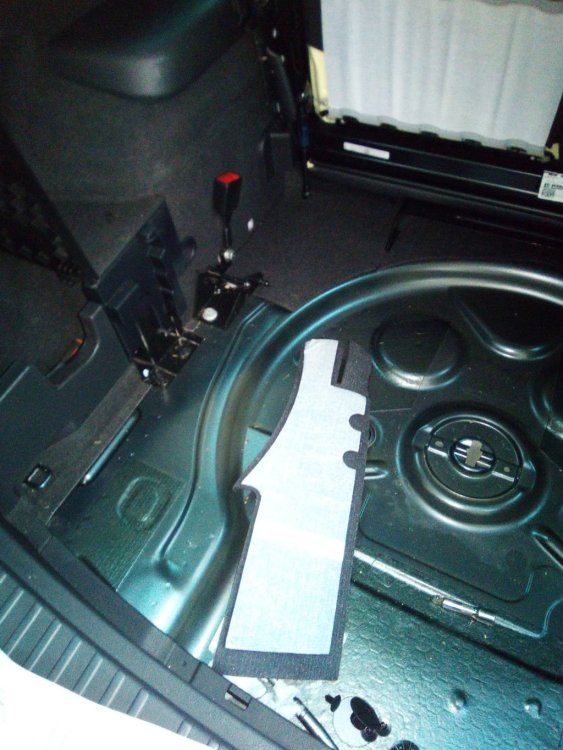
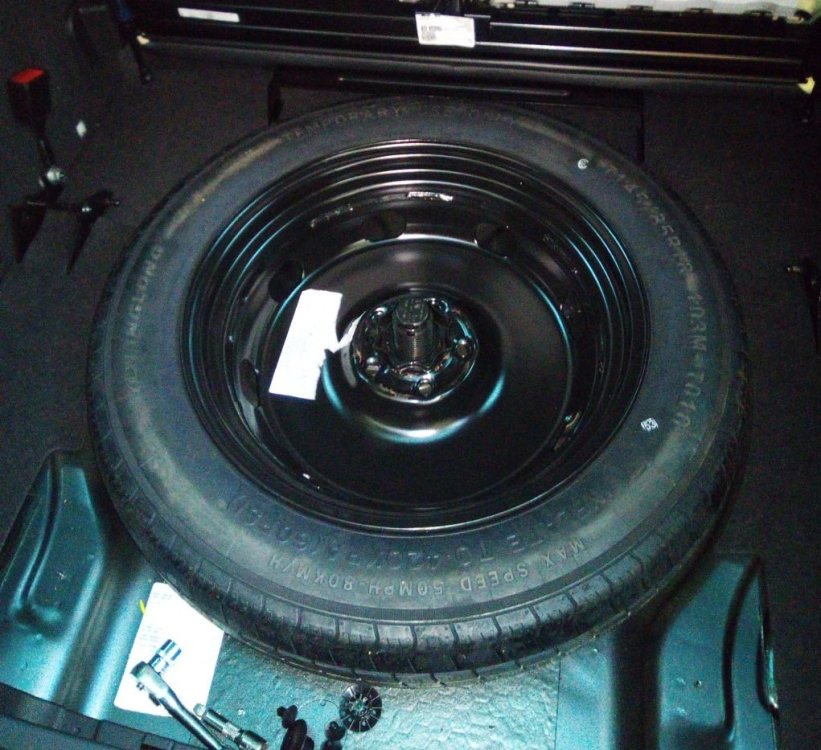
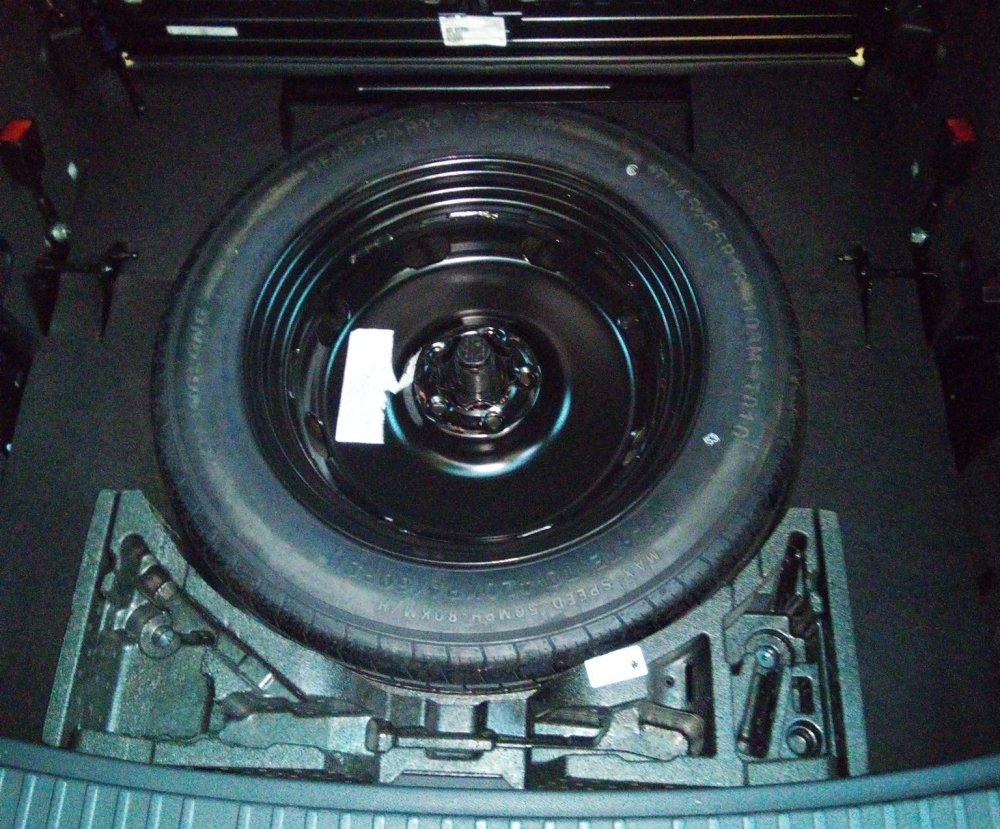
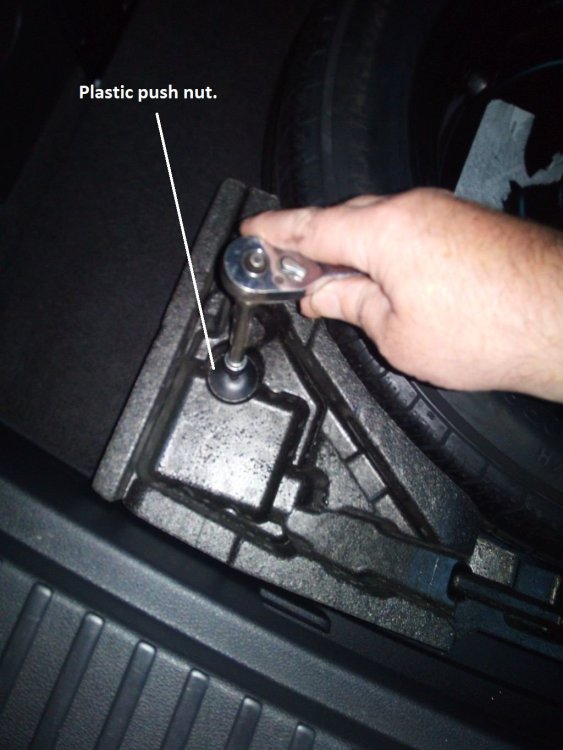
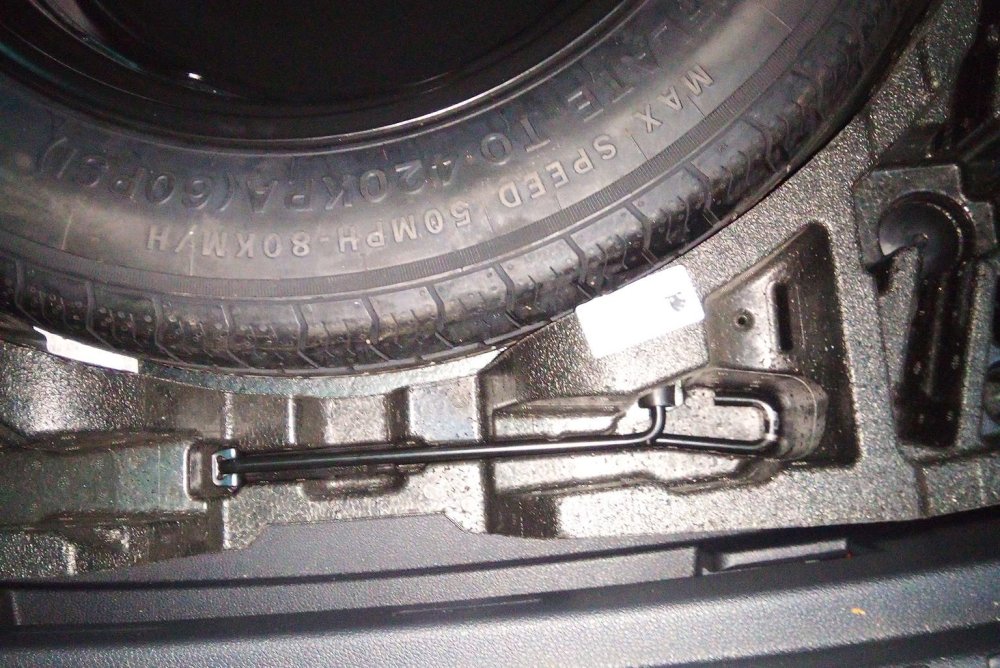
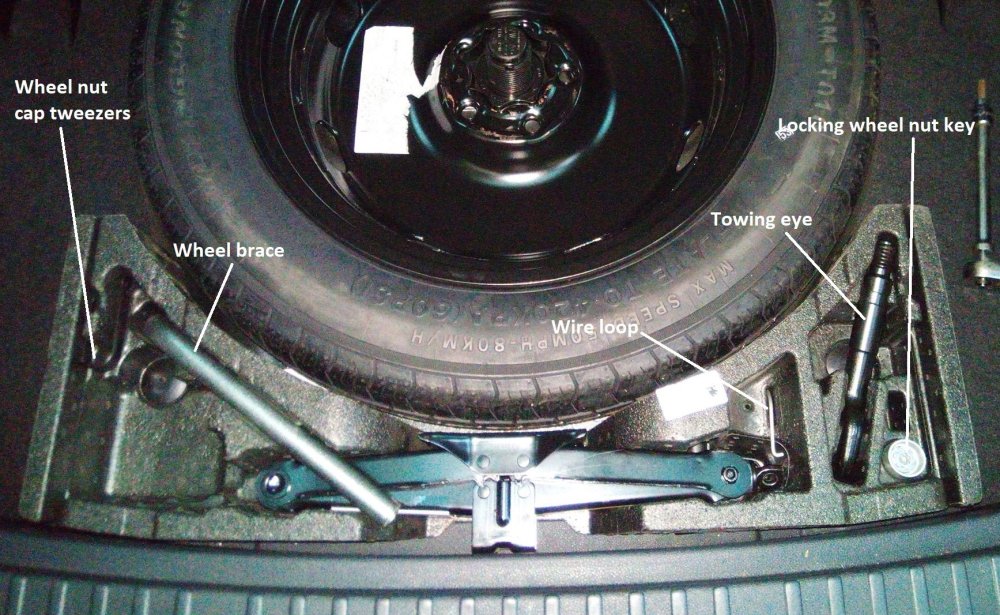
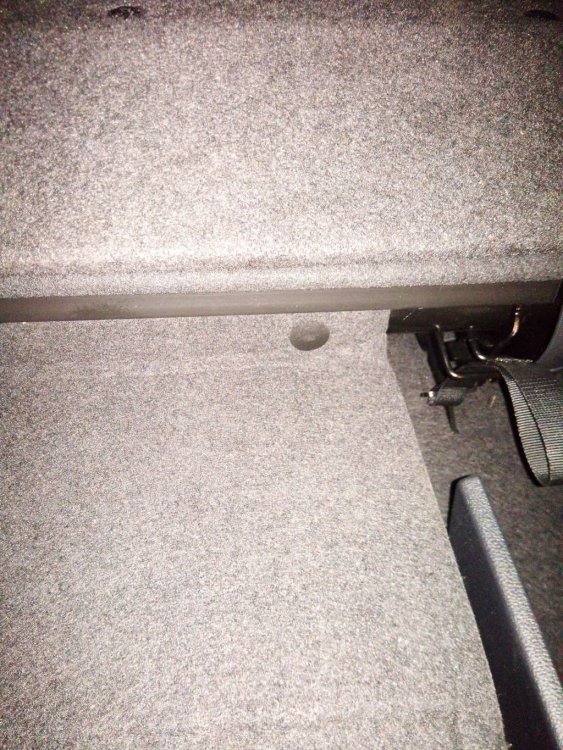
Apologies for the delay - managed to get Covid and then got hospitalised! How-to for 7 seater spacesaver installation, (car originally equipped with can of slime and a compressor), if it's of any use to anyone. Lift out the rearmost floor panel. Flip up the two side covers and lift out the "modesty curtain" Lift out the separator board Pull the tabs to release the Row 3 seat base. You don't have to do this next bit, but it makes access a bit easier. I popped the gas struts off their bottom mountings to allow the seat base to lift higher. Then tied the seat base to the head rest bars to keep it up out of the way. Pull out the carpet and take out the foam tray for the compressor and tyre repair "slime". This exposes the wheel recess and captive nuts for the steel retaining bar that goes over the front edge of the spacesaver tyre. Tighten the 4 screws to secure the steel retaining bar to the captive nuts. It should look like this, with the top of the retaining bar just under the leading edge of the seat. Fit the curved bit of carpet. It's a bit fiddly, it goes AHEAD of the steel retaining bar and then the ears at each side face backwards. Peel off the backing and glue down the two side pieces of carpet. Fit the spare wheel with the yellow speed warning labels facing DOWNWARDS and push the plastic retaining screw down into the slotted steel pressing on the floor of the car below the centre hole in the wheel then turn it 90 degrees to lock it. Fit the new foam tray just behind the wheel. Secure the tray with the two Torx-headed plastic push nuts. There are studs already in the steel floor to accept them. DO NOT over-tighten! The jack handle goes in first, under the jack. I wasn't quite sure where all the other bits go, but I think it's like this: Fit the new piece of rear carpet over the tool tray. Fold the forward edge up at right angles and push the Fir tree clips into the holes already in the rearmost round bar forming the Row 3 seat base.
-
I recently bought a space-saver spare and associated genuine parts for our car from Caffyns. Not cheap, (£288 delivered) but certainly comprehensive! I took a series of photos when I did the job. Would anyone be interested if I posted up a "How-to" on here?
-
Manufacturer-specific oil grades are becoming more common now. It's the VW spec that you want (possibly 507.00 - or I think there's another one, depending on whether you want "long life" or "fixed" service intervals. It should at least tell you what oil specification in your handbook?
-
Can you find an uphill bit of wet grass? I'm fortunate, living in rural Cumbria, because we have a plentiful supply of both"grass" and "wet"! In various 4 or "all" wheel drive cars, I have just driven along a quiet single track road until I have come to an uphill bit and put the nearside front and rear wheels on to the grass and tried to do a hill start. I've done the same in 2WD cars as a comparison. If you lose traction, just stop and reverse off. You won't get stuck unless you keep the wheel(s) spinning for ages and dig yourself a deep hole. If it passes the "2 wheels on the grass" test, and your verge is wide enough, try all 4 wheels next. Again, it'll not be a problem because the slope of the land will help you off again backwards. Incidentally, yesterday, by coincidence, I had to deliver Mrs. Avocet and some cycling equipment to a bike track. To get the equipment to the side of the track, I had to drive over about 100 yards of gently, upward- sloping grass field. It was soaking wet from recent rain, and a clay soil. Just about the slippiest stuff known to man! I have Pirelli Scorpions on the back and Toyo Proxes on the front - all with about 6mm of tread. The car is a 4x4 DSG 150 bhp diesel. I was very pleasantly surprised at how well it coped! Even in areas where I could see the ruts from tyres that ended where other cars had got stuck. I selected "off-road mode" but other than that, didn't do anything special. If the rear wheels were being driven, it was utterly seamless. I'm pretty certain they were being driven, though. The steering was squirming a bit, suggesting that the front tyres didn't have much more to give, and I really don't believe a 2WD of similar weight would have got more than a couple of car-lengths.
-
I'm wrestling with the same conundrum right now (except ours is 4 years old). I've always done my own servicing, but this is the newest (and heaviest!) car we've ever had. Plus, I'm recovering from Covid and really don't much fancy crawling under it just now...😁 The supplying dealer wanted £406 for the 4 year service, which they told me was oil, oil filter, air filter, fuel filter and pollen filter. Even at Eurocarparts prices using Mobil 1 and Mann filters, the parts would only have been about £100 retail. I was thinking that maybe I wasn't too ill to do it myself, after all, (Strange the effect that getting fleeced £400 smackers can have on your heath!) when I noticed that Skoda UK offer fixed-price servicing: https://www.skoda.co.uk/owners/servicing-maintenance-fixed-price Scroll down until you get to the schedule. "extended scope" for the three year one is explained here: https://www.skoda.co.uk/owners/extended-scope (along with a wonderfully sexist piccy of a bloke who looks like he's "mansplaining" to a woman what oil is)!🤣 Doesn't look like the extended service is anything you probably wouldn't have done anyway! You'll also see that (in my case) the 4 year one doesn't involve the fuel filter after all. Anyway, the "bottom line" is that it's booked in with a different dealer (but still a proper Skoda dealer) for the 4 year service for £220 on Monday. I don't mind paying that for the convenience and another genuine stamp in the history, given the value of the car and the way second hand prices are at present.
-
-
-
-
Funny enough, I'm having this discussion right now with my dealer! We have a 2017 car with very low miles (not even 27,000 yet, but coming up to 4 years old. They told me I needed the DSG oil and filter doing (...for a mere £289)! I've just (today, in fact) received the following answer from Skoda UK: > > Dear Mr XXXXX Thank you for your recent contact with ŠKODA Customer Services. I apologise for the delay in my response. I refer to your questions below which I have highlighted. a) which gearbox we have and; – The gearbox is a DQ500 (b) whether the DSG oil and filter change recommendation is time or mileage-based? – DSG oil and filter change is mileage based so it is required at 40,000miles I hope this information proves to be of use. If you have any further questions, please do not hesitate to contact me and I will be happy to assist you. Thank you for contacting ŠKODA UK. Kind regards" > > So I'm going to leave the DSG oil change for another year (I'll be surprised if it even hits 40k by this time next year, to be honest.
-
Thanks for that. I do a bit of work with VW UK in my "day job" so I might check with them to be certain, but nothing I've seen online has suggested that the DSG oil is time-dependent, only mileage, and our mileage is certainly low. I doubt it will have done 40,000 miles by this time NEXT year, even! The Haldex oil was changed earlier this year. We bought the car at 3 years old (supposedly fully-serviced) and then they sprang that one on us when it was in for some warranty work. Whilst I specifically asked (and they assured me they checked) the strainer, I'm willing to bet that they never touched it! Either way, the service record does show the Haldex oil change now having been done. How can I find out which type of DSG box I have, please? All I know for certain is that the car is a 2017 diesel 4x4 and that it is a 7 speed box, but I can't find anything that tells me whether it's the DQ200 0CW; the DQ381 0GC, the DQ500 0DL (etc)? The papers that came with the car just call it an "RPN" or a "G1D" - which are presumably some other code?
-
I'm glad this has been posted up! I've just had a cheery message from our local "Main Stealer" telling me that our 4 years service is due. This is true, the car's service indicator is indeed, telling me I have an oil service due soon. However, the car has only done about 27,000 miles. She's quoting an absolute bargain of a mere £409 (all-in) for the service and *only* another £289 for the DSG oil change...😁 Does anyone have any recommendations for a trusted independent in North West Cumbria, please? And can anyone confirm whether DSG oil changes are purely on mileage or on time elapsed?
-
Don't mess about. The steering rack is a safety critical component! Give them a week to respond, in writing, or tell them that you will be reporting it to DVSA as a potential Vehicle Safety Defect. It's quick and easy to do online here: https://www.gov.uk/vehicle-recalls-and-faults/report-a-serious-safety-defect DVSA are obliged to investigate. I work for a car manufacturer (not Skoda or even VAG). Trust me, we don't want visits from DVSA's recalls branch!
-
Thanks guys. Currently scouring the scrappies!
-
Thanks gents. I popped out and had a look. The date code on the Pirellis is 3817, which fits very well with the idea of just-in-time manufacture as the signature date on its Certificate of Conformity is the 9th of October 2017 (which I'm going to take as the date of manufacture), and the warranty started on the 31st of October that year. They do indeed have sealant in them, and are marked as such on the sidewall. They are not, however, "Winter" tyres with the mountain and snowflake symbol on them. I agree, it looks likely that it had 4, pre-sealed Scorpions on it, and maybe that's why it has neither the spare nor the repair kit? The Proxes look fairly new. I don't like mixing tyre models on the same car (particularly ones with 4WD), but we're stuck with them until they wear out.
-
Thanks, yes mine's the same as that. Absolutely nothing there.