Avocet
Members
-
Joined
-
Last visited
Everything posted by Avocet
-
The diesels are due a cam belt at 5 years, so worth checking if that's been done. Water pumps are very clever (to speed up the warmup). Unfortunately, a bit too clever for their own good, and overheating can be a problem. Cheap to change while the cam belt is being done, but £££ if not. Emergency Call problems are not unusual. Most people just live with them and reset the system. Again, very expensive for a new e-call module. If a 4x4, they use a Haldex system similar to the Freelander 2, and the dealers tend not to clean the strainer in the rear diff - just change the oil. A blocked strainer can cause big problems. If you're planning on towing, some of them from that period were not homologated to tow anything. Check the compliance plate and make sure it has a number in the second space for Gross Train Weight (It will be around 4 tonnes, if it can tow). Some of them (especially the 7 seaters), don't have a spare wheel, if such things are important to you. They have a bottle of "slime" which is supposed to be replaced at 4 years old, and is very expensive. You can buy a spacesaver retrofit kit. Brake discs appear to be of somewhat dubious quality. Other than that, ours (which is 5 years old) has been fine.
-
I've never had a Superb, but from a rough road point of view, the Kodiaq appears to have a very slightly shorter wheelbase - which helps prevent grounding in the middle, when laden. Also, as you might expect, a couple of inches more ground clearance, so you should see a reasonable improvement. Our youngest has piano lessons on a farm with a rough track about half a mile long, leading to it. We don't travel it fully-laden, but I could JUST get my 5008 to kiss the odd bump, whereas the Kodiaq doesn't. I'd definitely go for smaller rims and taller profile tyres though - they're heavy cars, and if you're going to be going over poor surfaces, you need the extra sidewall depth to protect your rims! Can't really comment on the option. Haven't tried Skoda massage seats, but the Peugeot ones were a bit of a gimmick - more like being kicked in the back sporadically, by a bored toddler, but without the "are we there, yet?", every 5 minutes...
-
Washers OR automatic levelling, I think.
-
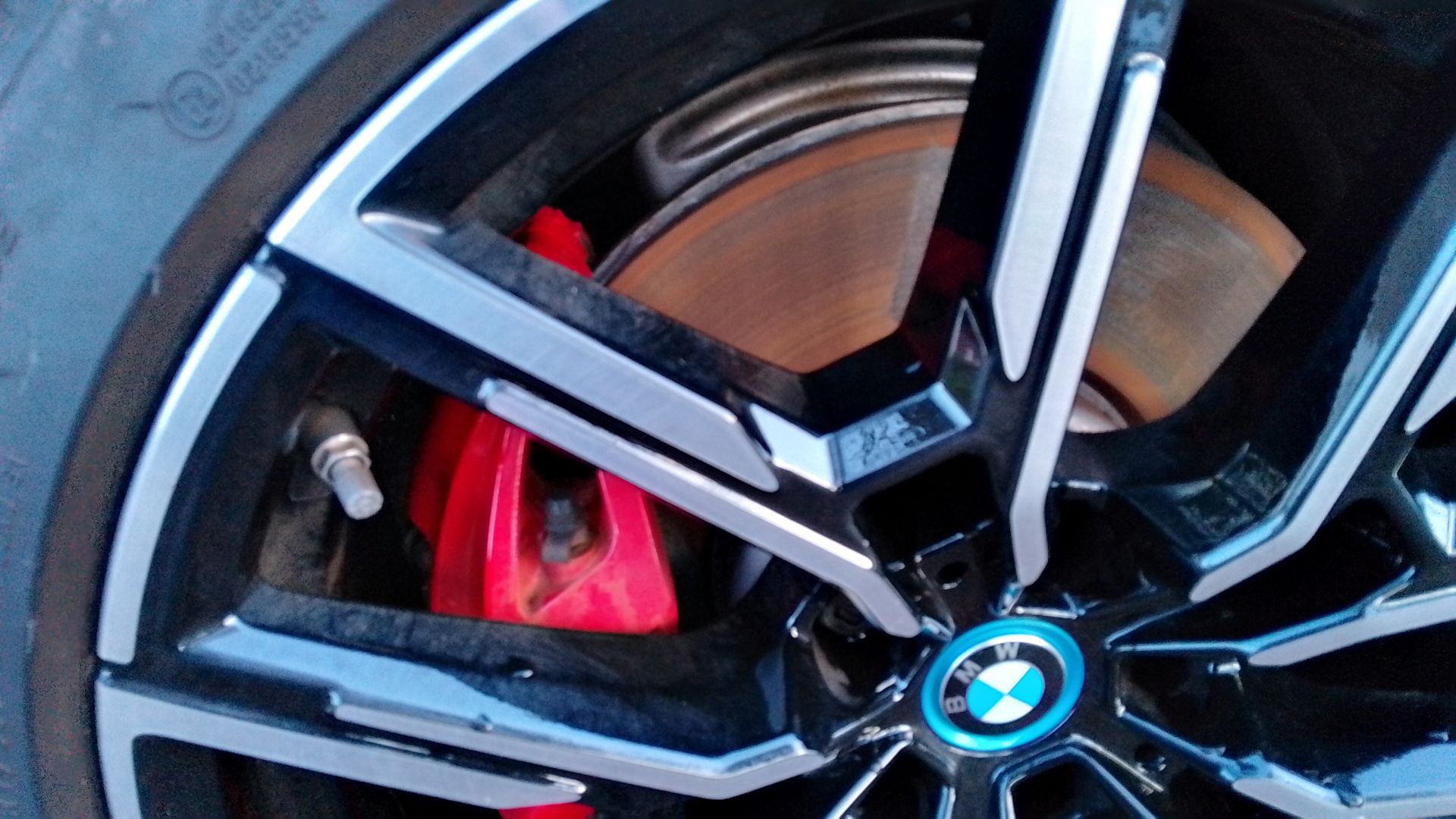
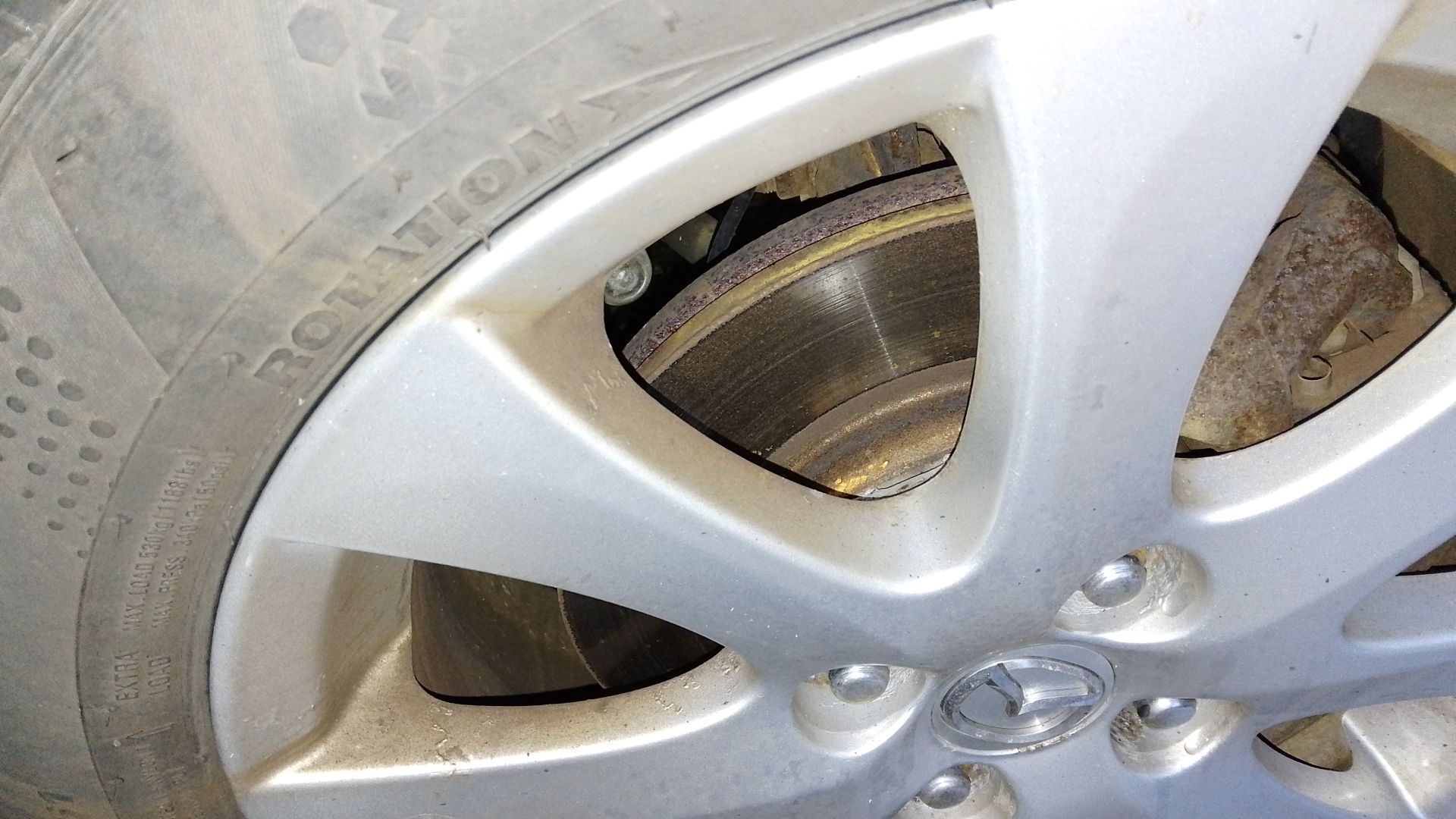
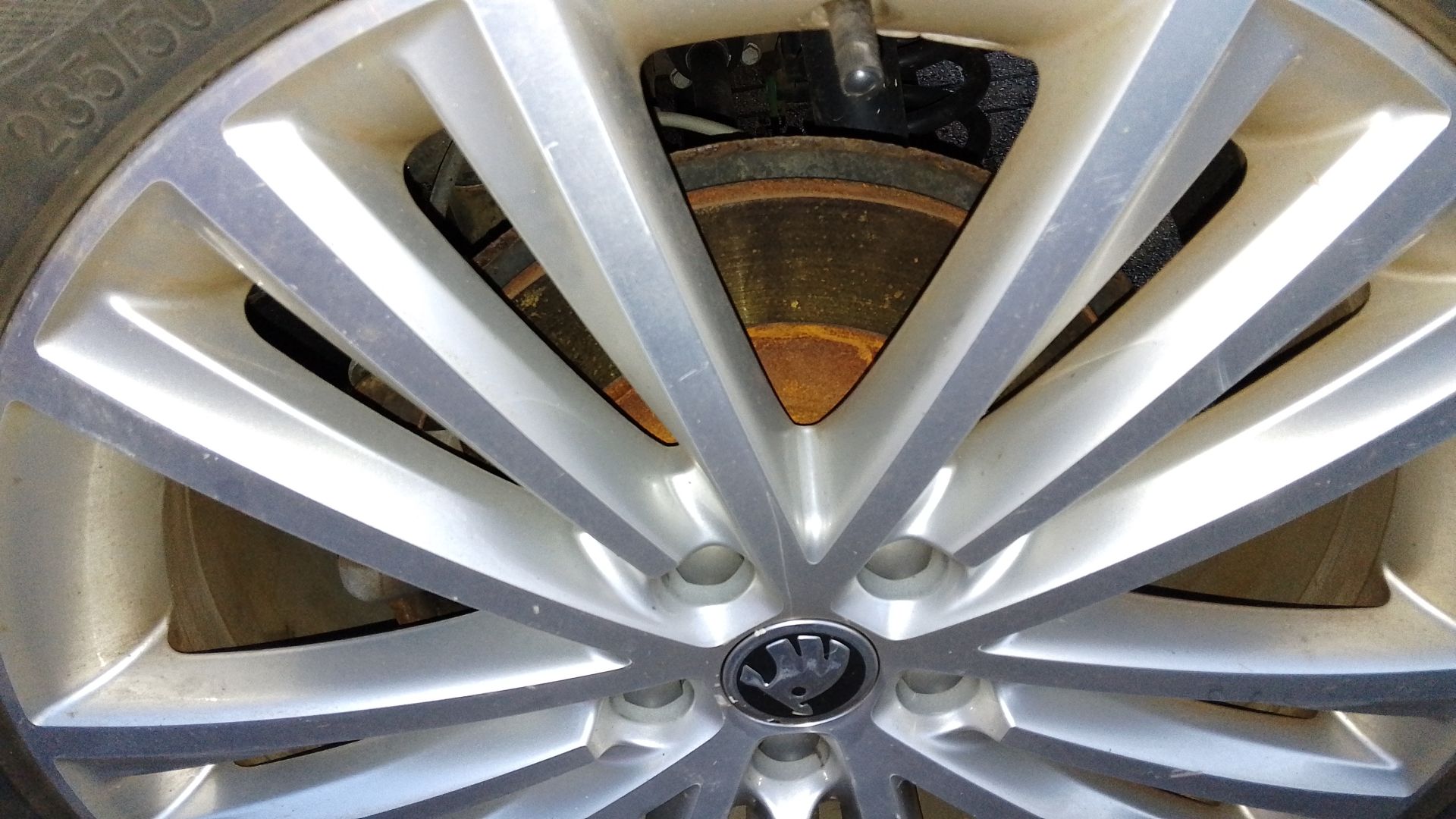
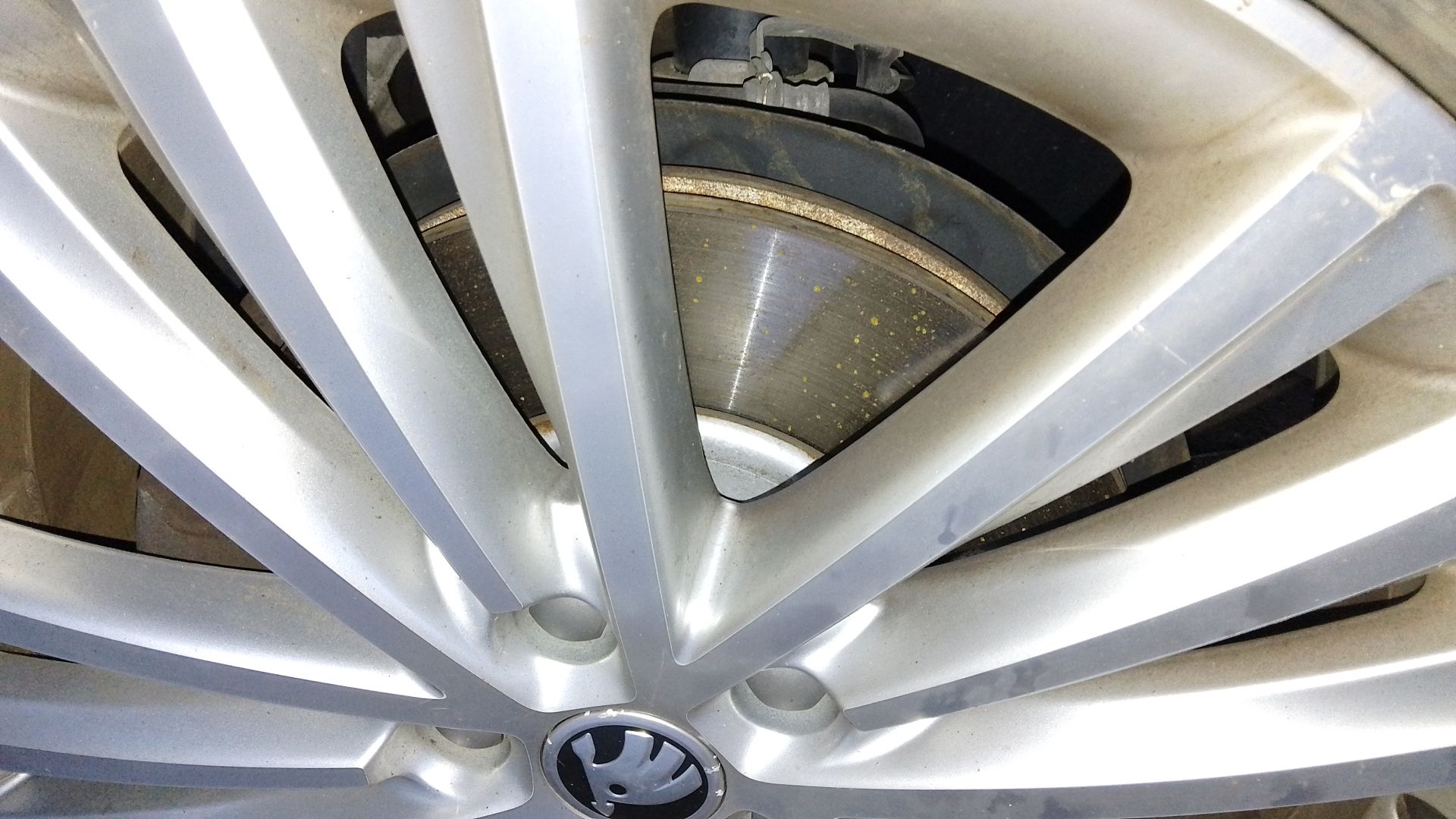
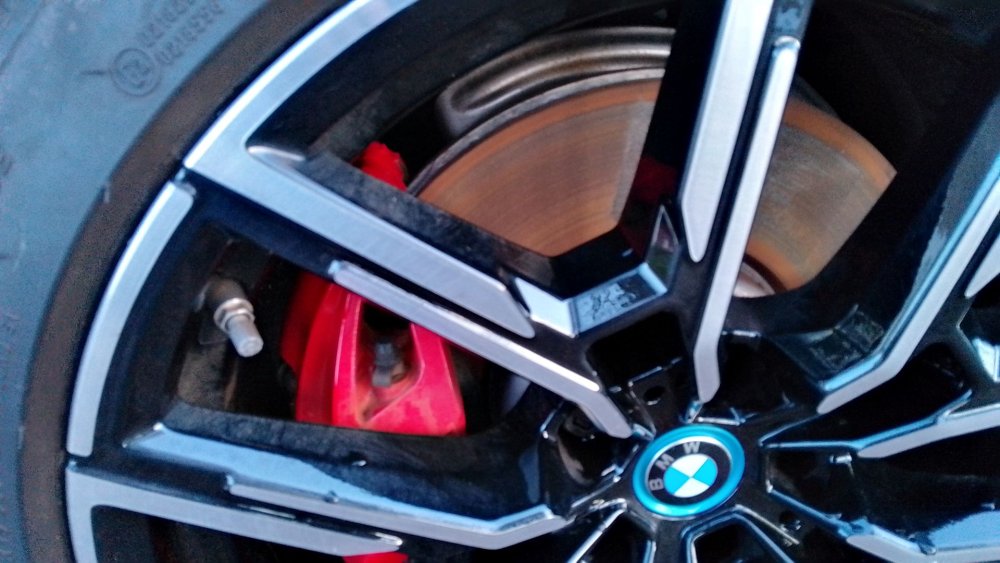
Certainly, none of them are anything that I worry about. First few hundred yards and they'll be cleaned up again on the friction surfaces. To be fair to modern car manufacturers, I think discs and calipers have always done this, but with modern wheel designs, the wheels are so big, and the spoke pattern so open, that you get to see a lot more of the disc and caliper than you would have done on a car 20 or 30 years ago.
-
No! I've had something telling me the collision avoidance radar is impaired (when there's snow on it), but never anything for headlights. (Ours does have the headlamp washers though).
-
I think standard fit is probably "recycled old manhole covers"!
-
How rusty is rusty? A quick tour of our drive this morning, revealed the following: A 2 month old BMW which was driven yesterday afternoon: a 12 year old Mazda 2 (Brake discs are cheap aftermarket about 3 years old), last driven on Sunday morning: a 5 year old Kodiaq rear (Mintex "uncoated" disc fitted about 9 months ago, last driven on Saturday afternoon: 5 year old Kodiaq front disc, Mintex "coated", also fitted about 9 months ago, last driven on Saturday afternoon.
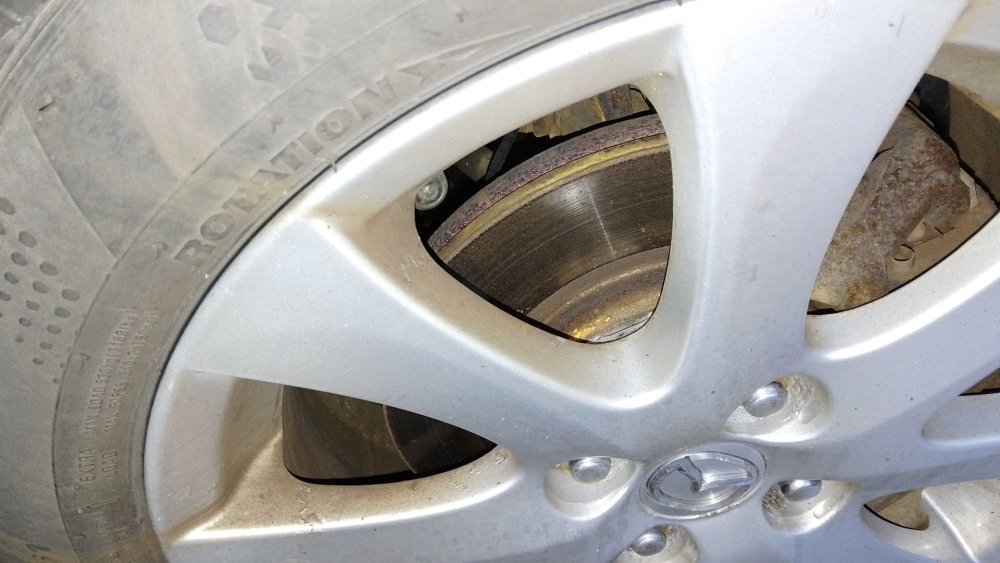
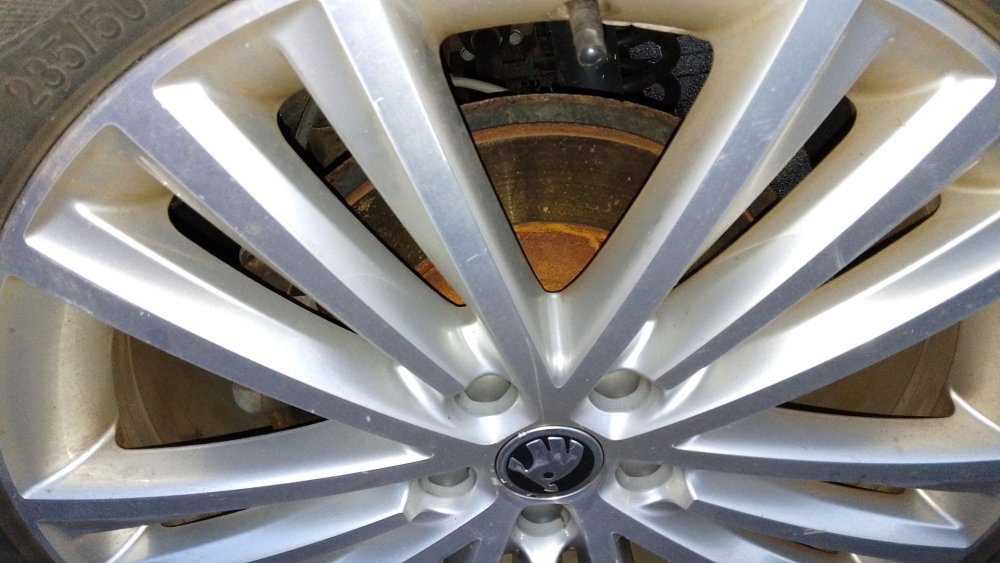
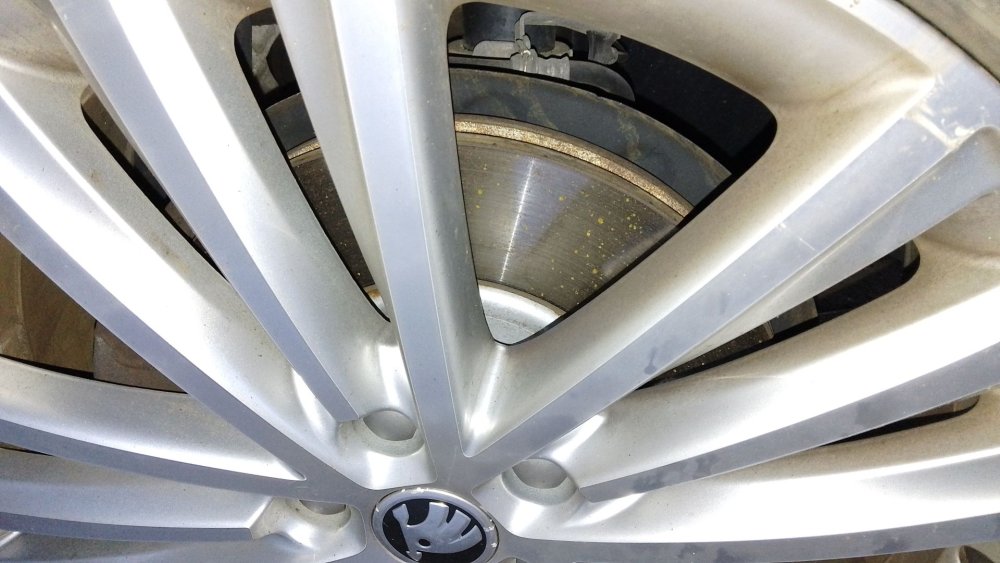
-
Funny enough, my "Sunday car" has dim-dip! However, simply "importing" cars built to EU legislation might not be straightforward. Another of the regulations in the EU's "General Safety Regulation 2" is Intelligent Speed Assist. The UK was heavily involved at the start, but we left before the regulations were finalised and one of the things the manufacturer has to ensure, is that the system can recognise any of the signs from a catalogue of signs collected from around all EU Member States. The UK's signs are, of course, missing from that catalogue. I think we'll start to see small divergences like that, which will gradually make it harder to simply piggyback off the EU regs.
-
No. I think it's unlikely. Legislation is rarely applied retrospectively. Even if it was, the system on your car, might not comply with all the requirements of the regulation at the point in the future where it becomes mandatory for new cars. Lots of manufacturers have introduced some variations of LDWS, LKA or ELKA prior to it being a legal requirement and those systems will be "close to" but not necessarily actually "compliant". (And yes, on our 2017 car, on rural roads, it's more trouble than it's worth). As an aside, by the way, has anyone tried letting it "do its thing" on an empty motorway? I did, a while back, and it corrects the first lane departure very effectively, but tends to over-correct. A few seconds after that, the car will then try to drift into the lane on the other side, so it corrects that too. After a couple of these, it starts beeping at you to "take back control". However, (and I didn't know this), if you continue to ignore it for a couple more corrections, it dabs the brakes pretty hard! It doesn't do it for more than a fraction of a second, so causing a pile-up is unlikely, but presumably, it does it with the intention of waking the driver up!
-
It doesn't help that the terminology differs. LDWS (Lane Departure Warning System), is the one that beeps or vibrates the wheel if you drift out of lane without indicating. "LKA" Lane Keep Assist" is the one that actively provides a steering input when you drift out of lane. This is further complicated by ELKA (Emergency Lane Keep Assist), which will intervene much more vigorously. It needs to work in conjunction with the blind spot detection system, so if you're drifting into a lane that already has a car in it, in your blind spot, it will steer you much more aggressively, away from the car you're about to hit. However, manufacturers are free to "gold plate" the minimum legal requirements and provide systems that actually steer the car and keep you roughly in the middle of your lane (like Tesla). It's further complicated by manufacturers making up their own acronyms rather than using the terms in the regulations. As has been said, the new EU "General Safety Regulation 2" will demand LKA on "new types" of vehicle introduced from last July, and for "all registrations" from July 2024. What this means, is that if (say) Skoda were to face-lift the Kodiaq tomorrow, then unless they change their type approval "type designation", it would not be a "new type". It will be an existing type, first introduced in 2017. That means new Kodiaqs rolling off the production line, don't need some of those systems yet, but will do, if registered after July 2024. If, however, Skoda introduced a completely "new type" of vehicle tomorrow, it would have to comply right now. Also as has been said, the UK no longer follows EU regulations. As of 1st of July this year, a "new type" of car being introduced in GB, will need a GB National Type Approval. (Funny enough, the scheme became "optional" on the 1st of this month)! The "GB" scheme, is, of course, only a "photocopy" of the EU scheme, as it was on 31/12/2020, so it doesn't include any requirements for LKA / ELKA. It will be for the British government to decide which (if any) of these requirements to adopt in the future. However, that becomes a very hot political and economic issue, as well as a very complex one. As GB falls further behind the EU on safety and environmental regulations, safety campaigners will, no doubt, stark kicking up a fuss about it. On the other hand, having lost our seat at the negotiating table where these decisions are taken, if we accept these new regulations, it will be without having had a say in their content. (Which is a pity as it was our very own TRL that was paid by the EU Commission, to do the research into the benefits and costs of these new systems)! But there's more... The EU regulations are in fact, a mixture of United Nations regulations (which the UK is still signed-up to) and EU regulations, (which we are not). So if any of the United Nations content changes, we're bound to implement those anyway! The other problem, of course, is who pays for it. Since the early 1990s, car manufacturers have saved costs by having just one common set of regulations allowing unlimited numbers of sales in any EU Member State. Over the next few months, they're going to be doing much of the same job twice for GB, maintaining two, near-identical sets of approval documents - one for their EU sales, and one for their GB sales. Naturally, the GB consumers will be picking up the tab for that. And here's the rub. If GB diverges from the EU regulations, it won't just be two sets of paperwork, it will be two different specs of vehicle. If the change is a simple one (like building the car with the appropriate hardware for LKS / ELKS and then simply toggling it off in the software for GB spec cars), that's clearly not going to cost much extra. We'll just be paying for some extra hardware that we don't need. But if the regulations diverge significantly in the future, it could start costing significantly more. The most likely effect, (I believe) is that vehicles that don't sell in significant numbers in GB (and are high CO2 emitters), will simply just end up getting dropped from the GB model range because the number of cars doesn't justify the cost of the extra paperwork. Interesting times!
-
Yes, it's a common fault, and yes, it sounds like water pump shroud. They may as well put a new cam belt on it while it's off. It has to come off to do the water pump. The belt is not expensive and that then re-sets the clock for 5 years. Whereabouts in the country is the OP? In my experience, Skoda dealers vary enormously in competence and cost. I prefer to drive 100 miles than use my local one!
-
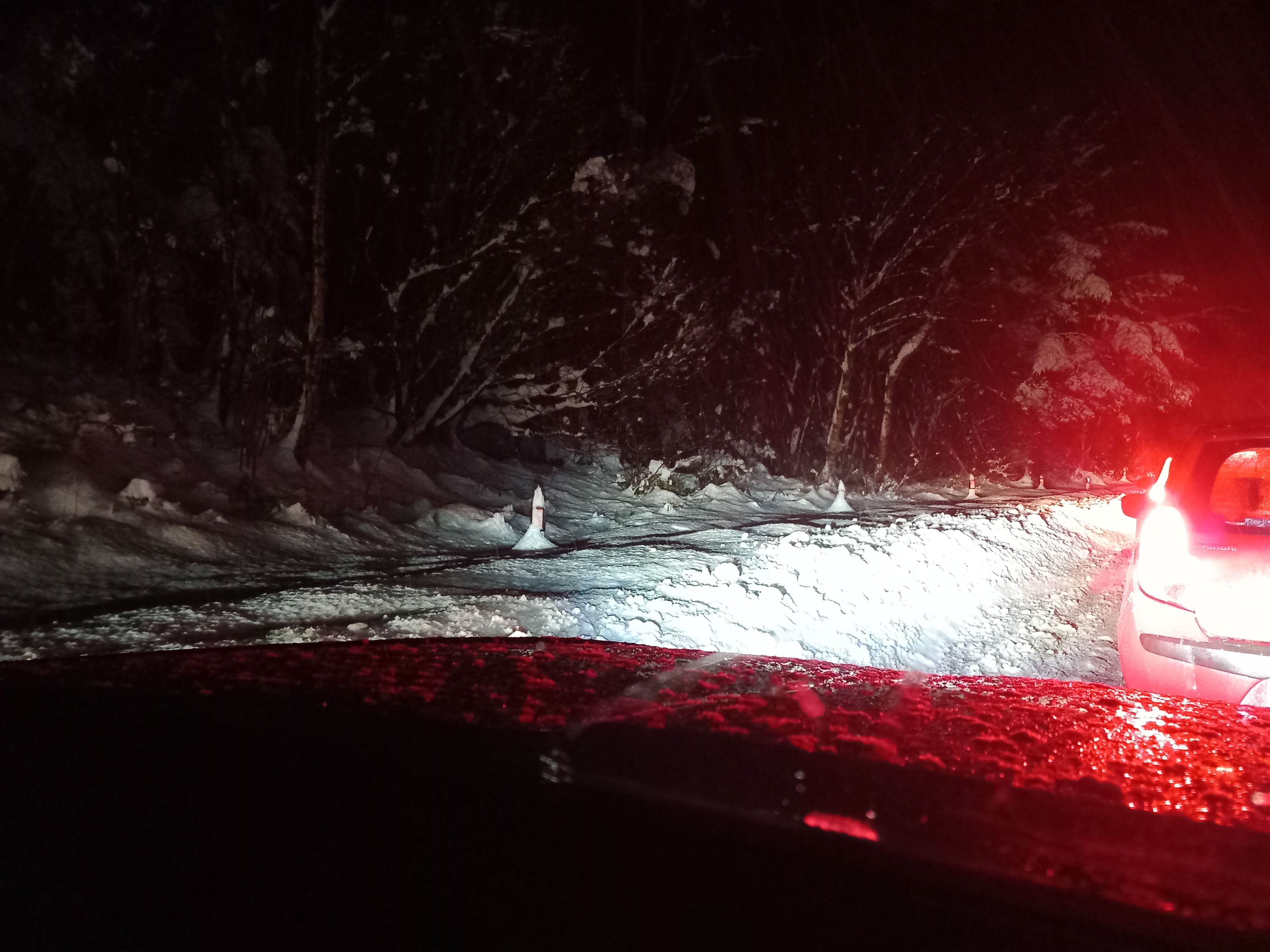
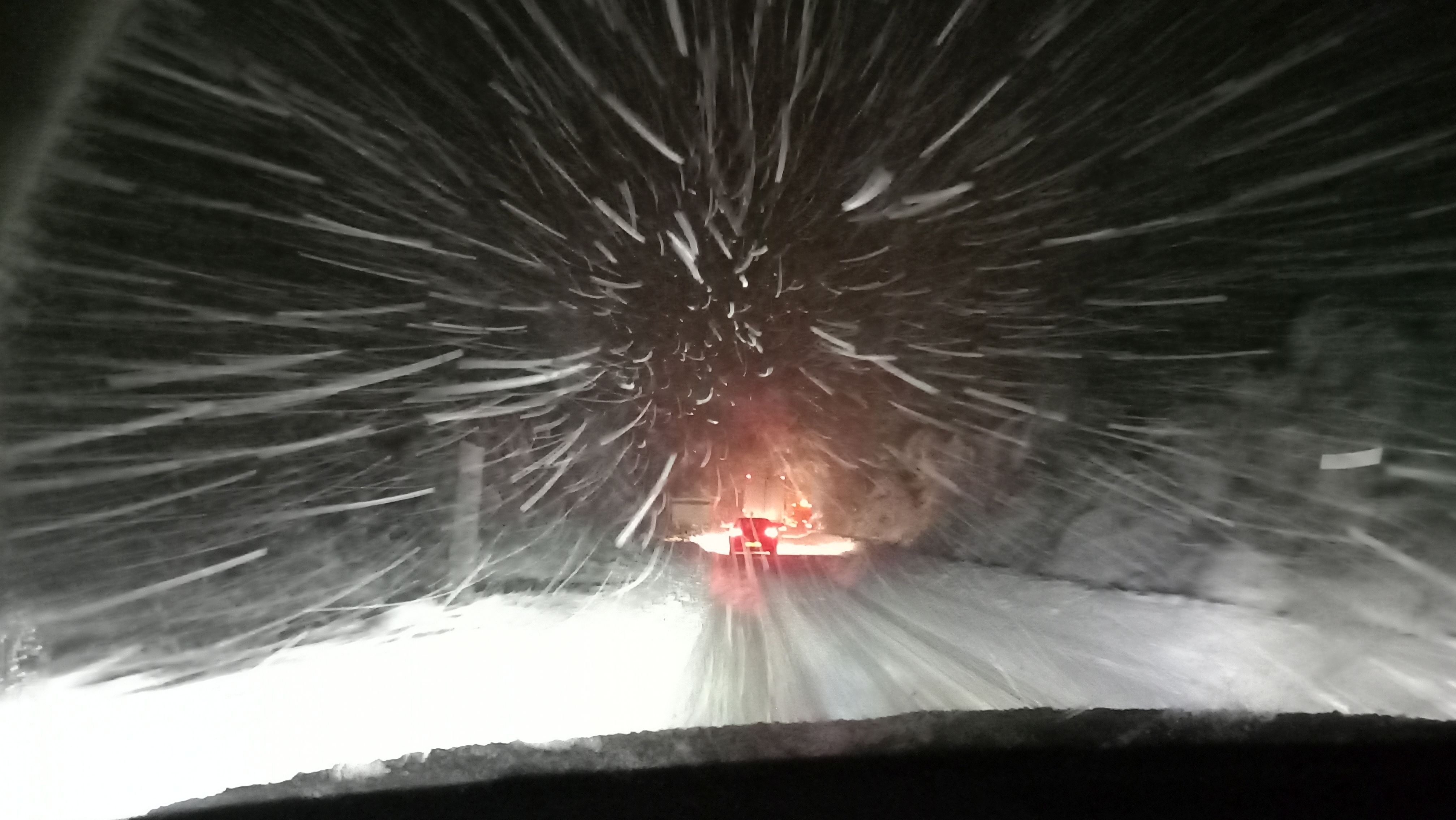
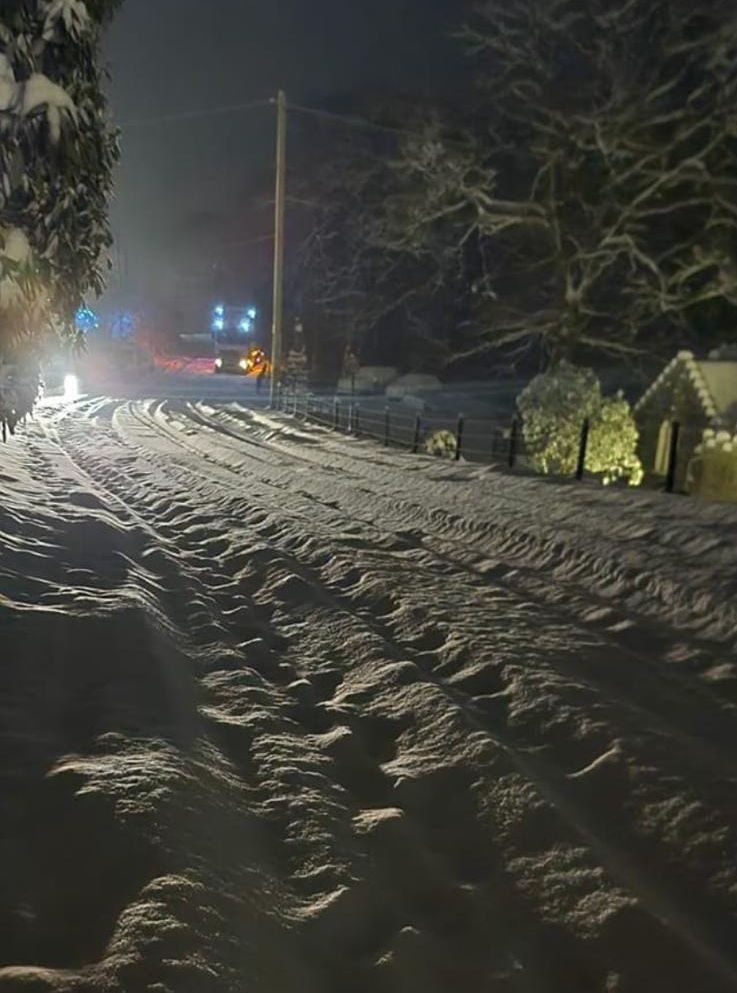
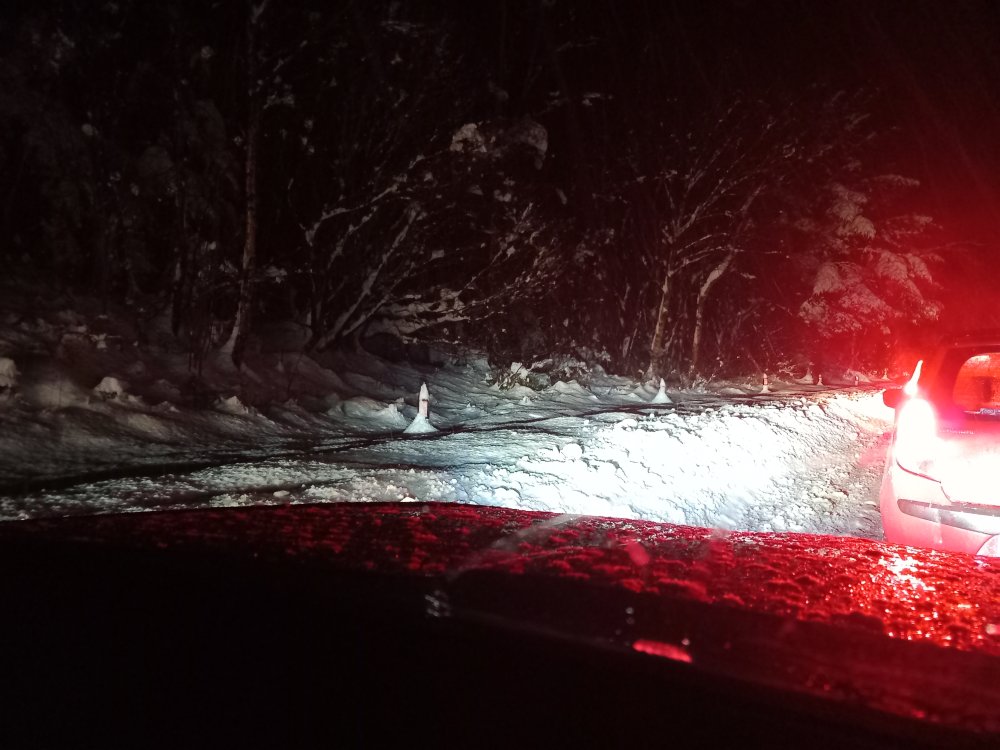
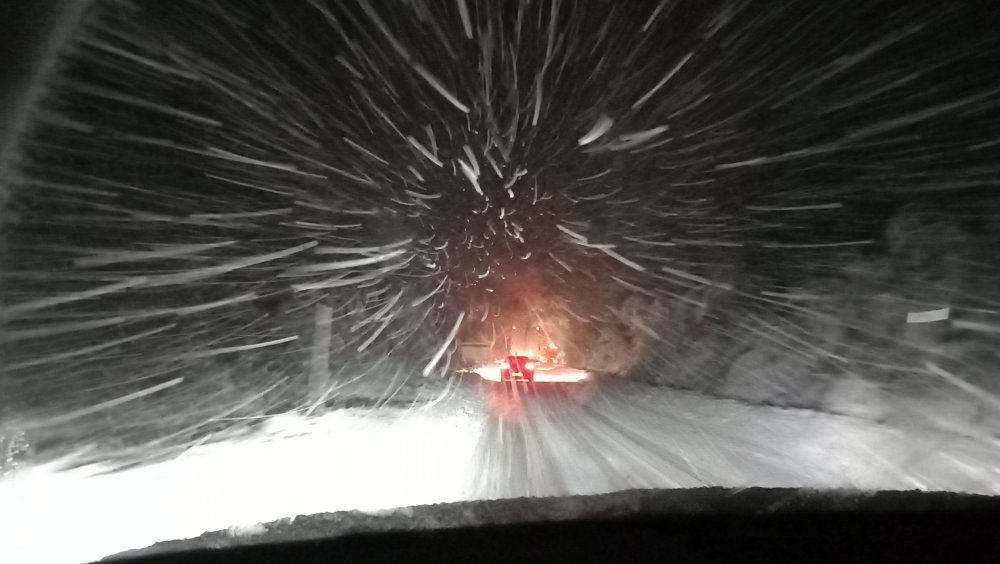
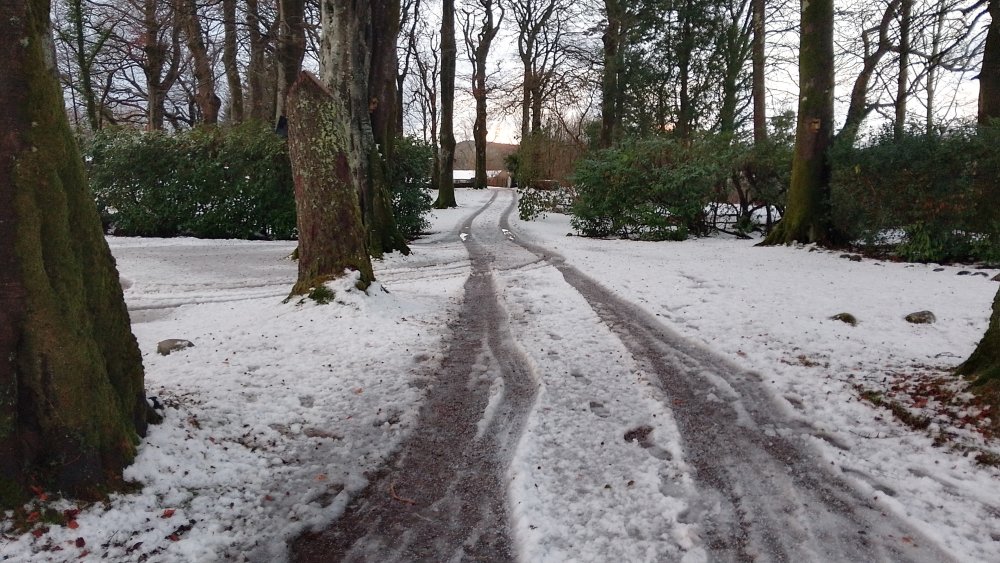
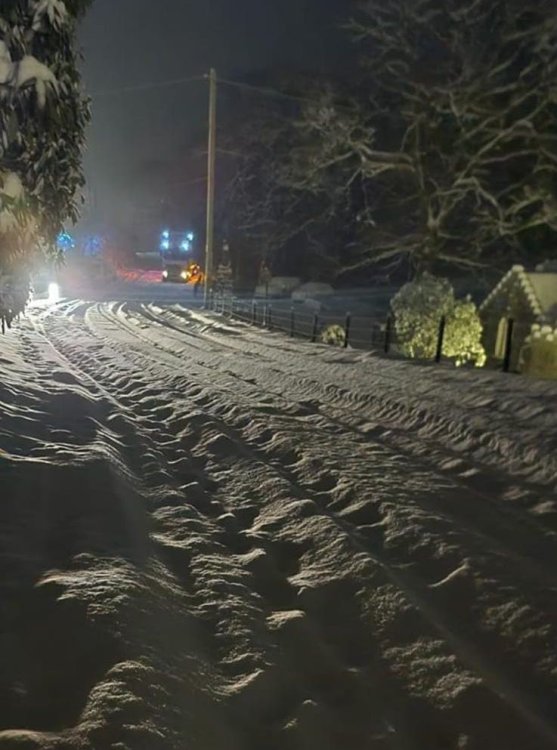
Had to get 5 people plus luggage, from Cumbria to Oban on Friday night. The A82 was blocked with snow, so we tried the A85. Ended up getting stuck for a few hours near Crianlarich because of a lorry that had slid down a hill and jackknifed. Didn't get to Oban until the "wee small hours" but the car did magnificently! 4x4 with winter tyres. No problem with traction whatsoever - even on the bits that hadn't been ploughed. However, it did do something odd... I noticed the lights weren't great, and assumed the lenses were covered in snow but one of them was switching off periodically. Now earlier this year, I bought an OBDeleven dongle and downloaded the fault codes (which could have been in there for a few years, for all I know) and one of them was something to do with a light (transformer, I think?) overheating. I didn't pay much attention at the time, because the lights seemed to work fine, but I'm wondering if the two are related? I'll plug it back in when I get a minute and see if the code has come back. Does anyone have any experience of overheating lights? (Or light transformers). Only other sour note, was a lorry throwing up a stone and cracking the windscreen, but c'est la vie!
-
I've recently given back a Peugeot 5008 as a company car, after a coupe of years. I thought that was a worthy car. 30,000 miles and nothing went wrong. Similar size and internal space to the Kodiaq, more space in the Row 3 seats. Flat floor. Mine was only the 130 horse manual diesel, so it was slower than our 150 horse DSG 4x4 Kodiaq, but it was also better on fuel and lighter. It handled really nicely, in my opinion. An indecently agile car for its size. They do a good auto version. However, the Kodiaq was more refined than the 5008 and although the 5008 had more "toys", the same toys on the Kodiaq worked better. Maybe worth a look?
-
Usually a small amount of noise reduction. Maybe a bit of splash protection if going off-road.
-
Quicker to just give it a couple of licks with a file! I'd have thought that was easier (and more accurate) than trying to wedge coins in each side between the jaws?
-
I've recently done discs and pads at both ends on ours. Because of the lip, you either need to take the lip off locally, with a file and put verniers on there, or you need to use a micrometer that can reach over the lip. My fronts weren't near minimum thickness (2017 car with 35,000 on it), but there was a slight vibration, so I changed them anyway.
-
Do you know how it utilises the pressure?
-
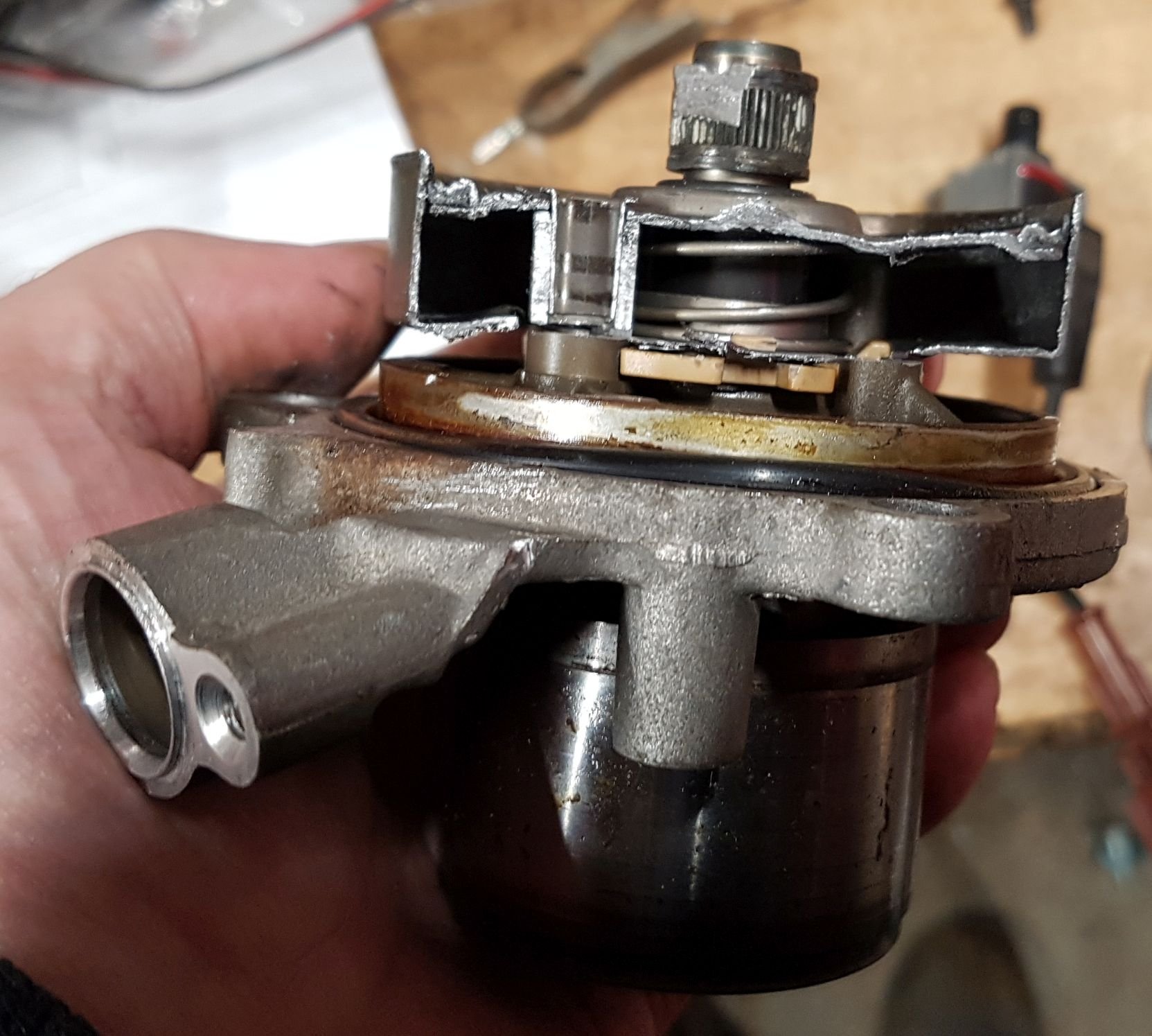
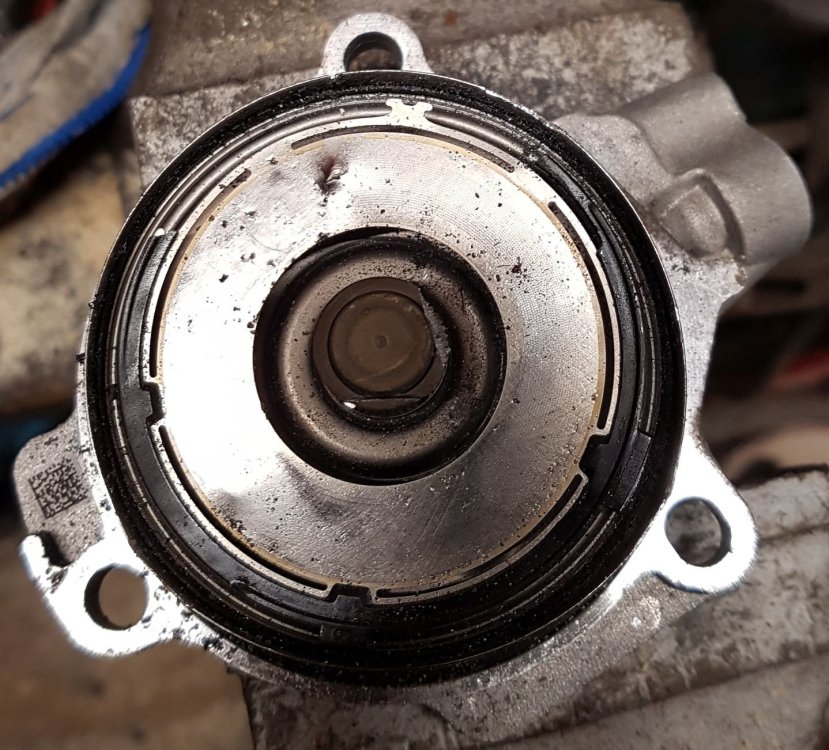
I then put an air line down the hole where the solenoid valve lives. What seems to happen, is that when the solenoid valve opens, it disturbs the balance of pressure between the big chamber formed by the shield and its "lid", and a smaller chamber further down, almost inside the pulley. I have no idea why it's been done like that, but I guess it's to save power. The solenoid will only pull a tiny current, and the actual propelling of the sleeve is done by somehow creating a pressure differential between the large and the small chambers? Seems a million times more complicated than it needs to be! And I can't be sure, but the failure looks like it MIGHT be a slightly leaky diaphragm on the edge of the smaller chamber. (Although I might have killed it by poking the airline down there at 100 PSI...)! 20221101_213047.mp4
-
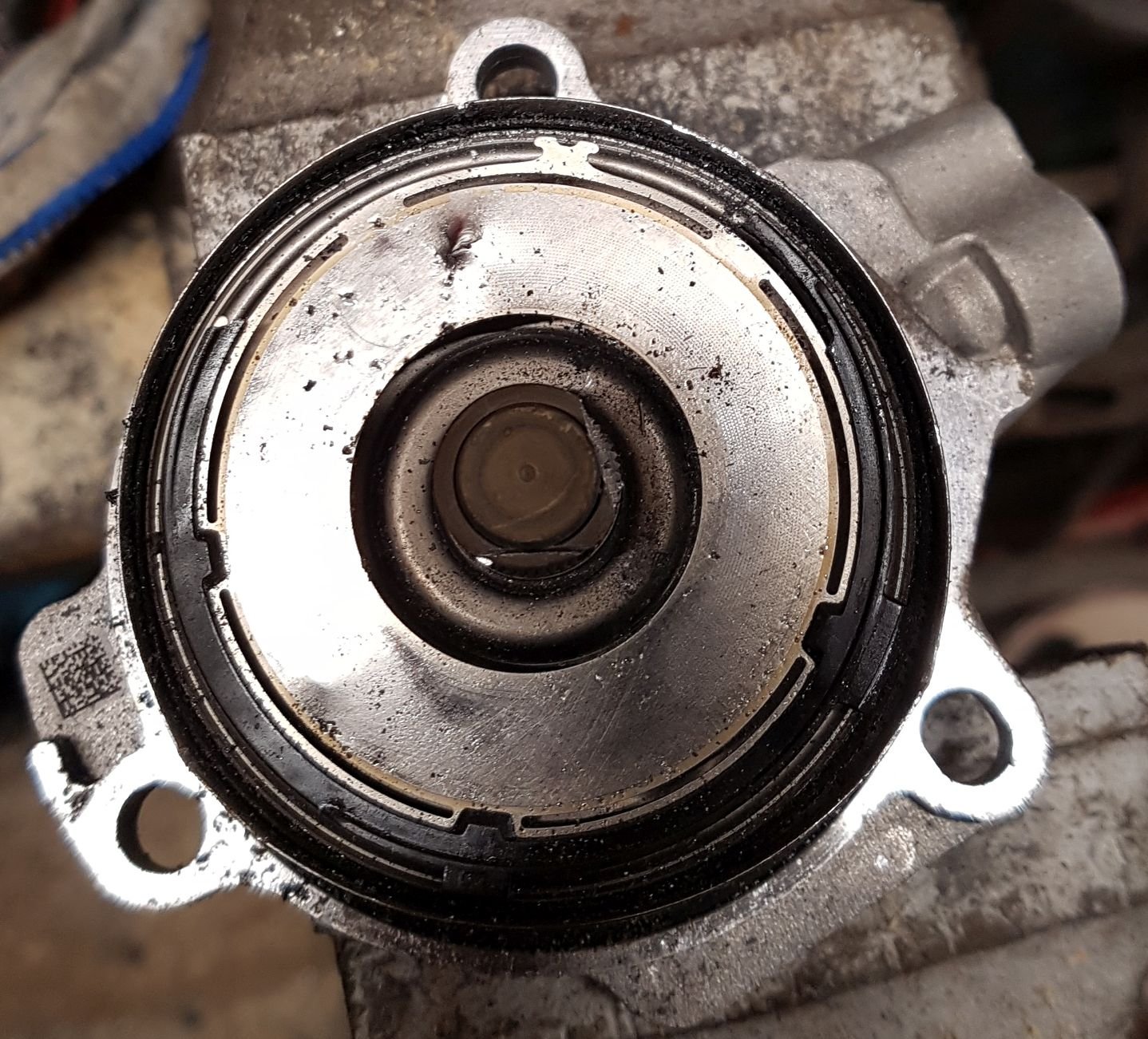
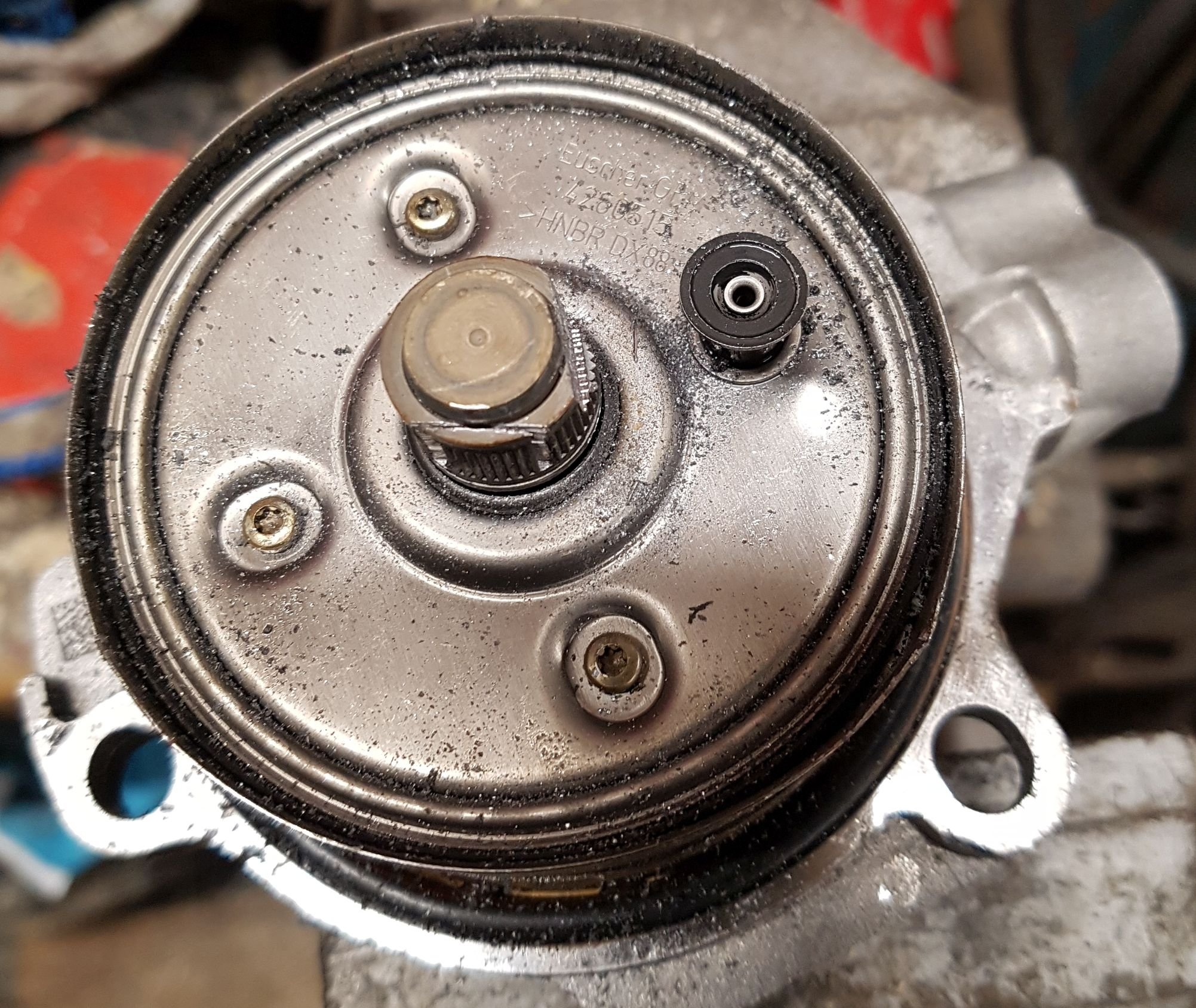
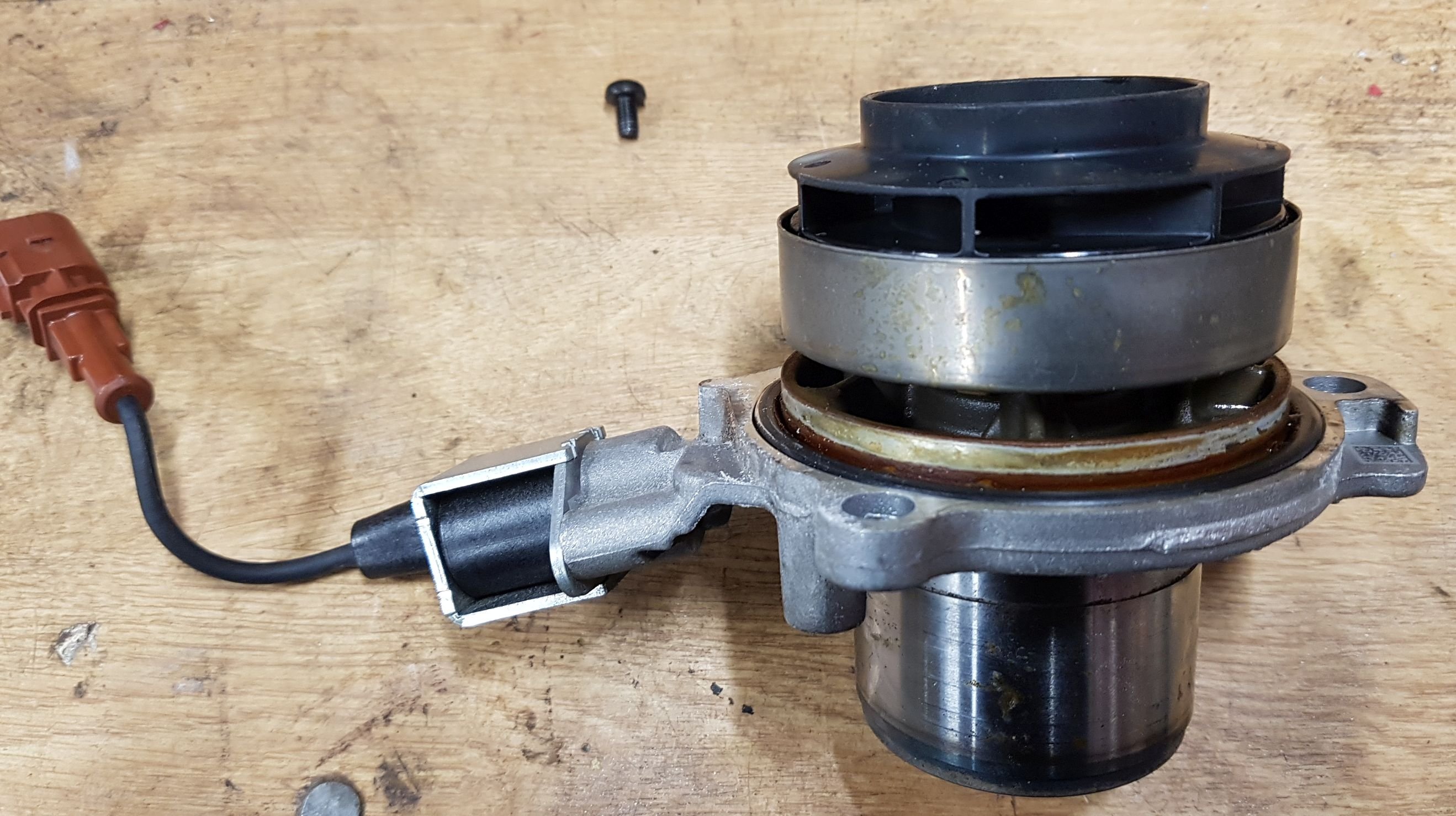
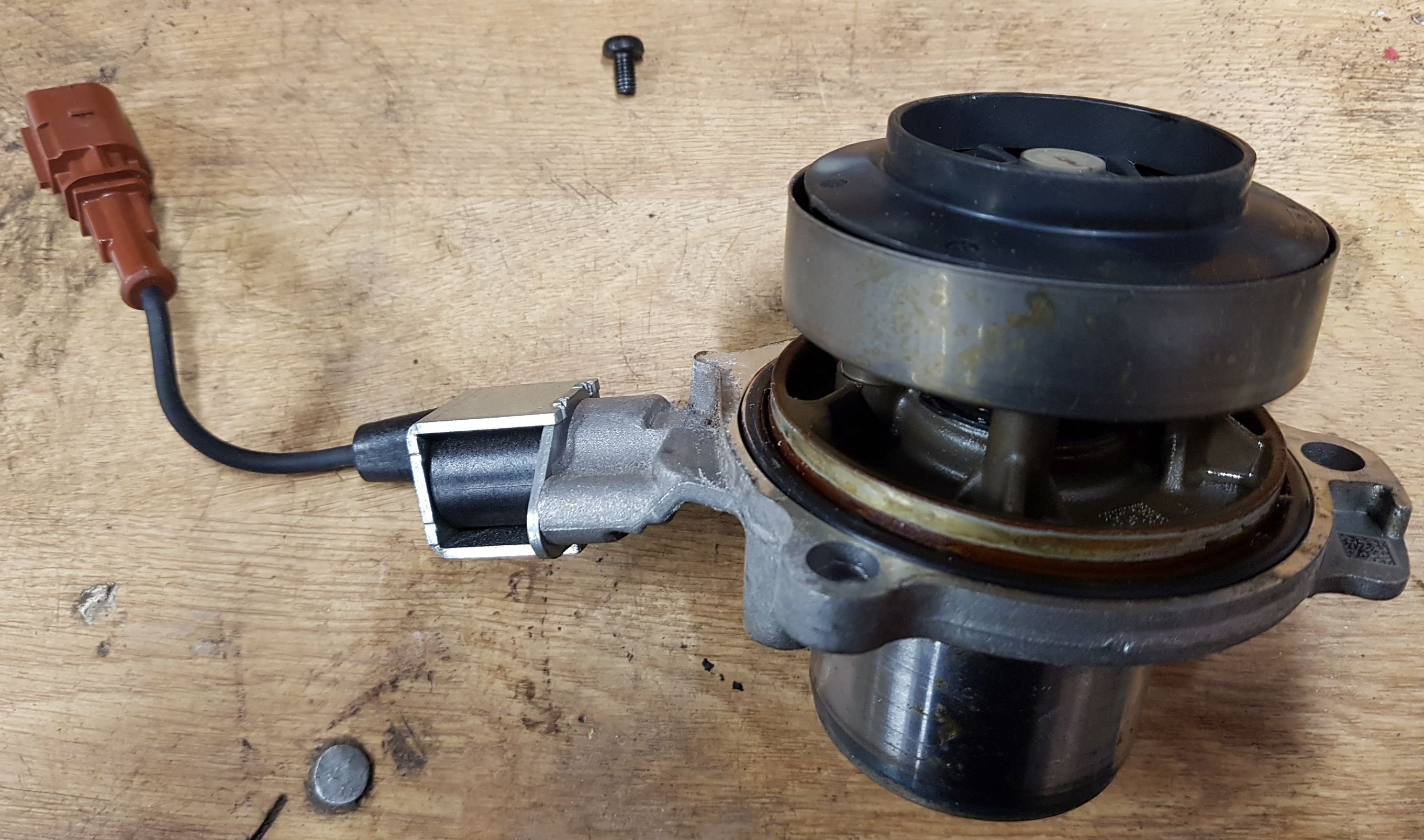
Now, I assumed that the little solenoid on the side, pulled on some kind of link rod and mechanically moves the shield, but no! It's a solenoid valve, which allows water to pass through an orifice (or not). The impeller is moulded on to the shaft, so I cut it off and underneath, it's monumentally complicated!
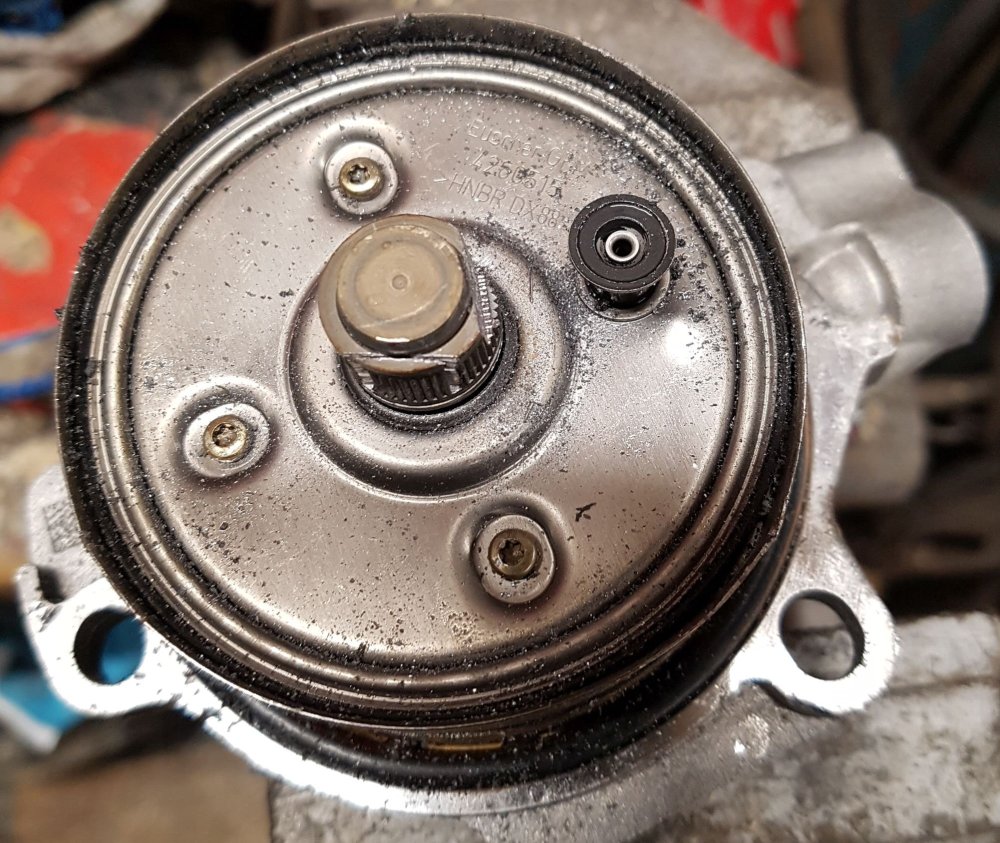
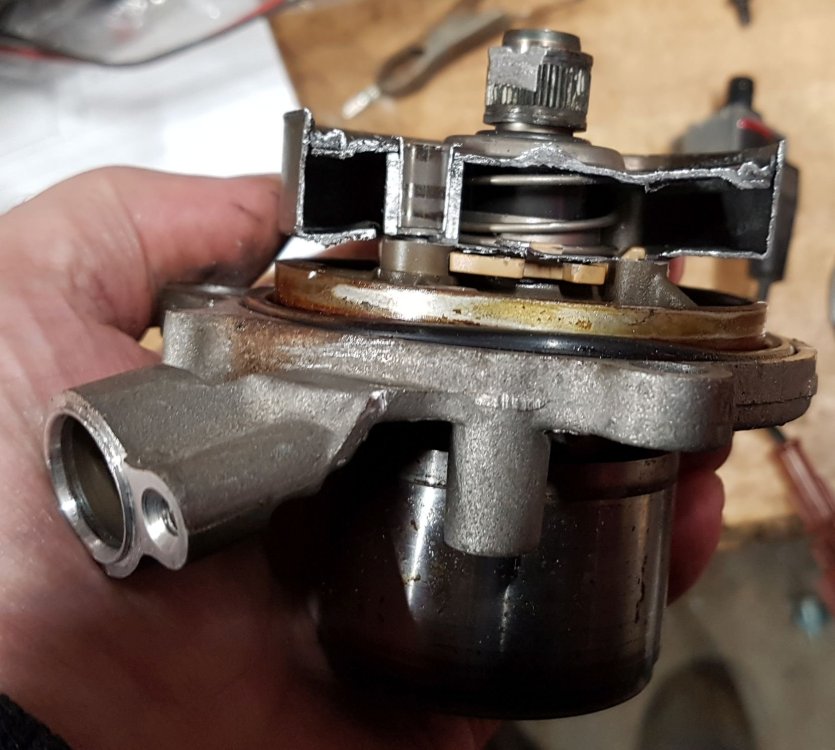
-
Well, that's not at all what I expected! Here's the water pump with its shield retracted (i.e. full cooling) And here it is with the shield extended (minimal cooling)
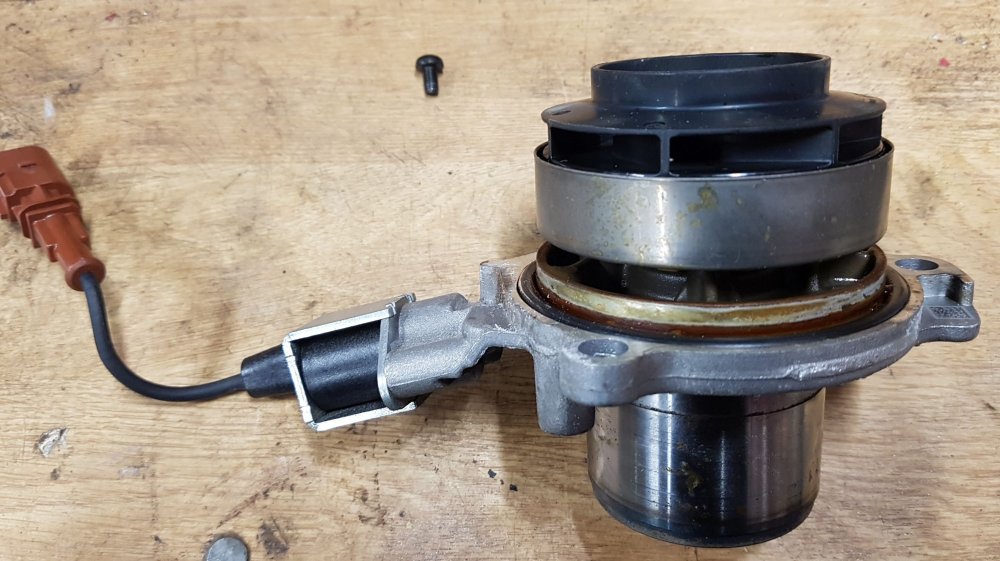
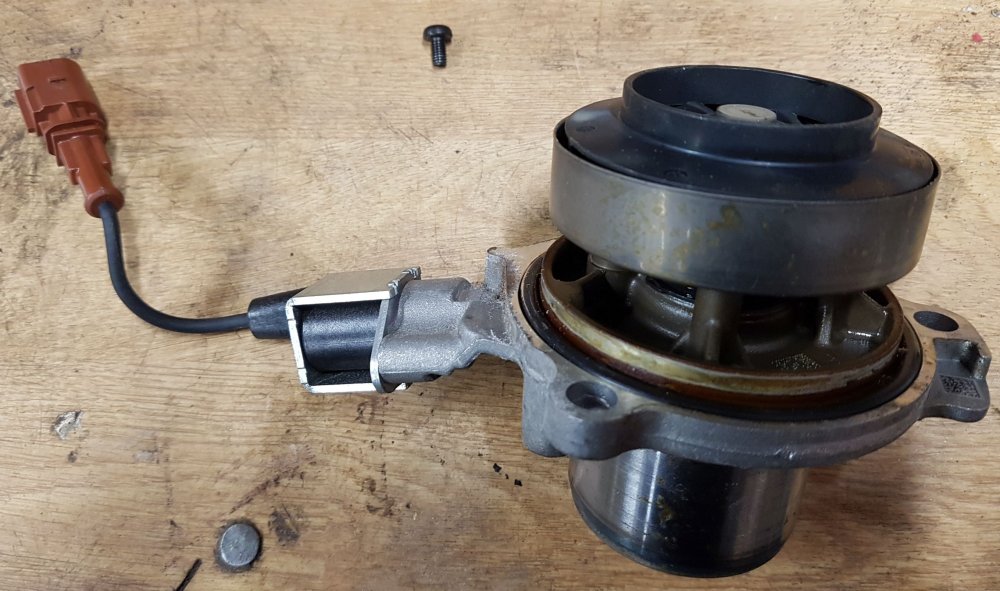
-
That's a result! We had the cam belt and water pump done the other week and I asked for the old water pump back. The shield in there does seem to be stuck! I've tried putting a battery across the contacts for the little solenoid and the shield won't move. I'll post up some photos when I get a minute.
-
People who race in classes that specify "road" tyres (rather than slicks) will sometimes pay someone to buff the tyres down to somewhere close to minimum tread depth. The cars handle (and grip) better without the tread blocks distorting as much. Obviously, you need to be quite rich to buy a new set of tyres and then pay extra to have them buffed down to almost worn-out, but they wouldn't do it if there wasn't a competitive advantage. Getting back to the Kodiaq, they're so heavy that I wouldn't hesitate to run our "summer" tyres down to the legal limit. The danger of aquaplaning isn't so bad as the vehicle gets heavier. I can remember driving TVRs in the early 1990s in the wet, very timidly on the motorway, if the tyres were getting a bit thin, with Citroen 2CVs overtaking me on their skinny little "bike tyres" without a care in the world! At present, we're on Toyo Proxes Sport SUVs in the summer and Vredestein Wintrac Pro in the winter. Originally it was on Pirelli Scorpion Verdes, and had just had the two front tyres replaced with the Toyos when we bought it, so it looks like under the previous owner, the front Pirellis lasted 22,000 miles. Too early to say how the Toyos or the Vredesteins are lasting on our, but it doesn't get driven hard at all.
-
No, none whatsoever! OK, the rear brakes don't do that much, but I was genuinely surprised. There's a very small amount of judder, but that's from the front brakes - which I've also just replaced.
-
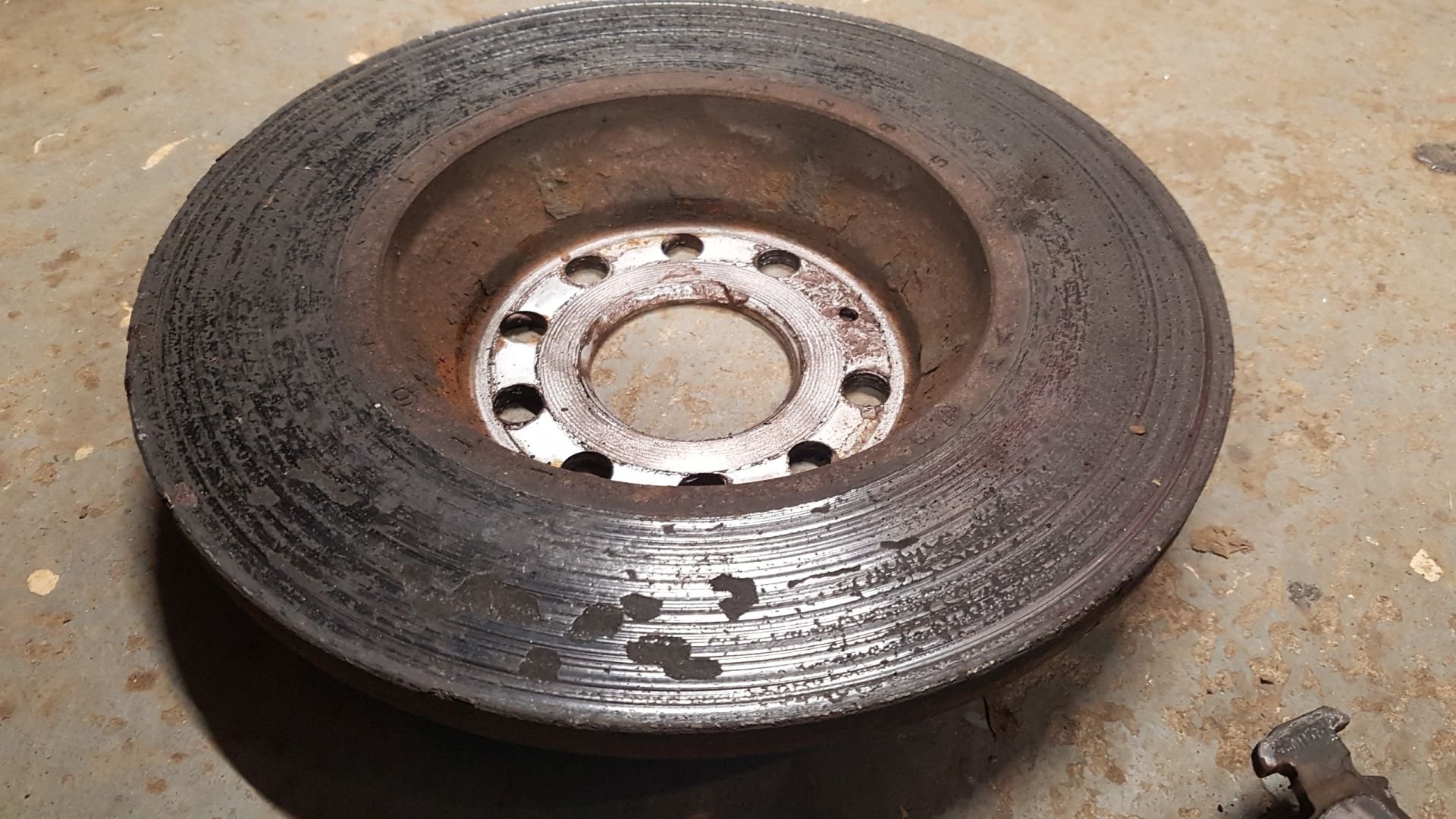
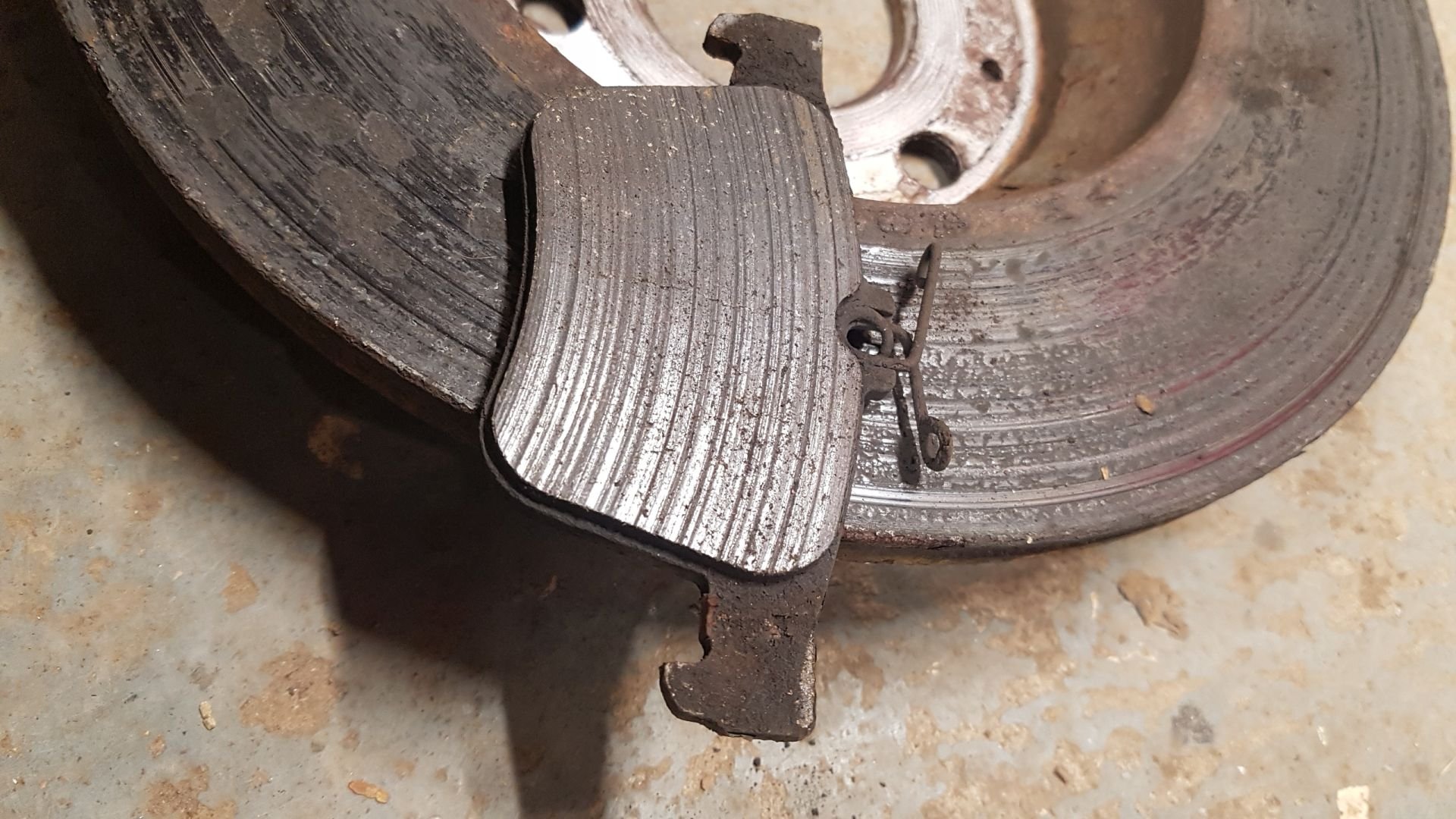
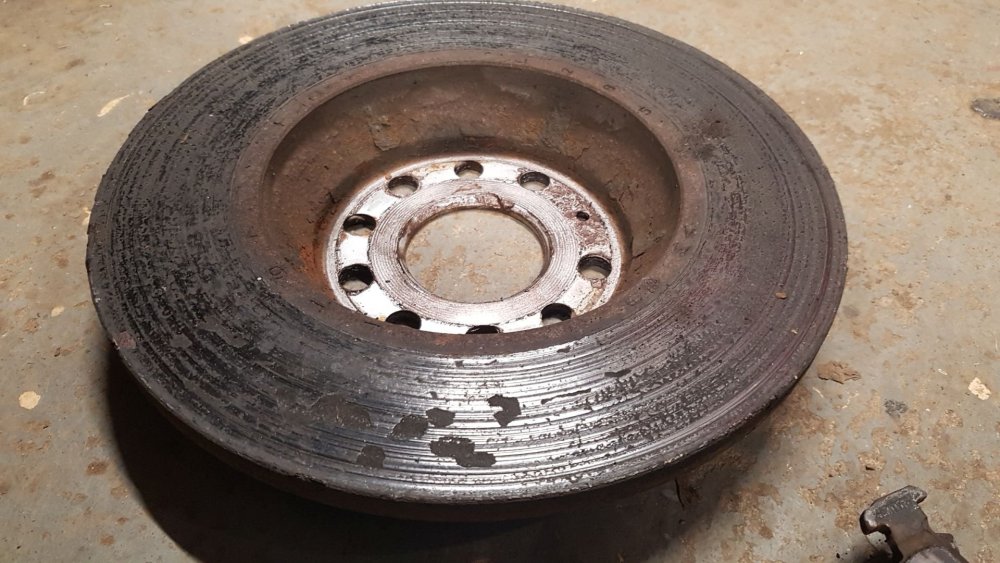
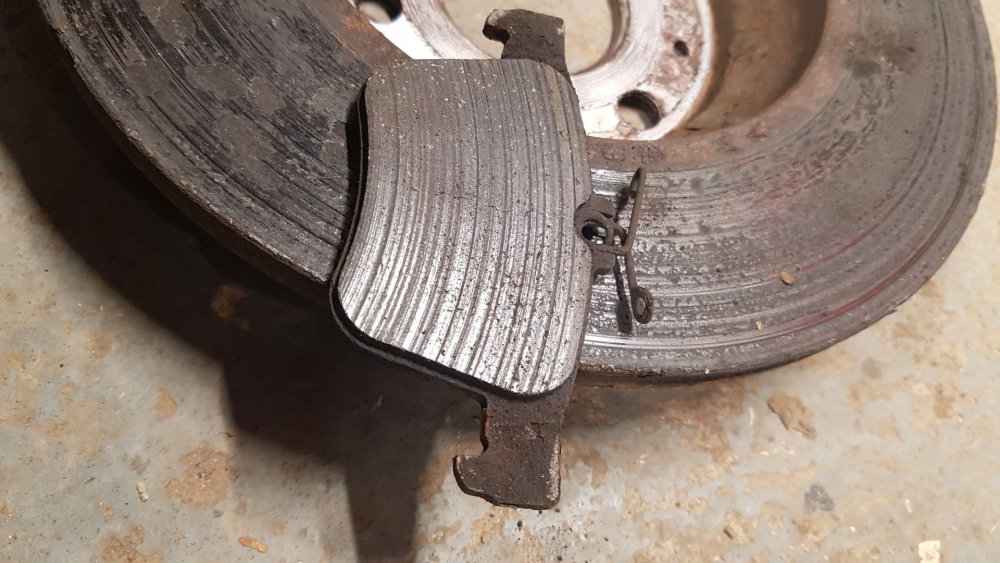
I have indeed, thanks. However, in case anyone on here runs into the same problem, it was my phone! It's a hand-me-down from one of the kids, a "Blackview" (Chinese). Although it had worked fine for reading fault codes and live data, it seems this operation was beyond it. I downloaded the app to a Samsung Galaxy S7 and it all worked fine. Also, if anyone is wondering, OBDeleven charge 10 "credits" for winding back the calipers, but it's another 10 credits to close them afterwards! I don't mind the cost, it's only a couple of Euros for each, but when it's 1.00 in the morning and your hands are filthy, the very LAST thing you want to be doing is pi55ing about trying to top up the credits on your phone! The other irritation (though I can't really blame a Chinese mobile phone company for that), was that three of the four rear pads had a good 10,000 miles left on them. They were about 5mm thick. However, the inner pad on the driver's side, was down to about 1.5mm. Originally, I thought I might have had seized caliper slides, but they were fine. The inside surface of the disc was truly appalling! Not only ridges (which I can live with), but lumps missing out of the surface, which were just "milling" the pad material away! 5 years and just 36,000 miles, and it looks like this!
-
Unfortunately, I seem to have fallen flat on my face at my first attempt! I've connected the (basic) device, bought 10 credits, gone to "workshop", selected "brake pads replacement" and I just get a message saying "not supported"! Help!!!! What am I doing wrong?