Kostas123
Members
-
Joined
-
Last visited
Everything posted by Kostas123
-
At least from the manual for my engine (which is different), limp mode is entered when the high pressure pump fuel dosing valve fails, then it revers to the fuel pressure control valve within the fuel rail itself (my engine uses common rail), however the failure of the low pressure fuel pump would make the engine quit completely. Of course there are many other factors that could lead to the the low pressure pump being the culprit after all, however almost every single diagnosis can be made without spending money on parts provided that the person diagnosing understands how the system works and has time to think and verify things. So either the place you are going to services way too many vehicles for them to actually get to know any of it, or they simply want you out of the door as soon as possible. Neither is OK.
-
I've also started my car repair learning journey with the Rapid. Getting proper repair manuals helps immensely. I found most of Rapid manuals from vwts.ru, however the engine manual wasn't there so I had to use google and found an Audi manual for the same engine. From what I know changing the coolant needs a lot of equipment. My engine (1.4 TDI) needs vacuum pulled on the system and the car computer needs to be set in bleeding mode for it to evacuate all the air due to large amount of one-way valves and three coolant pumps. You would need a compressor, special bleeder (looks like this) and a way to interface to the car computer. Engine oil change is a lot simpler, however resetting the service reminder by holding buttons on the dash turns off the engine oil quality sensor and puts the car into fixed intervals instead of intelligently measuring oil quality and your driving style (long vs short journeys). So having a proper computer interface is useful, though it's definitely not necessary for this job. Cheap readers won't help you, what you need is VCDS. Cheapest HEX-V2 interface costs $200 and lets you program 3 cars (but scan indefinite car error codes). China produces older HEX+CAN clones for ~$20 but of course instead of chinese creating something new, they simply pirate the official software so you won't get any help from us about those. You can also change the brake fluid easily, doesn't need any fancy tools. Though it's best to have a bit of negative pressure on the clutch bleeder since it's hard to reach and hard to shut it quickly to prevent air from getting in (of course this is only valid for manual gearboxes).
-
The simple truth is that if the repair shop is out of ideas and simply wants to shotgun replace all related parts, you really need a different shop (hopefully one that is better).
-
Could be the same thing I had. Does it start overheating but then fixes itself (i.e. by the time you reach the garage it's no longer overheating)?
-
The Rapids with the display on the right in the screenshot do have the buttons on the stalks to switch display modes. Was cruise control retrofitted in your Rapid? Anyways, you can try disabling all display except for speed in the infotainment, perhaps it will switch over to it.
-
DRLs are supposed to turn on when the light switch is at 0. If you have a touchscreen radio, there should be a DRL option within the car settings (if I remember it correctly). Non-LED Rapids use the main, "long" beams at a low power level as DRLs, so I don't see why it can't be programmed in into a non-DRL car.
-
I think I have the same thing. Haven't had the chance to diagnose, those looking under the steering wheel everything looks tight. Perhaps something under the bonnet?
-
but it still mainly runs from the main coolant pump, even with the auxiliary electric pump...
-
I had the sleeve issue on my 1.4 TDI. However, if the coolant pump is stuck closed, then how does the oil get cooled? The electric pumps seem pretty far away to pull any meaningful coolant thru the oil cooler...
-
I just bought ones that match the OEM code. The auto-opening is usually done with additional springs that go on top your struts if I remember correctly.
-
Does the MY16 Rapid Spaceback (so after MQB computer upgrade) need SwAP activation for the regular (non-distance) cruise control? I thought the stocks 6C0953513C, the correct clutch pedal sensor, some wires and few bits flipped with VCDS will make it work, but looking at Google it seems some cruise controls need SwAP activation at the dealer (for features that my car computer already has??). Is this actually needed on my car, or is it something only required on fancy ACC systems?
-
Swing is the cheapest multimedia available so I can't see it coming with carplay.
-
Labas! I 'd also be interested in this upgrade. Though if you are removing the steering wheel, wouldn't it be a good idea to do the cruise control at the same time? For Rapid programming I've found a great PDF (hopefully the link is allowed) : https://www.drive2.ru/users/prog-san/ It's in russian so I use deepl.com to translate it. The site needs registration but I managed to google the name of the file and found it somewhere. Just make sure that the version is latest (v1.1 as of now)
-
The issue seems to be resolved. I went to a repair shop to get the main belt replaced (since the car is 7 years old anyways), which includes the pump replacement. I haven't tested the heater (since it's summer), but from the few drives I've made with the car, the temperature seems to stay where it should be now. Seems like the diagnosis of the pump was indeed correct!
-
Can be done thru the head unit if it has car settings
-
Is European ERWIN still proving PDFs? I've read online that in some regions ERWIN is only showing repair instructions as an HTML page, so I'd like to know before paying for an hour to do my download marathon...
-
I'll try to get the main pump replaced first before I try to tackle any smaller items - maybe the main pump replacement will fix the cabin heat as well. Seems if the aux pump works, the heat should too, so perhaps a simple electric test would tell everything I need to know about it. Though by the fact that heat does exist, the pump works at least to some extent. Thank you very much for helping me!
-
It air gushing and fluid moving, might be negative pressure, might be positive pressure - I really don't know.
-
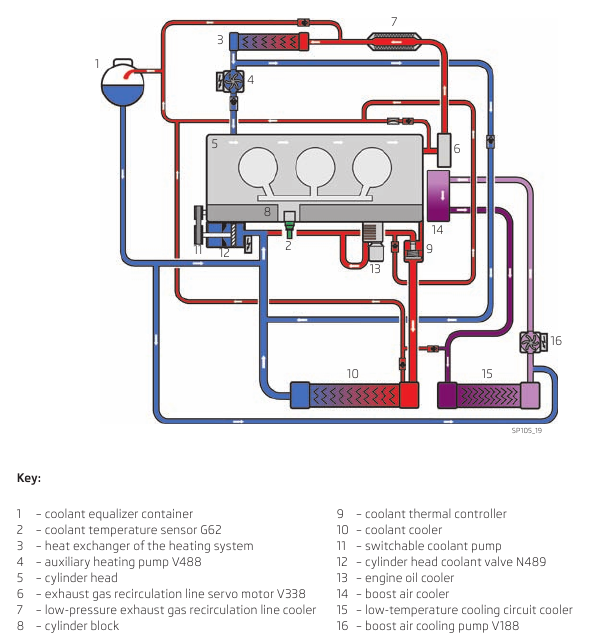
It seems like the heater core (marked 3) can only get circulation from electric heating pump (marked 4) pulling the coolant thru the heater core and EGR components (6 and 7) into the engine. On one manual 6 is called EGR line servo motor V338, and on other manual it's called high-pressure EGR cooler. Number 7 is called the low-pressure EGR cooler on both manuals. Could the name "servo motor" imply it can restrict the flow within the line on-command? The air pressure I get is when the engine is cold (usually after a night), I never tried to open it when the system temperature is anywhere near 90C. I wonder if I have additional issues with cooling, hopefully not...
-
I did more driving and the cabin heat is just intermittent. No idea why, maybe it thinks that there is heat from the main loop and doesn't turn the aux pump? Though I don't know how the fluid would reach the heater core without the aux pump being on.. Anyways, the coolant hoses stay cold and the engine gets hot, but after a bit of driving the coolant starts flowing, bringing the temperature down (though not completely to 90C). Most likely it's the infamous "controllable" coolant pump failure, though I guess the thermostat could also be sticking. Doesn't matter anyways since the car is seven years old with its original toothed belt, might as well do both the pump and the belt at once.
-
I successfully removed it. Fortunately or unfortunately, the bag stayed completely sealed. Though I'm sure that the way I removed it would have spilled everything left into the tank if it had split open
-
Thinking more about it, the bag didn't feel as full as in the pictures of other people. It felt like I could remove it with my fingers, I might just do it... Hopefully won't drop it into the tank itself
-
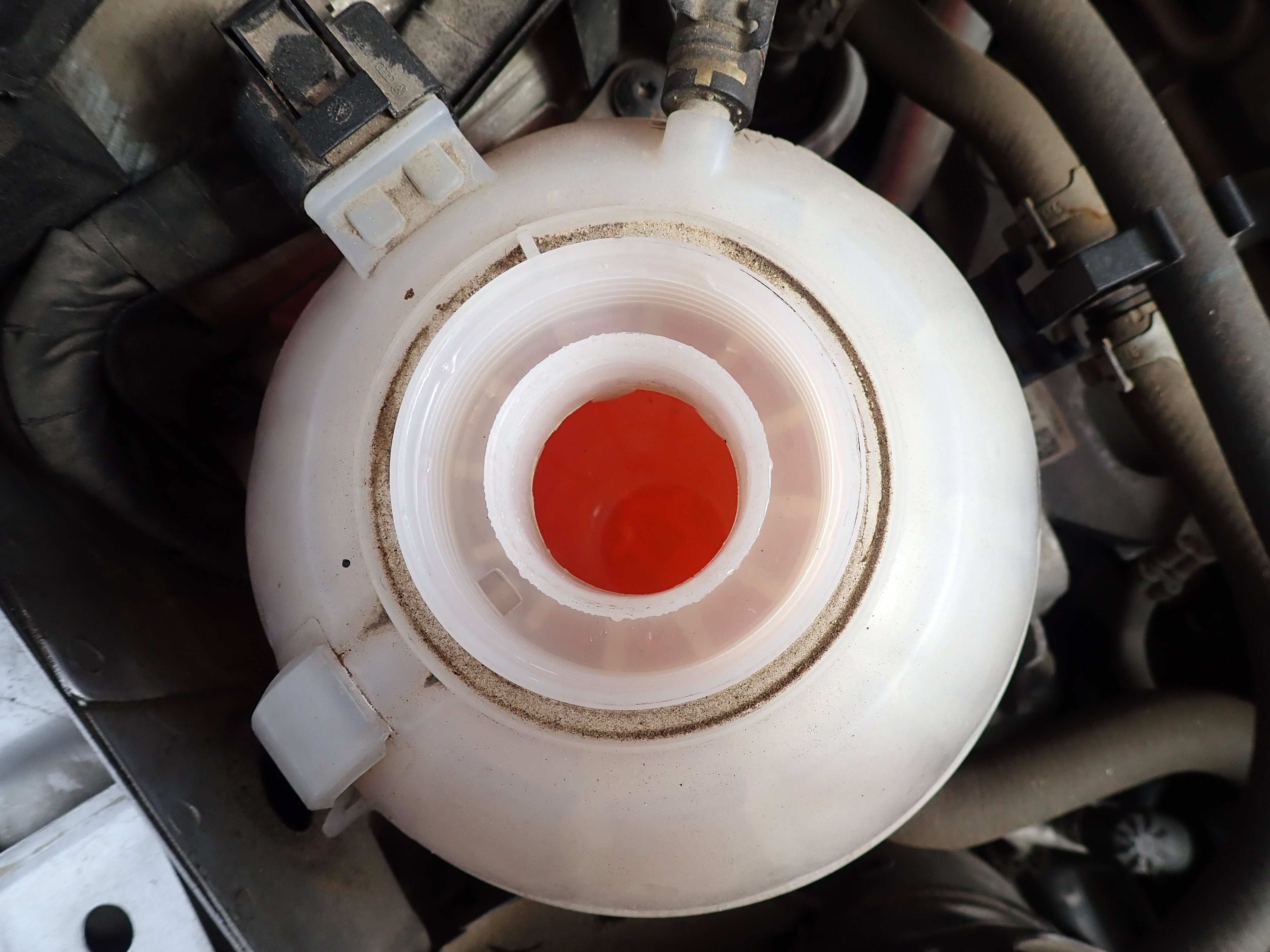
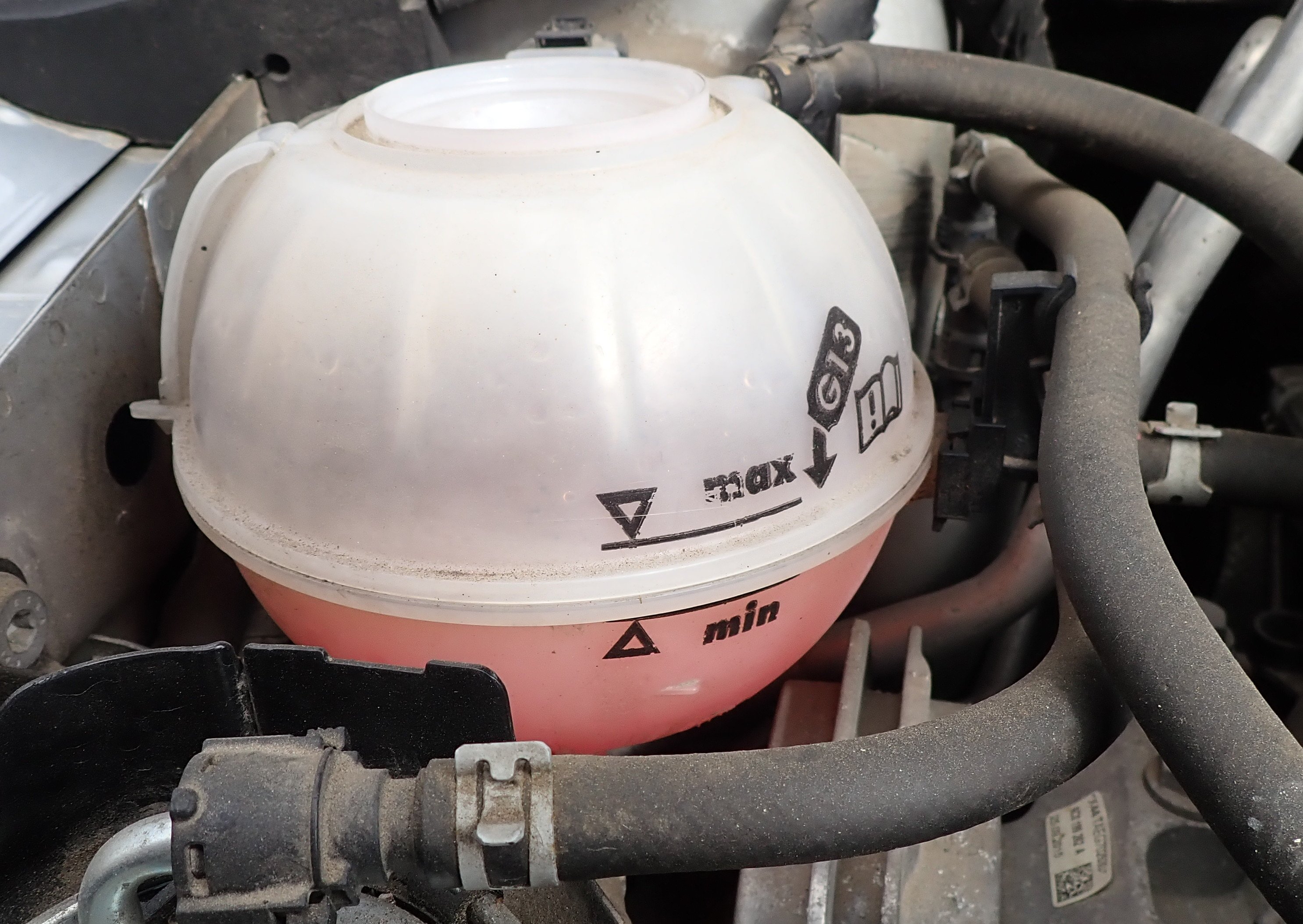
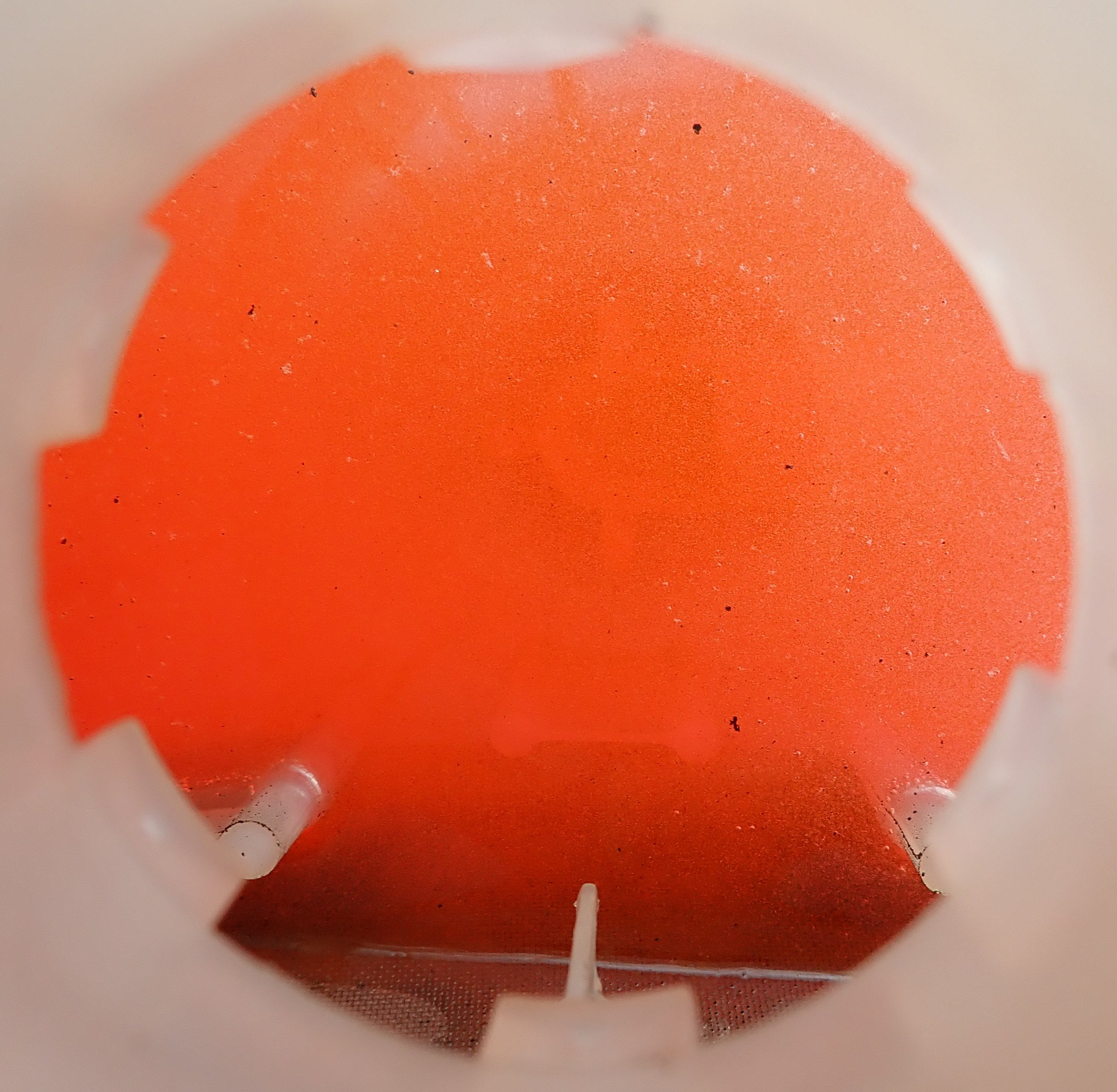
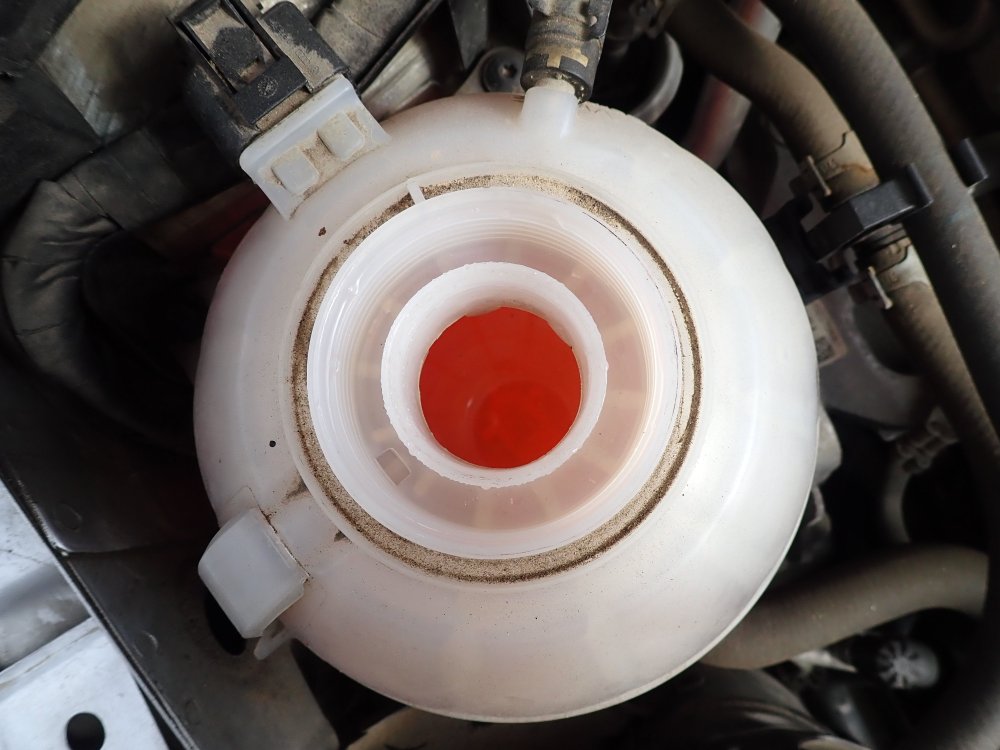
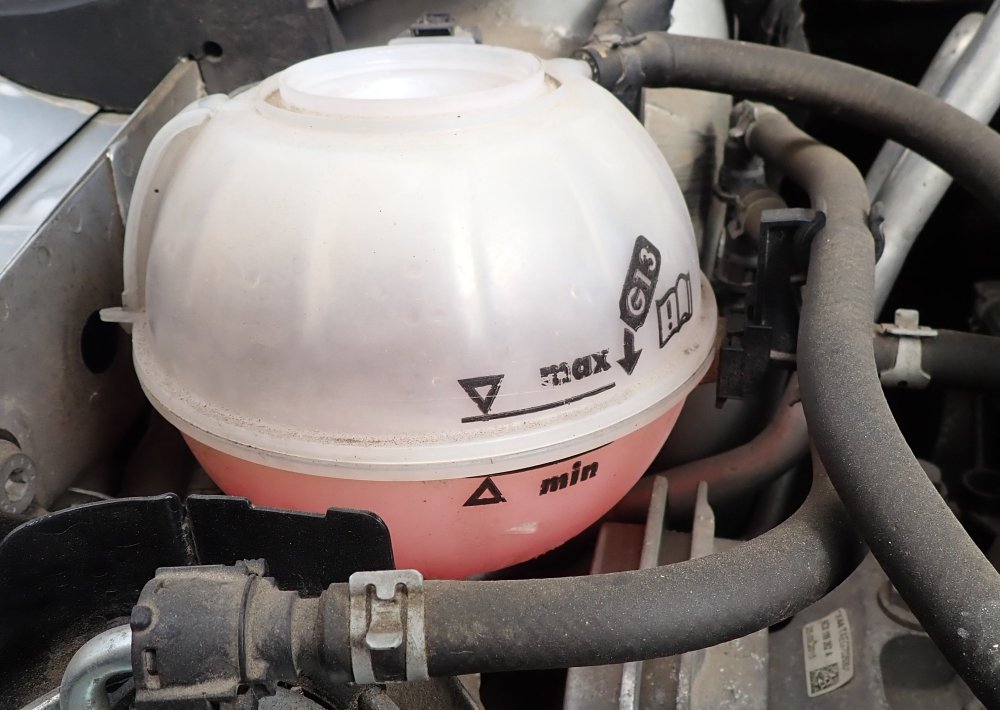
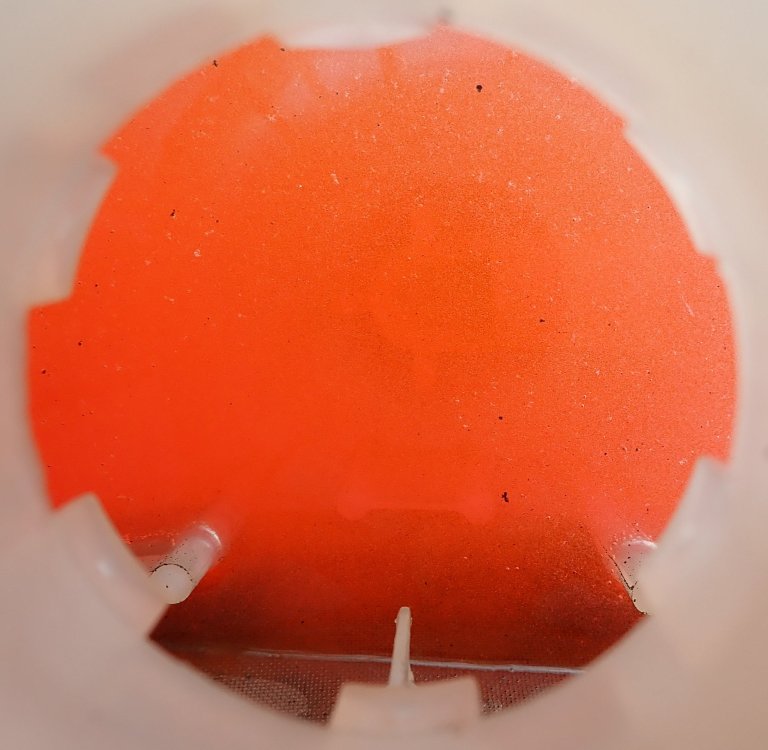
Thanks for your reply. My expansion tank does not have "Mit Silikat" written, and is of a different shape then those tanks (mine is more "round"). However I did find a bag of something inside. The coolant didn't let me see what it is, but I did poke my finger to feel it, and the bag is definitely not empty. After four days of not driving, the tank still held pressure, which after escaping made the coolant level rise above the "min" mark. I did notice a few black "dots" floating around, but those aren't uniform or round enough to be silica balls from the bag... Might be regular debris from four years of circulating... (I checked the log and the coolant bulletin was done on 2018, not 2017)
-
Hi, I've had my Rapid Spaceback MY2016 (CUSB 1.4TDI) for about a year now. Sorry for my extremely long description, but I believe it's necessary. Over the winter I've observed an interesting problem: Even though the engine seems to have warmed up, for the first ~15-20 minutes I don't get heat, or only a little. At first the electric heater kicks in if it's cold outside, but I believe it should switch over when the engine is capable of producing heat. Instead the heater switches off, and air output gradually cools down. I haven't done a longer trip for a while but from what I remember it does start producing heat later into the journey. The fun part, however, only began recently: A few days ago I made a trip that differs from my usual commute - it started with a 5min drive in a city, 4min hop thru the city bypass (~90 km/h), then ~2 minutes back in the city. Then the engine was stopped for 35 seconds, and I drove away. Then when exiting the tight residential road into a bigger road, I noticed that the acceleration was slightly incorrect for the sound (and revs) the engine was making. When I entered a hill (about 1.5 minutes after starting to drive again) it became really noticeable when I shifted into the fourth at around 47 km/h, and the car started slowing down. I do shift early, and this was a hill, but I knew this shift was possible. I then re-attempted it at higher speed, this time succeeding. Then I looked at the temperature gauge (I need to switch from digital speed to digital temp so I don't monitor it all the time) and saw something I've never seen before - 119C. This was 13 minutes after the start of the drive, and two minutes after my quick stop. The air from my vents was cold, even if the engine clearly wasn't. I went easy on the car and drove back home using low revs (and no city bypass), and the engine didn't go above 110C after that. There were no warnings from the car, probably because 119C is too low for such warnings. There was coolant in the expansion tank. I know my temperature in the highway was OK, since I checked it about 2-3min into the bypass (to check if my air still should be cold) and it was showing 90. This wasn't the first weird thing about the cooling system of my Rapid, however. The coolant level of the expansion tank was always around the minimum mark since I bought it. However one summer morning after starting the engine the coolant level warning came on. The car was parked on a slight uphill - probably fooling the sensor. After restarting the engine on a level surface the warning went away. I had parked there before without a problem for a few months, so I started fearing a blown head gasket. However there was no exhaust smell in the coolant tank, and no sludge on the oil cap/dipstick, so it remained a mystery. I then ordered some G13. The weirdest thing though was after I filled it up with G13 up to the maximum level. I waited overnight to fill a cold engine, then I drove forward a few meters to get onto level ground. Filled it up to the maximum, and drove to work. The work I was doing in the summer was deliveries with my Rapid, so I'd put around ~130-150 km on the odometer each day. This was one of such days. After driving for an hour or two I checked the level of the coolant, and I saw it was well above the maximum mark - like 1-2 centimeters above it. Waiting for the engine to cool down didn't make it go back down. It did go back to its previous "sweetspot" of near low, though I don't remember when exactly - maybe around a month? Perhaps less. The system does hold pressure over a night, as evident by air gushing when unscrewing the cap. Also the service records show the coolant service bulletin being done in 2017. I've read that people had their CUSB engine coolant solenoids fail, but then they do have cabin heat - I don't. So what could it be? The only logical solution currently would be air in the system, but that sounds weird. Could it be something else? I haven't driven the car since the temperature "incident". Thanks for reading my wall of text.