DerekU
Members
-
Joined
-
Last visited
Everything posted by DerekU
-
What are "slavery ego figures"?
-
This is an engine 'power gauge'. This video relates to the Virtual Cockpit and 2.56 minutes into the presentation the kW gauge is mentioned and its function demonstrated This link may also be useful for techno-geeks... https://www.keithmichaels.co.uk/news/ps-bhp-kw-engine-power-explained/ Altering in the gauge from kW to a different unit (PS, BHP, etc) was asked about here in 2022 but, as the gauge just shows a snap-shot representation of how much power the motor is producing, there's no real value in having ANOTHER multiple-choice option embedded in the Skoda software.
-
-
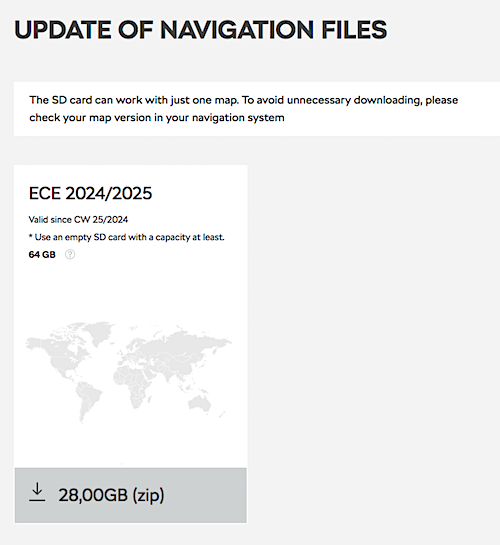
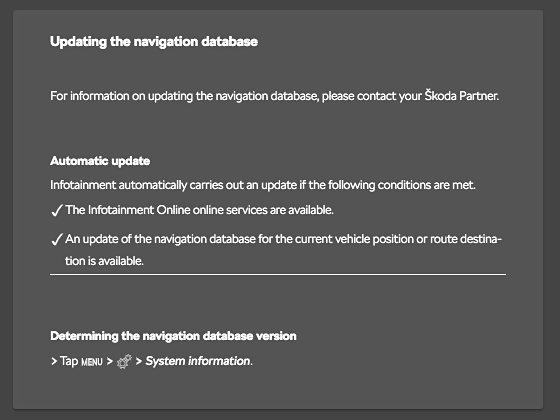
I'm not sure how applicable the system update portal link will be for a 2022 Fabia SE L car. Updates for my 2024-built Fabia SE L are normally OTL (Over The Air), rather than being carried out by the owner. I experimented with the update portal by entering my car's VIN. This was accepted and (for navigation file updates) produced the following However (to the best of my knowledge) my Fabia Mk 4 has no SD-card reading capability. The Owner's Manual for my car advises as follows
-
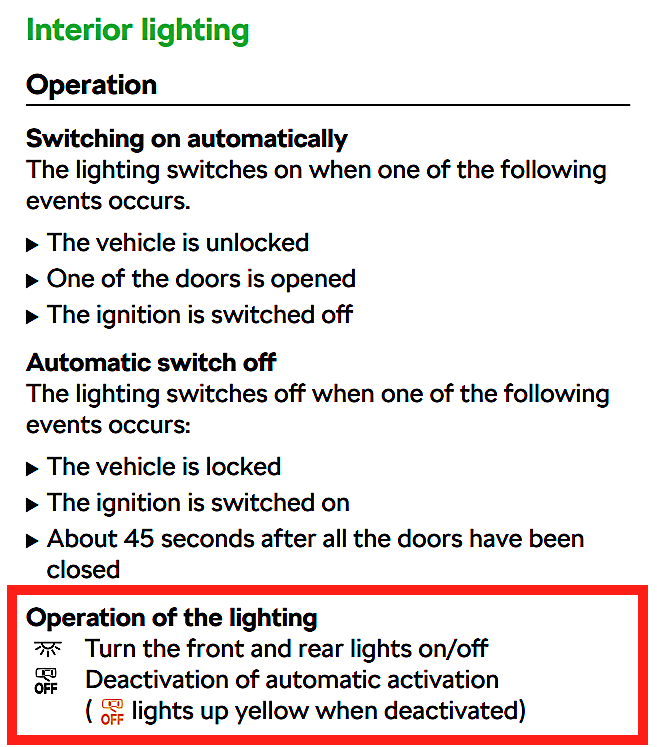
Yes it is in the Manual - but a magnifying glass is needed to spot the symbol.
-
My understanding (such as it is!!) is that the 1.5litre 4-cylinder DPC motor fitted to Fabia Mk 4 "Monte Carlo" models is referred to (by VW) as EVO1 and the folllow-on DXD motor is referred to as EVO2. This 2024 Skoda press release relates to the EVO2 power-plants https://www.skoda-storyboard.com/en/press-kits/skoda-scala-and-skoda-kamiq-media-launch-press-kit/powertrains-even-more-efficient-tsi-petrol-engines-from-the-latest-evo2-generation/ and the changes to the 1.5 motor are stated as follows Latest 1.5 TSI with even more advanced ACT+ active cylinder deactivation system The top-of-the-range 1.5 TSI engine benefits from improvements brought about by the new catalytic converter, which boasts improved efficiency and reaches its operating temperature more quickly. Moreover, it comes with upgraded software for the ACT+ active cylinder deactivation system. This makes the automatic deactivation and re-activation of two of the four cylinders based on power demands even smoother. The range of conditions under which the system is active has been extended as well, thanks to adjustments made to the intake and exhaust valve lift curve for the active cylinders (first and fourth cylinder). Apparently it is quite easy to tell DPC and DXD motors apart, with the former having a snazzy plastic top cover hiding its private parts, while the latter is naked and unashamed.
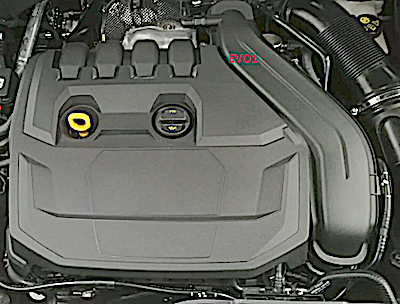
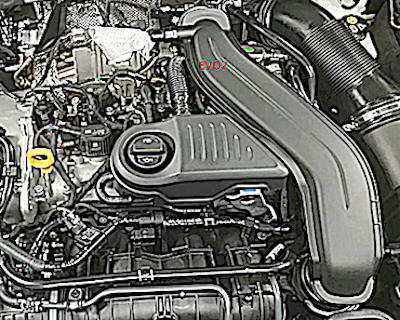
-
Skoda's guidance on importing/exporting can be found here. https://www.skoda.co.uk/owners/vehicle-import-export The following two sections are ( or may be) relevant in Pete79's case Importing a left hand drive vehicle under 10-years old from an EU country To import a left hand drive vehicle you must make sure the following modifications have been made to comply with UK road regulations: Headlights permanently adjusted/replaced to suit UK traffic Rear fog lights operate as a pair or only on the right hand side. Speedometer graduated in miles per hour (MPH) Your vehicle has two exterior rear-view mirrors You will need to present a Certificate of Conformity (COC) and evidence that any necessary modifications have been made, for example receipts and/or invoices, to the Vehicle Certification Agency (VCA) . You will then have to register the vehicle through the DVLA. Useful contacts and links If you need help with importing or exporting your Škoda, you can email Škoda Customer Care or call us on 03330 037 504. Driver Vehicle Standards Agency (DVSA) - 0300 123 9000 Vehicle Certification Agency (VCA) - 0117 952 4164 Driver and Vehicle Licensing Agency (DVLA) - 0300 790 6802 London Low Emission Zone enquiries - 0343 222 1111 To order your certificate of conformity please email [email protected]
-
That's why I said about the Fabia Mk 4's display "...this should satisfy the UK's (slightly ambiguous) speedometer-related importing requirements". A LHD Fabia's chronometric display with a KM/H-only speedometer can show the car's speed in KM/H and (by operating a 'switch') simultaneously show a digital MPH equivalent between the speedometer and rev-counter. Obviously this not 'permanent', but it should meet the importing requirements. Certainly, where imported LHD motorhomes with this type of dual-speed-readout arrangement have been concerned, there has been no need to swap the complete display just to get a combined MPH and KM/H chronometric speedometer. Even if a Fabia has a Virtual Cockpit that allows the speedometer's display to be easily swapped between KM/H and MPH, the swap will not be 'permanent' in the strictest sense of that word. This link may be of interest https://www.aronaforums.co.uk/threads/importing-car-into-uk.1209/ I would be very careful if the UK's VCA (Vehicle Certification Agency) is to be contacted for advice about the importing process. I've dealt with the VCA in the past about importing and been happy with their response - but I'm VERY careful with what I ask and how I word an enquiry. Some people importing LHD motorhomes have had questionable advice from the VCA that, when challenged, resulted in long delays and (eventually) the advice proved to have been wrong.
-
Amazon price for the A 864S set is £18.70 with an extra £4.49 delivery charge (£23.19 overall) if the buyer wants to avoid their loathsome 'free' PRIME subscription. There's currently an eBay advert quoting £19.95 with free delivery. https://www.ebay.co.uk/p/248788032
-
Although the title of this earlier forum thread related to the rear wiper-blade of a Skoda Fabia Mk 4, later in the thread front wiper-blades were discussed at some length. https://www.briskoda.net/forums/topic/524134-just-incase-anyones-after-a-rear-wiper-blade/#comment-5857586 Where Bosch "Aerotwin" blades are concerned, the A 864S set of two blades provide an immediate exact fit (ie. no adapters are needed) for a right-hand-drive Skoda Fabia Mk 4. I've always used Bosch "Aerotwin" front wiper-blades as replacements for my vehicles' original blades and never been disappointed. The Bosch blades always do well in independent tests (example here) https://www.autocar.co.uk/car-news/new-product-tests/best-wiper-blades-2024 The A 864S set of two blades is priced at around £25 (if one shops around). Example advert here https://www.halfords.com/motoring/wiper-blades/bosch-aerotwin-a864s---front-pair-785950.html
-
This link includes adverts for the rear light-units removed from a UK-specification right-hand-drive Skoda Fabia Mk 4 https://www.ebay.co.uk/sch/i.html?_ssn=salvogroupltd&store_name=salvogroupltd&_oac=1&_trksid=p4429486.m3561.l170197 The following four images relate to the light-units in the Fabia's boot lid. These two photos are of the right-hand (UK drivers side) unit that houses the operational rear fog-light and reversing-light. and the next two photos are of the left-hand (UK passenger side) unit that has non-operational lights. What is immediately obvious is that the right-hand (drivers side) unit has an electrical cable leading into it, whereas the left-hand (passenger side) unit does not. And - as I mentioned in my last posting - the reversing-light part of my car's left-hand unit has no internal fittings to accept bulbs. So, in order to comply with UK vehicle importing regulations that demand a fog-light on the driver's side (or centrally positioned), the best approach is likely to involve replacement of a LHD Fabia Mk 4's right-hand boot-lid light-unit with a UK-specification equivalent unit and 'cross-wire' this to the LHD car's operational left-hand boot-lid light-unit. Suitably modifying the wiring would then allow the LHD Fabia's left-hand fog-light to be disabled and a reversing-light on both sides to be obtained. I've had another look at the dipped-beam pattern of my Fabia's non-adaptive LED headlights. The pattern is definitely not 'flat' and I'm doubtful that it could be tweaked enough to comply with the UK's importing rules, even if one could find a garage prepared to attempt this. There are a few RHD Fabia Mk 4 secondhand (damaged) non-adaptive LED headlights currently advertised for sale online and their asking prices suggest that brand-new UK-specification headlights would be far from cheap (£500 each?) but a UK Skoda dealership could confirm what the price is. A basic rule for marketing a new vehicle in Europe is that its speedometer MUST be able to display speed in kilometres-per-hour (KM/H), but there is a derogation for countries that use imperial distance measurement (eg. the UK) to have the speedometer ALSO display speed in miles-per-hour (MPH). When a UK-specification RHD vehicle has a 'fixed' chronometric speedometer, the usual arrangement is to have an outer MPH scale with a secondary inner KM/H scale. (It doesn't HAVE to be that way round, but I've only seen the opposite once, years ago on a small Italian-made scooter.) The 'fixed' chronometric speedometer of a LHD vehicle will just have the KM/H scale and, when the vehicle is imported to the UK, meeting the dual MPH/KM/H requirement can be VERY expensive, sometimes requiring replacement of the complete original instrument-cluster. Fortunately a LHD Fabia Mk 4 with a chronometric KM/H-only speedometer can also display speed digitally (MPH or KM/H) in its central area (as shown below) and this should satisfy the UK's (slightly ambiguous) speedometer-related importing requirements.
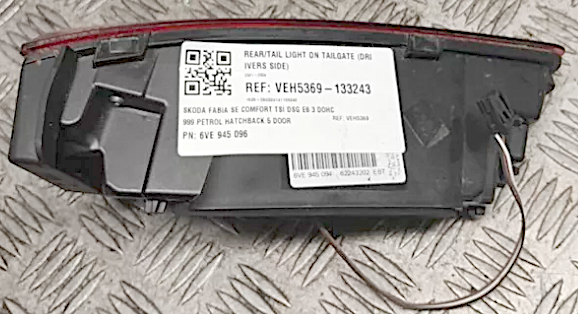
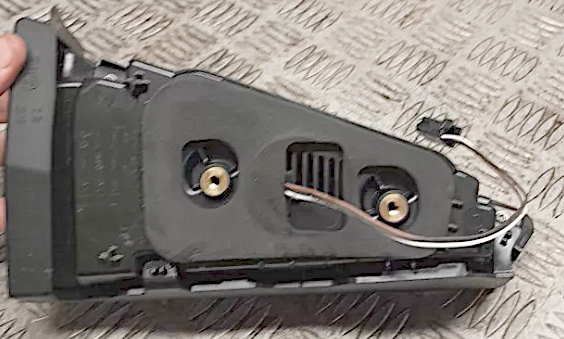
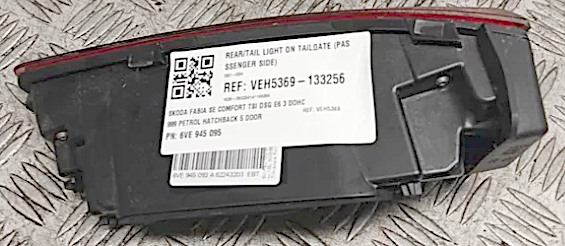
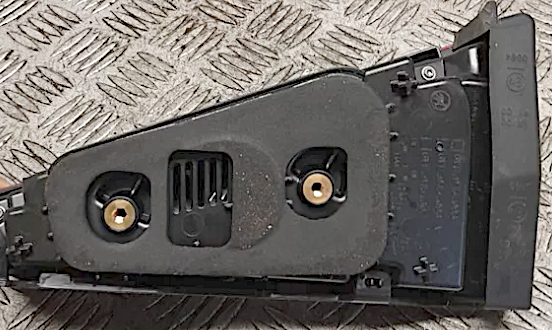
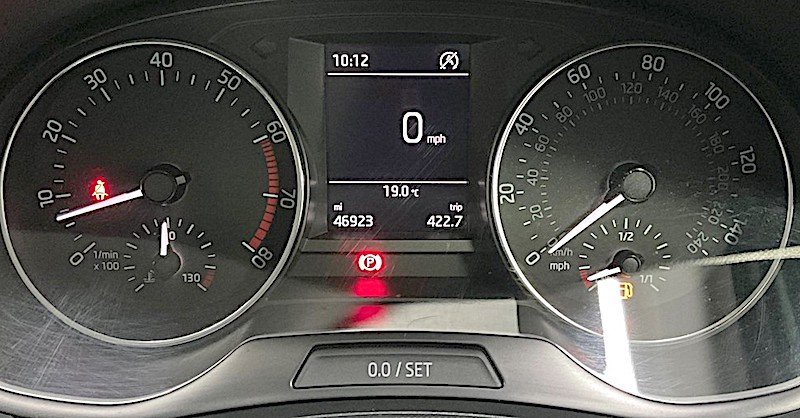
-
Mt 2024-built Fabia MK IV SE L has LED headlamps that include the turn indicators, DRLs and position-light functions and the only other front lights are the fog-lamps that clearly have halogen bulbs that will be H8 35W type. And I assume the turn indicator 'strip' on the external mirrors is LED. This leaves the non-LED lights on the car's rear and the interior lights. My 2009 Skoda Roomster's Owner's Manual includes a longish section on how to change the car's light bulbs, plus a list defining which bulb is fitted to each light, and the same type of comprehensive guidance was provided in my 2021 Hyundai i20's Manual. But that's not the case with my Fabia - there is advice on how to change a front fog-lamp bulb and how to remove a rear light-unit, but no advice on the bulbs themselves. The information on the link below is useful https://www.skoda-parts.com/catalog/fabia-4/service-interval-parts/bulbs-700.html and I can believe that a WY16W bulb is used for the rear indicator lights, that (probably) a 21W bulb is used for the brake lights and that (possibly) 5W bulbs are used for the position-lights, but I'm unsure about the bulb used in the reversing light and the fog-light. And it wouldn't much surprise me if C5W 'festoon' bulbs are used for number-plate lighting and in all the interior lights. But it would be nice to be sure.... Does any forum-member KNOW which bulbs are used in which light, please?
-
I've checked the dipped-beam pattern of my UK-specification RHD Fabia Mk 4's non-adaptive LED headlights and confirmed that this is appropriate for a vehicle being driven in 'left-hand traffic'. The pattern is 'left-dipping' and, although flattish, still has a mild uplift on the left. I've also looked at the French-language version of the Fabia Mk 4 Owner's Manual and the relevant guidance is the same as in the English-language Manual - that, for driving in a 'foreign' country (ie. a country with 'left-hand traffic' like the UK), unless the headlights are the adaptive BI-LED type, assistance should be sought from a specialist garage (which the Manual defines as a Skoda agency/partner). My Skoda Roomster's 'projector' headlights have a large rubber cover on their rear behind the bulb and removing the cover permits access to a lever that can be moved to flatten the UK-spec dipped beam pattern when the car is to be driven in countries that have 'right-hand' traffic. My Fabia's headlights also have a removable rubber cover on their rear, but there is no obvious beam pattern-adjustment mechanism beneath the cover. What this all boils down to is that, if a LHD Fabia Mk 4 with non-adaptive LED headlights that have a dipped-beam pattern designed for countries that have 'right-hand traffic' (like France) is to be imported to the UK, its headlights would need to be replaced to comply with the UK's importation regulations. My Fabia has a single operative rear reversing light on the right (UK driver's side) of the boot-lid and a non-operative reversing light on the other side. I can see into both reversing lights and the internals of the operative reversing light differ significantly from those of the non-operative light that is essentially 'empty'. So getting both lights to illuminate would take more than just putting a bulb into the non-operative reversing light. I suspect that the single on-the-left fog light arrangement of a LHD Fabia Mk 4 will be similar to that of the reversing lights and, to get a working fog light on the right in addition to the one on-the-left, would probably require a replacement right=hand fog/reversing light-unit and some cross wiring. Reaching the rear of the fog lights involves removing the boot-lid's trim panel. This 2023 forum thread discussed this and the advice in the 2nd posting sounds right (but I'm not going to try it!) https://www.briskoda.net/forums/topic/511125-installing-a-rear-view-camera-boot-trim-removal/ As I mentioned earlier, importing LHD motorhomes from Continental Europe to the UK used to be popular and fairly straightforward, though sometimes tricky where meeting UK lighting and speedometer import regulations was concerned. Conversely, importing a RHD motorhome from the UK to a Continental European country can be a lengthy and expensive procedure and, if the vehicle does not have a European Type Approval certificate of conformity, a bureaucratic nightmare. It's generally advised that UK motorcaravanners don't do this (however much they love their motorhome) as, even after they have jumped through all the hoops and got the motorhome registered abroad, subsequently selling it for a reasonable price will prove difficult.
-
On the following link the application form used when importing a car from the EU to the UK. can be viewed and the form describes the headlights, speedometer and fog lights requirements. https://assets.publishing.service.gov.uk/media/61f7cfd1e90e0768a3523234/application-for-gb-conversion-iva-passenger-cars.pdf I was wrong about my Roomster - it has only one rear fog light and this is on the right (UK offside). After purchasing the Roomster in 2009 (to replace a very sickly Golf Estate that disappeared into the Government scrappage scheme) I now recall noticing that the Roomster had just one rear fog light and, as my motorhome had two, deciding to investigate how easy it would be to add a second fog light on the UK nearside. This proved to be impracticable: I can't remember where the difficulty lay, it might have been that the nearside rear light-unit had no bulb-holder in its fog light section, or the fog light section had no internal reflector, or there was no cabling to the fog light section, but whatever the reason (and I'm not going to remove the Roomster's left rear light-unit to check) It was sufficient to dissuade me from going ahead. I tried shining a powerful torch into each of my Fabia Mk 4's rear fog lights to see if I could spot any internal difference between the one on the UK nearside that does not illuminate and the one on the offside that does, but the 'lens' of the lights is too opaque to get any sort of clear picture (and I'm not going to remove the Fabia's lights either).
-
My 2024-built UK-specification right-hand-drive Fabia Mk 4 has 'simple' LED headlights, not the more complex type that Skoda calls "Bi-LED Headlights" that have adaptive functionality. It's straightforward enough to identify which LED headlight-type a Fabia Mk 4 has using the car's infotainment screen's Lighting menu. If the headlights are Bi-LED there will be a "Travel Mode" option that permits selection of "Right-hand traffic" (ie. for countries where vehicles drive on the right) or "Left-hand traffic" (ie. for countries where vehicles drive on the left as in the UK and Ireland). If the car has LED headlights, but there is no "Travel Mode" option in its Lighting menu, its headlights are not Bi-LED and their beam pattern cannot be driver-adjusted to optimise/legalise their use in right-hand or left-hand traffic. For Fabia Mk 4 cars that do NOT have By-LED headlights, the UK Owner's Manual advises "Seek assistance from a specialist garage". I assume "specialist garage" means a Skoda dealership, but I don't know how the dealership would respond. (I'm guessing they would stick beam-converters (eg. Eurolites) on the dipped-beam part of the headlight, but I've not checked.) This issue was touched on here in 2022, but the advice given seems to assume that all Fabia Mk 4 models have Bi-LED headlights with a beam pattern that can be adjusted for LH or RH traffic via the "Travel Mode" lighting option - but that is not the case. https://www.briskoda.net/forums/topic/506791-driving-in-france/ Headlights fitted to cars to be marketed in the UK have historically had headlights with a dipped-beam pattern that is downwards and to the left with a noticeable 'kick-up' on the left to better illuminate the road's verge - and it's the kick-up part of the pattern that can dazzle oncoming drivers when the car is driven 'on the right'. Some headlights (like my Roomster's) have a built-in capability (a movable lever on the rear of the headlight) that will suppress the kick-up, otherwise add-on 'masks' or beam-converters can be used to do this. Some headlights have a 'flat' dipped-beam pattern that is less likely to dazzle and - in such cases - the car's Owner's Manual will (usually) advise that the headlights are bisexual (or ambidextrous) and do not need to be adjusted/masked when (say) a UK -marketed car is driven in Continental Europe. Oddly (to me) the Owner's Manual for my 2021 Hyundai i20 (that had halogen headlights and a dipped-beam pattern with a distinct leftwards kick-up) advised that the lights were suitable for left=hand and right-hand traffic. Modern car headlight units can be hideously expensive (I was told that a single new full-house LED-matrix headlight for a Hyundai i20 cost around £1400) so, if Pete's LHD Fabia's headlights did need to be replaced to comply with the UK's importing regulations, the cost could be very unpleasant.

-
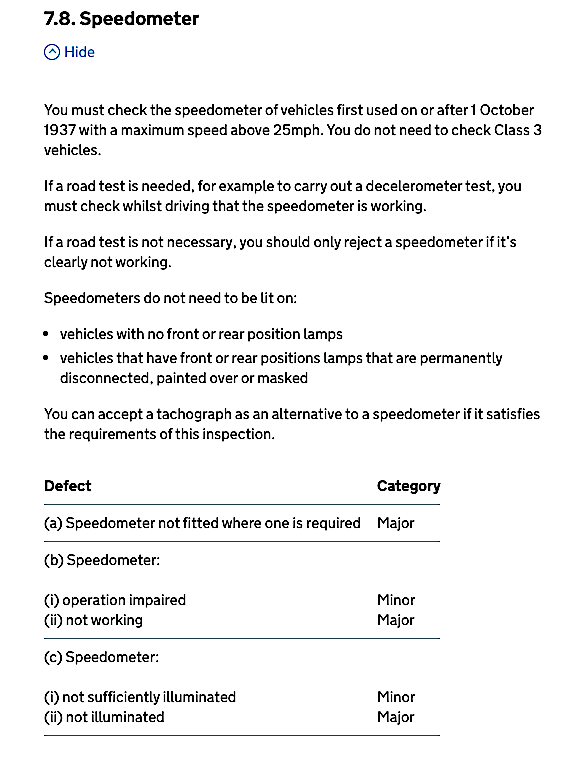
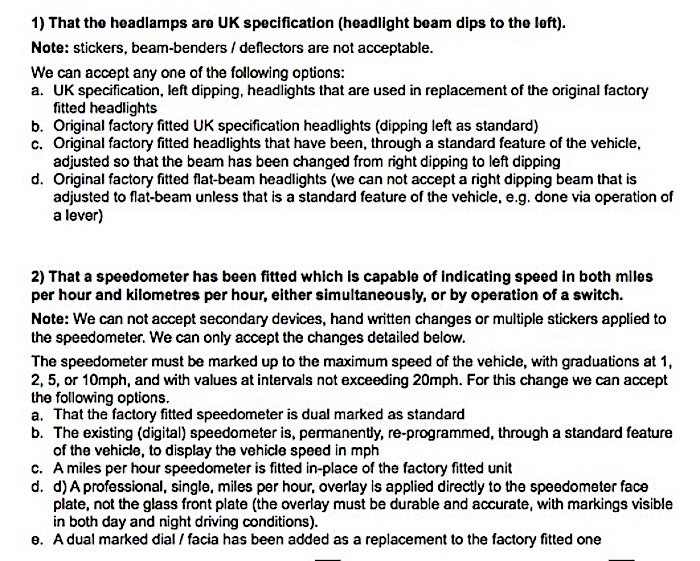
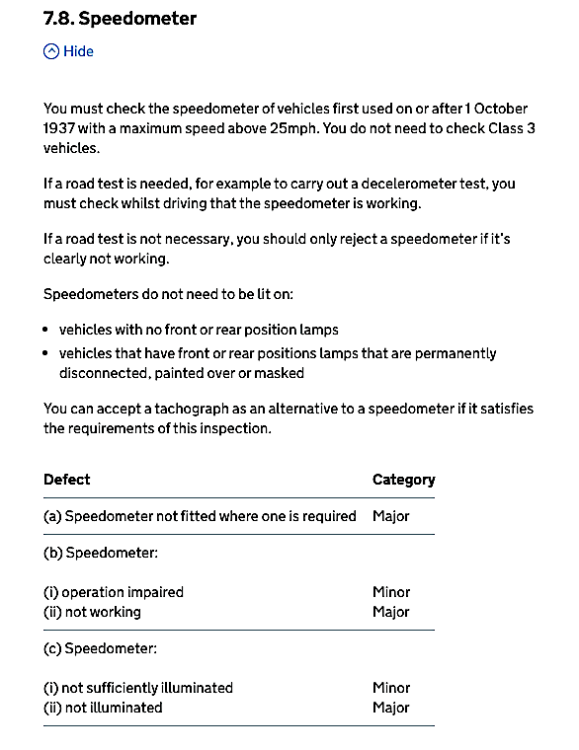
I'm a moderator on a UK motorhome forum (24 years of participation and over 24K postings). When sterling was very strong against the euro, buying a new or used left-hand-drive motorhome in Continental Europe and importing it to the UK was quite common and I did this myself in 2005. When it comes to UK-registering a NEW LHD motorhome imported to the UK, the current headlight and speedometer 'acceptability' rules are shown below and these should also apply when a secondhand LHD car is being imported. There's official guidance here https://www.gov.uk/importing-vehicles-into-the-uk/registering-an-imported-vehicle https://assets.publishing.service.gov.uk/media/6570647e739135000db03bd4/inf106-how-to-import-a-vehicle-into-the-united-kingdom.pdf The UK's MOT inspection manual can be found here - with sections 4 and 7 relating respectively to lighting and speedometers. https://www.gov.uk/guidance/mot-inspection-manual-for-private-passenger-and-light-commercial-vehicles The headlamp-related MOT rules say It’s acceptable for masks or converter kits to be fitted to right hand dip headlamps to temporarily alter the lamp for use in the UK by removing the beam ‘kick-up’ to the right. but this conflicts with the importing regulations I've listed above. When I imported a new LHD Ford Transit-based motorhome in 2005 it was primarily to use it in Continental Europe (though the cost savings were significant too!) The importing rules relating to lighting and speedometers were similar back then, but the buyer was not asked to confirm if the vehicle conformed or had been modified to conform and imported motorhomes were not being physically inspected at the UK-registration stage. I never swapped that motorhome's headlamps and speedometer as a) I wanted to drive the motorhome outside the UK where the original right-dipping headlamps and kmh-only speedometer would be preferable and b) with the Transit it was an expensive and far from easy exercise. The MOT test was passed by sticking black adhesive 'masks; to the headlamps prior to the test and removing the masks immediately afterwards. Unlike the importing regulations, the UK MOT test is much simpler and easier-going where speedometers are concerned, as will be seen from the rules below. I bought another new LHD motorhome in 2015, but this time via a UK dealership rather than importing it myself and, In this instance, before I took delivery the dealership had replaced the right-dipping headlamps and modified the speedometer with a mph/kmh overlay to meet the UK's importing regulations. FOG-LAMPS. One rear fog-lamp is mandatory (NOT two) and this needs to be centrally positioned or on the driver's side of the vehicle. I believe a LHD Fabia Mk4 will have a single rear fog-lamp on its left side (UK nearside) and this will conflict with general UK lighting regulations and the UK MOT test's rules. Both of my LHD imported motorhomes had as standard a fog-lamp on each side of the rear bodywork (as does my 2009 Skoda Roomster) but some motorhomes (and many cars) have just a single rear fog-lamp. When a 'single fog-lamp' LHD vehicle is to be imported to the UK, meeting the UK rules van can prove challenging and demand (expensive) light-unit replacement or adding a supplementary fog-lamp.
-
I believe the Hyundai press release is a mite ambiguous regarding the 'keyless' feature. My understanding is that ALL Fabia Edition models have Keyless ENGINE Start/Stop as part of their standard equipment, but the Monte Carlo Edition model now has Keyless ENTRY as standard too. My 2024 Fabia SE L has Keyless Engine Start/Stop (ie. press-button starting and stopping of its engine and no ignition switch) but it does not have Keyless Entry and the remote key-fob is needed to lock and unlock the car's doors and boot.
-
My mistake, the filter DOES have a VAG reference on it - though I doubt the filter is any different to a 'generic' Valeo cabin-filter suitable for a Fabia Mk 4.
-
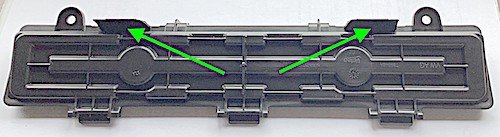
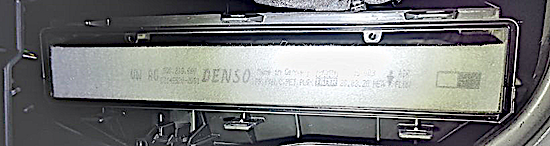
My OCD got the better of me... Once a Fabia Mk 4's glove-box has been fully lowered and the front cover of the cabin-filter's housing has become accessible, removing the front cover is indeed very easy. As shown in the following image, the top edge of the cover has two 'tabs' (arrowed in green). Pressing a tab firmly downwards while pulling the adjacent projection (with a hole in it) towards you will result in a click and that end of the cover's top edge will become free. When both tabs have been treated in this way, the top edge of the cover can be pulled towards you and will then release from the three 'hinges' at its lower edge. Refitting just involves relocating the cover on the 'hinges' and pushing its top edge away from you so that the two tabs click properly in place. Rather surprisingly (to me), my Fabia's cabin-filter does not carry a VW or Skoda marking. The filter is made (in France) by Valeo and the data on its front are shown on the photo below. (The arrow should point downwards.)

-
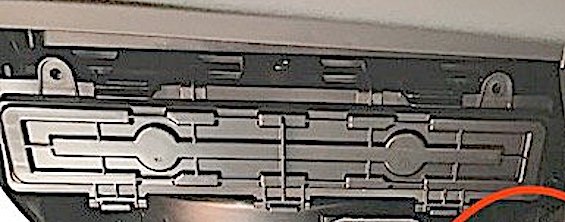
You might wish to check your car's cabin (pollen) filter to see if there's any debris in it that might be producing the rustling noise. Gaining access to the filter is described in my 26 April 2024 posting in this forum thread https://www.briskoda.net/forums/topic/516188-fusebox-opening-on-mk4-fabia/ The front cover of the filter housing looks like this Previously covers had a couple of 'sliders' that made removal straightforward and the method fairly obvious, but there's no sign of such sliders on my 2024 Fabia Mk 4 SE L car's cabin filter cover. The image below shows an Octavia Mk 4 filter housing with the cover off and removal of that (similar but not identical) cover was said to be not difficult (!!!). As you may have gathered, I haven't attempted to remove my car's cabin filter as there's no need (and I can control my curiosity) but - when I checked my 2009 Roomster's cabin filter - there was some leaf debris in it. (Worth updating your forum profile to reflect your change of car.)
-
Best asked on the Octavia Mk 3 (2013-2020) sub-forum https://www.briskoda.net/forums/forum/235-skoda-octavia-mk-iii-2013-2020/ There are also several discussions about the Swing head-unit that may be helpful https://www.briskoda.net/forums/search/?q=swing&quick=1
-
Donna A 2024 long-term review of a Fabia Mk 4 included the following comment There are justifiable criticisms to level at Skoda for the cabin tech. Menus within other unfathomable menus coupled with infrequent but frustrating glitches aren’t the quality I’d expect from a VW Group brand – especially one that, in other ways, has shown itself so future-forward. As you've gathered, the touchscreen-display infotainment systems fitted to recent Skoda, Seat and VW cars have gained a reputation for 'gliltchiness' never mind being bloody-minded and user-unfriendly. As your Fabia will be under warranty, I strongly advise you to take your car to a Skoda dealership and complain about the issues you are having. There may be a firmware/software update available that the dealer can install and that may sort out the problems, but, if you try to fix it yourself by resetting the system, you may end up worse than before.
-
While integrating the washer nozzle for the rear window-glass into the high-level brake-light's plastic moulding is undoubtedly a 'tidy' approach, it's perhaps not the greatest idea where longevity is concerned. My previous 2021 Hyundai i20 had this type of brake-light and there were several online complaints from owners of newish i20 cars about the moulding cracking in the nozzle area, with the predictable consequence that washer-fluid then leaked into the lighting part of the brake-light.
-
The Original Equipment (OE) Part number of the cabin filter factory-fitted to a Skoda Fabia Mk 4 is 2Q0819669. A GOOGLE-search on 2Q0819669 should retrieve online adverts for the 'genuine' filter. Or - when seeking online a (less expensive) filter made by a 3rd-party (Mann, Bosch, Ridex, Meyle, Mahle etc. etc.) - the OE number can be used as a guide to (hopefully!) ensure that a suitable filter will be delivered. Assuming that a 3rd-party filter looks visually OK, has the correct dimensions and fits snugly in a Fabia Mk 4's filter housing, I don't see how an owner can reliably assess its effectiveness or potential longevity. It's to be expected that a Skoda dealership will wish to replace the cabin filter at the recommended change-interval and will use (and charge) for the 2Q0819669 part. As @Ootohere has said, unless the filter is dirty it is unlikely to affect the coldness of the temperature the car's air-con can reach. Worth checking the state of the filter (as it's easy enough with a Fabia Mk 4) but if it looks clean and has no debris in it, there's not much point in replacing it in the hope the air-con's performance will improve.. On my Fiat Ducato-based motorhome replacing the cabin filter was a thankless task needing removal/replacement of 16 screws, much cursing and sometimes blood loss. I used to replace the filter annually (with a Bosch filter) and, when the vehicle went in for service, tell the workshop manager that I had done this. As the Fiat mechanics used to hate the task, they were very happy to avoid it. I also fitted a K&N 'washable' engine air-filter that the Fiat mechanics did not need to replace. This (supposedly) increased the air-flow rate, though I never noticed any performance improvement.
-
Ken502 You might want to update your forum Profile to provide details of your 2023 Fabia.