JayLibove
FREEDOM
-
Joined
-
Last visited
Everything posted by JayLibove
-
John, everything in that (AI generated?) advice seems to focus on newer cars and the need to work with/around newer cars' enhanced security systems. My vehicle was manufactured in April 2020, based on the 2017-2020 Octavia III Facelift platform, so nothing about these newest generation, more secure car computers applies. My question remains whether OBDeleven's custom-hardware-restricting-to-custom software (at a slightly reduced price compared to one of the major device-independent software author's suggestion of MX+ as gold-standard compatible hardware) has a driving advantage, or whether compatible (vs. OBDeleven's custom) hardware is a better choice (especially if someone has a specific product recommendation as being as capable, reliable, and at least nearly as fast as, while being less expensive than, the MX+)? thank you,
-
I'm not sure how any of that information responds to the question of which piece of hardware to buy - MX+, vs. OBDeleven gen3, vs. something else? thank you,
-
Since my car is the 2017-2020 design era, fortunately for my current interests I don't have to worry about the most recent models' enhanced security that breaks much of the capability of OBD-II consumer-grade stuff. The VCDS price is at least $199 (for USB-wired, apparently to-Windows-only?) or over $400 (for wireless, which really shouldn't be so much more expensive) more than OBDeleven's v3 device (€85). Does the VCDS software provide capability so much greater than the OBDeleven mobile/Android app to justify this cost difference? .. particularly considering that my specific use case is to record and graph live data over the course of maybe as much as a few tens of minutes? Or, because as I understand it, OBDeleven stuff is all custom (you have to use their software with their devices), is the functionality of e.g. an OBDLink MX+ (€139) at least as good as OBDeleven's (and, it has the flexibility to work with other software), so would that be a better/more-than-adequate intermediate between OBDeleven and VCDS? (I chose the OBDLink MX+ in my question above on the strength of the Carscanner app author's recommendations of that being the best option he's aware of). thanks,
-
Bueller? Bueller? Anyone? 😅
-
Reviving an older topic; I own an older generation OBDeleven device, which does not have useful Live Data recording/graphing. I asked OBDeleven about that, and they said, yes, my older device can't do that; I'd need to buy one of their newer devices. But, do you all recommend that I just go with a newer OBDeleven device? (I've always found OBDeleven's Android app and data exchange with my 2020 April-manufactured 2019 model year Octavia III Facelift to be frustratingly slow). Or, go for something other than OBDeleven at all? Is VCDS still the best thing? I saw some discussion of a VLinker brand, but their products are confusing - they don't explain how to choose among them. thanks for your suggestions, -Jay
-
Hm. Well. Okay. I just finished an 1800km drive through the continental European summer heat, and while I hope that what I felt was just the flu (yeah, somehow I caught the flu in the summer, ugh!) I am not 100% certain that the air conditioning was always working up to snuff. So, since my older generations OBDeleven device can't capture and graph live data, and before I shell out €85 for a current generation OBDelevent device, are there any other diagnostic port readers that you Briskodans would recommend over the OBDeleven gen3 device (without going up to a €1000+ professional kit)? many thanks,
-
Picking up on this prior thread - My April 2020 (last of the MkIII Facelift) Scout, with full LED package, has cornering lights on by default. I sometimes would like the cornering lights to come on earlier in a turn; as configured from the factory, the cornering lights don't seem to turn on unless the steering wheel is rotated quite far from centre. In the screenshots above, I notice fields: Lenkradwinkel, offset (Steering wheel angle, offset): 0.3° Unterer Lenkradwinkel (Lower steering wheel angle) 40° Oberer Lenkradwinkel (Upper steering wheel angle) 65° Do these control when corner lights turn on and off? Are they configurable? Any warnings about setting them too low/high? thank you,
-
This is quite a bit longer than my Octavia's key fob, but more importantly I really want the case to be rigid. It's remarkable that VW doesn't provide a slide cover for the fobs. (Neither has any other manufacturer whose fobs I've ever seen).
-
This is where I ended up looking, too; of course, I can't find on Amazon a plastic box that is almost exactly the size of the key fob, and as much as my purse is something of a bottomless pit, it doesn't have huge amounts of extra room. I'll keep looking.
-
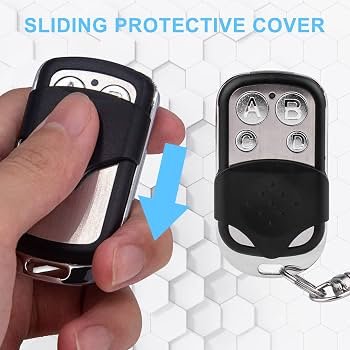
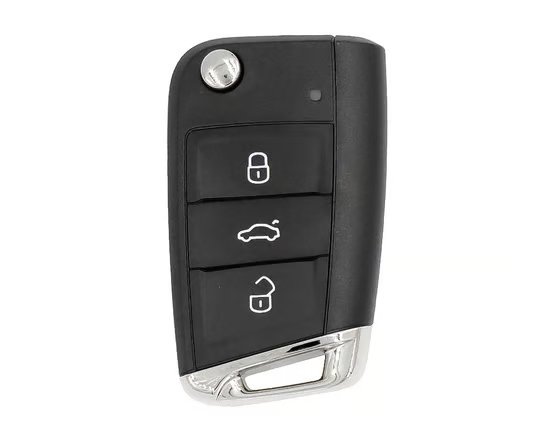
On a number of occasions lately (though, interestingly, not during the first five or so years that I've had this car - an April 2020-manufactured last of the MkIII Facelift, Scout 4x4 DST-7 diesel "combi"/wagon/estate) I realize that a button on the 'Kessy' key fob in my purse had been pressed without my meaning to. My purse is, like all such accoutrements, something of Felix's TARDIS (to meta my mixaphors). But in truth I thought that the exact spot (lower, front/outer pocket, of a medium size crossbody bag made of 'ballistic nylon' (the sales guy introduced the material to me by taking out a ballpoint pen and stabbing at the bag, hard, leaving no visible mark; so, not canvas; it has a certain amount of rigidity)) where I keep the key fob in the purse (and, the fob is in a closely shaped zip-lok bag, to boot) should have protected buttons from being pressed easily. Sitting in a (very good) cafe-bakery-pastisserie in lower France yesterday morning, having breakfast during yet another of my cross-continent drives, I glanced out the window and noticed my lift gate was half-up 🙄. I hadn't opened the lift gate on parking there, and I confirmed that the car was still locked. So it has to have been that, through the fabric of my purse, I had pressed-and-held the lift gate button on the key fob for several seconds. I searched the Internet in general, Amazon (of course), and our forums here (it would be great if these forums could deploy more advanced language/context-sensitive search tools 😅), and all i came up with were fabric cases or plastic shells, all of which inset the buttons some, but none of which actually provided a slide cover to fully protect the buttons. (I did find on Maker site with instructions for creating such a thing, but I'm not a Maker...) I'm looking for something that would function similar to this: Does such a thing exist commercially for the 2017-2019 Octavia III Facelift key fob? It's this model - the round silver button to allow the physical key to swing out, and the three flat buttons lock - lift gate - unlock. It would be okay if the slide/hard case does NOT support opening the physical key withOUT removing the fob from the case, as I almost never use the physical key. thanks!
-
On my April 2020-manufactured last-of-the MkIII Facelift (2017-2019) Octavia Scout (combi/wagon/estate, diesel, 4x4, DSG-7, 135kW/184cv, suspension about 3cm higher than the standard combi/wagon/estate model), the rear lift gate will always open, no matter the door lock status, if I have a key fob near the rear lift gate and I press the exterior rear lift gate button. Is there a way to set it so that the rear lift gate will only open if the driver's door (or, any front door) is already unlocked? I found some discussion of the Car Opening & Closing settings, and I tried setting it to One Door Only, but it made no difference. thanks,
-
Thanks very much, @dieselV6 . It turns out that the OBDeleven device that I own is first generation, and while it can show instant snapshots of live data fields, it has no way to record or graph them, so it's near impossible to get useful data from it :-( That said, I managed to get a screenshot: Refrigerant pressure: 16.0 bar (ambient temperature mid-30s °C) Temperature after evaporator 7.3°C Compressor load 16.1Nm Compressor active, no shut-off condition is present Compressor current, actual value 0.360A In the past couple of days I've driven over 1000km in 30°C+ (peak, 43°C outside temperature, idling in stop-and-go traffic up a mountain), and at no time did I get a sense that the A/C wasn't working. It would still be nice to actually know, but I'm not in the market for another €100 or so of diagnostic hardware. Yet. Thanks again! -Jay
-
So, which of the very many live data parameters (or, is it not in live data) gave information about AC system pressure? thanks,
-
Thanks @Breezy_Pete , yeah, guessed that; now, is there any way to get out of the system when that happened? We know that the system had been low (I had it recharged, and the amount of gas extracted was almost 50% low; I took these recordings after the recharge); my OBD11 never reported any faults in this system 🙄
-
So, I re-scanned today, and I've gotten a couple more of these - both left and right low-beam lights, on July 28 (I was driving up from Barcelona through a wide open, sunny valley, to the mountains; I don't recall exactly, but I assume the outside air temperature was in the low 30s°C). Should I be worried about a LED headlight over-temperature warning? thanks,
-
I finally had time to drive out a few minutes and find a place to stop the car (from Barcelona city you'd be surprised how difficult that can be). My OBDeleven original-generation dongle and app don't consistently show "live data", or maybe it's really live and the car computer only reports certain fields at specific moment? .. but it was very difficult to capture readings for a bunch of the possible data points. e.g. "A/C clutch": "Function cancelled, marginal conditions have not been met", and "Lots of different data fields, at least intermittently": "Not available" (but then, many fields, would intermittently show some data, then switch back to "Not available"). Is this a glitch, or just a known functional limitation, of OBD11/ an older OBD-II Bluetooth dongle? That said, I got some fields: "Coolant temperature": 88°C (although that seems to be more likely the engine than something specific to the A/C?) Blower voltage, actual value: 6.1 V Blower current, 4.50 A Compressor current, actual value: 0.810 A Compressor current, specified value: 0.820 A Rear temperature flap, actual value: 20, 0.0% Rear temperature flap, specified value: 20 Compressor shut-off requirement, penultimate event: Low pressure event (gotta love the word choice!) Compressor shut-off requirement, antepenultimate: Shut-off from Engine Control Module via CAN Outside air temperature: 38.5°C Outside air temperature, calculated internally: 31.0°C Left front vent temperature: 10.0°C Right front vent temperature: 9.0°C Footwell vent temperature: 16.3°C Temperature after evaporator: 4.3°C Interior Temperature: 30.9°C Sun intensity left: 750 W/m2 Sun intensity right: 690 W/m2 Blower status: active Actual value for fresh air/ recirculation air flow flap: 60, 12.5% Specified value for fresh air/ recirc air flow flap: 58 (Something obscured by a pop-up at that moment on my phone screen) "...stop for fresh air/ ...tion air flow flap": 210 Recirculated air stop for fresh air/ recirc air flow flap: 38 Left temperature flap, actual value: 28, 0.0% Left temperature flap, specified value: 27 Left temperature flap, cold stop: 32 Left temperature flap, warm stop: 233 Right temperature flap, actual value: 25, 0.0% Right temperature flap, specified value: 24 Right temperature flap, cold stop: 29 Right temperature flap, warm stop: 228 Front air distribution flap, actual value: 23, 0.0% Front air distribution flap, specified value: 20 Front air distribution flap, air outlet stop: 234 Front air distribution flap, footwell air outlet stop: 25 Defroster valve, actual value: 243, 100.0% Defroster flap, specified value: 244 Defroster flap, stop open: 239 Defroster flap, stop closed: 19 So. Yeah. There's that. Um. What does any of it mean? (And, I didn't seem to have successfully captured anything about pressure :-/ ) thanks!
-
Thanks @rum4mo , I believe my car uses the newer R-1234yf (I just had the system re-charged -- it had been struggling to cool at times, just barely noticeable; I think I recall overhearing the mechanic comment on the gas version; it was in fact approximately half down on the gas charge -- remarkable that it was still cooling almost-always mostly-well at that, against 40°C outdoor temperatures for hours on open-to-full-sun French Autoroutes at 130km/hr! ). I found some ambient temperature - gas - pressure ranges numbers online against which to compare. My one concern is about being actually driving while having the OBDeleven app talking with my OBDeleven (Bluetooth-connected) sensor (1st generation OBDeleven device) scanning, because I've noticed that some car systems/ control units seem to react to the fact of being scanned, and I don't want something critical to driving to suddenly be affected by the scan. Any experience, scanning with an OBDeleven (Gen 1), while driving (an Octavia III Facelift, 2017-2020 model, Diesel 2.0DSG-7)? My fallback is to drive a bit (making the engine work, in the sun, with the A/C on), park at the edge of a fuel station, and immediately start the OBDeleven scan. thanks,
-
Thank you, @rum4mo and @CianKT ; I'll take the car out some time in the next days to where I can park it, running, warmed up (easy in the Mediterranean heat!!), with the A/C running for a while, and plug in my OBDelevent. rum4mo, I apologize, I don't quite understand - what does the "online - ambient temperature dependent" mean? cheers, -Jay
-
Coming back to this, when I initially read @PetrolDave 's response, I (mis?)understood "a diagnostic tool" to mean something specific to the high-pressure gas system, but, did you mean an OBD-II reader e.g. the OBDeleven that I own? I asked Google the question of whether modern cars actively monitor A/C system gas charge/pressure, etc, and came up with: https://autoacrepair1.com/how-can-i-check-my-cars-air-conditioning-systems-freon-level-without-opening-the-hood/ .. which comments: "You cannot accurately confirm your car’s exact refrigerant charge without accessing the A/C system with proper service equipment. An OBD-II scanner may show A/C pressure-sensor data, compressor commands, clutch status, evaporator temperature, and diagnostic trouble codes, but these readings only provide diagnostic clues. They do not directly measure how much refrigerant is inside the system." I'm aware that the OBDII information includes 08 - Air Conditioning, but what I haven't found is how complete is the monitoring done by the Octavia III (Facelift), in the sense of "Occasionally spending the time to have an OBDII device read the A/C control unit is actually likely to help you notice an impending A/C problem before you notice that the system isn't cooling properly"? Any thoughts? thanks,
-
Ever since I got my new Octavia combi/estate "Scout" in September 2020 (last of the MkIII Facelift, manufactured April 2020, 2.0DSG-7 automatic Diesel, full LED headlights package, but standard 2013-era bulbs in the interior), one of the two cargo area lights has flickered. By "flicker" I mean, I open the cargo area rear hatch, and the right side light comes on and stays on solid, and the left side light tends to not come on, or to come on and off intermittently if I tap it or bump that side panel as I'm loading/unloading. If I tap the lens of the left-side light a couple of times until it turns on, it will stay on unless/until I happen to bump into it/ the left side panel again. The cause is pretty clearly a loose wire/connection behind the side panel, because I recently changed out the bulb from the factory original 5W halogen to a much brighter LED bulb, and it still does exactly the same thing. Since it doesn't seem to be the blocky connector of the lens-and-bulb assembly that snaps into a ~2cm wide x 6cm long rectangular cutout in the cargo area interior side panel, as I removed that and reconnected it as part of replacing the halogen lightbulb within the lens unit with the LED bulb, I assume it's the flimsy two-wire connector which provides the blocky connector to the lens, and then disappears behind the panel to somewhere I can't see. Any guidance on how to get at the other end of that flimsy 2-wire connector, to see what might be loose, and try to tighten or otherwise repair it? (I fear that I'll have to remove the interior left-side panel, and of course I don't want to break anything...) thanks, -Jay
-
Huh. So. The non-factory, replacement LED bulbs that I put in (and I've now also put a pair of the "Astur" flat-ish bulbs into the two front centre overhead console reading light sockets) DO dim down as the car turns the interior lights off ~30 seconds after closing/locking the doors, despite that they're not "dimmable", for which we have the highly plausible theory that the lights dim using Pulse Width Modulation (PWM) (sounds like something from Star Trek!). But. NONE of these bulbs, from the factory, were LED. Did Skoda put PWM onto circuits that would only, or at least also, have incandescent bulbs? I flat out don't claim to understand much of what I read on this page: https://www.electronicdesign.com/resources/ideas-for-design/article/55128912/seagull-electronics-driving-heating-elements-and-incandescent-bulbs-using-pulse-width-modulation .. but it says that, properly designed, you CAN drive incandescent bulbs with PWM without causing problems. D'you suppose that Skoda did? (Design the LED PWM-capable circuit, with halogen bulbs in it, properly?). None of my interior light bulbs have burnt out in the six years I've had the car (90K Km driven), so, I suppose so 😅
-
So, in the end, it turns out that the rectangular frame directly around the two round reading light lenses (and the two tiny cat eyes) does, quite easily, come out, without having to remove the whole panel. I started just outside of either cat eye, and the plastic clip there easily opened; then did the other; then the whole rectangular frame comes out easily. The original halogen bulbs are W5W, like the ones in the cargo area light assemblies; these simply pull straight out. (Not that I figured that out right at first; it looked like they might rotate. So I rotated them. Which rotated their entire socket. Right out of its rotate-to-clip-into-place, well, place. Which meant that I had to finagle the half-a-gram-if-that plastic socket back into the right 3D orientation above the lightbulb hole, and use a small pliers to grab a little metal tab to allow me to pull it back down through the hole, and rotate it back into locked position 🙄). The same "Astur" bulbs that I used for the cargo area lights work fine in the centre overhead console, too (polarity: + side of both bulbs faces towards the left/driver's seat on my car). And, as with the KATUR bulbs that I put in the over-door lights for the rear passenger seats, these DO dim down like the original halogen bulbs did. I also cleaned a small, dead bug off of the inside of one of the two front reading light lenses.... 🦟
-
Cool, thanks for the reference @PetrolDave ; I learned several new things today! https://quinled.info/what-is-pwm-led-dimming/ https://www.suretron.com/blog/-what-is-constant-current-led-driver-how-does-it-work.html https://quinled.info/2018/09/17/analog-vs-digital-led-strip/
-
Huh. Amusing. Despite that the KATUR bulbs are "not dimmable", in fact, they DO fade out as expected. Anyone know exactly how the MkIII Facelift Octavia does the fadeout? I assume it's by gradually reducing the voltage. (I'd seen a number of the replacement bulbs mentioning rather wide voltage ranges, but always starting at either 9V or 12V, so even if they might fade very slightly as voltage drops from 12V through 9V to off, I wouldn't expect such a nice, complete fadeout).
-
KATUR have also responded - also NOT dimmable. Hm. Anyone have experience with what happens when non-dimmable bulbs are put into the light sockets which the car tries to dim?