Jim Reire
Members
-
Joined
-
Last visited
Everything posted by Jim Reire
-
Hi all, Skoda Kodiak 4x4 AWD, and Skoda Kodiak front wheel drive....what codes or description spec's etc. differentiate between them ? My problem is that while my newest purchase of a 2020 Skoda Kodiak , 150 HP and Front wheel drive, is a delight in every way, my car insurance has gone through the roof, and when I queried it, I was informed that one of then reasons for the increase (more than.€200) is that its a 4x4 AWD. The problem is, there is only front wheel drive, and the rear wheels are free independent suspension, without any drive shafts at all. There must be a way to convince the insurers that the car is in actual fact just a Front Wheel drive car.. So my question is, what Nrs or codes are specific to the front wheel drive vehs? Thanks in advance for any help anyone can give, Regards, Jim.
-
Regarding Tyre Pressure Sensors, it should be known that these sensors are battery powered, and eventually, these batteries are kaput. To replace 2 in my last car, an E class MB, cost €180 for 2 sensors....therewas the usual yellow warning icon on the dash, but when examined by the tyre fitter, a 2nd sensor ready faulty also...
-
Just bought my first Skoda Kodiak this week, and trying to find my way around....having the VIN decoded would be a big help if anyone can help ? So far no luck trying to get it decoded on the net. The VIN is:- Thanks in advance for your assistance!! Removed Please use do not post your VIN or reg number on the public forums, as data scraping may use this information for vehicle cloning or other activities. Only send this information via the PM (Private Messaging) function to trusted members. If the PM function is not yet available to you, tagging the member and asking them to start a conversation will work. Thanks, Briskoda admin.
-
-
Thanks for sharing, its very informative, but its quite specific that its only for Audi A7 and R8 presently?
-
Agus mise freshin........
-
So basically, you were just buying some extra time....say every 2 years, you would need to replace the headertank ( and silica bag) to avoid silica contamination.....I think that I'd have more faith in a silicate free tank, and regular antifreeze changing.
-
Just wondering.. I've already replaced the "Mit Silikat" header tank in the 2015 Superb, and am now going to replace the same tank in the 2.0 Ltr Passat. The new one that arrived has the "Mit Silikat" stamp on it, so I'm wondering if its a new improved non-leaking version? As for continued protection in the Superb, I'll just top up with pure G13, until its time to change and flush the system sometime in 2022, and every 24-30 odd mths thereafter.
-
Any update on the issue of squeaking noisy tailgate struts on the Superbs? For sure its a lubrication problem ,,,but seems to be a kinda lubed for life setup. Anyone find solution for it?
-
One way would be if you knew someone with skoda and a functioning air sensor, and swap them over, and run a scan again? Other than that, I don't know how to check it. Its possible that its a faulty sensor, even if its brand new. Its been known to happen. Otherwise, it could be an electrical connection to the sensor that is at fault. Can you check if there are any earth or live wires connected to it?
-
Many Thanks, Munster. I'll get that one. Anything special to watch out for when fitting it? Steviedakota, it will most likely store the fault code as historic, meaning that even after fitting the new one, it will show up as a fault when its scanned. So then it will need to be cleared, and checked again after a bit if driving around, and then it should be gone, erased.
-
My 2015 1.6 Superb 3 showing the same fault code, B10AF04, so aircondition sensor. Anyone have the correct part Nr? And recommended best place to buy it? Thanks
-
I've already replaced mine...better safe than sorry, When I went to the local dealership, I was expecting to have to wait a few days for the tank, but was pleasantly surprised to finedthat they had them in stock,,,plenty of them as it happens, Which goes to show that there is a big demand for them, and proves to my mind at least that there is a problem with the silicate bag.
-
Yes strange as it may seem that anything could develop in something like diesel ( or other fossil fuel derivatives ) but for a time I was responsible for refuelling aircraft, and storing fuel in tanks, and ocassionally in 200Ltr drums. They were time critical, and the expiry date was exactly that, due to bacterial growth. Was a nightmarish job at times.
-
Rhids , I'll check the color of my superb in the morning, but I'm more than 100% sure that its absolutely nothing like that...pink as pink could be if my memory serves me right after the water pump was done and the coolant replaced as part off the job. If this is the same color that it was pre fitting of the matrix etc. it would explain what the garage meant when they said that it was contaminated,,,but could not say with what..I'd be looking at the head gasket at this stage. That color is not normal. Take it back and at least discuss it with them, Then if in doubt, get an independent opinion.
-
Normally, when changing the belt, the following kit is used :- tensioners, idlers, dampers, gaskets and even a water pump where required, as well as the belt itself. The reason for replacing the waterpump is that the timing belts have have much longer service life than the water pumps, so it has evolved that when you change one, you change all.. I've had mine done recently @ 80'000 Klms. The pump was starting to leak minute qtys of coolant, and as the car had reached its 5th Birthday in September, I changed everything, even though theoretically( and according to the service schedule) the belt was good for at least another 50-60'000 Klms. It also makes sense because when fitting the pump, the pulleys and belts etc have to be removed t as well
-
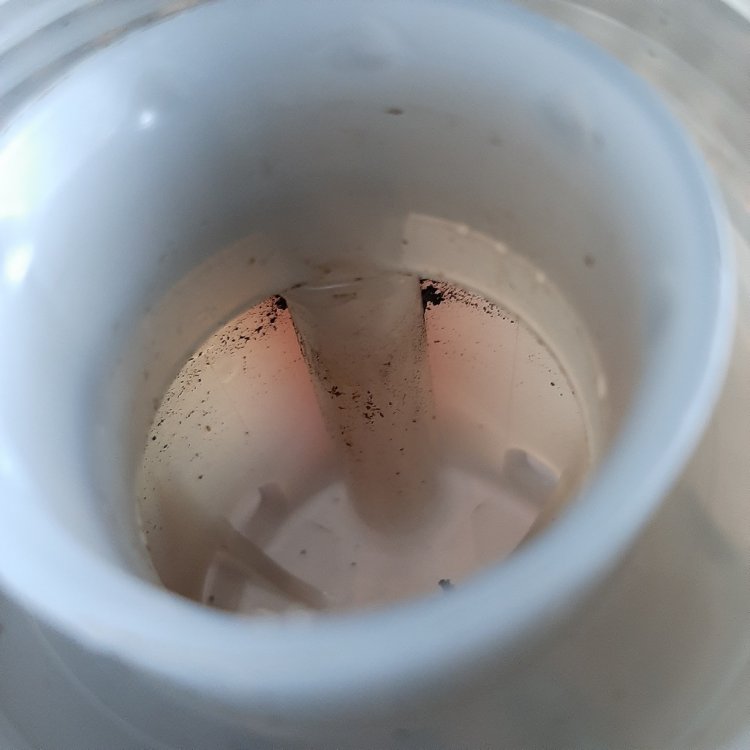
I have attached a pic of the header tank that I have replaced in my 152 Superb. As you can see, its doubled walled where the silicate bag resides..its the faint pink color, and no way to access it, unlike older models where it was possible to extract it from it's cage. Hard to figure out where your silikat vanished though.. Had to be in to the coolant, Where else could it have gone? And of course if it escaped and mixed with the coolane, it might not show any visible signs in the color of the coolant. But I'm pretty sure that the veins in the matrix will show plenty of evidence of what has blocked it. I don't follow this "debris" explanation one bit......If it was some kind of "Debris", then I'm pretty sure that it would have been flagged a long time ago, with other Skoda owners, and some explanation given. But if it WAS a debris, then the only 2 ways it could have entered the system, A, you topped it up with something that was contaminated, or B the Antifreeze / coolant itself reacted with the metals in the engine and created an oxide. Question is, which is it? Personally, I'd be going for "B" with the silikat being the culprit.
-
As these things go, yes you had your money's worth. But I'm not convinced that Skoda can't improve on the longevity of their waterpump's, given the quality of the other mechanical parts in their vehicles.
-
Re changing and flushing out the existing coolant in the VAG engines, I've just seen a video pf a very simple way to do this, and its something that I'm going to try myself. Run engine until it's hot. Then remove the header tank return pipe from the tank, and connect it to a long piece of plastic tubing ( 4-5 ft or 1 metre ) place the other end into a suitable container. (20-25 Litres) Start engine, and as the old fluid is being pumped out, replace it with either new coolant, or ordinary water if you want to do a full flush. While this is going on, have the heater controls switched to maximum heat and fan settings.
-
Having just replaced the timing belt and waterpump on my 152 Superb at 80'000Klms / 49700 Miles. I can't really say just yet if it's the "new Improved" version...maybe someone here on the forum cam help? But I do know that in many other makes and models, its standard practice to replace a part with a high failure / premature failure rate with an improved version. When a brand new model comes on the market, and even with exhaustive testing prior to release, its the general buying public who shoulder the brunt of real-life driving conditions, and thats when design faults become apparent. Generally, when the 3 yearly upgraded version comes along, a lot of the kinks which were in the original have been ironed out. And the VAG 1.6 engine is long enough in production now to have all the kinks sorted, especially short life water pumps....Its a black mark against an otherwise very good engine.
-
For the "Missing" coolant , I'd be looking at the waterpump. Check for water / coolant staining around the pump itself. It's recommended that they be replaced between 60-90'000 Miles, but they can go sooner. i would not be too impressed with any water pump that lasted less than 100'000 MIle's in any car.
-
To be honest, personally I would be in favour of changing the belt's every 5 years, as the composition of the belts can cause them to deteriorate over time, regardless of the mileage. That's understandable, but water pumps that need changing every 40-45'000 miles?? Sorry, thats not acceptable. Neither do I have any problem with 2 year brake fluid change, or 40'000 Mile Auto-transmission change and flush.
-
And no issues re bleeding all the air out of the system afterwards?? ... Just fill it up with coolant turn on the heating and run the engine, topping it up as needed, and it has been fine since? Thats good news...I had heard that it was a complicated process, and it needed to be plugged into VAG-COM to operate the pumps and thermostat. Thanks for your helpful post.
-
Something very wrong some where when water pumps are failing at those sort of mileages. What's the recommended service replacement mileage / time?
-
Very helpful post indeed skodavia. Thanks for posting. I need some advice about how bleeding the system went after installing the Matrix., if you wouldn't mind? In my Superb ( 2015 1.6 3V , but presumably the same set up?) I have just replaced the "Mit Silikat" tank as I was unable ( like you) to extract the "Teabag" from between the twin walls. I replaced the antifreeze lost during the job with G13 concentrate, but as the car is now 5 years old ( but just 80'000 Klms ) I plan on carrying out a drain and flush. From what I'm hearing, in these engines its not so simple..apparently there are 3 different pumps ( depending on the model) and these need to be activated electronically during the draining process? Did you have to do this when draining/ refilling your car? Thanks for your help