
Graham Butcher
FREEDOM
-
Joined
-
Last visited
Everything posted by Graham Butcher
-
It looks as if the UK was playing around with electric cars in the 1970s with a small startup company called Electraction and this video shows what is thought to be the prototype of a particular model known as Tropicana, which was powered by 12 6-volt lead-acid batteries. The channel is called "Look Mum No Engine" and some of you may (if you're into electronic and electrical engineering) know the presenter from his other channel, "Look Mum No Computer", where he makes all kinds of musical instruments and builds massive control systems to control them, even setting up a museum dedicated to them.
-
That is what I was going to suggest, to find a way of wedging or preventing the blind from opening, or leave it fully open so movement can be ruled out and see how the alarm behaves.
-
Is the sun blind manual or powered? Is there a spring in it that would tend to assist it opening if the magnets aren't holding it shut?
-
Yes, it could be. Is this a car that is in daily or frequent use, or are you still bringing it back to life? But battery failures are nothing new; the last time I experienced something like this happening was back when I was the electrical engineer looking after well over 100 buses and coaches in my 20s. I was just watching a video about brand new cars having a total turbo failure, completely destroying engines on brand cars with less than 50 miles on the clock, so it does happen. PS, A spider was what I blamed in the first instance when my alarms on the Superbs kept going off in the night, but that proved not to be the case in the end.
-
It should be OK, but if you have a battery tester to hand, I'd still test it under heavy load conditions; you have no clue how long it has been sitting on the shelf for before you purchased it. If nothing else, at least it would remove it from one way or another from being a possible suspect to either the the prime suspect or remove it altogether. I would not have suspected that a so-called brand new Yuasa 096 EFB battery would fail completely after 9 months (purchased 16/9/25) from GSF Car Parts on 15/6/26, but it did. Interestingly, I just checked on their website, and it seems that they no longer sell this brand. Form your own conclusions as to why that might have happened.
-
5.8V is perfectly acceptable. So it's looking like either the alarm itself is faulty or, as I said before, check the main battery for high internal impedance and SOH. You said before that it was pretty new but never said if it was a brand new one, a new second-hand one or how old it was.
-
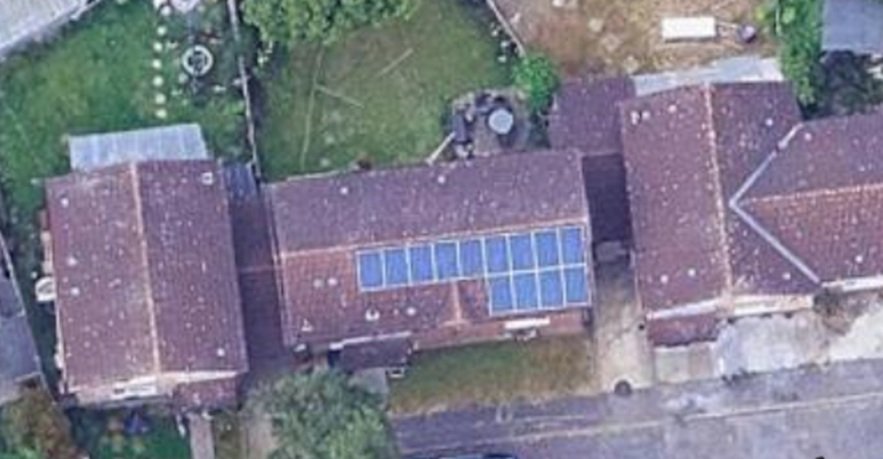
Now before anyone attempts to accuse me of being anti-renewables, let me remind everyone that I have no fewer than 13 solar panels on my rooftop as well, so this puts me at a small risk as well. Solar panels can only deliver what they are designed to generate, so a 400w panel should not be able to deliver more power, therefore current, than what the cells are designed to do. If your cables are running hot, then that suggests that they are undersized, not pure copper, or the total length of the cable run is longer than it should be for the actual cable rating and is acting like a small electric heater element, or maybe two or more factors are in play? I'll leave you with this snippet of info. I did a Google search using the following data: "solar panel fires UK", and it has produced no fewer than 25 hits where government, fire departments, the construction industry, insurers, consultants, etc. are all showing concern about this aspect. Reports are showing a 60% increase in the number of solar panel fires in the last 2 years alone. It also seems the much-heralded Norway is also suffering, and other countries are experiencing similar findings, so this is not a UK-only situation; it's just another thing that is not receiving mainstream media coverage for some reason.
-
@lol-lol Sorry to go on about solar panels catching fire, I think you might be interested in this, where there have been 3 cases of them catching fire on schools in Suffolk in the last 12 months. Extracted from one of these reports "Suffolk Fire and Rescue said afterwards that it had "confirmed beyond reasonable doubt that the cause was a solar panel on the roof". Fires at Brooklands Primary in Brantham in March and at East Bergholt Primary in August 2025 were also both linked to solar panels. The NEU said it had contacted the county council in April to request urgent reassurances and a clear plan of action, but said the issue was delayed for further discussion. NEU Suffolk joint branch secretary, Wendy James, said it was "deeply troubling that no decisive action was taken until after a third fire occurred in a fully occupied school". Ipswich primary school fire caused by solar panel on roof - BBC News Suffolk schools to switch off solar panels after fires - BBC News Union has 'grave concerns' over Suffolk school solar panel fires - BBC News
-
If you read my posts, I said that I have NEVER had to replace a horn battery or, indeed, for that matter, a horn. In all of my experiences of the car alarm being triggered, it was the result of the car's main 12V battery beginning to fail. It was also the cause of my neighbour's Ford Fiesta alarm being triggered several times in succession. Fitting a new 12V main car battery in each case cured it. The car that was written off had an alarm that was 10 years old, and in the car's 10 years it had 3 new 12V main batteries, and twice the alarm was the sign that the battery was failing. The last time that happened and the battery failed to start the car, I was outside of the Essex Ambulance Service depot on North Weald Airfield, and they brought their breakdown truck over to me, tested the 12v main battery and pronounced it had a bad cell, then jump-started me, and I drove to GSF, and they replaced the battery under warranty. Bingo, no more alarms and no more starting issues.

-
Oh, OK, I've had the alarm horn going off for no apparent reason on my last three Superb and the main car battery in each case was the cause. Just after the alarm started being triggered, the main battery failed completely. The last time the main battery was only 18 months into its 4 year warrenty. Replacing stopped the alarm being triggered. Just 2 weeks ago, my 9 month old main battery failed on the day I should have been taking my wife to the airport. So when you say it is very new, I wouldn't dismiss that completely I have never had to replace the alarm rechargeable in any of my cars.
-
That is an early indication of a failing 12V battery, I kid you not. Test your battery with a proper battery tester that tests it under a sustained load, and I expect it will report a higher than normal internal resistance and cause a voltage drop.
-
If people cannot understand and accept that as a car lover, I'm going to have a strong interest in all cars regardless of their drivetrain. As an electrical engineer, I'm naturally going to be interested in EVs, but currently not to the extent that I would have one until the bugs have been eliminated. Those that have EVs, I defend their right to have them if it was their free choice. I and others object to being labelled as anti-EV; we are not. We are against being forced to accept second-hand cars because new ICE cars are being phased out. Imagine (if you can) EVs were the norm and they were being withdrawn and those who wanted to have a new car were being forced to have an ICE car and your freedom of choice was removed. I cannot for a single minute accept that you would be happy. Now if people cannot see and accept that I'm being 100% genuine, then it is they who have the problem and closed minds.
-
This was an interesting repair and highlights the problems with EVs which have left idle for an extended length of time, so you most definitely do not want to get yourself incarcerated at His Majesty's pleasure. When you come out, you will have a sizeable bill to get your car back running again.
-
@lol-lol there is nothing stopping you have 3 phase supply if you are willing to pay for it I think. Trouble is that many are completely unaware of the hazards associated with it, you may well be, but others not so. When I rewired my parents house they had nightstorage heaters installed and as they were on a overhead supply, single phase to 4 houses, when they came on, there was a voltdrop. I had 3 phase put on split the loading over all 3, taking care to ensure the sockets, cooker etc in each room etc were all on the same phase to reduce the risk of having 415volts at socket level. But why would you want 16amp sockets?
-
@lol-lol I'm familiar with the European practise having worked a number of years for Hager Electrical and attended many training sessions they run and indeed gave given many such sessions to electrical contractors here in the UK. There are many practises they adopt over there including the use round flexes as a permanent feed and suitable for embedding within building fabric. Having been in the industry all of my working life, I can tell you that the UK system is the best. I also worked for Crabtree Electrical for around 15 years and they have one of the very few electrical test labs approved to test equipment to complete destruction. Many manufacturers used to pay for their services and believe me, what your perception of other product and wiring practises does not actually stand up to what ours demands and proves to the best. This is not the place to debate this in depth, I have voiced my opinion and warned others that they adopt these things at their own risks. Solar can be good but it also carries some risks and one is they do not like extreme heat with some catching fire and others failing to work in the heatwave. So people should either wait for full safety tests and approval for use by our own legislators or take a risk, their choice to make.
-
It is important to understand that is a government commissioned report and is therefore biased and designed to push this forward as another means of working towards net zero. It is NOT a report compiled by the British Standards Institute nor is it one by the Institute of Electrical Engineers who are the body that writes the wiring regulations that every electrical installation must comply with to fully approved. Any deviation from them can and mist certainly would negate any insurance claim on the building or any shock protection claim. So as an electrical engineer, I urge anyone tempted to use such a system to seriously consider the implacations should anything go wrong. I personally always say to follow the money, and see just who it is that actually benefits from any such reports and claims. In this case to my mind it clearly is our government as a means of propping the failing net zero mandate. They could not risk leaving to the existing organisations who only have your interests at heart. This system is akin to having a standby generator plugged in to power up in the event of a power failure. There you have to have special circuitry installed to prevent power exiting the building back to the grid which would put engineers working locally to repair the grid at risk of electrocution. There is no such system with this balcony solar, it is my view dangerous to both external people trying reconnect the grid, and also dangerous to people using the system.
-
Oh, so it would seem apparently. My info on that aspect was out of date.
-
The reason for the switch to 48volts you mention is because copper is so expensive as EVs use so much of it and with the higher voltage he is able reduce cable sizes massively so reduce the amount of it being used for normal functions in a car. The other issue here is that the electronics and there is so much of them in EVs and printed circuit boards all need copper to make the tracks. So EVs are becoming a real drain on the Earth's natural resources but nobody is willing to talk about it. At least the person you refer to is attempting to redress that in part at least but I suspect his real reason is to A, reduce the amount used, and B, save weight as EVs are heavier than their combustion counterparts. But I suspect that his real resin is that he can reduce his costs and hence enrich his bottom line.
-
One of the biggest problems with aluminium is that us both softer and at the same time is less resilient to bending / flexing making it much more difficult to terminate. Hence all terminals must be checked on a regular basis to ensure their correct tightness. It also cannot be soldered and it also a far lower melting point. I also seem to call that it stretches far easier so that it would require more pylons per mile to reduce the stretch induced by warm weather and wind loading. It was trailed once for transmission lines and rejected.
-
Aluminum is not a good replacement, you need an increase in size and the terminals need to be checked regularly for tightness. It has been banned in UK regs because of these issues. I have seen extension leads still wound up, being used and they have burst into fire as a result.
-
Yes it will, and there by stands a potential fire risk right there in the extension lead. So many of them are only rated at 8 or 10amps because of cable sizes used. Many of the cheaper ones are 1 or 1.5mm cable, and if it was made in China etc, that cable is often steel not copper, which is another problem area.
-
1.5 or 2.5 mm cable would far better, the losses would greatly less. I take it the 220V is at the consumer unit, or is at the output end of the extension lead?
-
Defo sounds like losses are being incurred in undersized extension lead. Is it a long one? Is it one of those wind up ones that have the outlets on the side?
-
@lol-lol With the error that you get from time to time, I'd be inclined to actually get the earthing and all associated bonding on your house and charging point checked professionally. If you do have a dodgy earth connection, one day when you come to disconnect your car, you could receive a nasty shock by becoming the earth bond, which could be fatal. I'm sure that we'd all rather be chatting with you than chatting about you.
-
While taking photos of an Omani Air Force Hercules arriving this afternoon at Stansted, a pheasant suddenly emerged from the crops and gave me and my son a checking out for a few minutes, and once it decided we posed no threat, it proceeded to walk towards us and then between and disappeared into the hedgerow.