Graham Butcher
FREEDOM
-
Joined
-
Last visited
Everything posted by Graham Butcher
-
Isn't that perfect storm likely to be one where the planet is awash with these hydrocarbons? Martime uses will never be able to use that amount of diesel, especially when many people/bodies/governments are all pushing for more and more electric transport, which also includes shipping and flights?
-
But where does plastic, etc., come from? Oil of course and is one of the smaller extractions from a barrel of crude, so what are we to do with the rest of the extracts such as petrol, diesel etc, Return to the days of dumping them just as they did with diesel before the diesel engine was invented? Apparently diesel engines are more thermally efficient than petrol ones. The History And Origin Of Diesel Fuel – Kendrick Oil Diesel engine - Wikipedia
-
Yes, I think you are right, but it is still a pretty damning situation of the UK in its big net zero push. All it is really doing is moving that pollution somewhere else, thus making pollution worse for someone else, while making living conditions far worse for British citizens as a result.
-
The UK government has created much of the current position and should be jumping through hoops to remedy the situation, but they aren't. Form your own opinions on why that is. This video explains the very points you raised above.
-
Volkswagon have just released details of their concept electric car, claimed to do 8.27 miles per kWh. This is based on their other concept car the XLintroduced back in 2009 and then the diesel powered 1 litre plug in electric, an early PHEV XL1 which was put on sale in 2015 in Europe only with electric range of 50km but the diesel engine delivered 100km on just 1 litre of diesel. This clearly demonstrates that the diesel-powered cars could be far more efficient and cleaner than they are today and help climate change. Volkswagen unveils the 'world's most efficient electric car' but you can't buy it
-
We really do need to up our game or we will be in deep trouble.
-
This video shows it all.
-
Well, I'm only 30 miles away from their distribution depot and one of their warehouses in Tilbury, and increasingly my stuff arrives via diesel-powered Mercedes vans.
-
Yes, it did come from a pretty good and reliable source. When I have a bit more time on my hands, I'll see if I can find it again. Regarding range, with a diesel-powered ship, there are ways to refuel them while at sea. The navy do it all the time at certain locations where their ships cannot afford to be off station for any time in order to protect other shipping in some of the world's hot spots. Not just refuel, but restock the ships' larders with food and drink and other essential items. Somehow, I really doubt that it would be possible to effectively recharge an electric ship in the same manner as they would to be connected for such a long period while generators supply energy that it would be far too dangerous to do.
-
Ever seen a Tesla Roadster? Well, there is one here that is in quite a bad way, but it seems is in safe hands if he can get the parts. Tesla has none, apparently. This should be a good one to follow progress on.
-
What has happened at Amazon with their big electrification plan for the last-mile delivery vans? There was a time when I was actually seeing this taking place, but now it seems that they are using diesel-powered vans in that role. I keep on getting more deliveries by Amazon and all in diesel vans, and I also have seen many other diesel-powered Amazon vans around Essex.
-
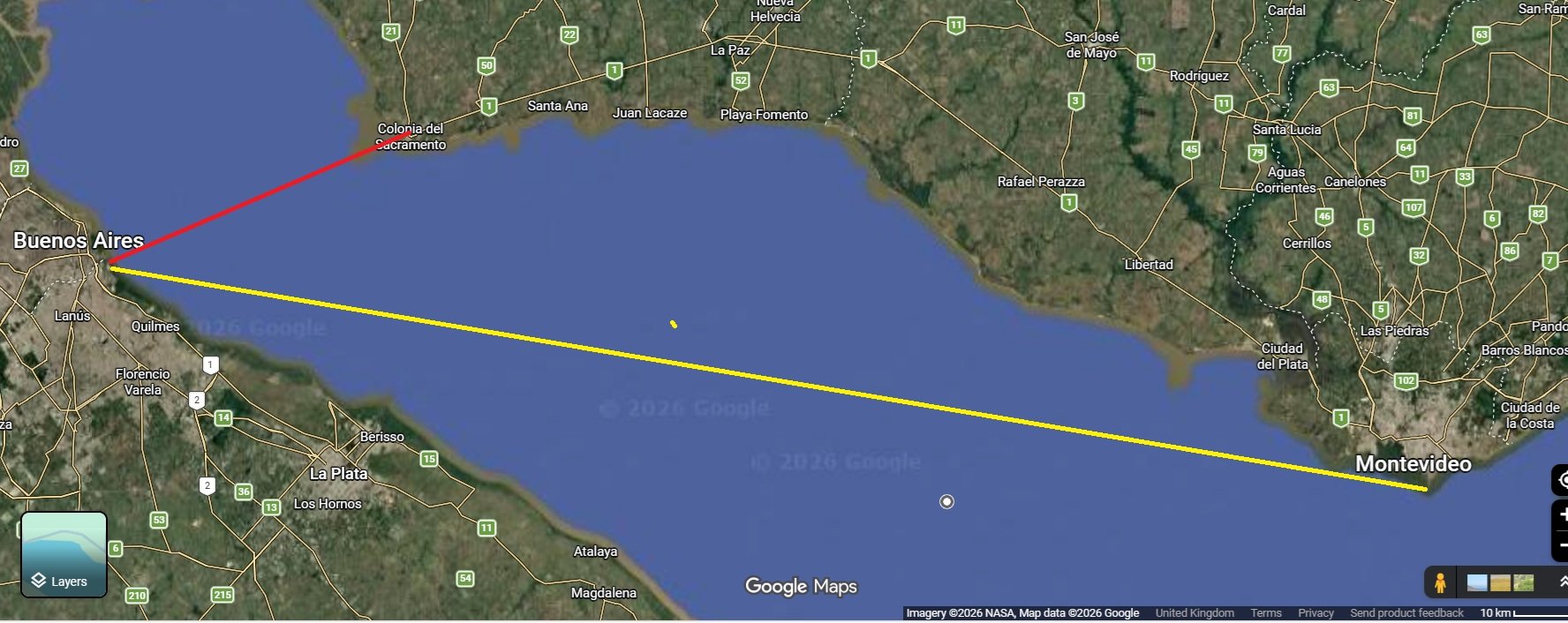
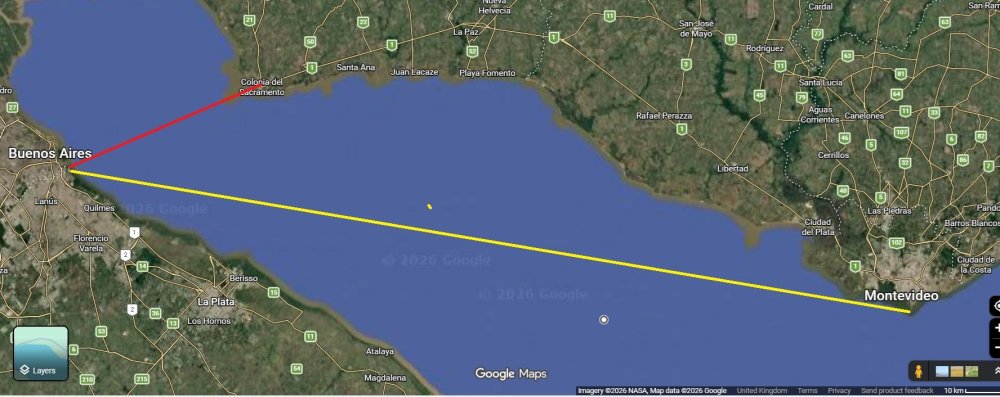
Actually you are partly right, it is designed for more inshore waters, but range is a real big problem for it was well. Also oddly enough, it was built in Tasmania so has had a massive piggyback ride on the diesel-powered ship. And if that was not enough, it was originally hoped to be suitable to the route shown in yellow (130miles) on the map below but it has a very good chance of being left drifting out of control if the seas are a bit rough, so instead it is going to be used for the red route (32miles) instead.
-
With a project cost of $200 million, the largest fully electric ship and largest battery electric vehicle of any kind in the world has just arrived in Uruguay for the Colonia-Buenos Aires route. Electric ferry delivery.mp4
-
@lol-lol but that is true of any company, their reputation etc is all down to the staff, they can make or break a company. Sadly all too often, staff is not appreciated by the bosses.
-
What I meant was that the car has to be there at the time, or else no cheap electricity, not like a loyalty card from an oil company where when you have amassed so many points, you can redeem those points at the filling station of the same brand at any time of your choosing.
-
The problem with electricity like that is that you have to be at home in order to take advantage of it. OVO have at long last rolled out special EV tariffs, or at least it is the first time they contacted me regarding them.
-
The whole point is that self charging hybrids and plug in hybrids still rely on combustion engines. Self charging only have an very short ev capacity and PHEVs, mostly are not plugged in they used as tax dodgers.
-
The Fine Print mentions about the self harm the UK has and is continuing to do it self with the Zero Emission mandate and is a clear example of follow the money principle.
-
If you want to know how we are being ripped off by the authorities, watch the YT channel "The Fine Print"
-
Here, they shove the price up instantly without filling their tanks
-
Last week I paid £1.80
-
£2.12 a litre, where is that?
-
I know about that, hence my surprise that you actually admitted to using Tesco fuel after you posted this.
-
I think you missed the point of my comment, I was saying that you don't get sidetracked talking to other drivers when doing a splash and dash or even a full refuel with liquid fossil fuel because you have to be there, squeezing the trigger for the fuel to flow to your tank, unlike an EV. Of course, rain, snow, etc is going to have just as much impact on the rolling resistance of an ICE car as it does on an EV; that's pure physics.
-
@lol-lol The Superb they used was a standard one and the only things modded were the fitment of low rolling resistance tyres, which many owners do as well. The only other thing they did was lower the suspension by 15mm to match that of the Greenline version. All Superbs have a smooth underfloor, unless someone has not replaced the various undertrays after doing a service on the car? The fuel tank holds 66 litres because it is a bigger car than the B and C-segment cars you mentioned; the Superb is D-segment and so has a heavier weight and has a larger wind resistance to overcome. An Octavia is a C-segment car and has a 50-litre tank, but their WLTP ranges are broadly similar, so the extra 16 litres did not give it any advantage in range. As to the fuel being chilled to allow more fuel to be stored in the tank, as far GWR is concerned, that is not allowed. What was that about Tesco fuel destroying ICE engines with water and other debris in their fuel, and yet you use it for your 5p and 8p-a-litre discount vouchers, which you use up? 🤨