
wyx087
Resident Member
-
Joined
-
Last visited
Everything posted by wyx087
-
Ok, water under the bridge re previous points. No point dragging it out. But a few new points that are totally not true: No, EV are comprehensively proven to be produce less carbon emissions in today's grid: In UK: https://www.nationalgrid.com/stories/journey-to-net-zero/electric-vehicles-myths-misconceptions In US: https://www.epa.gov/greenvehicles/electric-vehicle-myths EV myths busting: https://www.carbonbrief.org/factcheck-21-misleading-myths-about-electric-vehicles/ There's many more well established sources. Again, see myths busting page linked above. Batteries can be re-used, and recycled. All components of Li-on battery are proven to be highly recyclable. Cobalt-free batteries have already entered the market in a big way. Owning one does not invalidate arguments made for reasons why people should adopt one. But not owning one does invalidate attempted talking points on on real world usage experiences. Second hand experience does not equal to real world experience. Yes if you share conspiracy theory motivated slogans and spread FUD. No, your position isn't clear. Because you keep saying you are in favour of EV's but at the same time you repeatedly spread misinformation about EV. Case in point, above points.
-
Their article states 1 in 4 cars are now BEV but total "surface transportation emissions" dropped by 8.3%. So 4 in 4 cars would be 32% with extreme extrapolation and simplification. The number seems pretty good for this private car usage model. Remember surface transport include emissions from goods transport, shipping and mass transit. Passenger cars are a moderately small percentage. No it is impossible to achieve better result with ICE vehicle, unless the said ICE vehicles can reduce its per-distance emission over its lifetime just like BEV. It's very simple, cars live a long time and 10 year old VW Golf are still producing same amount of emissions per mile. Whereas 10 years old Nissan Leaf are cleaner per mile compared to 10 years ago because the grid is cleaner. So instead of the ageing fleet (average 9 years old as you previously pointed out) gradually reducing their emissions. The reduction speed is limited by new vehicles being bought. So I think even if a 100% "vehicle with less than <100g/km emission" mandate is introduced today, 4 years ahead of 2030 pure ICE ban, I think UK carbon emissions reduction would not be any faster than current 20 odd percent ZEV mandate. Let's not forget most vehicles that are not supermini cannot easily achieve <100g/km without electrification, it wouldn't be much different to 2030 pure-ICE ban. It appears I've hit a trigger word. You are actually the one toeing the line and spreading: Your own logic and points previously beautifully articulated (below), but outlook for the same concept took a turn when the trigger word is mentioned. How sad.

-
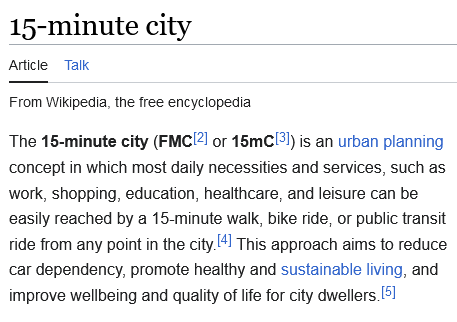
I own because I like and I can. Does not mean I don't walk the talk. My whole family had been using public transport whenever it is more suitable (eg. into the city). We use micromobility for most local things. Despite owning 2 cars, total annual mileage they do is less than 12k, including long drives such as the one earlier in the summer and many weekend day trips. Remember, car ownership does not mean using it to clog up the roads. It's parked on private land (a small driveway) when not being used. So 25% of total fleet are BEV achieved 8% reduction in Norway's total road transport emission, remembering last few years around 80% their new car sales are BEV and their electricity mostly comes from clean hydro. But you are saying a gradual reduction in ICE emissions is going to make a dent on the same emissions? Even if 100% new cars sold for last 2 years has 50% reduction CO2 emission (impossible and worse than Norway's 80% BEV). It will not make a dent in overall road transport emissions. Just like 80% BEV sales didn't make a dent in Norway. This ^ I am 100% in favour. It is the exact concept behind 15 minute cities. https://en.wikipedia.org/wiki/15-minute_city
-
Privately owned transportation is never the correct answer to mobility. I've been saying this for a while. EV are the answer to reducing road travel related emissions within current privately owned transportation usage model that already encourages inequality. The article is very clear, their mistake is not promoting more eco friendly solutions that is available to everyone, such as e-bike or mass transit. From that article: "At the same time, Norway offers a warning about the dangers of promoting EVs at the expense of modes that are more beneficial to the environment as well as urban life. " "“The mistake is to think that EVs solve all your problems when it comes to transport,” said Ruohonen, the Oslo mayoral adviser. “They don’t.”"
-
Again, I'm simply pointing out the bleeding obvious: ICE car is not the answer to everything. Many people cannot afford cars, out of car owning population, a subset don't have driveways. It is obvious there's many social divides, driveway is a very small subset of many bigger social divides. It is indeed a problem for overnight total 100% EV adoption right now but it doesn't mean it would still be a problem in 10 years time. If you have a problem with the way I point out obvious things, then find ways to word in such way so that your statements are clear and cannot be misunderstood.
-
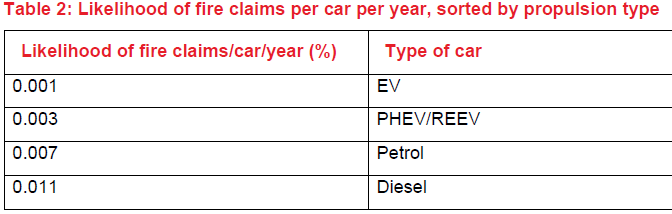
I'm very sorry that you have the inability to distinguish between car insurance claims data and compare it against "Titanic is unsinkable" outlandish claim. The data has flaws, but it doesn't completely invalidate it. Or even get discredited by calling it from corrupt source. I'm done here. You clearly have a bone to pick and anything that doesn't conform to your view is "corrupt" or "a narrative" or get called "rats" that get blindly lead away. Very mature.
-
None of what you wrote are related to: Data is data. It came from reliable source. Said data contains caveats and missing information, but does not mean corruption from publishing body. We've been through this data many times and its short comings have been repeated many times. But it's time to back off from keyboards and have a long and hard think about your false accusation.
-
People who can afford to own cars. People who cannot afford to own cars. https://www.cinch.co.uk/guides/car-finance/cost-of-owning-a-car There are many. Funny how this forum only focuses on car owning portion.
-
I'm sure I've read something like that for goods vehicle: https://www.power-technology.com/news/germany-launches-first-electric-highway/?cf-view https://www.caranddriver.com/news/a45989117/first-wireless-charging-road-north-america-debut/ It makes a lot of sense to reduce battery requirements on lorries so that they can travel long distances without needing to carry huge masses of battery. Not sure about passenger vehicles that can already do 300+ miles and occupants need stretching every 2-4 hours, with batteries and infrastructure that enables recharge in 20 minutes. Eg. longer range EV's from 2019 and onwards.
-
I believe you were saying the claim was result of "corruption from so-called exports". Let's recap, the said claim is that "ICE vehicles catch fire far more than electric ones", in your exact words. Below is one of the "claim" that matches your exact words, the source writes: "Thatcham Research, the UK motor insurers’ research centre, used the data from the Motor Insurance Anti-Fraud and Theft Register (MIAFTR) and their own data to categorise fire claims by vehicle fuel type" I'm not seeing any "corruption from so-called experts in electric cars" in this insurance data set, all I see is hard evidence with my previously noted caveat.
-
😛
-
It is designed for them to first gather data on how much energy they can get customers to soak up. So that they are able to bid for excess electricity and prevent excess renewable going to waste. (therefore being a bit wasteful is okay here) I'm not sure how it can be applied as discount to everyone, where they wouldn't be able to gather data for future use. Discount would also be applied to peak time if applied to everyone, which would cost them a lot more if customers used more during that period. It's all about data for Octopus. Time of use or Type of use tariff are the future.
-
I test drove an Enyaq back in 2022. It was a great family car, very comfortable suspension and lots of space. Feels like an evolution from previous Skoda models, which may be good thing if that's what you like. The bigger battery was available back then. Cars were still suffering from component shortages in 2022, I spec'd up a big battery AWD Enyaq with all the autonomous features and it came to similar price as a MY LR, without Tesla's charging integration. In 2022, downside was that the car don't do battery pre-conditioning for rapid charging. So you may not see quoted 100 kW in extreme temperatures. This may have changed now because it can be added via software update. The bigger battery will also support V2H after software update, VAG is limiting this feature to the biggest battery versions. BTW, spot on with the free extra electricity bit. But I think it's more aimed at people who can charge their battery, and thus normally have almost zero usage at that time. People who normally do stuff at that time can do more for free.
-
He may be referring to likes of this https://octopus.energy/free-electricity/ and this https://www.britishgas.co.uk/energy/peak-save/sunday.html Also post-code dependent sessions for lucky people living near wind farm grid connections. To most people with time of use tariff, the off-peak isn't getting more expensive and we are getting more and more cheap/free events. There had been 5 Octopus free sessions so far, I received £3.80 credit for the first 4 sessions. I turned on the tap to maximum for session last Saturday, consumed over 12 kWh of electricity during the free hour (charge 2 cars 7 + 5 kW and a 95c washing machine maintenance cycle) looking forward to about £2.60 credit. Wholesale gas price has risen a little bit, I suppose that is the reason for price cap to rise. It is driven by people who cannot time-shift their electricity out of expensive peak period, which still relies upon expensive fossil fuel peaking plants, and pushes up the average. So from my limited experience, free/cheap electricity certainly seems like more abundant. Whether that is the long term truth, it's anyone's guess. I feel cheap sessions will only get more often but also more extreme price swings depend on the weather. Related Beeb article: https://www.bbc.co.uk/news/uk-england-essex-66775731
-
Yes, there's so many ways EV ownership is cheap. I was alluding to the recent talk about taxing per mile. Current vehicle telemetric accuracy is questionable, there is also up to 10% reporting difference in many cars. This is significant enough to make it a no go. Not forgetting older EV like my early Leaf no longer have functioning telemetric. Could do through MOT but that introduces other problems, such as solving first 3 year ownership and clocking. Measuring home charge point wouldn't work because there's so many other ways to charge. It would promote use of granny chargers and result lots of burnt out plug sockets as minimum. Most of the charge point consumption measuring is not up to metering standard. Measuring what goes into the car would also stifle much needed V2X innovations. Taxing EV usage will happen, just the method is still up in the air. My point was that even with per mile tax such as the one recently in the news, EV still will always be cheaper to run when charged at home.
-
Although tax is coming. Not sure how yet, but it's inescapable. That will decrease 10p/mile saving down to something like 5p/mile. (12p/mile consist of around 6p tax?). Only sure thing is that home charging will always be cheaper than public charging. That aforementioned social divide in car forums....... although I'm not hearing people on car forums talk about the bigger social divide between have cars and have not cars. Funny how opinions work.
-
Just today, another 1 hour free excess electricity session thanks to lots of wind up north (I think, was calm down south) and good solar production. Yesterday, today's and a little bit of tomorrow's driving fuel cost: 0p. In case of any power outage, just offload my home battery into EV or one EV into another. (there's a recent hacker showing unmodified Model Y energy dumping into Powerwall: https://zecar.com/reviews/tesla-model-y-bidirectional-charging-v2h) Cyber attack? My whole house has ability to run locally, I run my own Home Assistant. (recently added redundancy and achieved high availability via server clustering) China is different don't forget. they have lots of private hire NEV (new energy vehicle, currently vast majority battery) from private hire leases driven by people living in flats. Notice how the queues are mostly same cars? They rely on public chargers multiple times a day due to cars being cheap with poor range. So any charging outage means queues piling up, just like UK's 2022 petrol station queues.
-
Never take miles range as metric, it is dependent on too many variables. Always only look at % or "remaining kWh" (in the battery) if available. 61% to 100% is 39% charged, let's say 30 kWh net usable, that works out to be 11.7 kWh added. So my guess is that it will say 12 kWh added.
-
Try to run it down lower to get a bigger data ratio so extrapolation is more accurate. 120 miles at 4.5 mi/kWh at 80% works out to be 33.3 kWh. I think your car probably isn't part of the battery recall, otherwise they'd have done this very serious work.
-
The US rant gave me a chuckle. Hence: "funny rant on EV website". We live in Europe don't we? Hence shared Europe data. Still, here, you are talking about Europe data and trying to discredit it solely for reason that it was published on a platform that you view has a vested interest. So please do share your "truth". Reporting on sales data is not the truth? Who do you consider is actually reporting the truth? Have you vetted them to ensure absolutely zero vested interest? Why do you say they have put their own spin on things? As far as I can see, it is laid out in 3 simple statements: https://alternative-fuels-observatory.ec.europa.eu/general-information/news/europe-ev-sales-analysis-key-insights-june-2024-registrations
-
Do the sales numbers lie, according to you? How does one discredit numbers? Are any of those truth I listed, not true? What spin can you put on this?
-
Please do highlight the sentence that shows the European article is "trying desperately to discredit". Do the sales numbers lie, according to you? How does one discredit numbers? (of course you didn't specify what you were talking about. For clarity, I'm only talking about European data)
-
I used my post code and figures from Octopus tariff search page rather than my own. For some reason, their Intelligent Octopus Go is 6p on there may be a price drop is coming? -EDIT: actually, on the main IOG tariff page, it still says 7 p/kWh. This is my current IOG tariff as it says on my account page. Same daytime but 7 p off peak. 05:30 - 23:30 24.39p/kWh 23:30 - 05:30 7p/kWh But yes, I totally agree transmission cost should be higher, so I should bear higher per unit cost. More dense grid network so lower infrastructure cost is understandable. Although yours shouldn't be vastly higher. I'm hoping for a reform (don't like this word) of energy billing system so that more is loaded on to day unit rate and standing charge made much fairer.
-
Peak is a rather big jump from standard flat. Around here with Octopus, day rate is hardly more expensive: Intelligent Octopus Go Day unit rate:24.39 p/kWh Night unit rate:6.00 p/kWh Standing charge:47.85 p/day Standard Electricity Unit rate:23.08 p/kWh Standing charge:47.85 p/day
-
Read my post again regarding BEV market trend quoted in the European article. BEV sales is in fact flat, not downwards as you wrongly claimed. What discredit had there been? Do you mind highlighting the sentence that is discrediting "the truth"? Truth is that across Europe, BEV sales is flat. Truth is that Germany subsidy were taken away which impacted its sales figures negatively. Truth is that outside Germany, BEV sales is growing at steady rate. Is your "truth" different to those reported?