wyx087
Resident Member
-
Joined
-
Last visited
Everything posted by wyx087
-
Well then, for sake of saving lives and less pollution, being slightly inconvenienced is no big deal. Why are small group of people up in arms about it? Feels very similar to the pushback against EV's........
-
I never said saying buses are the answer. Right tool for the right job. The more built up area, the less cars. Cars go to park and ride then public transport into the said built up area. Key is having all the other options good enough so that most people use those as first choice. My main point is cars should not equal to freedom. This entrenched idea is what's driving the backlash against any sort of restriction and even at making streets safer. I totally agree that it is decades of poor short term decisions that lead us down this route. But it's never too late to change. Most of the time those fanning the backlash are not even remotely related to the area, just like recent racist protests.
-
The thing is, if we take away the problematic buses, a portion of those people would drive, increasing amount of cars on the road. Would that make overall traffic flow better or worse? On the other end of scale, if we take away car traffic for that area. Forcing people to use the buses. Would that speed up the said buses and allow more people to get places? Just a simple thought exercise. I know reality can be different. Fair enough. I agree economics were flawed and ever worsening. But what big infrastructure project isn't? UK is in dire need of rail upgrades and whole thing restructuring. A useful HS2 could have been the start and the backbone.
-
Exactly, it's the mindset. This country's mass transit system is very bad outside central London. Too much money had gone into short sighted car centric development. Projects like HS2 should never be cut back. But I'm not advocating dropping cars. I'm saying Translation, in areas that have viable transport options, change the mindset away from "car is first option, car is king of the road, car equals freedom". Further translation, doesn't apply to areas that currently have poor alternative transport options. Actually, my TV is around 10 years old now and not UHD 😛 It gets use so little these days not worth creating e-waste by upgrading it. Disagreeing is okay, I'm not trying to convince anyone. I'm just saying UK public have an obsession with cars and it's not sustainable. Mindset need changing.
-
I'm saying in order to feel the freedom to travel, one should not require use of a car. After that change of mindset, banning cars or restricting cars is no big deal. As I mentioned earlier, UK rail infrastructure is severally lacking. It was built before cars became wide spread. Combined with the fact it has had poor investment in recent decades. As such (UK) people do think of rail travel as going back in time, which is justified. This is symptom of UK's emphasis on cars over many decades, and as a consequence, people without cars are put at a huge disadvantage. But having experienced modern and efficient mass transit elsewhere in the world, I honestly don't think going to train travel for longer distances, underground/bus/tram for built-up areas is going back in time. I think it is actually the next stage of civilisation. Mass transit can be easy, fast, frequent, efficient and effortless.
-
Conclusion to Autotrader's high mileage Tesla series. Interesting Range Rover are charging more for a tiny hybrid battery replacement compared to Tesla whole pack replacement. It's a disgrace. There is definitely a big gap with regard to trained service personnel to work on EV's. But then, stealership are known to only replace not repair. About 2 years ago, I felt steering loose on the Leaf and done an ATS free suspension check. They told me front right lower ball joint need replacing. But they don't work on EV's, so I have to take it elsewhere. Last week, before MOT I did another free suspension check, I am pretty sure left one is loose. Sure enough they told me left ball joint need replacing. This ATS branch do work on EV's now, and cheaper than the random garage I used 2 years ago. Result Probably just taken a course and been told don't touch orange wires. But this is desperately needed for all garages.
-
The fire starting risk is inconclusive, I agree. There is a bias for older ICE vehicle in the data set. Only way to really compare is to compare similar amount of vehicle from same age. For example, less than 5 year EV outnumber greater than 5 year by 3:1, so the dataset for ICE vehicle should have similar bias. Other points regarding your very personal opinions about maintaining "narratives" and "hoodwinked"....... I'll refrain from commenting.
-
Nor UK!
-
Both cars and trains didn't exist back in the middle ages. Now trains also exist. Done correctly, it is able to move massive amount of people cross country quickly and efficiently. Think Japan, China, Europe mainland.
-
Air in tube is breathed by people who get to choose to travel via tube. Most of whom are healthy working age. It has higher PM but much lower NOx. Air on surface from cars are being breathed in by everyone, including kids and elderly. ULEZ have helped reduce NOx, and PM from ICE. It is also possible to commute via buses, breathing cleaner air on the surface. But selfish people in cars make it really slow. EV parking perk and ULEZ related air quality improvements are completely unrelated. I have never linked driving EV into the city to air quality, it was purely due to financial savings.
-
Cars are not a symbol of freedom and should have never be seen as such. Decades of car centric road design are actually the opposite of freedom for people who cannot afford to drive. This is a more concerning social divide than driveways. Despite paid fine for driving through newly introduced LTN, I personally welcome LTN and banning cars in areas that are not suitable..... as long as there is actual viable transport option for all abilities. In the end, there should only be vans remain on the road. Pick the right tool for the right job. Since no longer get EV parking discounts, I no longer drive into central London. It is quicker, easier and less stressful to take the tube/train. This is a perfect example of viable mainstream transport method and driving seen as alternative option. I think this is what we need in all built-up areas.
-
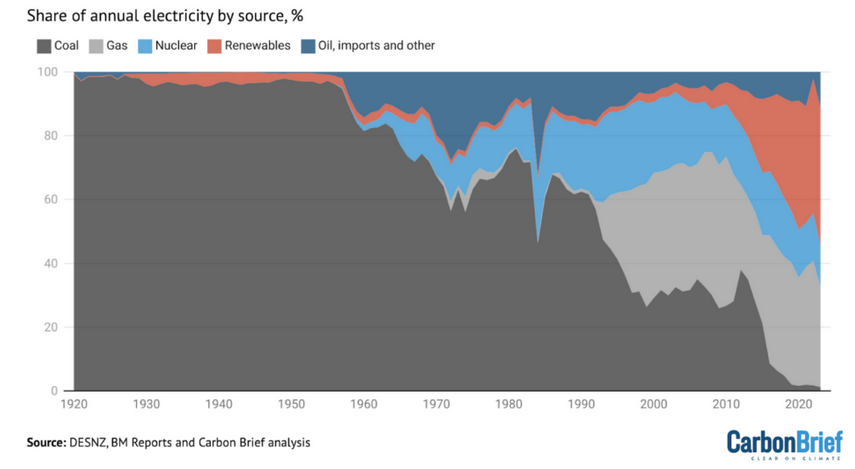
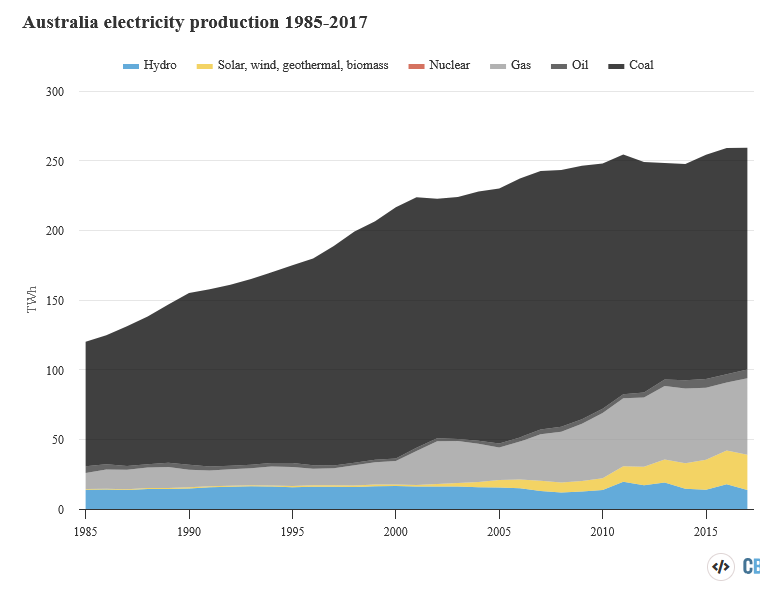
How many sources do you need? https://www.nationalgrideso.com/future-energy/our-progress-towards-net-zero/carbon-intensity-dashboard https://electricityinfo.org/real-time-british-electricity-supply/ https://carbonintensity.org.uk/ All agree we are currently 31 gCO2/kW. The first dashboard showing 32 gCO2/kW. Rounding errors. No, we are not being "hood winked". Because over time the grid becomes cleaner and the lifetime CO2 emission of EV also decreases: https://www.carbonbrief.org/analysis-uk-electricity-from-fossil-fuels-drops-to-lowest-level-since-1957/ Australia is unique due to their HUGE coal presence in the government. If anything, fossil fuel industry has their government "hood winked". https://www.carbonbrief.org/the-carbon-brief-profile-australia/ In the English speaking countries, not a lot of region can compete with Australia in terms of coal consumption. End of the day, that video contains lots of assumptions. ICE car will emit those 22 T of CO2 over its lifetime, at minimum, at point of use. (fuel refinement and extraction, manufacturing not included in calculation) The EV will emit maximum of 25 T of CO2 over its lifetime, assuming the grid never get more renewable install and the vehicle is always charged from the grid. (unknown if coal extraction and transport was included in the energy source calculation) So you tell me if who is "hood winked" by who? Not stating assumptions made and cherry picking numbers.
-
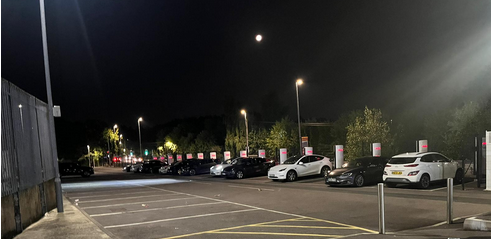
Even at other charge networks with multiple cables, they sometimes support 2 cars most of the time only support one car. I think only Gridserve supports 2 cars. Newer V4 and all other charge networks would have long enough cable to reach charge ports at any location when parked in intended charging bay. This is a uniquely Tesla V3/V2 charge point problem due to they were designed before Tesla decided to open up the network. For example, V4 Tesla superchargers with good mix of brands: https://www.speakev.com/threads/first-tesla-v4-superchargers-in-uk.179536/page-29?post_id=3650852#post-3650852
-
Those V3 charge stalls have short cable, designed before Tesla opened up the network. They reach Tesla vehicle perfectly on the left side. The mini charge port is not back enough so he had to go over the ramp. Vehicles with charge port on the right side would effectively take up 2 charging spaces. For example in the last photo there is a blue Tesla charging next to the mini. The charging stall visible in the middle is effectively blocked and the charging stall used by the mini was meant to be used by the empty space other side of mini. Hence try to bunch up with other cars so in total only waste 1 space. Or go on the end if possible.
-
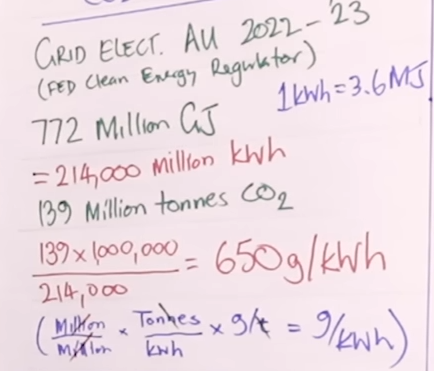
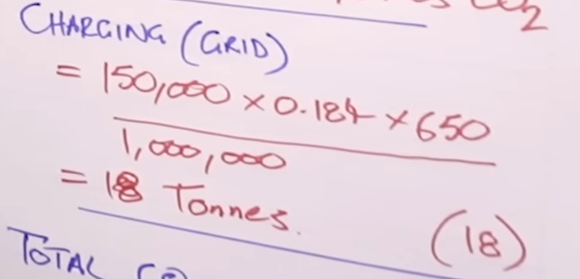
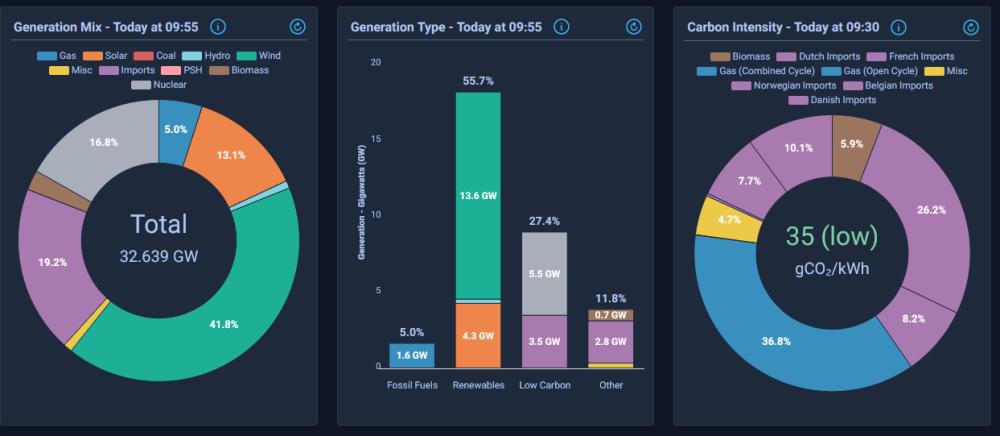
Have you actually had a think about what you are sharing? Only true if you take 650 g/kWh this guy claims: Not true in rest of the world, for example in UK, currently it is 35 g/kWh: https://www.energydashboard.co.uk/live Highest last 2 days was 80 g/kWh at 18:30 (peak time) Same everything else, using highest UK value over last 2 days works out to be: 2.2 T Total (using his numbers for everything else): 9.2 T Vs the smaller ICE Mazda of 22.5 T.
-
Try to go on the very end (last photo) or along side another car charging with charge port on the right side. This way you are not using up 2 charging spaces.
-
Did you get any credit as compensation? I just finished having other work done on my house, still Tesla Powerwall install to go. I took the opportunity to move solar PV meter and isolator out of the DNO box, shouldn't have been installed there. This created space for mains isolation switch. I want mains isolation switch to make it easier working on wiring. The first appointment Octopus had a mix up and person due for my appointment was in Leicester. I received £30 compensation for missed appointment.
-
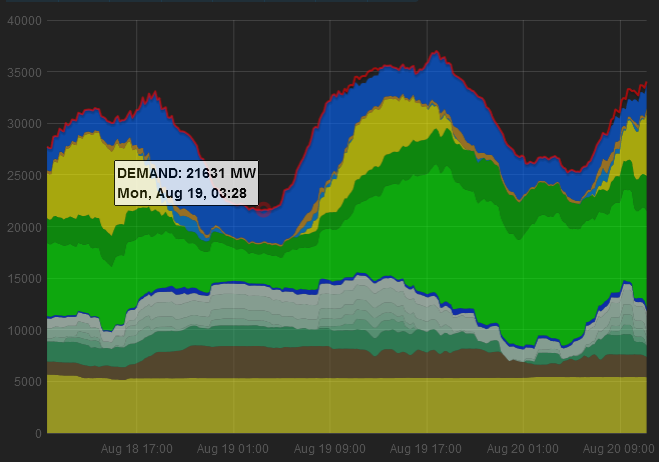
Between Monday's peak and troughs there is a difference of over 15,000,000 kW Typically there's between 10,000,000 to 15,000,000 kW of difference. Over 1 hour during the trough, let's say 12,000,000 kWh. That equates to 42,000,000 miles (at 3.5 mi/kWh). How much does UK population drive in total per day? We have 42 million miles per day of EV driving capacity just in just 1 hour trough window. It will take a long time to close this day peak and night trough demand difference. People say the off-peak time length will decrease or it will disappear. But forgetting as long as we have (ever increasing) portion of the grid on renewables, the unpredictability will always be present. The price will thus always be changing to generate the demand to match the supply. It's simple demand and supply management theory. This is the energy market, and now we, the end user, can finally participate thanks to smart meters.
-
This is opposite of my optimism and utopia vision. But remember just like right now where all time of use tariff that are variable (eg. Intelligent Octopus Go) have to adhere to price cap average throughout the day, if your theorised client-level peak pricing becomes a thing, there will still always be cheap periods to offset those more expensive peak periods. So it's no problem for people who can be flexible with their grid demands. Would be problematic for those without home storage capability.......
-
It will become a normal regular occurrence, but also might become regular is higher 4-8pm peak-time pricing. Renewables are cheap and clean, but they are unpredictable. So they need to be built overcapacity. As with anything over supplied, there will be times when they become extremely cheap to generate demand. This is where batteries come in, ability to be flexible in time domain ensures getting maximum savings in cost domain from unpredictability nature of cheap and clean energy. Hence why I pointed out EV's are typically charged with more renewables in the grid mix than typical household. It isn't about where that electron came from, it's about grid carbon intensity and the time that demand was put onto the grid. It is also important to get those who can be plugged in when at home to driving EV and keep plugging in. The more people do this, the more renewable can be connected without shutting down/going to waste. On a larger scale (both in time and capex), this sort of surplus period is the exact time to produce renewable fuel (green hydrogen, e-fuel). The more excess renewable capacity there is, the more low efficiency method of energy use is viable.
-
Something I noticed whilst renting a Model 3, there is a strange lip in the Model 3 footwell. I think it is where the battery starts. In order to give the sense of lower driving position and/or attempt at accommodate large feet, Tesla have the heel rest area lower than flat area in front of the seat. But as soon as I move my feet back to rest on the flat part, feels like knees are at chest level. I personally found it difficult to get comfy whilst on AP. That lip probably wouldn't work well with large feet.
-
You are totally right. That's when grid carbon intensity is high. But consider my lengthy post, how charging batteries are not time critical.
-
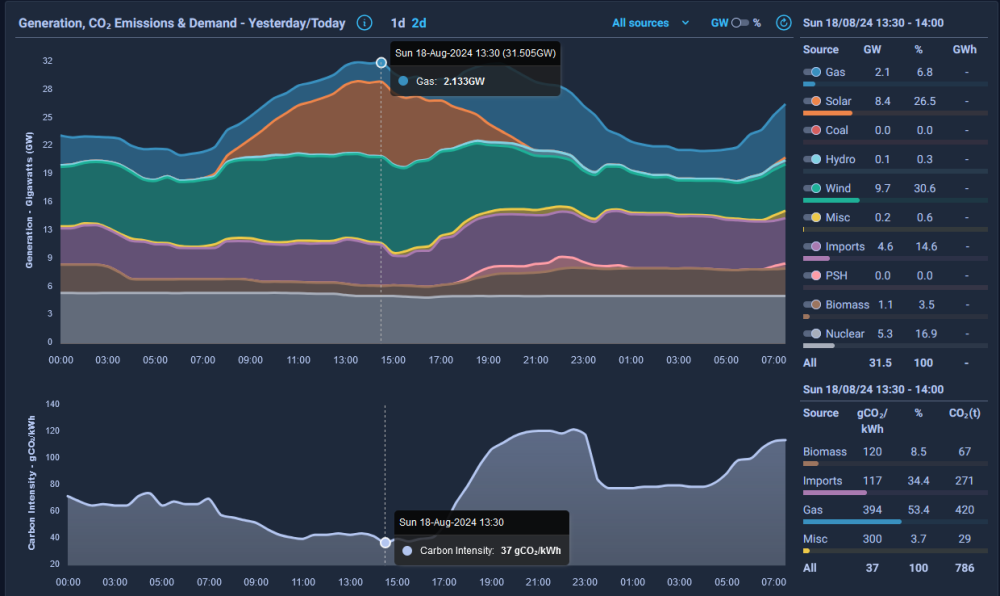
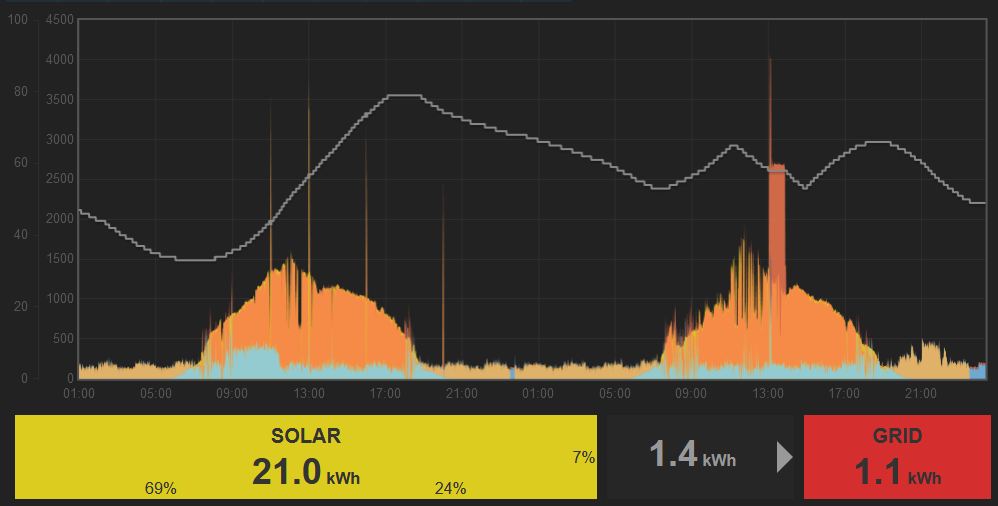
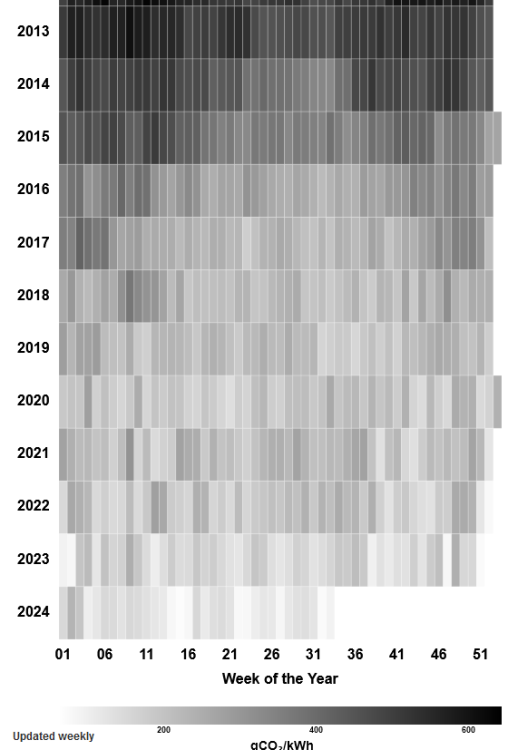
As you said, it all goes into a mixing pot. So we work by percentages, how much % of electricity is fossil fuel powered. From that we get carbon intensity. On individual basis, think voting with one's wallet. If everyone use green electricity suppliers. Only more green supply will be added to the grid. Someone (probably built into standing charge or time of use tariff) would fund the fossil fuel peaker plants. We could get rid of the constant gas production we currently use. Remembering EV's and house with batteries are not time critical and can soak up excess renewable or not charge when fossil fuel peaker plants are being used. So end result is most EV (and home with battery) smartly charged (Intelligent Octopus Go or Agile) would have lower carbon intensity than typical household. (Peaker plant explanation: https://en.wikipedia.org/wiki/Peaking_power_plant, no doubt we need those around for many years. I think batteries and time-of-use tariff are the answer) Yesterday during Octopus free electricity for example: https://www.energydashboard.co.uk/live People with EV's and home battery filled their boot at vastly lower carbon intensity than people using electricity from the grid at will. Charging EV and home battery being time constrained is the key here. Ability to time-shift charging to lowest carbon intensity period. With ever lowering grid carbon intensity, my 2014 Leaf now have much lower per mile carbon emission than 2014 when it was new: https://dashboard.nationalgrideso.com/ Can ICE vehicle claim similar feat? Also batteries can charge from self production. My example: over last 2 very sunny days, I have drawn almost 0 electricity from the grid apart 1.1 kWh during the Octopus free event. Leaf V2H home battery SoC is the line plot. Leaf was getting drained slowly before and after Octopus free event as I was charging MY with solar. Netted 30 miles of range yesterday from self consumption + low carbon free electricity. Could have got more free electricity by set higher charge rate. But I haven't received Octopus credit for first event, so I decided to take it easy in case their calculation isn't right. TLDR: key takeaway is remember that with batteries, every charging can be controlled whilst daily use is unaffected by price changes or renewable unpredictability. This means batteries are typically charged with lower carbon intensity than grid average.
-
You are saying because ICE vehicle data include older vehicles and older = higher fire risk. Making excuse for the higher likelihood number in the table. Although poor excuse because higher number of vehicles does not change likelihood probability. Your other point regarding fires originate elsewhere are entirely valid. But the first part is not needed. As I said, you just can't help but slip in your biases.
-
Same to you regarding diesel fire risk 😛 I only referenced the table to say how probability works and why the sample size is important.