wyx087
Resident Member
-
Joined
-
Last visited
Everything posted by wyx087
-
Agrivoltaics is the answer
-
In order to make use of those renwables, a good amount of grid connections need to be made up and down the country. There should also be a lot of smart charging incentives for areas with high renewable excess. For example, that podpoint flex scheme and Octopus power hours https://teslamotorsclub.com/tmc/threads/pod-point-flex.311017/#post-7814934
-
Your fruit analogy is not correct. The supplier would pre-purchase 100% of your organic fruit needs from certified organic suppliers. If they end up with a deficit, they will borrow from Aldi and pay organic suppliers to put back what they've borrowed. There is no pretending. Your money only goes to renewable suppliers. JL stops offering EV insurance. JL temporary pause offering EV insurance. Which statement sounds more like JL (their underwriters) does not plan to resume? Yes, it's all about wording and what has actually been said. The whole article is based on statement from JL with other bits giving context. I don't see any problem directly use wording that was officially stated by spokesperson. My insurance isn't with JL. I was giving context. Is that in France? France are known to have stable nuclear generation than other nations. UK electricity spot prices seems to be tied to renewable generation, as more wind is generated, price goes down. In UK, Octopus Go and Intelligent hours have never been reduced. The off-peak pricing has seen a decrease in-line with reduction in price cap. The price in other times used to be 1p more than price cap before 1 Oct, now around 10% more (28p to 31p for my location).
-
If they sell 300 MWh of electricity and end up only able to procure 100 MWh, then they've broken their promise/contract. Now I don't think any of those renewable electricity promises the electricity has to be produced at time of use does it? So you may use 10 kWh one cloudy day but the payment to solar farm is made in 3 days time when it is really sunny. Traceable in the sense their supplier is certified renewable supplier and their supplier are actual renewable generators. So the energy they buy can be traced back to the renewable source. It's the bucket analogy. The bit of water you are using may not be generated by renewable, but you are only paying renewable supplier to replenish it. It's the best we can do in current grid system and I think it's working, seeing so many solar farms and renewable projects. Which generates more clicks? "John Lewis' underwriter has temporarily paused offering policies on fully electric vehicles while they analyse the risks and costs entailed.” or the title that was used? The truth is the title I wrote, buried about 2/3 way in the article. My renewal price increase last month has increased just over 30%, for 2 EV's, which is in line with industry-wide premium increases.
-
The screenshot explains it. You use 1 kWh, they pay 1 kWh traceable renewable generation. It's like a bucket, you take a cup of water out, they replenish that amount of water with renewable type. The actual electricity you use at certain time (typically peak period) may not be renewably generated, but the fossil fuel company doesn't get your money, so effectively you are voting with your wallet. England have quite a lot of solar farms: https://www.energydashboard.co.uk/map There is extensive interconnect network to deliver renewable electricity to where needed. https://www.nationalgrideso.com/future-energy/pathway-2030-holistic-network-design/holistic-network-design-offshore-wind/our-interactive-map
-
V2G/H depends on the car. Currently the wider industry isn't ready for this yet. CCS standard V2X spec was only published in 2022 (IIRC). No cars support this currently. Nothing to do with smart meter or Octopus the energy supplier. Energy supplier don't care if you have house battery or bi-directional chargers. Currently only Nissan Leaf's Chademo rapid charging supports V2G or V2H. I'm getting V2H installed end of this month. Ford offer V2H via AC for their F150 EV trucks in US. MG and Korean cars offer V2L (load), where you can plug in a kettle to the car. But the car cannot sync to the grid. The bold text you quoted is just me saying majority of home electricity usage will come from EV miles, so with the car parked on the drive, it is easy to be flexible in when you can charge it and shift charging exclusively to cheap periods. I wasn't implying bidirectional charging is a thing right now, although it would certainly help in the future when it arrives. Indeed, never trust the headline number. Typically charge rate slows down as battery fills up. More important is how long it takes to charge enough to go to next charger or destination (something car sat-nav should be able to tell you) and how consistently the car can achieve max charge rate without external factor. Tesla can achieve max charge rate pretty consistently regardless of climatic conditions because they pre-condition the battery as you drive up to the superchargers. As for external factor, V1/V2's load sharing is very good. It reduces cost of charger install, reduces queue by increasing plugs. Even in ideal conditions, EV doesn't pull full power for long. So sharing the power and worst case prolong charge time by a few minutes isn't end of the world. V3/V4 are 1 MW charger shared between 4 stalls to achieve 250 kW, meaning V3 and V4 wouldn't reduce charge rate when other people plug in. Here is a run down of all the variables. https://fastnedcharging.com/hq/everything-youve-always-wanted-to-know-about-fast-charging/
-
https://www.telegraph.co.uk/business/2023/09/30/ev-power-point-shortage-driver-disputes-motorway-services/ Very easy to blame someone else. It's amazing how much a bit of foresight and white paint can do. Why does none of the rapid charging hot spots have standarised place to queue like petrol stations? The key is having enough rapid charging facility to support peak private travel season (eg holidays). Something charge point operator seems to ignore in their metric statistics. low utilisation averaged over 24/7/365 does not mean they've installed enough chargers. Grid connection isn't necessarily an issue, battery buffering can be used. See Teby, after Christmas 22 disaster, they now have 12 stalls with battery support. Also, for peak season, they could install temporary charging solutions. Lemme find the link on youtube.....
-
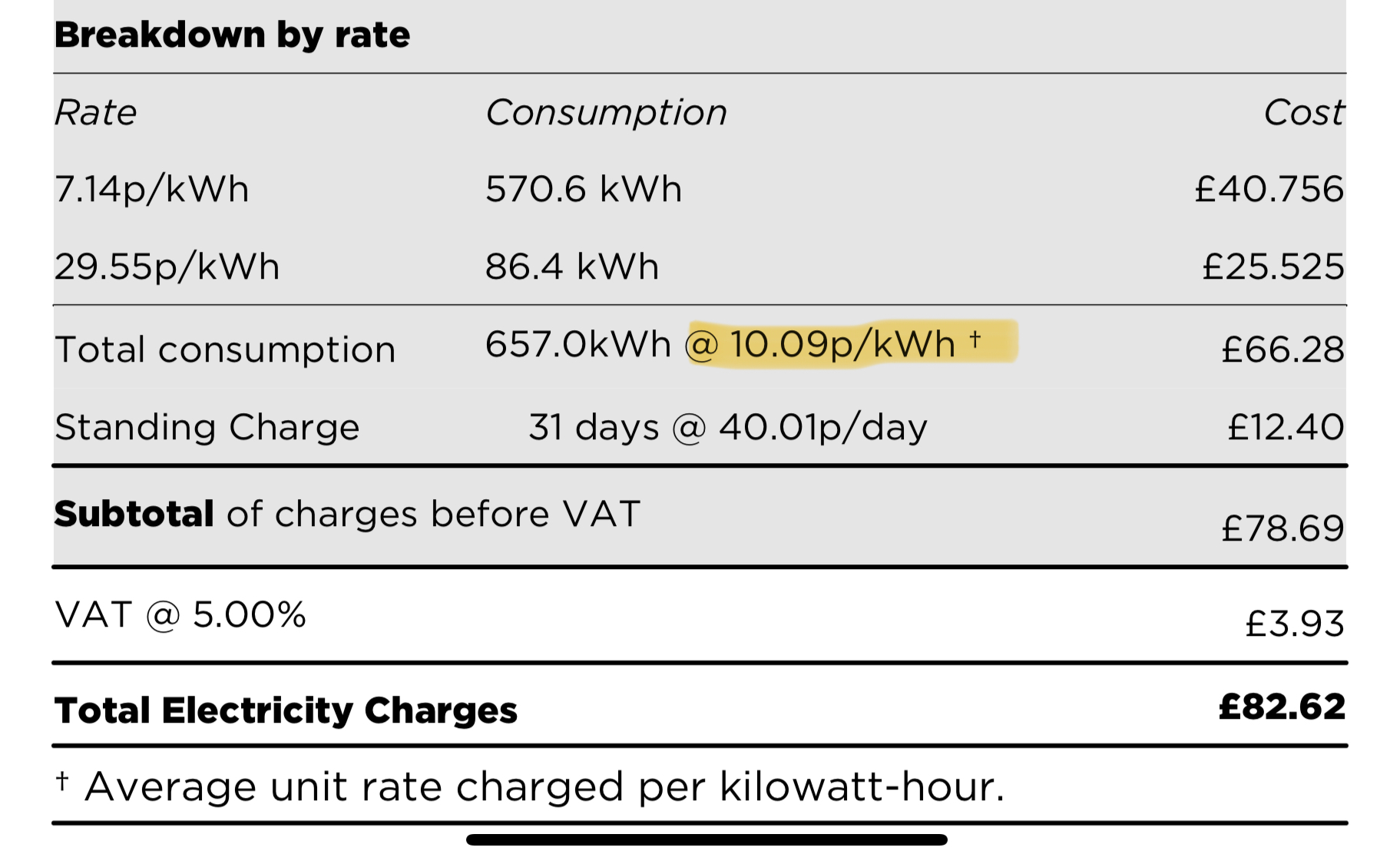
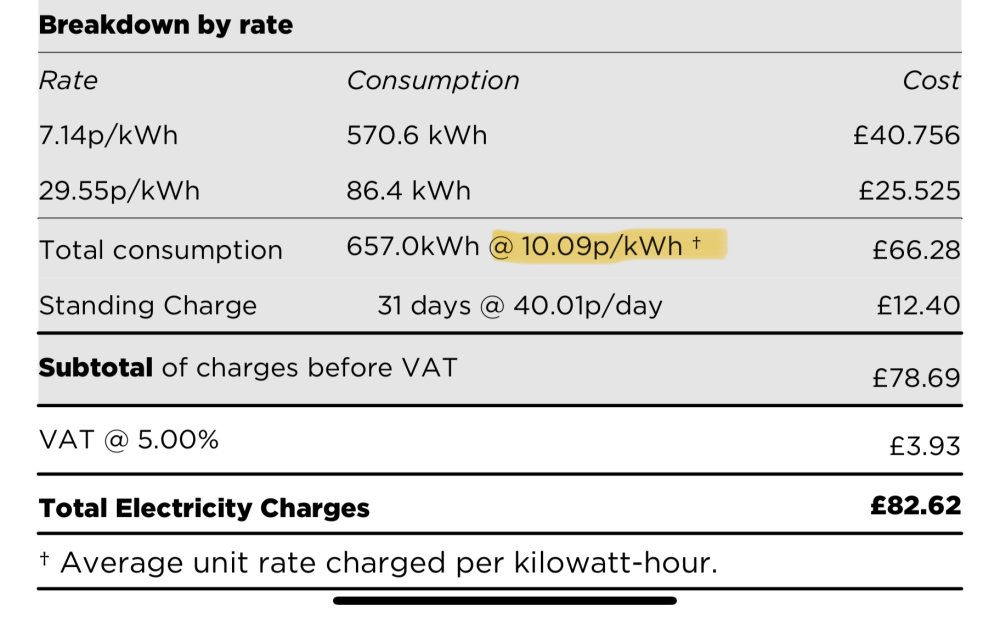
Example, my latest bill: I think the only heavy handed approach to smart meter we'll ever see is increase in regular flat rate tariff to the point where it is logical money saving to go time-of-use tariff. For example, TOU tariff max out at 33 p/kWh for a few hours but is lower all other times, flat rate at 30 p/kWh all the time. Octopus Go and Intelligent is already along those lines for EV drivers. Off-peak is 9.5p and 7.5p respectively. Other times it's only a few pence higher than regular. With majority of home electricity usage being very flexible thanks to ownership of EV battery, majority of usage can be shifted to cheapest periods. So it is logical to have smart meter.
-
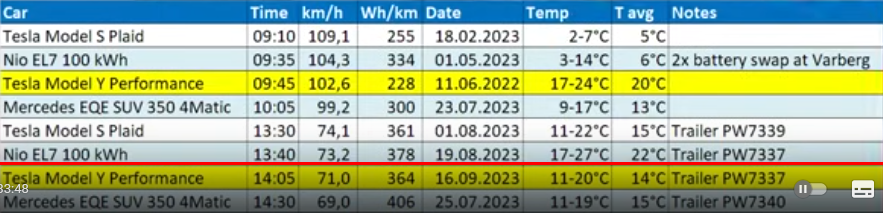
You'll need to look at very recent EV's. The efficiency takes a big hit, so you'll need to recharge more often than without. Unless you do towing only once or twice a year and can rent for those occasions? Oh yeah that was great. I was "essential" and had to travel back to office ~150 miles away about once a month. Almost empty motorway and £1 per litre diesel. I was almost looking forward to the 3 hours drive.
-
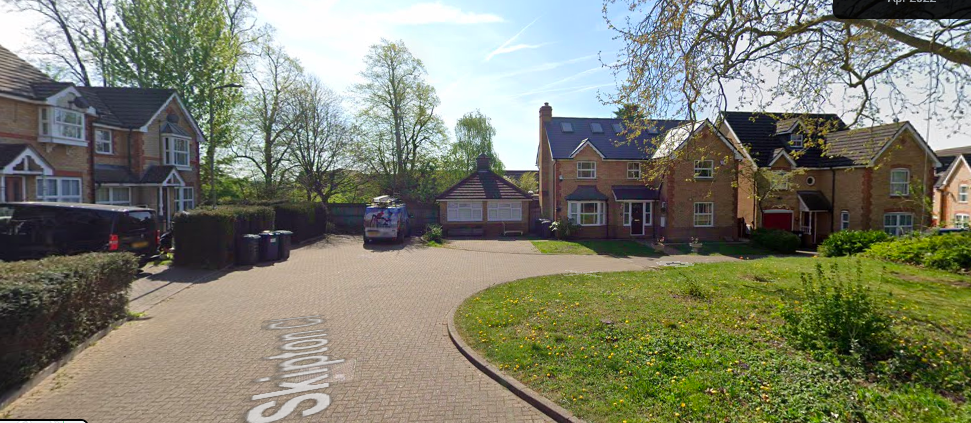
15 minute cities does not prevent people from moving around, at all. It also does not prevent formation of large cities. It is a model to build more accessible amenities and do away with reliance on cars. Remember, cars does not equal to freedom. When a society has over reliance on cars, it is actually the opposite for people in the lower percentile. Building amenities within walking distance helps everyone. If we can do away with private car ownership, it's even better. Eg. Community car clubs? Small Close is something like this, where the space is shared between cars and all road users. I don't see any problem allowing children to play on the road between the bins and house to the right. 20 houses is not a small close...... I'll leave it at that, relying to anything else just goes further off topic. The groan reaction will have to do.
-
This right here is the mentality that gives rise to yesterday's government announcement in their bid to win votes. I would argue it is highly situational dependent, and good road design should be used solve it. In residential area or for example near school gates, pedestrian steeping down from the kerb should not fear for their lives. It should be a shared space, and as said, hierarchy of vulnerable road users. In a small closed residential road, it is absolutely the place for kids to play. Apologies, I was only replying to what was said in the video Graham posted. The guy in the video was ranting about blanket 20mph. Yesterday's government announcement had all the keywords to please the tin foil hat/car is king crowd: "20mph...blanket use", "stop ..... 15-minute cities", "freedom to drive", "private car is vilified" https://www.gov.uk/government/news/government-announces-new-long-term-plan-to-back-drivers 15 min cities are great things: https://en.wikipedia.org/wiki/15-minute_city "The 15-minute city (FMC or 15mC)[2][3][4][5][6][7] is an urban planning concept in which most daily necessities and services, such as work, shopping, education, healthcare, and leisure can be easily reached by a 15-minute walk or bike ride from any point in the city.[8] This approach aims to reduce car dependency, promote healthy and sustainable living, and improve wellbeing and quality of life for city dwellers.[9][10]" I'm fully supportive of 15 minute cities. It's a tiered approach and I think it makes sense. Blackwall Tunnel is £4, Dartford crossing is £2 using autopay. Clearly asking drivers to only drive the more congested route if necessary. Case in point, I've been to Kent via Blackwall tunnel a few times just because it's free and only 10min extra driving time. The route is actually more logical to take Dartford crossing. My 2013 Octavia with ACC was able to speed up/slow down with it set at lowest 18 or 22 or 24 mph, I don't recall. I'm sure lowest limit was a speed that wouldn't trigger 20mph camera. I just hover my foot on the brake ready for pedestrian on the road.
-
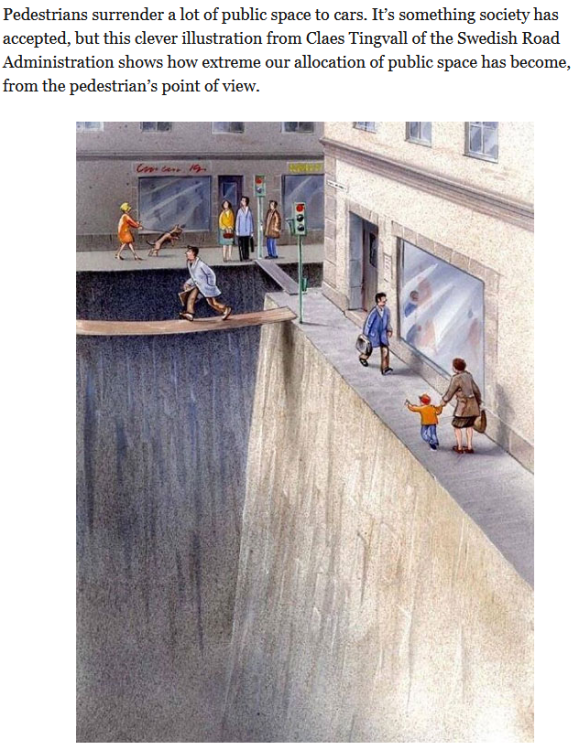
Blanket 20mph is stupid. If people speed, it's because they feel it is safe to do so from the road design. The feel of the road should reflect the maximum safe speed of the road. 20mph is only needed at strategic locations where requires large open design but not safe to drive fast, eg. school gates. The stress argument doesn't stand, just set ACC at 20mph (or speed limiter) and don't stress about it. Finally, drivers like to think ourselves as main user of the road, the video talks about educating other road users. But the truth is, private cars and allowing cars to dominate roads are the worst use of public space possible. Public spaces are safer and nicer when there's no cars on the roads. It's so nice walking on podestrianlised roads. Personally I hate old traditional style High Street where shops are at street level, it is both difficult to find parking to go to shops, and difficult to use it as a street to get to places. Worst of both worlds that I try to avoid as much as possible.
-
(yes another app/card, but it's one card to [almost] rule them all) Octopus Electroverse covers almost all the network. 8% discount for Intelligent Octopus smart charging tariff customers. For me, notable missing are Gridserve and Podpoint. Tesla and BP are also missing. Friends in the North would also point out Charge Place Scotland is missing. Another benefit with Electroverse RFID card is that it wouldn't have that pre-auth problem. All of the new rapid chargers are required to take contactless. The regulation to mandate contactless payments on rapid charger is going through the motions. There is also a 99% up time requirement. IMO 99% is pretty low, when in IT "five-nines availability " is the golden standard. https://www.autocar.co.uk/car-news/consumer/new-law-make-ev-charging-network-99-reliable
-
I've been saying this for a long time. EV's are an asset to support transition to renewables. But only when plugged in. In the future, I can see the cheapest way to recharge is to use smart charging or V2G/H. Hopefully this clear benefit will make people plug in as much as possible when parked. Which hopefully speeds up changing away from refuelling mentality. Alas, as usual, public charging will lag behind with these innovations.
-
Ordered 4x Michelin CC2 for her Leaf. Stupid size so more expensive than VAG cars. £159 original fitted price, 10% off tyres at Blackcircles and then £40 or 50 cashback from Michelin (webpage tells me £50, T&C says £40) to make £133-135 fitted per corner. I'll rotate it every other year. This should be the last set of tyre I buy for this car due to local mileage she does. If/when it snows, we'll drive Leaf with all-season tyres. AWD on the MY with summer tyres doesn't help stopping. Those bigger fatter tyres are even more expensive, so I'll get as much life out of them as possible.
-
To be fair, Nissan/Renault did provide the initial capital expense for the (back then Ecotricity, now Gridserve) Electric Highway charge points. Back in 2017-2019, driving Leaf beyond home range relying on Electric Highway was not much of problem, if you don't mind stopping to recharge every hour of driving. Also, there is currently concern by some UK EV drivers that Tesla are building too quickly and not always opening up to non-Tesla cars. This means the grid capacity is used up and pushing up installation cost/time for other (usually smaller) charge point operators. I still think slow destination charging is the answer to EV adoption. Rapid charging should only be needed en-route somewhere. It enables cheaper charging and maximises EV convenience benefits. Yes, the problem is not every parking space is suitable for charge point install and it requires a large change in user mentality. Both are very difficult problem to solve in span of a few years.
-
I view this thread as an on-going discussion of many different topics. I think I missed 10 pages while I was away last week, just ignored it and joined in when I was able.
-
Not quite new hubs. But Instavolt joins Octopus Electroverse today. They now appear as compatible chargers (with bigger circle) in on the Electroverse map.
-
Thank you, I stand corrected. I knew there's 2 tiers, thought it was 80%, must always go to source to check. There's ways around it. "When charging finishes", but if one set charge limit to 100%, it will take a lot longer to completion after 80%. So more time to get back to the car to move it without incurring idle fee.
-
So £35.4k RRP. On-sale for £15k, above average miles on the odometer and less than ideal condition with not much prep work. Feels about right. I've been look at £20k EV's for my parents, there's a lot of Corsa/e-208 in £15-20k range. But I'm thinking an ultra-efficient Ioniq 38 kWh or stretch slightly for a Kona would be better EV's. Have you seen High peaks auto youtube videos, he spends many hundreds on old cars to get them into top conditions. Might be right up your street.
-
Same should be done for any car (EV or ICE) parked at rapid chargers. But what you speak of is only applied when stall utilisation is near 100%, and ICE cars don't get fined because it's not connected. The cost per mile when public charging has been worked out, time and time again, is marginally cheaper than driving ICE car if not charged using most expensive charge points, "competitive to run" in your words. Do I need to quote relevant posts you've already replied to? The only stumbling block is your reaction to every time home charging is mentioned. You wish this topic never to be mentioned because it doesn't fit with your views. I can give you a referral code to Octopus, They allow easily adjust monthly payment online and never get into too much extremes. But remember, it's always better to build up a bit more credit during summer for winter months to use up. I usually aim for 0 balance in April/May.
-
What was the RRP of your car? £20k depreciation, that's roughly xx% depreciation at just over 3 years old? 50% is typical depreciation at average miles, yours are quite higher than average miles as well. Also, presumably this is on a forecourt, so had a few hundred of prep work done. Trade value would have been lower (more depreciation).
-
So you've never seen 2 petrol stations are different prices along the same stretch of a road? The truth about electric car is that different people use their car differently, benefit of EV is that doesn't have to conform to petrol station refuel speed and payment model. Charging at home is super convenient and completely removes the need to even think about petrol stations. I bet if people can have a bottomless jerry tank at home, no one would refuse. So insisting EV must be compared in the same way as refuelling at petrol station is missing the point. You explained why we should discuss public charging pricing and availability, I don't disagree. You haven't really explained why we should remove all talk of home charging other than "no incentive for those who can't". Well, if certain bit of information doesn't apply to you, you don't have to respond to it.
-
Exactly what Lucky said, at Reading services, there's a row of Gridserve at 69p/kWh and a row of Tesla open-to-all superchargers at ~35p/kWh with subscription or ~50p/kWh without. Need more sites like this to drive down prices. https://www.speakev.com/threads/first-tesla-v4-superchargers-in-uk.179536/post-3503657 Why would anyone (with CCS car) charge on the expensive chargers? Video about those chargers: https://youtu.be/eBUMxsSgx_k
-
Is the block in your minds because you can't charge at home? I get there is a disparity and it needs to be looked at, but to ignore and discourage discussing the benefit of home charging is certainly not "the truth about electric cars". Those who can benefit should take full advantage as much as possible. Me think this is another example of "vans are not cars" head-in-sand situation....... 🤣