JayLibove
FREEDOM
-
Joined
-
Last visited
Everything posted by JayLibove
-
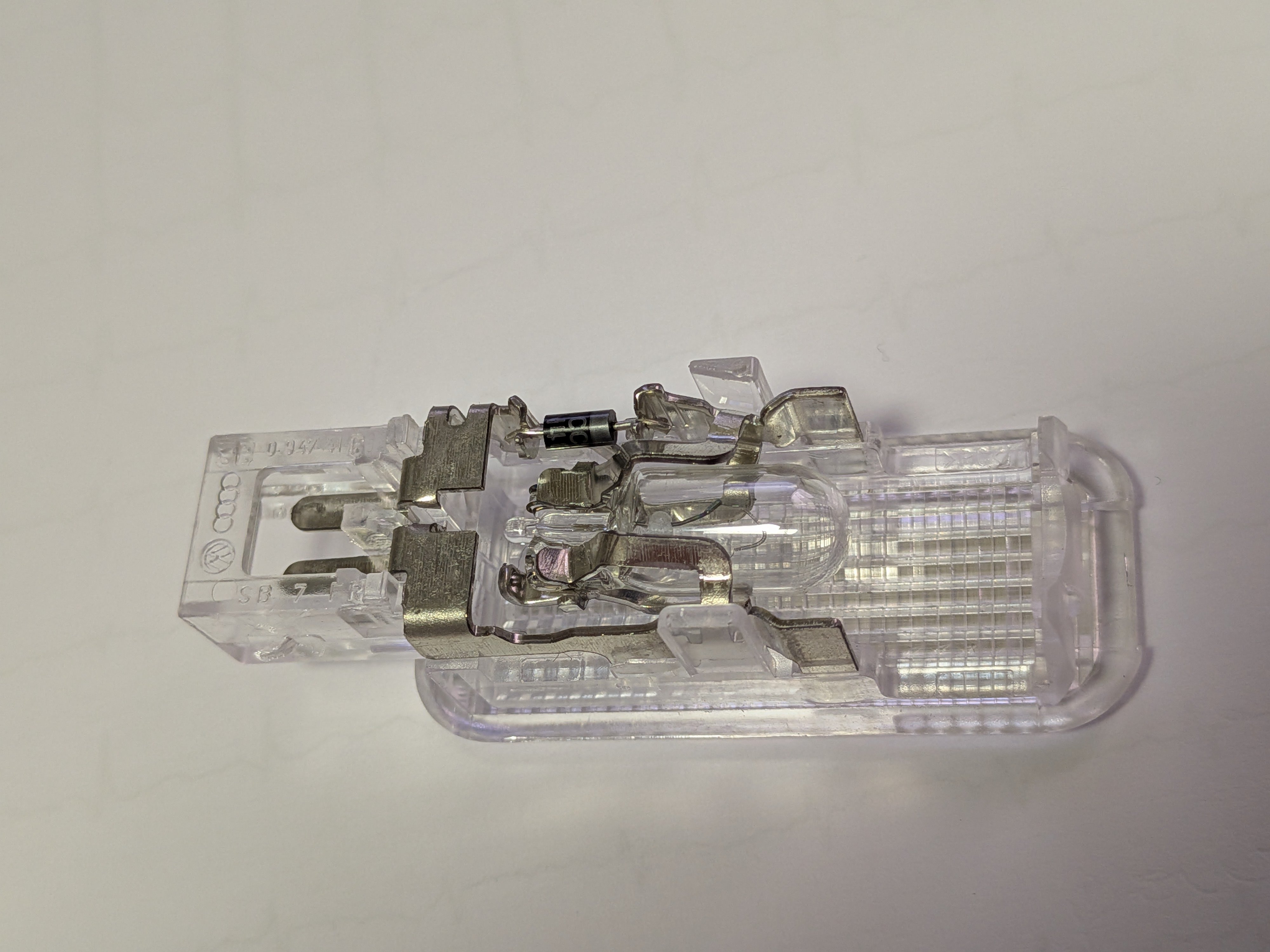
Ugh. The Astur group flat-ish multi-LED thingies are not dimmable, so if W5W is what the front centre console lights use, I'll need to find something else..... (Still waiting for an answer from the KATUR vendor about whether those are dimmable).
-
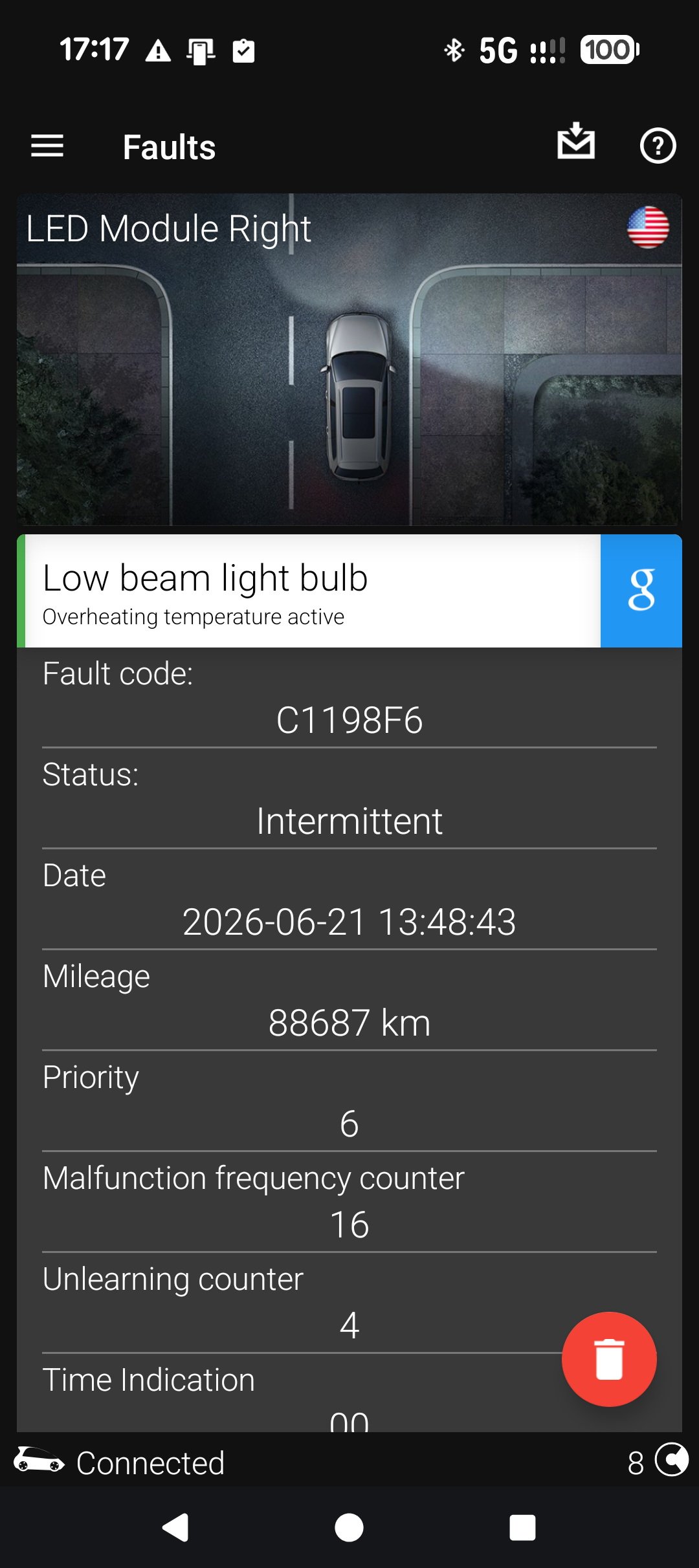
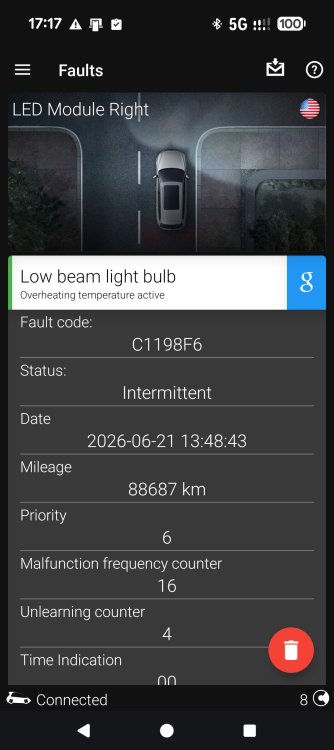
[ 2019 model year, April 2020 manufacturer, Octavia III Facelift, "Scout" - combi/estate, 4x4, DSG-7, 2.0L 184cv, full LED lights package ] I always have my low-beam headlights on. I spend a lot of time in Germany, where this practice is "strongly encouraged" (although I do not find any continental EU country which strictly requires headlights be on except in specific conditions like tunnel, dusk, rain, etc; all countries require some kind of daytime running lights, but not strictly headlights). I just got into the habit of having my low beam headlights on, always. I'd rather not have to think about it. (And I don't find that the automatic dusk sensor is as sensitive as my own judgment about making my car more visible to others). On rare occasions, my OBDeleven reads a fault "Low beam light bulb" "Overheating temperature active". Most recently, this happened while driving at mid-day through south central France with no shade at all and the outdoor air temperature 38°. So, if there was any condition in which a headlight bulb might got quite hot, that would be it ... but, shouldn't the headlights be designed to handle this, even well above 38° full Mediterranean sun??
-
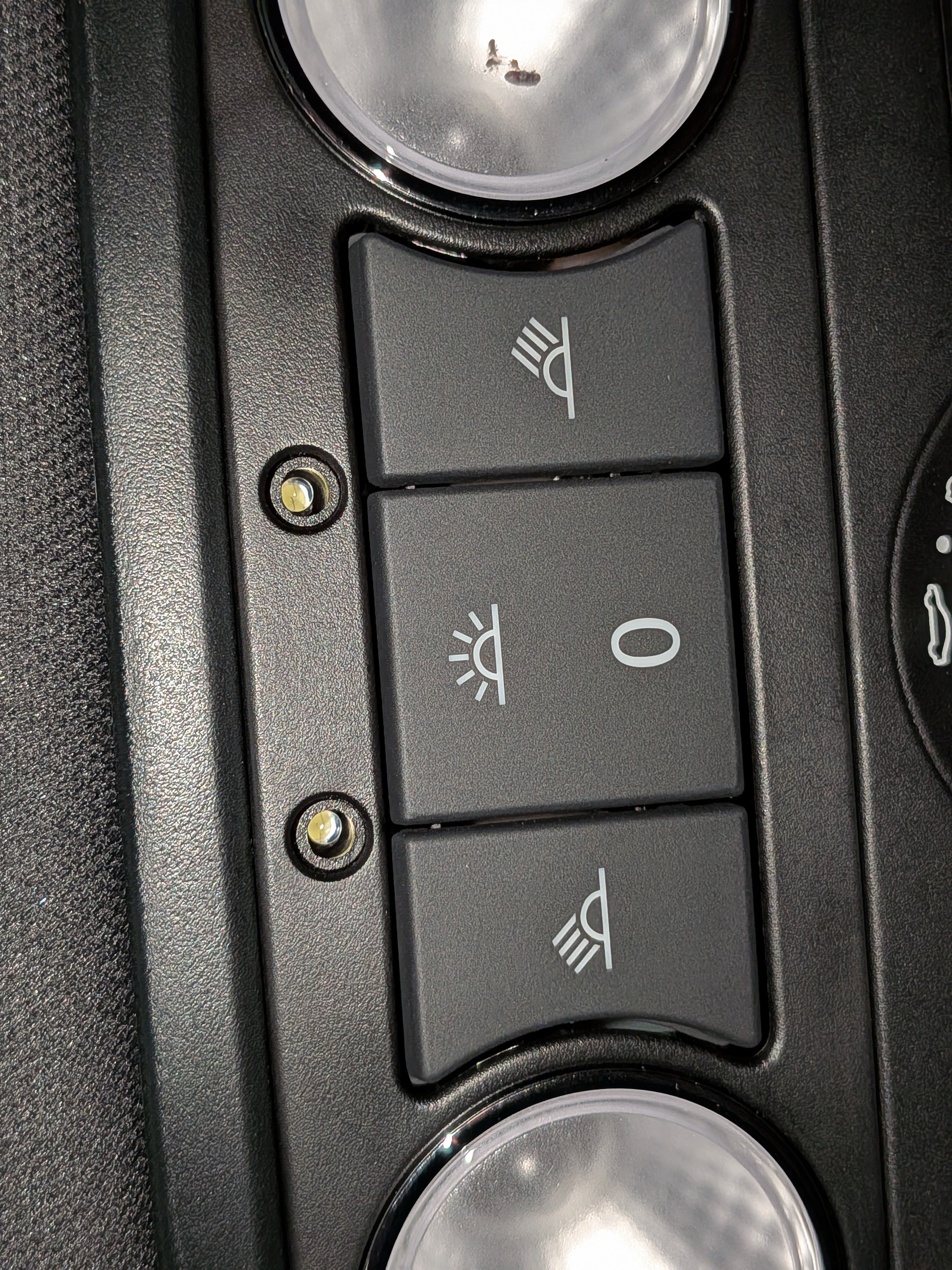
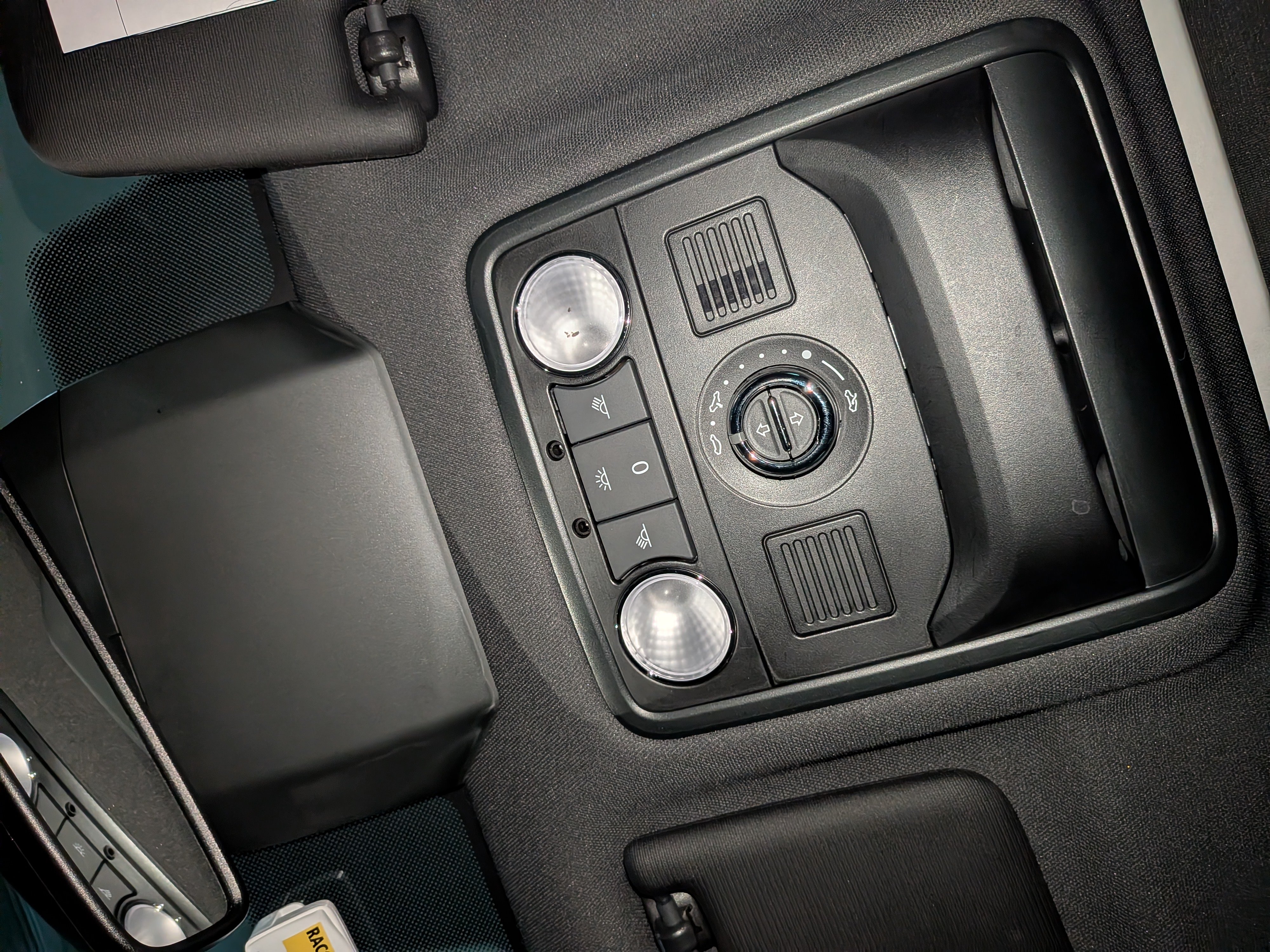
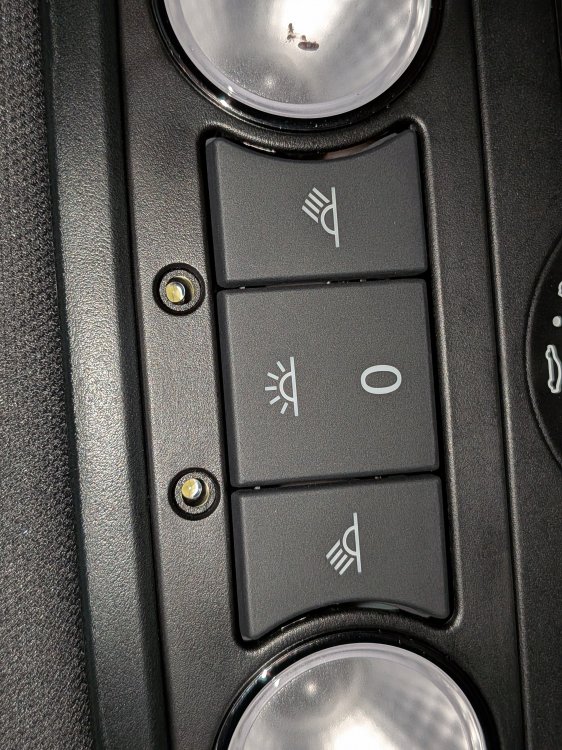
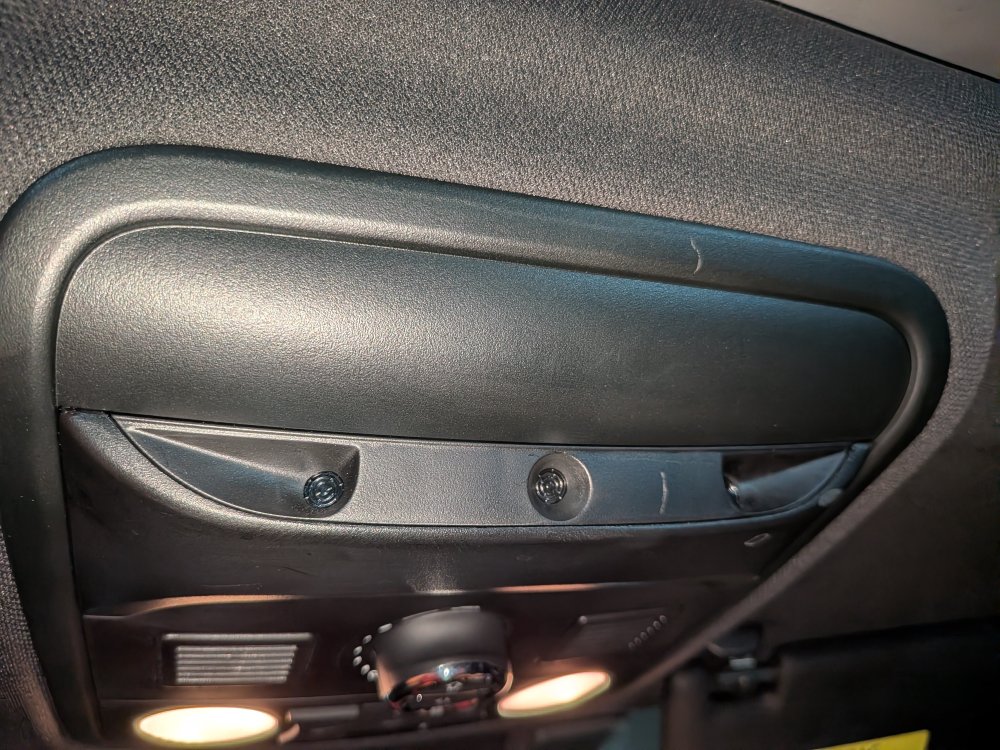
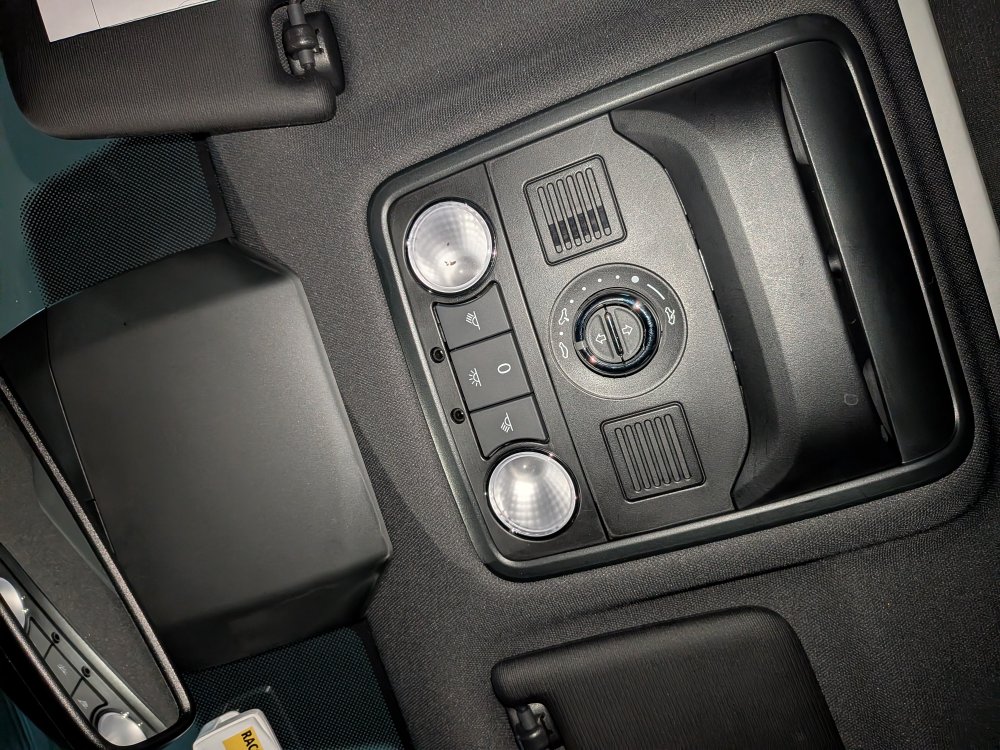
There are various threads, photos, videos, and sets of instructions on how to do this, but none of the pictures exactly match my car, and as many of the threads have cautionary tales about having to start at exactly the right spot - and that exact spot differs from model to model (even to where I've seen one video say absolutely start at the rear of the panel, and another say absolutely start at the front ..... ), before I scratch and break stuff, I'd like to see if anyone here has the exact model that I have, and if they've figured out the magic procedure to open that panel ... Photos below. When I first bought the car, I looked to see whether it would be possible to fit a sunglasses compartment in this panel. The answer is no, not on this model; there's just not enough room. Between the innermost edge of the functional part of the panel and the actual innermost edge of the panel butting up against the panoramic sunroof, there's just not a sunglass frame's worth of space. That's already different than I think I've seen in any of the photos/videos on this topic. Separately, although I don't think this is relevant to getting the thing open (without breaking anything), there are what look like two tiny little LED bulbs inset between the reading lights switches and the front edge of the panel, but I've never seen them light up. (The apparent light in these in one of the photos below is just the reflection of my phone's camera light). I believe these are non-functional by design in my car; I saw some discussion of "cat eyes" which exist but are disabled on models with the panoramic sunroof. So, any experience with this exact panel, or, failing that, which is likely to be the closest advice and how to get this open to replace the lightbulbs without scratching stuff up or breaking anything? thanks! -Jay
-
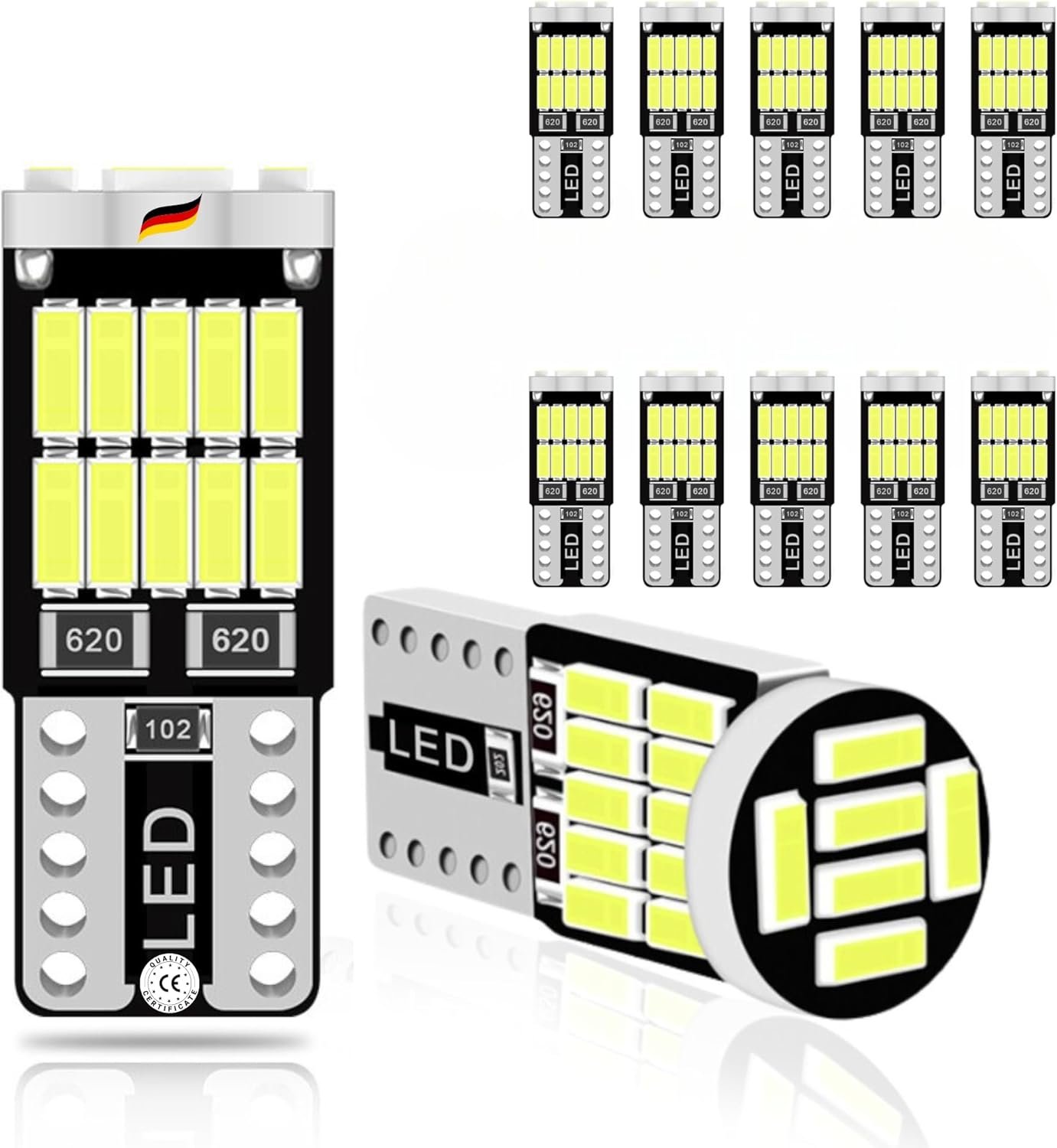
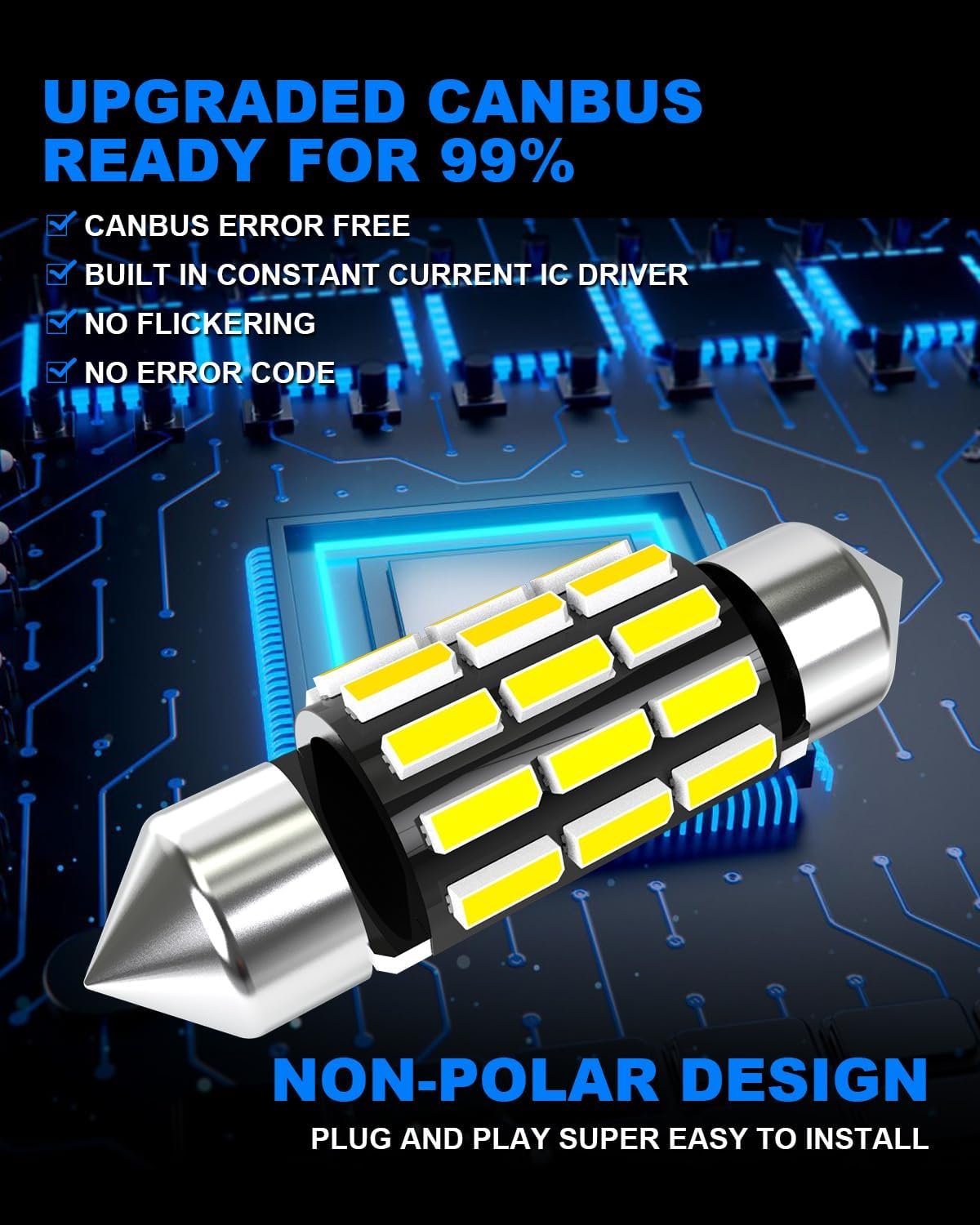
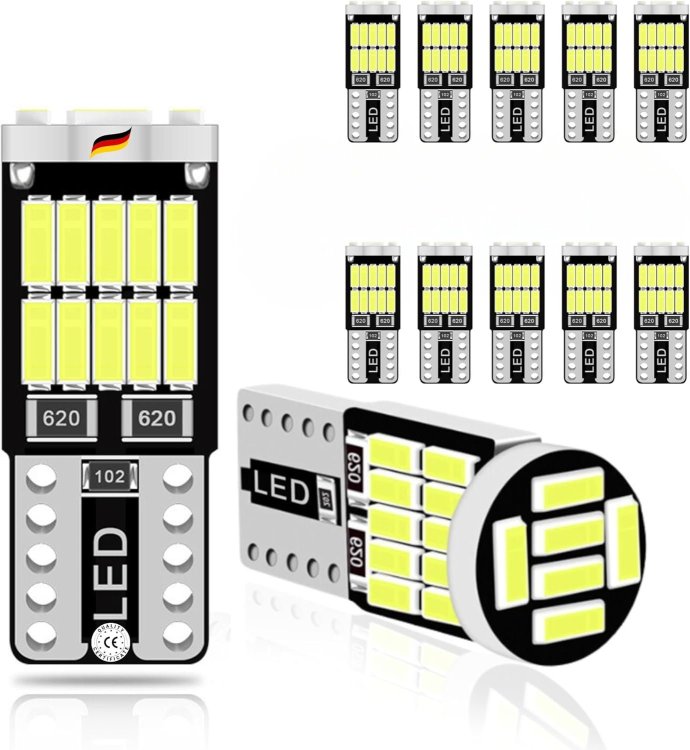
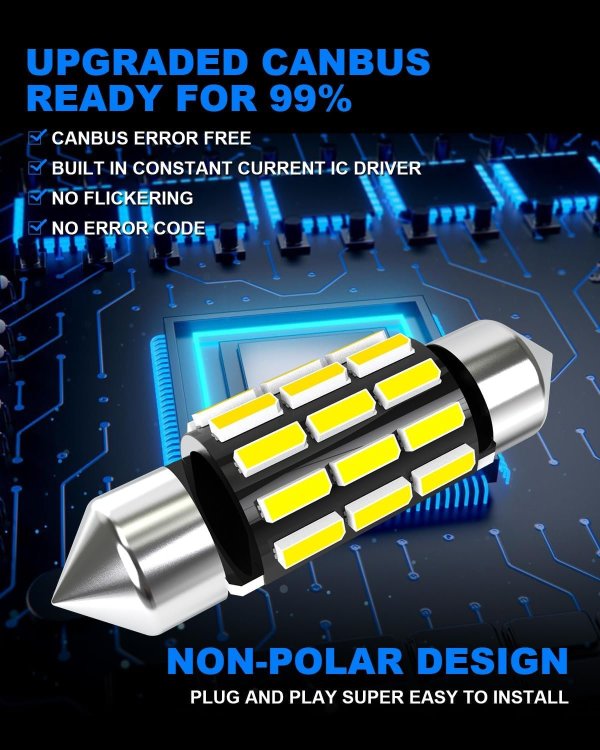
Over rear-passenger door bulbs replaced. I remain flummoxed at how difficult it was to get those light units out of their metal frames in the roof. Snapping them back in was a .. snap (you knew I was going to say that). I hope these new LED bulbs last a long time; I do NOT look forward to having to extract those things again! Next stop: front reading lights! (I'll post a new thread). Thanks again, all, for the guidance! -Jay p.s. Not sure if I posted the specifics: Rear cargo area flat-ish lots-of-little-LED bulbs (flat-ish because they have both a flat section, with ten little LEDs on each side, and then perpendicular to that a round section with another six little LEDs on top, picture below): https://www.amazon.es/dp/B0D7J2VJ2Z "Astur group" "W5W LED Canbus Error Free 26 LED 4014 SMD 6000K Super Bright 360° Visibility Easy Installation LED Car Interior Light and License Plate Pack, White (Pack of 10 T10 Premium)" €10 Rear passenger seat over-door lights: https://www.amazon.es/dp/B0FFY95763 "KATUR" "36mm Festoon C5W (4pcs)" - half of a barrel, with little LEDs strewn all across; non-polarity (can insert in either direction), just have to place the bulb into the C5W socked so that the LED-"festooned" (see what I did there?) side faces towards the lens inwards to the car cabin:
-
Thanks. That's how I understood it, and I had also found a video that showed that. I guess it's just these had never been removed on my car, and they were really stuck in there. I sweated bullets getting each of them out, but finally did so. And, of course, found that they use different bulbs entirely from the cargo area lights (which I have now successfully replaced; and, which, I notice, do have polarity and have to be inserted a specific way - despite what the product listing seemed to claim; I mean, of course, that makes sense, 12VDC, but, is it too much to ask for accurate product listings?). Now to shop for bulbs for the rear door reading lights (C5W)...
-
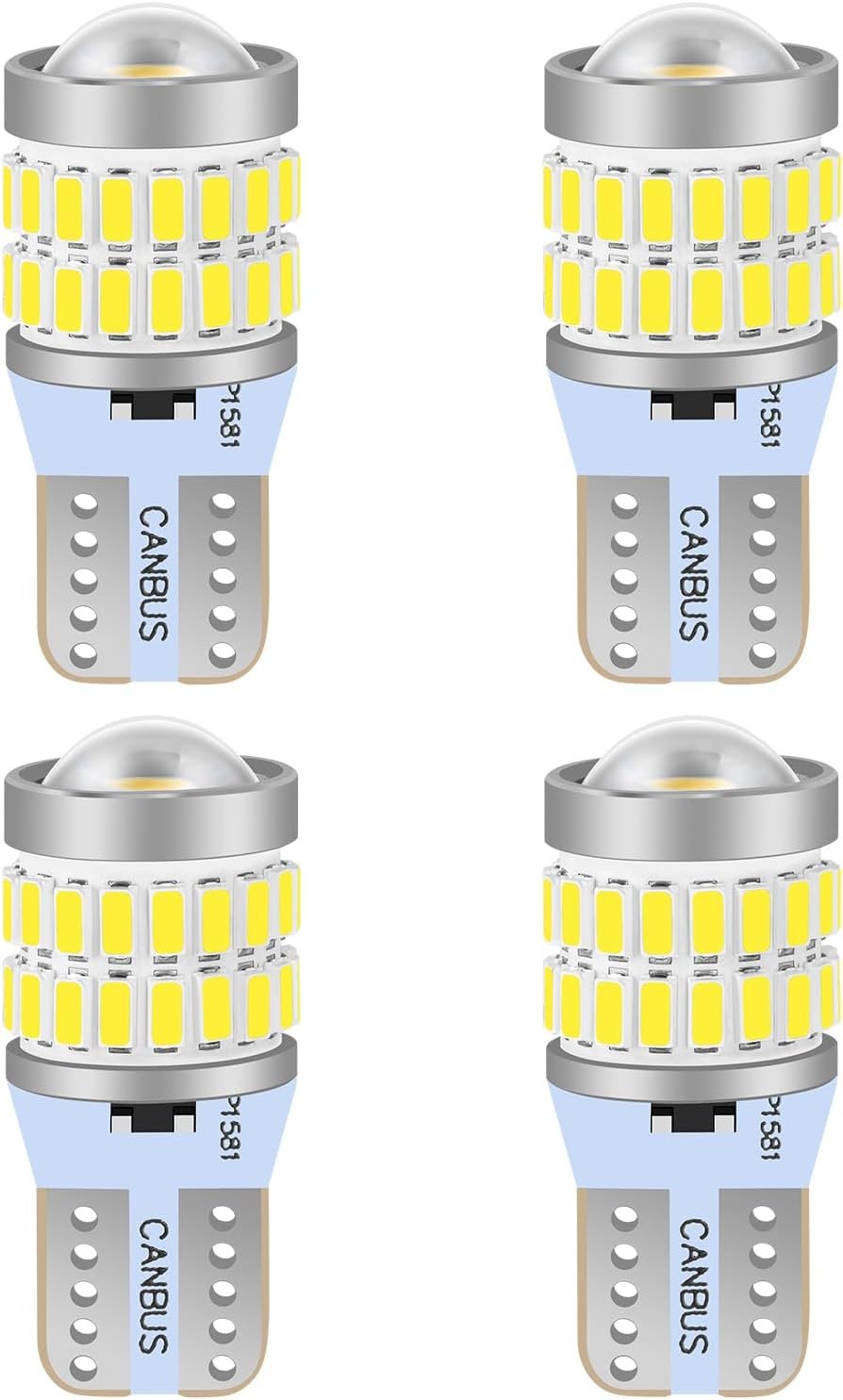
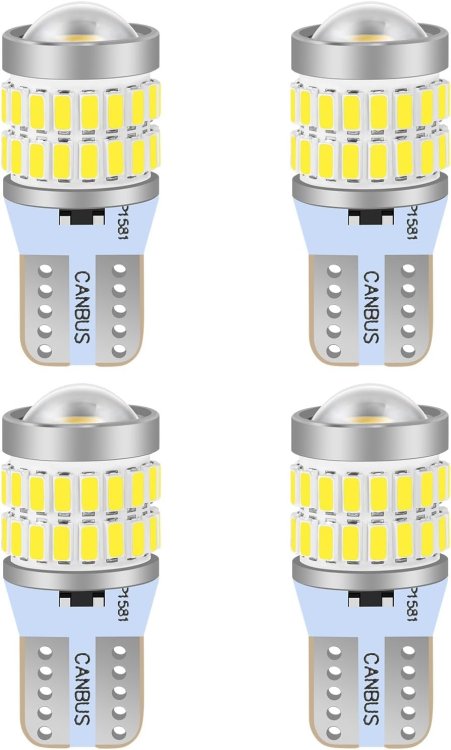
Ahhhhhh, nuts. These bulbs' metal fins are a bit too short/ the much wider diameter LED round blocks the fins from pressing far enough into the T10 socket to sit securely. Returning, continuing the search... (Also, still need guidance on how to get the over-the-rear-passengers'-doors lenses out of their holes without breaking something ... Bueller? Bueller? 😅). -Jay
-
@nickytheshaft (great handle!) The Aliexpress ones .. the complete LED-from-the-ground-up replacement units? Or LED bulbs to fit into the stock plastic-lens-enclosed-T10 sockets? -Jay
-
I've placed an order for bulbs ("XELORD" W5W T10 LED, supposedly 800lumens but I'll believe it when I see it, since most W5W LED replacement bulbs for which I saw lumen ratings were 450LM and 300LM). https://www.amazon.es/dp/B0DK8FV8V8?th=1 These bulbs have the word "CANBUS" printed on their stems. 🤞 We'll see. (If the new bulbs are bright enough, that is!) Any guidance on how to remove the rear passenger seat over-door lights? https://www.briskoda.net/forums/topic/540252-add-morebetter-lighting-to-combiwagon-cargo-area/#findComment-6020021 Again, thanks! -Jay
-
@inspectorman very cool. I searched for T10 W5W LED and came up with a set of 10 which includes four WITH a "built-in IC Driver" and six more withOUT that. The question is, for our current purpose (boot lamps in an Octavia) is there a need for/ benefit of the IC Driver, or does it not matter, or would it even cause a problem? (I'm guessing that it's needed, do avoid CANBUS problems?) Thanks, -Jay
-
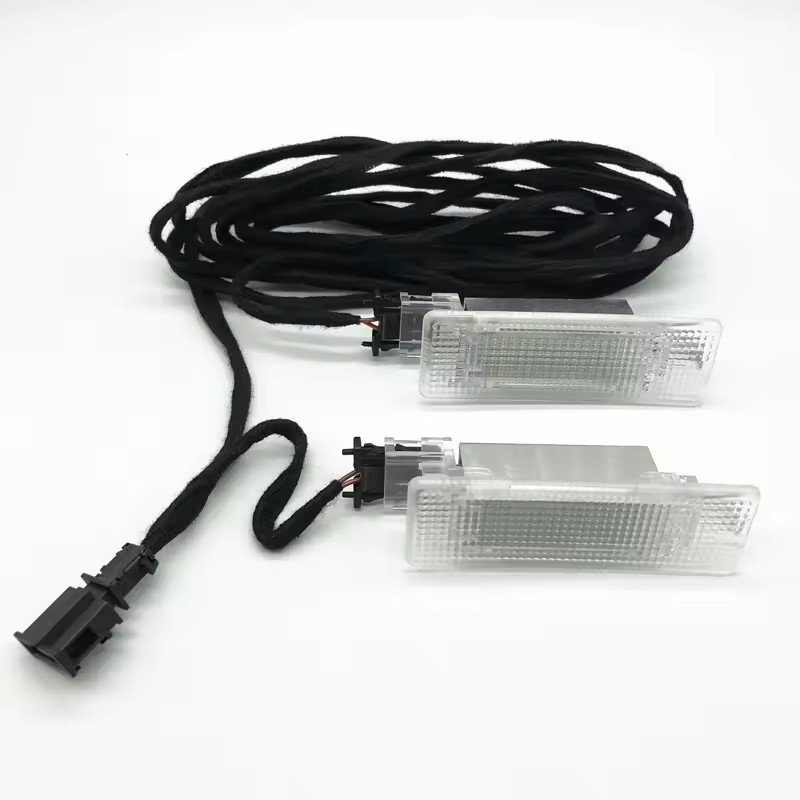
Thank you, @GREEBO_22 . In typical AliExpress (not to mention, Amazon) fashion, when I do that search, I get thousands of hits, most of them irrelevant ... The two kinds (because, of course, there are several vendors selling their name of obviously the same thing) that seem to match are either 1.8m or 3.0m long. (Of course, I could buy these longer ones, hack them up, and join shorter pieces back together, but I admit that I'm getting a bit lazy about the finer detail work at this point in my life...) What would make this easier would be if I could find the correct technical name for the type of connector, but again in typical online marketplace form, most don't mention a standard at all, and those that mention standards 1. tend to mention more than one standard, and 2. never agree with each other ... 🤦. So, anyone know what the connector type, that the Octavia III cargo area light assembly hangs off of, is officially called? thanks! -Jay
-
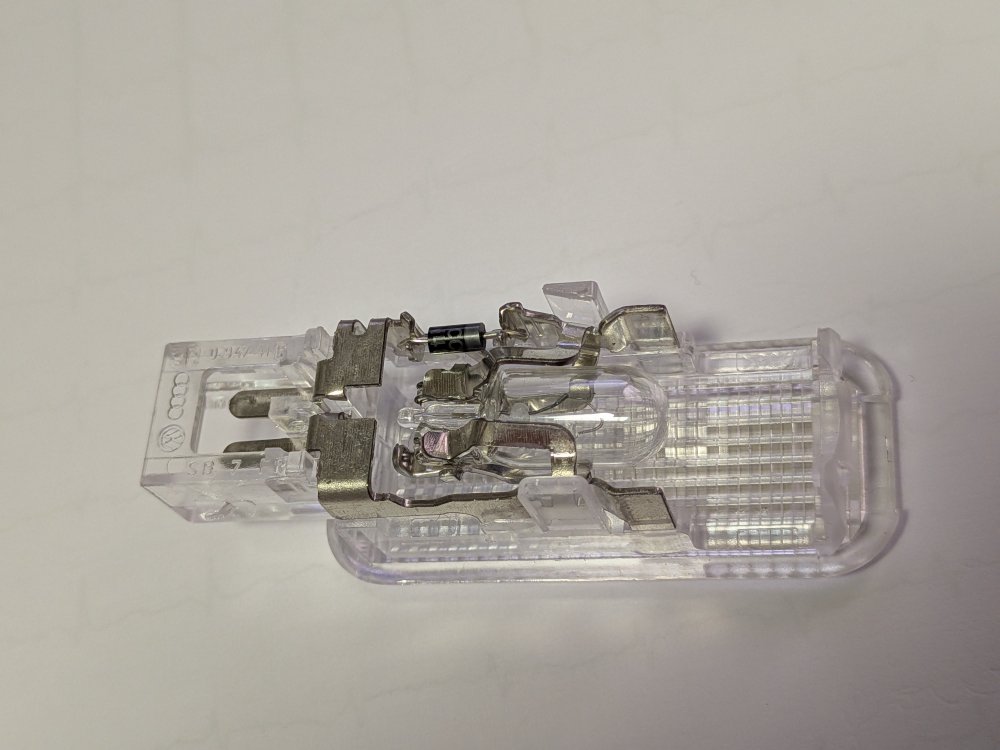
My wife asked the same question, and I gave the same answer (Although with less cleverness than "eleventy billion" :-) ). My April 2020 (last of the 2017-2020 Octavia III Facelift) Scout's cargo area bulbs are even simpler: I believe that the bulb can just be pulled out. But I want more light than I assume a simple bulb replacement could provide, so I'll go with the whole LED-from-the-ground-up replacement plastic-and-light-source options. This brings up the question: Okay, how much excess wattage do we have, now, swapping out the original halogen bulb unit, that we can add back on something extended from the original cargo area bulb socket? I believe that the original halogen bulbs are rated at 5W, correct? The Kopacek replacement part doesn't mention its wattage; neither does a "RECAMBO" product; One AliExpress product mentions 0.75W. Does anyone have the wattage of the replacement all-LED units? @skomaz Do you happen to have the total wattage of the LED strip that you tacked on to your cargo area light socket? I tend to see "6W/m". I assume that there's a small amount of margin above whatever the manufacturer puts in, but I have no sense of how much margin. thanks,
-
Separately, can someone point to a splitter cable, as in, unplug the rear cargo light, plug the splitter cable into the socket hanging from the wall of the car, plus the light into one of the two splits, and plug whatever else (e.g. an extension to a LED strip mounted on the cargo area cover) into the other split? I think I found such a thing: https://www.ebay.com/itm/205130338596 The seller of that item (which has a 1.5m cable) offered me a 30cm version for about $20 (plus shipping from I don't know where), and I wonder whether I need to pay that much for a splitter cable? thanks,
-
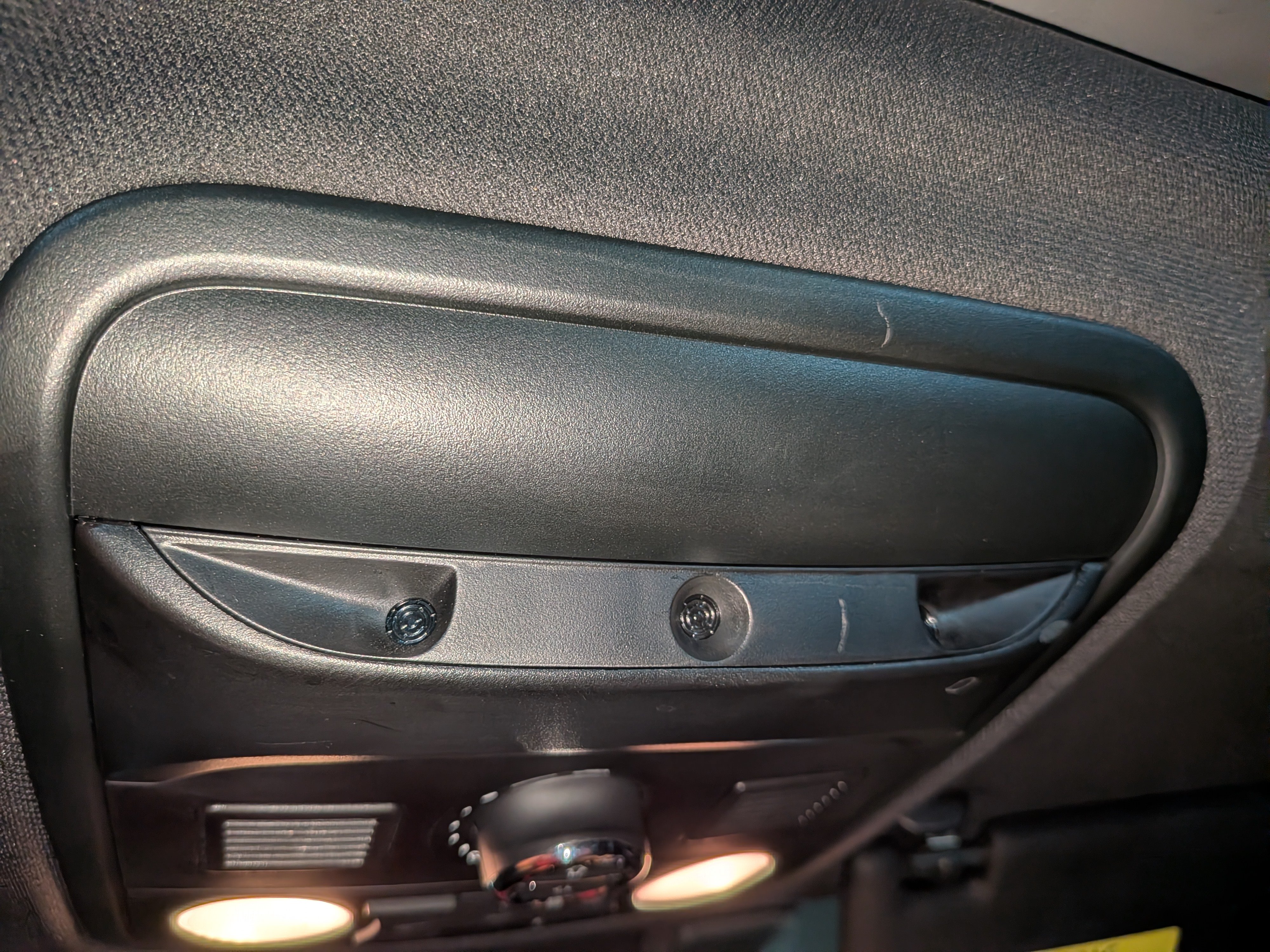
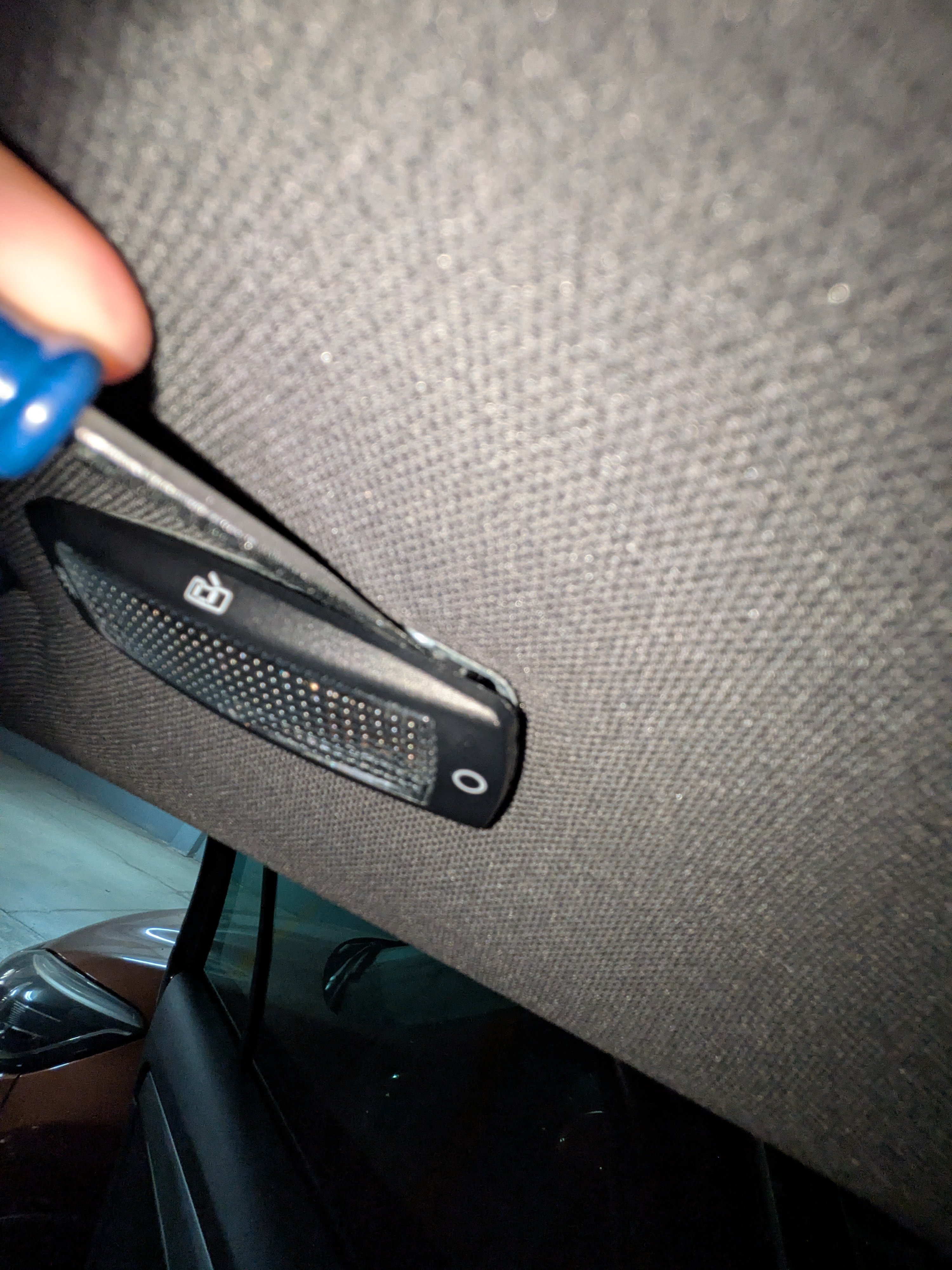
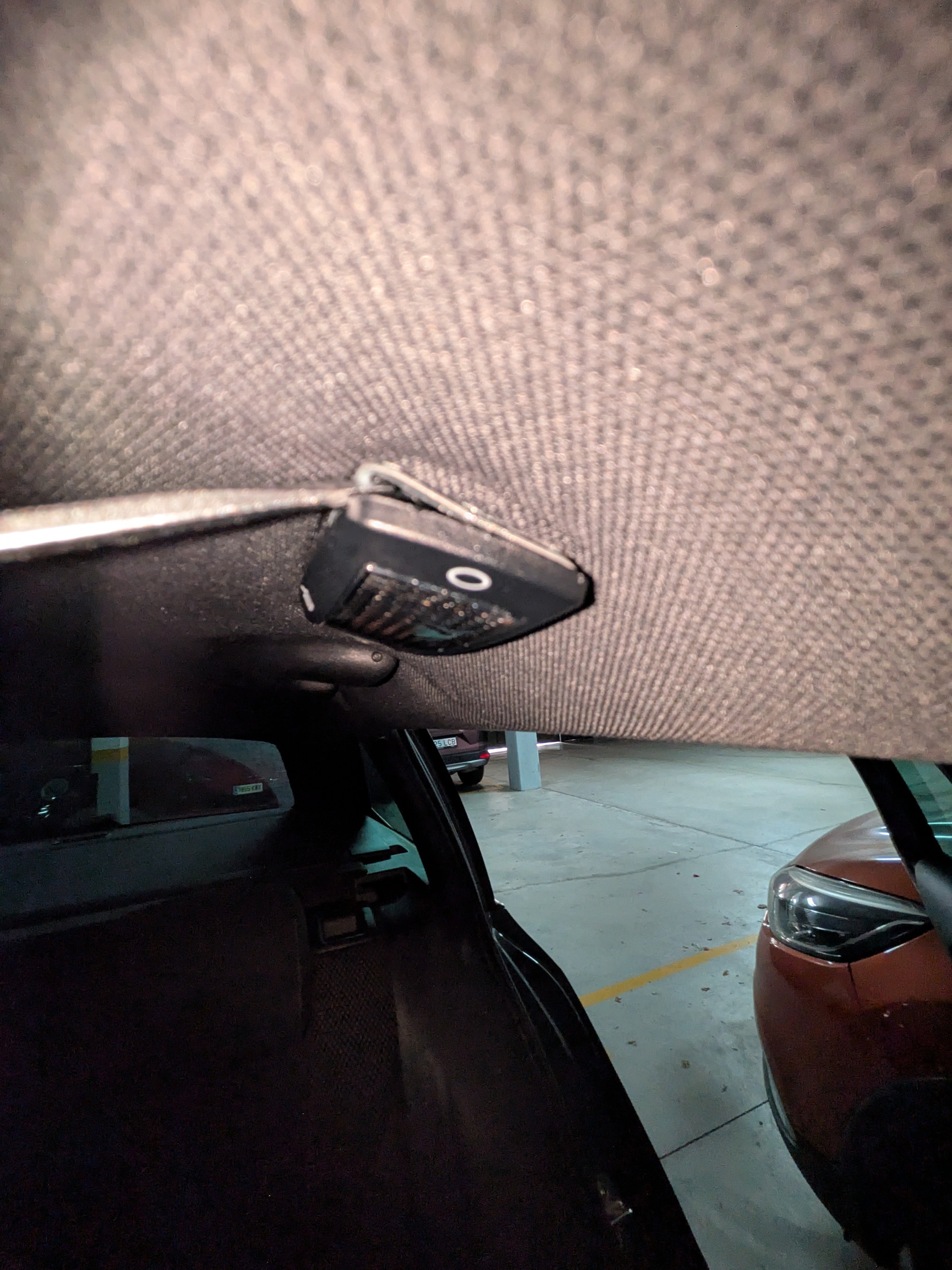
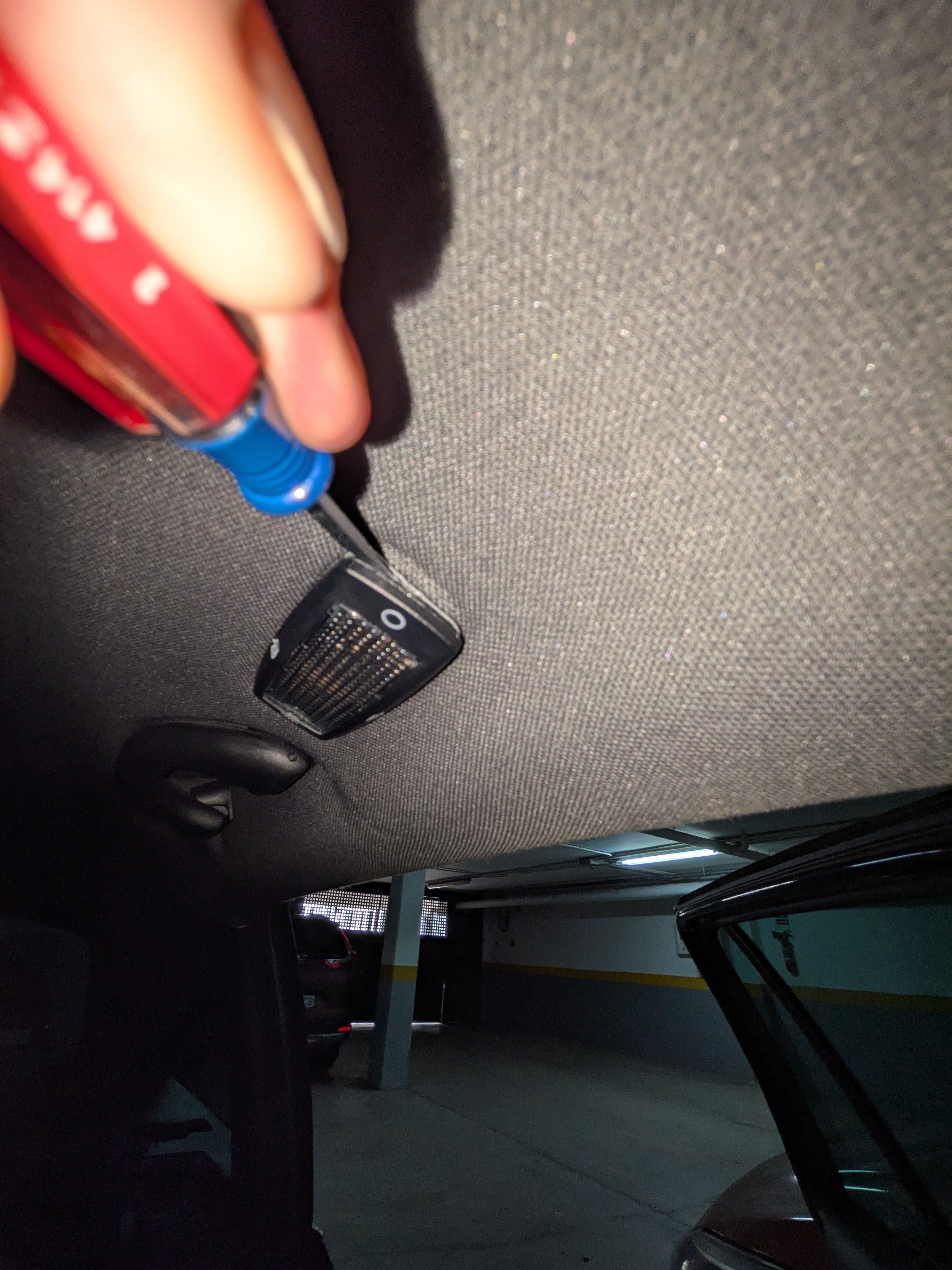
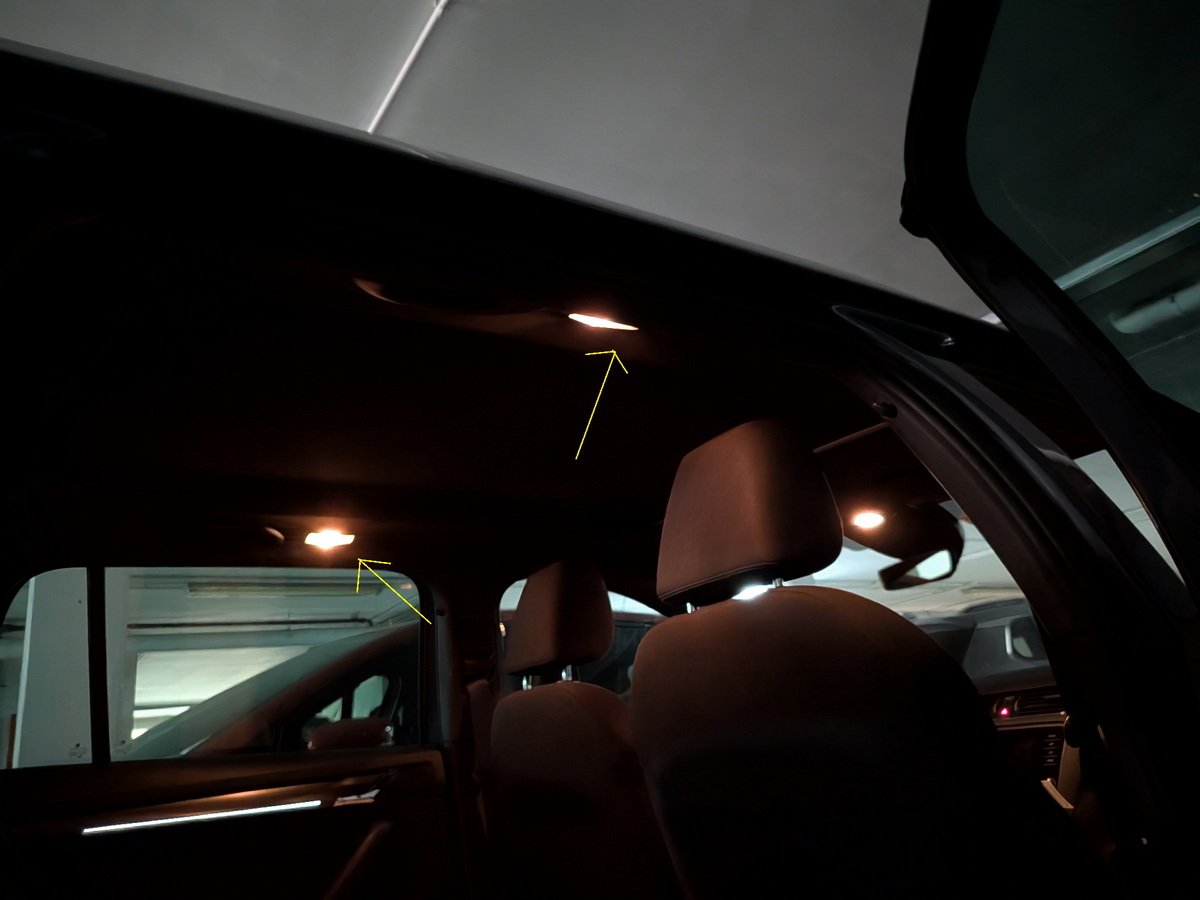
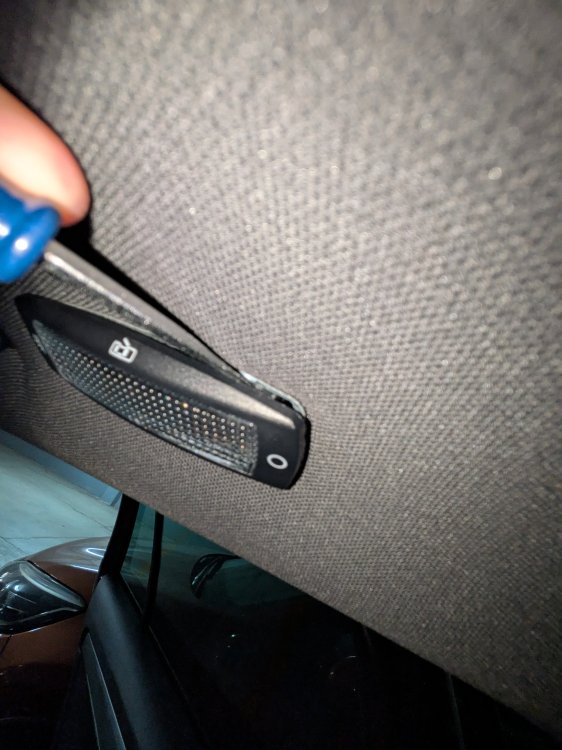
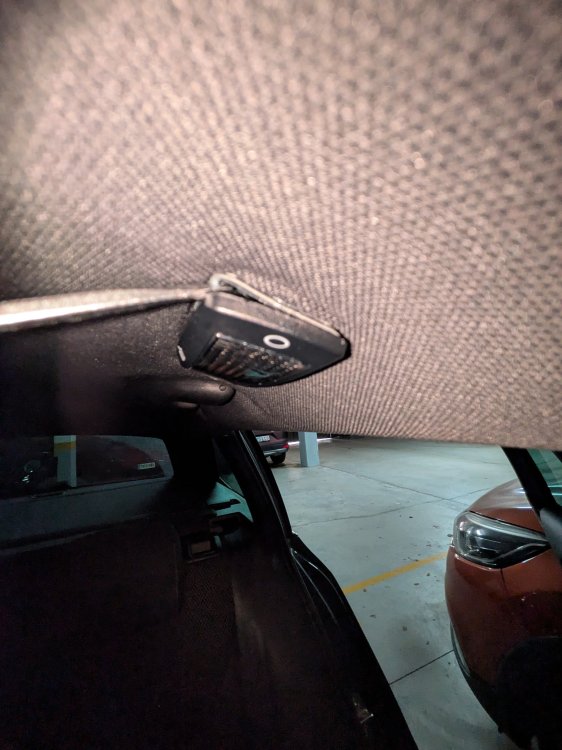
So, in furtherance of the project plan to replace my Scout's front centre console lights, cargo area lights (both, Kopacek products), and rear passenger seat over-door lights (my car has a panoramic moonroof, so instead of another centre light set, each rear passenger door has a light just above it), this morning I dismounted one cargo area light -- pulling it out of the side wall was easy; disconnecting the light assembly from the plastic connector took some careful work, but I got it. However, I was unable to remove the over-rear-passenger-door light. I found an Octavia II video and also a reference in another thread here to an instruction manual which show it being "easy" (insert a plastic shim or a thin flat-head screwdriver on the "0"/forward side of the lens, between the lens and the metal frame that is embedded in the roof of the car, and press in on the spring metal clip that holds it in place, and pull the lens down) ... but although I could see the metal frame, and I could slightly separate the lens from the metal frame (and, then, if I push the lens back up, it "clicks" back into place), I reached an amount of force with which I was uncomfortable, trying to pull the lens down, and I stopped. Hard to see much in them, but below are photos. The question is, how on an Octavia III Facelift do you remove the rear passenger seat over-door lights? (without breaking things...) thanks, -Jay
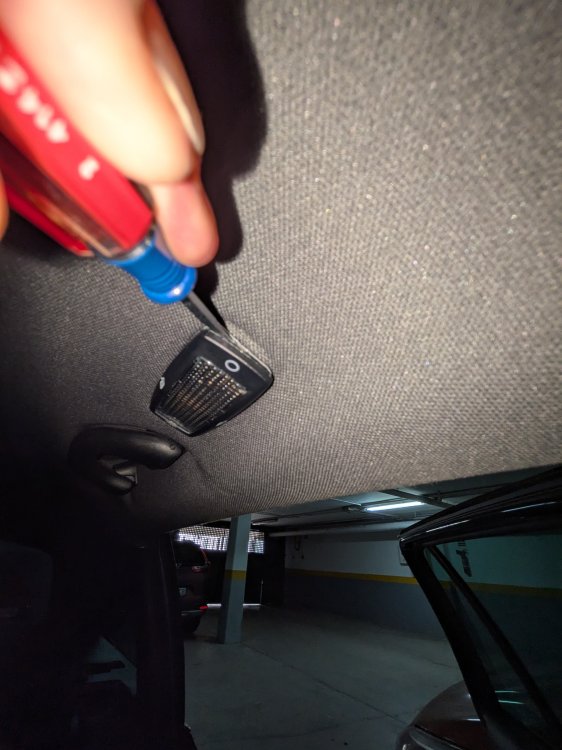
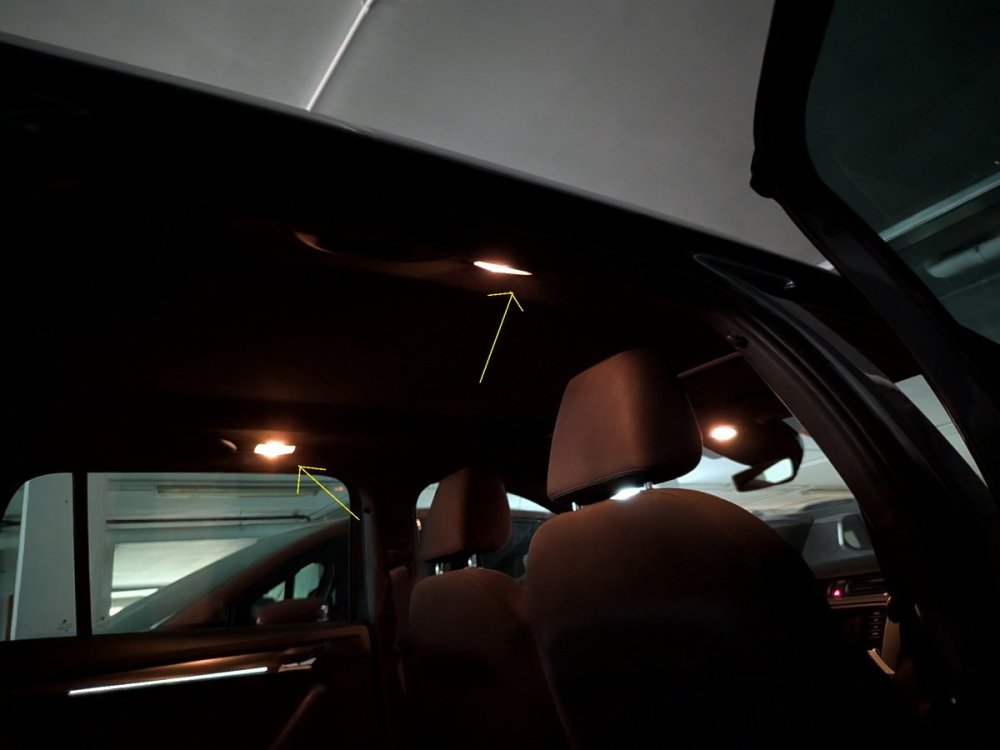
-
@skomaz See, now, that's "Clever"! :-) How did you connect the wire from the adhesive LED strip to the existing boot light? Looking at an aftermarket replacement whole-assembly for the rear cargo area lights: .. it looks like it might be possible to get a little harness extension, to plug in between the standard harness and the rear cargo area light, to provide another (female) harness plug into which to connect the wires extending from the LED strip. Are these harnesses standard, and is it easy enough to buy a harness splitter? But then another thing occurs to me - I frequently remove the cargo area cover, because I often carry a bicycle inside the cargo area (I also have a bicycle rack, but there are times when I'd rather have the bicycle locked inside the car's cargo area, instead of locked onto an exposed rack); so, maybe with harnesses (and a big black and yellow zebra warning sticker so I don't just yank wires out of things 🤦) the LED-strip-on-bottom-of-cargo-area-cover would be practical for my particular use case. Else, other ideas ? I suppose I could put up two LED strips, one on each side of the cargo area, along the long horizontal plastic pieces (into which the baby seat release latch is fitted in this photo): Lastly, you indicated that the extra power draw doesn't cause any problems. Do you have a sense of whether that's because the car doesn't particularly monitor that circuit, or because the extra draw is within some (what?) limit? What is the V*A of the LED strip that you added? thanks again!
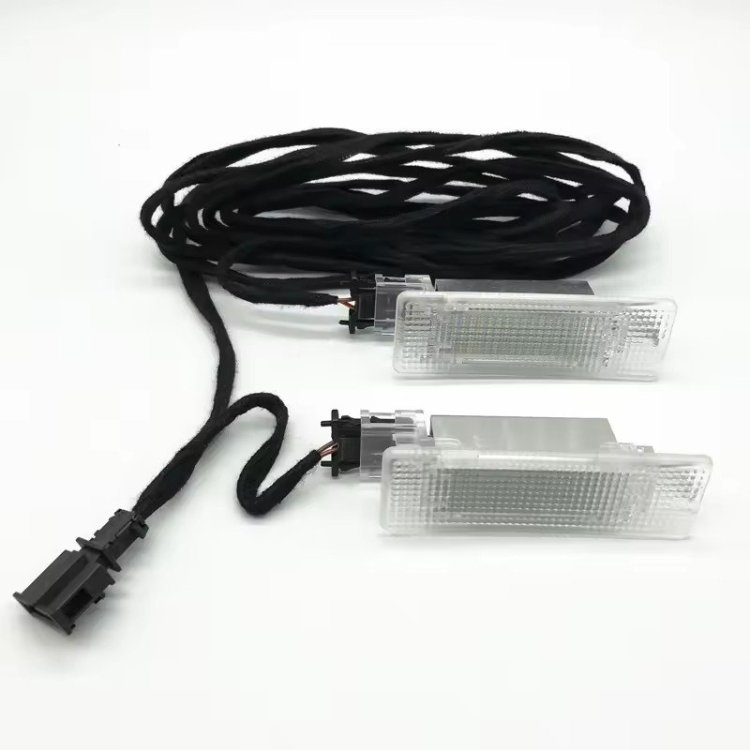
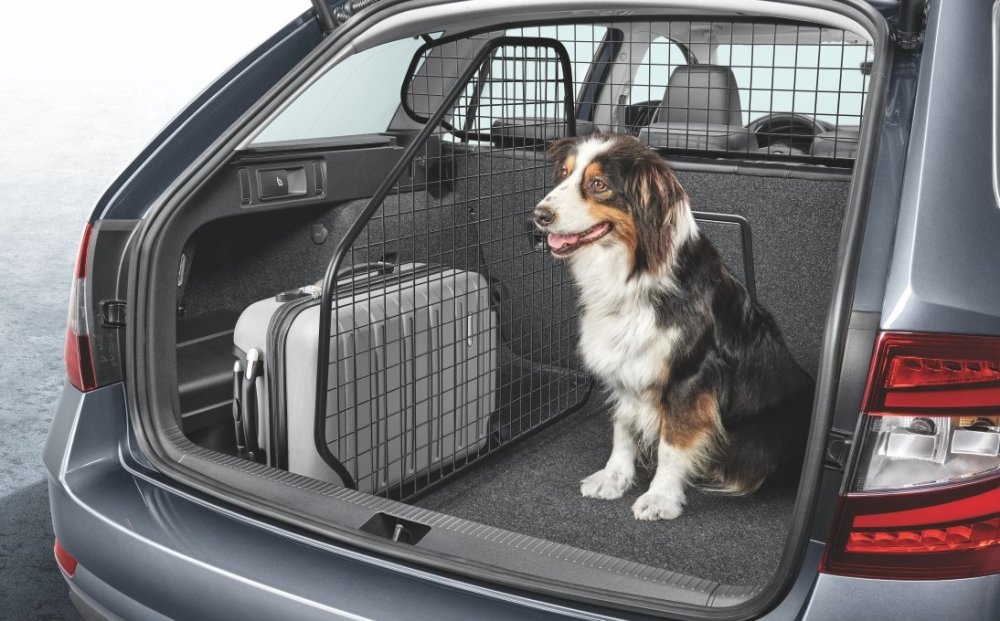
-
Thank you, @Warrior193 . Sadly, where I live in Spain, the search doesn't match anything; on ebay.COM (USA), the vehicle selection doesn't even offer the manufacturer Skoda 🤦. I'll probably go with PetrolDave's suggestion, so that's okay. Um, "SWMBO"? When you say that you "fitted" a single one into a Fabia, did you add a whole new light where the car didn't with a light/wiring, or you swapped in one of these for a standard light that did come in the Fabia originally?
-
Thank you, @PetrolDave . I notice that no W5W replacement bulb that I find lists the lumens that it produces, and while several of them state that they're brighter than the originals, none give any details. I found this older thread: https://www.briskoda.net/forums/topic/483053-interior-leds/ .. which suggests that replacing a bulb with one of higher wattage causes problems with the car's electronics, which makes me guess that there's a constraint on increasing the brightness of any bulb, which is that it can't meaningfully increase current draw (or even light-on/heat-up timing), so the only way greater brightness can be achieved is with more efficient bulb/gas technology. Do I have that right? Now that this thread (thank you, both, again) and others have helped me figure out what to look for, I see that there are plenty of options .. but I find no way to compare them to determine which would produce the brightest results...
-
Thank you. If you'd be willing to provide a reference to a specific product, please?
-
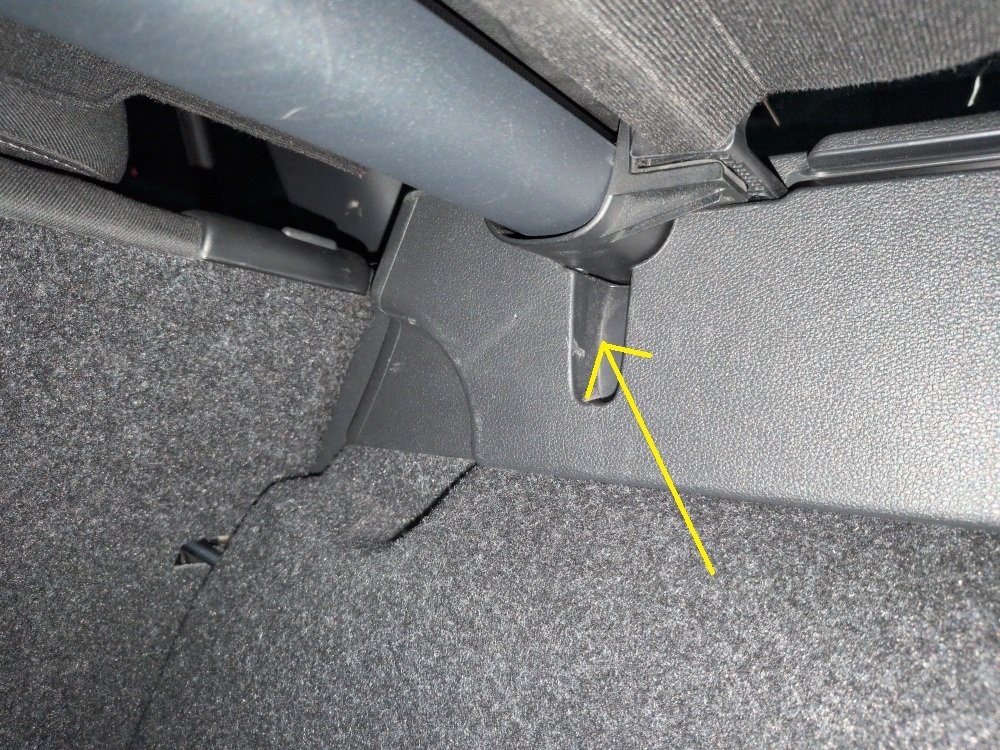
I love my 2020 (MkIII facelift) Scout (combi/ station wagon), but the lighting in the cargo area has always been insufficient. The only built-in lights in the cargo area are two small, dim white lights, near the rear, about halfway up each sidewall: I'd appreciate ideas for adding more/better lighting to the cargo area. Ideally, integrated into the car's electric system, but battery-powered/ rechargeable standalone lights could be okay, too, as long as either way they can be installed quite well-fixed, so that they don't come loose/ fall off, or get in the way of cargo. The first thought is, are there replacements for the two small built-in lights (as in the photo above) with MUCH brighter lights? Then, my own brainstorming, just about where more lights might go: In/on the cabin roof just before the upper seam of the tailgate? Embedded into the rear seatback just below the top? (embedded, so that when the rear seats are down to increase cargo space, stuff placed on top of the seat backs doesn't damage the lights and vice-versa?) In the plastic sides panels into which the cargo cover fits, just below the cargo cover's seating slots? (there actually seems to be space just inside those slots - they're deeper than the cover which came with my car needs). Your thoughts, and especially specific existing products or services to do this, much appreciated! thanks, -Jay Barcelona / west-Girona region, Spain
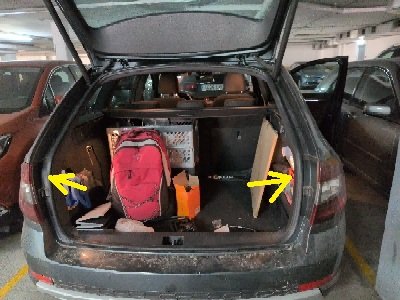
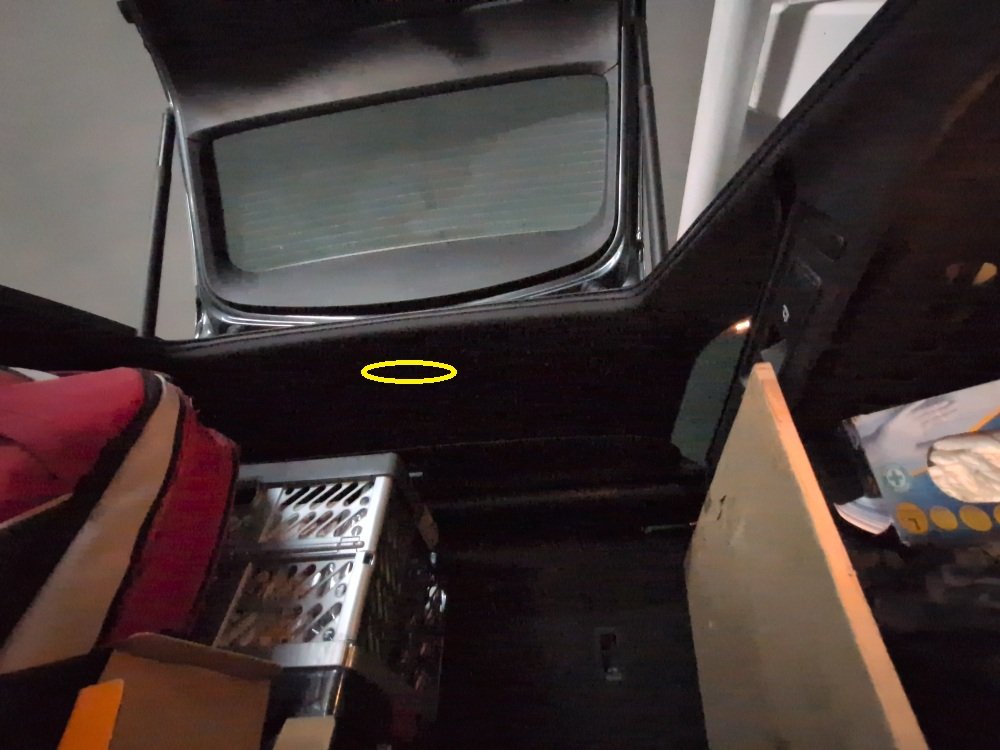
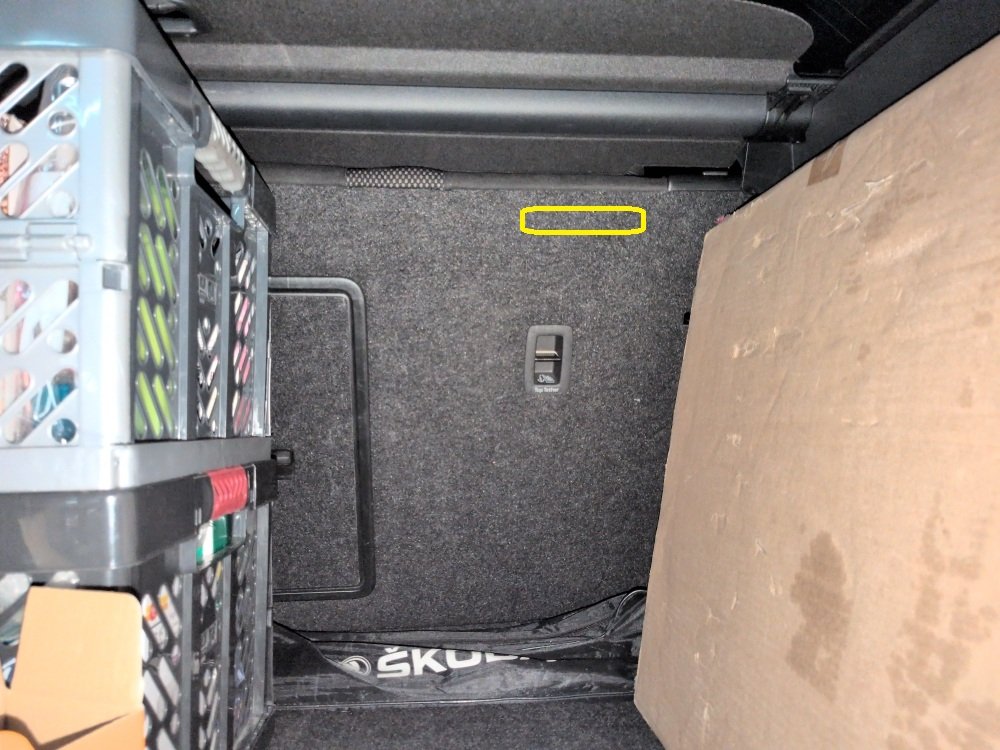
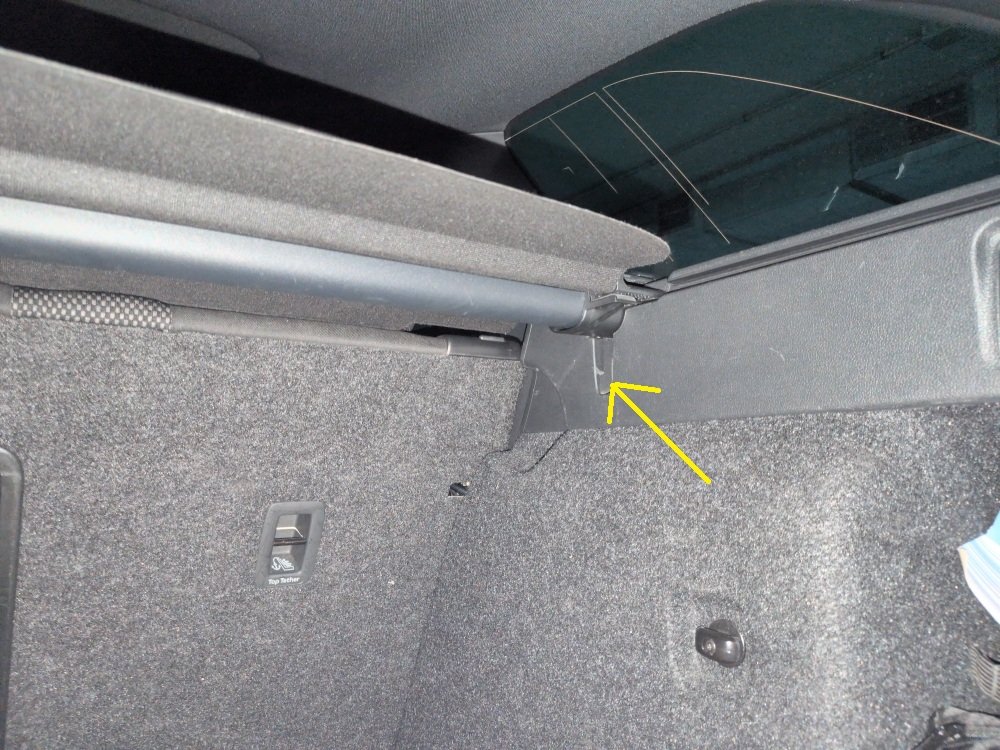
-
Thank you, @PetrolDave .
-
Ah. Yes. That actually makes sense 😅. Although, I did stop the car, but I left it running, in park, while I walked around to eyeball the tires. Well, anyway, nothing critical, just a could-be-explained-better error message, which is nothing new! Thanks, -Jay
-
April 2020-manufactured Octavia Scout 2.0TDI (MkIII facelift). Is there an indicator in the infotainment system, or which can be read with an OBDEleven, to check the AC cooland level/ system function? I was driving in the crazy southern European heat a few days ago and there were times when it felt like the system wasn't cooling quite as well as it usually would/ used to. The engine temperature was always fixed at 90° (after the initial very few minutes heating up); engine RPMs were in the usual 1800-2200 range (gear S7, driving at between 100km/hr - 120km/hr), no extraordinary hill-climbing. The moments when it felt that the system wasn't cooling as well as I'd like, I tried lowering the cabin set temperature, which didn't seem to improve the air coming from the vents. The amount of airflow seemed consistent with the fan speed dial setting. And it didn't seem to relate to the current heat load (e.g. it sometimes happened when I happened to be in shadow or going through a long tunnel, not always in an open part of the road in full sun). thanks,
-
April 2020-manufactured Octavia Scout 2.0TDI (MkIII facelift). I was driving back from France to Spain the other day, after the car had been parked for a week, and shortly into the drive, I got a TPMS warning. Eyeballing it, the tire wasn't obviously very low, and I was in a hurry, so I went to reset the TPMS, with the intention that if it signaled Again then I would recognize that there really was a problem. Each time I tried to reset the TPMS (Cat, Settings, Tyres, Set) it would give the error that it could not "store". It still did this after rebooting the head unit (long-press the power button on the display). I don't recall whether I fully turned off the car and tried again. Once I got home, I manually checked the tire pressures, and indeed that wheel was a few PSI low; I pumped it up, turned on the car (without even starting the engine), and lo and behold I COULD now Set the TPMS. Without ever having rolled the car. Nothing critical, but I thought that the TPMS worked only by RPMs, so actually changing the pressure in a tire shouldn't be detectable until the car rolls again, and both this time (in the end) and previous times when I've adjusted tire pressure at reset the TPMS / Set "all tires are at the correct pressure" (or whatever the precise text is), it accepted the TPMS reset withOUT having moved the car. So, any idea why TPMS Set would fail to "store"? Nothing critical, but it would be interesting to understand. thanks!
-
Thanks @Evolution13 , indeed, I had found that exact document. (And I agree, I don't "trust" AI; but I do somewhat more often these days use it to find sources, then I go read the sources to see if what the AI thought it understood from the sources was accurate. Sometimes yes, sometimes not so much ...)
-
Interesting perspective 😅. (Apologies for my delay in replying. After resolving the B10 problem, I finished my drive to a horse farm in the French Ariège Pyrenees where I volunteered for a week, and did a 2-day excursion in the mountains on the inestimable Mérens horses (which, like Ford's Model T, come in any color you want, as long as it's black!). I called roadside service, which came within an hour. (Spanish plate, Spanish auto club membership; while they were efficient at getting a French service truck to me, they didn't seem to bother using good translation to properly express the concern, and the very nice French guy who showed up thought that I'd put petrol into my diesel car, until I showed him the more nuanced concern). He said that, despite Skoda's officially not having put their B7 diesel cars on the "certified okay with B10 diesel" list, that the one-time 2/3 of a tank fill-up with B10 wouldn't hurt my car - just to maybe run a tank of "premium" diesel, or add a container of diesel fuel injection/ system cleaner the next time I fill up. Putting my "engineer" (I'm obviously not an automotive engineer, but I'm an engineer by training) hat on, from what little I could find about why B10 might not be good for some B7 diesel cars, I'm guessing too that during these 30°C+ days and with most of my driving being NOT local tooling around, there's also less chance of the B10 fouling anything at the moment, whereas during cold weather with short drives I guess it might be more of an issue. (What I read suggested that B10 diesel, if the fuel system isn't specifically designed to expect it, could build up waxy deposits that a B7-only system wouldn't handle by default). Anyway, in the 350km I've driven since then, no obvious problems. I'll top up with a premium diesel this afternoon after another 120km on my way BACK to France where I WON'T touch anything labeled "B10" again.....
-
****. I'm driving my early 2020 Octavia (mkIII) Scout (2.0L diesel DSG-7) through France, and only after I filled up (31L of the 55L tank) from the "diesel" pump I noticed the marking "B10" which apparently really exists about only in France, I'd never heard of nor seen before, and is officially (per Skoda) not compatible with this engine. I don't find "B10" mentioned at all in the forums, and I find only few, vague mentions online in general about how B10 diesel (90% mineral diesel +10% bio diesel) can gum up diesel filters, degrade some engine parts, etc. Anyone have experience with whether just (slightly less than) one single tank of B10 would be so noxious that I Shouldn't Drive It At All until I can get service to pump out the bad tank of fuel, or whether it'll be okay? thank you, Jay