Bete Noir
FREEDOM
-
Joined
-
Last visited
-
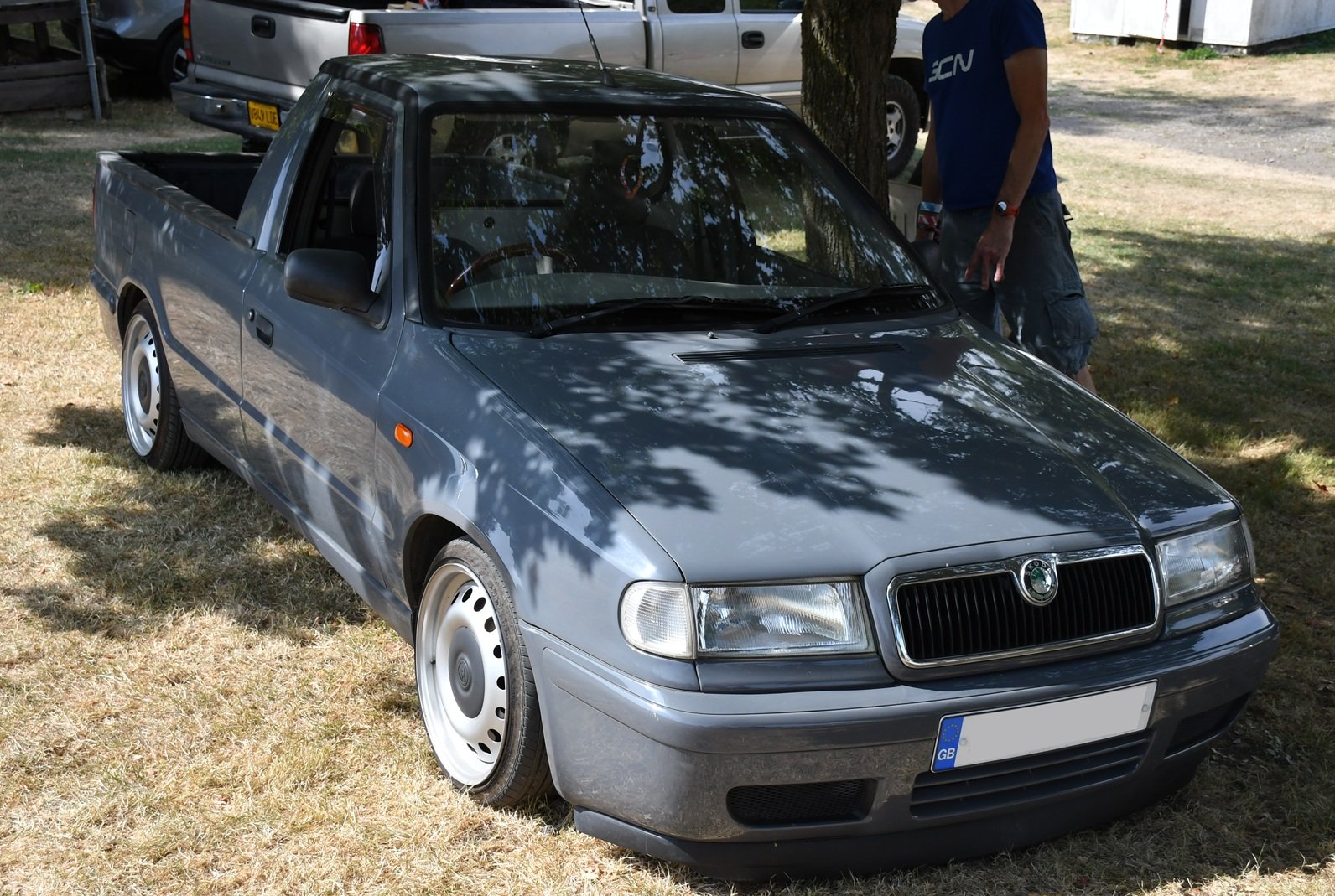
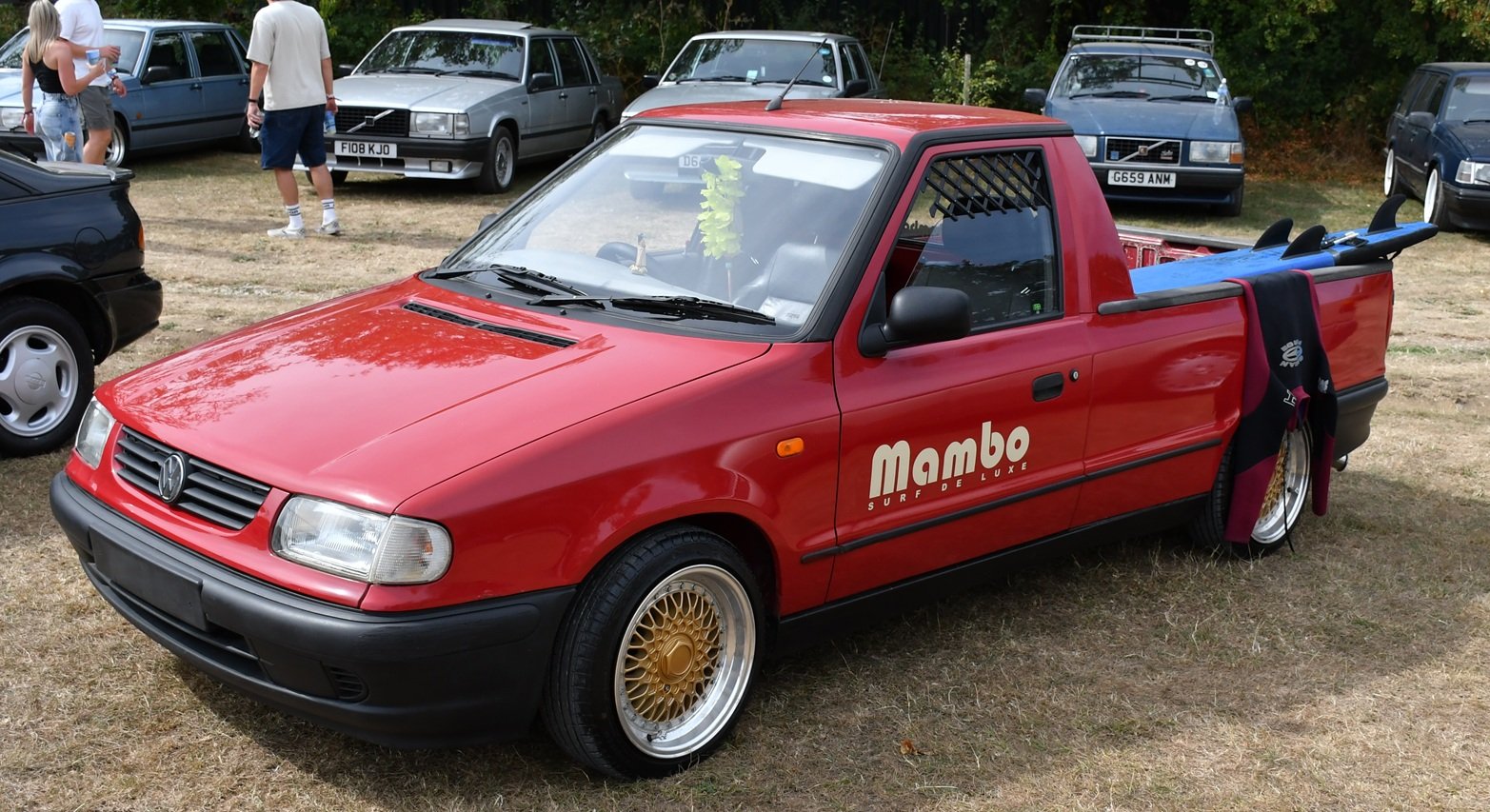
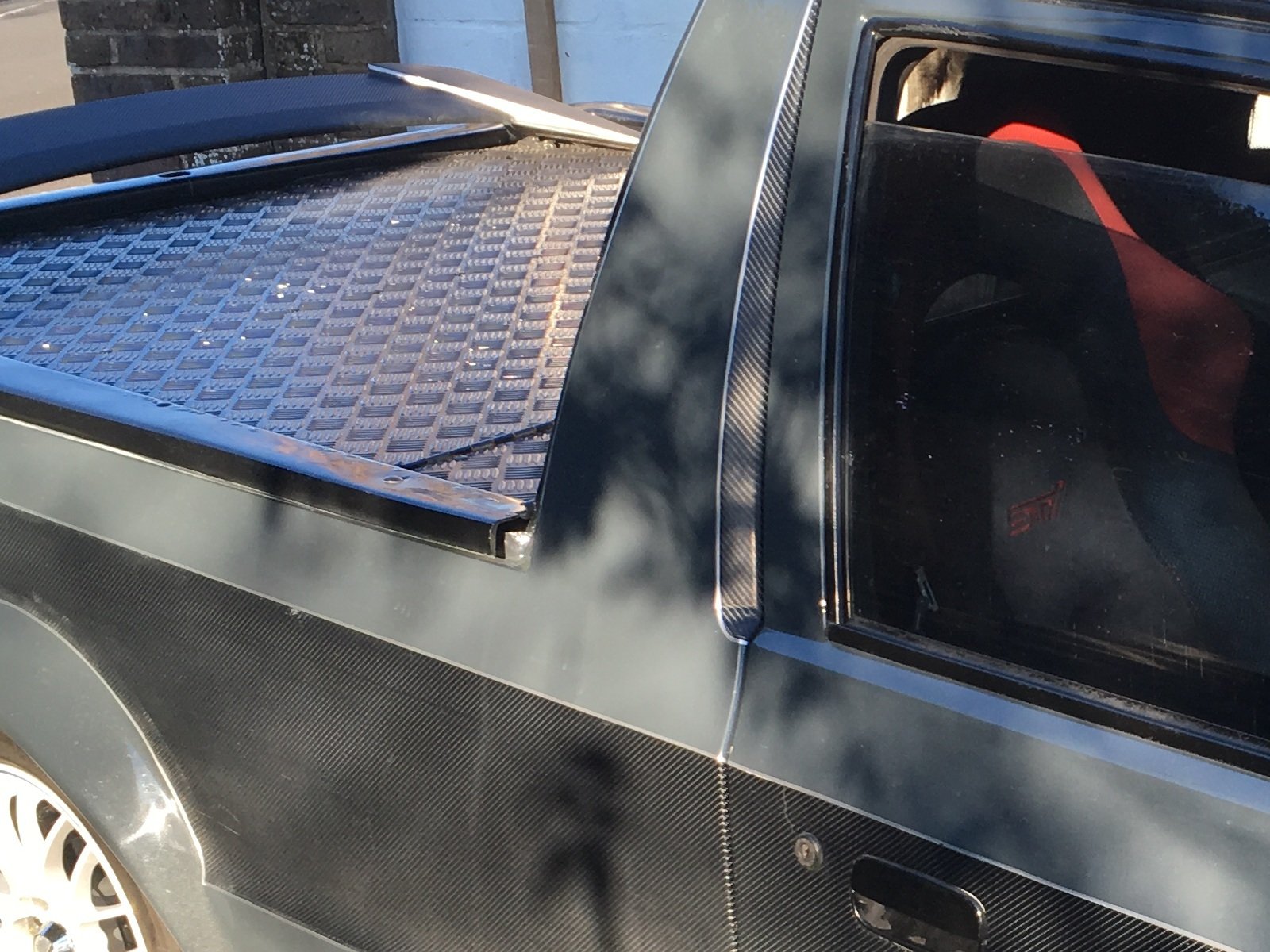
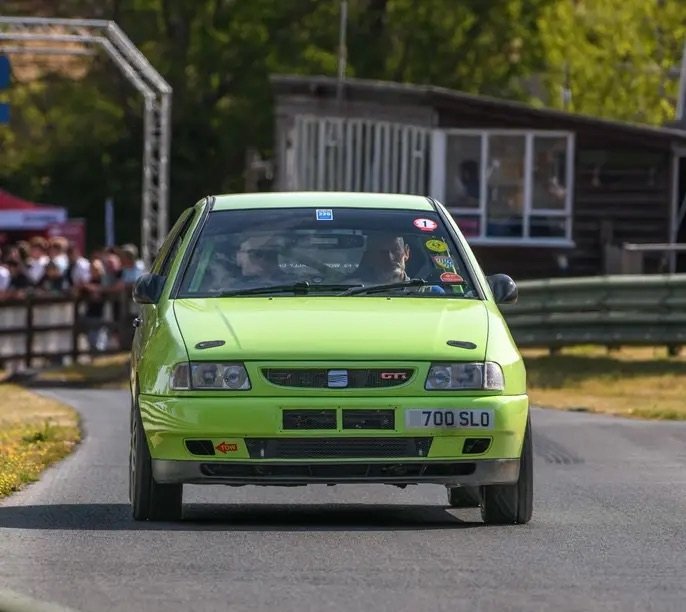
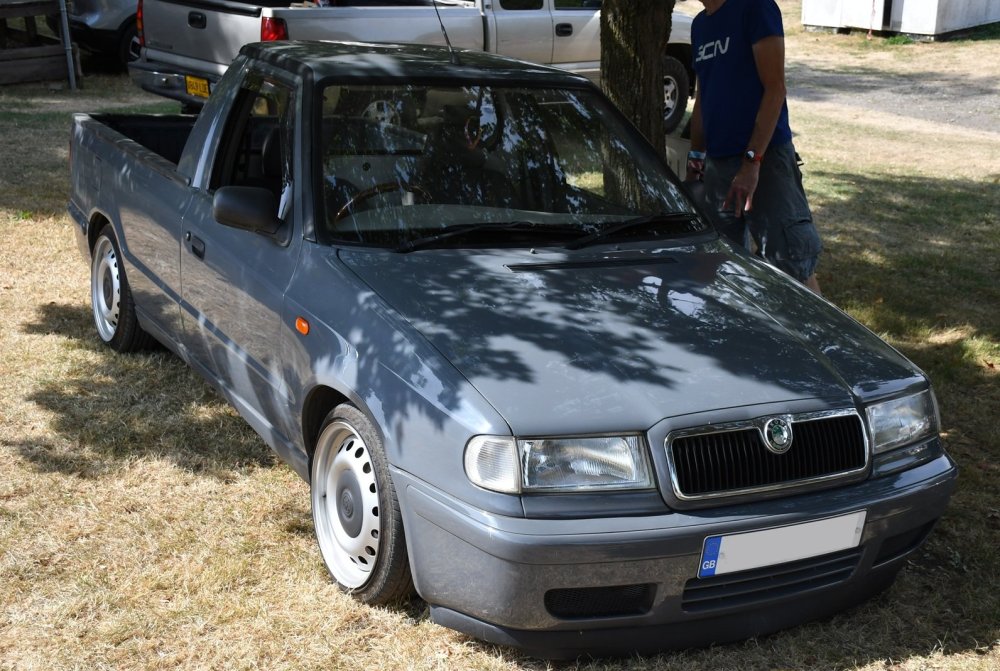
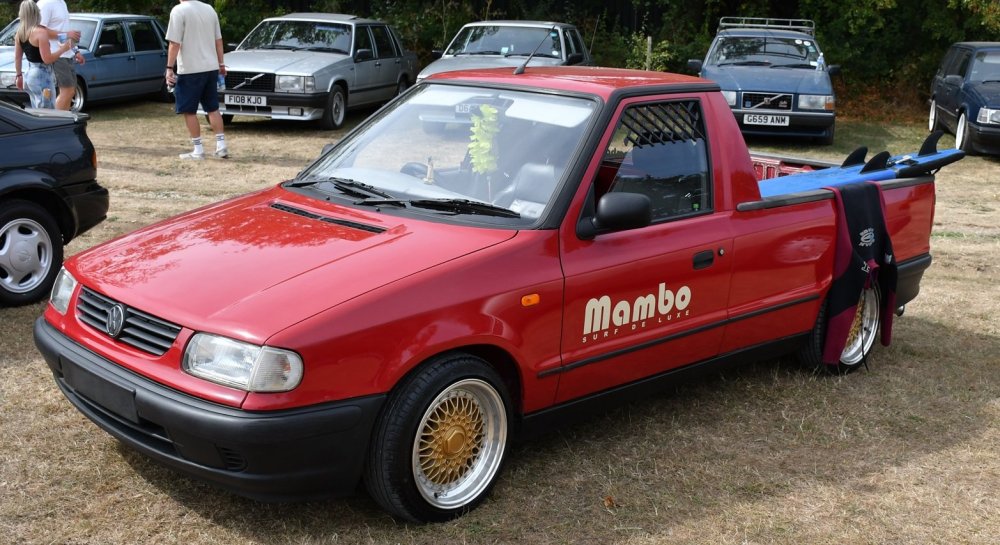
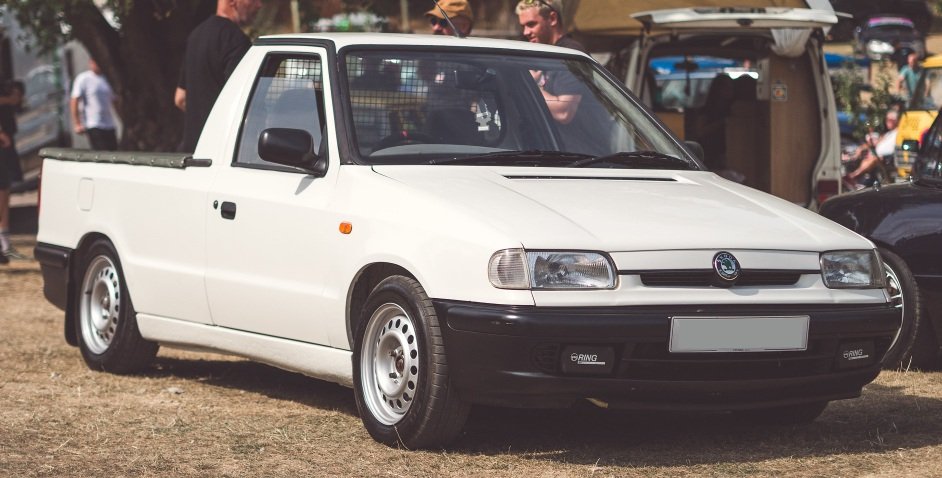
This update is not about progress on my Caddy, but instead is about an event I attended. I was not there in the Caddy so the relevance to this thread may seem tenuous, but please bear with me. Earlier this month I attended the Retro-Rides Gathering at Prescott Hillclimb. I was there in my SEAT Ibiza, and was lucky enough to be able to take it up the hill. Wandering around the retro parking I saw these: I would have really liked to have spoken to the owner of this one. The wheels appear to be the same Renault 16” steels which I have on my Caddy, and the paint colour is remarkably similar. I love the facelift front end too. This last one is not my photo, so if the person who took it recognises it and objects then please get in touch and I will remove it. The point I wanted to make is that when I bought my Caddy these Felicia-based pick-ups were mostly unloved, and you never saw them at events. This is clearly changing. There are now increasing numbers of Felica and mk2 Caddy pick-ups which have obviously had money and effort spent on them. I think this is great news, and if anyone reading this is struggling for motivation on their own project, I hope this helps.
-
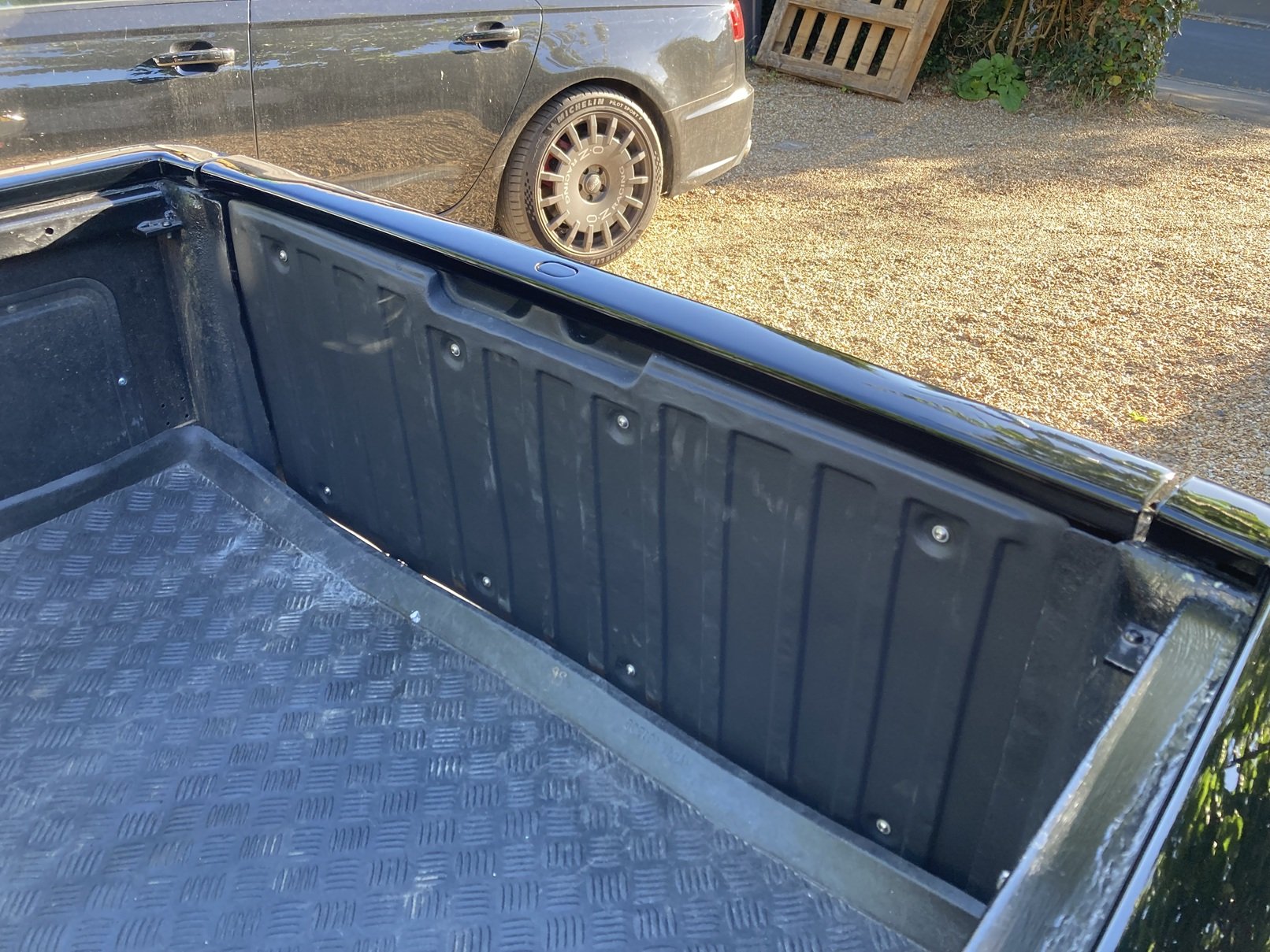
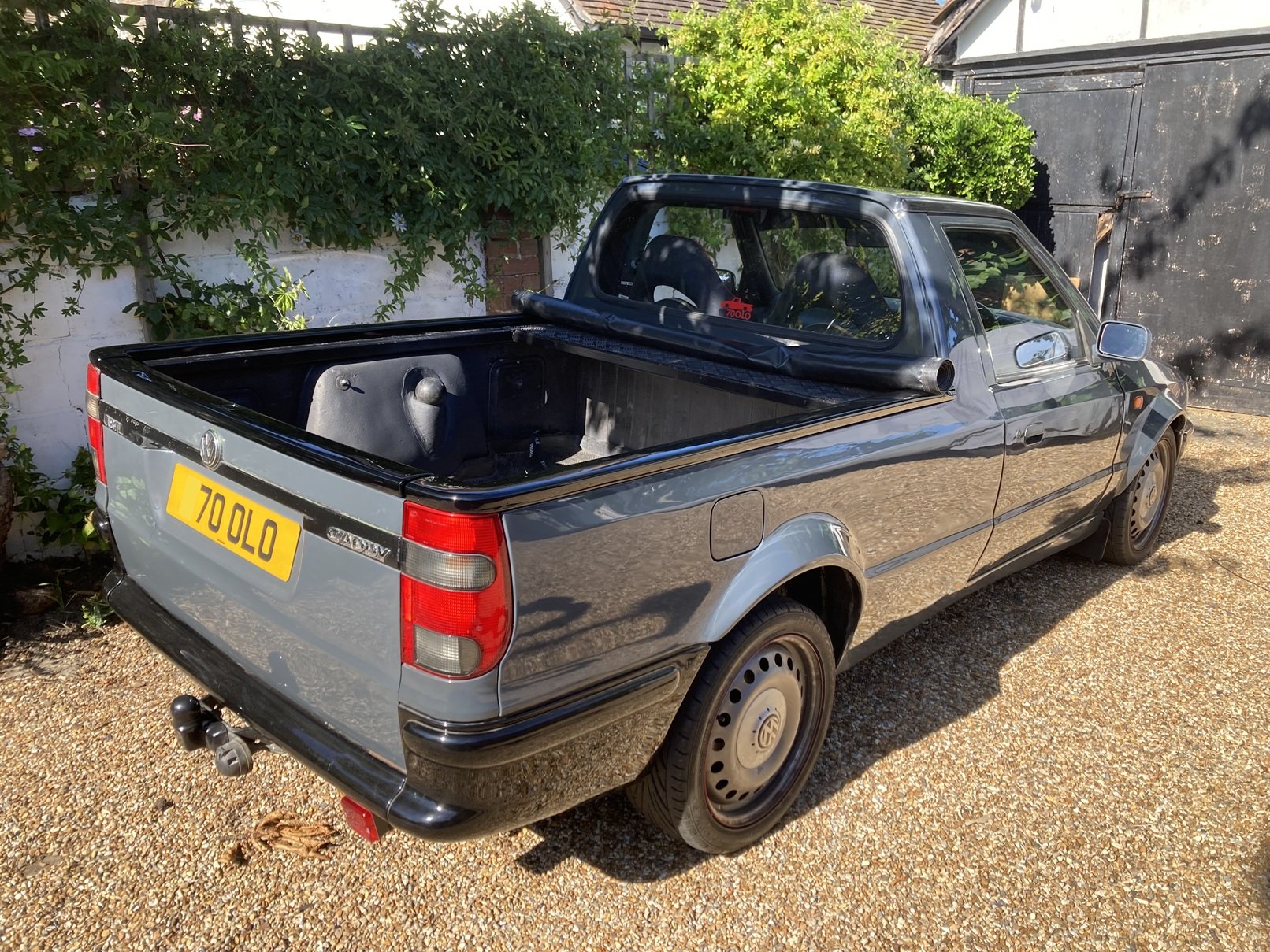
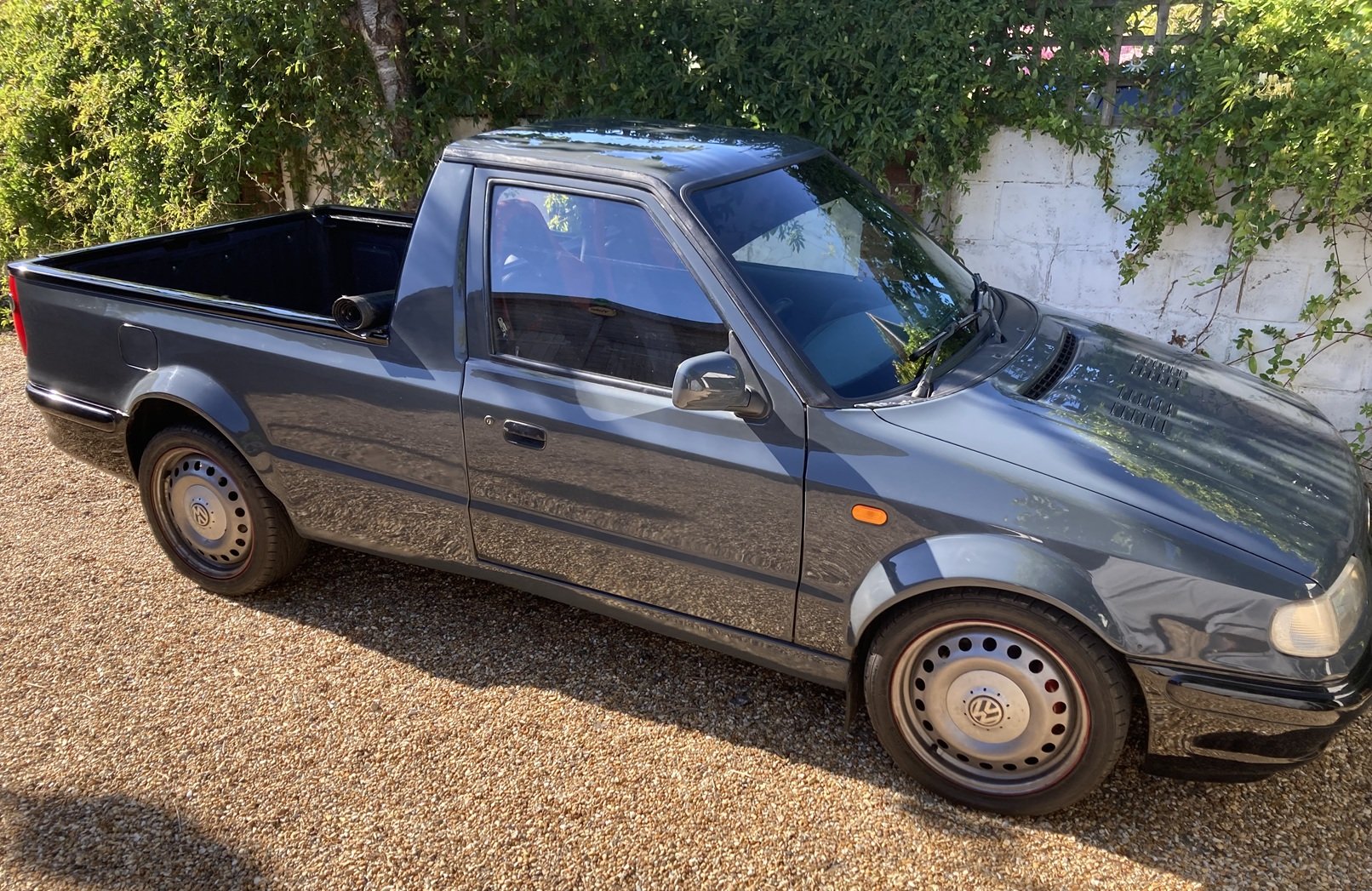
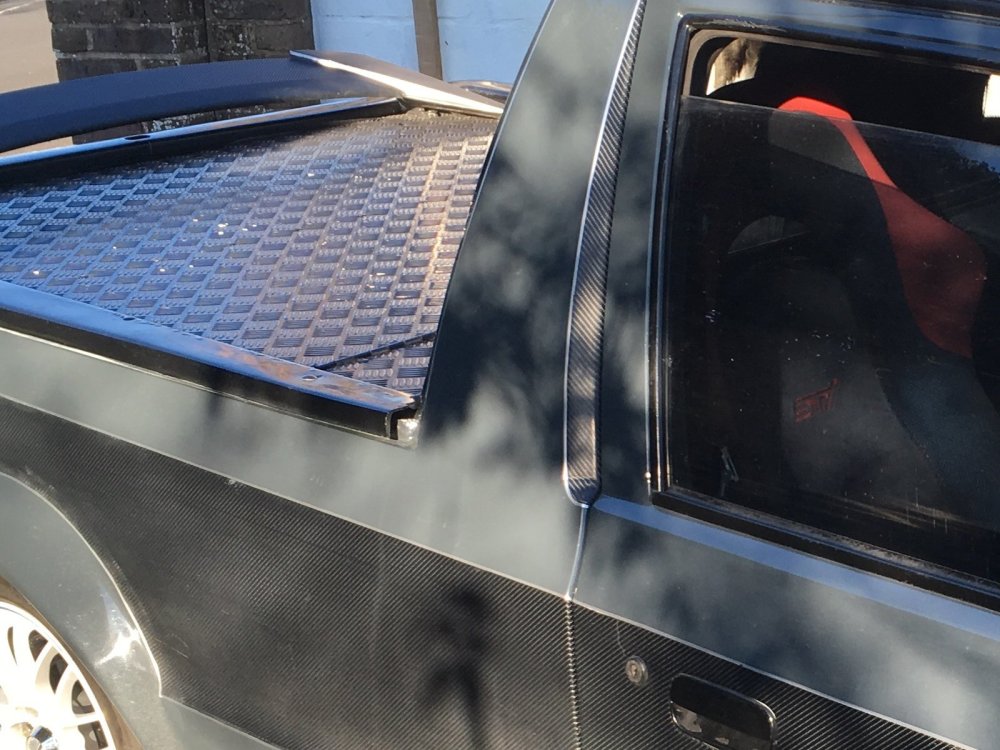
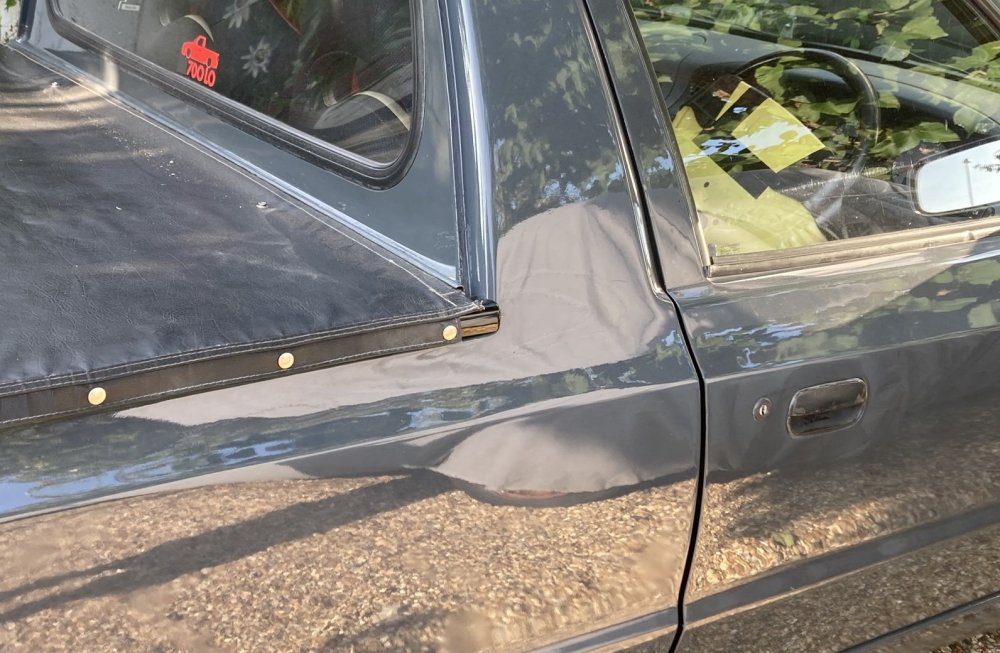
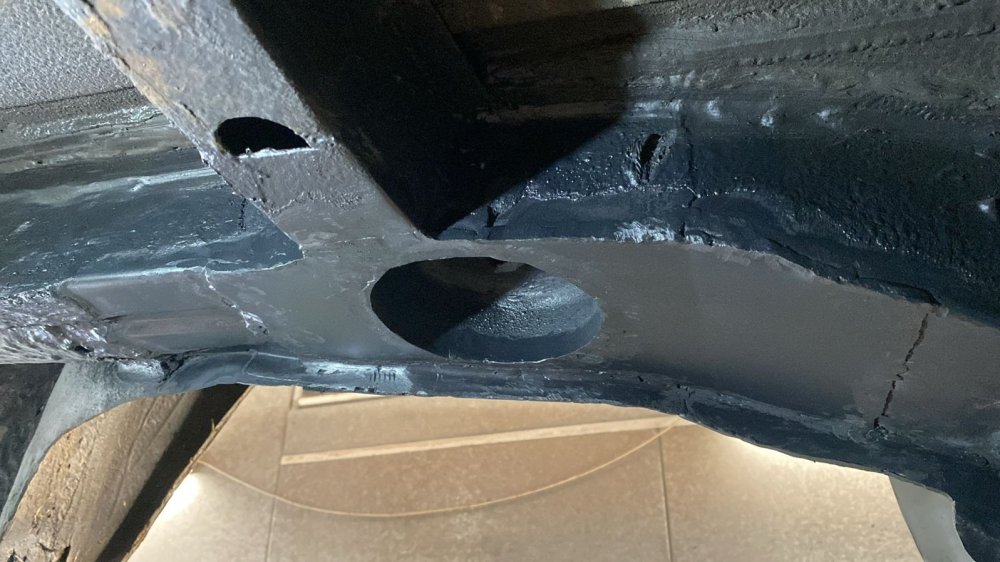
There are a couple of results from the latest trip to the body shop which I neglected to draw attention to in the last update, one of which was a conscious choice while the other was unexpected. I have never liked how the ‘hockey stick’ trims extend across the B-pillar. When I bought this Caddy these trims had been unceremoniously curtailed at their front ends, which caused some problems with water ingress to the load area, but was one of the previous owner’s visual mods which I did not hate. Replacing these trims was an opportunity to do a better job along the same lines, and I had Martlet Autos cut and chamfer the front edges to follow the line of the cab back. In my opinion it looks like they are supposed to be like that, which is a positive sign. The unintended outcome from the work to the rear spring top seats is that the rear ride height is now much higher. I need to get the back end up in the air again to make sure that the springs are seated correctly (there are no untoward noises to suggest otherwise), and if they are then I need to look again at lowering springs. I still have the springs I bought when I rebuilt the rear suspension, so it will be a little effort no cost job to swap them over.
-
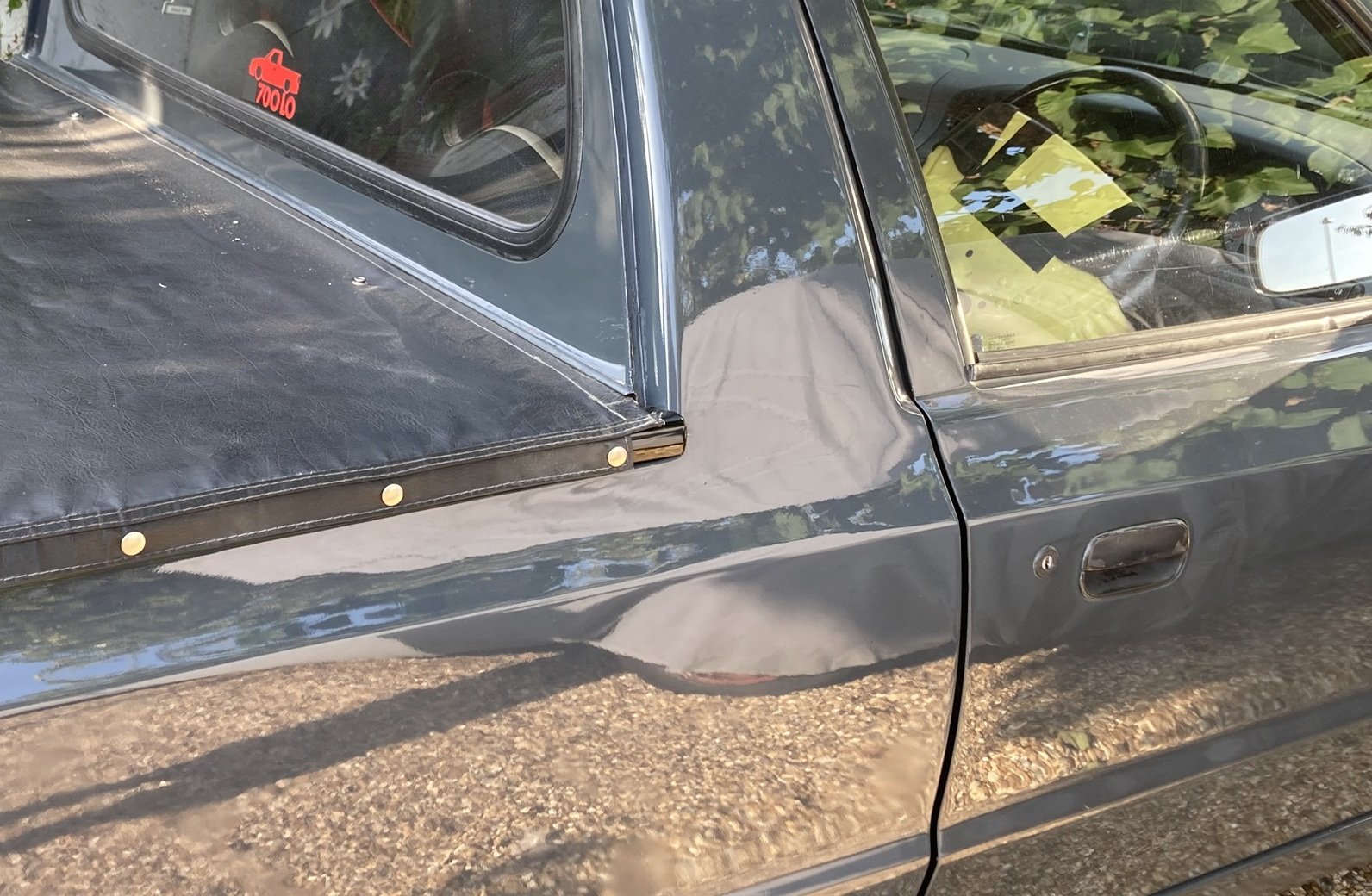
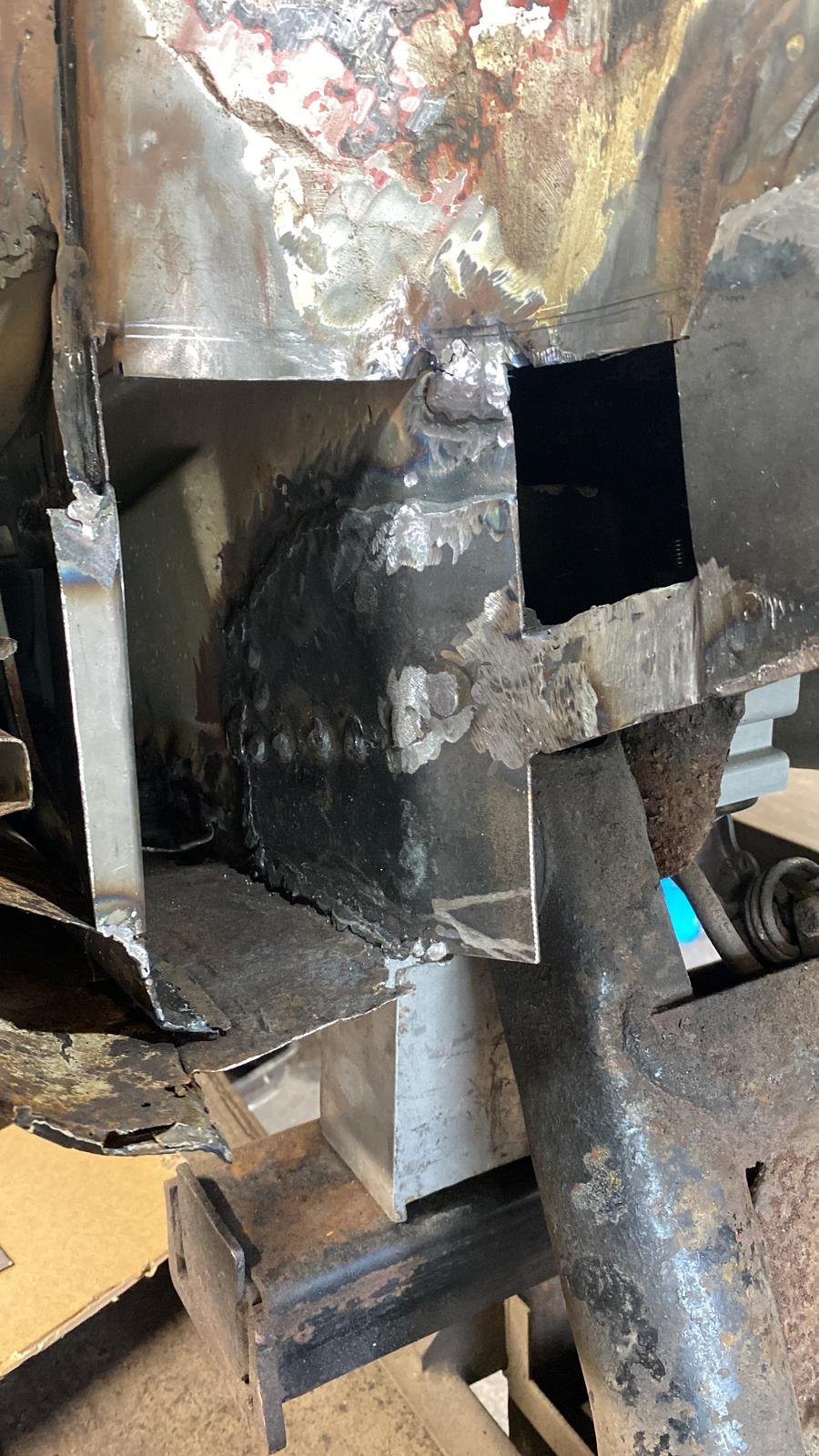
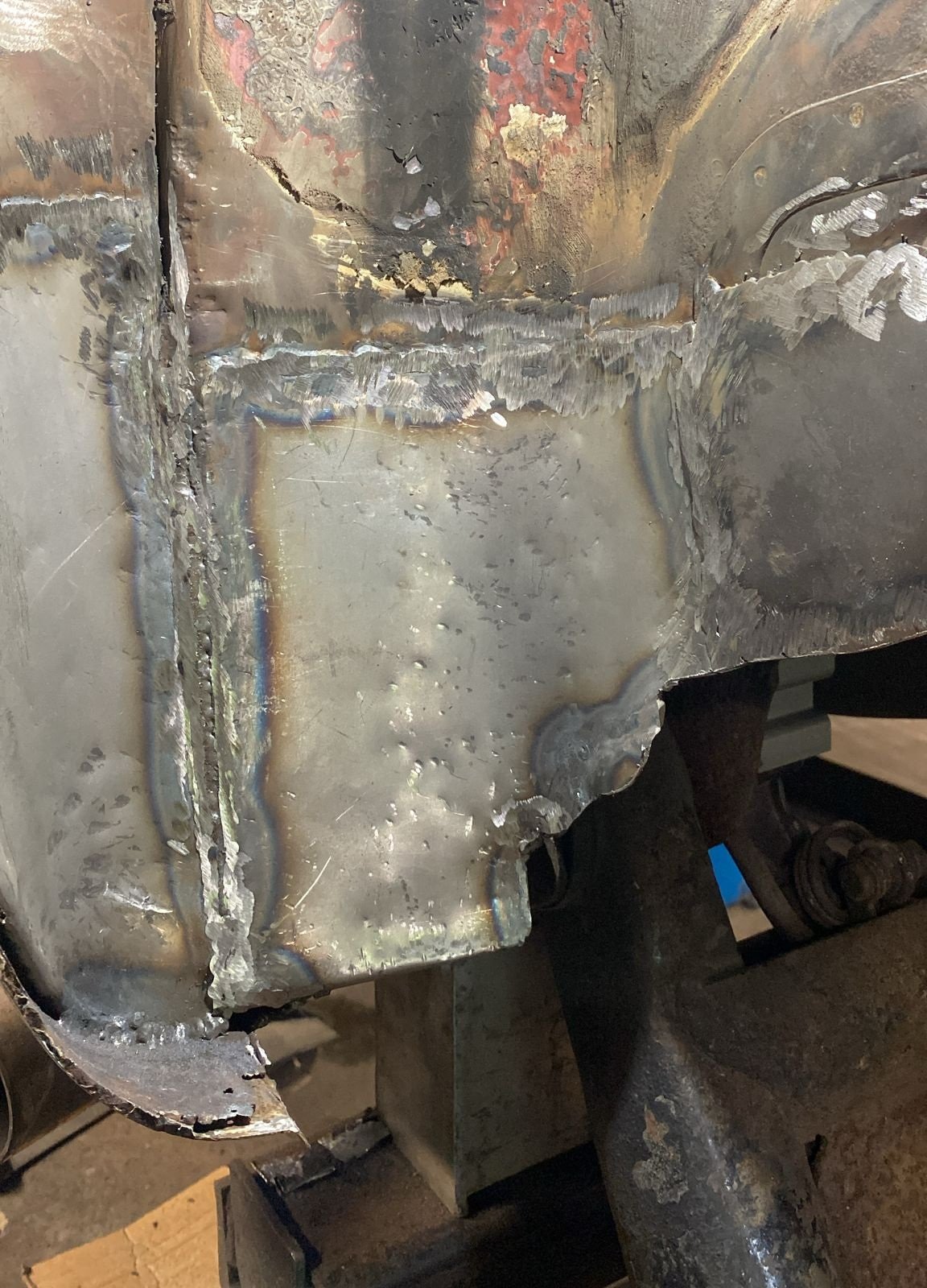
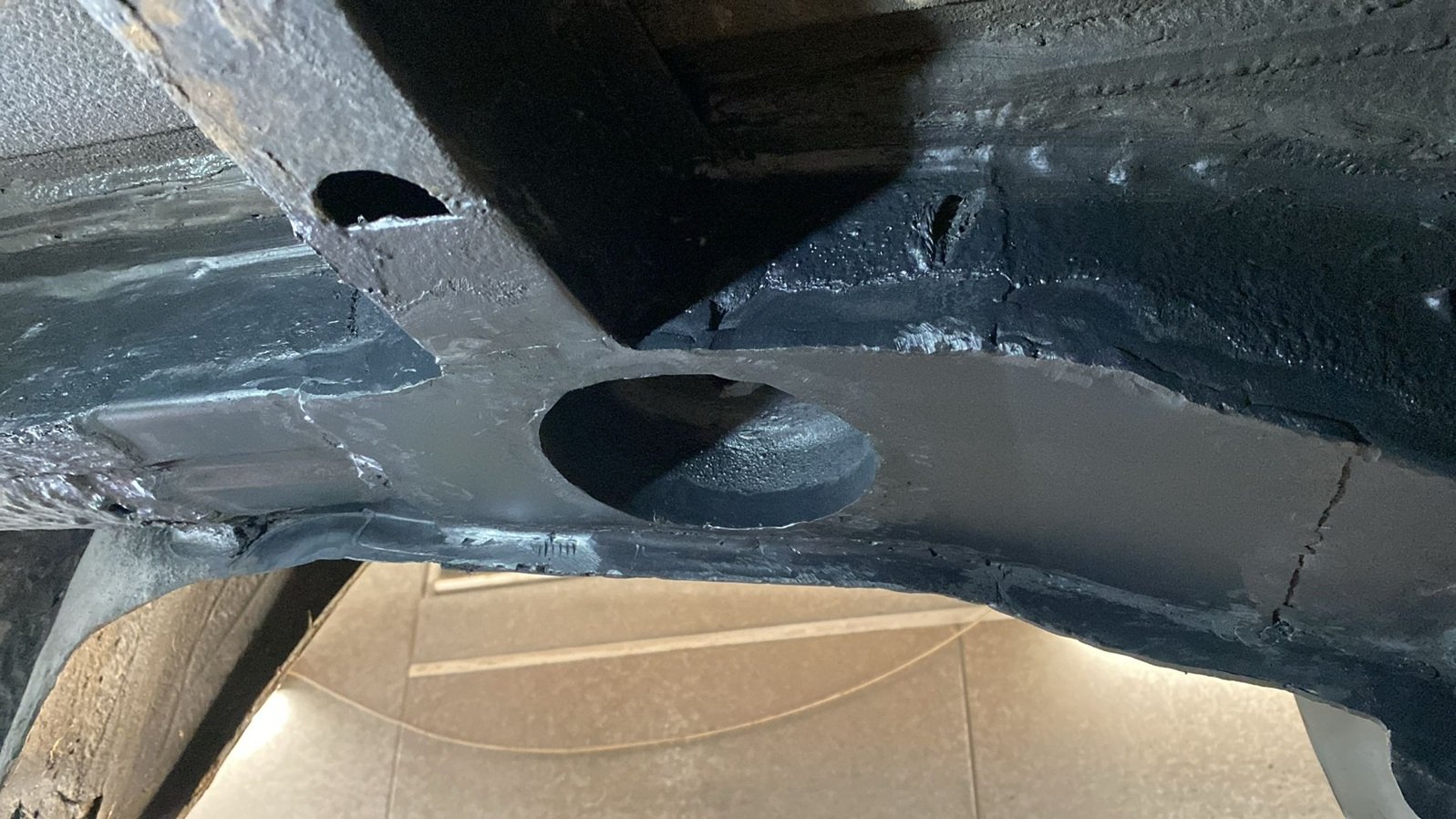
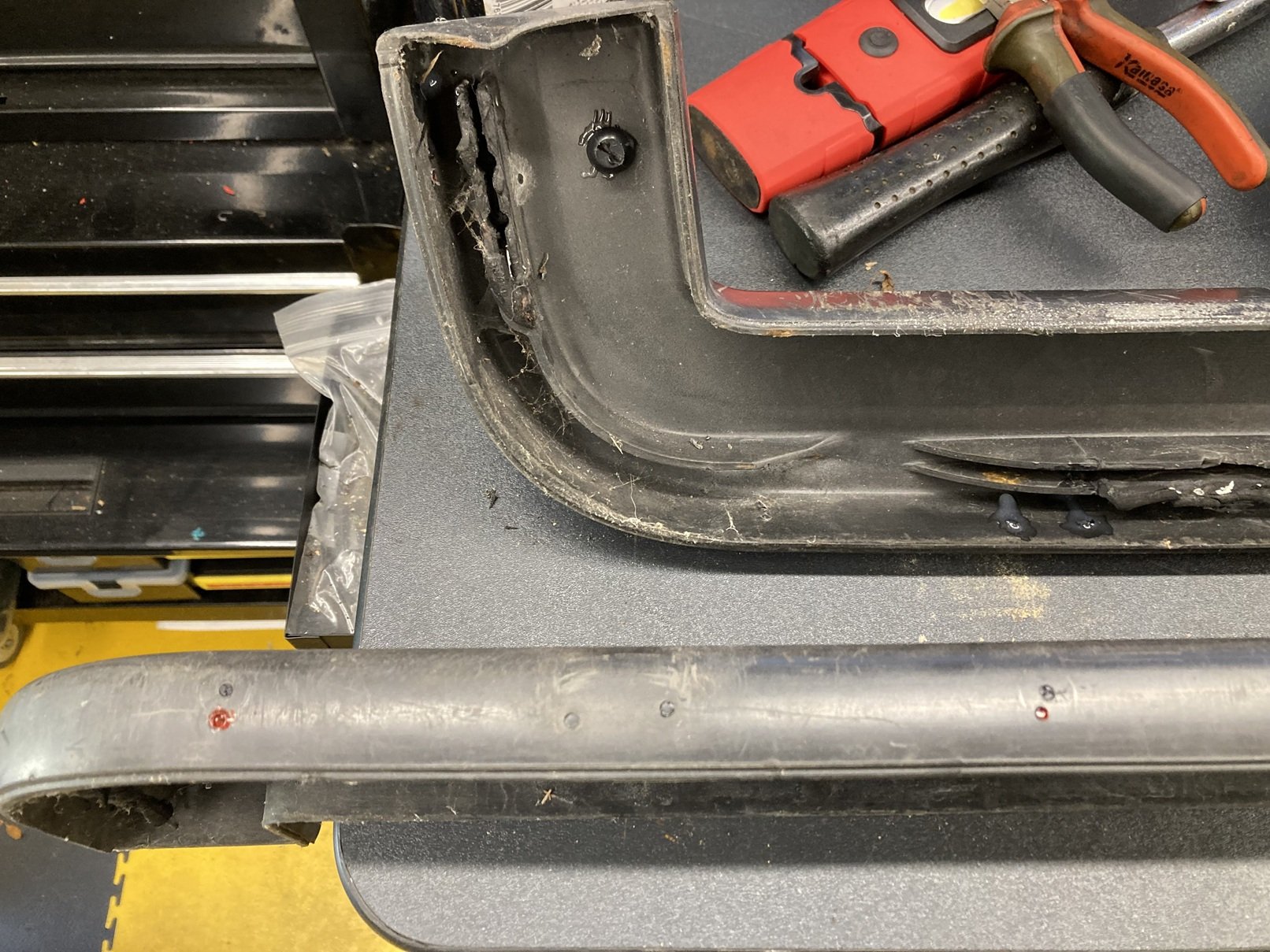
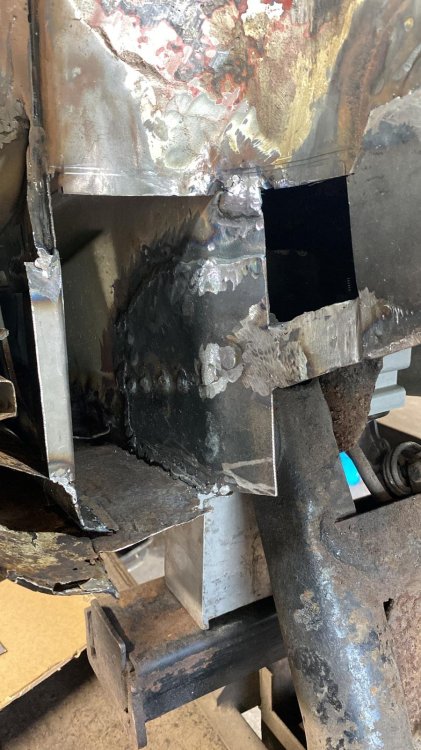
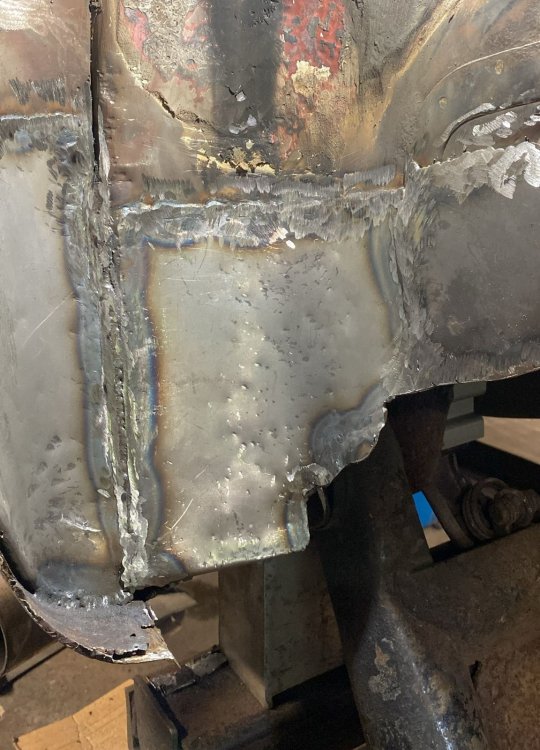
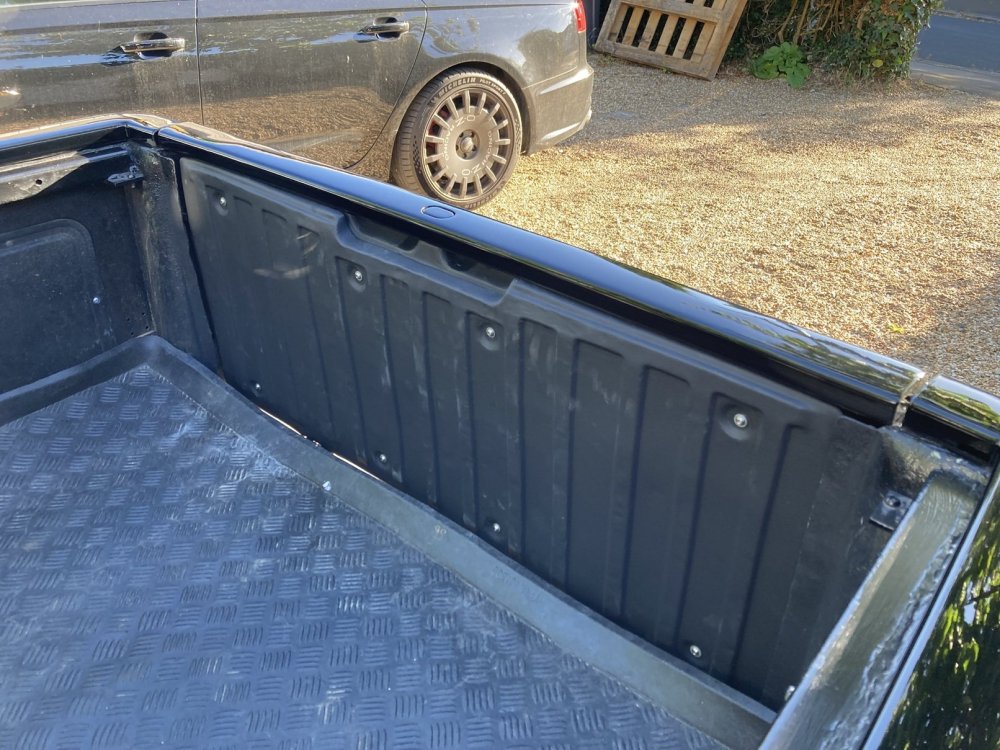
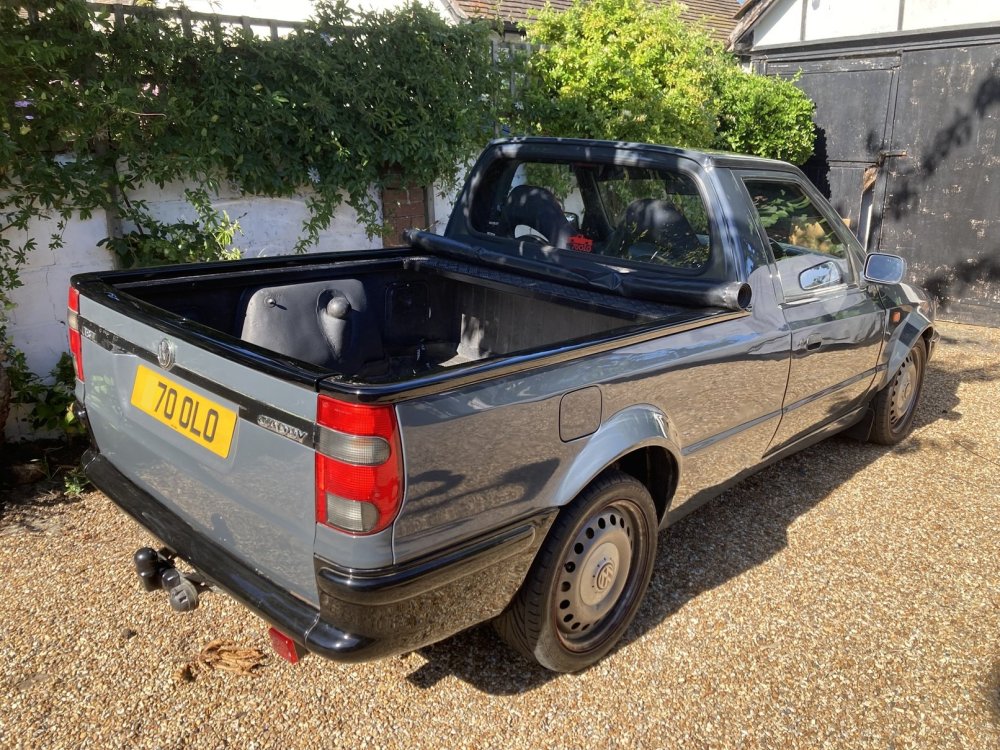
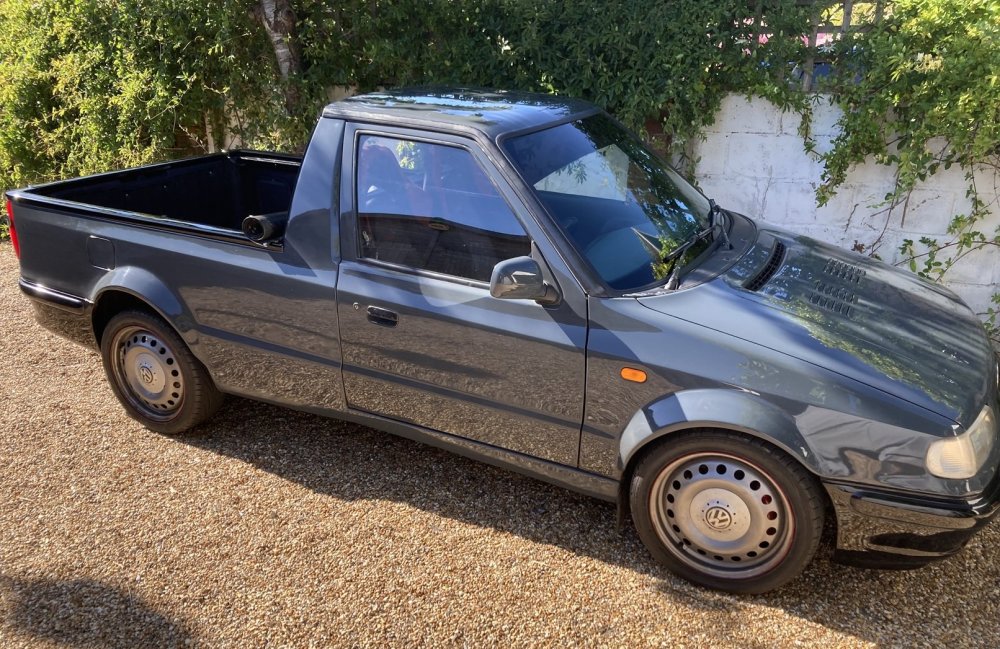
This Caddy has been in my ownership for almost nine years. The work that is documented in this thread I hope bears testament to the fact that it has never lacked for attention, and it has had more money spent on it than I would ever admit to my partner, but nonetheless there was still a shocking discovery to be made. Driving in and out of my workshop, up and down a small step / ramp I sometimes heard a noise like sheet metal deforming. More than once I had crawled over and under the pick-up in search of evidence of the source of this noise, but without success. The same noise occurred when I raised it using the scissor lift for the recent gearbox / driveshafts and brakes work, but now I could see dents in the side panels between the B-pillar and the rear wheels. This is not good! Johnny from S&P Autos, who have now changed their name to Martlet Autos, had a look at the Caddy while it was on the lift in my workshop. It was obvious that it was not as rigid as it ought to be, but it was not at all obvious why not. There is a lot of new metal under there, and no sign of tin-worm, so the cause of the flex in the bodywork could not be identified. There were a couple of other jobs I wanted Johnny to do on it before submitting for an MOT test anyway, so we added further investigation of the structural issue to the jobs list. When the appointment at the body shop came around, tactical jacking soon had the area of weakness pin-pointed, and a bit of expert poking unmasked the full horror. The front lower half of the nearside rear wheelarch was not steel. Rust had eaten away the original metal in this area, and rather than repairing it properly the previous owner had put some effort into hiding it instead. The critical area where the wheelarch meets the sill, adjacent to the rear beam mounting, had been patched-over with fibreglass then painted with stonechip to complete the disguise. No wonder the Caddy was trying to fold in half! NSR wheelarch fibreglass bodge I want to stress at this point that I have never sought or received a ‘dodgy’ MOT for this or any other vehicle I have owned, and nor do I blame any of the MOT testers who have passed the Caddy during my ownership for not having spotted this horrendous bodge. Effort had gone into applying and painting the fibreglass so it looked like the surrounding solid bodywork. I can remember when MOT testers routinely used to run a hammer and a magnet over the underbody, which would have shown there was something very wrong, but I do not know of anyone who still does this as a matter of course. Without that this bodge was very hard to detect. This photo was taken once the repair work was underway. Getting back to how it needs to be. Whilst the rear axle was hanging loose and out of the way, the opportunity presented itself to do some work to improve the top spring seats. They certainly look better for it. At the body shop the work that I had done to tidy the hockey stick trims was completed, concluding with some nice gloss black paint. When the rear bed floor repairs were done they were finished-off with a covering of black raptor paint, but the tailgate inner panel had not been painted to match, and this was a good chance to rectify that oversight. The Caddy looked better than it ever has previously, during my ownership at least.
-
@D.FYLAKTOS This is all of the info on the front brakes which I found in TeflonTom's Felicia 1.8T transplant thread. https://www.briskoda.net/forums/topic/209180-felicia-18t-transplant-thread/page/4/#findComment-2991830 https://www.briskoda.net/forums/topic/209180-felicia-18t-transplant-thread/page/4/#findComment-2991838 This is essentially the same as what I have told you already. The 'little spacer' which is mentioned as being required between the mounting lugs and the caliper carrier bracket is actually some chunky washers with a total thickness about 5mm. I had in mind that the holes in the mounting lugs had to be re-tapped for larger bolts, but I can find nothing about that in this thread so I am not sure now. Next time I have a front wheel off my Caddy I will check the size of the caliper mounting bolts and confirm on here. I discovered that I have a 14" wheel here too, so I will try that and see if the Mondeo calipers fit under it. It is actually a Vauxhall steel wheel so it will not tell you definitively whether your 14" wheels will fit, but it should show conclusively if they will not.
-
Front brake disc diameter is 280mm. If you are interested, I can re-post the front brakes info I gleaned from TeflonTom's Felicia 1.8T transplant thread, plus what I have since discovered for myself.
-
You need the ATE callipers as fitted to the Mondeo V6 1998-2000. I do not know whether they fit under 14" wheels, the smallest I have tried is 15".
-
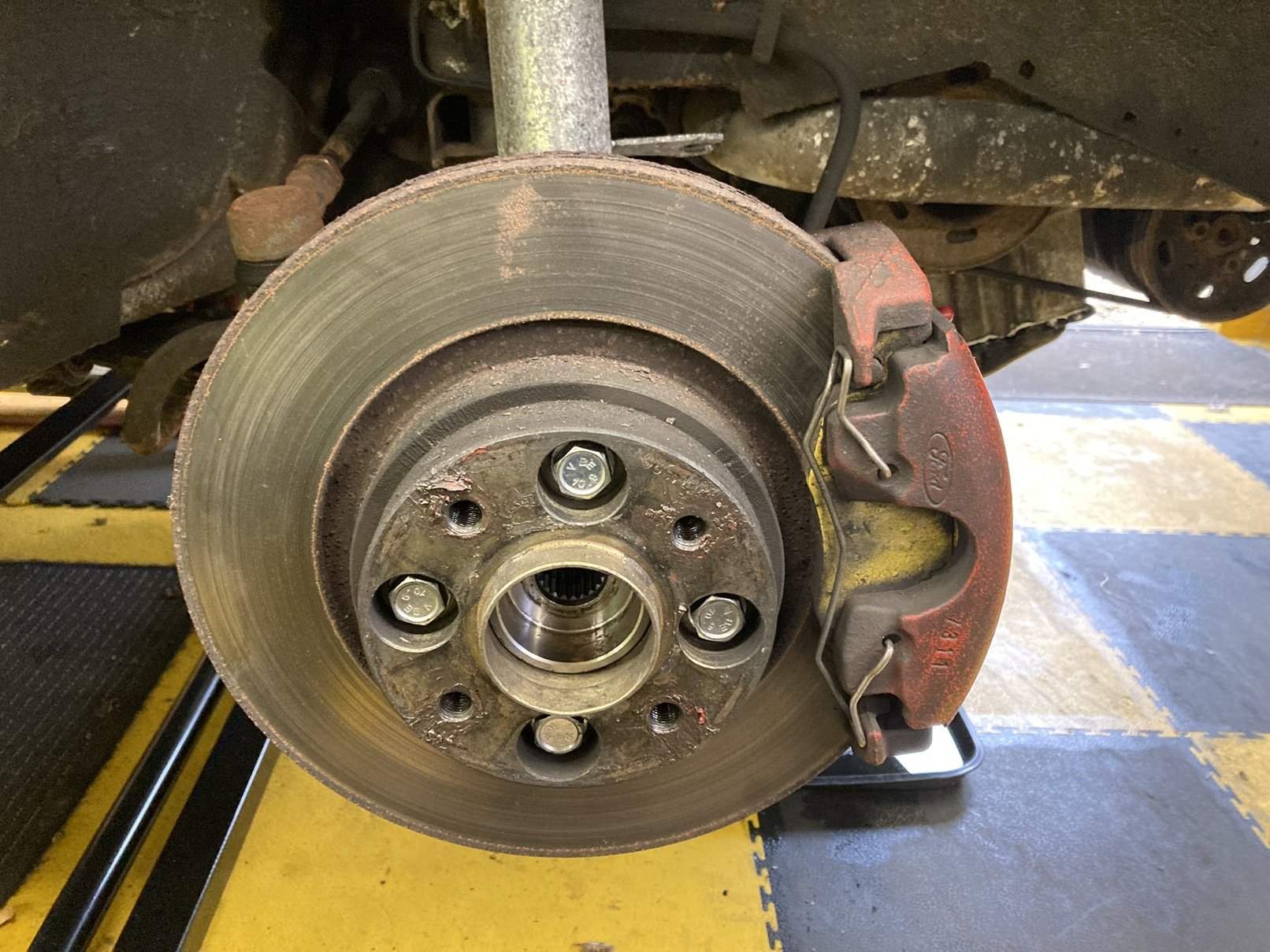
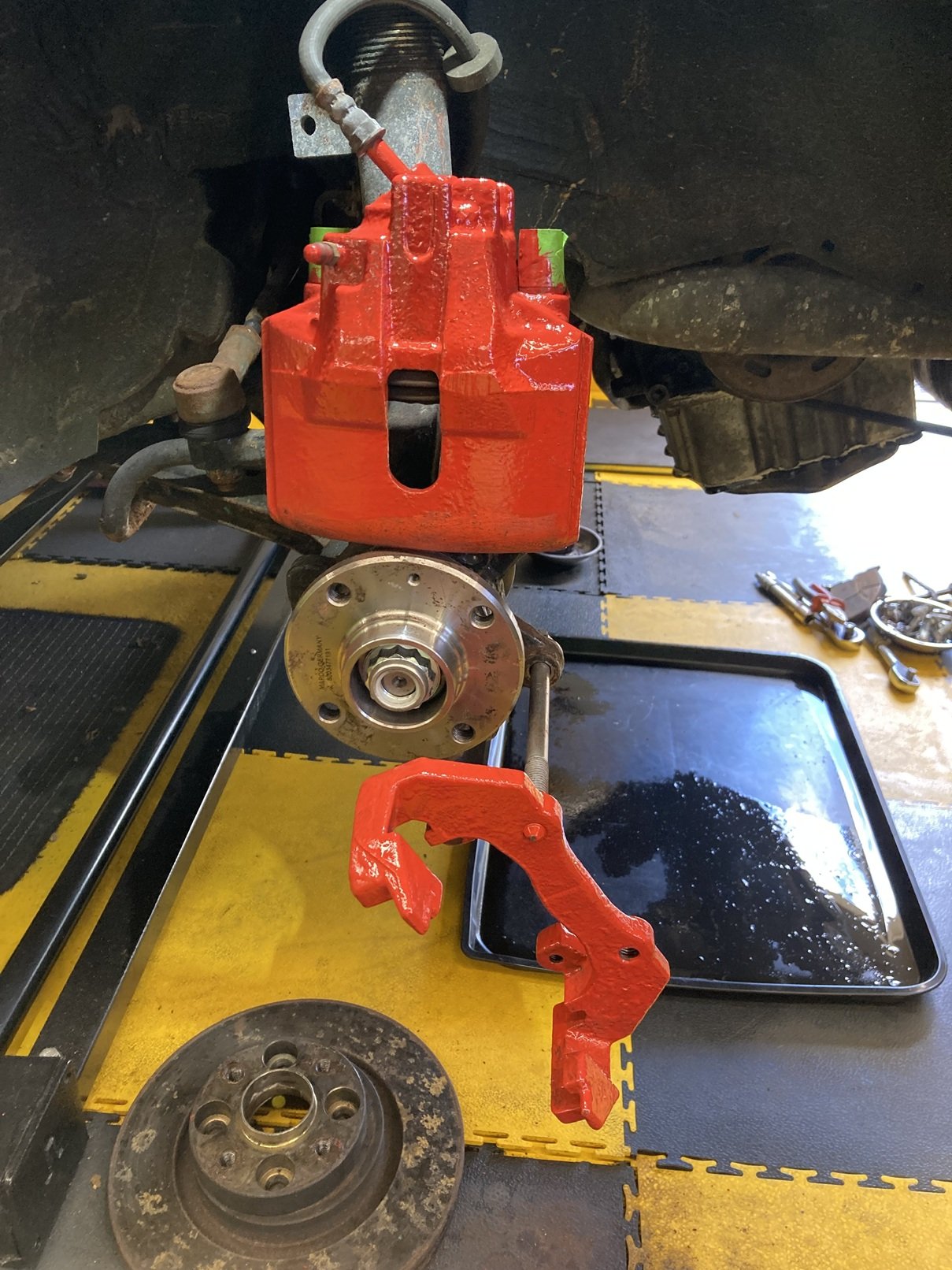
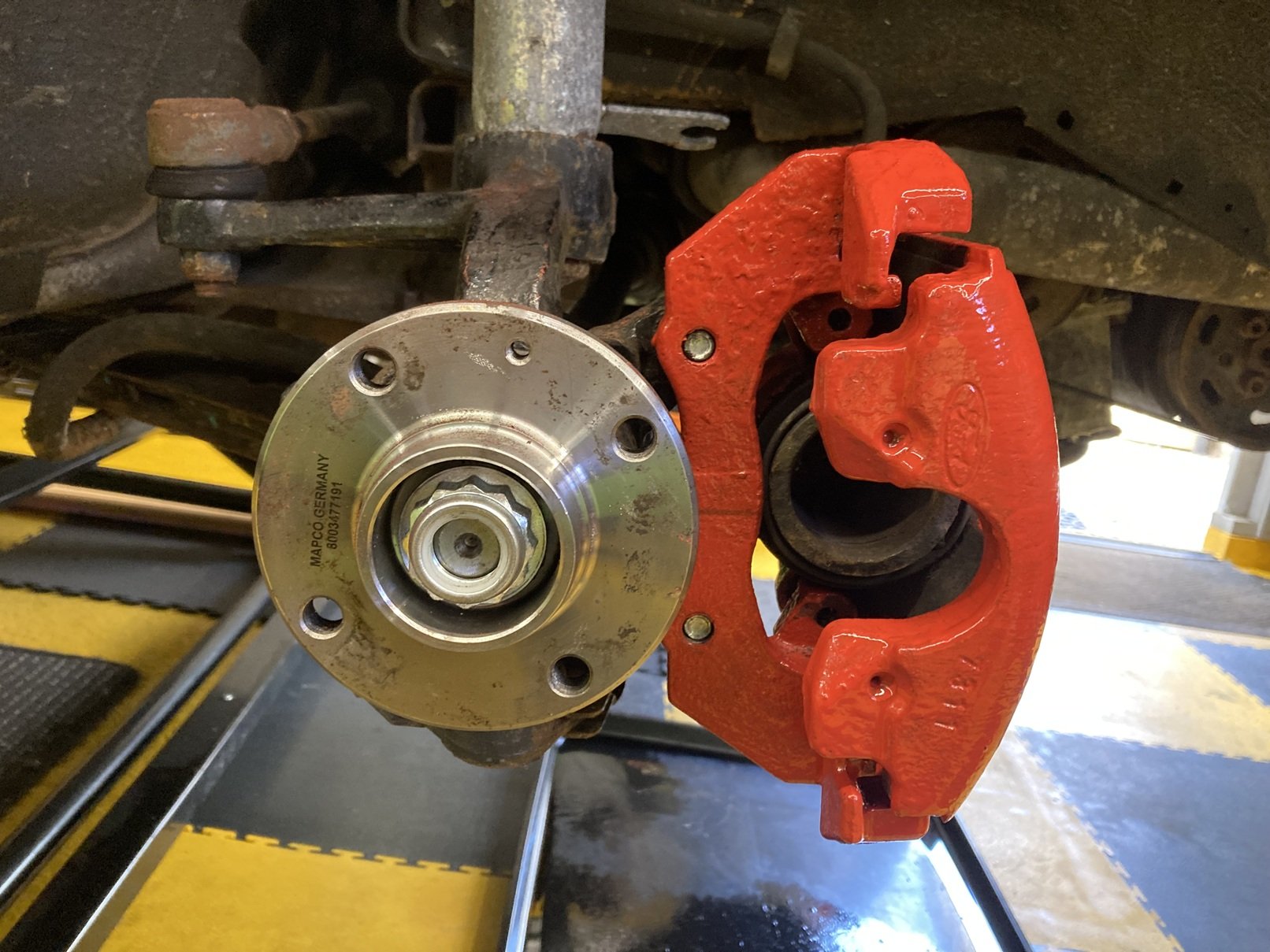
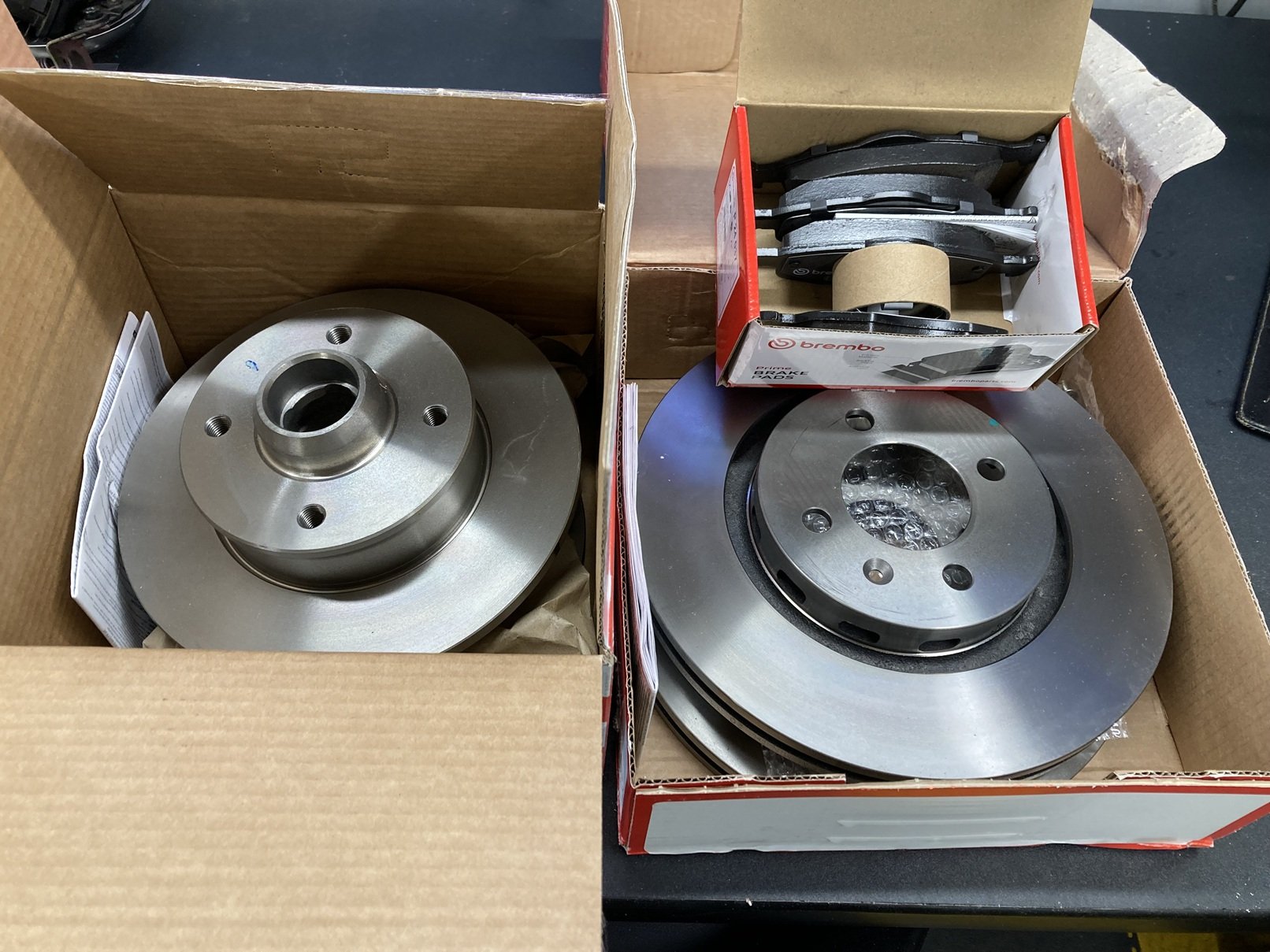
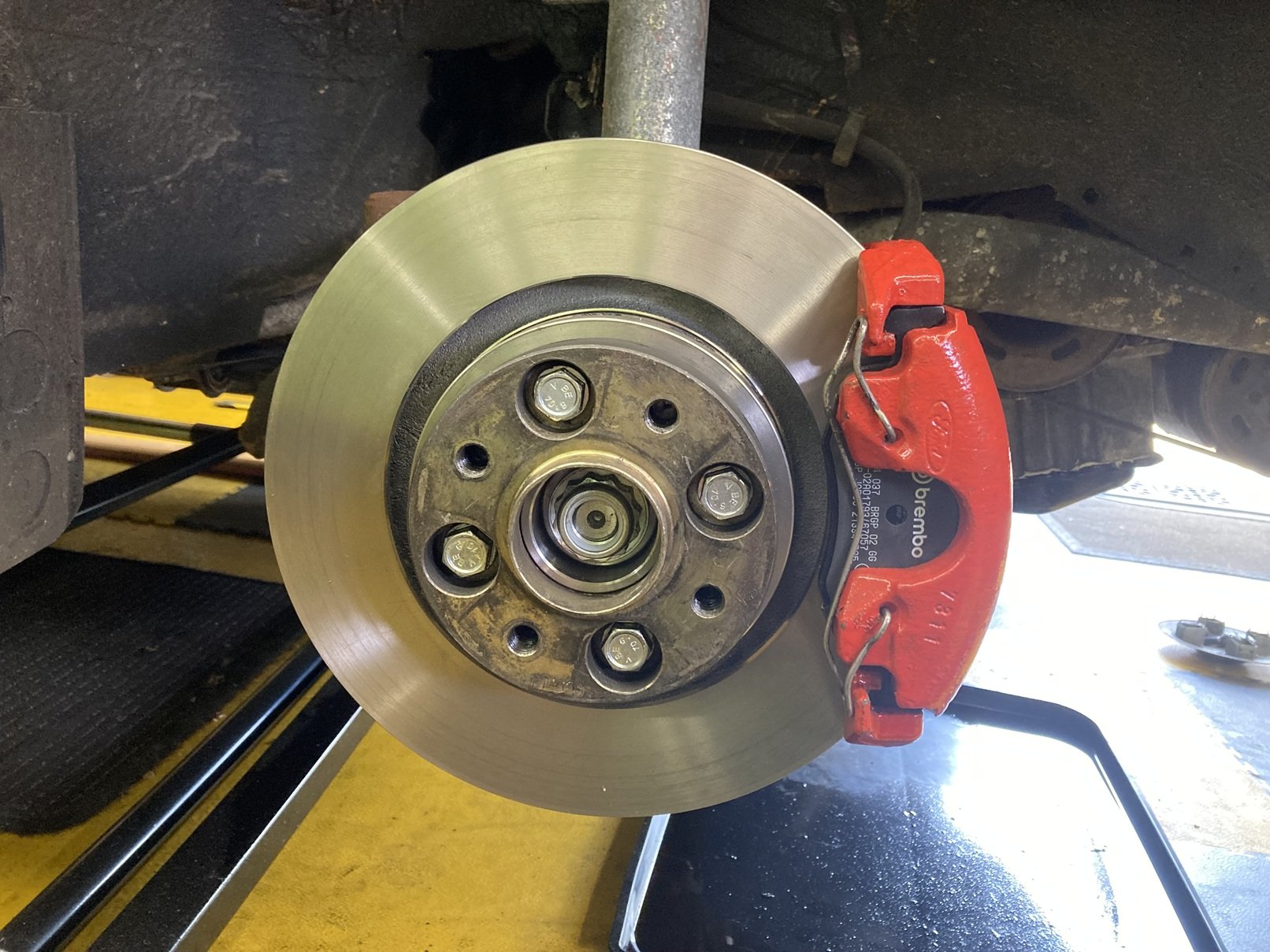
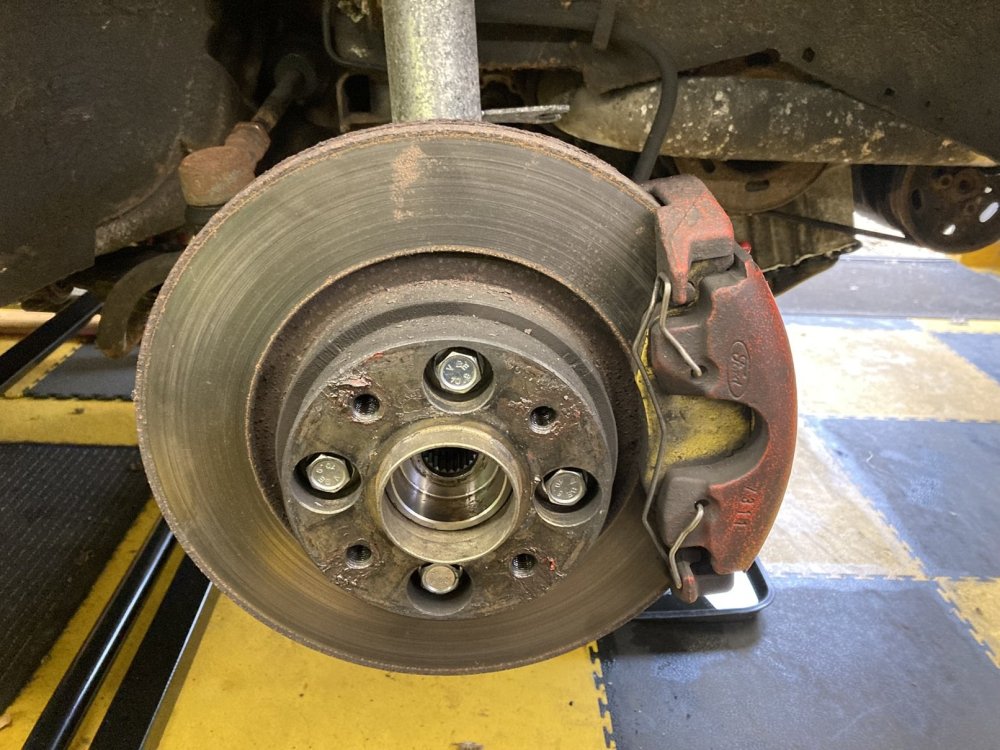
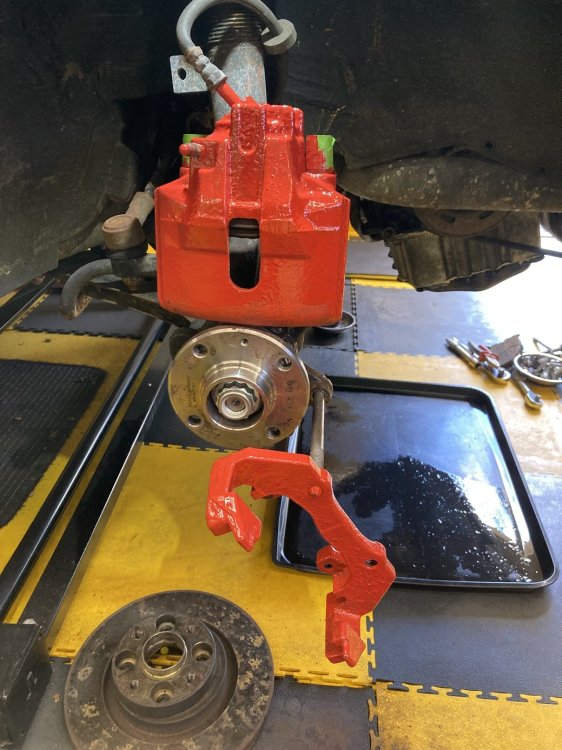
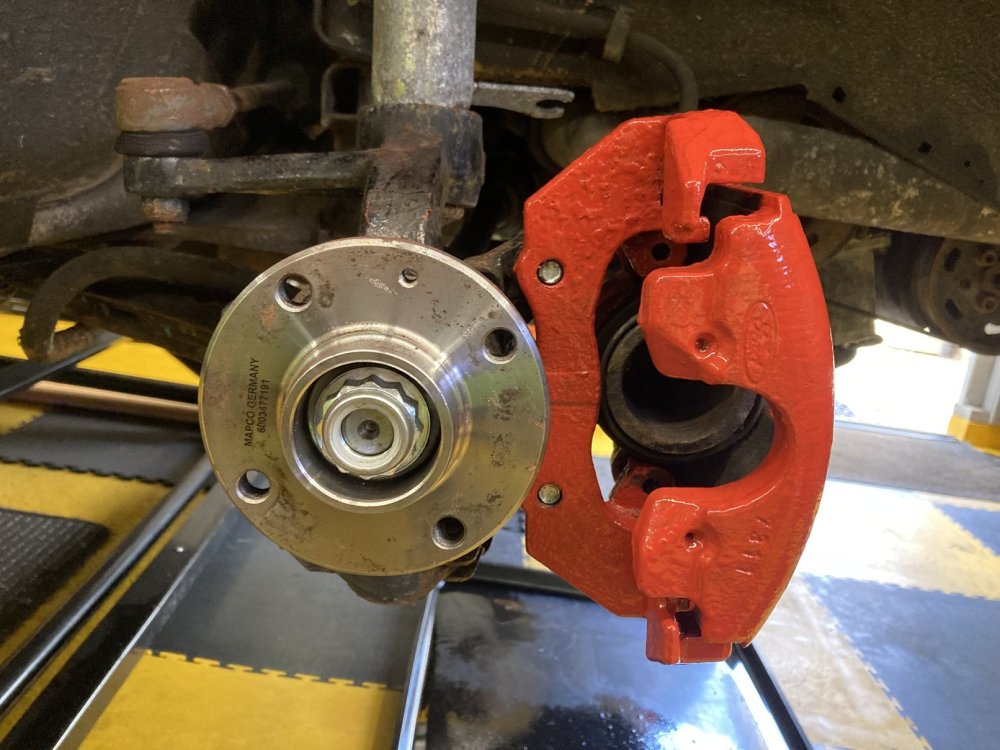
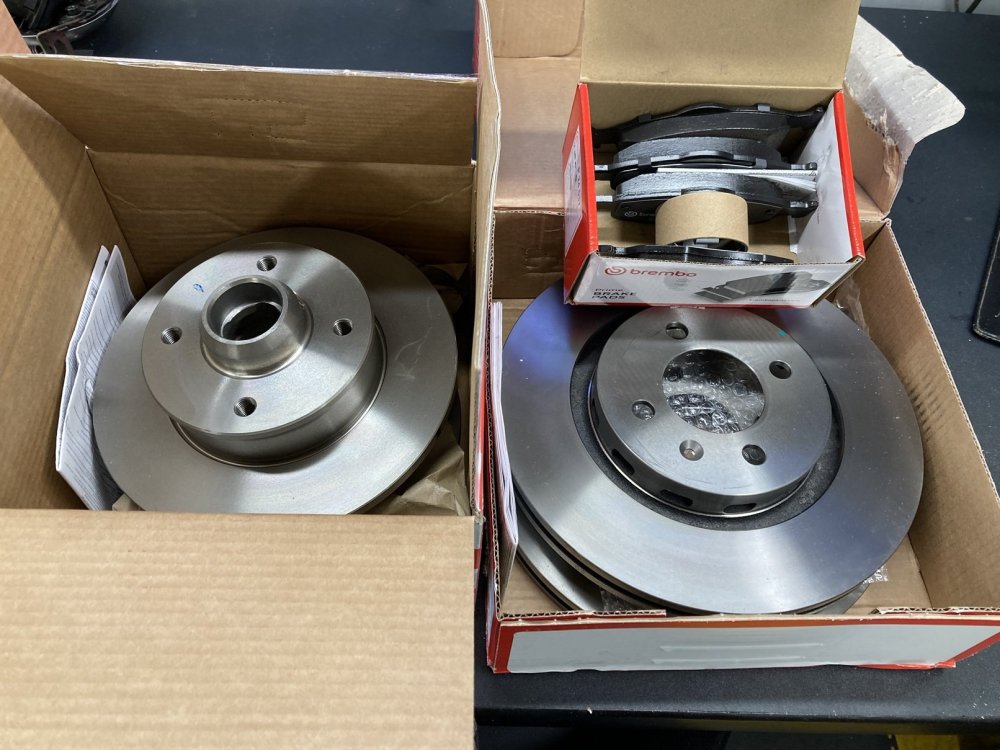
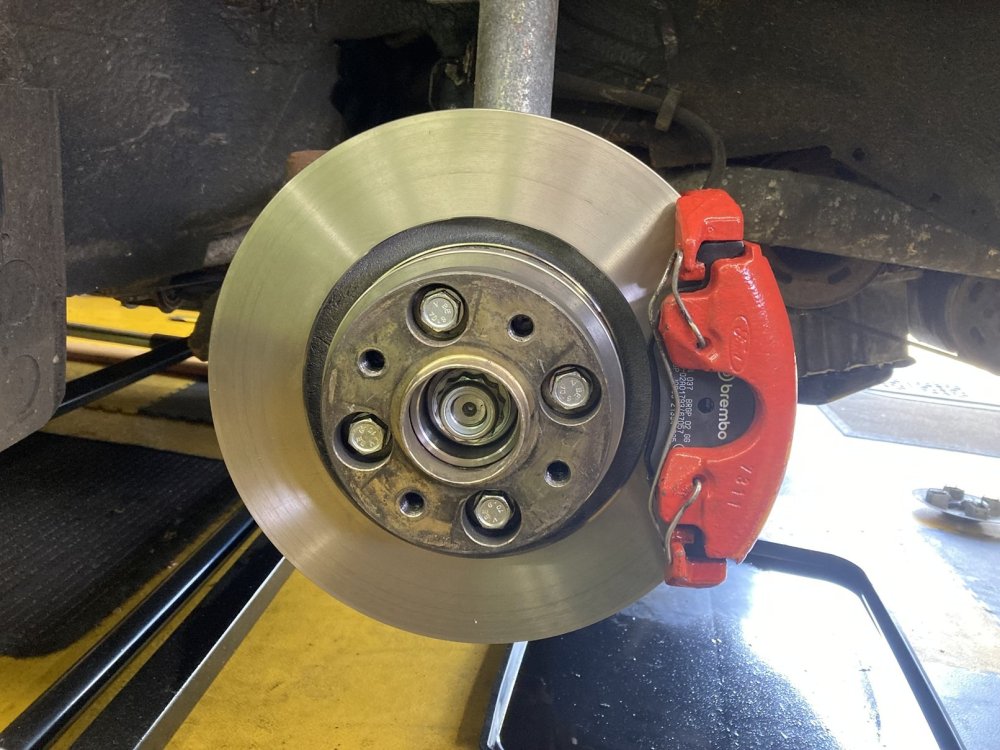
The brakes were looking shabby, and the discs had been mentioned in the advisories at the Caddy’s last MOT. Obviously this did not compel me to do anything to them before it goes for its next test, but I do not believe in taking chances with brakes. When I swapped the uprated brakes from the Felicia onto which they were fitted previously, the only new parts I had bought were the pads, which meant that I was not even 100% sure what the front discs were from. I have read of people fitting Hyundai Lantra discs, so I was pleased to read that my Caddy has ‘Golf G60’ discs. This means they are the same as would have originally been fitted to my mk2 Ibizas. The front callipers are Ford Mondeo parts, but pretty specific Mondeo parts so I had to remind myself of those details too. I ordered the bits then set-to removing the old discs and pads, and giving the callipers a clean then a couple of coats of red paint. The pads I took out were EBC Yellowstuff, which were fine in terms of all aspects of their performance, except that they seemed to generate a lot of dust. The new parts I chose were all Brembo. The Caddy does not go on track or even get driven particularly hard on the road, so there is no need for more expensive discs or pads, especially as the Ibiza GTi discs all round are a significant upgrade on the standard Caddy brakes. New brakes always look so nice. What a pity they do not stay looking like this for very long. The brake hoses have not been touched yet, because when I looked at the unions with the brake pipes they did not look good. I do not trust myself to do a good job making replacement brake pipes, so I will entrust that job to JKM when it goes there for its MOT.
-
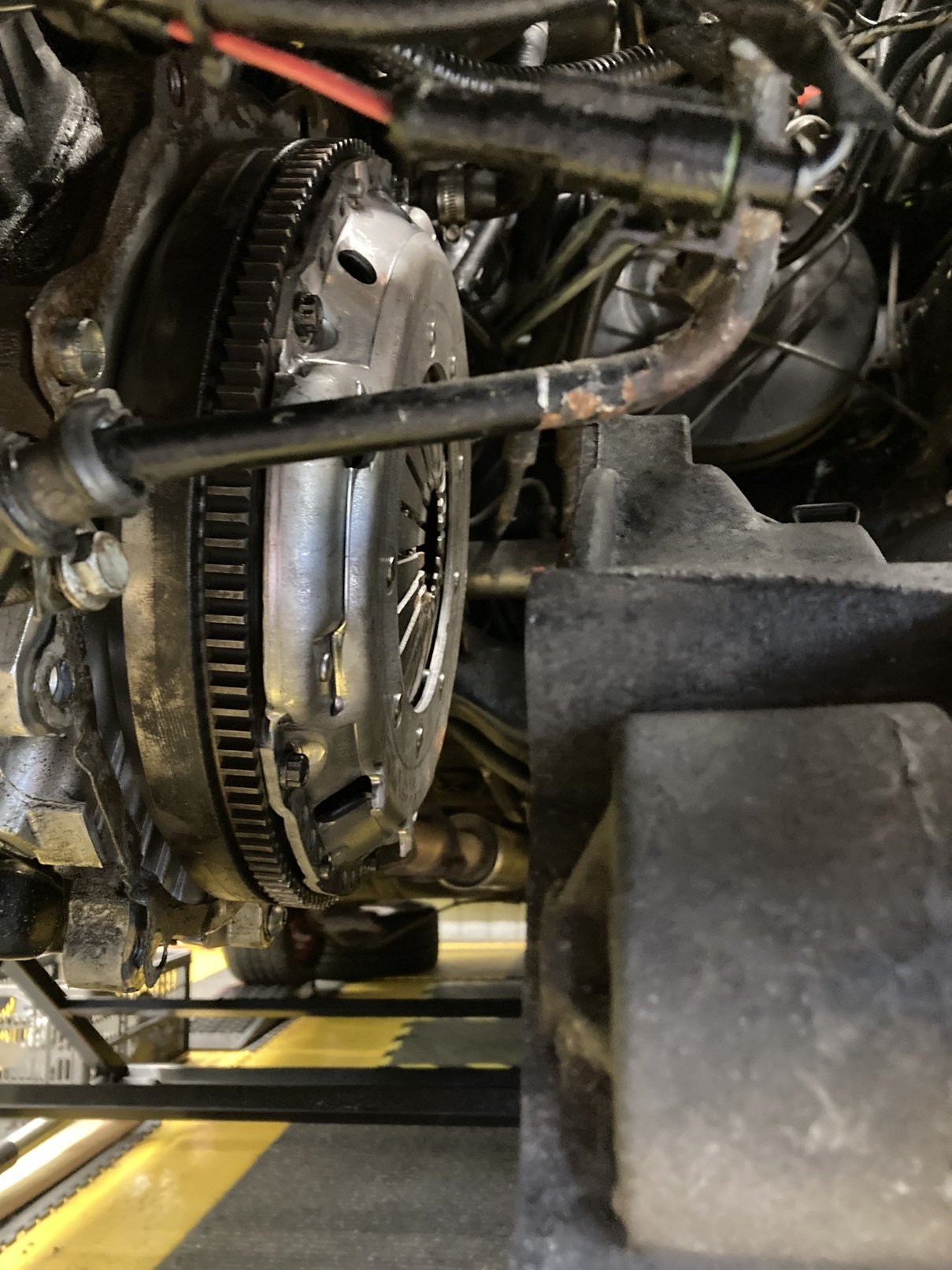
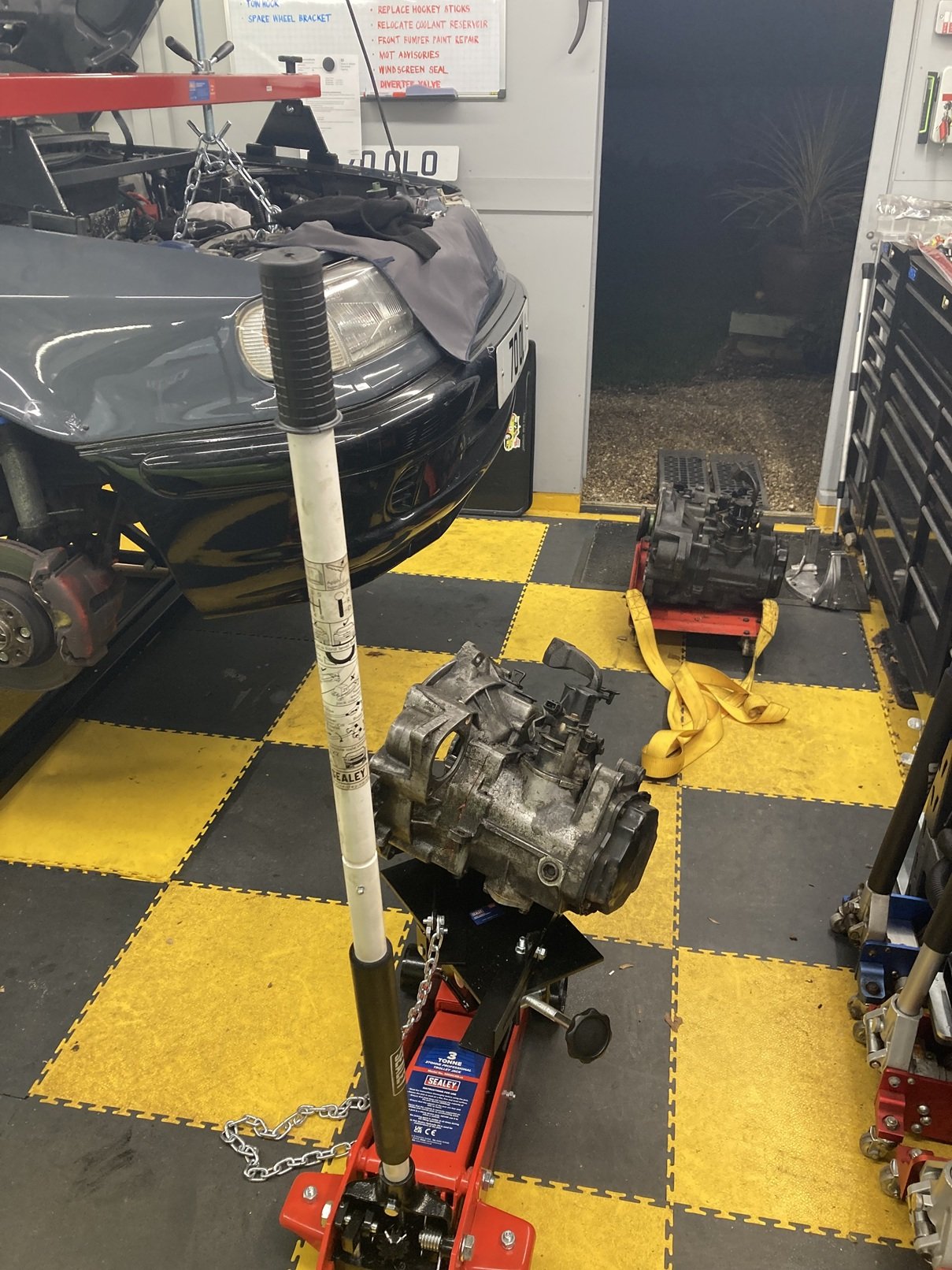
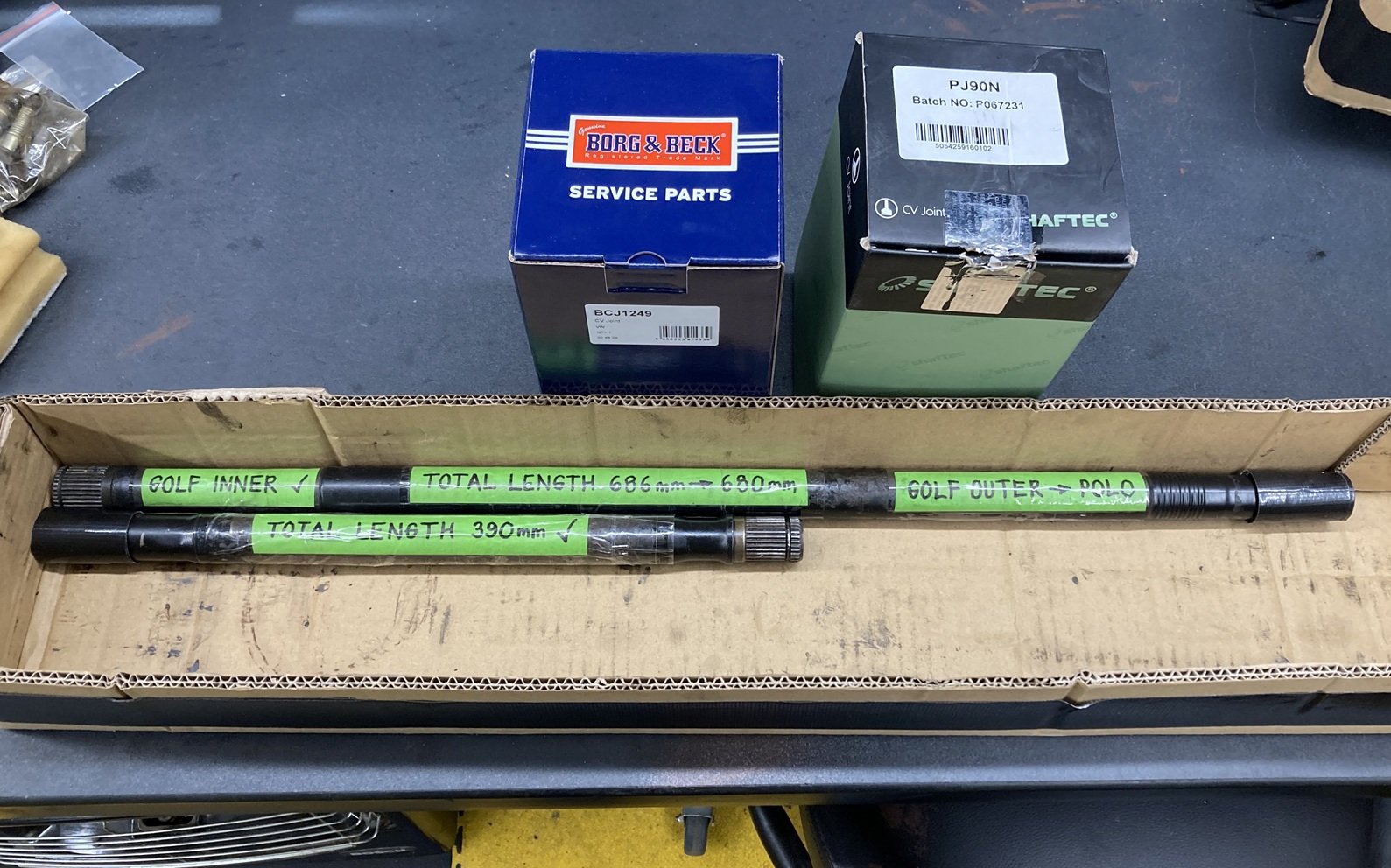
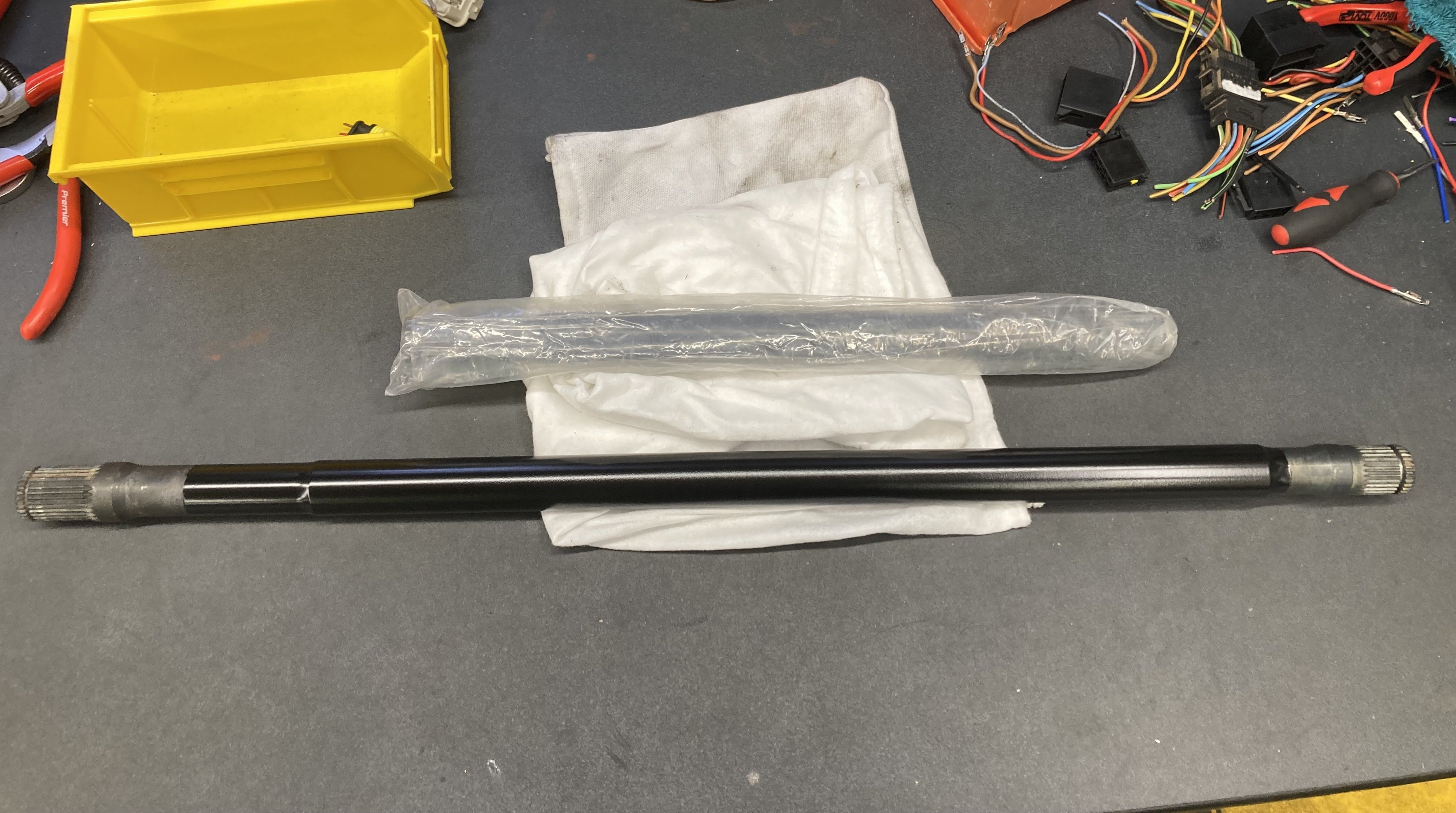
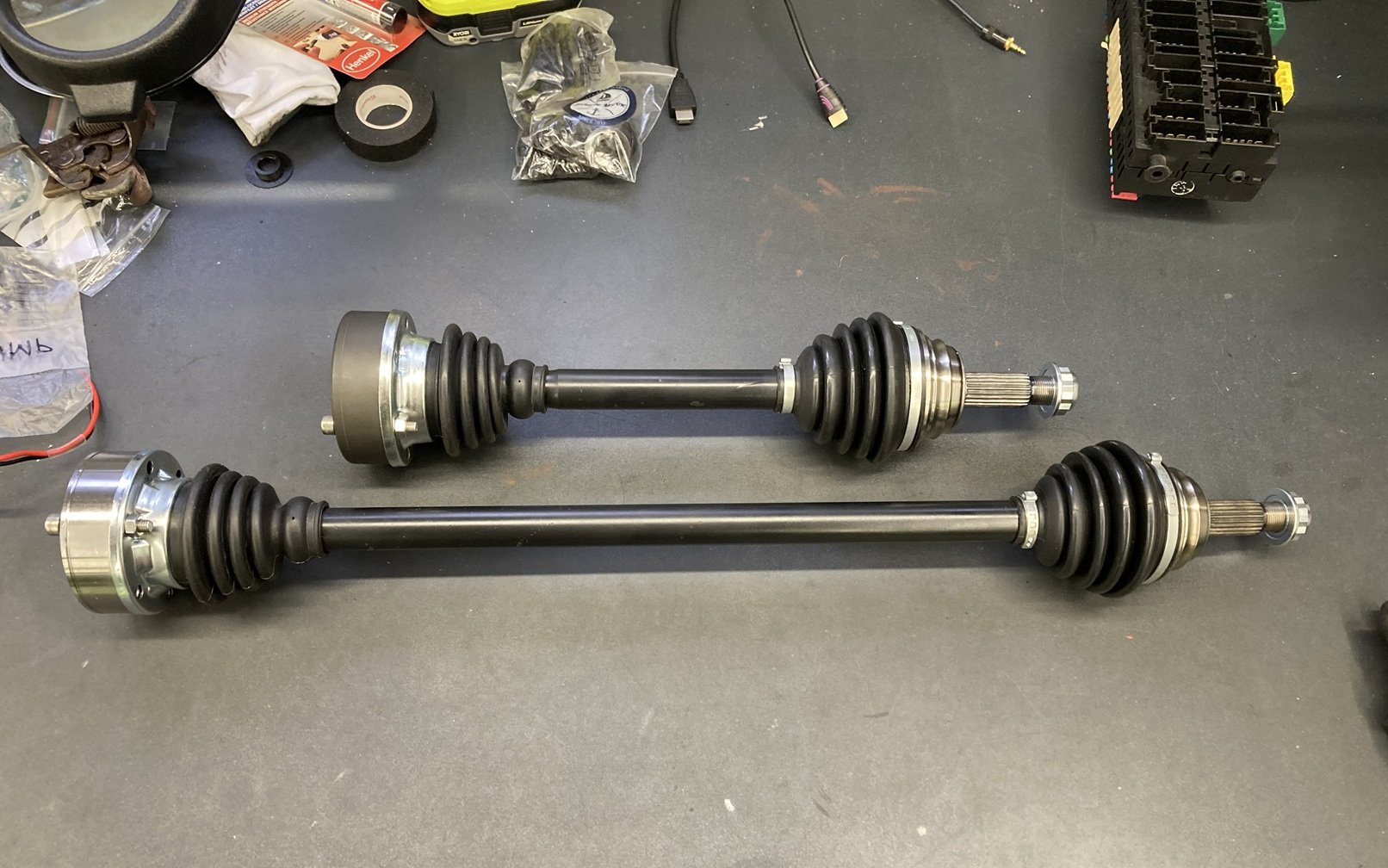
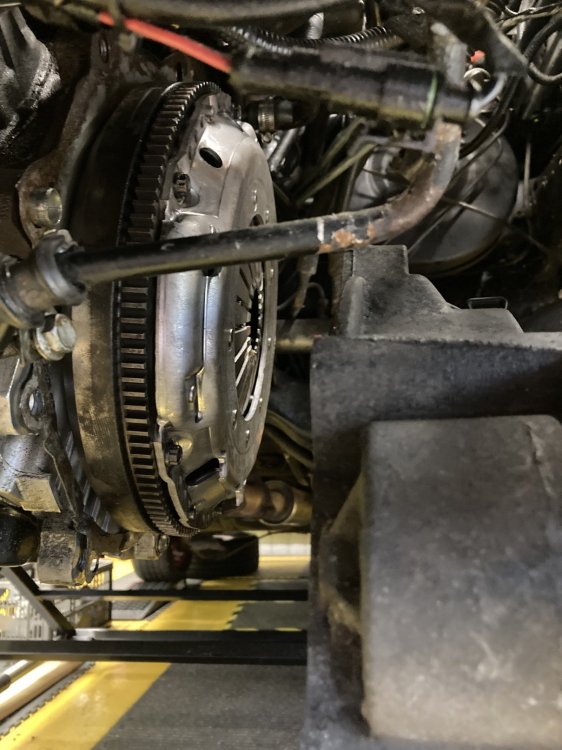
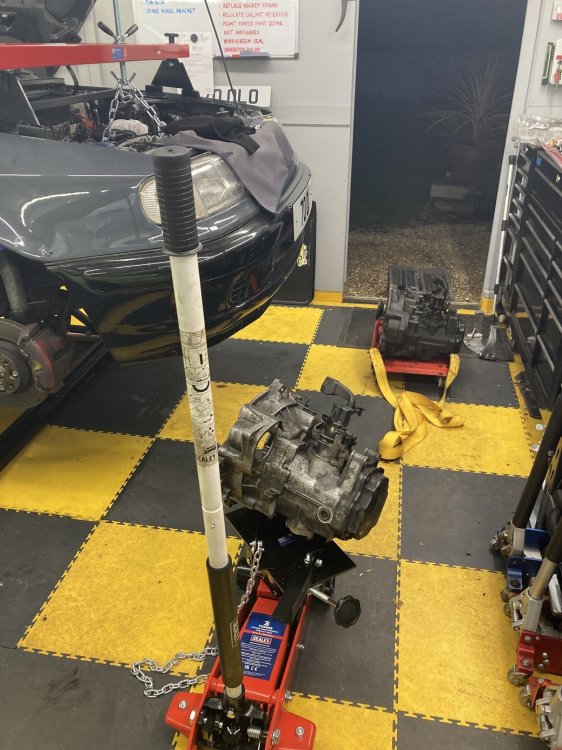
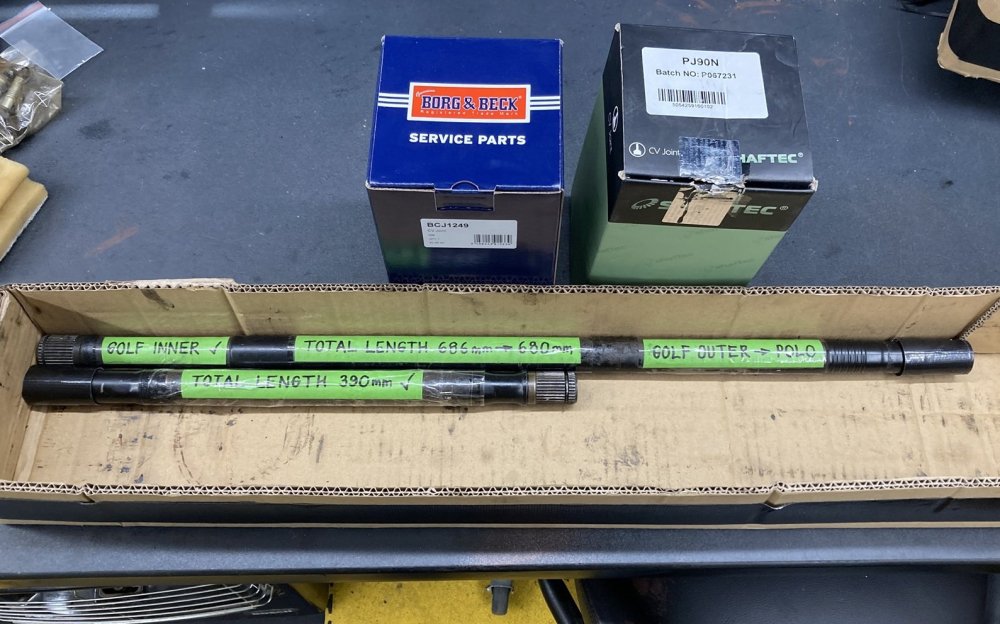
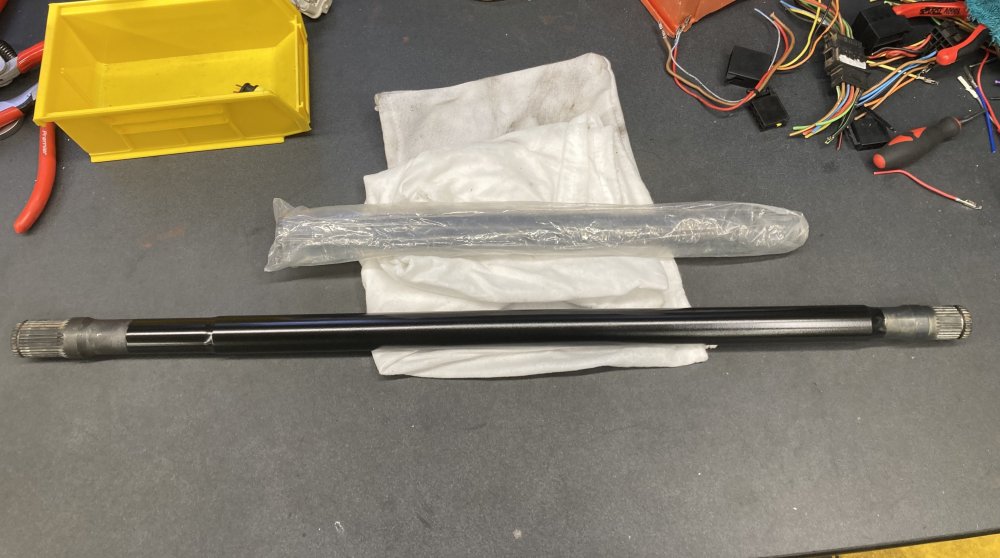
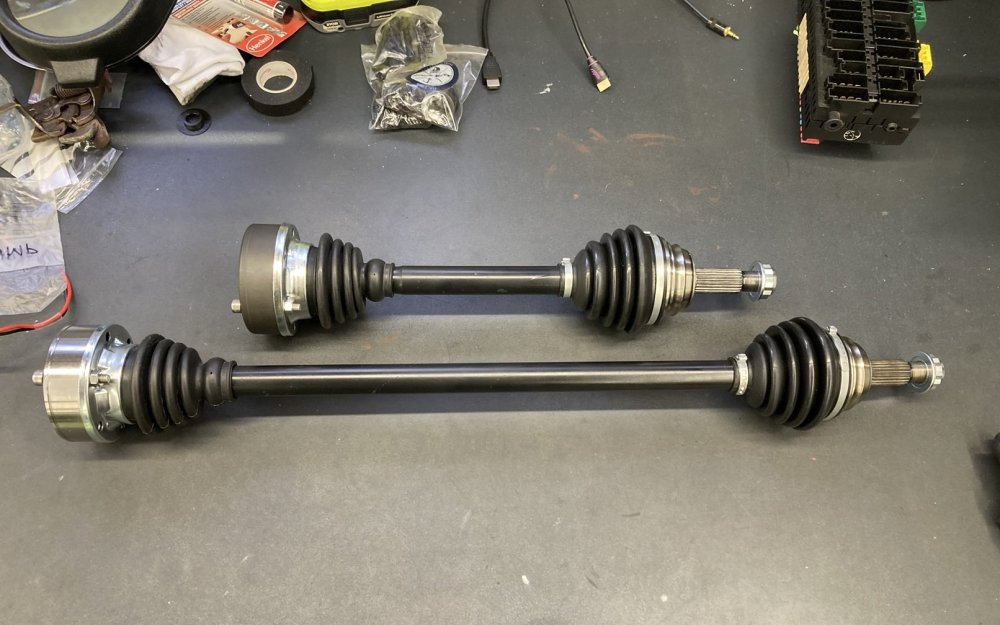
The Caddy’s gearbox had been suffering from a slight oil leak for a while. As it is not used for significant mileage, and the rate of oil loss was so low, sorting it had been on my to do list for a long time without getting anywhere near the top of that list. When I discovered that one of the driveshafts was badly worn, the silver lining in that cloud had to be that I could sort the gearbox out. I have lost count of the number of times I have had the gearbox out of this Caddy since the transplant was done, although a check back though this thread would say that I am probably sitting at four or five times. On each of the previous occasions I have used my A-frame and hoist out on the driveway, but this time I was in the workshop, and using a transmission cradle on a trolley jack. The gearbox came out readily enough. One advantage of doing the job a number of times is that I am fairly efficient at it now. Rather than making any intelligent attempt to resolve the oil leak in that box, I was swapping it for another of the same spec. I have no real idea if the replacement box is any good, but fitting it and trying it on the road will certainly confirm either way. The leaky gearbox will be rebuilt at some point for future use. With the gearbox out of the way, I fitted an ABF flywheel to replace the TDi one, so I could use a nice new VR6 clutch. After my previous flywheel / clutch nightmare I bolted them together on the bench to confirm I had the right combination, before I fitted them to the pick-up. It may be that there is a technique which I am yet to master, but I did not find it easy to fit the replacement gearbox using the cradle on a trolley jack. After the above photo was taken I added some studding side rails to the cradle, and chained the gearbox loosely to it. That enabled me to offer it up to the engine at the required angle, and then manoeuvre it into place. Seeing it written like that makes it sound much easier than it was in practice. I was dreading having to specify the driveshafts. The build thread for the Felicia 1.8T which became the donor for this Caddy did have information about the driveshafts, but it was quite difficult to follow and some of it appeared to be inconsistent. That in combination with custom driveshafts not being cheap, and being scrap if I specified them incorrectly, had me fretting. I should explain that while I could have asked the supplier to simply copy the old driveshafts, one end of each shaft was not quite right, and the longer (offside) shaft when assembled was fractionally too long. After procrastination that was annoying even me, I worked-out the changes that I needed relative to the existing driveshafts, and labelled them ready to be sent off. Of the six companies I identified who may be able to make my driveshafts, just two came back with an affirmative response and an affordable price. I would have been equally happy to order from either of them, but I chose one, couriered the old driveshafts to them, and got the new ones six weeks later exactly as promised. It only occurred to me after they were ordered that the required driveshafts have the same ends as mk2 (6K) Ibiza parts, with a Golf inner end and Polo outer, although Ibiza shafts are not the right lengths. The new shafts arrived in bare metal, so I masked the ends and sprayed them with satin black from a rattle can. I thought about trying to assemble them with new CV joints myself, but I took them to JKM instead, and I was glad I did because the joints are very tight on the shaft splines. The inner joints are both the same part number from the same manufacturer, but one of them arrived in bare metal while the other has a black finish. Since the only way to see them both when they are fitted is to be underneath the Caddy, I am going to try not to stress about the fact that they do not match. Fitting driveshafts is not a job that I enjoy. The Caddy was on a scissor lift in my workshop, which is a significant improvement on having it on axle stands on a gravel driveway, but I still find it awkward, despite having done it many times. Maybe one day I will discover the knack I have been missing. Despite my trepidation, the nearside (shorter) shaft went on a treat, and then the offside shaft looked set to do the same. Both sides were bolted to the gearbox output flanges, which is the part of the job I like least, and the driveshaft hub nuts were on finger tight. All that remained was to torque these nuts, then stand back and admire my work. The nearside hub nut had read the script, and torqued-up without difficulty. Things were different on the offside. These nuts have to be very tight, and the offside one was close but not at the required torque when it suddenly went loose. This could be very bad news. The nut was now spinning freely, but was not moving on the CV joint thread in either direction. Apparently I had stripped the thread on the CV joint or the nut or both. For the avoidance of doubt, I had been using a torque wrench to tighten the nut, I had not been attacking it with an impact gun (yet). After a brief interlude of quiet contemplation (plus some swearing and a bit of panic) I realised the only way to resolve this required the driveshaft to come off again, so I got back underneath and unbolted the inner end. With the weight of the driveshaft supported on a bungee I (now) got the impact gun onto the hub nut whilst pulling the shaft away from the hub to get the nut to bite on the thread. This worked a treat, so I soon had the driveshaft on the workbench to inspect the damage. The thread inside the nut was a mess. This was a brand new nut which was supplied with the brand new CV joint it had been wound onto, and it had definitely not been cross-threaded. I suspect that it was a material rather than a manufacturing fault, which caused the thread to strip from the nut once it started to get tight. The thread on the CV joint, which was much more of a concern, had not escaped unscathed, but looked salvageable. Once I got it under the magnifier I could see that most of the apparent damage to this thread was where detached bits of the thread from the nut had lodged themselves on the shaft. I spent more than an hour carefully removing this swarf and cleaning the thread, until eventually I could wind a nut on and off the whole length without resistance. This was one potential set-back avoided. There was still another nagging doubt to be sorted. Was the problem with tightening the hub nut caused by me having specified the driveshaft incorrectly? This seemed unlikely to the point of being hard to see how it could, but until it was fitted to my satisfaction I could not completely dispel the doubt. So I shuffled underneath the Caddy again and bolted the inner CV joint back to the gearbox, then fitted another new nut to the end. This time it tightened just fine. I still need to drive the Caddy on the road to be 100% certain that its new driveshafts are good, but all the signs up to this point are positive, for which I am very relieved.
-
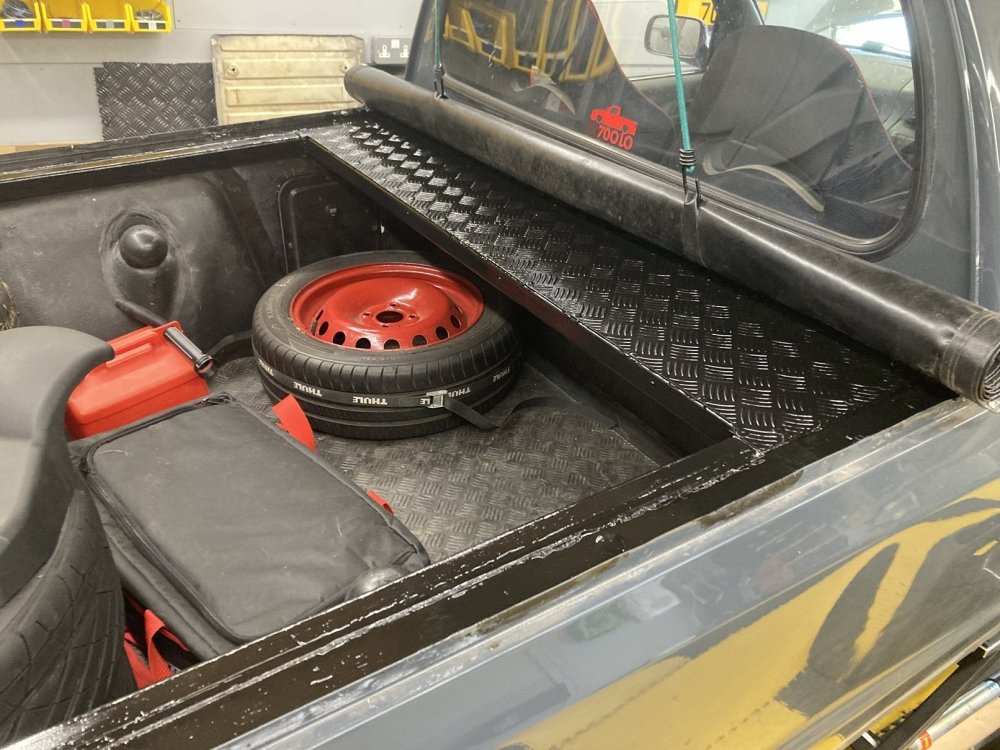
@skoda_cat When I bought this pick-up it had a checkerplate load cover which was hinged to the square section tube under the back edge of the remaining bit of checkerplate. I removed the load cover years ago, but I left that bit in place just because I thought I might replace the cover at some point. That is now vanishingly unlikely, but the bit that is still there does not get in the way, and adds a bit of extra rigidity to the rear bodywork, so I decided to keep it.
-
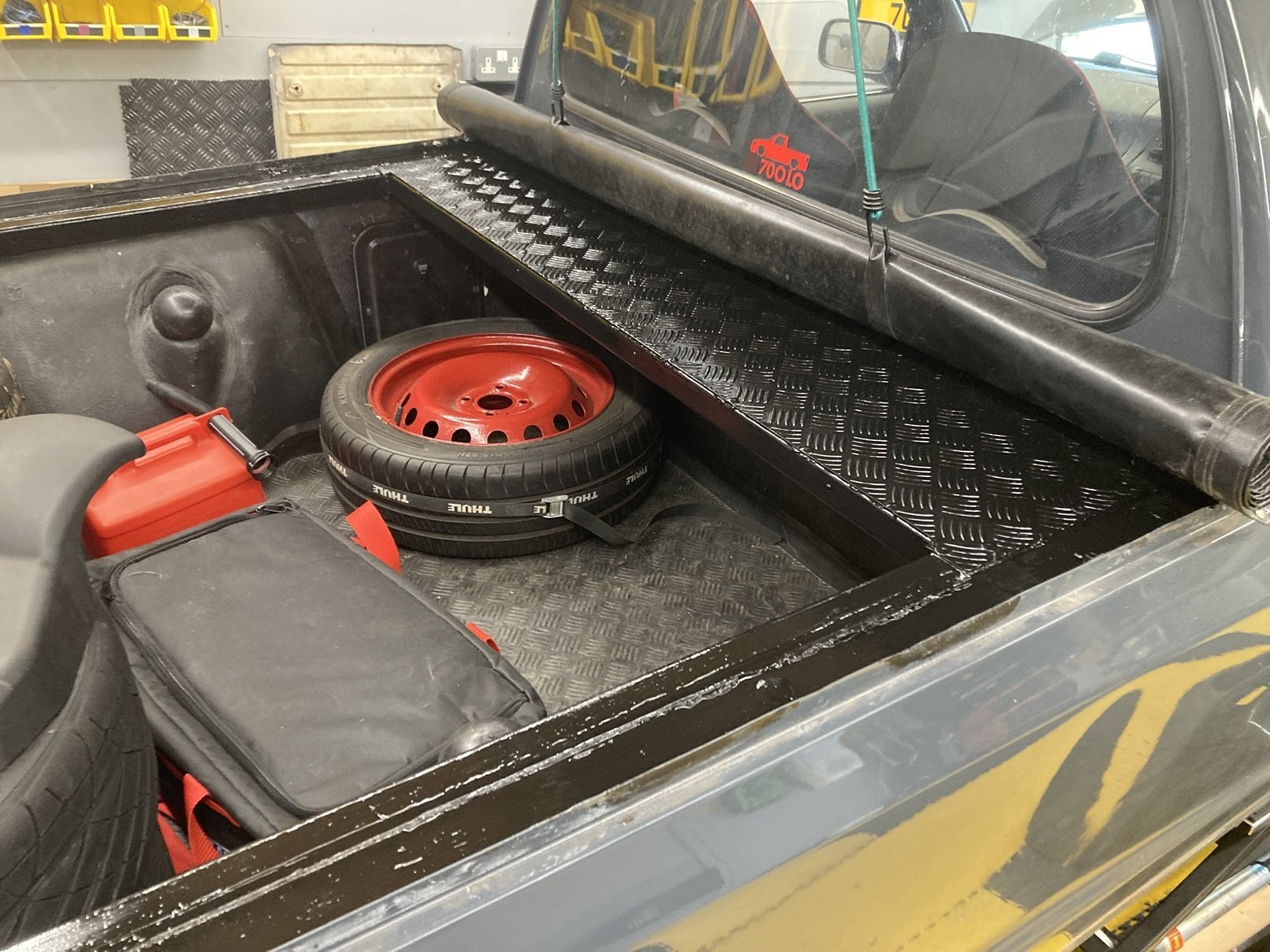
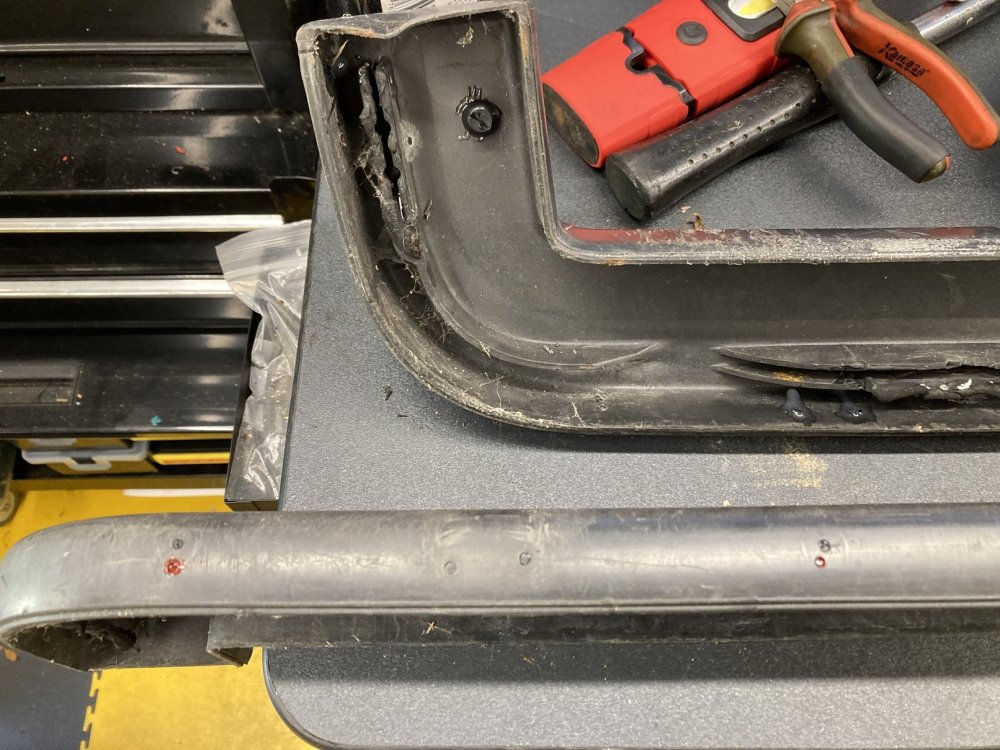
It has been a long time since I have updated this thread. My Caddy has not been forgotten, but it has largely been abandoned in favour of my Ibiza project (the SEAT variety, not a Balearic housing development). The Ibiza is now finally MOTed and in use, so I can turn some attention back to the Caddy. The pick-up has been enjoying the comforts of my garage workshop for a while because it is far from watertight. If it is parked out in the rain, both the passenger side footwell and the rear load bed fill with water. The windscreen seal is the obvious suspect for the wet carpet in the cab, on which more later, but the route for the water to get into the back was less obvious, given that it is rarely left without the tonneau cover in place. Suspicion fell on the front corners of the load area, where the ‘hockey stick’ top trims had been cut to finish more or less level with the cab back rather than extending across the B-pillar as standard. This appeared to have left a route for the water to get past the end of the trims and into the back, which warranted further investigation. Neither the side nor the rear top trims had ever been fitted particularly well in place. With the side pieces I had resorted to putting a couple of rivnuts in the top of each body side and screwing the trims down, which kept them in situ but was pretty unsatisfactory. The trim at the top of the tailgate had always sat high at the offside end, and whilst it did not obviously contribute to the water ingress it was worth looking at whilst the sides were being addressed. When I removed the tailgate top trim I discovered that the flange on the tailgate onto which it slots was folded over at the offside end, which was preventing the trim from sitting properly in place, and the captive bolt at that end was absent from its (broken) mounting, suggesting that possibly a previous owner had over-tightened the nut in an attempt to overcome the obstruction caused by the fold in the flange. I had a couple of used spare sets of trims in the shed, which were complete (as in not obviously broken or butchered) although not great cosmetically, so I selected the best set to trial fit. It became immediately apparent that the trimmed shape at the front of the side trims had masked the fact that they had not been located properly. I located the front of the trims onto their mounting flanges, then gave them each a couple of gentle taps with a rubber mallet on the rear corner to position them flush against the cab back before applying the mallet all along the top to ease them down to where they are supposed to be. The original parts had never fitted so well, and the gap at the front corner is no more. The folded mounting flange at the top of the tailgate was easily rectified via judicious use of a set of mole grips, after which the replacement trim sat neatly where it is supposed to. Now I knew the spare set would fit properly, I could turn my attention to the aesthetics. When I fitted the non-standard tonneau, I located the press studs on the top trims by progressively pulling the tonneau into position and drilling a hole for a stud so it lined-up with the other half of the fastener on the cover. It was not a massively professional (or patient) method, although the end result had looked OK. With the trims off the Caddy, however, it was clear that the press studs were neither particularly well aligned nor exactly evenly spaced. Now I decided to do better. I applied some masking tape to the outside face of each of the trims, and marked a straight line for the studs to follow at the correct depth for the tonneau to fit snugly. With the side trims I fitted them in place temporarily to give a location for the front press stud, then marked locations for the others at even intervals along the line. For the tailgate trim I measured out from the centre to the required locations for the end studs, then marked the others at even intervals in-between. Once I had drilled all of the new holes, only two of which corresponded with existing holes in the trims, I marked them all with red paint to show which were the ‘right’ ones, as the trims now had a lot of holes in them. The trims I had chosen to use had at some stage had the ‘goalpost’ style mountings for an original tonneau, and subsequently had another set of holes for press studs. All of these ‘extra’ holes would be invisible with the tonneau in place, but I had a cunning plan to deal with them. I had used a 2.5mm bit to drill the new holes, and I realised that I had some black plastic drive rivets which had a central shaft of very similar diameter. A trial fit confirmed that these handy little nylon cylinders were a perfect fit for most of the unwanted holes, requiring a couple of taps with a mallet to get them in place, and being nigh-on impossible to dislodge thereafter, so I set-to cutting a load of drive rivet centres in half, tapping them into place, and putting a dab of araldite on the back to be absolutely sure they would stay in place. Both replacement side trims had a small hole in the top surface by the rear corner, almost certainly where a screw had been used to keep them in place. I could not use the same technique to fill these holes, as the top surface of the trims is too thin. Instead I drilled the holes out and tapped them for M6, so that I could screw (and glue) black nylon number plate fixing screws in from the underside. Once the glue was set I trimmed the thread down to the level of the top surface of the trim. Various clamps, and judicious application of a heat gun, enabled me to correct a few places where the trims were mis-shapen, and then a bit of sanding further improved the look of the now-filled holes before priming and painting. I could have saved myself a lot of time and effort by using filler in all of the unwanted holes rather than faffing about finding bits of black plastic to glue into place, but I decided this solution would be more durable for when I am using my pick-up for its intended purpose. I do not want to have to worry about cracks appearing in the filler when things are (inevitably) dropped onto the top trims. Only time will tell whether my efforts have been worthwhile. Whilst the top trims were off, I decided to give the checkerplate ‘shelf’ and additional side rails a couple of coats of paint. I had some Hammerite black satin so that was what I used. Once the top trims are eventually back on this should have it looking much smarter in the back.
-
Thank you
-
I am planning on replacing the windscreen rubber seal on my Caddy (Felicia) pick-up. Can anyone make recommendations based on personal experience of decent quality Felicia windscreen seals vs manufacturers to be avoided?
-
Behind the NSR light unit there is a handy spare hole in the panel, intended (I think) for tow bar wiring. Run the cables through there and that gets them behind the bumper.
-
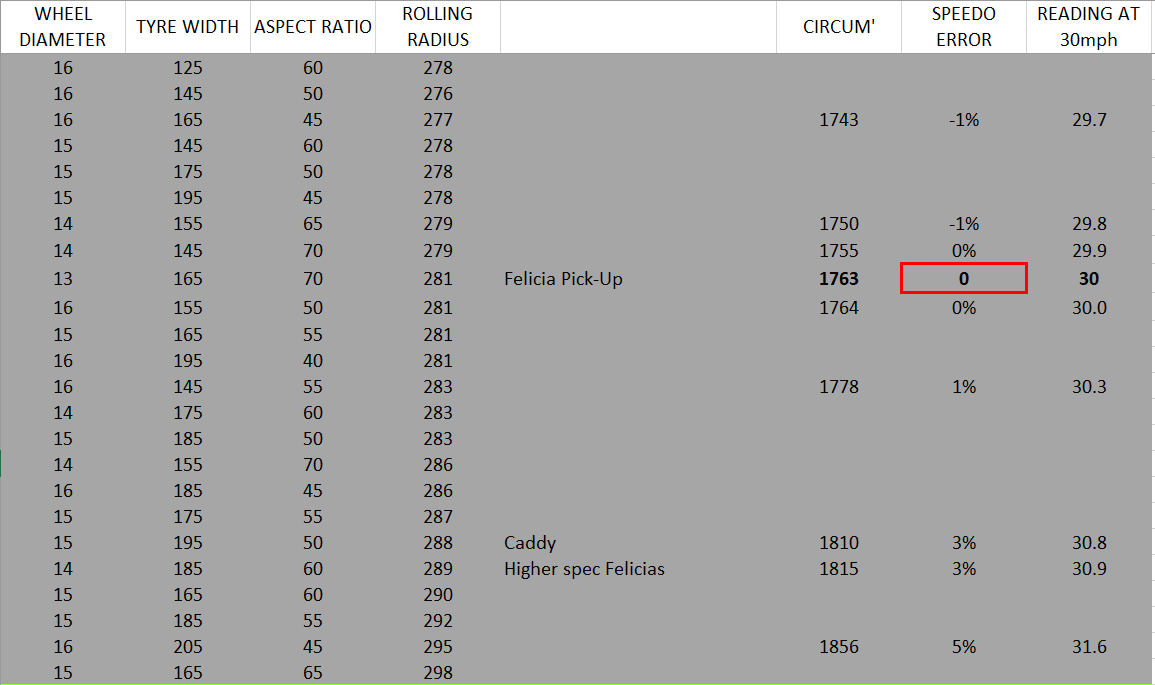
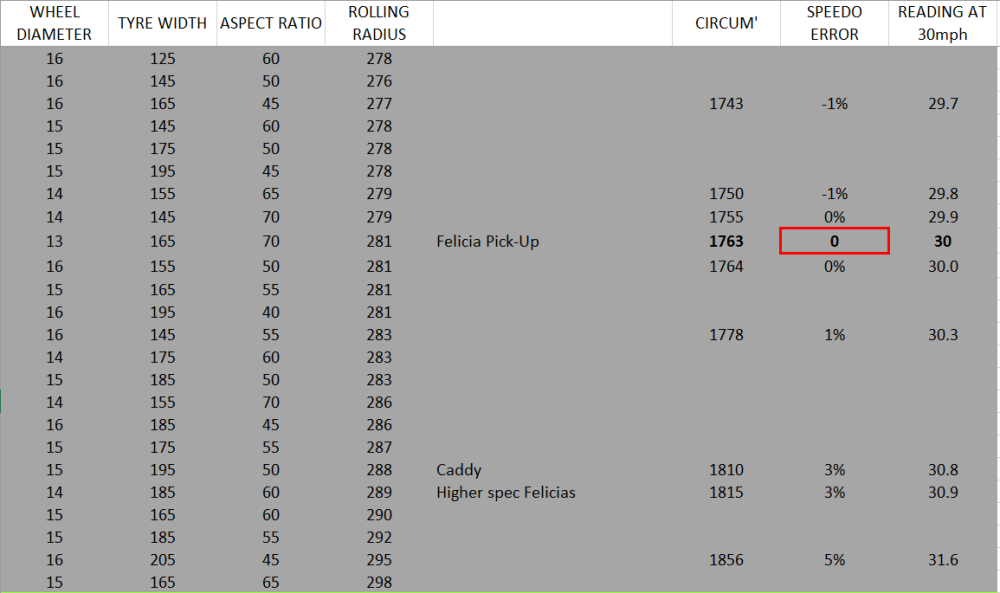
This might help on wheel and tyre sizes. It is not an exhaustive list, just something I put together when having a similar dilemma. Ignore the 'reading at 30mph' column heading, I think it should be 'actual speed when the speedo says 30mph'. Are you thinking steel or alloy wheels?
-
I am honoured to have provided some inspiration 🙂 For my Felicia I made up a SURPRISING SKODA sticker for the rear window, in the style of the 90s (?) advertising slogan. It seemed appropriate in a tired-looking Felicia hatchback running 200hp. 😆