Graham Butcher
FREEDOM
-
Joined
-
Last visited
Everything posted by Graham Butcher
-
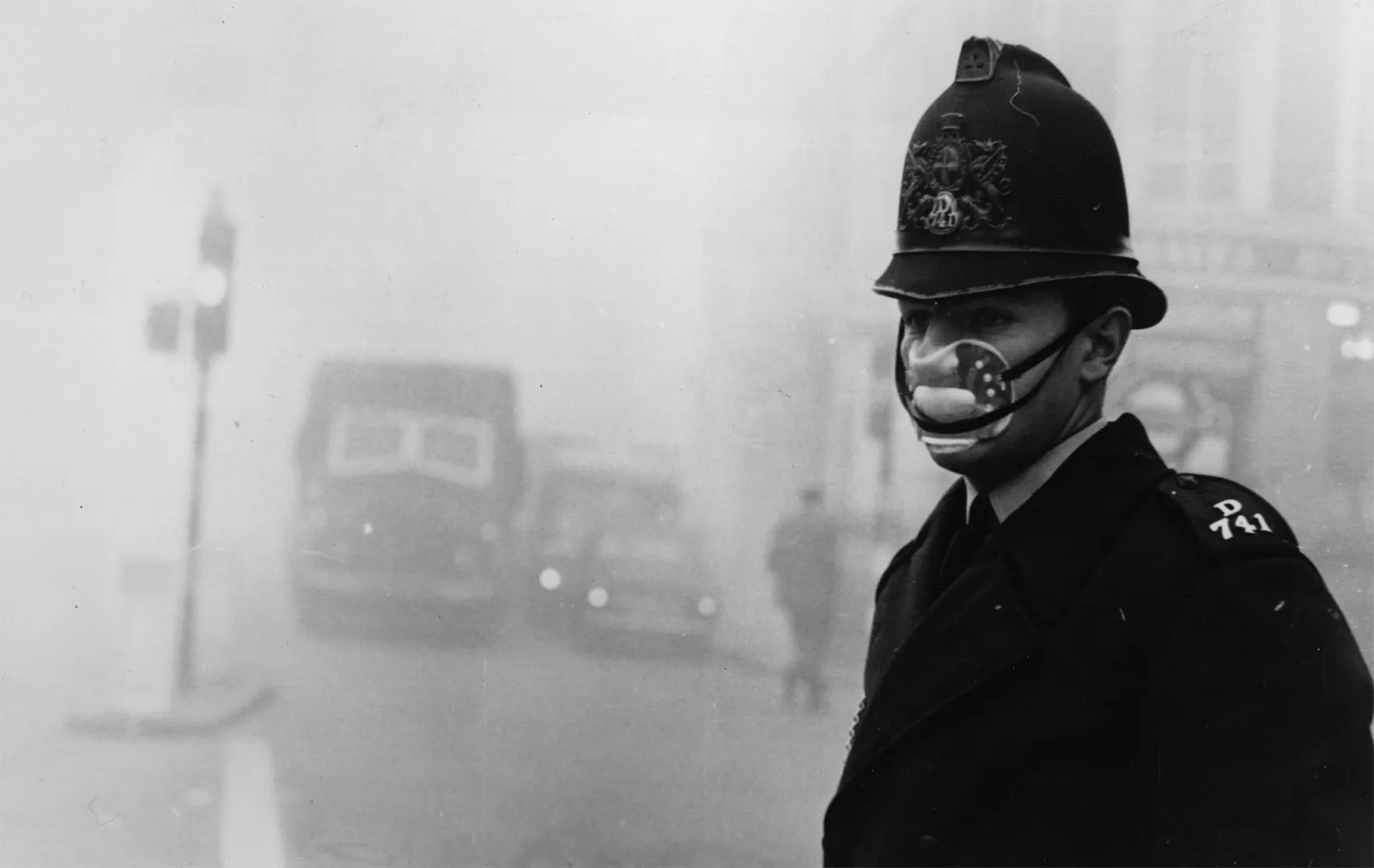
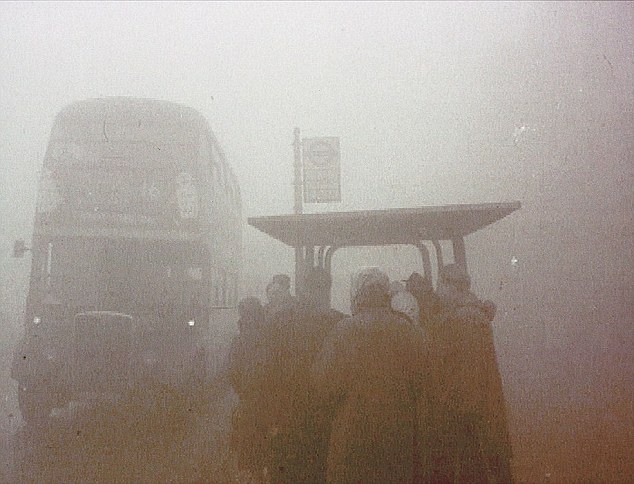
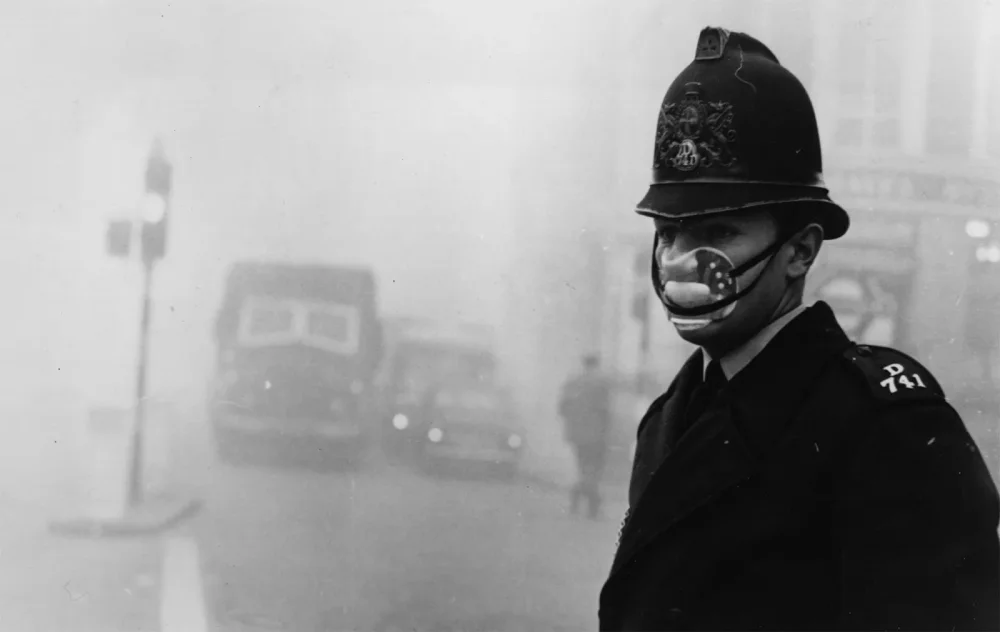
@lol-lol I think you will find if you dig into it a bit more that EV cars might not be the answer either. There can be no denying that our air has become massively cleaner over the years. I can remember in the 70s driving a lorry in London that on many occasions everything just ground to a complete halt, or at best a crawl with engines at idle in 1st gear as the air was so polluted that in places you could not see 3 bus lengths away, and the buses back then were only 27ft (8.2m) long. We have come a long way since then, coal was the fuel of choice for heating and London in those days had loads of industrial estates and heavy industry / foundries all contributing massively. These days, those factories etc have gone (mostly overseas), industrial estates mostly now have become housing estates or retail parks and gas / electric is now used for heating and engines have grown to be more efficient and far cleaner and now of course we are on Euro 7 class of cleaner engines. Cars these days are also do not emit far less pollution than they used, but also many do massively more miles to gallon. Back then I had a 1.2L Ford Cortina which did in the low 20s to the gallon and now I have 2L Superb in which I regularly get over 60 mpg and way lower tailpipe emissions, thats a sign of how far we have come, for example almost a tripling of MPG and more likely a massive 10 times or higher less emissions to boot. In fact in 1952 London had pea-souper fog that lasted for 5 days and killed at least 4,000 plus people, some estimates say it was more like 12,000. Hmm, maybe that is where the current London Mayor plucked his 4,000 Londoners dying prematurely from air pollution.
.jpeg.a8c751113eb82121fd672e2217cce0a7.jpeg)
.jpeg.7cc827e29210a482a2ed1540b3c7a951.jpeg)

-
Looking at the data it would certainly seem that these clean air zones are indeed more to do with raising revenue than cleaning air which is already considered by WHO as clean and safe.
-
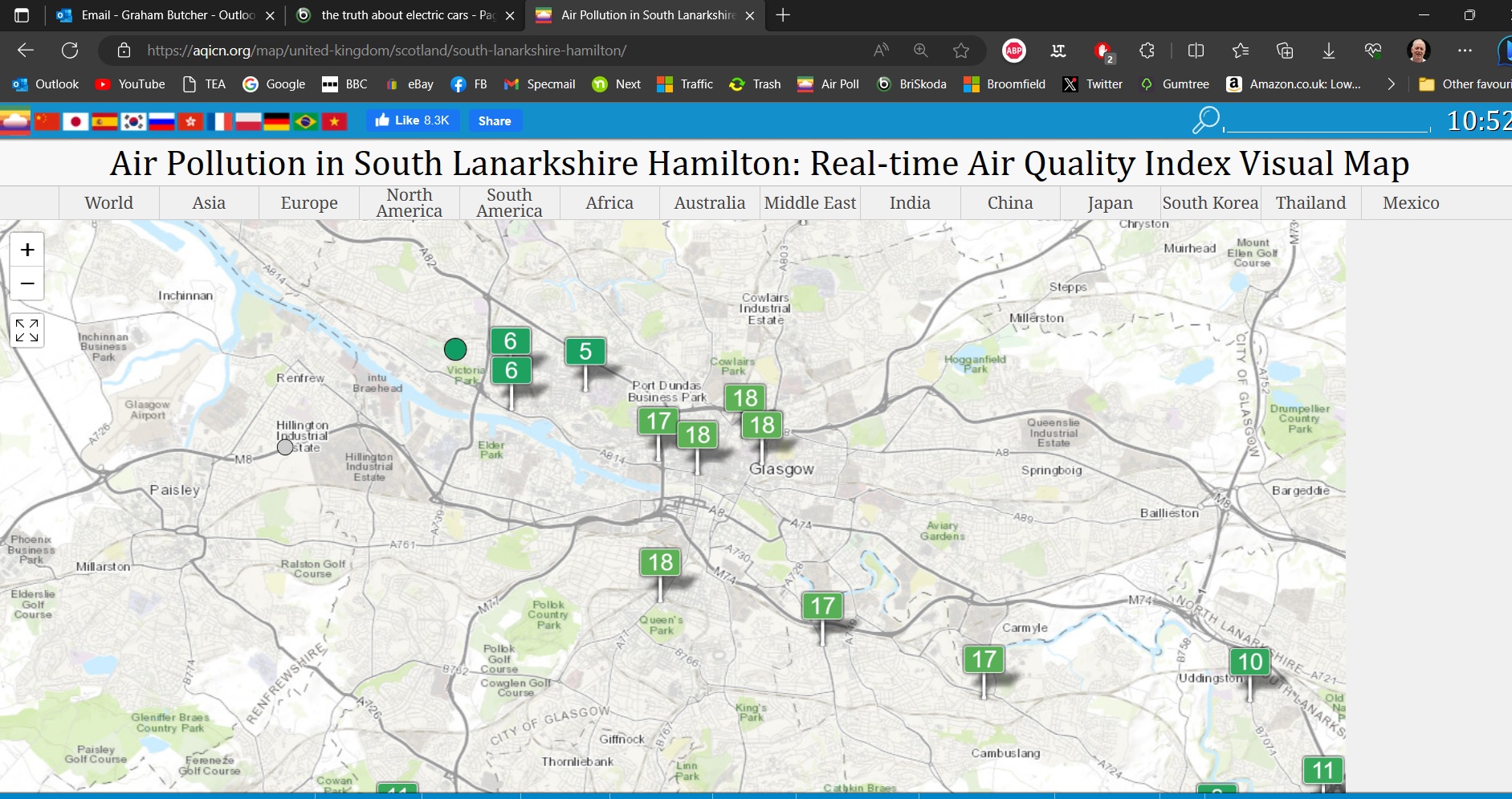
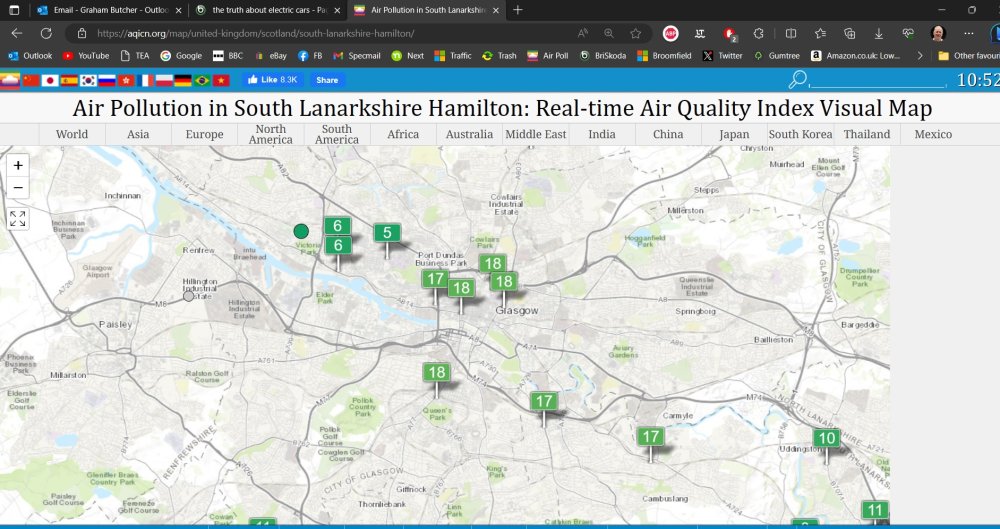
Interesting, seems to be a bit of politics at play there, here is a print screen of Glasgow done just a few minutes ago, and you can clearly see the air is excellent and safe. I did a bit of checking on some the worst spots in London by drilling down into the data on the AQI map, zoom in really close, and it will show where air monitoring equipment is located. By doing this and then using Google Earth street view it is possible to see some of the reasons for some of the higher readings and in London, it is not the tailpipe emissions at all to blame. The equipment has in many locations been located by subway entrances/exits, next to underground stations entrance/exits and also where the intake vents for the equipment is adjacent to the kitchen windows of catering establishments or right in the middle of quite housing estates. This suggests that the biggest culprit for bad air quality is the burning of gas for heating/cooking, as it has been shown that far higher readings of bad air are obtained in the average house than the air outside. Also, the air on the London Underground system is appalling, and yet they still want people to use the tube rather than drive.
-
I really don't think that switching to EV's is all it's been cracked up to be and I really cannot help but think that we are all being sold yet another pup just diesel. It was the supposed to be the wonder fuel and we were urged to switch from petrol/gasoline over to it and now it seems its bad and dirty. The air quality in the UK is very clean, as can be seen by playing around with the interactive live map on this site, Air Pollution in World: Real-time Air Quality Index Visual Map (aqicn.org) This is video is also worth watching.
-
I thought I'd stumbled onto a good thing when I saw this thread mentioning right-hand foot rest, but was disappointed to see that it is a footrest for your left foot. The car could do with a rest for your right foot, especially on long drives using the ACC, it gets very tiring keeping one's right foot just hovering the pedals ready to interact with the pedals should the need arise. Does such a rest actually exist, and is there enough space to mount one if any are in existence?
-
They are saying that because they can see the outer one working but the inner one not. I would say that if it was brute force then both vents would cease to work as there is very delicate linkage on both sets of move able items. I call the outer ones slats and inner ones vanes as a means of identifying them. I suggest that seeing as the vanes are operated by a hinged piece of plastic attached to the operating tab, that's more likely that the hinge was stiff and the prongs failed to flex properly ao the prongs caught on the vane instead of the bar. Look at my earlier posting for photos showing how this could happen. The whole vent is over engineered and this is common fault. I had 3 of my vents where the inner vanes were not working but I managed to fix them.
-
I take it that you gave them your dashcam footage as well, with that they can't fail to agree that the other driver was to blame for the accident, anyone who has not got themselves one really should reconsider getting one in their car, especially with the rising cost of premiums these days.
-
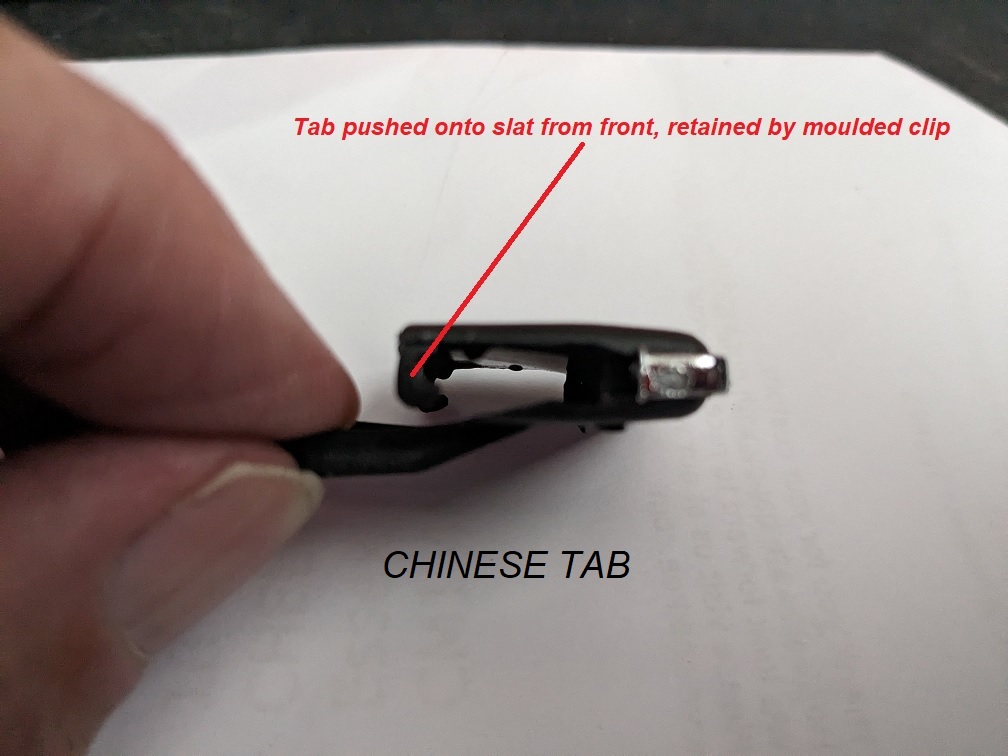
Yes it is a very fiddly job to do. I'm pleasantly surprised that I actually managed to complete it without breaking anything for a change, my hands are extra large and there are just so many clips that need to be manipulated at the same time in order to release their grip. These things are only ever designed to be easy to assemble from sub assemblies, they were never designed to be pulled apart again, thinking that if anything were to fail, the dealers would simply buy and fit a complete new vent assembly at god knows what price and bill the end user, ouch ☹️ I have now had to remove the rear, centre dash and right dash vents and strip down and repair them. Thank goodness I managed to that and the only cost was these useless Chinese tabs I sourced thinking that they might just do the job. My impression of the OEM vents is that they are overengineered and as such are very easy to break. It seems to be a common problem judging by what others say, indeed, I had 2 in my car that the previous oner managed to break, the 3rd was just a case of one of the vanes becoming unattached from the bar that connects them all together, so they all move as one. Thankfully in the case of the tabs, all the parts that were broken off, were still laying in the vent, behind the horizontal slats and had not fallen down the air pipes 👍
-
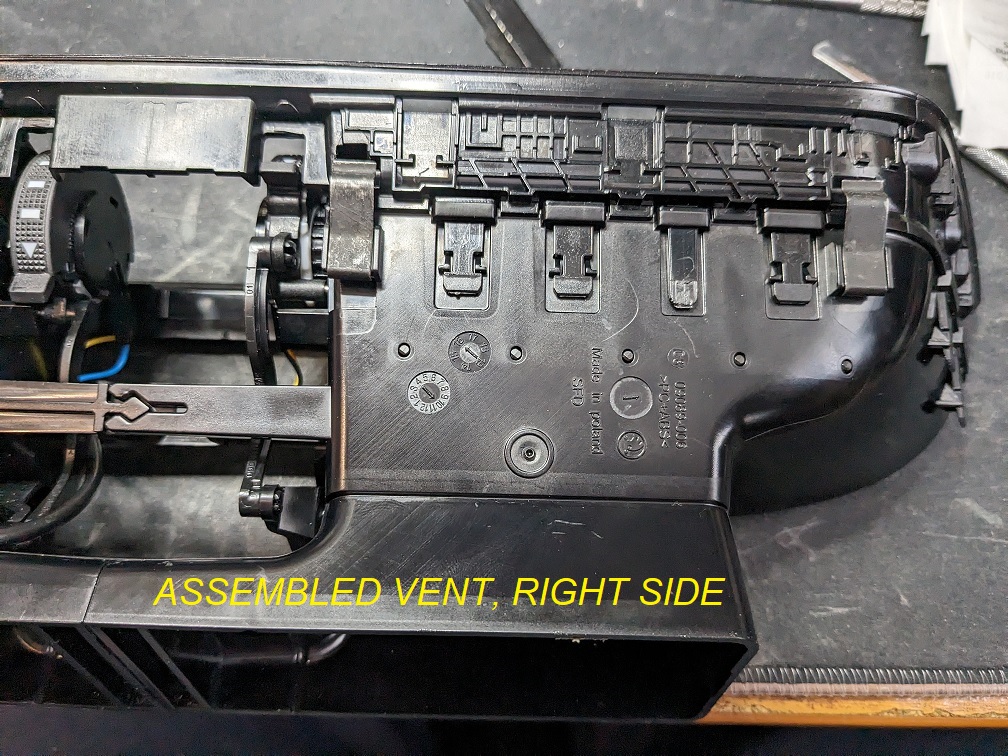
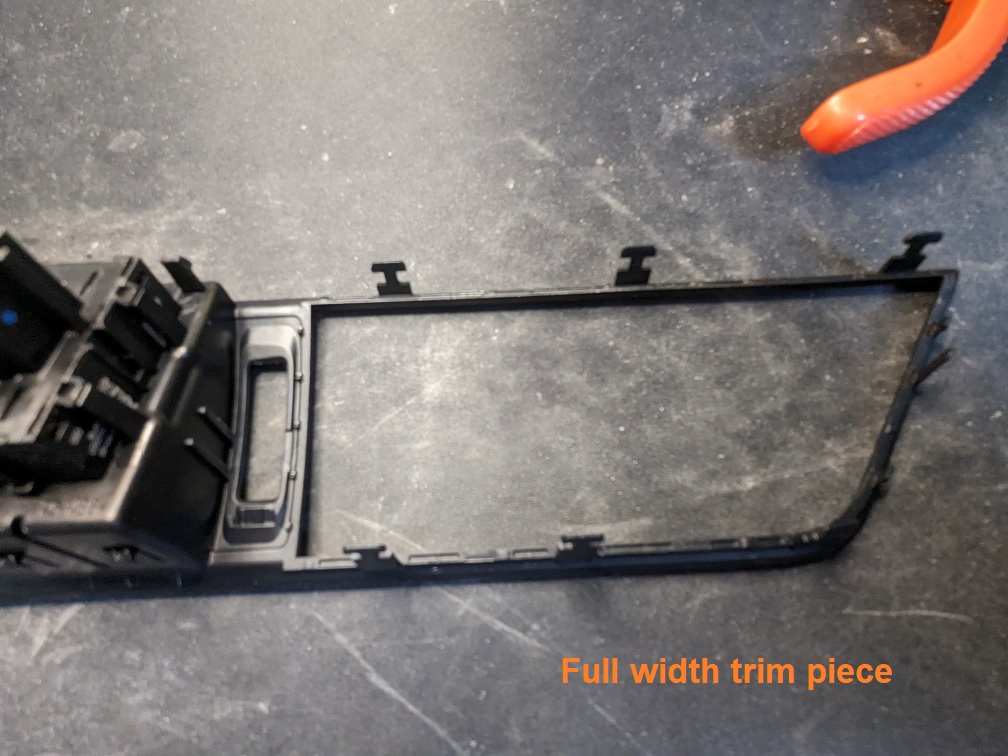
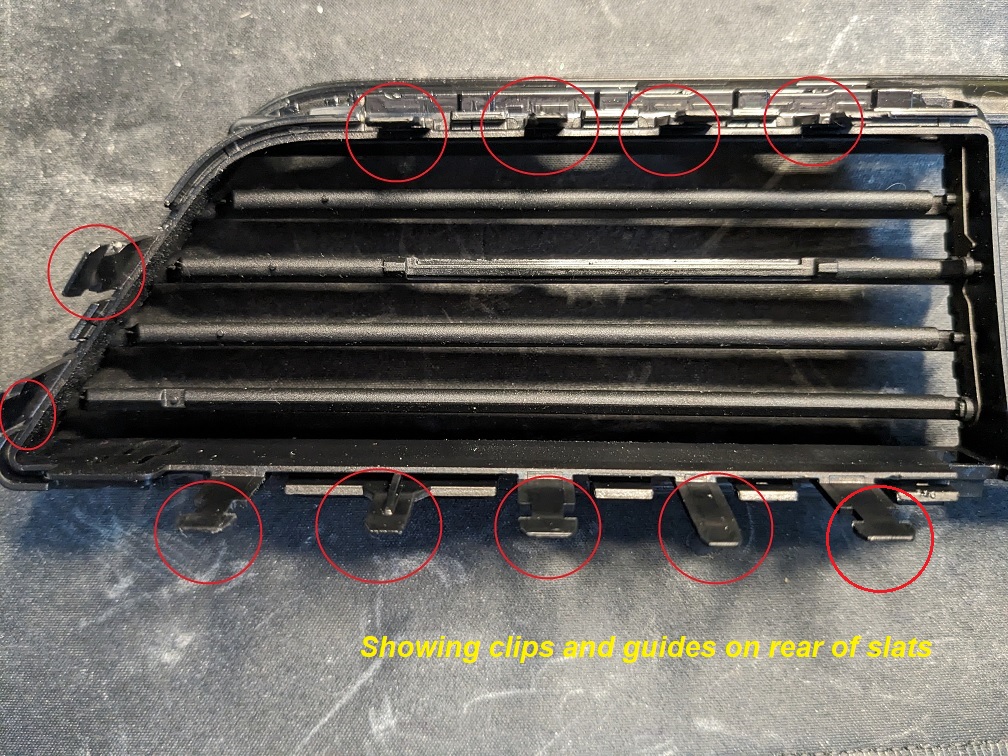
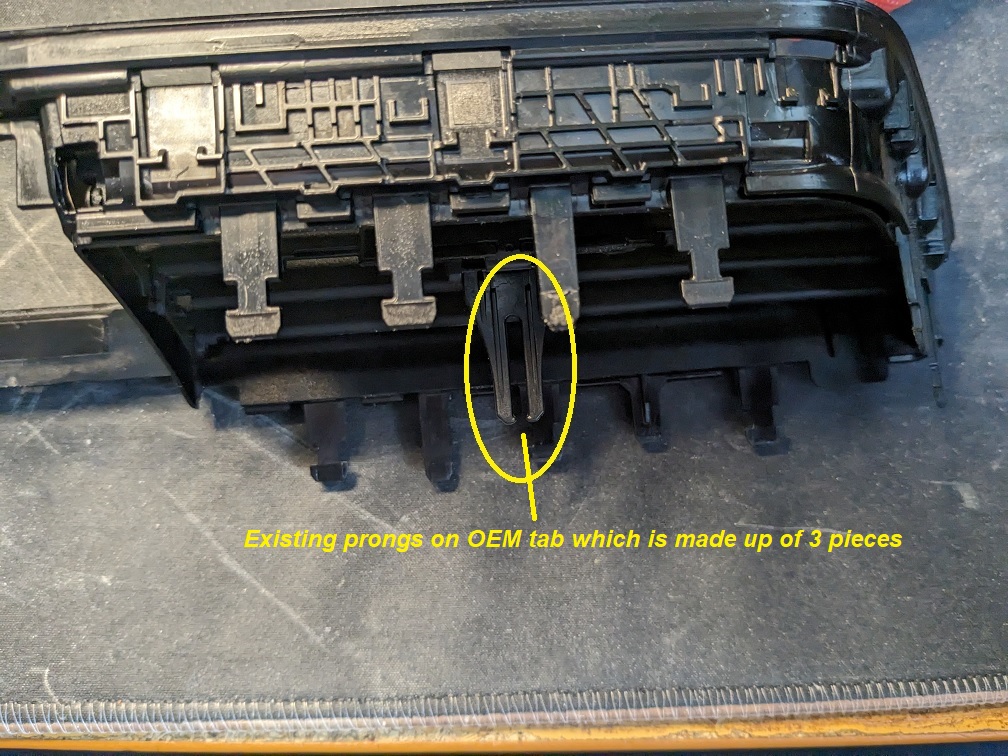
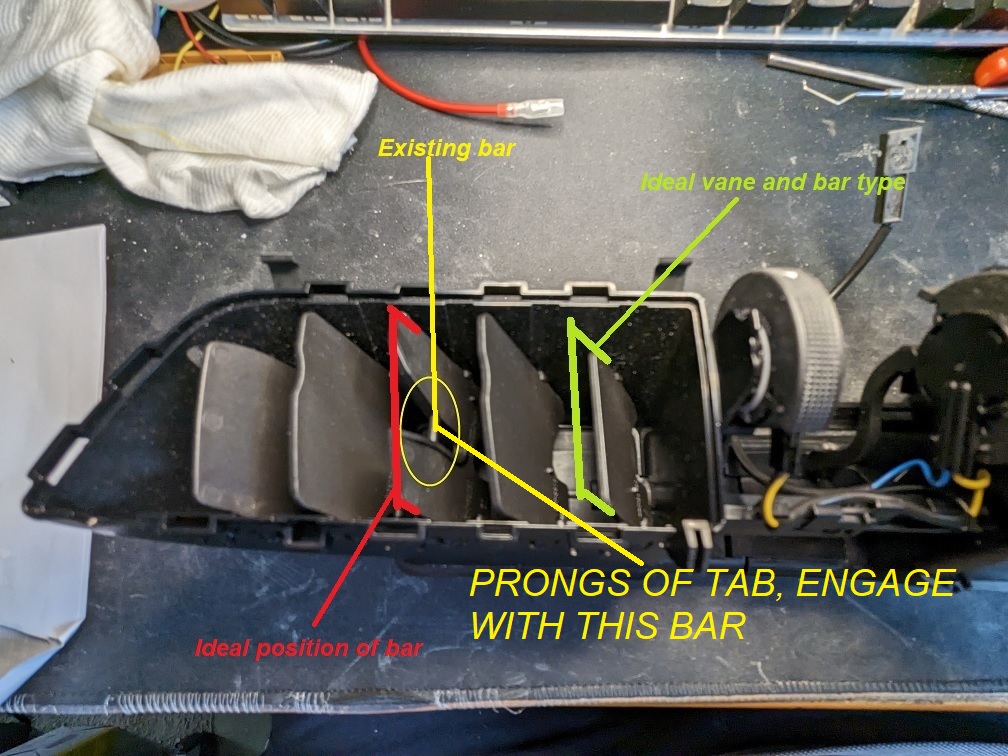
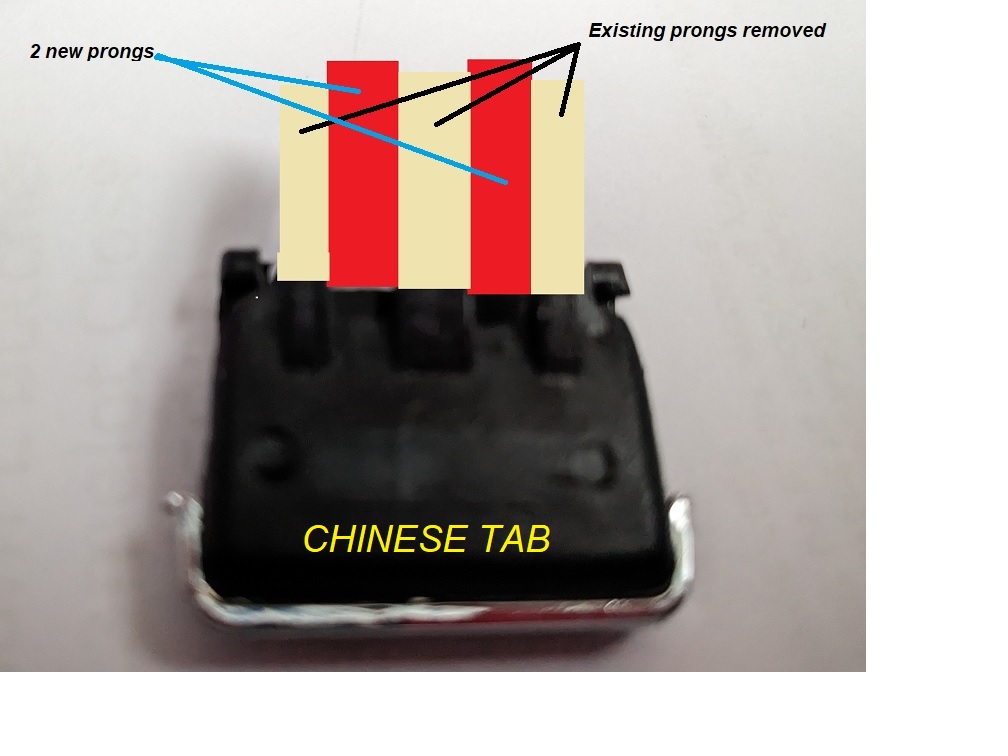
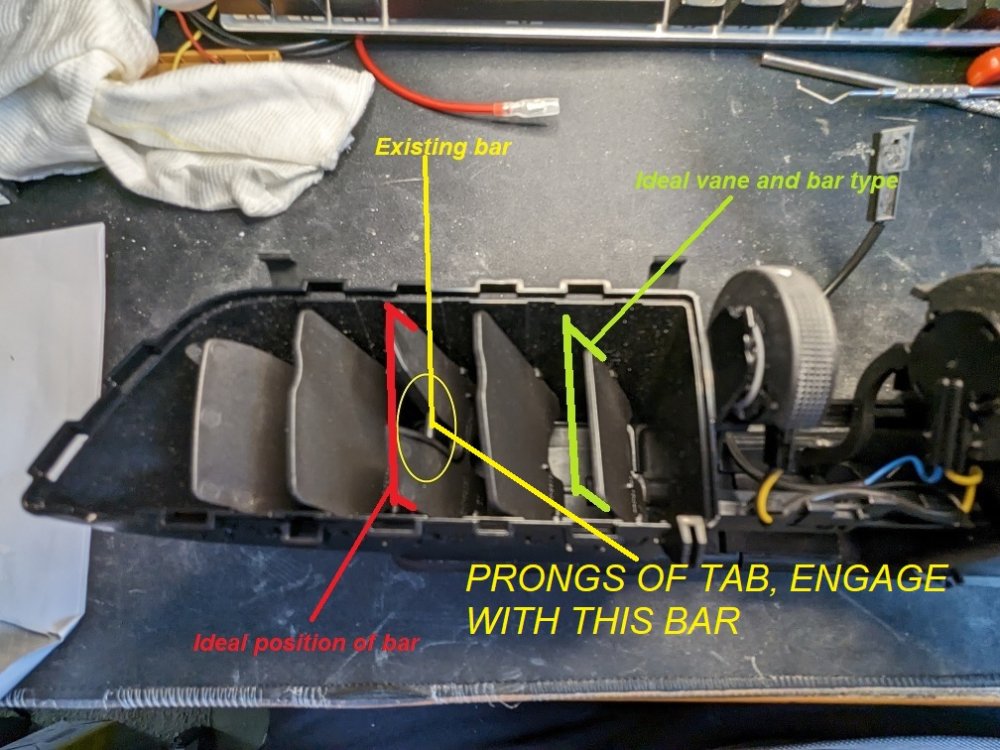
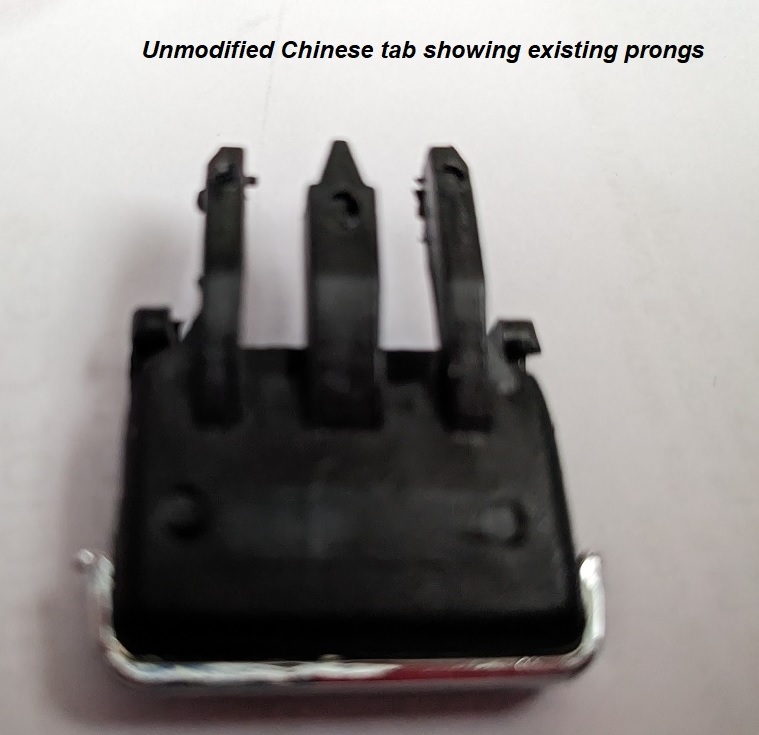
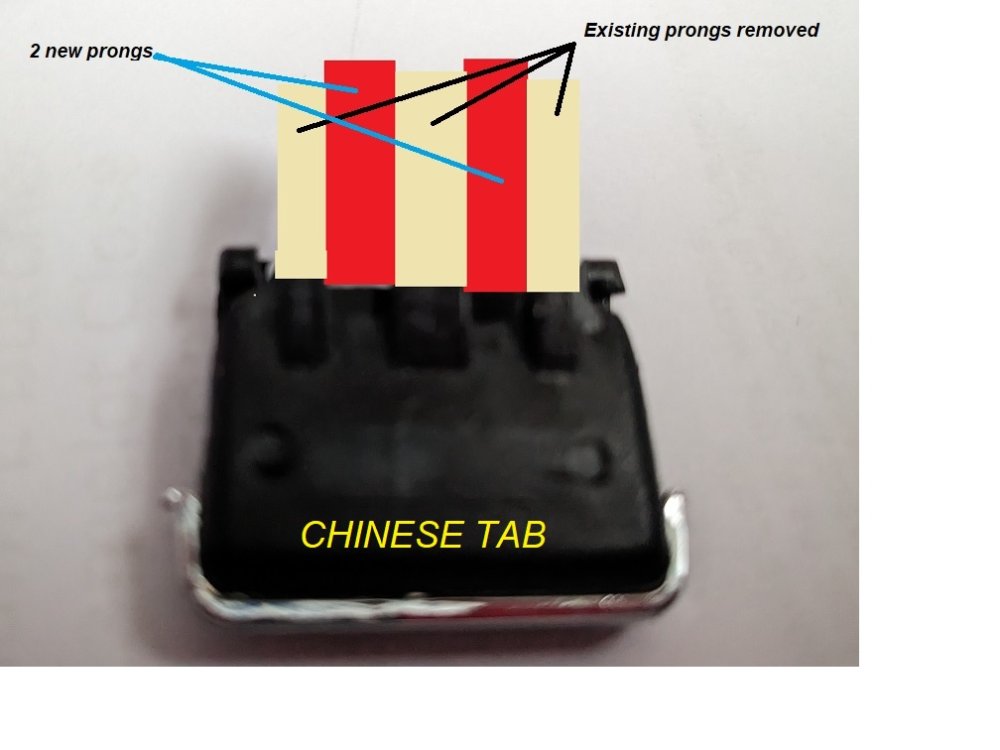
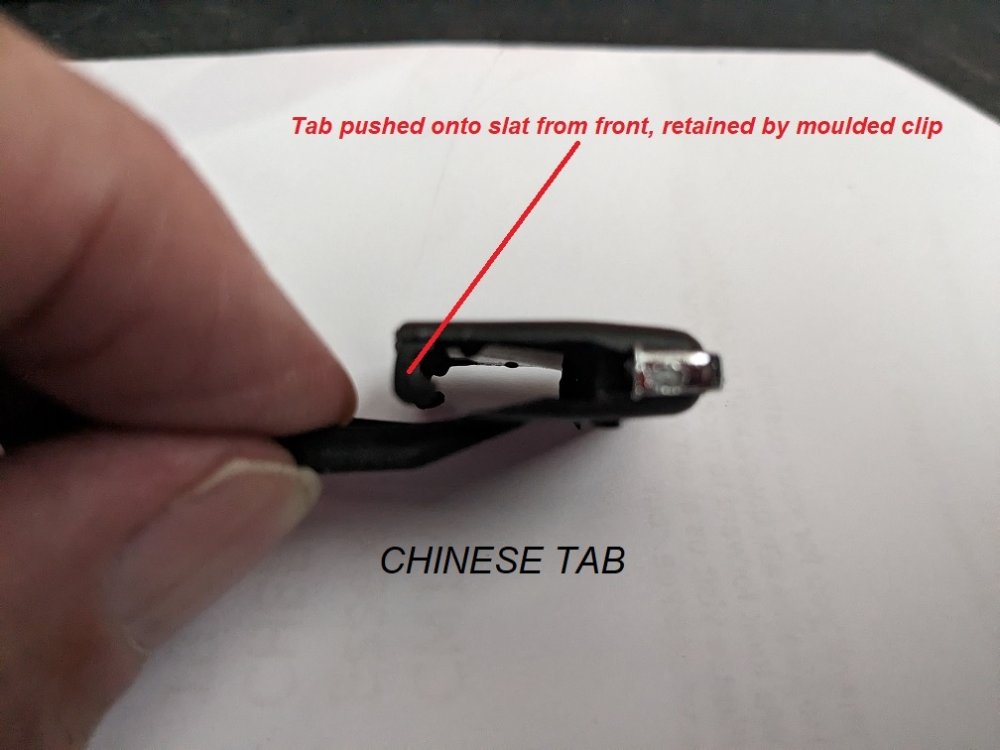
Here at last is the brief write up on the tabs that I sourced from eBay via a Chinese seller that I hoped would be a suitable replacement for the original ones which are assembled from 4 parts which simply snap together, although they are incredibly difficult to assemble as the tab is assembled around the central slat, and you effectively need another pair of hands to hold, guide and press fit the bits together while inserting the hinged elongated prongs at the last minute before the parts snap into position and click lock together. However, sadly the clips are not suitable for use with Škoda air vents due to the tabs having 3 prongs at the back and the Škoda vanes having a strange shape as can be seen in the 5th photo below. If the vane had a profile like the "ideal" in that photo with "C" type bar as drawn and a tab like the Chinese ones but with 2 prongs would have been ideal. Anyway, after extracting the complete vent I took it apart very carefully on my bench, this whole vent is made from 2 identical units but are mirrored and joined to together via a series of clips and a single full width rim piece locks them together to form a complete vent and this vent has to be carefully unclipped and teased apart from the rest of the vent and this has approx 18 clips around it. Then you need to carefully unclip the frame that holds the slats/shutters and this around 10 clips and guides to release and then with gentle pulling should then separate from the main body. On the back of the tab on that vent, you clearly see the two prongs that engage with the vanes for side to side directional control of the air. This is where I discovered that I had got really lucky, the small piece of the tab that connects the large chrome knob and the 2 pronged section that fits the vanes was still firmly attached to the main tab body meaning all I had to do was try and reassemble the pronged bit with the rest again. After much swearing, this was achieved, and then the long job of rebuilding the vent takes. I attached some photos I took during the process, I hope you can make sense of them.
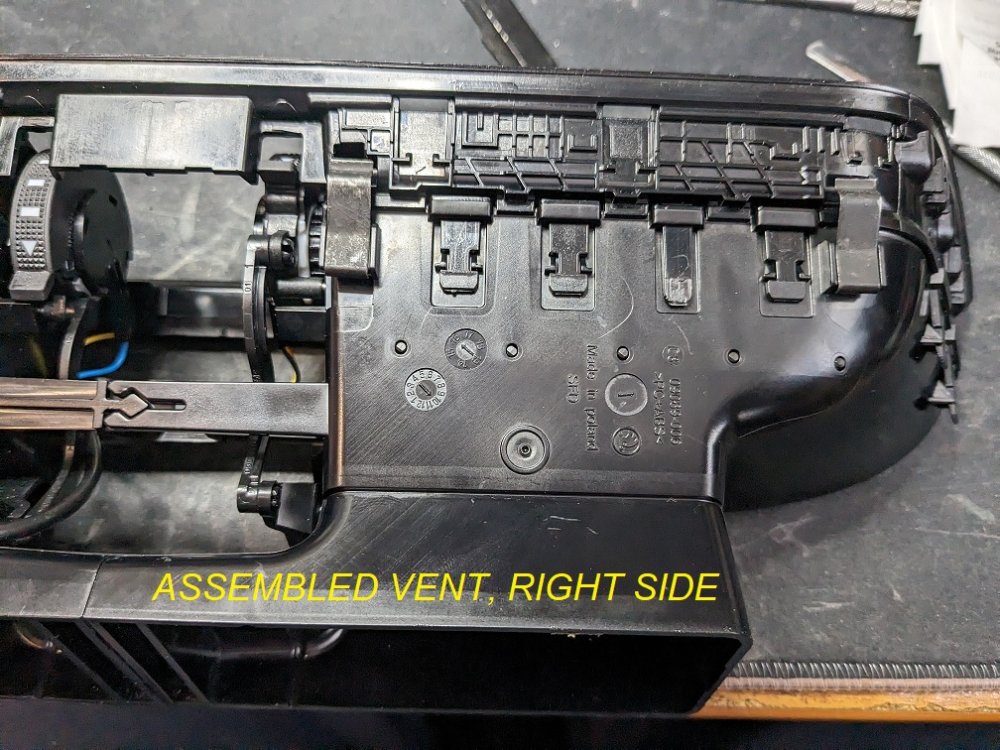
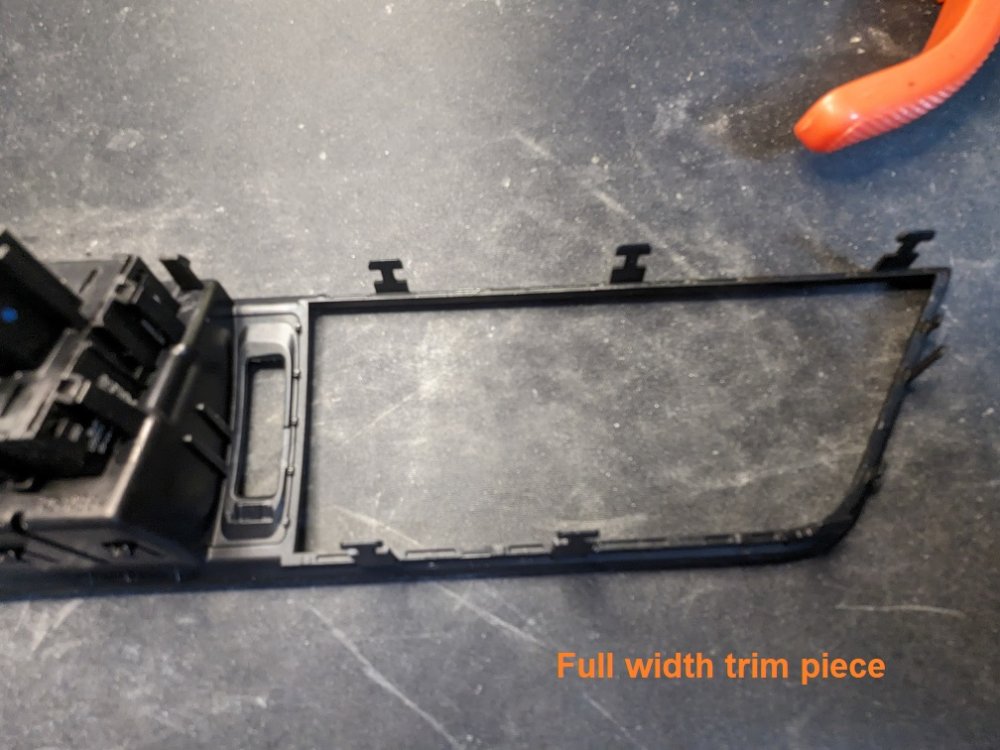
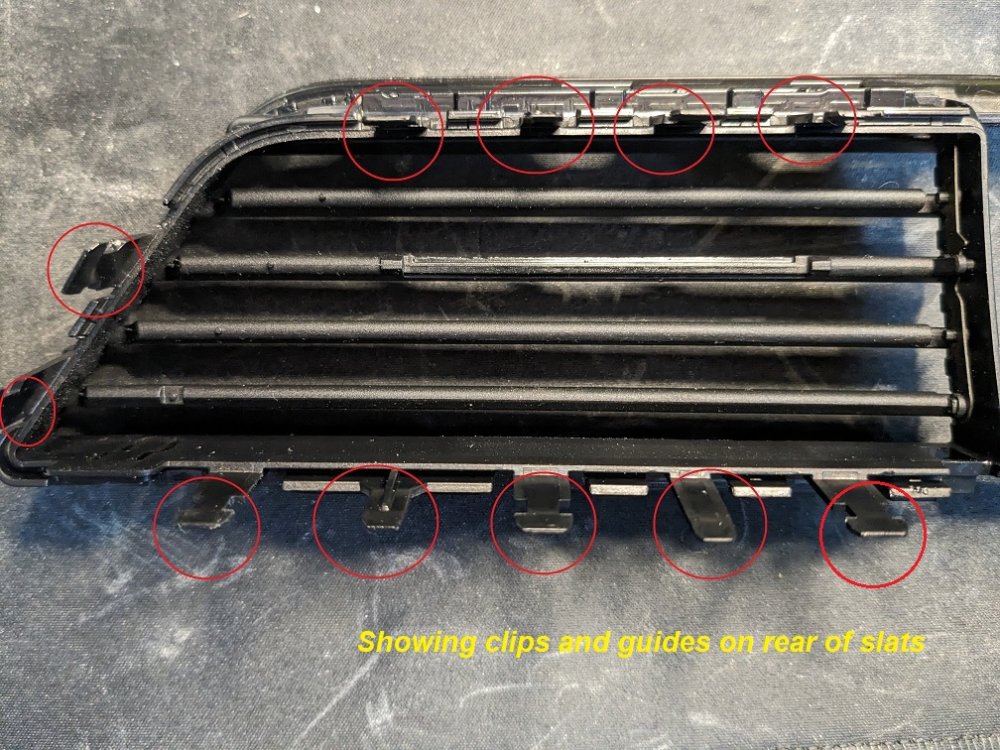
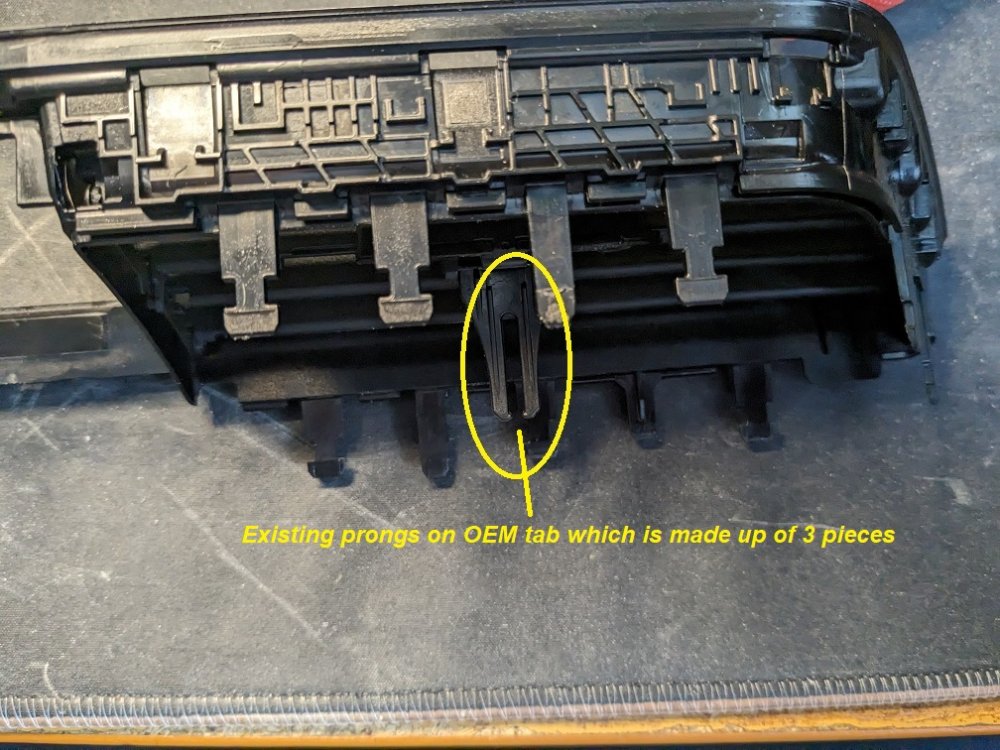
-
Nope, that why I said I would expected/thought that they might have ordered some tabs that could have been sold as a service kit to replace broken ones, without having to extract the old vent completely, but I suspect that they think that people would just buy new vents complete at god knows what price and fit those each time a tab get broken by kids etc.
-
That seems very young to be flying that, usually they look for ex RAF pilots with years of experience under their belts. The 12 minutes is pretty impressive, I guess Redhill is not very busy then, the distance is about 30 odd miles, but they have to wait for the engines to get upto working temp before they can take off. The air ambulance over at North Weald can take a few minutes before it gets airborne.
-
Ok here is the long awaited up date on the Chinese replacement air vent tabs, don't even think about it they, will not operate the left and right vanes (the fingers are not long enough), only the up/down ones. On the plus side, I decided to extract the said vent and I think I should rush out and buy a lottery ticket, because the small section that snaps into the tab that holds left/right actuator was there after all. So after a right struggle and some choice swear words I managed to break the complete vent apart and after many failed attempts managed to rebuild the tab. Then began the struggle to rebuild vent into a single piece after many attempts and failures to get it back together with it all working and yet more swearing, I was able to do it ok. I did take a few photos of the various bits and I'll pop them on here later, however I never took any of the real fiddley bits as it was a real struggle and once the tab was in one complete bit again, it was a mad rush to reassemble it before it came undone again. Now I've noticed that I have to pull out the drivers side dash vent as one of the left/right vanes is disconnected from the system 🙄, oh well that's for another day.
-
What do you mean about the DRL's not being legal there, you're in Sweden, the home of Volvo who invented them in the first place 😲 then almost everywhere else unilaterally adopted them over the years. You'll be telling us next that it's illegal to use another of Volvo's inventions, the seatbelt 🤣
-
@Ynnoj85I can't believe that you don't find the xenon bulbs good enough. That light view from the car is great though but I'd hate to be driving towards you with those on.
-
Is the insurance hike just because of the C19 or are there other darker forces at play here? The Internet is awash with theories about the ULEZ in London and other locations with their own schemes to improve air quality, being trojan horses to bring in RUC, Road User Charges. This RUC is also linked C24 which is about 15 minute communities and many councils are already planning ways ways to make car ownership difficult for the masses and trying to makes us, walk, cycle or use public transport and reduce the need to travel. Many on the Internet are saying it is like the communist party where only those in high office or essential positions will be allowed to have a car. So the expansion of clean air zones, then the RUC and the insurance hikes are just trying to price us out of cars? What are your thoughts, are they possibly right or what?
-
Can't be arsed with all that modifying malarkey, the insurance company would have to be told and possibly modify the premium as a result. Thinking back to April when my old car was written off and the problem I had getting a decent valuation, they would have no doubt used the fact the car was not as supplied from the factory against me. I'm happy with the DCC I have on my new car, and as I said it has not bottomed out on speed bumps, despite being in comfort mode. My old mk2 without DCC but with alloys as standard often did bottom out.
-
Nope, I don't want it bottom out, I set it to comfort because I like a smooth comfortable ride, not a hard one where you feel almost every imperfection in the road surface. If I could have done, when I originally ordered my mk2 L&K, I'd have ordered it with the steel wheels of the base model for a more compliant ride. Alloys look great but after is said and done, once you are in the car, they become eye candy for others, and the payoff is a more jarring ride for you due to the lack of sidewall on the tyre.😏
-
I have had it in normal, but I'd have thought if it was going to bottom, it would do it in comfort as the dampers are in their softest setting? Not that I want it to bottom out 🙄
-
As I pointed out earlier, it might be the DVLA were slow in updating the database and the driver might have just very recently purchased the car and taxed in online, as I did with my recently purchased car.
-
I think the sensor that you are talking about is not a blind spot sensor as that is radar sensor behind the rear bumper. Those sensors at the corners that you are looking for are the ones used for the parking assist which is not always present as I think it is now an optional extra.
-
You're correct about its tax status and the SORN statement, however, that does not actually mean that is the real situation. When I went to Mansfield to collect my current car, I had to tax it before I could drive it home. I paid the tax on line and it was a few days later before the DVLA updated the status of it so any police car could have pulled me over if they had their ANPR cameras switched on. All I had to prove that it was taxed was the online receipt email on my phone.
-
It all depends on how well anyone knows that road, having pulled out and seeing what is ahead, you have a split second to decide if its safe to back out of the overtake or to press on. Personally if it was a road I didn't know, I'd be happy sit behind and follow them, but each to their own ideas.
-
Absolutely, clearly shows who's to blame, also helps to stop insurance companies wriggling off the hook.
-
Me too, but I'm afraid we'll have to wait a bit longer yet, their still in China.
-
Great job, thank you for the input. As I expected, the two side vents are hotter than the two centre ones. I think it works on the same principle as air curtains on shop doorways, they are always the hottest to warm up any air coming via that way as it will be colder. Once the engine is upto normal running temperature, I now sit in the seat and toast quite happily, the same for all other seats in the car and the 3 zones can all operate independently just as it was designed to. I wonder how the flaps came to be out of calibration in the first place? Is it right that the two wedge shape vents on the top of the dash, above the side ones are not controlled? Are they part of the screen vents for demisting etc?