
wyx087
Resident Member
-
Joined
-
Last visited
Everything posted by wyx087
-
Every. Single. Tesla have the same rear door manual release mechanism. This is going to be another case of please provide your sources.
-
Giant IF. But more often than not, the fire would not involve the battery simply because it is more rugged than plastic liquid fuel tank.
-
Obvious/naive or not, that was not the point of discussion. The fact is this VED change is retrospective to cars that were brand new between 2017 to late 2022, where VED was set at £0 and there was no communication that it will change in the future. It was not an exemption that was removed, it was an amendment of VED charges retrospectively. If you want to discuss obvious/naive. The ever rising cost of VED is pretty obvious. To say that change is retrospective is rather naive. 😜
-
When those vehicles were purchased, it is understood VED will be increased over the years. The payment structure and expectation of price adjustment were clearly communicated at time of purchase. Just as VED price adjustments from £195 to £200 in future years. But for EV's that were purchased before they announced April 2025 introduction of VED, there was no such price structure to suggest that EV will pay VED. Even the wording is clear from government website, they are "introducing VED to zero emission cars": https://www.gov.uk/government/publications/introduction-of-vehicle-excise-duty-for-zero-emission-cars-vans-and-motorcycles-from-2025/introduction-of-vehicle-excise-duty-for-zero-emission-cars-vans-and-motorcycles-from-2025 It is not removal of exemption. compare to the wording for Expensive Car Supplement, where it is removal of exemption. Thus I think it is fair to say this is a VED change retrospectively in relation to vehicles that were purchased before the announcement.
-
For home charge points: My parents installed their charge point in the back garden, next to the garden gate, where their car parks outside. In effect zero visibility from outside. My Dad is a bit paranoid. You can also get a less conspicuous charge point. Such as: https://andersen-ev.com/pages/andersen-a3 https://simpson-partners.com/ A pot plant in front they will be hardly noticeable. Or just get untethered charge points.
-
Wanted to test out rapid charging with my parents' Kona yesterday. 2 previous test change they've done at Morrisons and Osprey didn't stop, I figure they probably didn't follow instructions to the letter. Gridserve Stevenage hub was coned off, all 20 odd chargers. Tesla chargers there are operating, but only for Tesla. Across the junction have 4 chargers at Starbucks, 2 broken and 2 in use, 0 available. Welwyn garden city Shell had 1 broken, 3 charging, 0 available. The van at 88% wanted to wait for 100%. Got testing done at nearby Instavolt 2 chargers, stopped when I operated it. I don't think they are scanning the Electroverse card long enough. Truth is if really needed charging, the Osprey nearby has 8 capacity and seem to be reliable enough. But I'm saddened that public charging can still be a bit of time waster with poor reliability and congestion seen yesterday. Sunday ~11am.
-
Winter efficiency seems to depend heavily on driving pattern. My parents' new Kona EV 39 kWh are supposed to be very efficient, but only managing 3 mi/kWh over multiple short journey in the first week. So 100 miles reliable any weather range with some remain for plan B. They only do very short journey, a few miles here and there every other day. When sitting in the car configuring stuff, can see SoC drop as cabin heats up. Leaf I no longer track data due to CarWings shutdown. But guess-o-meter seems to think ~80% means 30 miles in coldest days with 3 bars on the battery. Still perfectly fine for the range wife is willing to drive, she doesn't drive beyond local familiar roads. Remain is used up daily for V2H, I figure it's easier to change a 10 yo car than call specialised electrician to change battery on the wall. My MY lifetime data goes as low as 3.11 mi/kWh average over one winter month, vs 4 mi/kWh in summer. Taken out Dec 2023 where I had extra annual leave drove it local use only while Leaf was parked up doing V2H, average efficiency for the month dropped down to 2.9 mi/kWh. All other months I used it for my commute and Leaf doing all the local runs. 78% range drop winter vs summer month averages for same use pattern. I'm pretty sure diesel would get similar. I seems to recall mid 40 mpg in winter and high 50 in summer with Octavia 2.0 TDI on same commute 58 miles return.
-
You don't have anything to say about Corsa being 4th?
-
This is called "state of charge drift", google it. As multiple variables change, the BMS re-evaluate its SoC estimate. Got to remember SoC you see is an estimate of energy in the battery. It is much better than miles guess-o-meter because there's less variables involved but it's still an estimate. The only time SoC is accurate is when you charge the car to 100%. The charging logic monitors cell voltages and stop charging at its defined cell voltage limit. At this point the SoC reporting 100% can be considered accurate. Doing is also calibrates the BMS logic so that it knows the battery is full. When this happens, It is worth charging to 100% if you know you'll use the car soon. This recalibrates the BMS logic then you shouldn't see SoC drift until it gets itself confused again. There is nothing to worry if you want to leave the car at 100% charged. It wouldn't magically gain 2% and there is no increased chance of self-combust. The reason people say don't leave Li-on battery at 100% for too long is to prevent accelerated degradation. Cells chemically degrade quicker when being under more stress. Li-on cells are least stressed at 3.7v, which is typically around 50% for most Li-on chemistry. All of above is why LFP tend to have more cycle life, because it has a very flat cell voltage. This means the cells are not under stress most of its life. But LFP also require regularly charging to 100% to re-calibrate SoC logic because BMS uses coulomb counting during that flat voltage part, easy to loose accuracy. SpeakEV folks will be able to give much better explanation than me, probably also find areas I'm not explained correctly. I suggest you pose these sort of technical questions there.
-
https://media.renault.com/renault-5-turbo-3e-legend-reborn-as-a-production-model/

-
As long as temperature is kept in check and then quickly reduced after charging the momentary high C shouldn't cause too much degradation. Norway/Thailand Bjorn summaries: Degradation = SoC extremes * heat * time. Reduce the latter 2 variable should mean vastly reduced degradation. There's a recent research saying regular high C regen have shown evidence being good for reducing battery degradation: https://www.nature.com/articles/s41560-024-01675-8 But at the start they talked about only having one cooling plate at the bottom. This sounds like uneven ageing waiting to happen, across every cell! Leaf 30 and 40 are well known for this, where rapid charging causes the vertically stacked cells under the rear seat to stay hotter than flat cells along the bottom. So cells degrade faster with those hotter cells. For that design, I'd have preferred 2 thermal control plates, top and bottom. For fire conscious, the presenters were guessing they left a lot of venting room along the centre and edge to allow venting. Edge clearance also said to be for impact protection.
-
If no money to purchase outright. No money to spare month-to-month for car monthlies. How is money off a brand new car going to help? Please help me understand in that situation, why you think a few % off brand new car costing over £20k will help.
-
Apologies, yes, 0% loans. Which allows you to gain more than old grant if you invest the money into the market. I have a habit of thinking one thing typing something else. Proof read once sometimes doesn't pick out everything. TBH I'm not better off than anyone here, £9000 Octavia was the most expensive car I've ever bought up to that point. I just got lucky with some stock, shares and crypto during COVID. Without the giant market rally on tech stocks in 2021, I wouldn't even think about buying a brand new car. The money for the battery came from recent AI surge. Only the solar panel were from my own savings almost 10 years ago as I felt it was a worthy extra-long-term investment.
-
The grant was £3500 for a £35k car, there was an upper limit I can't remember, not many EV below price back then. That is 10% increase in price without grant. It's not going to affect the end outcome is it? People who buy brand new cars can forego a few options to achieve similar price. Going through websites like carwow will usually net very close price reductions. Your wish may be granted soon though, government is said to be looking at 0% grants to boost private purchases: UK Government mulling EV loan subsidies to boost sales
-
I don't feel that way for vehicle grants, the removal of grant saw car prices drop by similar amount. EV have been price parity for some time now. I feel vehicle grant at this late stage is cash flowing out of the country or subsidising people who can afford new cars. Similarly, home charge point grant saw higher than necessary install costs near the end. Don't get me wrong, grants are necessary to push something from innovator stage into early adopter stage. But once enough skills had been obtained, grant need to wind down otherwise it becomes price gouging. Key for painless EV ownership is grazing on destination charging whenever parked, especially hotels and workplace. I don't believe there's grants for hotels. Workplace grants could be higher to encourate more than 30% coverage of EV charge points in workplace car parks. For example, my workplace have more than enough, most of the time spare EV charge points and ok SS scheme. We are seeing more and more EV driver every day.
-
There is of course always cheaper cars, ICE had been around for a long time giving huge range choices and are almost equally capable. This is more fault with manufacturer not having capable EV offerings in 2010's. There's some waiting to be done for more affordable and capable second hand EV's enabling those as choice for everyone. But even in those cases driving 200+ miles a day, the range of today's EV are still plenty as long as destination charging is up to scratch. Saving everyone time by getting their EV charge up while parked. In this area there's still much work to do. Need more government grants or remove red tape, "build it and they will come".
-
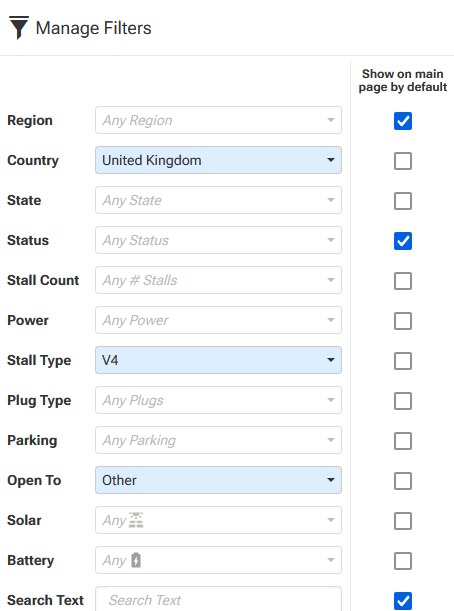
https://supercharge.info/map?Center=54.10770422053768,-3.9111328125000004&Zoom=7&RangeMi=175 Hum, that doesn't include filters, do filter as follow: Only Tottenham V4 is no longer open to others, every other V4 are open to all.
-
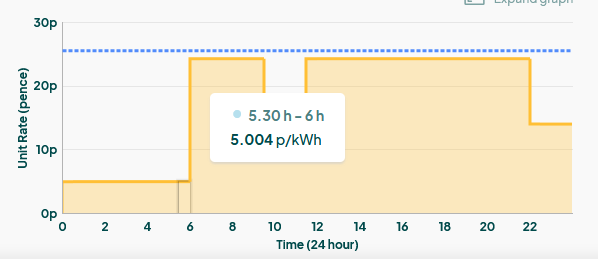
If you aren't bothered about energy fuel mix, Tomato Energy is worth considering. https://www.tomato.energy/fuel-mix 5p for 6 hours and other 14p periods for washing, etc.
-
That's more than enough for free return journey. Even 4 hours is enough to cover majority of your commute (40 odd miles) still giving lots of fuel saving. If more people get EV, you can work out some sort of whatsapp group within the company and coordinate charging this way (eg, 4 hours morning for first batch, afternoon for late leavers). When we only had 4 charge points, we did this until more were installed. With free or cheap energy and routine journey, you won't need to focus on efficiency. ID7 may wipe out possible savings, it's their top of the line offering, so be careful and do the numbers. Unless the lease on ID range is very cheap because the car is end of 2024 pre-reg for VAG's ZEV mandate, everyone seems to think there is lots parked up in a field.
-
Wife's Nissan Leaf was on PCP in 2017, specifically purchased no battery lease, purchased outright at end of PCP in 2019, total cost including interest was £8800. In her name on the V5c, keeping until probably suspension are beyond economical repair. Potholes around here are numerous and lethal. My Tesla Model Y purchased outright 2022. In my name on V5c, keeping until after another MY update and buy a 2-3 year old, so this car will probably be 10 years old. My Tesla Powerwall 3 was installed in 2024, 0% 3yr loan so took it and stuck the money meant for it elsewhere to grow. My parents just bought (last week, cash purchase) an ex-motability 2023 Hyundai Kona 39 kWh, just 5000 on the odometer. Zappi charge point install today. There's one big outlier in those 3 cars, but it's more of a want to play with tech than need. EV overall were very cheap back in 2017 and are at price parity still getting cheaper after ~2024. Battery are also cheaper now that they are 0% VAT. In searching, and having read poor winter performance of Stellantis cars on this very forum, I told my parents to look at Hyundai/Kia, VAG and Renault. They ended up liking look and size of Kona, nothing else on the market in 2022 or later is this small. I suggested looking a new Renault 5, but my Dad did not like the idea of initial new vehicle depreciation. Presumably you can charge at home and are happy to move to time-of-use tariff? Otherwise not much fuel saving. You say 20k annual mileage on the EV, this will push up leasing cost. Need to balance lease cost increase vs fuel savings. But also check out excess mileage cost, may be cheaper to pay the excess miles cost and still get some fuel saving (eg. 8p per mile still gives you 2-3p fuel saving charging at 7p or just 5p on Tomato) If 20k is for commuting and you will mostly charge at home, all EV on the scheme will be brand new, so any of them can comfortably do your commute. As pointed out, insurance will be costly so ensure it is included in the lease. Not all lease includes insurance, at least not when I looked at leasing via personal means. As well as ID range, Renault are worth looking at, their recent offerings seem excellent value. The Koreans' EV are known to be very good and efficient. I personally think 2 car approach, EV for most things, ICE for long distance, makes a lot of sense. I think Tesla are only worth it if you know you will use their superchargers. But you will probably drive your ICE for long trips and home charge most of the time.
-
See below, digital gives far more flexibility at fraction of price per photo. Kinda like EV's. EV are not limited to filling up at any station and the energy could come from own generation.
-
Intelligent Octopus Go will give cheap charging for the whole time car is parked if the user needs it. So let's say 8pm get back and 7am leave gives 11 hours of 7 kW charging, 77 kWh into the battery gives over 3 hours of motorway driving before needing to find a rapid charger. Different machines, different mentality required. You wouldn't use a digital camera in the same way you use film camera. Different machines, different mentality.
-
The efficiency figure will drop as precondition is happening. By how much I have not measured and it will depend on a lot of variable, precondition length of time, driving condition (motorway speed = more waste heat to use from motors), many temperature readings, etc. RSEV video often say their efficiency was 3.5 mi/kWh (let's say) and get to the charger average at 3.3 mi/kWh due to preconditioning. After all, you do use extra energy to heat up the battery. But with mordern (post 2020) Tesla with heat pumps, after charging that heat energy in the battery is scavenged back into the cabin for heating. There is a slight efficiency cost in summer as the car works hard to dump excess heat energy outside. Luckily efficiency isn't normally a problem in summer. Summer if parking up after supercharging could also hear car working and SoC drop 1-2% as the car works hard to reduce battery temperature to reduce battery degradation. The software manages everything automatically. One way to avoid this is, if not in any hurry, navigate to a nearby destination, not the actual charge location pin. I then use S3XY button to start precondition based on how much speed I feel I need. Above 30c seems to charge quick enough, but car seems to want precondition to over 45c for fastest rate. The car's waste heat from motor during a long run is normally enough to sufficiently heat up the battery to optimum ~30c. For non-Tesla and any EV more mordern than Nissan Leaf, I can highly recommend CarScanner app and an OBD dongle to try to work out what is going on in the background. I personally find this the most ineteresting part of EV. I used to monitor diesel particulate filter closely like this, but that is pretty straightforward based on a few parameters. Tesla uses so many more parameters and different behaviour for each condition, the "octovalve" is a work of engineering art. Shame it's all invisible to the end user without scanner tools.
-
Exactly. It's all designed to show EV in the worst possible light with thumbnail to match. That channel has had its biggest growth using this method so the "drama" will continue. It's like Top Gear but without the actual entertainment and banter, only 1 block acting stupid. I had supercharged in the morning once, to avoid charging on the way back in the afternoon. 10min to the first supercharger en-route wasn't enough to pre-condition the battery. But 15min charging was still enough to get back on the road and get home with comfortable margain. Battery heats up when charging, ride that high for a bit and dash when it slows down, don't need to wait for 100%.
-
Of course it's a real thing. Electricity comes from a limited pipe. Key is managing this using on-site battery and being smart about power distribution. Throttling wouldn't be a thing at large Gridserve hubs with on-site battery. Part of Gridserve business model is to use those battery and grid connections to make money, EV charging is their public-facing side-gig. Most Osprey and all Tesla locations also have backend management so that cars that are slowing down charging could allow other cars to ramp up. All managed by backend system and sharing banks of AD-DC inverters. If site-power isn't enough, it could throttle all cars by a small amount rather than penalise the last person connected. Osprey's Kempower stalls also tells the user what is causing the slow speed, whether it is the car or the charger. Tesla vehicle can also do so on the screen. This is great to keep people informed and all rapid chargers should have this. I think current Ionity chargers do not have much power sharing management backend, they are individual chargers that dumbly throttles when site-power (probably includes service building) isn't enough.