J.R.
Resident Member
-
Joined
-
Last visited
Everything posted by J.R.
-
Anything from 60°c. There are several clues that its telling you what you want to hear (see) rather than the truth, the non linear rate of climb during warm up & that once indicating 90°c it sits rock steady without any variation to be expected resulting from engine load, outside temp, airflow etc. Having owned a Triumph Stag I learned the art of driving with one eye on the temperature guage and to recognise all the tiny fluctuations and what caused them and to recognise anything out of the ordinary, something that continued to serve me well until driving VAG vehicles of this century where it serves for nothing.
-
Mmm.......................... Imaginations seem to be running riot today. It will be the warm up impellor shroud stuck in the deployed position.
-
That is the brake master cylinder and not the ABS pump. "The brake fluid hasn't been bled well, leaving old fluid in the system. The old fluid continues to receive moisture, making itself more viscous and hard to move inside the system freely." Either you are not being serious or have a fertile imagination. I can recommend the VW self study programme 374 for a comprehensive understanding of the ABS, traction control and assist systems and their interactions with each other.
-
Oil is the primary coolant. Good point re how much longer the oil takes to get to operating temperature than the coolant. Start the engine, clean any windows if necessary then drive off, one minute for the oil to get where it needs to be? Driving gently until the engine is up to operating temperature is simply common sense but some want it spelling out, if you have sticky turbo vanes you will have already refined the practice into an art form, either that or have been taken for a hell of a lot of money by garages for new turbos.
-
The guage may say 90°c but sitting at idle from a cold start without driving in winter the actual coolant temperature sure wont be. But hey if thats what makes someone feel safe then thats their look out, by spring they should be safe to leave their driveway but they will have had to fill the tank a few times while waiting. The later CR engines with the achilles heel waterpump sleeve warm up a lot quicker but a PD is really slow, on a cold day driven gently mine would take at least 5 miles and often require an uphill drive to get to 90°c on the guage which was not a real 90°c but as hot as the coolant was going to get.
-
Its the outer of the 3 heat exchangers so no need to disturb the engine cooling or intercooler ones. I had the front off to do accident repairs, if there is room between the crash bar & AC condensor it may even come out without removing the bumper, if you remove the top bonnet slam closing panel you will see exactly what is involved.
-
I had a blue MK2 Tincorner with the same Thrush sidepipes. The jacked up stance of those days did nothing for handling Mine was the same
-
£60 and a doddle to change on my Yeti which is the same platform. Pulling the front off the car may seem intimidating but is in fact very easy, far easier on the Octavia because of the simplicity of the headlamp removal. The same goes for dashboard removal, its also dead easy.
-
Thanks, I was just reading the Wiki page, they are both PQ35 platform cars hence the similarity, every day is a learning day. It's very usefull to know the other more popular vehicles for Ebay parts searches
-
Thanks. I thought my Octavia 2 was MQB and this looks so familiar I thought it was the same, what other vehicles are on the A5 platform?
-
Glad you liked it! You can also shine it vertically to take measurements from the wheelarch or inwards to a better fixed datum, suspension pick up point etc to see if the axle is misaligned sideways, the wheelarches may have had a ding & been repaired. On the front the 30mm misalignment was clearly a rotation of the subframe but 3 or 4mm was sideways movement which I could see from the paint marks. I checked the rear today and had 0mm on the drivers side and 6mm on the passenger one so a 3mm misalignment, I have left it for now as I could not get enough purchase to undo one of the fixing bolts, its a good thing because on reflection I need to check the sideways alignment measurement to know in which way to move the rear subframe, it will only be a small nudge to get the 3mm over half the wheelbase. My tracking guages are in the UK, when I check the front & rear track which should be 10' of toe out I will make a shim so I can mount the level facing straight ahead (or behind) with that done measurements can be taken from the laser spot to the wheel rim or better still driveshaft bolt of each side of the other axle to make sure there is no stagger. I know what I mean but its hard to put into words. I have always done my own suspension set ups on my race cars using strings, levels, straight edges and my tracking guages, I made my own camber guage, being able to use the laser level is a game changer. I have always believed that someone with a true understanding of what they are doing with basic equipment like string a levels can do a better job than someone with hyper expensive computer equipment that does not have a clue. I have seen lots of prints outs posted from Hunter 4 wheel alignment rigs where it was apparent to me that the rear axle should have been aligned before even taking the measurements, followed probably by the front and only then any adjustments made. I was really shocked by how far out mine was after my refitting the crossmember taking great care (but not enough) to put it back where it was, I'm pretty sure it had already been out and not put back correctly, how many mechanics doing a clutch change would even be aware let alone take the significant time involved to get it right?
-
If the car is no longer misfiring then no coils are burned out, what do you think that the C.A.B. can do for you, reassurance? To repeat what I suggested earlier: I suggest having an independant VW specialist check it over for you including scanning for fault codes would be money well spent in giving you piece of mind and having something tangible to present them with as a warranty claim. At least that way you would have something tangible to ask them to replace or have the reassurance that you are seeking.
-
I can see an oxymoron there
-
A bad diet, well its what happens to me so cats ought not to be any different Topinambour is my biological weapon of choice.
-
My mention of pistons & con rods should have given the clue.
-
Try it without the towrope!
-
They are not reciprocating masses.
-
A lower reciprocating mass? Are the pistons & con rods that different? Wouldn't they only affect the engines ability to pick up revs in neutral and not the power developed?
-
The first part I agree with, the second is anyones guess. The diaphragm is the spring, a clutch cover is either a coil spring (old school) or diaphragm type. I changed my clutch last week (cleaned all the friction surfaces with brake cleaner), the friction faces of the flywheel & pressure plate were blue from heat and the pressure plate annular ring was bowed like a saucer, 1.5mm in 40mm the driven plate had therefore worn thin on the outside edge tapering to full thickness at the centre.
-
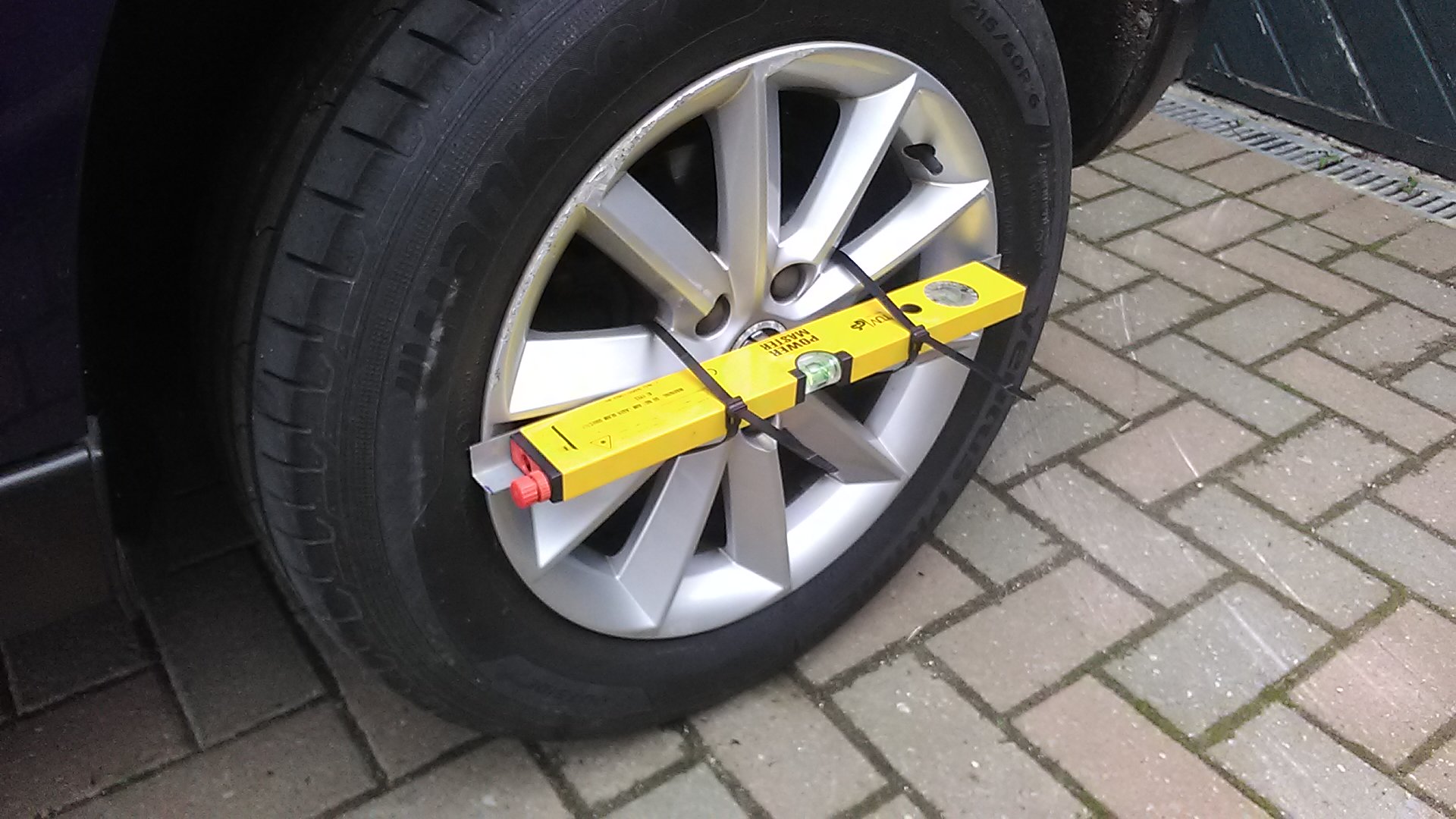
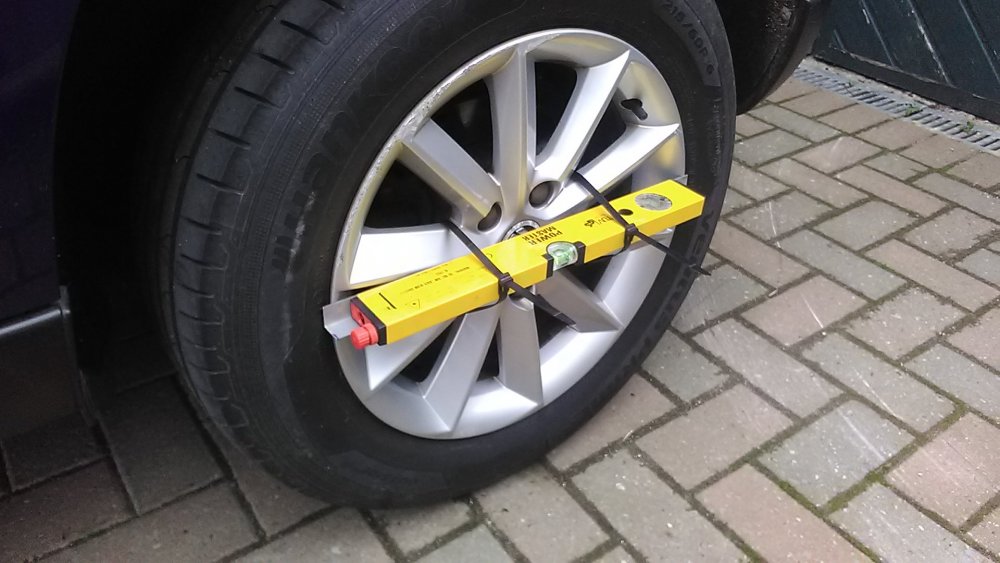
I had to remove the front cross member to be able to remove the 4wd transmission unit to replace the DMF & clutch, I thought I had repositioned it in the same position but had not realised just how much clearance there was on the bolts for the factory alignment, the person I had helping acting as my eyes (I am partially sighted & seeing close up whilst simultaneoulsy being dazzled by the flourescent pit lighting is a challenge) and we thought it was correct from the clean paint marks under the washers but it wasn't. What surprised me was how far out it put things, driving the steering wheel had to be held 15-20° anti-clockwise to drive straight on, so much that I questioned whether the rack had dropped out of the clamp whilst unsupported & had gone back in a different position. Not knowing if the tracking had been mucked about with before I started by counting the turns lock to lock either side of the central position, dead equal at 1.5 turns each way, then I measured the exposed threads on each track rod, again dead equal at 20mm each side so I was confident that the vehicle was stock & I had misaligned the cross member. I then did a home 4 wheel alignment check first with a MK1 eyeball & even this half blind geezer could see it was a mile out! then with a 3m straight edge, then a laser spirit level on a metal rail attached to the wheel spokes (photo below). I used a paper target on the B post held in place by the closed door for both the front & rear axles, the rear was a little bit out which I will correct later this week and which makes me realise that most 4 wheel alignment checks start out from a bad datum of the rear wheels. The front was massively out, 6mm from the laser spot to the drivers door directly beneath the waist moulding, 73mm on the passenger side Anyone whose front subframe has been removed for a clutch job could be driving a vehicle that crooked and all a garage would have done would be to take the error out by tracking, big-big mistake!! Looking at where the bobbing is bolted to the chassis rail above the wishbone (access hole in wishbone for the fixing) I could see the paint marks where it had not gone back in the same position, these could not be seen from the pit. In hindsight i would now spray a contrasting paint over these 2 points before unbolting. I needed to move the subframe slightly to one side and to twist it to the limit of the bolt clearances to get the laser alignment spot on. The car now tracks perfectly and with the steering wheel central, in fact better than it ever has as the subframe was not correctly aligned before further confirming my suspicions that the transmission had already been removed (loose bolts, broken solenoid connector etc). I still have the rear axle to tweak very very slightly to have a die straight ride. The laser level works very well for checking if the subframes are aligned, definitely check this before making any other adjustments like camber correction. Finally the kits of stepped washers sold by specialists to "remove the tolerances and align your subframes central where they should be" are snake oil sold by those who dont understand why the clearances are there in the first place and how the front and rear subframes should be aligned for the correct wheel geometry. A small amount out makes a huge difference!
-
I am usually very good at deciphering and making senses google translations from one language to another but this part of the tech webinar is causing me some problems, can anyone suggest what it might be saying? the rest makes sense: Technical background/Cause Due to anticorrosion protection applied to the flywheel and the clutch, the friction value increase is much more slowly. This may lead to premature clutch failures. Despite optimizing measures (plate lining of the clutch S308, the diaphragm spring of the pressure plate with temperature stability and decreased rpm in the transport mode), the premature heat overload of the clutch still sporadically occurs.
-
That horrible clutch smell can hang around for ages, a bit like the smell of death from a decaying rodent in my roofspace you become hypersensitized to it, it can appear to have gone away but one day perhaps the wind is blowing in the right direction and you get a tiny whiff of it which your sensory system amplifies massively probably recognising it as a threat. If it isn't smelling through operation, reverse hill start, reversing a trailer etc then I would not be too concerned.
-
-
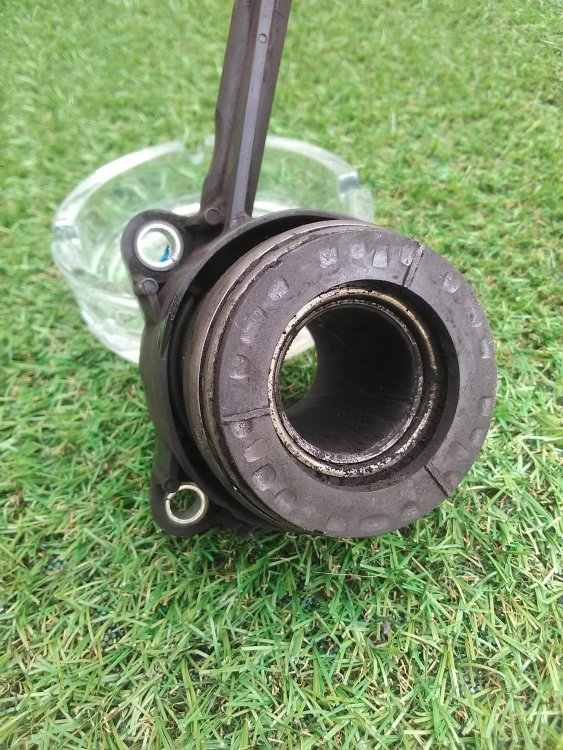
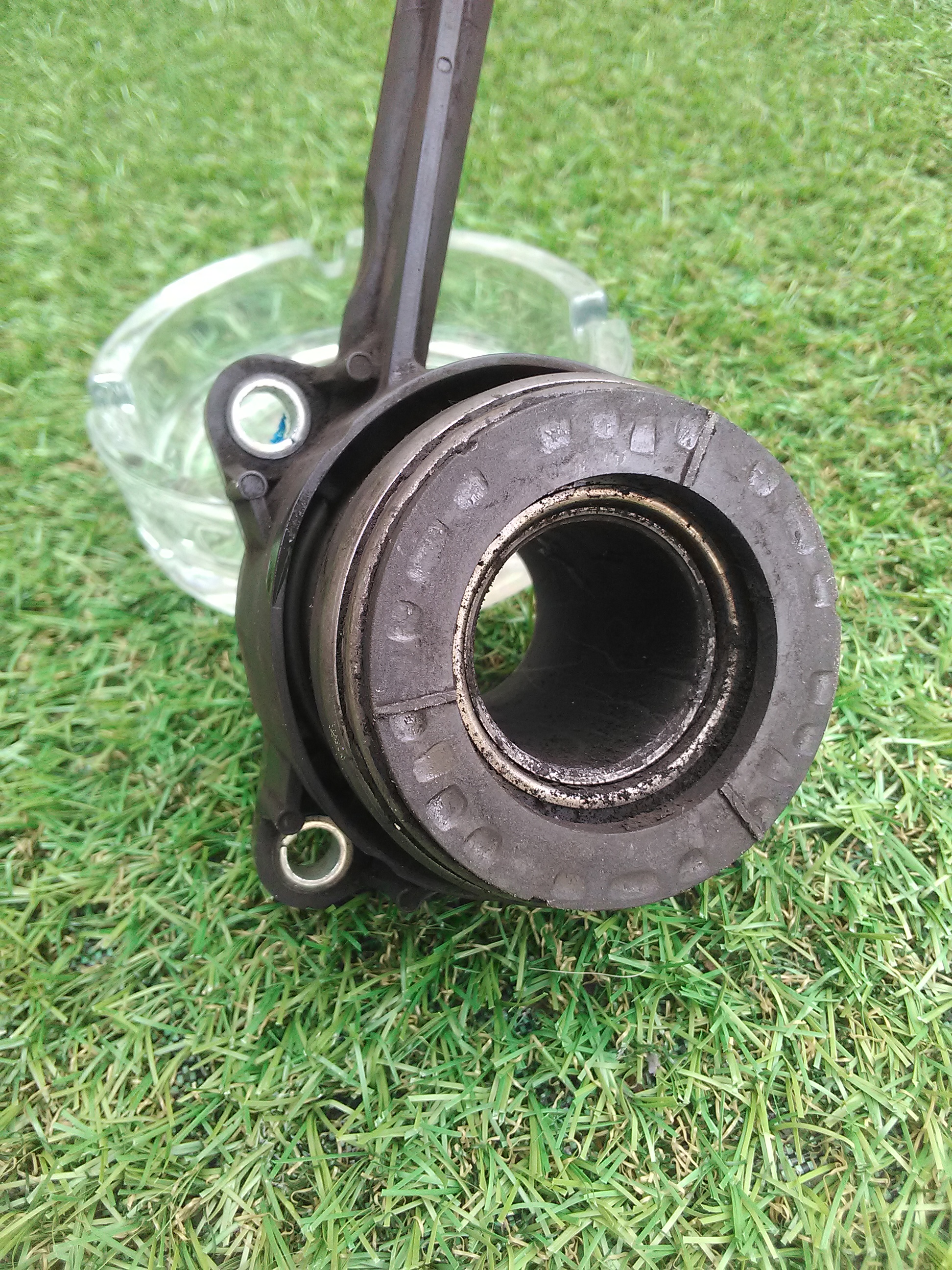
The two pieces old plastic cylinder with the damaged joint allowing air ingress were made of different plastics, the inner part black glass filled nylon, the outer a yellow plastic, the new plastic cylinder (which I didn't fit) has both parts made of the stronger glass filled nylon. Given that the air ingress happened when things got hot I think differential expansion also played its part. I wonder if the Sachs cylinders are alu and not plastic or plastic but in one piece without the joint?
-
Well the job is done now, a very heavy transmission to remove weighing 68kgs!!! The thrust bearing was faced with plastic where it contacted the pressure plate fingers and had indentations, I dont think this damage was relevant to the problem but both my new release bearings had metal contact faces. The DMF had slight wear and the lateral oscillation may have contributed to the indentations on the release bearing or vibrated the fluid joint allowing air ingress, it was silent at low revs as is the new one but at high revs its much quieter, now its a diesel sound rather than a high rev death rattle. I decided to fit the aluminium cylinder so as not to risk a future problem with a 1ct O ring requiring transmission removal, I think my car may have been originally fitted with an alu cased bearing & that the clutch has already been replaced, some bolts were loose, the starter solenoid connector broken and other indications that the job had already been done by an inexperienced or slapdash mechanic. Also someone had abused the clutch, pressure plate & flywheel had burn marks, the pressure plate was dished, 1.5mm over a 40mm wide contact face and the drive plate worn thin on the outside only. The clutch and its hydraulics are behaving perfectly since replacement, also the gear selection is much improved as the counterbalanced quadrant that the cables attach to was loose on the selector shaft spindle (more signs of being worked on), so loose that the spline would soon have stripped and I would have lost all gears