Johngerard
Members
-
Joined
-
Last visited
Everything posted by Johngerard
-
Normally, if you just turn the ignition but do not start the car then the fuel pump relay is energised (to start the pump) but only stays energised for maybe 5 seconds or so, its definitely more than a second or two to allow the car to start which then sends a signal probably from the RPM sensor to the ECU to keep the relay energised, in the even of a collision or if the engine stalls then the relay is also denergised for safety reasons. I would just switch on or get someone to switch the ignition on and monitor the time taken before the relay deenergises again.
-
-
When the engine is heating up the VCDS (true coolant temp) might look like this, the ECU modifies the temperature Gauge to read exactly exactly 90C until the temperature rises to a (true) ~ 107C, is yours reflecting this, the fan if controlled by a coolant temperature sensor must read the true temperature?. The basic fan speed control is just a thermoswitch with two sets of contacts and two speeds, (one controlled by a resistor in the fan motor) screwed into the rad header. VW Polo 02092024 Coolant Temp VCDS (true temperature)/Car (coolant gauge) 52 /52 53/55 56/58 58/62 60/65 63/69 64/72 66/74 68/78 69/82 71/84 73/86 74/88 75/89 75/89
-
The heated rear screen doesn't activate until the engine is running even if switched on I think, and has been that way for years.
-
It most certainly wouldn't be IMO, I monitored it with the VCDS one time and coolant temp was something like 25C with a ambient of 5C after 500/600 meters, apart from being frozen almost to death if you left the stop/start enabled and just doing very short trips then you would probably need to get the engine replaced every 4 years or so as well, of course you could fit it in when they are renewing that pesky battery at the same time!. Also, I noticed one time that after driving around 50 miles (stop/start working because the ambient was ~ 0C) when the engine etc would be well warmed up that the ambient temperature dropped below -2C and the stop/start was again disabled, logic at its very best.
-
Batteries are a bit of a mystery to me, you frequently read posts re over and under charging or whatever, I knew several people who's batteries lasted for 8+ years, even though constant charging at 14.2/14.4V while driving for well over 4 hrs every day, my own cars, with bog standard lead acid (original) batteries all lasted for 10+ years, also charging at this constant 14.2/14.4V, some cars doing aroud 15K miles/year, others ~ 3k miles/year, but very rarely if ever requiring topping up with a drop of distilled water. Fast forward to modern times where batteries are now only charged to ~ 85% SOC so I wonder does this give reduced or increased battery life vs 100% SOC assuming same operating conditions. I would also be a bit doubtful about the longevity of battery life where the car is only used say once every few weeks but kept fully charged with a smart battery charger, but perhaps they do/will last for years. My only experience of "shelf like" charging is the 12V 7.2AH battery in my house alarm cabinet which only ever operates in anger during the very very seldom times when we get a elec mains blackout of generally a few hous only, I replaced it after 7 years purely as a routine. This battery is charged continuously while installed in the alarm cabinet.
-
This VCDS scan of a Polo coolant Temp will give some idea of your actual temperature. You can see that with a true/actual temperature of ~ 75C then the coolant gauge will indicate 90C, it will remain showing this 90C until or if the actual coolant temp reaches ~ 107C and then start displaying the true temperature again. (I've obviously not verified this). As noted in another post, it does look as if the new stat is either stuck open/partially open, very unlikely IMO, or is the incorrect one, allowing coolant to by pass into the rad. My Polo has got two coolant stats set to different opening temps but I don't think they are interchangeable VW Polo 191C561 02092024 Coolant Temp VCDS(true temperature)/Car coolant Gauge 52 /52 53/55 56/58 58/62 60/65 63/69 64/72 66/74 68/78 69/82 71/84 73/86 74/88 75/89 75/89
-
I'm not sure but I think I did see the voltage drop from its usual 14.8V on overrun to 13.6 ish on a 4 hour trip one time, so probably will do likewise if "100%" charged?
-
The parasitic loss in this car must be very very low because we often go abroad for 10 days or so, on return, as soon as the car has travelled its mandatory 500 meters to arm the stop/start, the engine will immediately shut down if I re enable it, I can't remember but I think the low voltage inhibit is set at something like 12/12.5V, however even though its never lower than 13.2/13.5V with all auxiliaries on the stop/start is disabled at fairly high electrical loads. It clearly states in the manual that one of the conditions for enabling the stop/start is that "a minimum engine temperature has been reached" This certainly does't apply to this car, as long as the ambient temperature is > -2C then the stop/start is enabled once you drive 500 meters even after been parked up all night, however I don't get neurotic about it as I do find it useful at times.
-
Even if your battery is fully charged, assuming its a VAG car, then it will still only be at 85% SOC and assuming ~ 75AH battery, it will still take around 24 hrs to bring it up to 100% assuming your smart charger is probably only charging at about 0.8A after its initial 3/5A or whatever, i wonder would my 6.5 year old battery now achieve this, I might, for the first time in 62 years give that a go but just wonder would it confuse the cars BMS which always charges at 14.8V on car overrun, my car too does very short runs but daily runs and I did see the SOC down to 73% (previous post) at one stage but it never affected the stop/start when I occasionally use it as circumstances dictate
-
Why should I get my battery load tested?, its working perfectly, in 62 years of car owenrship, all from new, I've never done this and have never used a battery charger/tender, all my previous cars charged at a constant 14.2/14.4V and all lasted "for ever", all the cars were in the family (handed down) for well over 20 years and none ever had a battery problem, I changed the battery on handing them down after 10/12 years purely as a precautionary measure. This is the first car I've owned with a smart charging system so I purchased a DVM which I leave permanently plugged in and occasionally glance at it, I will soon know if the charging system is acting up, if not, and the car fails to start then I will just go away and buy a new battery, so far, the indications seem to say that I should get, hopefully, at least 8 years+, I would be quite happy with this. I would suggest that a reasonable load test is to monitor the battery voltage with a multimeter connected across the battery terminals while someone starts the car. Assuming any car battery is charging properly then like ourselves, age kills them as their internal resistance keeps building up, I think this car's battery new resistance showed a VCDS resistance of ~ 2mohms, its presently a indicated around 7mohms,assuming a starter load of say 300A then the voltage drop will be 300*7/1000, 2.1V, to give a battery terminal voltage approx 10.3V, eventually, this volage drop on starting will either not pull in the starter solenoid or fail to crank the engine.
-
I have a Jan 2019 Polo with only ~ 23000 miles, all short runs, stop/start used selectively. The Battery SOC never exceeds 83%/85%, I have a DVM plugged into the internal power point which is quite reasonably accurate as checked with a accurate Multimeter, the voltage here always reads ~ 0.2V < than the battery terminal volts but is quite OK for checking charging pattern. The charging volts sits around 13.5V under normal driving but will always increase to 14.8V on the overrun. Recently when the SOC was only 73% I went on a round trip of 2hrs duration and the battery charged continuoisly at 14.8V for most of the trips duration but did fall to 13.5V about 15 minutes before reaching home. The "SOC 73%" scan was taken just before that trip but the "SOC 83%" scan wasnt taken until a month + ~ 530 miles later, the scans may be oft interest. What is interesting is that even with only a SOC of 73% the charging voltage/current fell from 14.96V/16.5A to 13.51V/2.2A in only 33 seconds, this with the car idling but once on the road continuously charged at 14.8V, BMS at its best for economy? SOC 73%.txt SOC 83%.txt
-
A VW Bora that was in the family for 22 years had a measured parasitic loss of 40mA, I used to regularly leave it at the airport for 10 days, total parasitic loss of 9.6AH, but never a problem in starting the car on return, right up to the time I replaced the battery after 12 years , purely as a precautionary measure as I was passing the car down to one of the children. A almost 21 year old Polo still in the family has always had a very high parasitic loss of 90mA for some reason or other, both these cars, like all VW pre smart alternators charged at a constant 14.2V. Have never measured the present car parasitic loss as I don't want to disconnect the battery to do so.
-
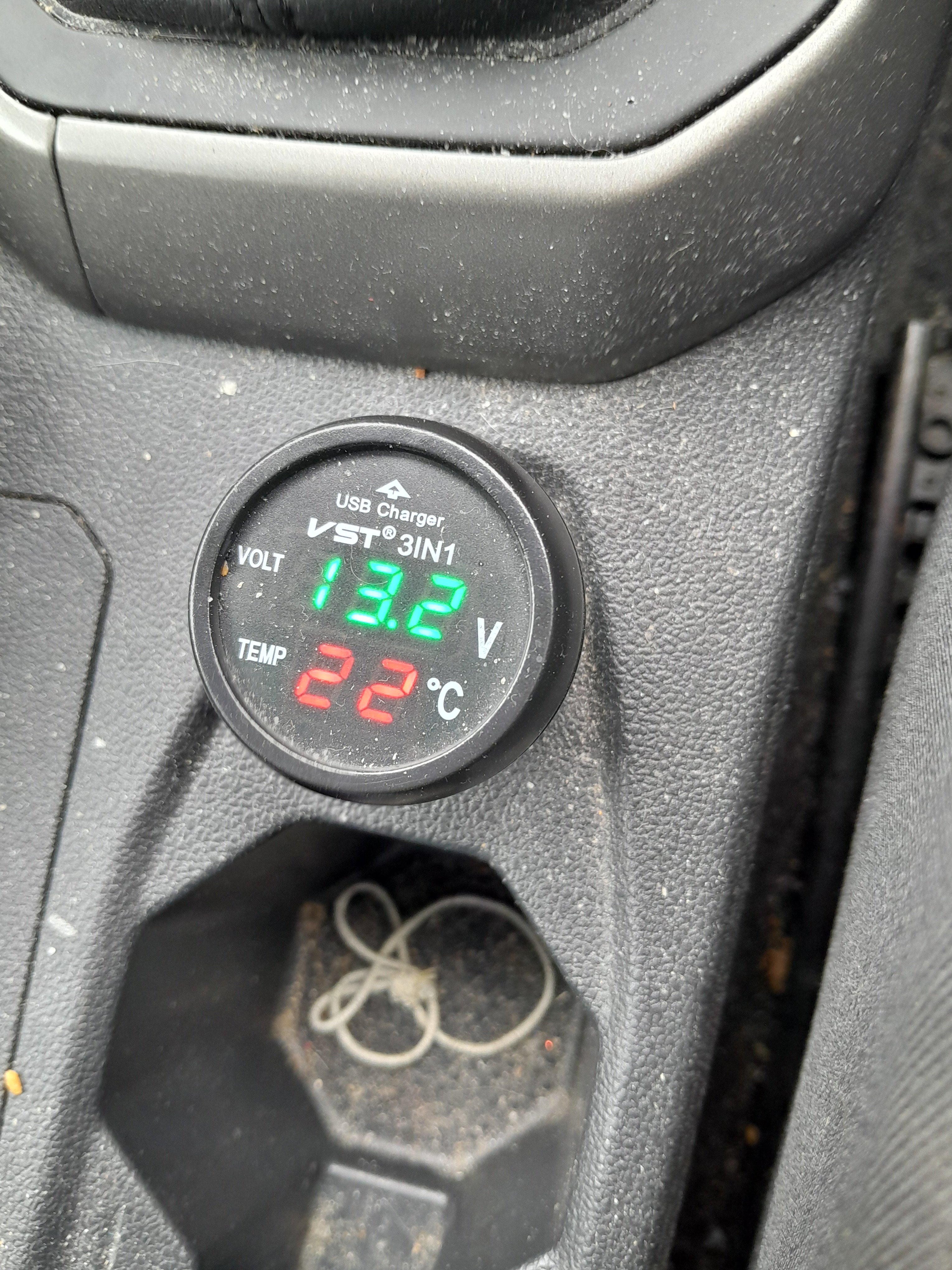
My DVM cost ~ £5 and also displays the interior temperature which most cars do not, even with all their fancy AC controls. I can leave it plugged in permanently as no parasitic loss because the ignition must be on to power the auxiliary power socket. Shortly before a 50 mile trip, VCDS showed a battey 73% SOC & "at rest" 12.4V, the DVM never fell below 14.1V until the ~ 1 hour trip was almost completed but then fell to 13.2V and VCDS then showed a 83% SOC and 12.6V "at rest".
-
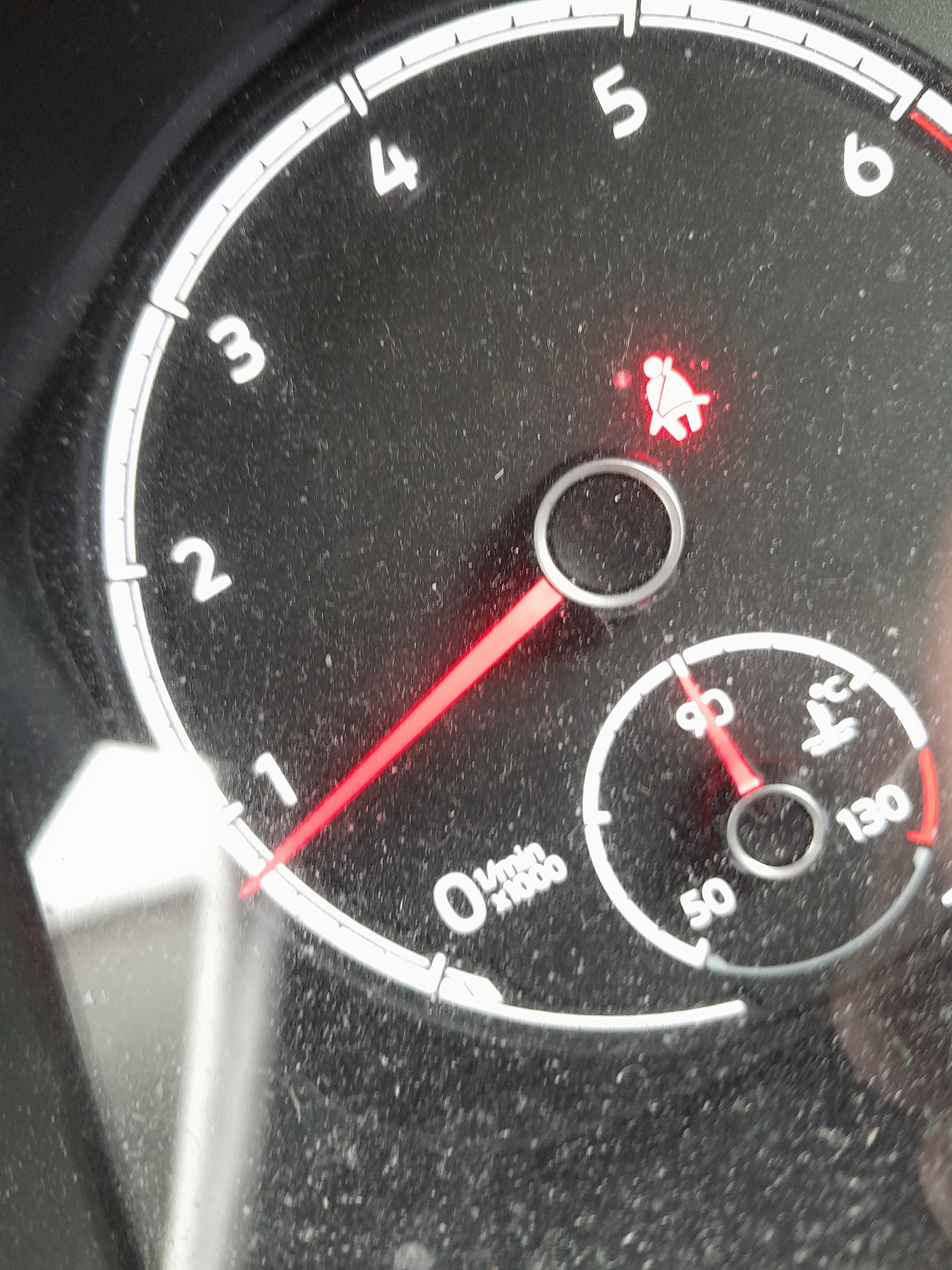
"Comfort" coolant temperature gauges have been a feature of VW and VAG? group cars since at least 2000, the gauges do display numbers, 50C to 130C, they are supposed to roughly give a true reading up to 70C although my 2019 Polo seems to say, up to ~ 60C and will then rise rapidly to a constant 90C but will again read correctly from a alleged 107C, I did prefer the simple type which would sit under normal driving conditions right in the centre of the gauge, might only move by the thickness of the indicator and only moved up really in idling conditions until the rad fan cut in via its thermoswitch. I don't know what the thermoswitch settings are in this Polo but on another 2005 Polo are set..... Fan Speed 1 ON at 91C to 97C. OFF at 91 to 84C. Fan Speed 2 ON at 99C to 105C. OFF at 98 to 91C. Thermostat begins opening at 84C. Fully Open at 98C. VW Polo 2019 Coolant Temp VCDS/Car 52 /52 53/55 56/58 58/62 60/65 63/69 64/72 66/74 68/78 69/82 71/84 73/86 74/88 75/89 75/89
-
Can you just inhibit the Stop/Start for a few days or so, requires pressing the inhibit button each time you switch on the ignition but no big deal.
-
One of these Digital Volt Meters (DVM) that plug in to the auxiliary power socket give a permanently useful indication of battery voltage/Alternator smart charging etc.
-
The auxiliary (cigarette) power socket on mine is only live with the ignition on, not much use really, also the DRLs (daylight running lights) are then also on with a total battery demand of 4.8A. My £20 charger is a Ultimate Speed ULGD 5.0 C1 (5amps max) and has a volt meter, it seems reasonably smart, I attached it 2 hours after my 50 mile trip today, it read 12.8V and after switching on went to 14.4V for a few minutes and then settled at 13.5/13.6V trickle charge?. These type of chargers are really only battery tenders but should do the job quite well IMO to maintain any battery during infrequent car use.
-
The BMS on my 2019 Polo maintains a max SOC of 83%/85%, presumably to allow room for "more" as the voltage always rises to 14.5/14.8 ish (as per plugged in DVM) on the overrun and then returns to ~ 13.1V. I have a 3.8A Ultimate Speed smart charger but have never used it on my own cars, I will be doing a reasonably long run today of around 55 miles and when I return I will see what the Ultimate Speed does when I plug it in. The readings below were taken yesterday, immediately after the same 55 mile run. The car has only ~21,00 miles done, all very short but daily runs and I often see the SOC down around 73/75% but the Stop/Start operates fine when I use it, selectively. IDE01836 Battery current -4.924 A (engine off, ignition on) IDE01837 Temperature of battery sensor 35 °C IDE01838 Battery temperature 37 °C IDE01839 Battery charge level 83 % IDE01841 Battery internal resistance 8.0 mOhm IDE01842 Usable battery charge 33 Ah (59AH EFB Battery, original, 6.5 years old) IDE01843 Battery voltage at rest 12.6 V IDE01948 Battery internal resistance not normed 5.6 mOhm
-
Something else, it looks like the cylinder head thermostat opening is controlled by the return from the (cabin) heater?, there were dozens of posts on various sites re expansion tanks blowing out their water contents ( on engines even with only one stat I think) with no apparent high coolant temperature but replacing the heater matrix "cured" this as they were getting blocked and of course this would happen IF the heater return does control the thermostat opening, paradoxically, the more cabin heating required the lower the heater return temperature and the less the stat would open if the heater matrix partially blocked.
-
This is a more general query re above where most Vag cars now seem to have separate circuits for cylinder head and jacket cooling, the cylinder head stats opens at ~ 87C and the jacket stat ~ 97C, the coolant temperature display/warning comes from the cylinder head sensor, wonder what happens if the jacket stat failed and stayed shut, doesn't seem to be any sensor/alarm function for this?, general arrangement below. The lub oil temperature is monitored and can be displayed but I don't see anything in VAG com about any alarm function for this which at least might give a reasonable warning of jacket overheat?. Two Stat Photos (Skoda).docx
-
VW EA211 Engine.pdf
-
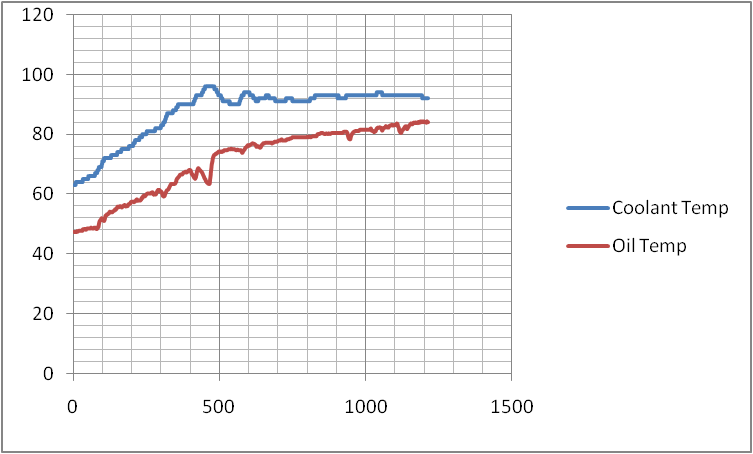
I know that all EA211 engines have two separate cooling circuits, cylinder head circuit stat opens at ~ 87C and the cylinder block circuit stat at ~ 97C, I have a 2019 Polo 65bhp petrol engine with two stats, and have noticed a similar drop in oil temperature around the time I would expect the cylinder block stat to open, the oil temperature then increases steadily again, no oil cooler on this engine. The 0 to 1500 reference scale below would roughly represent 1500*0.75, 1125secs or 18 minutes or so, the luboil temp dropped ~ 7 minutes after moving off, it eventually rises to 95C to 105C depending on engine load.
-
What Battery Serial Number and Battery Technology is the obdeleven indicating since recoding?.
-
A link to VW self study SSP 465 will show how the above works but the attached shows a similar system but without a auxiliary pump so replacing the main pump is probably the way to go all right as start. https://studylib.net/doc/18145304/audi-self-study-programme-485---1.2l-tfsi-engine