wyx087
Resident Member
-
Joined
-
Last visited
Everything posted by wyx087
-
Back in 2015/2016, there was "Feed in tariff". my was installed Oct 2015, receive ~15p/kWh generation + deemed 50% export at pittance. It's not the export they are banking on, it's the generation and government money. I can highly recommend getting one of these to monitor generation so you can better utilise it. https://docs.openenergymonitor.org/applications/solar-pv.html Commenting on your points: - Tyres will definitely last over 10k miles. My are OEM still over 6mm, I think they were 7mm new, my LR AWD car has done 12k so far, a lot of motorway miles as over 2/3 of my commute is on motorway at "70" mph, and we drive Leaf locally. - Road noise is more than 2006 Mercedes C class I've had and more than 2014 Nissan Leaf. Slightly better than previous 2013 Octavia on road noises. Difference is that MY is very well insulated up top with double glazing, but road noise comes in all the same as speeds pick up. - Ride jiggly-ness is highest in any car I've driven. Overall ride comfort for 2022 MY LR on 19inch (smallest default) about the same as 2013 torsion beam Octavia on 18 inch wheels (biggest option, ex showroom car). From early 2023, there had been a "comfort suspension" tweak. I've not driven one to compare. But it is possible to do retrofit at cost of around £1500 including new OEM parts and labour by Cleevley (I enquired, decided it's not bad enough to worth the money and effort) - Model 3 2024 refresh is very well reviewed in the noise dampening compartment as well as ride comfort. I think it's more to do with use of noise dampening material, or complete lack of for first-gen 3/Y. It is well known that their first US factory has worst build quality. All Model S/X and early 3 are from this factory. Texas factory is a big improvement. Shanghai factory cars are very well built, we get them here from 2021 onwards. Berlin factory cars are about same or slightly better than Shanghai plant for build quality. Paint quality is said to be miles better. They are the only factory that produces quicksilver paint option 😍
-
For comparison: "London receives 0.52 and 4.74 kWh/m2 per day in December and July, respectively. " Source: https://en.wikipedia.org/wiki/Solar_power_in_the_United_Kingdom So way less than half of claimed "up to 1500 miles". "Up to 700 miles" if you never park under a shade would be my guess. 🤣 Out of interest..... 3 kWh on a good day last few months or good day in summer? What's the rated system peak power? That looks like a nice sizeable install, when did you get it? What sort annual generation are you getting?
-
My 2.9 kW-peak W-E facing 2-string array can only manage 2,200 kWh a year. ~8000 miles. Considering the much smaller surface area on roof of a car, I guess 1000 may be possible as long as the car is jacked up as tall as 2 story building and never parked in any shade ....... Diesel vehicle is probably at same point as BEV at the moment, where people don't want them due to public perception, so there are many cheap deals to be had. Currently PHEV are selling well, it is the fastest growing powertrain type. Doesn't matter if one Harry find ways to justify his purchase, other people is buying. Personally, I'm more worried about the anti-EV FUD being spread on tabloids, slowing mass adoption of BEV.
-
Moving the goal post is comparing 2019 Model 3 to a 2016 Superb “limousine“ 😂 I don’t know about you. I’m not seeing any full electric Range Rover on the market today. If he wanted a RR, there isn’t such choice. As always, people will always find a way to justify one’s decision. Harry had decided on a RR and he had a few things to say about EV’s. Mostly valid points, but he combined it to fit an outdated narrative. The truth is that EV are becoming cheaper by the day. There are many deals to be had on most levels today.
-
Harry's garage video talked about cost of EV's. Clearly hasn't seen the latest deals: Landscape are changing, EV's are becoming super cheap.
-
That's only 200 miles per day over 5 working weekdays. Well within modern EV home range. EV: 7.5p/kWh at 3.5 mi/kWh => 2.2 p/mi => £22 per week. 45 weeks, 1000 miles a week => £990. Irregular daily miles, let's say EV 75% home charging, most expensive 79p/kWh public charging => £56.42 per week + £16.50 home charging. Over 45 weeks => £3281.40 Diesel: let's say 10p/mi. 45 weeks => £4500 Again, you are not reading. My bit you quoted did not mention battery degradation at all. There's 2 perceived issues: 1. Cold weather reduction in efficiency 2. Battery degradation as it ages My post you've quoted is point number 1. My post quoted your post and that is about point number 1. My post you've quoted never mentioned point number 2. Bjorn Nyland spreadsheet is on point number 2. The Nissan Leaf example is point number 2. The heat pump talk is point number 1. Also remember, not all heat pump are made the same. As I said, most cars today don't do heat scavenging. The motor cooling is different system to cabin heat pump. This sort of thing is not visible to the user and just by having heat pump installed at their house does not mean the user is aware of the differences in their vehicle. Especially considering when the said user is basing their PHEV battery health on the guess-o-meter, a combined metric that takes into account of driving style and conditions. Granted, issue is that there's no better alternative, but GOM is the least reliable metric of battery health. Sorry, didn't realise we are playing top trumps, "my car is better than your car". In that case, your car is great 😜 I only commented on your strange comparison method. Let's compare similar sized AWD cars as per your table: BMW 3 series: 1.8 T https://www.parkers.co.uk/bmw/3-series/saloon-2019/m340d-xdrive-sport-automatic-4d/specs/ Merc C class: 1.8 T https://www.parkers.co.uk/mercedes-amg/c-class/saloon-2022/c43-4matic-premium-plus-4dr-9g-tronic/specs/ Don't forget Paris' new heavy-car parking surcharge is 1.6T for ICE cars.
-
The matter you pointed out was "cold weather aspect". It is separate issue to milage/aging degradation. In this post you've completely mixed them up. The guy has garage and charges at home. As I said, the worse efficiency in winter is when used intermitted throughout the day and is noticeable, but if one can charge at home, why care? Get up every day with 80% or 100% charge, more than enough for vast majority of people, and get on with the day. This may be difference between getting home with 40% or getting home with 25%. It wouldn't change usage pattern. I don't know about Jag IPace. But for long journey, heat pump Tesla has octovalve and will move heat energy around the car, nothing is dumped outside. So when driving, motor heat is moved into cabin and battery. After charging, battery heat is moved into cabin. Nothing is wasted, improves efficiency. Most EV even with heat pump will only heat up interior using cold outside air and dump motor/battery heat outside. The point on degradation is highly dependent on how the battery is used. The Nissan Leaf example is probably due to Leaf being abused, also the battery was first-gen. My updated battery (post 2013) and apply very basic care still has 79% health at over 9 years old. Again, you are overly focused on negatives. The point Harry is making is that EV battery health varies depending on how it is used, second hand market need better reporting of battery conditions. "Superb is no small car, whereas the model 3 is the smallest car from Telsa" ...... what a strange comparison. Would you do the same comparison with smallest Rolls Royce Ghost? The fact is Model 3 has almost 20cm longer wheel base giving more space to passengers despite being a slightly shorter car.
-
I've not completely dismissing it, I've got plenty of this experience in both cars. It can be most noticeable when cars are used intermediately, as I alluded to. But that circles back to if one can easily charge when at home makes it a non-issue. 300 miles become 100 miles is no issue if I only need to do 80 miles. However, remember ICE fuel economy are also affected by intermediate use throughout the day. But when range actually matters, when trying to get somewhere in one go, it isn't much of a problem in well designed EV's that can do heat scavenging. Jag IPace doesn't do heat scavenging, it is well known to be one of the worst efficient EV.
-
I think main dealers not wanting used EV is mainly down to the 22% mandate that new car dealers must hit in order for the manufacturer not get hit by penalty. As mentioned around 9:20 video. I do see what Harry is saying about manufacturers not telling about battery degradation, at around 13:15 of video. Nissan, for example, their service contains a battery report that doesn't tell you anything what so ever. One has to buy Leafspy or other OBD tools to find out. It's one of the reason I decided to buy new (my only brand new car) for the long range car I want to keep for long term. Through TeslaMate logging, I know the whole history of its battery down to every detail. You can see I try to keep it between 30%-75%, right around 50% mark. I don't agree regarding cold weather performance though. In situation where range is actually needed: during long distance driving, heat scavenging from the battery after rapid charging solves the problem pretty well. Day to day, using a bit more energy to warm up the car is non-issue. The 3 points conclusion is pretty spot on: 1. Target on efficiency. "Efficiency should be name of the game" 2. Battery health openly available for second hand vehicle 3. BEV isn't going to solve climate change, "even if charged on green electricity" For last point, I think he's forgetting or not aware of V2G or V2H that allows the battery to be an asset. The reality is that we are waaaaaay short on battery production and adoption to allow 100% renewable powered. EV's are battery on wheels, we should start use them when parked. No single thing is going to solve climate change, but batteries are an important part of the renewable energy solution, and BEV happen to contain the biggest one most people will ever own.

-
Great efficiency there. Sounds like 100+ miles any weather no problem. Smaller rims probably helped a lot.
-
I don't think EV need government help to push forward. Reducing VAT or giving grants will only spur the manufacturer to charge more. Remember when £5000 EV purchase grant dropped to £2500, magically most EV/PHEV price dropped by same amount? Besides, even £20k is expensive for many people who only buy second hand at price range £1-5k. Money is far better spent on National Grid and DNO to speed up charging infrastructure installs. Most importantly is making sure on-street chargers cost similar price as private driveway to resolve people that has been disenfranchised. Make plugging in as easy as possible for everyone. Build them and they will come.
-
Fossil fuel not dying in UK? https://www.statista.com/statistics/418202/fossil-fuel-dependence-united-kingdom/ Data can always be selectively made to tell a story, I'd say there's no definitive answer either way. 🤷♂️
-
It is returning to normal pricing, stop receiving discounts. There is no excess surcharge ("charging more") on the vehicle for being an EV. There is no tripling parking charges targetted against EV SUV's. 1.6t for regular vehicles, 2t for EV's. Most traditional automaker cannot compete in this area, must be dedicated EV platforms. Most EV, even mid-sized i4, are over 2t. Whereas the spacious Tesla Model Y comes in under 2t and wouldn't get excess fee. VW "loosing EV race to Tesla and China": https://edition.cnn.com/2023/12/14/business/volkswagen-losing-electric-car-race/index.html If VW cannot compete...... by numbers only a single VW vehicle in top 10 in 2023 Q1 to Q3: https://www.visualcapitalist.com/electric-vehicle-sales-by-model-2023/ Outside of EV's, 2023 world top selling car is a Tesla Model Y, European legacy car company not in top 3: https://www.best-selling-cars.com/brands/2023-full-year-global-best-selling-car-models-worldwide/ But destroyed is perhaps a bit strong. I'd say more of "out competed by Tesla and Chinese in EV segment". This is after state subsidy before taxes. The retail price is unchanged at $39k plus taxes. Not quite right to use GBP to invoke comparison with UK cars...... remember UK price for same car is £40k includes VAT. But at same time, it's not expensive either, when mid spec Golf is around similar price. 3 series also starts at £40k and Passat starts at £35k. German cars have expensive optional extras. Post-Covid cars are expensive.
-
Let's break down what you asked: It is EXACTLY answer to what you've asked: More EV + greener grid = less hydrocarbon burnt. But you have decided decline in petrol station is the only correct answer to your question. In that case, this is the first one in UK: https://www.businessinsider.com/shell-gas-station-electric-vehicle-charging-hub-london-uk-2022-2
-
One thing I've noticed, with doctors car (estate with ambulance marking, I assume it's doctor's car rather than full on ambulance) and police vehicle is that they would park up (my residential area gets them, probably because it's not far from North Circular) and just run their engine while sitting in the car. I get it's their office and all, but there's campaigns to ask people not idle their engine. https://idlingaction.london/ In those instances, EV or even just large battery hybrid make perfect sense. Ambulance, buses, police patrol vehicle all make perfect sense. Sprinkle a bit of computer algorithm in there to allocate vehicle based on charge level, don't even need rapid chargers at base.
-
The article quoted is from UK National Grid. In which carbon intensity is said to be lowest on record. Use of hydrocarbon raises carbon intensity. Cars charge off the grid most of the time.
-
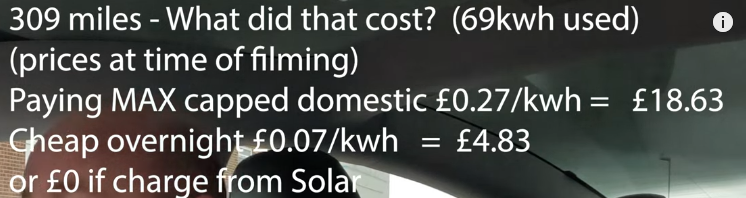
Data can come from many points in the chain. Energy into the motor? -> traction only, not accounting climate and accessaries. Energy from the battery when driving? -> not accounting for when car is parked. (Tesla counts this) All energy from the battery? (such as vampire drain, pre-conditioning usage, sentry mode usage) All energy goes into the battery? Energy delivered at dispenser unit? How is the car going to know about losses between battery input and dispenser unit? Energy went through the meter, with transmission losses before the charge point? Electricity is very efficient in everything (eg. heating, LED lighting, battery storage, inverter/rectifier, transmission) , but there are many small percentage losses everywhere. At some point, a decision must be made on where to measure. I personally don't see any problem only measuring battery consumption during driving. Remembering electricity is priced at 7.5p/kWh for well over 90% of my EV charging. 😜 Today, I drove into London, parked up about 10min walk from Buckingham Palace, a street away from St James' Palace for £1.34 (Westminster 10min parking fee for EV's, max stay 4 hours). This 20 odd miles trip would cost ~60p in electricity at most. No congestion charge, Might as well get most out of parking discounts before it goes away.
-
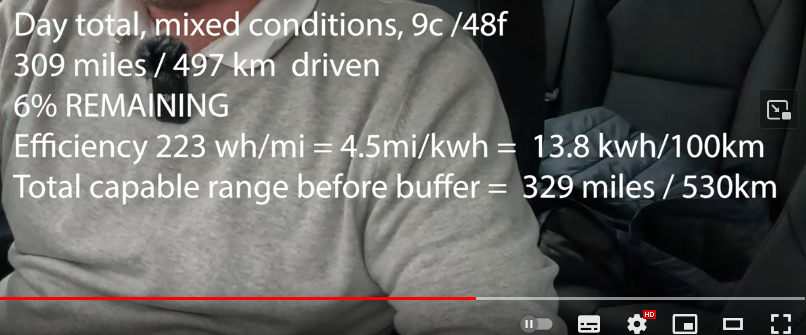
M3 LR Highland achieved 4.5 mi/kWh. Merc EQC said to average 2.4 mi/kWh in the drive back. I'd estimate my MY LR would average 3.5 - 4 mi/kWh. 9c is not that cold, I was getting around 270 Wh/mi (close to 4 mi/kWh) yesterday's commute at ~10c.
-
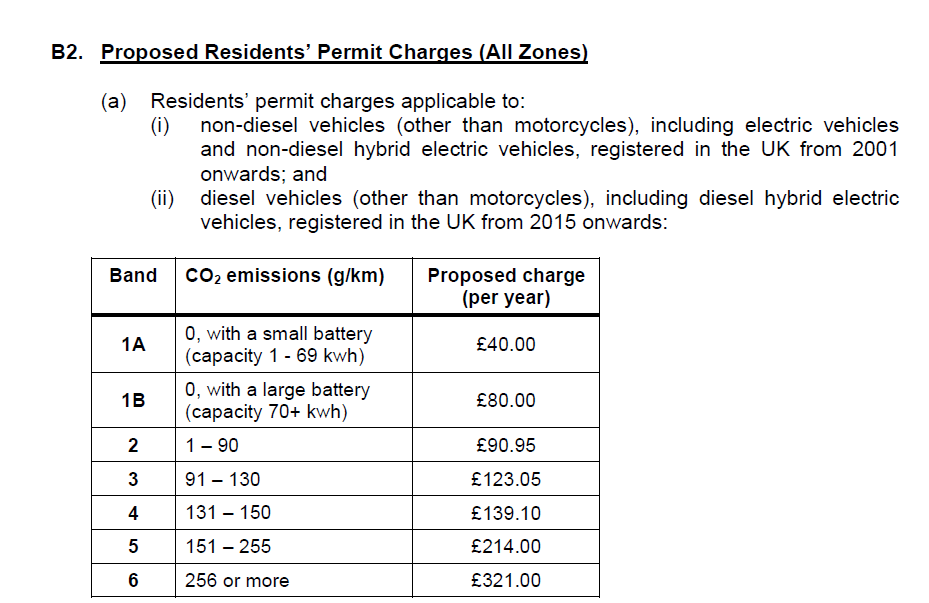
Let's examine the Westminster consolation (link I provided in my previous post) to see whether EV are being charged inflated prices: As I suspected, EV, being zero local emission, are still cheaper than ICE cars. I also thin 70 kWh is a good cut off point as it incentivise people buying the standard range version rather than the "long range" because they might need it one blue moon. Myself is ashamed of this.
-
A summary of Islington's previous EV benefits: https://www.speakev.com/threads/westminster-cheap-parking-to-end.182876/#post-3561364 So knowing the full picture, it is clear that recent changes are actually EV benefits in Islington and Westminster are being cut because there's so many of the cars on the road now. Similar to 2025 VED for EV's, it brings EV in line with ICE cars. The early adopter phrase has ended.
-
The Westminster increase is an outlier, their pre-2014 policy is that parking EV for 4 hours (max) only need to pay 10min. From March 2024 the discount is disappearing, there are no extra to be paid. https://www.westminster.gov.uk/parking/changes-how-we-charge-parking I'm can't find any written sources on Wandsworth, but they are all likely to be similar change of policy as EV's become normal and the end of gravy train. Only Islington is applying additional costs based on battery size, from the Sun article root posted.
-
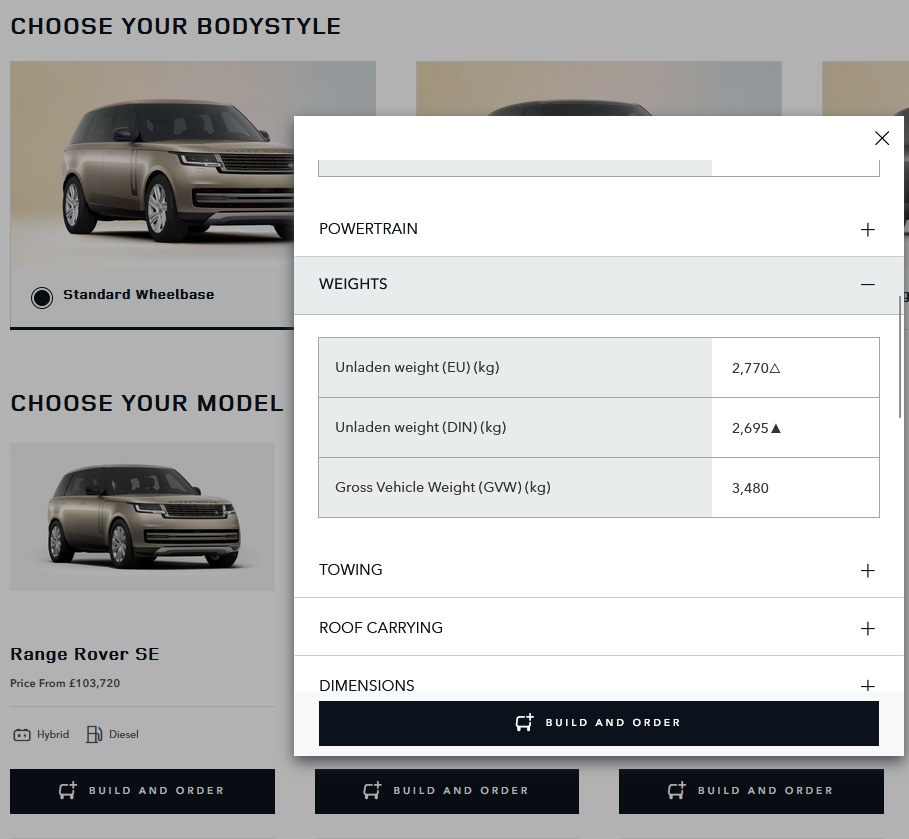
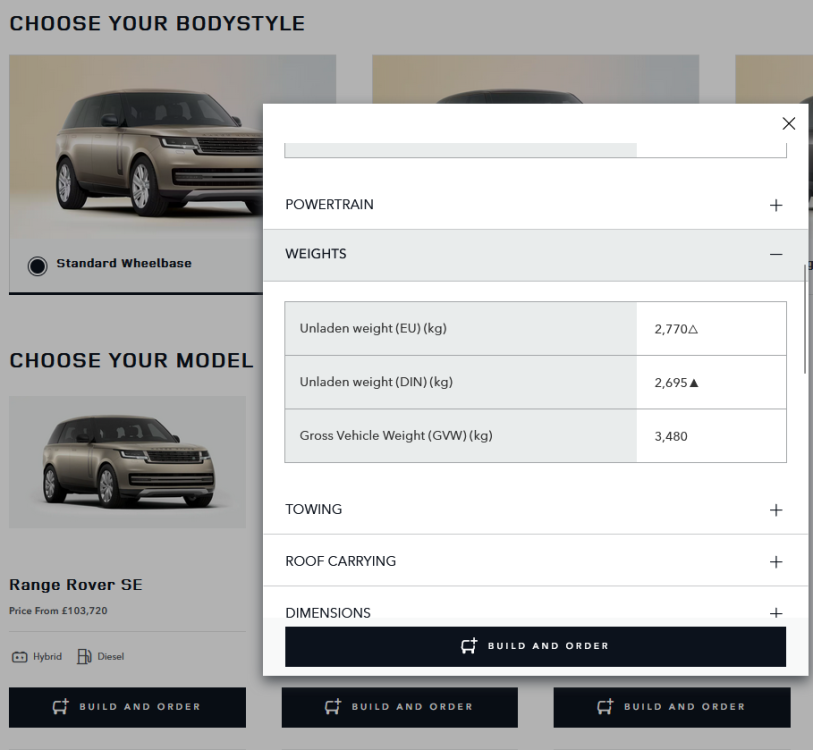
I totally agree that larger battery EV's should receive higher government taxation of some sort. There is bigger embedded carbon emission in the larger battery production. However, there are 2 glaring contradictions. This is only Islington, a borough that has always been anti-car. There may be an element of someone reading too much mainstream media FUD on EV's weight and battery production emissions. First, embedded carbon for large battery does not translate to higher emissions during use. In fact, the more use the vehicle receives, the less per-mile emission. So as large battery vehicles get older, they need to be encouraged to keep on the roads. There should not be any form of penalty for use of large battery vehicles, the penalty should occur at point of sale for bringing said inefficient beasts into the world, eg. something functions like the lux-car tax band for 70 kWh or higher battery. Second, the weight of EV's is not much different to newest ICE vehicles these days. For weight based usage penalty, it should be applied equally across all vehicles. How much would a petrol PHEV range rover pay for the same parking permit, it should be more than a Model X? Of course, getting people out of cars in the city makes a huge amount of sense. Islington council is all about that. Range Rover SE (not PHEV, not 7 seater) weighs 2.7 tons Model X can spec to 7 seater and weighs up to 2.5 T: https://www.tesla.com/ownersmanual/2015_2020_modelx/en_cn/GUID-5FB8FC1E-0B1D-4ECC-99D6-4EEE2B8FB725.html
-
Sorry to point this out.... kWh for energy capacity Energy is power delivered over a period of time. It is the area under power-time plot (charging curve plots). So power is kW (PS, BHP are non-SI units) and energy is kWh. Although Joules is the SI unit for energy, but we keep it simple with kWh, in line with Amp-hour. ICE car is not so different. Fuel tank contains XX kWh of energy and engine outputs kW. Likely need replacement battery and motor (windings age and short?), probably also new power electronics. But with replacement battery and motor, it becomes the Ship of Theseus. Similarly, are classic cars converted to EV still classic cars? Where do you place the soul of a car? I think there is an element fear of unknown, how will we do all this when it hasn't been done before. But don't under estimate human ingenuity. Where there is sufficient will, it is always possible.
-
The advise on charging to 100% for LFP is more for home/destination charging. The in-car nav will tell you when you have enough to continue your journey, it usually leaves 10% buffer, with temperature, wind, weather condition, elevation, traffic, etc taken into account. So during long journey, it is unlikely you'll ever need to sit and wait for 100%. (Also, it's kW for charge rate and kWh for battery capacity)
-
V1 and V2 have similar backend inverter (the giant cabinet hidden away nearby), 150 kW shared between 2 stalls. V1 are pretty much extinct. V2 is still around, they have 2 cables, one for old S/X and standard CCS for all cars. V3 and V4 have similar backend, currently. 1,000 kW shared across 4 stalls, in another words, 250 kW for all stalls. V3 are seen in the video and have a single CCS cable. V4 have longer cable and contactless payment terminal. V4 is said to be compatible with up to 1000v when backends get upgraded for 800v cars. Summary of that video is 28 minutes 4% to 80%. Extrapolate to 200 miles range in all weather means up to 150 miles per hop, 30min charge. Long range is similar percent-wise, at 250 kW peak means still under 30min to charge to 80%. 250 miles in all weather means up to 200 miles per hop, 30min charge. For price, let's not forget cars are expensive these days. £40k is the new £30k. Model Y start at £45k but contains every comfort option by default. Only configurable are tow hitch, enhanced autopilot and colour/wheel options. Superb 2015 used to start at £20k: https://www.parkers.co.uk/skoda/superb/review/ Superb now starts at £31k, 150% price inflation and goes all the way to £41k, all before optional extras: https://www.skoda.co.uk/new-cars/range