wyx087
Resident Member
-
Joined
-
Last visited
Everything posted by wyx087
-
Second hand price have normalised. A 3 years old car with typical mileage used to typically expected to retain 50% value, for a Corsa probably more. I was quoted £3500 by Motorway for my Leaf, in my spreadsheet using 60% value every 3 years I got £3350. (formula is =E8*0.6^(E4/3)). Getting £5200 So I'd say depreciation for EV is back to pre-COVID level for a regular car.
-
Yes, it's banned on all UK public transport. https://www.moveelectric.com/e-scooters/which-train-firms-have-banned-e-scooters That is due to fire risk concerns and the fact private vehicles are not legally allowed on the roads outside the station. But e-bikes, electric wheelchairs and mobility scooters are all fully legal and thus not banned. Remember e-scooter and drones often use Li-Po battery, which are notorious for catching fire when slight hint of over charge. Whereas EV use LFP or NMC battery have much more sophisticated battery management systems. They also tend to not charged to 100% that often, practically zero chance of overcharging. Finally, lower range variants tend to use no-cobalt, much safer LFP battery. https://www.evlithium.com/Blog/advanced-safety-features-of-lifepo4-batteries.html So I think it is disingenuous to taint all Li-on battery with one brush: infer BEV battery life from phones and fire risk from poorly made e-scooters or other simple portable device batteries.
-
There's a Zoe just further into the closed residential area. When I'm in my garden, which backs onto the road they take, I hear the spacy Zoe sound everytime it drives past. I much prefer that to the "symphony" BMW gives to their recent EV's. My neighbour bought a X1 PHEV, the sound is really strange and not distinctive. Tesla reversing sound is also quite spacy and interesting.
-
Watch out, according to Graham's logic, it's a death trap 😜
-
Ok, let's all take you as sole authority and no one shall oppose your statements. Because you have many hard drives of many TBs of reference that you are not able to share. An academic paper PDF would be 5-10 MB. "Many TBs", so you must have at very least 200,000 reference material stashed away. If only the world can learn of that knowledge! /s But then, I'm sure a quick google should hit at least a few of your vast collection? https://www.google.com/search?client=firefox-b-d&q=ev+banned+in+apartment+building First result: reddit post regarding banning EV charging in apartments, reason is billing Second result: UK charging legislation. Is the flat in question will never, ever going do major renovation? Third result: nothing about flats banning EV parking Forth result: again, regarding EV charging hurdles faced by apartment dwellers. Nothing about flats banning EV parking Fifth result: getting warmer, banning e-bikes. But it's US "Home owner association" thing, rather than UK or insurance related. Sixth result: someone asking about apartment banning EV's, perfect. But all of the responses speak sense, unlike you. Add UK to the end of search? Just webpages talks about the UK charging regulation. So if what you claim is true, as toot said,
-
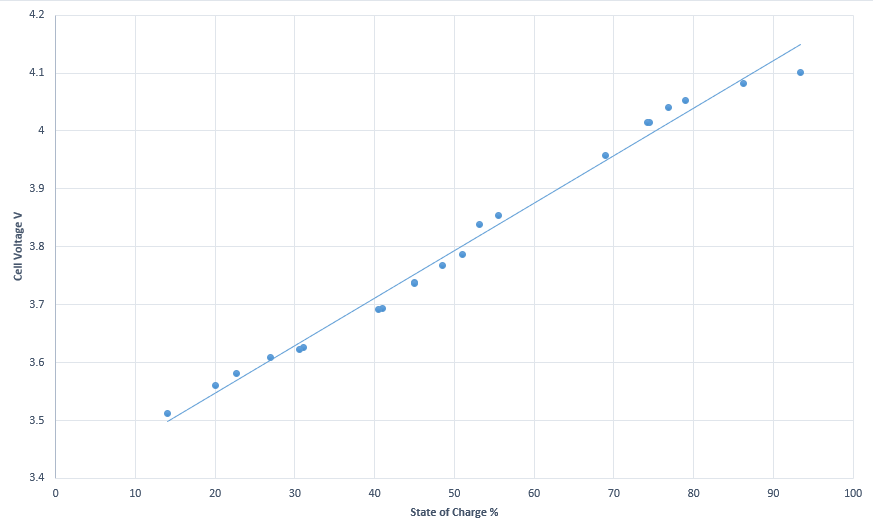
Sorry I missed this. The reason I haven't done it that way is because the compromises one has to make for a shared platform. The reason Model Y is lighter than similar sized EV from legacy auto is that there is no unnecessary parts sharing with ICE vehicles. As I said, need properly designed EV's, completely from blank sheet without legacy baggage. Another example, BMW i3 starts at 1.2 T. About similar to Polo/Fiesta, which start from just under 1.2 T. Ionity are 800v-first chargers. Tesla and VAG MEB cars are 400v cars. At 500 amp max, absolute maximum 400v can pull from Ionity is 200kW, but that requires pack at 400v, which isn't the case when at low SoC. Tesla NMC Pack voltage tend to be just over 300v when at low SoC. So maximum charge rate is only 160 kW. Tesla v3 superchargers are said to be able to deliver 800 amps to achieve headline figure of 250 kW at low SoC. https://cleantechnica.com/2019/03/08/supercharger-v3-shocking-power-smart-strategy-by-tesla-charts/ This is my MY LR cell voltages: Cells are arranged in 96s. I think charge points really need to advertise by voltage and current. Because (just like remaining miles guess-o-meter) max charging power is dependent on cars batteries.
-
So you are very happy to make wild claims (in earlier post) without referencing evidences to back it up. Noted. It appears you cannot hear anything said against your claims no matter however much evidence against them is presented. Read a bit more outside mainstream media and you might learn something Happy to be name called and be put into any camp, I don't care. I just want to get the facts straight. As always, I'm happy to be change my view as long as I'm presented with credible sources.
-
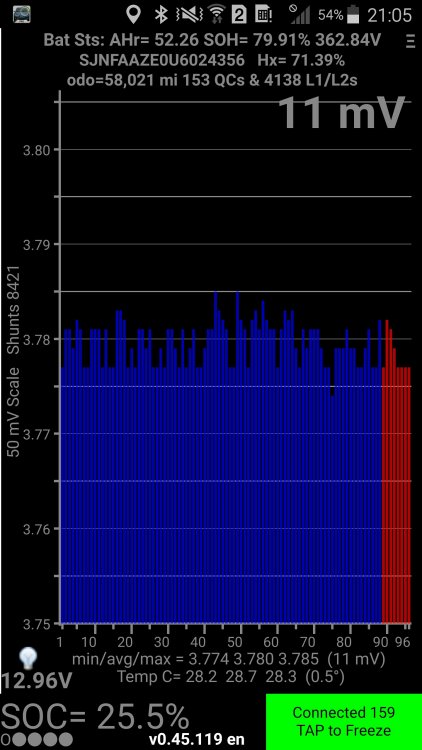
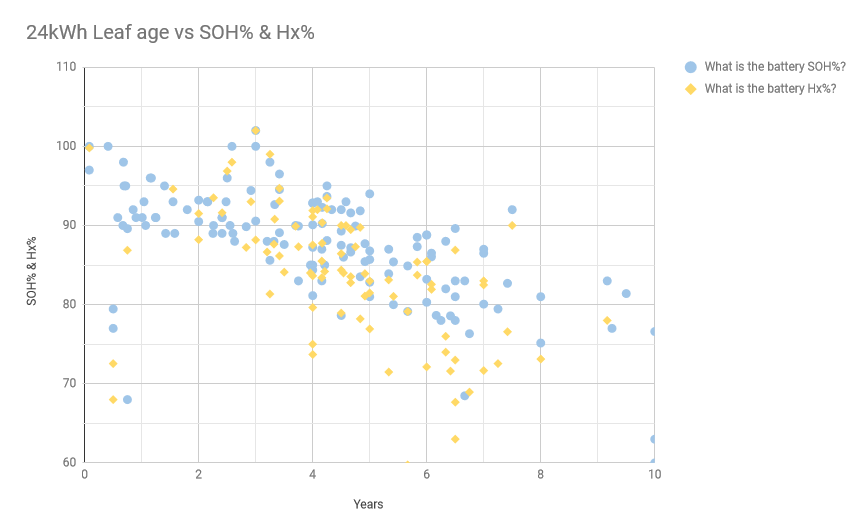
I never denied EV have higher risk of thermal runaway. In fact, I remember, a few pages ago when ship fire were current news, I said EV's pose a new challenge in shipping fire fighting procedures and preparedness. Here's what Bedfordshire fire department has to say about EV fires: https://www.bedsfire.gov.uk/electric-vehicles You can call me whatever name you wish. I don't like grouping people into camps. My problem is when you make outlandish claims such as below, I'd like to get the facts correct. I'm always learning, and I'd happy to learn if you can provide credible sources. Ok, why don't you present the evidences of your claims below? because so far, after being asked, there is none! "On good authority" is not a credible source. If what you say is really true, why isn't there news articles about this? The tabloids love these kind of stories. Myth or fact, only well published articles can reveal. Where is the source to say second hand EV batteries are a liability? That batteries in EV capacity will be "diminished just as the battery in your smartphone, laptop" I can tell you this is a myth. Fact is my 8+ years old Nissan Leaf has just under 80% capacity left (SOH figure). Which smartphone/laptop battery function like this after 8 years? My car isn't a one-off. Here is crowd collected data: https://www.speakev.com/threads/the-battery-health-thread.18923/ This is 2020 data regarding old Tesla battery longevity: https://electrek.co/2020/06/06/tesla-battery-degradation-replacement/
-
You didn't use your own "life lesson". Why are EV's singled out "affecting fire safety of flats"? What evidence are there that EV have higher self-combust risk than ICE cars? Is it a one-case or a standard clause among flats? Could it be just flat leaseholder's lack of understanding? What is the real reason behind this clause? Again, you "expect"? This is your assumption? I have been to many flats around London, every single one that has resident parking, has visitor parking spaces. Not well designed EV's. Benchmark: Tesla Model Y LR: 1986 kg, 378 bhp, 854 l boot. Tesla Model Y SUV Long Range AWD 5dr Auto specs & dimensions | Parkers Volvo XC60 polestar engineered PHEV: 2145 kg, comparable 399 bhp, 598 l boot. Volvo XC60 SUV Polestar Engineered T8 Twin Engine AWD auto 5d specs & dimensions | Parkers Audi SQ5 sportback diesel: 2010 kg, 336 bhp, 500 l boot. Audi Q5 Sportback SQ5 TDI Quattro 5dr Tiptronic specs & dimensions | Parkers VW Touareg R-line tech petrol: 1945 kg 335 bhp, comparable 810 l boot Volkswagen Touareg SUV R-Line Tech 3.0 V6 TSI 340PS 4Motion Tiptronic auto 5d specs & dimensions | Parkers Where are you getting that idea from? EV are liability when old due to batteries? Is there any sources to this? There's a healthy scrap market for second hand batteries: https://www.ebay.co.uk/sch/i.html?_from=R40&_trksid=p4432023.m570.l1313&_nkw=leaf+battery&_sacat=0 So to my mind, how would an old EV be liability when its batteries are an asset waiting to be re-used? You can still buy hybrid ICE in 7 years time until 12 years from now. Even today, it's already about 50:50 between hybrid and non-hybrid ICE. Ownership price parity have happened years ago for home charging. Purchase price parity will happen way before 2030.
-
Link/source to this? What about visitors? This sounds like the car park collapse FUD. https://www.speakev.com/threads/second-hand-evs-are-cheaper-than-ice.179449 No one is forcing anyone to switch to EV. ICE are a viable choice for next 12 years. You can continue to buy second hand ICE for next 30+ years.
-
First, let's forget about the guess-o-meter. Let's only talk in % terms. The range based on previous driving style is completely unpredictable and a useless metric apart from when driving on a very flat road at constant speed. Too many variables to use as a comparison even to itself. Yes, the rate of recharge an EV (rapid charging) depends on many factors: mainly battery SoC, temperature, Although it sounds correct, increased battery voltage as it charges isn't the reason why EV's slow down charge rate. The rapid charger is variable in voltage, it is able to constant increase voltage to maintain charge rate. The real reason charge rate slows is to protect the battery for longevity and safety. The charge rate is controlled by the car's BMS.
-
Have you read the tabloid article with click bait title root was talking about? I've no problem with carwow test and the test methodology. I'm just saying the test itself isn't the sticking point.
-
Well, if you really need the range, there's always rapid charging. If you are not short on range, just grazing, does charging speed matter? If you are saying grazing at many places for many short stays and thus charging speed differences add up. I'd say the effort of getting the cable and plugging in so many times also add up, might as well just rapid charge once and overnight charge the rest. When I'm out about, if no overnight charging option, I usually use Tesla supercharger network during their the off-peak time so that's not much more expensive than peak time home charging. In the few instances I'm beyond Leaf home range, I'd use rapid charging. I think the point was how a tabloid dramatise a non-story range test.
-
The destination charging speed is only really relevant when trying to get some charge during a short stay. It's the rapid charging speed that really matters. VW are average in this area. Personally, I don't care if my car charges at 3.3 kW or 11 kW when it's parked at a destination and I'm off doing other stuff.
-
Typical isn't it. When I had my put in in 2017, it was £250 with £500 grant for 16 amp and add £99 for 32 amp. Nissan paid for £250 so I only needed to pay £99. It then slowly went up to £1000 as charge points become "smarter" due to regulations and grant dropped to £250. Of course, that was before the scuffle to get charge point grant in the last month. Surprise, surprise, after the grant went away and dust settled, it's still ~£1000 for a "normal" install. I'd just get this Ohme ePod at £899 installed (I prefer untethered and buy a cable to leave on the charge point) https://octopus.energy/get-an-ev-charger/
-
Uncle Bjorn at it again. Meanwhile, mainstream media......
-
It is always most efficient to do as little energy conversion as possible. This means zero regen braking and coast as much as possible. I'm just so used to regen braking and half-pressing the pedal. Always drive in B mode in Leaf, MY's stronger regen feels great. Then when I was driving a rental X1 diesel, the auto-box would open the clutch when not on the gas pedal, it felt so wrong to me. Felt like I had no control of car's speed. By the end of the holiday, my right foot, that was constantly shifting between pedals, were very tired. But each to their own.
-
Embrace one-pedal driving
-
The mini electric is a very handsome car. I think you should add a splash of colour like this: (Munich airport)

-
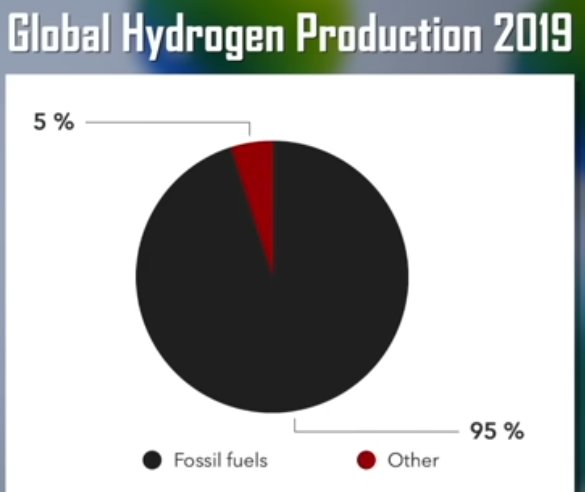
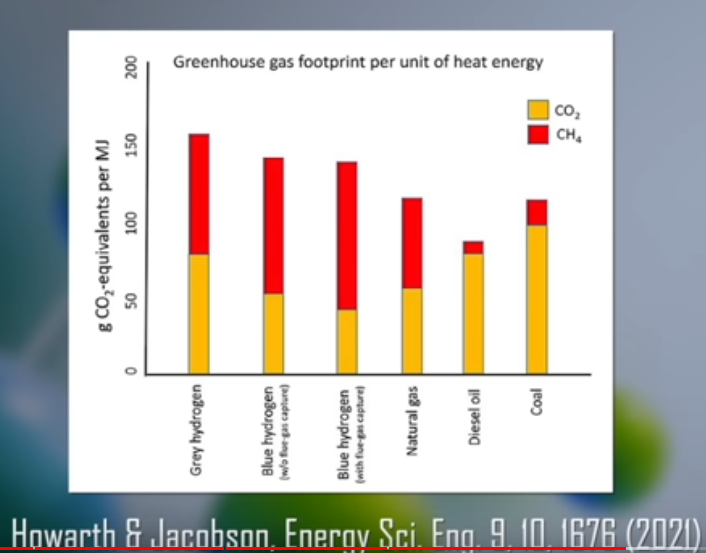
Came across this video explaining the problems with adopting Hydrogen In case you can't be bothered to watch, highlights: 2019 world hydrogen production sources: Green house gas emission from generating and using per unit of heat energy: (hydrogen is worse than diesel) News to me: 10:37: Renewable fluctuations make green hydrogen production inefficient. 13:34: The fuel cell cannot be lower than a few degrees below freezing to prevent icing and degrading the cell. More energy wasted to warm up the fuel cell. 14:05: Platinum and Iridium are needed for fuel cell. A fuel cell car will have same problem as cobalt in high performance batteries (LFP don't have rare earth material problem) and catalyst converter theft in ICE cars. Despite the problems outlined by the video, I still think hydrogen has its place, but only in areas that battery absolutely cannot work and the cost of carbon emission and inefficiency is built into the cost of the hydrogen fuel.
-
I always think electric motor are the holy grail for converting energy into kinetic. But the energy storage can vary. It can be fossil fuel now in style of range extender, or hydrogen fuel cell in the future for the minority that cannot make BEV work. Of course MUST be green hydrogen at same proportional cost as loss in efficiency. Charging those EV’s costed some pretty pennies. It’s probably a brand publicity move or tech demo. Practically, it is always cheaper to use a small grid connection and second-life batteries as buffer.
-
Demand for EV is always up according to the EV dealer…… as great as their content, I don’t find this type of video update useful. There’s too much vested interest.
-
From what I can understand, that 250 kw rating is most likely peak output. It would be interesting to see how long that lasts and what is guaranteed continuous output from the fuel cell generator. Just like hydrogen fuel cell cars, battery are always needed to act as buffer between non-constant power requirement and constant fuel-cell power output. Key is getting the right matching for the application.
-
I call it charger anxiety. I find there’s no such thing as range anxiety. Not in my short range Nissan Leaf and certainly not in long range TMY.
-
“It’s about X kg of CO2 per kWh of battery” Yeah mate, very well referenced number pulled out of your backside. The correction had to be made, because it was a mistake so fundamental, there is no excuse in the first place. If only he had double checked his figures and conclusion with reputable sources.