wyx087
Resident Member
-
Joined
-
Last visited
Everything posted by wyx087
-
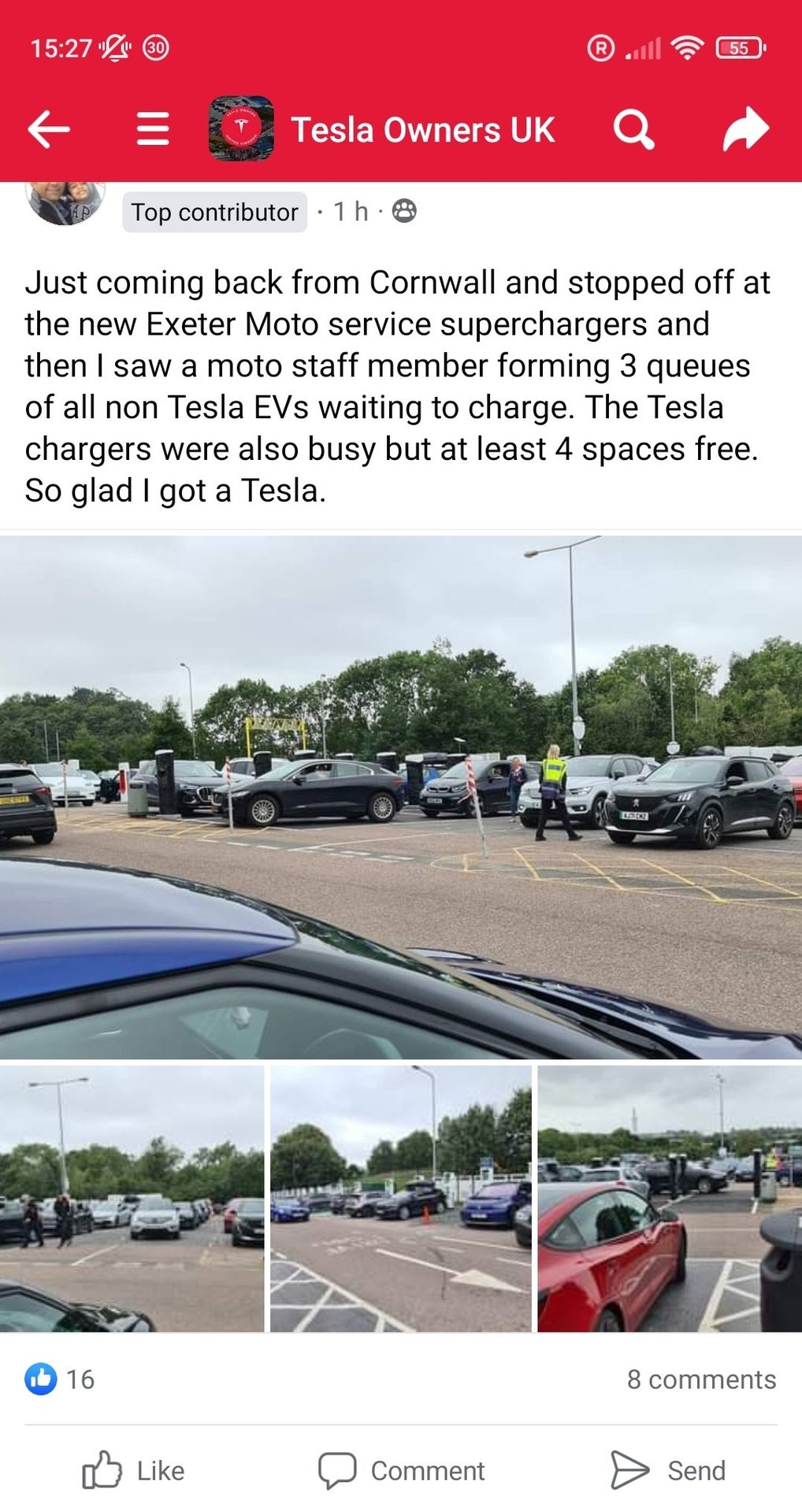
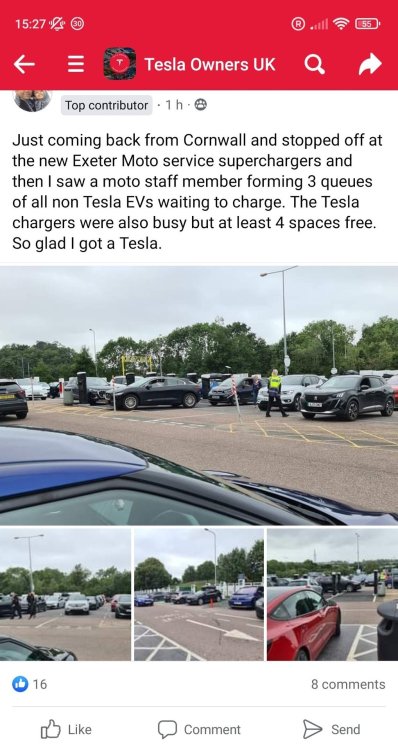
The queues? I’ve not experienced such long queues myself. At most only needed for current charging car to finish charging. But that was early days and most location only had 2 chargers.
-
Just need the public network to get better.
-
With a cheaper MG4: sleeps 2 at a squeeze, cooks meal with V2L. Speed kills efficiency in EV’s. But I’m still averaging 274 wh/mi (3.65 mi/kWh) for my lifetime efficiency of MYLR since new, one summer month short of 1 year. Most of which are motorway miles because we drive Leaf locally.
-
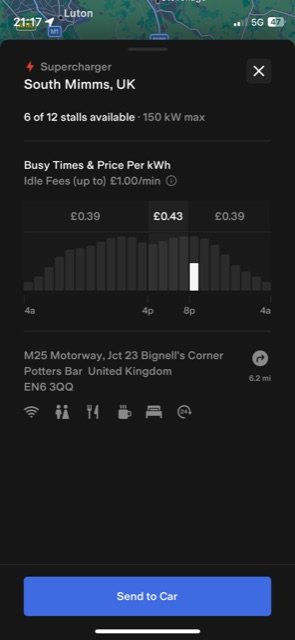
Still getting 3 mi/kWh? Weather these days should be perfect for EV’s. I’m regularly getting over 4 mi/kWh. In both my EV’s. Totally agree. Perhaps time to seek out Tesla supercharger at around 40p
-
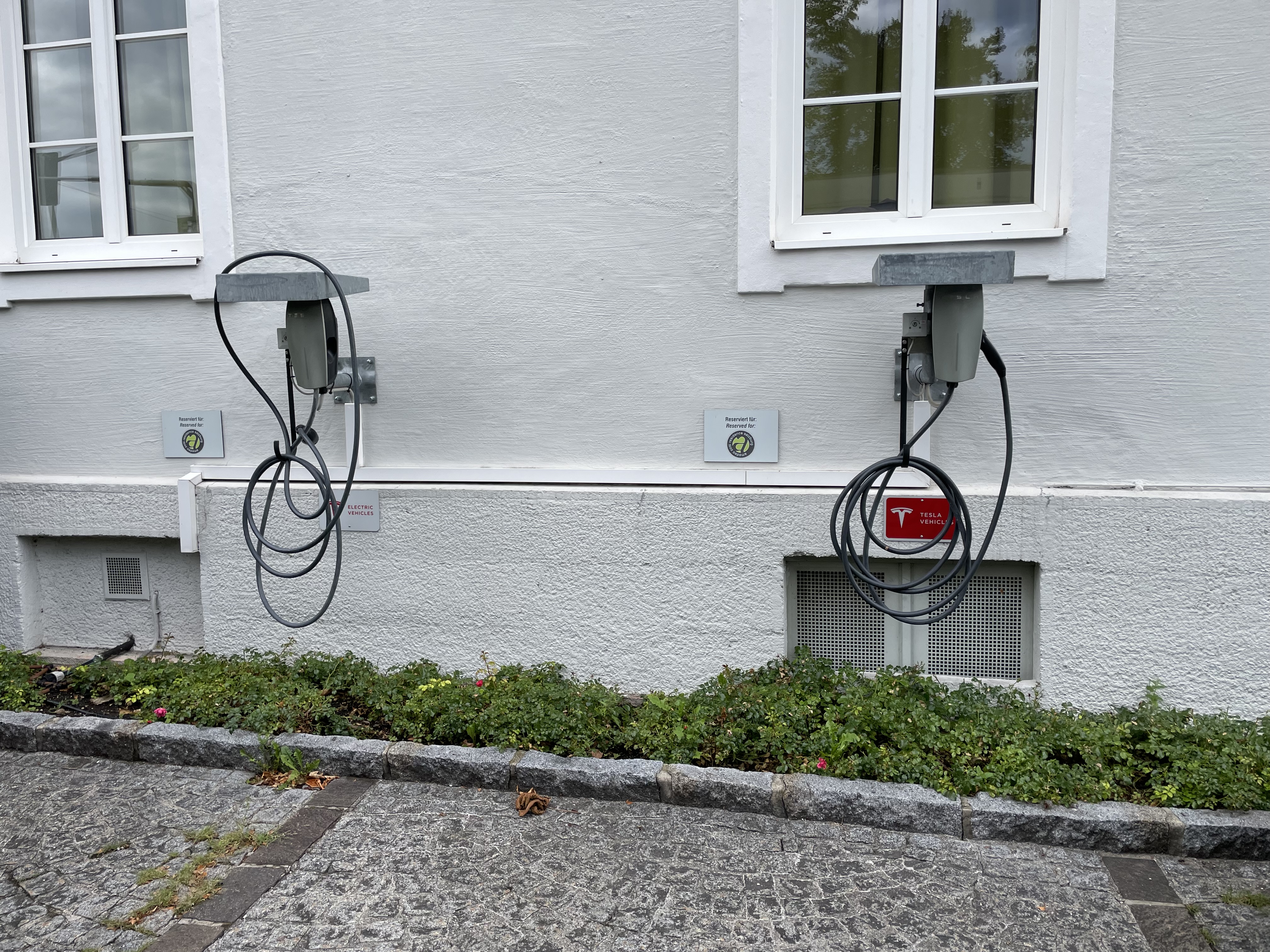
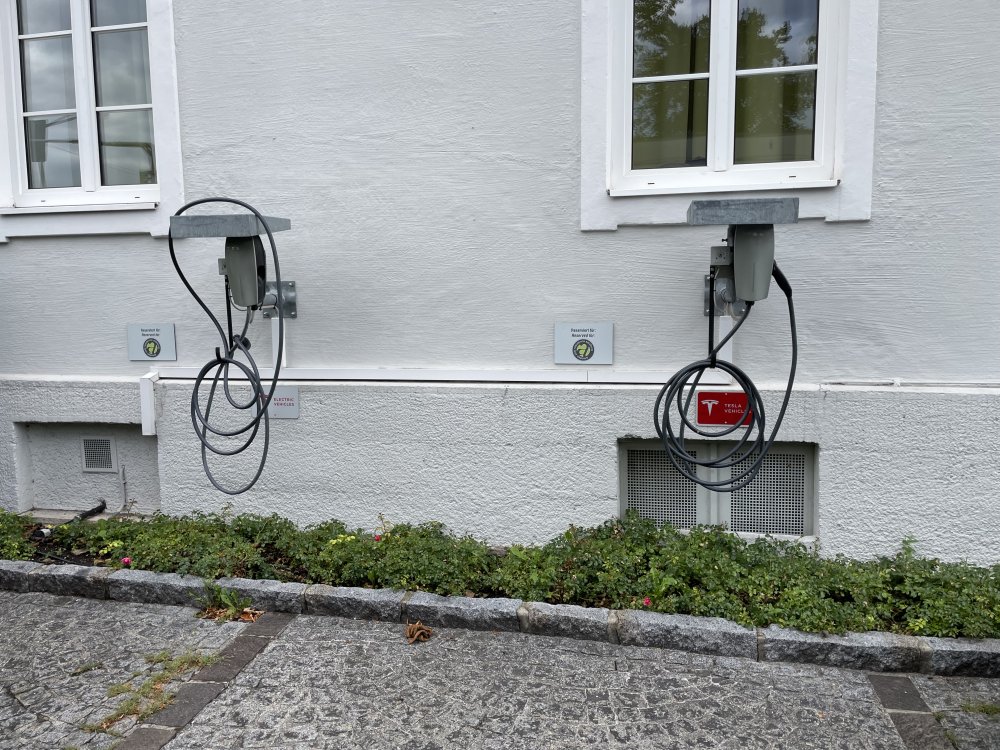
That MY LR only needing one 33min charging stop to go 478 miles is pretty epic. I guess diesel driver are going to say they can drive that distance non-stop because they have no bodily function requirements 🤪 Holidaying in Austria at the moment. Got a X1 diesel as rental car. It’s such a horrible driving experience. Forget much more expensive MY, I prefer my £5k (current worth) Nissan Leaf to this new-ish diesel: B mode regen braking, instant acceleration, no gear change delay, no engine noise and vibration, much smoother drive at lower speeds. At this Austria apartment we rented: Tesla provides those chargers for free. In return, there is Tesla-only charging (red) and a few public charging (white). At those locations, charging is completely free. https://www.tesla.com/en_gb/charging-partners @toot, worth seeking out these chargers if you want much cheap-ness? https://www.tesla.com/en_gb/findus?v=2&bounds=58.79959858334538%2C-1.6884431664088972%2C55.03126146463905%2C-5.808316213283897&zoom=7&filters=destination charger
-
Air quality is part of the reason for ULEZ. It is never the sole reason, sorry you feel you were misled. The government have 2 methods of pushing for change in general public: a carrot and a stick. The ULEZ scheme is the latter. The video you’ve linked answered your question: regulation is not following fast enough. Very good point. The accelerometer is mentioned because regulation stipulate rate of deceleration in g’s. I’m sure well designed cars have more than an accelerometer for brake light logic.
-
Today had storm warning, high wind and rain. Of course air quality is very good. The Bowes primary school side is also regularly congested, good data point. The Ikea Wembley junction is also a very congestion point. The video in question, as you've link and you've mentioned, clearly stated it is a design problem by that particular manufacturer, not an overarching EV problem. Generally, I find Korean cars are great until you get into details. My test drive I found they don't blend in regen braking when disabling cruise control, the moment cancel is pressed, full regen braking. Combine with the brake light issue, feels like they are not test driving their cars enough. It's a problem in early Leaf 24 I have, but Leaf has accelerometer to never brake more than 0.2g. It's not a problem in my Model Y, the display shows the car and brake lights, I can see anytime I expect the brake light to be on, it is on. In my previous 2013 Skoda Octavia, I can feel the brake pedal moves from under my foot, so yes, brake lights will turn on. In my 2022 Model Y, behaves same, it applies one-pedal driving logic for the light and also use physical brakes when needed. Brake pedal is mechanically linked to the brake system, so pedal also moves when higher stopping force is requested. There is regulation talking about deceleration amount and when brake light should be lit. It's referenced in the video. This is why accelerometer are being suggested. But I think software logic in combination with ABS sensor should be able to mimic everything. In the first bold part, if speed is not being reduced, then brake light not lit. Therefore brake light driven by accelerometer is okay. In the second bold part, simple software logic for 1-pedal driving can be used to turn on brake lights. Quick about me, I'm a chartered principal electronic engineer. Not working in the energy/transport sector so no vested interest. I would like to move into energy/EV/autonomous vehicle sector, but haven't found a suitably located job yet as I don't desire to move, nor have I looked beyond head hunter messages. Loved idea of Nissan Leaf in 2010. I had solar panel installed just out of pure interest in 2015. Started driving EV in 2017 with Leaf 24. Getting vehicle-2-home for the 9 years old first-gen Leaf soon. Before then, I'm charging my Tesla using excess roof top solar generation with a little bit of coding.
-
Is that the Nissan e-power serial hybrid? It looks interesting, but the source of power cannot be changed from fossil fuel just like non-plug-in Toyota hybrids, so I personally don't like the idea of it. On stopping, this is the problem with blended braking. On pure EV with one-pedal driving, it's a solved problem because the car takes care of EVERYTHING. not press anything and it guarantees a smooth stop every time. I would attribute this to ULEZ and congestion zone for cars and other steps for industries and clean up of home heating by introduction of gas central heating. Google North Circular road outside N11 3PW retail park. The air quality there is always the worst due to congestion. Transitioning everyone to zero-emission-vehicle would massively improve air quality in that area. EV wouldn't be any magic bullet if it were used as simple replacement to ICE cars. But they are so much more than it, the battery housed inside can be made to do many things in support of much higher renewable utilisation. (eg. simple sink, bi-directional home battery, bi-directional grid support battery) I've said this many times, EV is essential part of renewable transition.
-
Well..... actually, diesel is still "greener" in the sense it produces less CO2 per km. It's just localised harmful pollution is much much worse for Euro 5 and earlier vehicles. I don't think this is another "switch to diesel". That was evolutionary, emission reduction were around 10% for CO2. But with EV, it is possible to completely drive on renewable energy. With ICE, it is a snapshot in time. The CO2 per km may only get worse as it ages, it will never get better. With EV, its CO2 per km changes as the electrical grid changes. If charge on renewable means CO2 per km is 0. Transition to EV (removal of ICE) is a huge step change, not n evolutionary shuffle. If you like the way diesel pulls, you'll love the way EV pushes
-
It's not about point scoring, it's about getting the facts straight. I'm always happy to be corrected with good quality references. I think we are in the process of transitioning away from plastic and other oil derived products. For example, "bag for life", rubber and lubricant can be produced using silicone rather than petroleum byproducts. As always, reduce, reuse and recycle. In this order.
-
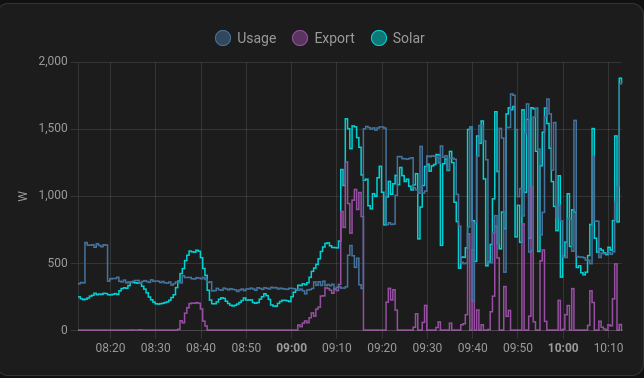
Personal choice as in home owner get to choose between gas cooker or electric cooker to improve indoor air quality. The idea is that electric powered cooking are centralised and can be cleaned up in due course. Right now 4pm-7pm cooking is mostly gas powered due to peak in demand and gas power plants can react quickly. This is less efficient than just burning gas at point of use. But as higher percentage of electricity is generated by renewables, the green house gas produced by cooking will be reduced. The idea of shifting pollution get to be applied to EV as well, but people often forget, with batteries, one is not limited in power source. Batteries are energy storage, they don't need to be re-energised at a constant rate. We can and should use it as a sink for excess renewables. For example, I'm charging from my roof-top solar from ~9:15. The charge rate closely tracks solar production in today's windy and mixed day: Rubber wear - same across all vehicles, variable is weight. Properly designed BEV doesn't weigh more than ICE. For example Tesla Model Y at under 2T vs other large SUV with similar interior space. Brake pads - yes, they do contribute in terms of particulate pollution. But at same time, EV's mostly do regen braking. So is guaranteed to generate less particulate matter than any electrified ICE car with a tiny battery. Larger battery EV's can do regen braking at over 100 kW. Meaning it can brake harder than typical small ICE can accelerate. It is still not enough to stop in time for emergency (hence friction brake are still installed), but it can be relied upon for pretty much all normal driving, even enthusiastic ones. Mining/extraction/transport/manufacturing pollution - There's also massive amount of pollution for oil exploration, extraction, refinery and finally distribution for a one-time consumable! On the other hand, the higher initial vehicle production emissions are offset during use. The production emissions are "paid back" in as low as 20 thousand km according to some studies. At end of life in a vehicle, the batteries are still useful in stationary applications. Finally, the rare earth materials can be recycled. Fact checks: https://www.epa.gov/greenvehicles/electric-vehicle-myths https://www.carbonbrief.org/factcheck-how-electric-vehicles-help-to-tackle-climate-change/ Breakthrough may be just around the corner, but what breakthrough are there that are ready for huge mass adoption within a few years? The key question is, who really benefits when the transition to clean energy is delayed by waiting for the best solution? (fossil fuel industry) Who really benefits when we delay transition to renewables because UK have no way to store the excess production? (gas supplying entities)
-
This needs educating. Such as: Youtuber Bjorn also pointed out the article's opening and closing person's 350 miles range car only getting 150 miles range may be due to use of sentry mode and other consumables. The article goes into so little detail as to how the range was achieved it is as reliable as gospel.
-
Nothing other than education is needed, the air quality in homes are by personal choice. Only need to bring awareness to this issue. See, this is the issue with tailpipe emissions: ever moving goal post. The issue can be entirely solved by removing the tailpipe. Centralise power production, which in turn, allows more control of the emissions and any upgrade also reduces emissions across the fleet. Would they find another cash cow? Absolutely, I think the next one might be vehicle weight, if it isn't across all vehicles.
-
It is all electric, at least the many lines I've been on. Problem is particulates from friction and brake dust, in combination with less-than-ideal ventilation. Just because air is cleaner now, doesn't mean we should stop doing everything we can do make it even cleaner. Got to remember cars are typically in service for 10-15 years. So a Euro 5 car could still be on the road idling next to a nursery in 2030.
-
We are on the way to stop installing gas boilers in place of much more efficient heat pumps. The air in London underground system is indeed appalling. But at the same time, there's no alternative to a mass transit system to move this amount of people in such a compacted city. Personal transport is never sustainable in the city. At very least, the poor air quality in the tubes are by personal choice. I can choose not to take my young children. Whereas I have no say to non-ULEZ compliant cars outside my neighbourhood...... until ULEZ expansion. The EV transition is less about local air pollution, more about reducing our (human) impact on the climate by enabling us to transition to sustainable renewable energy sources. Regarding the transport ship fire. Let's remember the stats and source of problem: https://www.reuters.com/business/autos-transportation/ocean-shippers-playing-catch-up-electric-vehicle-fire-risk-2023-07-27/
-
I know it feels like UK, being such a small land mass, population and small percentage of global emissions, doing stuff wouldn't matter. But if every nation thinks this way, every person don't care what we leave to the next generation, would we see any progress? Besides, it doesn't matter if UK bans sale of pure ICE in 2030, this is bigger than UK. Here are list of all the nations that have plans to ban different level of hybrid cars in 2020-2040. There is no way for this small nation to continue function if the EV infrastructure doesn't catch up while supply of fossil fuel vehicles dry up. https://en.wikipedia.org/wiki/Phase-out_of_fossil_fuel_vehicles#Countries Change is indeed very difficult. but it's not the reason to give up. The more pure EV's on the road and plugged in when parked, the faster we (human) reach climate change goals. EV's pollute less as it ages because electrical grid gets cleaned up, smart charging EV's are a valuable asset to allow higher renewable utilisation. I've said this many times, EV batteries are part of renewable solution. Just need to change the mindset of central location refueling.
-
That's odd, they are both SE spec from lack of rear spoiler. (as opposed to trophy spec) The previous post video with Xpower at 0:32 also has rear wiper. May be it's standard going forward. (Wiper can also be seen at 10:30 in the video further above)
-
I've been monitoring the Leaf 40 kWh market. It feels like the market have hit rock bottom and prices are no longer decreasing. Now that you've decided on a Leaf. A few things to keep in mind: Buying second hand Leaf, it's worth getting a look via Leafspy. State of Health (SoH) degradation should be around 1-3% per year. If you go for 2018 cars with smaller screen, you wouldn't need to pay £1.99 per month to pre-conditioning. https://www.speakev.com/threads/nissan-connect-pricing-post-free-3-year-complimentary-period.175585/#post-3399336 Checks and journey from another Leaf 40 buyer: https://www.speakev.com/threads/leaf-40-tekna-pre-purchase-checks.175427/ Same buyer had bought one with dud battery, worth doing similar checks when you test drive the car: https://www.speakev.com/threads/yg18xfk-avoid-leaf-40kwh-2-zero-high-mileage-dud.173915/
-
Interesting report, strange they are picking out Tesla. In the screenshots of the video all Tesla did was provide EPA or WLTP ranges. Same as every other car manufacturer. I can't comment on appointment cancellations, but unlike other auto makers, Tesla can do remote diagnostic. So from outside it may feel like shoulder shrugging. When has any vehicle actually achieved advertised MPG/range in non-ideal conditions? Many traditional car journalist doesn't seem to understand that to get most out of the car, pre-condition it before leaving. It is widely accepted in EV circle that Tesla's efficiency (and thus range) seems to suffer the least from temperature variations out of all EV's. I seems to recall the same correction were requested on Korean cars: https://evfleetworld.co.uk/hyundai-kona-electric-driving-range-corrected-to-279-miles/ That's the whole point! Instead of displaying a guess range based on unknown variables, Tesla display a consistent value based on usable charge remaining. The latter is much more deterministic and useful than a value that drops by 50% just because I was driving up hill for 1 mile. Personally, I never look at range estimates. I completely ignore the guess-o-meter in my Leaf, I set my Tesla to show %. The only thing I take note is sat-nav estimated arrival %, and it has always been within a few % for me, no matter the condition. This bit is interesting, until you go and read Edmunds test methodology: 60% urban and 40% highway. https://www.edmunds.com/car-news/electric-car-range-and-consumption-epa-vs-edmunds.html I don't know about you, I find my first-gen 24 kWh Leaf has plenty of range for urban uses. The reason I buy a bigger battery EV is for driving longer distances on "highway". So the only efficiency value that I'm interested in for EV's are the highway efficiency. I'd take the Bjorn's 1000 km test over any traditional car journalist every time.
-
The higher efficiency may be due to more ideal battery temperature after rapid charging? I know efficiency in Leaf also improves massively after rapid charging. I know we are all different, personally, I would have gotten the free home charger. It makes a world of difference in convenience.
-
The white one do look a bit more special, more like a mini thanks to the contrasts. I personally think you've made the right choice. 👏 Not tempted by the Abarth 500e?
-
EVM was having a go at certain drama queue in this very sensible video 😂 Where he drove a 22 kWh car without rapid charging capability 260 miles.
-
Well, he's doing 1000km in a bus now: https://youtu.be/AVnL3k99BOc
-
Oui you, I see you, get your hands off my potential purchase. I'm also considering a 40 kWh Leaf Tekna in red, to replace our 24 kWh Leaf Tekna in red. The range is not the issue for our local use, we were going to keep the car until it's beyond economical repair. You say Chademo is outdated, but that is the exact reason I'm looking for another Leaf. Solely because I'm waiting to get Vehicle-to-Home installed, to use Leaf battery as home battery: https://www.indra.co.uk/v2h/ For £10-12k, Leaf 40 kWh is a solid choice, as local car that rarely go beyond home-range. You don't need to have it plugged in for pre-conditioning via the app. This feature should also be available in lower spec. The Bose sound system sucks, weaker base than Skoda Canton, slight improvement in clarity. It's night and day worse than no-brand Tesla. Have you considered Hyundai Ioniq? It's more efficient than Leaf, it charges faster and it's on CCS. Despite only 28 kWh, it should be able to manage 100 miles. Downside is that 28 kWh version doesn't have remote app support. Up budget to £15k and the 38 kWh Ioniq and you'll get range to spare plus remote app support. I would get Ioniq 38 kWh if I'm not locked into Chademo and wife needs a new car tomorrow.
-
This is the new government legislation on charging. If it goes through, things are set to improve. https://www.legislation.gov.uk/ukdsi/2023/9780348249873