
wyx087
Resident Member
-
Joined
-
Last visited
Everything posted by wyx087
-
Toyota ramping up their EV plan ..... 4 years later ..... 1 passenger vehicle with really bad efficiency and range, poor software. Good build quality though. "Look at solid state batteries, it's coming soon™. Let's keep waiting and buy our cars where 100% of its energy comes from fossil fuel"
-
Came across this article. I think it's quite a balanced view of current status of EV and both sides of the arguments: https://www.nationalworld.com/opinion/rabid-refuseniks-and-smug-evangelists-do-little-to-help-the-debate-around-ev-charging-4184653
-
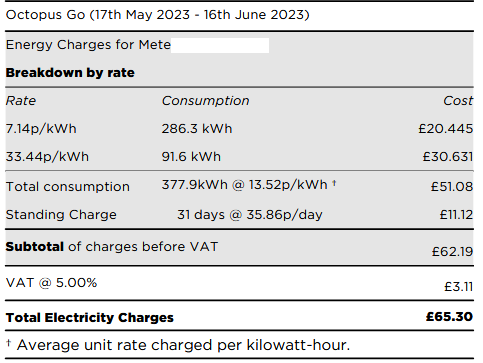
Viability of this tariff depends on how much you can put into the cheap period. I'm on fixed 7.5p and 35p until tomorrow, then I'll switch to Intelligent Octopus to keep 7.5p for 6 hours off-peak. https://octopus.energy/intelligent-octopus/rates/ Either way, not the same tariff as "46p daytime and 18p night, plus 45p standing charge.", not "a couple fractions of a penny difference"
-
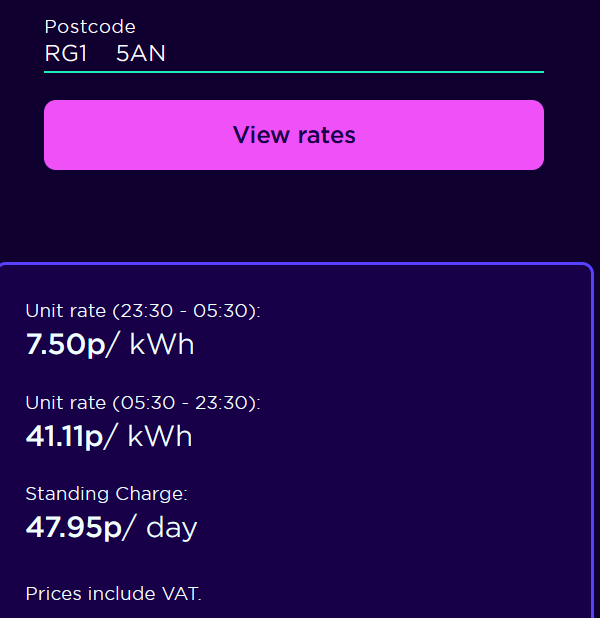
Are you sure you have actually looked? Check Octopus Go rates in your area Postcode RG1 5AN <-- a post code for Reading, UK View rates Unit rate (04:30 - 00:30): 41.11p/ kWh Unit rate (00:30 - 04:30): 9.50p/ kWh Standing Charge: 47.95p/ day Prices include VAT. Night time unit rate almost half of what you pay. Day time rates are also over 10% lower. Standing charge is only 6% higher.
-
Check what rates you can get via Octopus Go, only need to pop in your post code. https://octopus.energy/go/rates/ Word is, it's going to decrease in the next 2 round sof price-cap adjustment: https://www.moneysavingexpert.com/utilities/-are-there-any-cheap--fixed-energy-deals-currently-worth-it--/#winter
-
Lane centering is just that, keeps the car in the centre of the lane. Autopilot is basically adaptive cruise + lane centering. There is vast difference between a good responsive touchscreen and a slow bad touch screen. The former wouldn't need taking eyes off road for long. The eyes-off-road time isn't too different compared to normal air vents. Except with added assurance of ACC + lane centering to be extra safe. It can be safely done while driving, just doesn't feel safe enough for me to do it. Key is accuracy while on the road, to a lesser degree, it is the same for regular air vents. I rarely do minor adjustment of regular air vents either, only big strokes to move it out of the way whilst driving. 😜
-
This is the only thing that bugs me. I never realised I sometimes want to adjust air vents until I wanted to make minor adjustment while driving on a twisty B road and AP couldn't reliably turn due to a stupid EU rule. Something about max turning angle. Of course, I left it until a straight bit of road where I can enable AP and fiddle with touchscreen air directions.
-
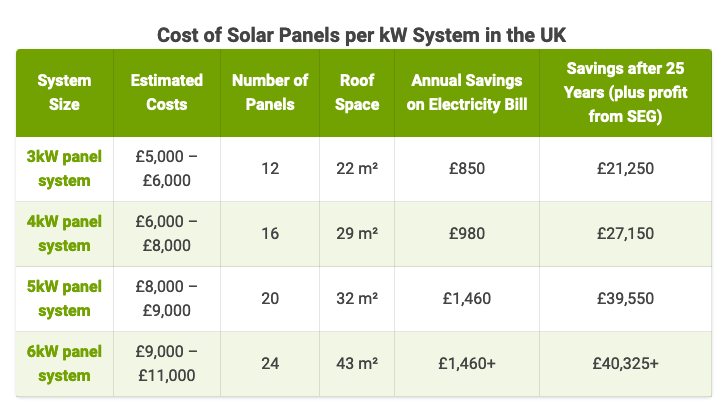
I don't agree. EV's as presented today are meant to be replacements for ICE cars. As mentioned, urban environment need public transport. Again, please do check out the EV charging cable and study how they function when being used. https://www.greenmatch.co.uk/blog/2014/08/what-is-the-installation-cost-for-solar-panels Similar figures here: https://www.checkatrade.com/blog/cost-guides/cost-of-solar-panel-installation/ I agree if you are renting, the point is mute. House ownership are also a good investment
-
I don't know about that car in particular. But battery management is automatic. Absolutely to set/change when driving, not on Leaf and not on Tesla. When parked, you may want to set charging limits/schedule on some cars, a touchscreen is fine when parked. Performance/suspension settings are typically a set and forget. There are a single setting to set in Tesla, but it's the same in petrol/diesel cars, the button only brings up the screen and use touch screen to customise. The only thing I use the most on touch screen is selecting music. This being on touchscreen is not EV specific.
-
Very large hub coming for Tesla: https://www.speakev.com/threads/some-very-large-tesla-supercharger-sites-in-the-uk-on-the-way.178195/ Exeter will soon be the biggest UK site with 32 stalls, followed by Rugby with 28 stalls. Both these will be larger than the current largest sites (24 stalls) at Heathrow and Westfield White City. Work has begun on a new 10 stall site on the A303, to be open by end of summer Seven new Moto sites and 2 expansions underway with more to come I'm hoping it will be V4 chargers with longer cables and enabled for charging all EV's.
-
Follow that link. It's Agile Octopus, a different tariff. The price in that tariff isn't fixed, it varies every 30min depending on wholesale price. Some times it goes negative. There's no fixed pricing, so one may need to pay £1/kWh if worst comes to worst. But typically, with a small home battery, it's about same price as fixed ToU tariff such as Go. Without home storage, it'll depend on how much you use during peak hours. All the houses you say cannot have driveway are not counted towards the stats. The stats clearly state "properties have off-street parking". Obviously those houses that doesn't currently have off-street parking will not be counted. The point about flats and communal off-street parking is indeed correct. It is a worrying trend in new builds, where allocated parking spaces are placed away from property, just some painted lines. But I believe this is changing, new builds now require EV charge point provisions put in for allocated space: https://pod-point.com/guides/business/ev-charging-legislation-new-build-uk Doesn't solve the problem for existing flats and communal off-street parking. That need a case-by-case look, working with management company and other leaseholders. How much of the stat is house-attached driveway suitable for EV charge point is difficult to say. I can't find any sources. What's certainly true is that the area matters a lot. I remember dropping off a relative at Bradford Uni, most houses only have street parking. But looking at Welwyn Garden City, most houses do have driveway.
-
Of course the stats say one thing and people's experience say another. I can only speak from gernalised stats to say that majority seems to have the means to recharge using their own off-street parking. Got to remember even with just 1 driveway space, it can support many cars within the household. My household functioned perfectly fine with 1 EV charge point shared between 2 EVs, one of which has tiny range. All on the 4 hour off-peak rate. Used zero public charger except for long trips. The nature of EV is that it's not a direct replacement to liquid fuel cars. Some people, unfortunately, need a direct replacement due to many factors. But according to generalised stats, it's not the majority.
-
There's a few good points. I strongly agree charging infrastructure is the primary limiting factor and need massive investment in public transport rather than current focus on private vehicles. The need for large grid connections (and thus investment, jobs, opportunities) to deliver renewable power throughout the country is also an excellent point. But let's put some of other points into perspective: Regarding off-street parking, I've done some digging for exact numbers and multiple sources say majority of residential properties do have off-street parking: Rapid charging can be detrimental to battery life, on small number of models. A well thermal controlled car would not have any problem solely rapid charged. The repeated rapid charging issue is only present in very small number of models, mainly Leaf 40 kWh due to absolutely zero thermal management. But it is an issue for repeated rapid charging in quick succession. Using it like a petrol car, rapid charging every few days would not trigger this problem. Unbiased lifecycle assessment: This report commissioned by UK DfT: https://www.gov.uk/government/publications/lifecycle-analysis-of-uk-road-vehicles This peer reviewed paper, published in scientific journal: https://www.sciencedirect.com/science/article/pii/S1364032122000867 This US EPA's EV myth busting page, referencing other peer reviewed sources: https://www.epa.gov/greenvehicles/electric-vehicle-myths All say the same thing: that BEV greatly reduces CO2 emission compared to fossil fuel cars. Even with today's grid power sources and are set to improve as the grid become cleaner.... without needing to buy new vehicle. That's an increase of less than 1%, UK population is 67 mil. Much lower than net population change during the baby boomer years. All numbers need perspective, can't just pick numbers that suit your narrative. (for example the net population change and the CO2 reduction percentage)
-
No, I'm not operating in good faith. I have been through the scientific process, have many friends in the field of academia. I believe in the scientific process. I don't view outlier data as evidence against establish consensus unless many peer reviewed papers support this view. No, let's not muddle the waters with other controversial topics. Anything to actually support your statements regarding climate change? 8 kWh is current average, yes, with gas central heating. Additional 41 kWh is said to be average for heating cold winter days. Very believable, as my house uses 100-120 kWh of gas during coldest days, ASHP are about 300% efficient, so around 40 kWh sounds about right. There is 2 options: 1 - get a big enough battery to cover most days, for example 20 kWh should be enough to cover most days except coldest winter days 2 - get a different electricity tariff, designed for heat pump https://octopus.energy/smart/cosy-octopus/ So only need a small 3 kWh battery to tide over the few peak hours. A good insulated house can also work as heat battery, heating up the house just before 4pm and turn the heat pump off until 7pm. The idea is that if driving anywhere, no one wouldn't be in the house As we have 2 cars, Model Y and Leaf 24 kWh. When V2H is installed, Leaf is only going to be used for 40min away school runs or other local errant. If wife is home, the car is home functioning as battery. The MY will be used by myself for anything else. The V2H inverter is 6 kW. So if I upgrade to a 40 kWh Leaf to support heat pump (don't have yet), it will take 6 hours off peak will be able to charge 36 kWh. V2H/G isn't widely available yet due to CCS standard messing about. Only available with Nissan Leaf. So entirely possible to see Leaf being SORN and left on driveway as home battery.
-
6 hours of guaranteed 7.5p/kWh with a compatible car or charge point, if need more hours, more is allocated with Intelligent Octopus. Otherwise it's flat 4 hours at 9.5p/kWh Octopus Go, available to everyone, old and new customers. House fuse are typically 100 amps, there are 60 amps if on old looped supply. Taken to extreme, 100 amp could continuously pull 64 amps no problem, I've double checked with charge point installer. That's what I plan to do when I get V2H: charge V2H car battery and larger car battery at same time. Not sure about electric heating and hot water. If heat pump, it'll be a constant low of 1-3 kW 24/7. So 13 amps at most. Storage heaters will use a lot more though. Average household uses 8 kWh of electricity. That translates to 2 kW charge rate over 4 hours if we are pessimistic and assume all uses are done outside off-peak and no solar panels to reduce load on battery. The idea is to use battery to off-set majority of home uses to ultra-cheap off-peak times. So there should be less than 5% use on peak price, therefore peak time price is irrelevant. Go standing charge: 42.01p / day https://octopus.energy/smart/go/ IO standing charge: 42.01p / day https://octopus.energy/smart/intelligent-octopus/ Regular Octopus standing charge: 42.01p /day Charging cars will be done one at a time, or one at 16 amps and the other at full 32 amps. House would only need the other 16 amps for heat pump. Could stop the car half hour early to run other home appliances. Of course, put the car that integrates with IO on the slower 16 amps charger to get more allocated cheap hours.
-
Got any good sources on those 2 underlined parts? It's a very slippery slop to go from scepticism to conspiracy. The data has always been widely available. There are outliers but never been withheld. Policing is done within scientific community via peer review. This practice of paper publishing is well established. To say aim of this is to not allow deviation would be gross misunderstanding of the process. As mentioned, it is not impossible for radical ideas to be shut down initially. Consensus takes time to change. But it is clear we don't have the time to wait. Besides, why can't changes happen multiple times? Don't let perfection get in the way of progress. I guess if the area is newly developed, it would be low power lighting. Then no, it wouldn't support EV charging. But one could argue newly developed area should have EV charging provisions from day one. Older converted lamp posts may run on low voltage, but the power is still delivered to the posts using the original method. It is not cost effective to replace underground wiring or deliver power long distance using DC. 1 & 2. it is pretty hard to push limits in an accurately reporting EV. You cannot compare the guess-o-meter with modern EV's that can accurately predict arrival State of Charge. 3. Again, you are thinking with petrol station mentality. The idea is not to remember to recharge, the idea is to hook up the car whenever the car is parked. Make plugging in EV's a part of parking process. Especially anything parked overnight. 4. I really think you need to drive an EV. Things like lights, radio, dashboard, wipers and cameras use negligible amount of power. Only heating uses noticeable amount, again, a good car takes it into account when accurately predict arrival SoC. 4a. Even if in very slow traffic in winter, only running heating will still use less % of stored energy (eg. vs petrol in the tank) than a petrol engine ticking over. A good EV is extremely efficient. 1 & 2. Not all lamp posts are suitable. Agree. But again, it was an example to explain how we can get ahead of EV adoption curve. Doesn't need 100% coverage of all parking spaces. 3. Cables don't belong to charge point, not there when no one is using it, it's just a single port hidden in the lamp post. When connected, the cable is locked to the car and the post locks the cable. It cannot be removed unless it is cut using heavy duty tools, and cutting risks being electrocuted. Just the cables, it's worth probably £20. The plugs are £60+ a piece when brand new. But it is impossible to get the plugs out undamaged. Again, do consider try out a good EV, live with it for a few days, keeping in mind home charging is much simpler with a home charger. It would help you gain a better understanding. How is £800-1000 calculated? Why does bill (recurring payment) need to increase by this much? It's a one-off cost that the property owner/charge point operator pay. Local council only need to get involved if they wish to fund charge point operator. Charging at home using domestic rates is as cheap as 7.5p/kWh, 2.5p/mi. So running cost will be lower than refuelling petrol, thus even if property owner increased rent by £36 a month for 3 year ROI (no sane landlord will increase by £800), overall cost of living for tenant shouldn't increase. A small some battery and solar can be installed for less than £9000 if house is suitable, hence £10k inc. interest I mentioned earlier. I had my solar installed on not suitable house (W-E surfaces, complex roof, difficult scaffolding) for £7000. I'm about to spend £1600 for vehicle-2-home, turning my Nissan Leaf into a large home battery. Total less than £9000 for a large home battery and solar on a not suitable house. Average UK household uses 8 kWh per day. Just need a 3 kWh battery to tide over evening. Said household can switch to off-peak tariff and use the battery to tide over morning use as well, essentially never pay higher peak electric price ever again. Let me re-iterate, safest investment ever.
-
Everything 90's car had are still dials and buttons. The touch screen looks to only do sat-nav and music. Latter can be controlled via button on steering wheel. So what is the problem? Is it purely down to don't like the aesthetics?
-
No urban errand will ever use more than 100 miles. At average speed of 20 mph (more like 10 mph, but let's be generous) 100 miles is solid 5 hours of driving. 200 miles is 10 hours. Local use is a solved problem for EV from day one. I thought we were talking about driving long distance, like 600 miles a day. Recharge at destination. This is the key difference between liquid fuel cars and EV's. There is a difference between en-route rapid charging and destination charging. To take time off to recharge and then leave the car sitting somewhere is absurdly stupid. Key for non-driveway owners to adopt EV is to solve destination charging. That leads nicely onto your next points. Lamp post charging is just an example, the easy-win to get ahead of EV adoption rate. 1. It only requires those who currently adopted EV to be near a lamp post. As said, the idea is to get ahead of EV adoption, not to have everyone fighting for the few spots near a lamp post. How far away would invalidate "park at home, on street" insurance anyway? Is there a definition? 2. The switch from incandescent to LED would have freed up some capacity. Underground capacity upgrades shouldn't be out of question. Charging doesn't need to be fast, 3 kW would be more than enough used overnight, 10 hours. Good for 100 miles per day. Key is that vast majority cost is in the physical hardware, lamp post charging would massively reduce the cost of physical hardware wouldn't be a trip hazard. 3. Theft of copper cable? What cable? Have you looked at what you are talking about? https://ubitricity.com/en/charging-solutions/ac-lamppost/ Truthfully, I don't know how that would work. Not every car parks in a predefined parking space. Anywhere on the road and don't have yellow line, a car will park there. On cost, it will be the charge point operators for the CapEx, and users pay during charging, as you said. Lamp post charging installation shouldn't cost more than home charge point installation (£800-1000 per install). Dedicated charging posts will cost more. The thing with solar panels and free energy is that it is truly free. A few years after install, the electricity saving would be equivalent to cost of install. Then any energy generated after that would be free energy. Don't have the money, it makes absolute financial sense to borrow to fund it. Simple example: system cost £10 including interest, monthly bill decrease from £183 down to £100, stick the £83 into repayment for the loan. 10 years later free energy. It's the lowest risk investment.
-
I think you got to realise, when you refer to "exports", you are referring to a wide collective that consist of a high percentage of scientists. Whereas when you are talking of demonised dissenters, you are referring to individuals. It is true that history has a lot of individuals that were later proven right. Prime example is Galileo and that Earth evolves around the sun. But it is also true that large industry with a lot to loose, has a remarkable consistent history of paying individuals to advocate their narrative or stir up doubt. https://en.wikipedia.org/wiki/Merchants_of_Doubt Oh yes it's a complex issue. But end of the day, this is about energy, it is always about energy. From hunter and gatherers arguing over food, all the way to the war US wages in the middle east, all about who has control over energy. Many people feel EV is restricting their freedom. It means being reliant on the charging network. But how much of people's current fossil fuel derived energy come from exploitation of foreign land/people? Remember, to keep getting the energy, got to keep that drill going and got to keep the area under control. The simple solution? Be self sufficient. Over last 30 days, almost 50% of my driving in the Tesla came straight from my solar panels. Zero cost (my solar panel install ROI is about now). How do we become self sufficient? By using renewables, by utilising current global industry to do a one-time mine/refine/production/install and be self sufficient for many years to come. The tipping point for EV is when people realise it is a necessary tool in the switch away from constantly mining for fossil fuel to renewable energy. I know it is still early days for technology such as vehicle-2-home/grid. I know not everyone has the capability to benefit from this change. But the sooner we stop thinking EV as cars, I think the sooner we will reach the tipping point. In another words, I think car companies are selling EV's wrong. It's part of our overall energy solution.
-
You know which is the cause and which is the effect. The scientific consensus made that clear. I don't have the expertise to say one way or another. I know it is advantageous to pay a few person to come up with something that supports something that had previously been profitable. But it is impossible to pay enough scientists to get a wide consensus.
-
The mining, refining and disposal of a single use product, known as oil, petrol/diesel, and subsequent CO2 has been extremely profitable. Especially the last part where there's no associated cost. The mining, refining and reuse, recycling of batteries is a circular motion. Currently need to mine a lot but in 20 years time when EV batteries can no longer be reused as stationary battery and must be recycled, mining efforts can be greatly reduced. Reduce - efficiency Reuse - second life local storage Recycle - no more mining
-
So 5min to refuel, 2-3 min to pay for it, 10min for everyone to go to the loo, walk through the service shops and stuff back into the car. Total time out of motorway is probably 20min. EV takes 20min to recharge back to 60-80%, 30min to 80+%. During recharge can go to the loo, relaxing stretch, etc. Total time out of motorway is ~ 30min if charge back to ~80%. Why would anyone need to do a full recharge? Yes, need about 8x times the number of charge points as fuel pumps at motorway services. Not all cars can go 600 miles in one tank. My parent's Volvo s40 mk2 has about similar range as my T MY LR. But let's say fossil cars have 400 miles range and EV can only do 200 miles between recharge hop. That means double number of motorway service charge points vs fuel pumps. Then plus the 4x longer time to occupy the station, that translates to 8x. Let's examine how many parking spaces are there at motorway services, usually waaaay more than 20x vs service station petrol pumps. If about 1/3 of the parking spaces have rapid charging capability, backed up by local battery storage (that can also make money when not during peak travel season by working with renewables). En-route recharging is a non-issue. Your costco example is more about local users. Liquid fuel cars rely on public infrastructure 100% of the time. EV's can forego that and charge slowly when parked most of the time. If overnight, every lamp post became a slow trickle charge point. That will be waaaaaay ahead of the adoption curve of EV's for next few years.
-
Don't know about you, but I certainly want to do my best so that future generations are not left to clean up behind their previous generation. As non-scientific community, 0.04% to 0.0386% is meaningless. All I can say is that it feels like a small change in numbers. We do know there is a direct correlation between increase in CO2 emissions from industrial revolution and global temperature increase. Scientific consensus is that one is caused by the other. There is also a consensus (both scientific and political) to limit global temperature increase to 1.5c, the baseline was set a few years ago. They (scientists) say the way to do it is to reduce CO2 emissions. Hence the push for net-zero. Therefore, the rush is to reduce CO2 emissions so that we limit our damage to our currently habitable ecosystem. The cost will great, but also comes with creation of new job and more opportunities for innovation.
-
Your sources look legit, I didn't question your numbers. I questioned validity of your questions, only thinking about cost vs reward for UK.
-
Love the data sources. The question isn't "getting to net zero in the UK" and if that has any impact on climate change. The question is "getting to net zero by everyone on Earth" and what we, as older generation, leave behind for younger generation. Given now that we have scientific consensus about the lasting impact of man-made post-industrial revolution CO2 emissions. With that in mind, what is the reason for not aiming for net-zero 2050, given it's the global direction and it also create jobs. Costs are only one side of the coin.