wyx087
Resident Member
-
Joined
-
Last visited
Everything posted by wyx087
-
Thank you for correction. I remember reading the fire started from the bus being charged, but missed the bit where it said there's only 2 electrified hybrid bus, others are diesel. I thought it was all 6 electric buses, sorry for that. (orig post edited) I think I read previously it was due to maintenance error. But I can't find the article I read back then.
-
You can achieve ultra-cheap motoring by charging at home using off-peak tariff. The key is to carry as much of that cheap electricity as possible, something PHEV cannot do. For example, I did 177 miles for less than £4 last weekend. Charge up at home and ready for another 300 miles of cheap motoring. According to this guy's calculations, from London, one can to drive to Leicester much cheaper than ICE. Because public charging is expensive, the drive only gets more expensive when the journey distance gets close to Scotland. https://www.speakev.com/threads/ice-fuel-costs-cheaper-if-driving-to-scotland-and-back.179558/ The price of electricity for business is not directly controlled by government, there is also 20% tax as opposed to residential 5% tax. So public charging is expensive at market rate. The encouragement for uptake of PHEV happened about 8 years ago (IIRC?), low company car tax, zero congestion charge. For next 2 years the encouragement is for update of BEV: zero road tax, very low company car tax, zero congestion charge. BEV gravy train ends in 2025.
-
There was a Potter's Bar bus depo fire that had destroyed 2 plug-in hybrid and 4 diesel buses: https://www.thefpa.co.uk/news/fire-at-potters-bar-bus-depot I can't find the official outcome of the investigation. But according to this article from York, who resumed running the same model of the bus, the fire was caused by human error: https://yorkmix.com/york-electric-buses-back-on-the-road-after-depot-fire-investigation/
-
I've no experience of PHEV myself. But I did briefly consider the Octavia PHEV as direct replacement for my previous Octavia diesel, before deciding to just go the simplicity route with a long range BEV. From my understanding is that "preserve charge" is similar to non-plug-in hybrid, where it aims to keep at a rough charge level but you still get benefit of electrified powertrain. Yes, compared to regular hybrid, in that mode PHEV have the disadvantage of lugging around an unnecessarily large battery. Volvo are not known for their efficiency TBH. This. Considering the short EV range, PHEV requires more plugging in than a long range BEV and thus more effort to keep using it in EV mode. No PHEV can do 60 miles, so if I were to buy one, I'd have to plug in at both ends of my 30 miles commute. It's worse EV than my Nissan Leaf having to lug around an ICE as dead weight. It's got best and worst of both worlds, depend on your daily driving pattern.
-
Just minimise burning stuff (re wood buner and bon fire)...... we ought to be past that by now 🙄
-
With exception of North Circular, I think a 30mph or faster EV with proper seats and doors will do very well in the city. I've seen a few G-wiz around the city back in the day. Second hand, of course, will always present batter value. But think of the cheapness when cars like Ami gets to good value age. I mean, it's only for school runs and all roads are 30mph or slower. The smaller the car the easier to nip around in traffic and park. Only problem is my wife want 5 seats in case she need to bus relatives around, less than once in a blue moon. So we got 2 regular sized car taking up space on the drive and roads. I know this specialise the car type of thinking isn't for everyone, including my dear wife.......
-
The best thing with PHEV is that if public charging is expensive, you can hit preserve charge mode and not use the battery until you need it. You get to choose which fuel type you use to maximise savings. I think someone said their break-even point is 57p/kWh (IIRC?). Home charging is 9.5p/kWh (or 7.5 p/kWh if you get Ohme charger and Intelligent Octopus). So for your local journeys, you have the potential cut down fuel cost by over 80%. For example, to charge empty-to-full a 78 kWh 330 miles WLTP rated EV only costs £6.30 for me. It's about 2.5p/mile.
-
The roads in 1st and 3rd set of photos look very poor. Especially in the wet, I'm not sure any tyre can handle that?
-
They are perfect as EV's. If they shrunk Leaf down to K car size, eg. give it a Chademo for V2H, I'd be all over it. One car for the city, one for occasionally needing 2 cars and doing long trips. I'm sure you have seen this video:
-
Ok. So in summary of your para 1: you use a single photo of burnt out cars, you decipher that to be an EV and say this is conclusive evidence. Whereas the way I drew my conclusion from evidence I posted was not wrong, strangely you seem to have a problem with that. But I was wrong to post (what I thought was) the latest development that “no EV was burnt” as evidence, because it isn’t concrete and conclusive. I “liked” your post pointing out the fact my evidence was non conclusive evidence and I agree we should wait for investigation report. However, I do feel sorry for you, that you view my post as defending EV’s. It was nothing more than pointing out your methodology flaw, like any good evaluative scientific paper. Also, in yesterday’s posts, no where have I even hinted that you suggested fire was started by EV, this thought never even crossed my mind, where did you drew that from? Speaking of defending EV’s, this post is, because you posted a myth
-
https://cleantechnica.com/2023/08/17/a-ship-carrying-electric-cars-is-on-fire-we-must-run-and-tell-the-king/ So the uncontrollable fire on the ship had nothing to do with EV's. Quote All I'm doing is correcting the misinformation you were posting about it. As mentioned in the videos, unless that photo is a fake, that photo proves that your statement was incorrect, the car shown is a Porsche Taycan, a 100% EV car. If you watched and listened to the videos and also read what I wrote, there is claim anywhere that EV car was the cause, that is yet to be determined, but it is an undeniable fact that EV cars were involved in the fire, they were not all on another level of that ship and 100% untouched by the fire, which is what you are implying. This is what you claimed that you were doing to my posts, but nowhere did I ever say that the fire started by an EV, I just said the involvement of EV in the fire made putting the fire out impossible, don't me that you still don't think that they were involved.😣 I said what I said based on the evidence that I thought was new evidence. It may not be new evidence, if so, I apologise. However, your latest post (quoted) did not present any new evidence what so ever. Again, you use internet speculation as facts. And trying to identify cars using photos of burnt remains? Playing detectives are we? I implore you to wait for official reports. Where have I ignored actual factual evidence? I have repeatedly ignored your speculations, that’s for sure. If you feel that is wrong approach to a factual discussion, I’m sorry for you.
-
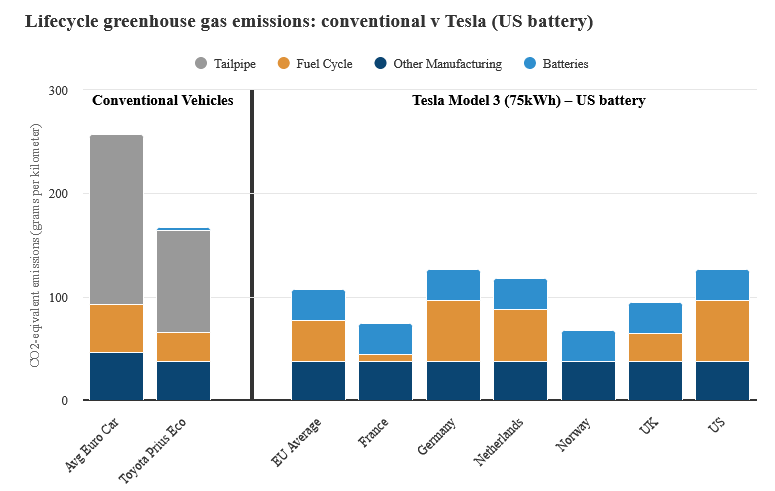
This is only true if you recharge solely use a fossil fuel powered grid. Again, I refer you to many sources: US EPA: https://www.epa.gov/greenvehicles/electric-vehicle-myths https://www.carbonbrief.org/factcheck-how-electric-vehicles-help-to-tackle-climate-change/ MIT the university: https://climate.mit.edu/ask-mit/are-electric-vehicles-definitely-better-climate-gas-powered-cars IEEE: https://spectrum.ieee.org/the-ev-transition-explained-2659316104 Titled: Why EVs Aren't a Climate Change Panacea Unless people change their behaviors, we won't hit 2050 net zero emissions targets This IEEE Spectrum article somewhat echoes your view that it will not solve climate crisis. But it effectively says one of primary reason is the slow adoption speed. The rest of article goes into the second reason, for example, emissions in other sectors (not transport, which is kind of off-topic IMO) and EV manufacturing supply chain concerns. There are many similar balanced articles in IET E&T magazine. For example this issue is especially talking about EV's: https://eandt.theiet.org/tags/volume-17-issue-9
-
*sigh* I thought you said: Whatever you feel, whatever you want to say about this incident, I'm done. I'm just going to leave it for the outcome of the investigation report. But I get the feeling you've prep'd the floor for a narrative that suits your view point. Whatever, this is currently neither incorrect fact or myth, not worth my time.
-
Rumour is, the "Highland" Model 3 refresh is focused on manufacturing cost cutting, using similar gigacasting and structural battery approach as Texas Model Y. Considering the price drops recently, Tesla seems to be focused on market share and adoption of EV's, I think it is highly likely to end up in the £35-40k ballpark. Although probably not first few months after release. Remember, Tesla doesn't do options, only colour, wheels and 2 interior. Every trim level have same amount of very generous standard equipment: heated every seats, heated steering, elec mem front seats, all mirrors dimming, large info screen, pano roof, ACC, lane centering, parking cameras and pleather seats. Today's BMW 3 series starts from £39.6k. Trying to find Passat price on VW, it's no longer available to order?! Octavia "starts from" £25k, but that's without auto box and not much equipment. Spec it up from SE L with auto box, heated seats, ACC and elec seats, it gets to almost £35k. Even with current asking price of £41k, Model 3 isn't expensive compared to similar cars within its size segment, considering the equipment and performance. Still, would be nice to have a Zoe sized Model 2 (or whatever name) with hatchback for under £25k. Hopefully VW can deliver on their compact EV. Agree, Lucky. Efficiency is everything. Improve energy density, allows the car to be lighter, which in turn improves efficiency and thus range. I hugely dislike current trend of stuffing in bigger and bigger battery. The new Escalade EV has 200 kWh of battery! I'd rather have a 50 kWh battery with 4.5 mi/kWh efficiency for 225 miles of range, than 75 kWh battery with just 3 mi/kWh efficiency for same range. The Model 3 RWD can easily achieve over 4 mi/kWh in most weathers from what I've seen. It's on the right track.
-
https://cleantechnica.com/2023/08/17/a-ship-carrying-electric-cars-is-on-fire-we-must-run-and-tell-the-king/ So the uncontrollable fire on the ship had nothing to do with EV's.
-
Not in America, apparently: https://www.speakev.com/threads/5-days-with-a-model-3-my-review.179207/ I personally put it down to engrained mindset (not offering), rarity (expensive) and slow adoption. When I asked the German rental company whilst picking up, they said they don't offer it due to poor charging network. But as EV owner, I looked at Octopus Electroverse accepted sites and in combination with Tesla chargers, I'm very sure I can make a Tesla work. It would be nice for them to offer the option like in the America. And where will the fuel and hot exhaust be located in a BEV? 😜 As the car ages, batteries degrade, BMS algorithm takes note and prevents over charging. Minimised this fire risk. Accidents damaged battery, battery get repaired and recertified as per a process (do we have those? as far as I'm aware currently only manufacturer can do that). This fire risk is also minimised. Hot components are bearings, motors and heaters. All are nowhere near the battery. Battery is completely immovable by being bolted centrally to the frame of the car. The problem in accidents is actually battery being punctured, as your firefighter video showed. I know early Model S had bottom shield upgraded to prevent such incidents with large road debris. I would think all modern EV's have similar amount of under battery protection. https://arstechnica.com/gadgets/2014/03/shields-up-tesla-model-s-gains-free-titanium-and-aluminum-armor-upgrade/
-
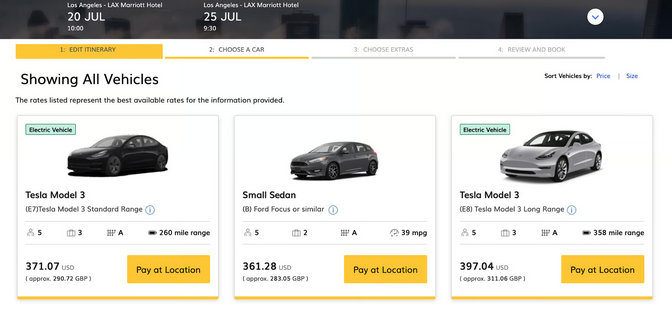
I'd love to get EV hire car. But it's stupid how one have to do homework learning about the unfamiliar area's charging networks, whereas petrol/diesel can just pull up and refuel. Of course if in an unfamiliar area with unfamiliar charging networks, I'd prefer to get a Tesla so I don't have to figure out other networks. I tried hiring a Tesla during my Munich/Austria trip. They are all 2 or 3x the price of a regular "standard" car. Came across Li-Cycle doing Li-on battery recycling by rushing it all in a special liquid and then separate out useful materials. So mining only need to happen once. The video goes into more detail with closed loop water in the recycle plant and zero burning. Of course, remember the order of 3R's. Reduce, re-use, recycle. So before EV battery gets recycled, they are re-used: https://www.nationalgrid.com/stories/journey-to-net-zero-stories/what-happens-old-electric-car-batteries
-
No denying EV isn't suitable for everyone, especially those who cannot charge at home. But because you've been very specific, here's a similarly specific response: Tesla Model Y at £45k. https://www.tesla.com/en_gb/modely/design#overview Skoda Superb mid level SE L with a few options to bring it in-line with MY £41k. With more knowledge, you may be able to configure a cheaper car with similar stuff equipped. I've only gone down the options list and ticked once that I know are standard on MY. So that's £4k price difference. Tesla does not require servicing to maintain warranty. Let's say £100 for air filter change over 4 years. (cabin filter every 2, HEPA ever 3) Skoda Service plan is £480 for first 2 services. Is that long life, so over 4 years? Insurance is very personal/location specific. But Tesla insurance are expensive. So let's be pessimistic and add £400 pa. more in running cost for Tesla. Total difference £1600 more on MY. Buying September 2023, there is 2 years of £0 tax for the EV and followed by £180 subsequent years. There is an expensive car tax on the Superb for first 5 years, let's keep it at our 4 years ownership. £490 per year. So that's a difference of £1600 more on Superb. Convenient number So that's only £3620 price difference over 4 years. Assuming 100% of price difference need to be clawed back within the 4 years of ownership. As in, when selling, both cars worth the same after 4 years. But remember, MY is a few classes above Superb in performance, internal size and brand appeal, not to mention in-car tech and safety rating. More comparable Skoda model is the Kodiaq which is ~£3000 more expensive than Superb. Over 4 years, let's say 50k miles covered. If charged at home, 7.5p/kWh (Intelligent Octopus), 3.5mi/kWh (MY RWD can easily average 4 mi/kWh), this is running cost of 2.15p/mile. So at very least £5000 saving in fuel. But need to -£1000 for home EV charge point install. Still overall saving of £400. If no home charging and charged exclusively at Tesla superchargers, which are averaging 40p/kWh, this is running cost of 11.42p/mile. So a p or so cheaper than very economical diesel. Are EV's really more expensive to own? Are they really more expensive to buy when spec'd to same level?

-
The per-mile cost of EV's, on a time-of-use tariff at 7.5p/kWh is as low as 2.5p/mile. In comparison, diesel is typically 12p/mile. You can see how savings could quickly add up. Annual servicing costs are also lower because there's less work required. On the other side of the coin, insurance costs are typically slightly higher for EV's. Also got to remember a large portion of new car owners pay by monthly payments. Again, total monthly spend for using a vehicle should be the focus, not the sole cost of car.
-
I am only posting to present counter arguments and dispel myths in comments. Originally, you said you didn't have funds and never specified whether you wanted used or new. I am not a mind reader. For completeness, here are article/studies using purchase of new cars: https://www.fleetnews.co.uk/fleet-faq/how-much-do-electric-vehicles-evs-cost https://nickelinstitute.org/en/about-nickel-and-its-applications/nickel-in-batteries/total-cost-of-ownership-tco-for-electric-vehicles-ev-vs-internal-combustion-engine-vehicles-ice/ Key in both instances is "total cost of ownership". Only looking at purchase price is only part of the picture. You were talking about battery degradation as reason for used EV being cheaper. The Achilles heel part I read as failure point for very old cars that will be beyond economical repair. Hence pointing out if the car is beyond economical repair, the battery still holds significant value. I then further clarified degradation comparison to smart phones, using my almost-9-years old Leaf and other Leaf/Tesla as example. In this post, in case you missed it: The Bedfordshire fire service stated 2019 a small ratio between EV and ICE car fires: "Data obtained by Air Quality News through a Freedom of Information (FOI) request revealed that in 2019 the London Fire Brigade dealt with just 54 electric vehicle fires compared to 1,898 petrol and diesel fires." Hum... I consider the following links not gospel, although may have missed a few. I'd group them into 2 categories. Factual record: https://en.wikipedia.org/wiki/Plug-in_electric_vehicle_fire_incidents Prevention and best practices: https://www.essex-fire.gov.uk/news/essex-firefighters-adapt-new-hazards-electric-vehicle-fires#:~:text=Several approaches have been tested,cool down the battery material. https://www.firerescue1.com/firefighter-training/articles/what-firefighters-need-to-know-about-electric-car-batteries-omiDv8vd87oZ9ZKs/ https://www.ddfire.gov.uk/electric-vehicle-safety-advice https://www.nationalfirechiefs.org.uk/Emergency-responders-guide-for-alternatively-fuelled-vehicles https://www.autocar.co.uk/car-news/new-cars/uk-company-reveals-6wd-ev-battery-fire-response-truck https://www.autoexpress.co.uk/consumer-news/360108/thermal-runaway-ev-battery-fires-controlled-water-cutting-tech https://cesafety.co.uk/news/data-reveals-extent-of-electric-vehicle-fires-around-the-uk/ https://www.ife.org.uk/IFE-Blog/tackling-fires-in-electric-vehicles- https://futurism.com/the-byte/electric-cars-lighting-houses-on-fire I think the final link summarises it very well: "But how widespread the problem is remains to be seen. There's still no evidence that EVs catch fire at higher rates than gas-powered vehicles, the Post points out — though it didn't track down comprehensive data on the phenomenon." Again, I never deny thermal runaway is an issue. But it's on a risk scale. As I repeatedly pointed out, you only focusing on the worst aspect, not presenting the full picture. It's like saying airplanes crash, therefore nobody should fly an airplane. The question got to ask is, what are the risks of crashes, how to prevent crashes? Is the risk worth the reward?
-
No, I haven't taken anything personal. I just want to get the facts right and myths cleared. Let's clear some of the throwaway comments you've made about BEV's that are clearly myths that had been dispelled. Can you provide counter points to my posts above? There is surely something to use from your TB's of disk drive references. Why does every time I post counter arguments, you don't respond and add context/reference to your original statements? The only thing you've continuously responded to was regarding fire risk. Something I had not dismissed as "nothing wrong here". I am merely asking for a risk assessment and whether the risk is being managed, rather than you only stating the worst possible outcome. Also there had been some very clear misunderstanding of terms, such as air quality and net zero. This makes me doubt about your repeated boasting engineering background. May be it was more management focused? (you wanted me to lighten up?) Basically, if you want to make statements, best have the evidence to back it up, Don't want to spread myths or FUD.
-
Compulsion is the only way to drive changes fast. We cannot wait any longer to achieve net-zero goals. As I said, it's not the perfect solution but it's the current best solution. EV has not been marketed as the only means of transport. There's many other means of transport that are viable options: bikes, public transport, taxi, etc. This is not true. It is possible to charge EV using renewable. I consume 1 kWh of electricity from the grid, and my energy supplier pays green energy producer for 1 kWh. Granted, the energy grid is a giant pot and the exact bit I take off may not be produced by a renewable. But the fact remains, I am not funding burning fossil fuel to produce my energy needs. Also, it is possible to completely charge EV using roof top solar: https://www.speakev.com/threads/charging-off-excess-solar-using-dumb-charger-and-home-assistant.177813/#post-3441721 https://www.notateslaapp.com/software-updates/upcoming-features/id/1392/first-look-at-tesla-s-drive-on-sunshine-feature-that-will-charge-your-tesla-with-excess-solar-energy https://www.myenergi.com/zappi-ev-charger/ Air quality != net zero. One is combination of many different measurements including particulate matter and NOx. Latter is massively reduce CO2 and other green house gas emissions. What area do you want to question? Other than already been disproven myths such as the "long tail pipe", the actual risk of fires (instead of only focusing on the thermal runaway), the cost of ownership, and that battery degradation cannot be compared to smart phone batteries. https://www.epa.gov/greenvehicles/electric-vehicle-myths To my mind, BEV is not only current best solution to personal transport. It is a step change to the old "buy this new engine for less emission". Any emission are centralised and can be tackled easily and quickly. Any BEV today will benefit as the grid get cleaned up, whereas ICE are a snapshot of its emission technology and would never improve by itself. BEV is also part of solution to allow higher renewable utilisation, they are essentially battery on wheels. So instead of having to come up with massive amount of energy storage, V2G or V2H is the solution. Distributed across all EV's that are parked, this virtual power plant can work to match demand to unpredictable nature of renewables. Or right now, smart charging such as Intelligent Octopus. Sorry, you are: You've posted thermal runaway without answering the actual likelihood of such problem, thus stirring up fear by not providing a measured view of the actual risk. You have ducked the question regarding the actual likelihood/chance/risk of thermal runaway. You've attempted to put word in my mouth "that you others who appear hell-bent on kind of denying that we are entering into what is increasingly looking like being dominated by BEV's, landscape these events will become far more commonplace ...... because almost every car will in time be a BEV so the chances of seeing a car which has entered in runaway mode". When asked to point to my post, you have ducked the question.
-
Again, what are the likelihood of a parked car in a packed car park enter into runaway mode? Is it not a valid question? Why do you keep dodging this question when you are so knowledgeable on EV battery thermal runaways? Where have I denied that there is no fire/runaway risk associated with BEV? Just like everything in life, risk management is key. Why is me asking about the actual chance/likelihood of EV battery enter thermal runaway is, in your view, denying? No need to dig through your TB's of hard disk, just look in this thread and quote me denying thermal runaway risk. Otherwise, please stop with your nonsense accusations about me or other "hell-bend" members. The balanced holistic view is to say there is X chance of BEV entering thermal runaway, is it acceptable, how to mitigate it? It can be as simple as parking accidental damaged BEV in the open for dozens of days. Something you know is already put into practice. The diesel was never marketed as "answer to all problems". It was the an answer to the CO2 problem as limited by technology at the time. It is still a valid answer, just the problem was expanded (CO2 and local pollution). BEV is a much better answer to this expanded problem, batteries (stationary or EV) are also part of answer to problem of getting higher renewable utilisation. Li-on is currently the best solution for energy storage, and we (humanity) cannot wait for the perfect solution. Again, the cost of ownership is vastly cheaper with EV. It has been proven many times. You appear to be hell-bent on making throwaway comments about everything negative about EV's.
-
What is the likelihood of BEV reaching thermal runaway? It's classic risk vs reward. In a crash, if the chance of battery reaching thermal runaway is less than the chance of life threatening cabin intrusion due to battery placement, then surely it is safer to be in a BEV? I have never accused you of denying what I'm saying. I'm just saying you are very focused on the negative and not a balanced holistic view. Is it because it is the only way you feel to make your point? Hence I feel the need to point out the other sides of the coin. I'm sorry if it makes you feel threatened. You are right to bring up the issues. Am I wrong to ask for the likelihood of this for risk assessment?
-
No one is denying this, for batteries that have started thermal runaway. But what is the actual likelihood of battery reaching thermal runaway? For regular undamaged, never overcharged pack? The more important question is, are they (BEV) more dangerous than ICE cars? Which energy storage (battery/petrol) is more likely to start self-combust by itself? In a crash, the a BEV as a whole is safer to be in than any ICE car. The battery pack provides more passenger space protection and no engine provides a bigger crumble zone. Even if the pack is damaged, thermal runaway is not guaranteed. You are laser focused on thermal runaway situations, which no doubt is devastating. But how often does that actually happen?