
nta16
FREEDOMLite
-
Joined
-
Last visited
Everything posted by nta16
-
Years ago I read that modern battery posts don't need Vasoline or the like, can't remember now if that was on a manufacturer's or supplier's site. I used to use Coppergrease IIRC. Personally I don't like the spray stuff over the clamps as most are sticky and hold on to grit/muck/crud. But I'm not an expert in anything or technical or have any mechanical aptitude - I did once, for a short time work in the motor trade and my general experience was, at that one place at that time, that some there at least including the owners, had little high regard of their customers and the service manager treated customers, internal and external, as something he'd just trod in and this attitude no doubt influenced the others he commanded. I know not all are like that, some get so fed up with it they set up their own business and often they have more business than they can cope with so are difficult to book in with or get in as a new customer.
-
I also use the (Autoglym) bumper gel on rubber seals and the metal wiper arms with an inch (or so) cube of clean old sponge, it gives a better finish but doesn't last long enough.
-
Just for info, from the (confusingly for me titled) 'Operating Instructions' (which I always think of for "the stereo") info on the engine oil operating temperature. -
-
@EnterName I'm not having a go at you, I'm really not, the old farts with "classics" are usually old (and often own more than one "classic" and even a fleet of them) I'm just surprised that 50 miles a week isn't considered low mileage. For short times we've had four cars but also 6 years with no cars pushbike everywhere, and not in Lycra without mudguards. so I'm a foot in both camps, my wife even had a diesel. Just to answer your points. VED, well the Fabia is £20 a year, my Midget is zero. Petrol, yes is related to usage but also the vehicle and driver type. There are other ways to get supplies from 2.5 miles away and I don't necessarily mean having it delivered. Oil temperature wants to be 90 for the oil, car book has 80-110, 60 is not warm enough and certainly not at the end of the journey. Another reason I favour better quality oils that function better from cold and offer greater margins but they still need to be warmed fully to fully work and not get too contaminated. And I don't think the tyres will get exercised enough but I've not researched that. Your 15-20 miles mostly motorway will be better but don't just rely on that depending on what you use on the car during the journey, consider it more neutral to better than too good. Walking along the road near us during lockdown when the traffic was sparse and a petrol car passes, let alone a diesel, for the first time I noticed what some others do, the smell and taste of the fumes - bear in mine I drive a car with an engine design from the 1950s (if not 40s I forget). Hope some of this is helpful too you.
-
Must be a generational thing as I expected it to be mains. The older generation thought there was a pill for all ailments and younger generation expect a buttons to provide instant solutions instead of somethings you just have to do for yourself and often the best results require time and patience. I'm very happy with things that work instantly but only if they work well and reliably. For stop/start cars something like a charger with battery and alternator checker might be a good idea but it would need to be a good reliable one, so probably expensive, otherwise it could give you false hopes with inaccurate and inconsistent readings.
-
I'm amazed that modern car drivers think 50 miles a week is fine, 50 miles a day could probably only be two 25-mile journeys, not only the battery but the engine oil and other systems might not get fully warmed in 3-5 miles, certainly in winter. I get this with the old farts with overpriced old cars called "classics" trying to get them to understand that to keep it running well regular reasonable length journeys are necessary of at least 25-50 miles and they can be on the many dry and sunny days of late autumn, winter and early spring when many think it's best to hibernate them, and I encourage them when possible to actual drive the more sporting examples as they were designed for rather than perpetuating the idea the cars are slow, don't handle and are unreliable. Very rarely do I succeed.
-
If you disconnect the battery from the car (check your book for requirements) you don't need the extension leads, you can lock the car without the battery, and the battery will charge faster (but not fast). The chargers do need plugging into mains electric, a long. low and slow charge will stick more. I don't like the 6-amp much prefer the slower 3.8 amp of the likes of C-Tek (as an example) but it may take longer. - https://www.halfords.com/motoring/battery-maintenance/battery-chargers/ctek-ct5-start-stop-battery-charger-203734.html https://www.ctek.com/uk/battery-chargers-12v-24v/ct5-start-stop-uk Now I know it's not macho and beyond the comprehension of some male brains but before using RtFM to see which setting is best for the circumstances and time of year and the operating requirements of the unit, remember if it's too hot or too cold the battery doesn't charge as well and the electronics of the charger won't be happy, though the C-Tek seems to have a very wide range for ambient temperature. - https://www.ctek.com/storage/D552D34DE68AA1908A3833CD1AE39CCFD3828E5B450EDAFBD080D6CE33F41315/6152a2edc4db4d8a95f37629cfbc32ea/pdf/media/f4dedf4b0b2146aeb94022cf1a8dbc18/CT5_START_STOP-manual-low-UK-EN.pdf HTH. CT5_START_STOP-manual-low-UK-EN.pdf
-
Yes as they're painted so you can use whatever polish you use on the painted body but if they're dull you could use something like a T-Cut style product that is a slightly more abrasive product (many liquid cream polishes are mildly abrasive). Take care with T-Cut style product not to over do it otherwise you're taking too much paint of and/or they might get duller. After you'd need to use your standard polish or wax. Always use the mildest cleaner or polish you can, certainly to start with and see what the result is before moving on to slightly more abrasive. Black always stands out more on the car, paint, seals, tyres, just cleaning them, and the lights and number plates, and perhaps the windows can make the whole car look cleaner and you've not touched the bodywork. I often clean only the safety items, the lights and reflective number plates, then sometimes also the windows and wiper elements and people think I've cleaned the car when the bodywork and wheels are still dirty. I clean the bodywork three or four times a year and then with great reluctance.
-
Yes they probably need frequent paint touch-up. Usual thing of prevention is better than cure., either do the best that can be done or buy new and start from fresh.
-
That's the 'Italian tune-up'! Good for the car generally and worth doing every now and then on a regular basis if you only use the car for shorter journeys. 50 miles a week could be 7-10 miles a day and if its return journeys that's 3.5- 5 miles per journey, it used to be 8+ miles to get the charge back in the battery from starting the engine, that's not using any other electrics, no idea now with modern cars but starting a car is still a short but very heavy load. Good that the battery and alternator were checked and I could well be wrong, very, very often am, but I'd put a very small bet you might soon be back at the same situation unless you do a lot more longer journeys or charge the battery, with the appropriate charger, and a long slow charge is better. Unless the mechanic used a proper professional unit you're trusting one set of electronics against another lot and with DIY units the check needs to be done a while after the car has been resting otherwise the non-pro stuff can get extraneous readings. Batteries and electronics don't like things too hot or too cold so now is a good time for charging a battery. Once you know the battery is fully charged you have a fixed point to work from, at the moment you don't. If you don't use the stop/start the battery charge could be good for a while or good while depending on how you use the car. Yes the alternator will help with the load but your making it work harder which is also harder on the battery. As with central heating, the first cold snap of autumn or winter can weak a low battery but often they get through that and if they do it's the second cold snap they really gets them. That's when the choice and stock of car batteries reduces on the shelves as it's herd actions or inactions. The cold weather works against the battery charging and the battery has to cope with higher loads because of the extra electric and facilities you use on the car in colder weather and often wet and dark. Look up one of the most common causes of breakdown call outs, most, in fact the vary majority, of this particular call out are avoidable, no wonder the RAC are/were selling car batteries. Let us know how you get on I'd be happy to be proved going battery OTT. Cheers.
-
I expect you could wire brush the arm hinge end and give it a lick or two of paint but I'm not sure how good it'd look and how long it'd last and possibly unless you can blend in you might have to paint the rest of the arm and then the other arm to match. Some people seem to have a knack of removing the arms but that might need a soak of GT85 or PlusGas (ordinary WD40 isn't as good at penetrating) and then you might need some sort of puller or less subtle tool. As I scrolled passed the white stuff on the battery terminal it reminded me that it looks like a bomb dropping from a bird. Certainly not applied by a delicate hand but someone who believes lots more is lots better, but at least they had a go.
-
White stuff on battery just looks like a guy was trying to empty the can of whatever it is. Nothing to worry about, just check the battery post terminal clamps and connections are are tight (but not stupidly so). If it's sticky then it's probably also holding all that natural debris. The bottom of the wiper arm is a common sight on cars, it probably does have a name (the rubber part of the wiper blades are called elements) but it's part of the arm as a whole so unless you're really into DIY you'd have to get a complete arm (new or used). I expect you could do something to it and paint it all but I don't know what you'd use, I avoid paints and adhesives. I do know applying paint to plastic, particularly if the plastic is scratched, isn't an easy thing to get a really good finish and paint on plastic will look different to paint on metal, then applying the very reflective top coat highlights any differences more. A suggestion, as plastic doesn't rust why not leave it until you have more practice and able to do more research on how to get a better finish. Check your Driver's Handbook, check you have any codes you need (radio, etc.) then if possible remove the battery and give it a long, slow and low recharge for as long as possible or until full. You wont regret have a good battery fully recharged but you will a battery too low to operate those computers fully. All cars are stop/start, the electronics for this are between the driver's ears. 😊
-
Totally agree, as if you take your car into a tyre place or garage and they insist on tightening the bolt or nut with a rattle gun it might make things wore rather than better. As for the battery charger to battery you do want the right type and not to overcharge the battery particularly careful with AGM batteries which also want low slow chargers as do most cars batteries for best charging. With care an old charger is fine on even EFB and AGM batteries and if that's all you have then it's better than battery problems but a dedicated charger would be better, then of course you need to consider the build and operating quality of the charger and its use and conditions it's used in. Many of the more modern chargers would be less effective and you'd have to watch more than the older ones and brand new ones depend on the quality of their electronics and build. One key ingredient often overlooked in the charging process is the person doing it and their knowledge and a lot more often patience which is why car battery sales are good and will no doubt get higher with the modern technology in cars. Even I panicked and replaced my wife's Fabia battery before I should have just for an easier life.
-
The white-creamy-ish stuff might be battery terminal protection grease (or just lithium grease) some people spray it on or garages (sometimes to show a bit of extra effort). It's ok but can collect grit/crud/muck and is a sticky mess to fingertips. It's not needed on the actual battery posts of modern batteries, as some old timers might remember it to be last millennium, but some like to see it over the battery post connectors/clamps. Sorry to here of your ownership path. Do make sure the battery charger is suitable to the battery type but a trickle-charger should be fine, but note my neighbour's old big battery previously fitted to a diesel van took well over two days to charge up, off the vehicle, pretty close to the 60 hours the paperwork with my 20+-year old 4-stage maintenance charger said it might. Battery on the car, the car is pulling power from the battery all the time (I don't know if it's more or less with the doors locked, alarm on, or doors unlocked alarm not on) so some of the trickle charge is immediately being lost. If you have to trickle charge on and off for a number of days that's fine provided each time is long enough. And you don't lock the charger into a baking oven of a black car with all the windows up during very hot weather as my neighbour did with my other old 4-amp 30+ year old charger. When she put the ignition key in ready to lower the windows, she'd left the blower fan switched on which was the last straw for my old charger and it overheated it and the needle dial dropped like a stone to zero. Her face was a picture when she thought she'd killer it. I just disconnected it blow through its vents to cool it down then reconnected it to see it back to life. It did reinforce all I'd been trying to explain to her about recharging the massive very old battery in her car in the hot weather. We decided to give up until the weather cooled to average temperatures and she could try interment recharging with her 6-amp charger now. I expect to hear any results in September when the MoT is due despite me telling her she be best to get it done (as you can) up to a month earlier. Or first or second lot of cold weather in late autumn or early winter, when many others will be running after new batteries (whether they need them or not). Check your book but on my wife's 2015 hatch the only thing that was lost when I took the car battery off the car to recharge for many hours was was the time clock. Let us know how you get on.
-
No problem. You always want the relevant Driver's Handbook with the car, if you can't get it from the dealer-seller or the previous owner doesn't have it you can download the pdf copy from that previous link but it's not always as handy as a paper printed copy in the glovebox. You also always want the second key or keyfob, if the dealer seller-doesn't have it again you can try contacting the previous owner in case they found it at the back of a drawer or some where after the car left them. That's why I always recommend alternating the use of both keys or keyfobs that way you get even wear out of them and you always know where they are. If you have a keyfob you want to make sure the battery in it doesn't go too low (see DH for details) otherwise issues can arise. If you renew a keyfob battery then you want to resynchronise it with the car (see DH for details). I'd do the same if the car battery is disconnected or changed. Which brings me on to, always have a good car battery in good condition and in a good state of charge, with the post connections not loose or covered in crud (or battery) as even if the car starts and the headlights seem bright the battery might be too low for the car's computers to be happy and you don't want to upset them as they can play up in all sorts of ways and really make you wish you'd keep on top of the battery's state of charge. Don't wait for an error light or message to appear to warn you as often by that time the computers are already serving their revenge. The old timers used to often unfairly (but sometimes accurately) call such lights ("idiot lights"). A bit of old timer's, er, advice.
-
@mrgf just for info, the link you put up was live for me, without the need for cut & paste. You can do a shorter link by just using up to the end of the eBay item number, i.e.. - https://www.ebay.co.uk/itm/192299508828
-
That's the one I was thinking of, I assume it fits a Mk2. Same applies to all vehicles and many more items, that is ignore the usual macho rubbish and actually read the Driver's Handbook, and then refer to it when required, as it covers so many of the usual queries and things that need doing that many don't know or forget.
-
Generally in the boot with your wheel/tyre stuff will be a black plastic long-U shaped puller, as you push it on the sides of the bolt cover the puller's ends spring open more to hook on to the far end of the bolt covers and you pull the cover off. This link will get you to the Driver's Handbook (or whatever they're calling it) for your car by VIN or model which will give more details. - https://manual.skoda-auto.com/004/en-com/Models HTH.
-
@e-RoottootI'd go along with that, winter tyres on front of FWD. Of course it would help particularly for snow if the fashion wasn't for such oversized wheels and such low-profile and wide tyres. We had friends that lived above the snow-line at Castle Bolton in as my mate called it "real Yorkshire" North Yorkshire he had a Scooby and other vehicles at the time, less than 10 years ago, and even the local Landies couldn't get up the hill one snowy day - an old Vauxhall Nova was the only vehicle to make it up to the road. I avoid going out in the snow with my Midget as the over-shod RWD Mercs and BMWs either get stuck and block my way or as the Midget is so much narrower one side of the car's wheels gets in the twisting furrow left by all the weaving of modern drivers and vehicles and the other side has tyres on often higher up on unbroken snow making progress awkward and frustrating and waiting for the car in front to slide across or even back towards me. Lighter snowfall and many continue to drive at summer speeds with the widows completely covered in snow other than perhaps ****holes the drivers no doubt expecting the car to sort everything out for them or worst still heavy 4X4s thinking their oversized road wheels and tyres are totally suitable and probably that the weight is an advantage. I can remember helping a RWD BMW driver on snow as he got his boot very close to a stone wall to get moving again by telling him just to take it steady whilst I pushed, course he had the rear wheels spinning and I just pushed the corner of his boot with one hand (I wasn't taking any chances of getting crushed) to get the car straighter then a small two hand push and he was on his way, he was blocking our way to the pub car park!
-
Not for me, see earlier, I swapped both tyres when one got an irreparable puncture. I never understand the reluctance to spend on important items when so much is spent on trivial items on a vehicle - but as always each to their own.
-
As with many things in life the answer isn't totally black and white but the general conclusion, on the following three pages at least is better tyres to the rear even though this has pros and cons. Always best to have a full set of good tyres in good condition and plenty of tread in the wet, the 1.6mm is a legal requirement but often not a best option, many consider tyres on performance cars should be changed at 3mm. Even all the computers on the car can not always compensate for poor tyres or tyre maintenance and/or poor or bad driving in the circumstances or just generally. Three examples where it's got put good tyres to the rear. - "Regardless of the drive type, we recommend not fitting the better tyres at the front, but always fitting them at the back. The reason is simple: The rear axle ensures the tracking stability of a vehicle." - https://www.uniroyal-tyres.com/car/tyre-guide/tyre-knowledge/good-tyres-on-front-or-rear "To give the best possibilities of a vehicle handling safely when fitting new tyres to a vehicle in pairs, it is advisable to fit the new tyres to the rear axle." - https://kumhotyre.co.uk/kumho-news/should-you-fit-new-tyres-to-the-front-or-rear/ A more compressive article and answer - https://www.oponeo.co.uk/blog/better-tyres-in-the-front-or-back-test-results As always yer pays yer money and makes yer choice. HTH (but I doubt it will fully).
-
@BasilHumefound this that relates more to your tyre situation, I've put the conclusion first but there are important factors to read that came before and you can read the whole page here - https://www.oponeo.co.uk/blog/better-tyres-in-the-front-or-back-test-results "CONCLUSION: There is no ideal solution for tyres that differ significantly in performance either, but just like for combinations 1 and 2, it is advisable to fit better tyres on the rear axle. Front-mounted tyres in better condition significantly reduce the stability and handling in emergency situations and in wet weather. To reduce the risk of skidding when maneuvering suddenly, it is recommended that the better tyres should be fitted to the rear axle despite the deterioration in braking distance." What came just before - "Combination 3 – Much better tyres on the rear axle In this case, imagine that you have two completely different pairs of tyres (model, production time, tread depth). If you mount the better ones on the rear axle, braking on wet roads with an ABS system will deteriorate significantly. Taking corners on wet roads without an ESP will worsen to a medium degree. The following will deteriorate less: sideways aquaplaning, wet handling with ESP, ABS braking on dry road surfaces. Combination 4 – Best tyres in the front If you mount your tyres that are in better condition at the front and your tyres that are in worse condition on the rear axle, three of the following results will worsen significantly: wet handling without ESP, wet handling with ESP, changing lanes on wet roads without ESP. Such a solution also makes cornering worse on wet surfaces. On the other hand, braking on dry and wet surfaces as well as aquaplaning resistance don't worsen."
-
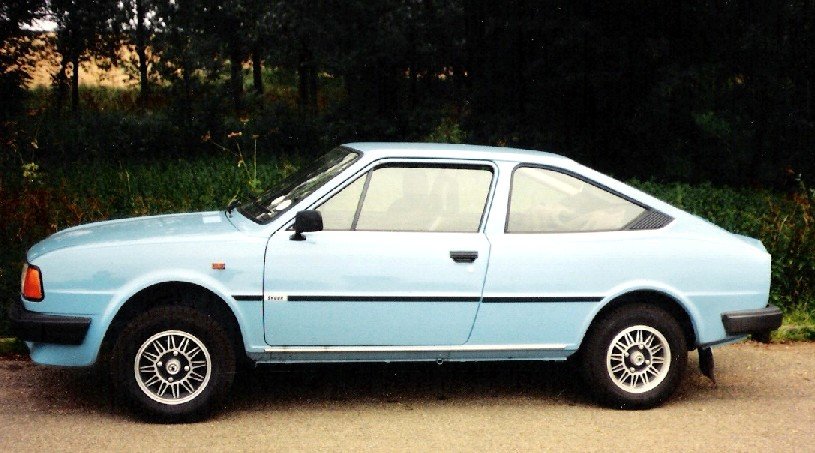
Blimey, I'm a youngster! I've never heard of Town & Country tyres but I've a mate in his mid-70s that probably has, I've heard of vacuum wipers but never experienced them. My car has power steering, push the pedal on the right, no servo required or needed, which is why I like good tyres, and as you can see from photo below it has full onboard navigation systems (updated since photo). But in wet weather I'd sooner be in a modern car.
-
Wow, you must be ancient! I can't remember if I've even driven on cross ply but I do remember in about 1978 or 9 as an 18 year-old doing a quick turn off a 30mph road into a street that was very uphill and a remould tyre going instantly flat. From then on I had good tyres and never remoulds or retreads and never part worn, no matter what certification they might have. My car now is a 1973 rwd so I like to have good tyres but you can't get really good tyres in the size I want so I'm used to compromises and for decades now modern cars have made up for my inadequacies as a driver. Good and really good tyres make a big and very noticeable difference to a live rear axle drive and the same for other types and modern cars but the difference is less noticeable with the chassis design and/or the electronics flattering the driver's errors, and even though I'm an old male I am not a good driver, though I am rare in actually stating such.
-
Have you or the previous owner(s) been using auxiliaries of high electrical consumption, inverter running four separate lots of computer screens with heated or cooled drink containers, or things like heated seats, mirrors, windows running full-time at full blast, a commercial kitchen from the boot, anything that might draw a lot of electric, or a very small amount but constantly or over very long periods when the alternator isn't running? I'm in the habit of being very thrifty with car electrics, I turning all electric off (that the car allows) before I turn the engine off and turn nothing electrical on (that the car allows) until the engine is running. I think a coin slot-meter for the car's electrics would help some, not a smart meter but money from the pocket or purse. Good luck, let us know how you get on.