
Jocko
Members
-
Joined
-
Last visited
Everything posted by Jocko
-
Just try starting the car each morning. A voltage check doesn't tell you a lot.
-
I have tried about 100 times to reset it and it still comes back. I will just have to live with it.
-
To measure voltages you don't disconnect leads. Leave everything connected up and measure the voltage across the battery terminals. A good battery should be 12.6v. Your reading of 12.3 volts suggests to me the battery is not great. 0.01 on the 2mA range on your meter is just noise. If you have a simple circuit of a 12v battery, a switch and a lamp all connected in series (wire from battery + to switch, switch to one side of the lamp, the other side of the lamp to the battery - ) then you will measure 12v across the battery and everywhere up to the switch. Close the switch and you will get 12 volts everywhere up to the lamp. This will still be the case even if you remove the bulb. To measure current you have to break the circuit and put the meter into the circuit. If you did you would not get current flow when you opened the switch or removed the bulb. You do get meters that clamp around a cable and measure the current flow but these are usually for large currents and impractical for measuring small current flows. You cannot restore a sulphated battery. A sulfated battery has a buildup of lead sulfate crystals and is the number one cause of early battery failure in lead-acid batteries. Eventually, a battery starts to draw current internally hence the reason a fully charged battery, left overnight, even if not connected, can be discharged in the morning. It sounds like your starter and alternator are both fine. I still think both batteries are knackered.
-
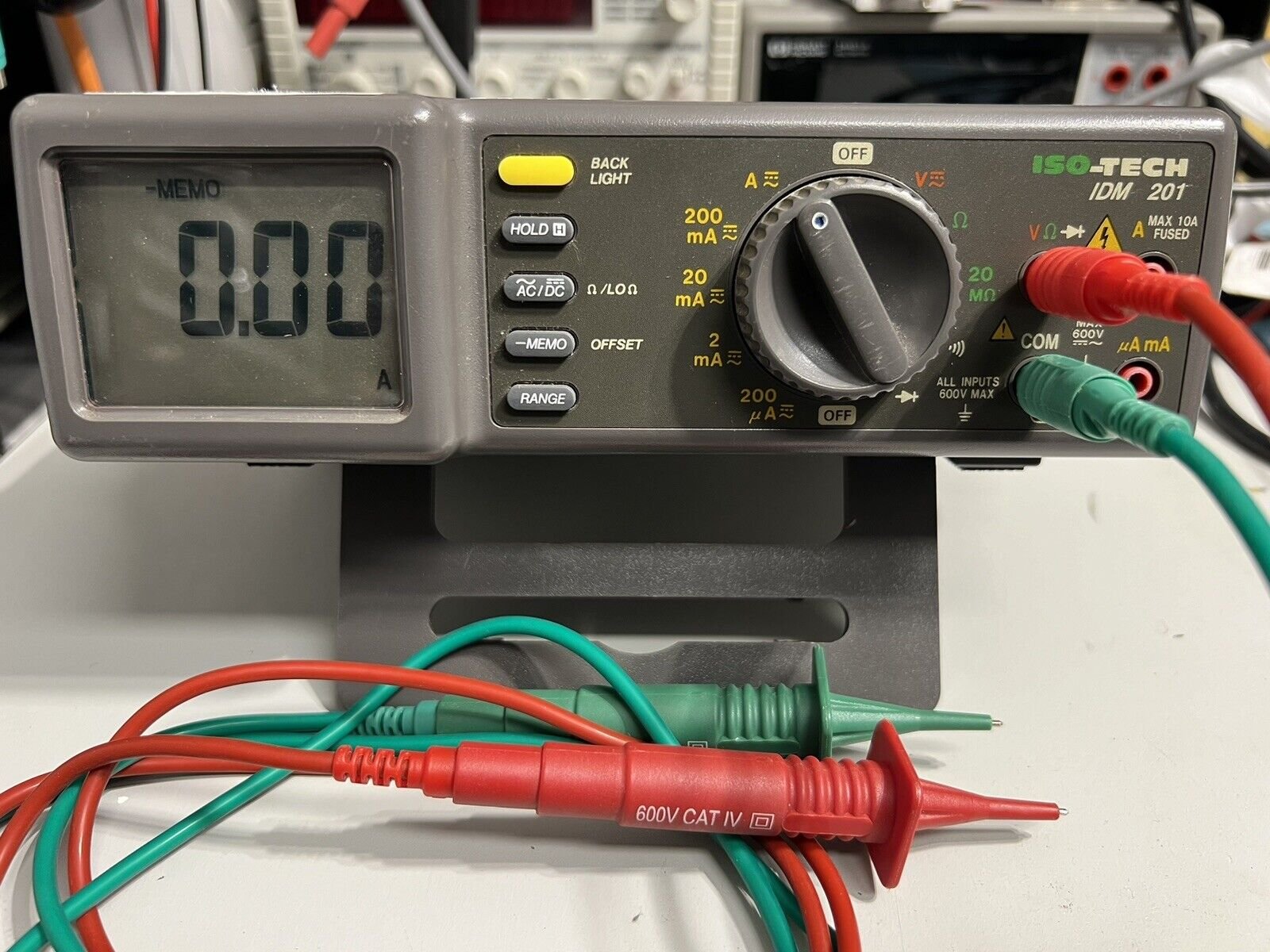
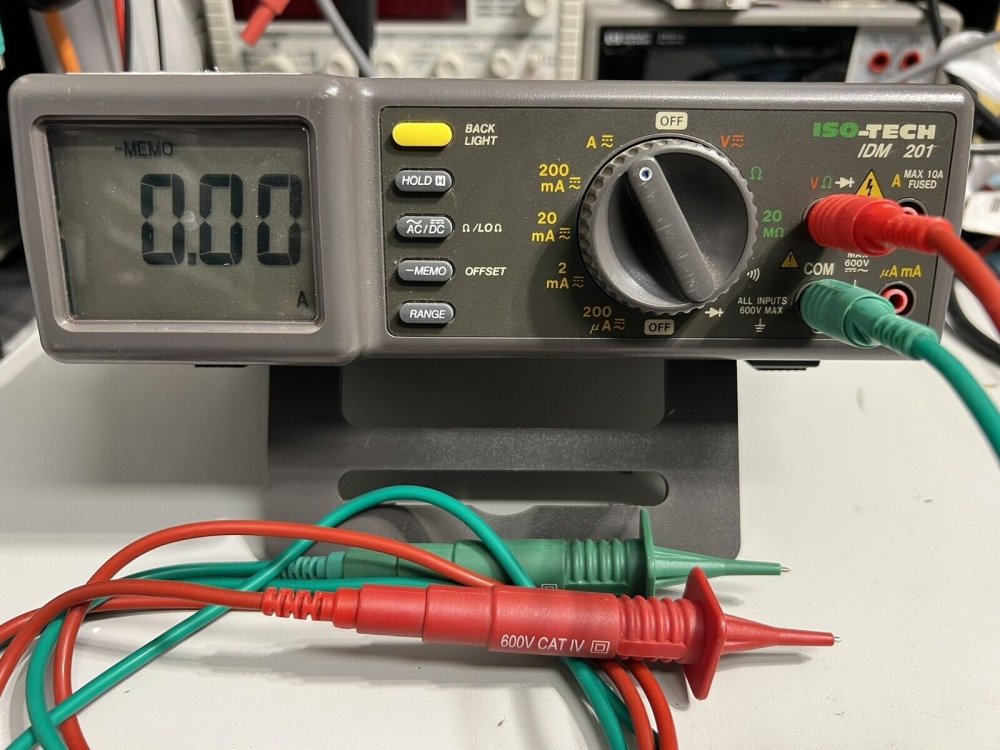
"I went through all the fuses touching all the test points on the top of the fuse bodies to see if any of them were carrying a current". That does not tell you a fuse is drawing current. It only tells you if there is a supply voltage to the fuse, at that time. You do not get Voltage drain, you can get a voltage drop across a component or a current drain through a circuit. if the voltage across a battery drops when you put a load on it it must be drawing a lot of current or the battery is duff. The X relay is a relay that has contacts in several unrelated circuits. I too use an intelligent charger, an AA 4A which has a Recovery mode which will charge a deeply discharged or sulphated 12V battery using pulse charging. It will charge a 12v battery showing only 2v. I used that on my battery and the car would start great. But next morning it was as dead as ever. I fitted the new battery on Wednesday and the car has been great ever since. As a retired electrical engineer with over 50 years experience, I love to get back into fault finding in simple circuits like cars. It has been a while since I had my multimeter out. I use an old Iso Tech IDM203, similar to this 201.
-
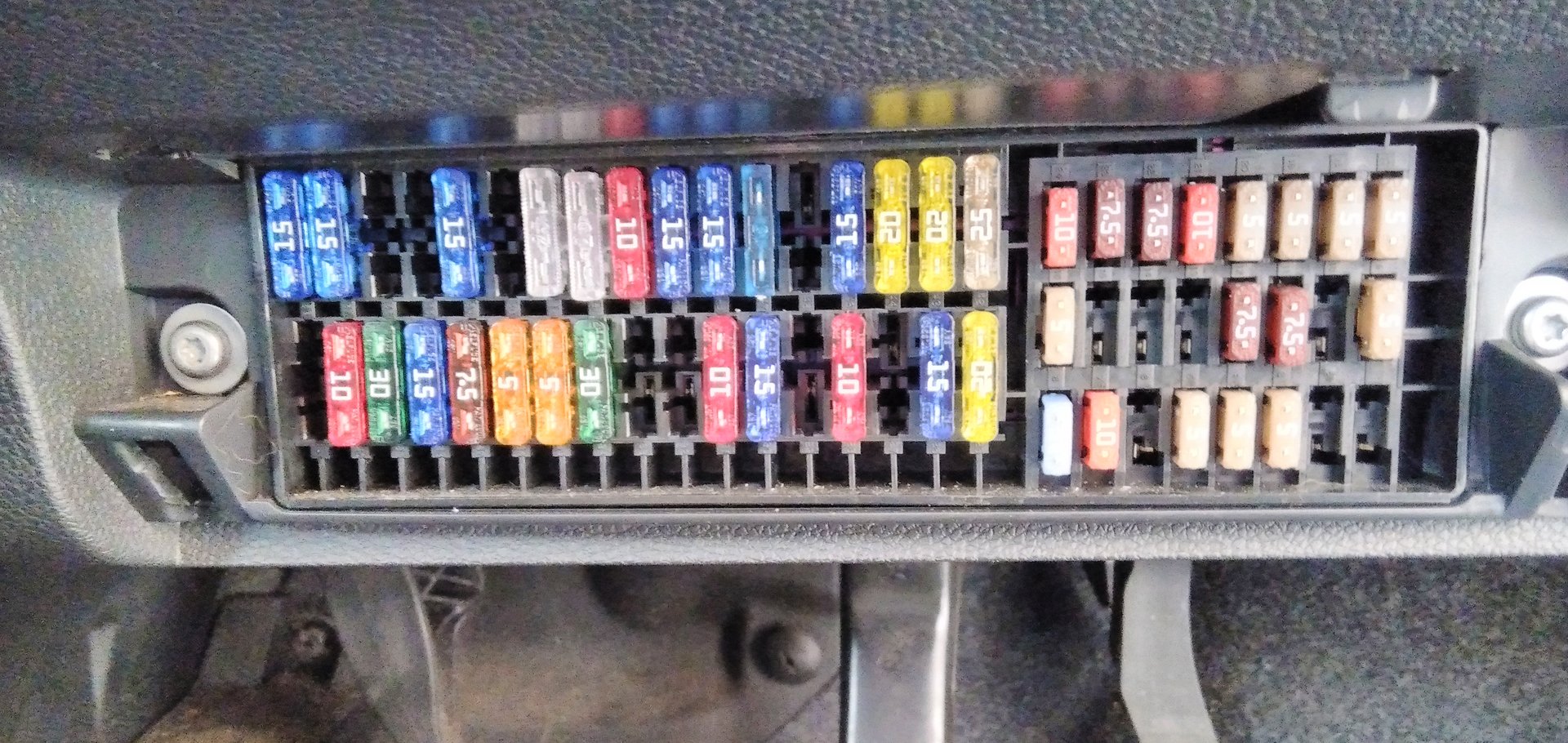
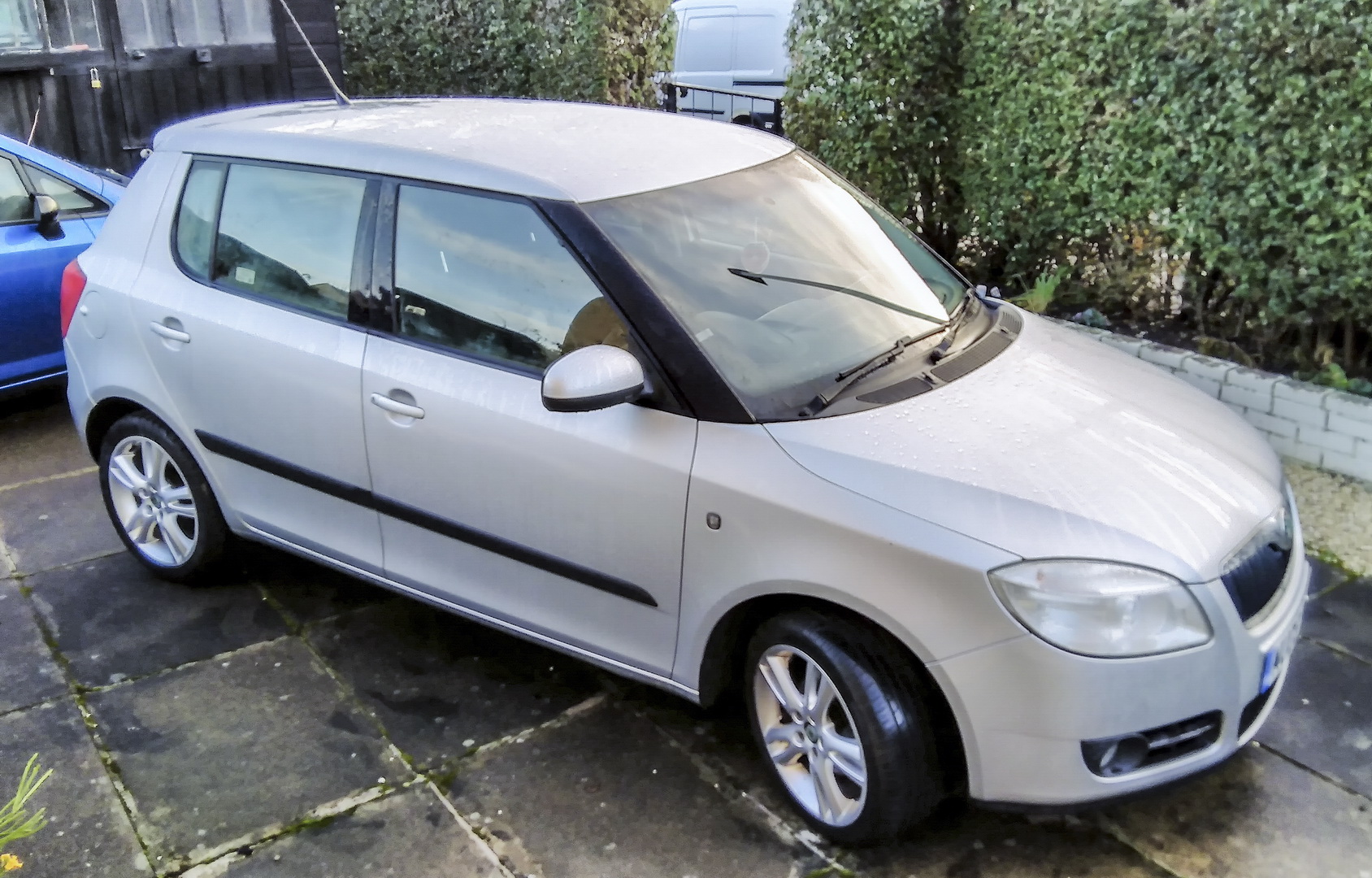
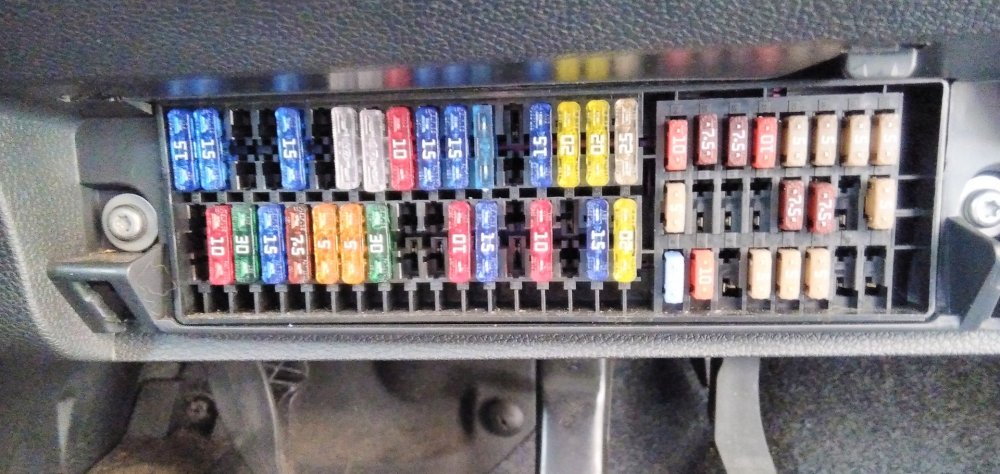
This is the fuseboard from my 2009 Fabia Elegance Hatchback. It has a 1.4 16v petrol engine. I hope it is of use to you. My limited experience with the fuse diagram in the Haynes manual has so far been positive. I do however think you are barking up the wrong tree. In theory, a 60 Ah battery should deliver 60 amps for 1 hour, 1 amp for 60 hours, or 200mA for 300 hours (12 days). In theory. A 3W bulb draws the current you measured. I take it you made the measurement with all the doors closed, the bonnet closed and the car locked. Just the boot/tailgate open would give you that current draw. If you are driving the car then the alternator should happily replace that use in a few minutes running. The alternator pumps out 50+ amps. Check the alternator is working by measuring the voltage across the battery with the engine running. I checked mine this week and it showed 14.5 volts. Personally, particularly with my experience this week (I had to buy a new battery), I think the original battery is done and the one you replaced it with is also kaput.
-
Service indicator keeps coming back. I think I have reset it then it will pop back on again. Bar steward.
-
After fully charging the battery, I left it overnight, and it was flat in the morning. I got a new battery from Kwik Fit, with a five-year guarantee, which will see the car out and, more than likely, me with it.
-
It sure is. I was a Merchant Navy Radio Officer 60 years ago and our equipment was supplied from two banks of batteries, with one on charge at any one time. Although meticulously maintained they didn't last anything like that long. The charger is connected to a socket on the outside of the vehicle so there is no problem connecting it up every time I come home. As for parasitic drain, just what the car needs locked and alarmed.
-
I do very few miles, 5 or 6 miles, 2 or 3 times a week. Because of this, I have a Smart Charger connected to the car whenever it is parked in my drive. Yesterday, I went into the local town, then onto the supermarket, and when I came out with my shopping, the car didn't start as crisply as it might have. Later in the evening, I tried to start the car and the battery was apparently flat. The charger has a Restore function, so I selected that and after about 90 minutes the car started readily. I left it on the restore function overnight and this morning it was showing 90%+ charge, so I resumed my normal charge cycle. This afternoon, I checked the battery voltages (disconnected from the charger), getting 12.6v with the engine off and 14.5v at tick over. I don't need the car tomorrow so I have left my charger disconnected and I will see what the battery condition is first thing tomorrow morning. Last night, when the starting problem reared its ugly head I inspected the connections and all appeared good with no heat to the touch. The battery could well be the original as there was no receipt for a replacement in the paperwork I got with the car, so it probably needs replacing. I have a Swing radio, which as far as I am aware is the original, so I am assuming I won't need a code when I replace the battery. I hope not, as I don't have a code in the radio manual. I welcome any thoughts or suggestions.
-
Sorted. I followed the procedure in the book with the same result. In disgust, I switched the ignition off and turned the knob to the right (CW) one last time and it reset!
-
Last year I reset the service indicator with no problems, I assume I followed (I cannot remember) what it says in the manual: The Service Interval Display can also be reset with the reset button as follows: • Press the reset button with the ignition switched off and hold it down. • Switch the ignition on, release the reset button and turn the reset button to the right. The service interval display is reset. This year, all it does is advance the minutes on the clock. What am I doing wrong?
-
My was no problem at all to undo. The car had been regularly serviced when I bought it.
-
Yes. I check mine a couple of times a year and the level has never changed.
-
It's great to hear you got it going.
-
I find the headlights on my Fabia sh*te. Worst headlights I have had on a car in 40 years
-
There is a method of resetting the flaps by pressing a sequence of buttons. Google it (that's what I did). I may sort the issue for you without getting cold and cramped.
-
Breezy_Pete, a question from an innocent bystander. Why are they different for LHD and RHD? Is it just cable lengths?
-
As Breezy_Pete says, 'bank 1 sensor 1' for the upstream one. The one nearest the engine.
-
Is it not a split reservoir for the brakes as well? It may be the brake fluid you are seeing.
-
Yes. The supply will come into the switch as Breezy_Pete says. You can confirm it is there, by measuring the voltage between a good earth (outside of the Aux socket will do) and the supply wire. As you turn the switch it should also be present on each of the other connectors depending on the switch position. Remember, you must have one side of the multimeter connected to a good earth and the meter set for DC volts.
-
-
I wouldn't imagine there would be a problem driving with the headlights on. If there was, you would notice it first as sluggish starting, as the battery charge starts to drop.
-
There is usually a connection, sometimes low down on the engine/transmission, tied to the bodywork. In my time it was often braided. That is what the jump lead trick bypasses. The battery can be connected clean to the body but if the body is not connected properly to the engine you can have issues.
-
The heated seats are working again. All I did was remove the fuse to check it, find out it was okay, and replace it. When I checked the circuit I convinced myself it had to be the main supply fuse as the lights on the switches came on and there is a separate relay for each seat though neither was working. It must have been a poor connection at the fuse although everything looked clean and tight.
-
Check the earthing strap between the engine/transmission and the body. If you have jump leads connect one between the battery earth terminal and a clean metal part on the engine. See if that makes a difference.