dieselV6
Members
-
Joined
-
Last visited
Everything posted by dieselV6
-
Unless he pressurized cylinders to 100bar on a warmed up engine (I doubt it), he cannot diagnose partially overheated head gasket failure, as exhaust goes into coolant only under high engine load with a warmed up engine. While it could still be something else, all symptoms described so far point to what I had described, together with mechanic's reassurances on how everything is tickety boo with head gasket and pressure. Anyway, just my opinion, time will tell if I am right. If it is the head gasket, you will experience increasing loss of coolant, including coolant expulsion in large quantities after long periods of hard engine work (uphill runs for example). If/when it gets worse, the problem will become obvious, but of course then it will be some months since the water pump job and no recourse. Not the first engine damaged in this way and not the last. HTH
-
From Mk1 Octavia TDI experience under very much similar circumstances, what likely has happened is that the engine has not been refilled with coolant properly and has been driven, overheating head gasket. This only results in exhaust in coolant when the engine is under load. Static coolant pressure test does not detect it, as the pressure is insufficient (<1.5bar vs tens of bars coming from the cylinders via leaky gasket). To confirm in later stages of the problem, warm up the engine, find a long enough uphill road, accelerate in high gear (ideally ~1min), and then usually either you get low coolant warning or the coolant temperature goes berserk. Another telltale symptom is slow loss of coolant into the engine when it is very cold, but you'd need to wait till winter for this. In any case, most likely this is an error on part of the workshop and unfortunately it is very likely that the head has to come off, preferably in another workshop :) In my case, after a timing belt / water pump job by a dealership in late summer, unfortunately I only noticed the slow loss of coolant in winter, then experienced coolant being expelled in late spring. Replaced the head gasket at an independent and all was well for then next 5 years. Dealer who originally bodged this ignored me completely, so I ignored them for all my future car purchases...
-
I think nowadays the newly acquired value of these events is that you get to buy low-maintenance, reliable cars that are no longer made, therefore you cannot order these cars new. For example 150bhp diesel manual gearbox cars at Skoda, or a 3.0TDI V6 tiptronic non-SUV cars at Audi. Sad state of affairs...
-
No new cars that I can see in any make/model (at least except large SUVs / pickup trucks). In used/ex demo ones probably yes, as I have named Karoq Sportline 2.0TDI 150bhp manual (but then no Varioflex which is immensely useful), or if I decide to live with a durable auto box, an Audi S4 Avant 3.0TDI tiptronic (though for a thirsty engine fuel tank borderline at 58l). Did not look at other makes (used) too closely (yet) as I have always maintained my own cars, so switching away from VAG cars would require new tools / OBD interface / manuals etc.
-
I agree with earlier postings that probably the biggest threat to Skoda is the Skoda Auto itself. The doctrine of mandated removal of manual gearboxes from all lineups is now bearing fruit given the numerous premature failures of DSG boxes and the need for much more frequent maintenance/fluid and filter change for DSGs than for manual gearboxes. Same goes for 4x4 Haldex that I have never needed in nearly half a million miles of driving... In addition, cutting fuel tanks everywhere except top of the range (Superb) resulted in a situation where e.g. I can afford any Skoda in any trim in the range, but won't buy it chiefly because the Mk4 Superb only comes with DSG box and is too too long to fit in garages at at least 2 locations I frequently use. At this point, the ill fitting (Kodiak) instrument panel in Mk4 Superb dashboard eclipsed only by its software gremlins probably are worth mentioning. The rest of the Skoda lineup has either way too small fuel tank or a DSG box. Another off-putting feature for me is that the headlamps suitable to drive in the UK and abroad for long periods of time at night seem to be now a £1500+ add-on, when just a few years ago they were a standard feature of most models in the range (halogen and HID projector headlamps with a lever inside). And to make things worse, on e.g. Karoq you have to make a "logical" choice between either having matrix headlamps (Sportline only), or having Varioflex seats, but not both. That's on nearly new ex demo cars, because Skoda killed manual gearbox on new Karoqs... At the end of the day, we probably could live with a well-made and quiet Fabia sized car nowadays, provided it had ~130bhp diesel, manual gearbox, 50l+ fuel tank and headlamps that go to true flat beam for Europe, no need even for matrix high beam. Mk1 /Mk2 Octavia and a Yeti fitted the bill perfectly, so did Fabia vRS except 45l fuel tank. Even the 105bhp Roomster, although underpowered, had Varioflex seats and continues to astonish with its practicality (and a 64l fuel tank for diesel cars, after ventectomy). Right now, I see nothing in the Skoda range that can replace my 2 ageing cars. The numerous electric trolleys introduced into the Skoda range are a complete non starter for me, given that last year, e.g. on my vRS, I did 80% of annual mileage in 10x overnight ~1000mile trips. Petrol/hybrids are also a non starter for me, given petrol/diesel price differential in Europe (probably £8k+ in additional petrol over diesel fuel costs over lifetime of the car) and the inevitable loss of range on autobahn with the thimble fuel tanks present on current Skoda models (except the Superb).
-
It could just be electrical glitch due eg to oxidized connector to injector harness. I'd wait for failure that is more systematic / repeated. On my wife's Roomster, an injector failed on a trip back from shopping (electrical failure), engine went into limp mode and was shuddering, but other than getting home very slowly, no other harm done. I have replaced actually 2 injectors, as this allowed me to diagnose and eliminate a long term fuel into oil migration issue. Would have replaced only 1 injector otherwise. HTH
-
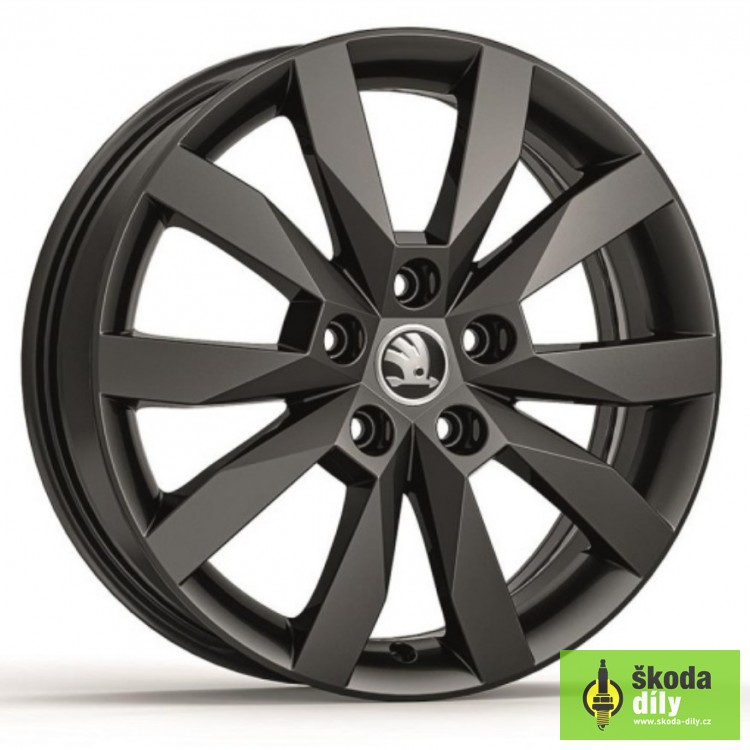
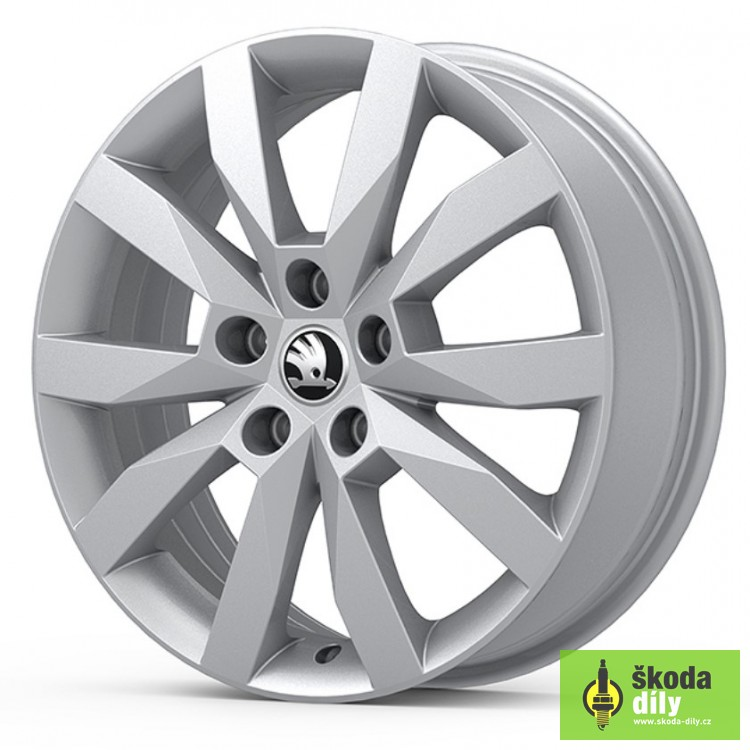
If you really want some rim protection as well as comfort, you can get 17in "Crystal" (winter) factory fit alloys which are 6J, with 205/50/R17 (with snow chains) or 205/55R17 (without snow chains, or with snow chains if suspension raised, it's Scout size) tyre. They come in silver or black. These particular ones will even take the larger 340mm brakes such as on petrol Octavias. Granted, not the racing wheels / tyres, but for everyday use incl high speed autobahn driving they are more than adequate. These offer over 25mm+ rim protection on each side of the wheel, and I have not managed to scuff these in 6 years / 60k+ miles, including driving on some very poor quality roads in the UK and abroad.
-
It will fit (make sure it's the correct side :) ), but it is also refurbished / remanufactured, there's a £35 core charge on top of price to return old ones to them. The only new ones I know of are straight from VW/Skoda, at nearly GBP300 a piece, that's close to £600 for 2 new rear 310mm mechanical handbrake calipers. For example here: https://www.skoda-parts.com/spare-part/5f0615423-brake-caliper-rear-left-skoda-39953.html https://www.skoda-parts.com/spare-part/5f0615424-brake-caliper-rear-right-skoda-39954.html I have ordered from this supplier many times, the service is very good, but at these prices, I'd rather stick with what I've got. I looked into the topic last year as I considered upgrading my vRS TDI brakes to the full 340mm / 310mm combo, but in the end decided to stay with 312mm/270mm and just put EBC yellow pads all round. Works well enough for me, just like on all previous Skodas I had/have, and parts are readily available, unlike the mechanical handbrake 310mm rear calipers.

-
Out of curiosity, I've checked that website, 2 variants and both out of stock, nothing new, the likes of autodoc etc have the same lack of stock. Most rear 310mm vented brake calipers for mechanical handbrake that you can buy at all are refurbished. Not an easy item to get a replacement for nowadays as no one is making them new, only ones for electric handbrake are still made.
-
New calipers for rear vented discs are hard to get for mk3 octavia as they are mechanical, much easier to get ones for cars with electric handbrake, unfortunately.
-
Front DRLs can be coded out with VCDS or similar tool in Central Electrics block, pretty much any lighting combination can be altered in that way. But it is quite involved, every light is on a different light "channel" setting, and you can change when the particular "channel" is used. I did some recoding 6 years ago to enable rear/scandinavian DRLs and 5-light stop lights and remember it was easy enough but quite tedious to code in everything, any exterior light on the car could be coded in that way.
-
A bit OT, but a manual VW/Skoda gearbox only needs a gearbox oil change every 6 years / 150k km or so, a good automatic tiptronic gearbox does not need oil/filter change more often than 8 years / 160k km. Looks like we are quickly going backwards on car's durability and maintenance intervals... progress, eh? ☹️
-
Same vote here for the B6, in my mind B8s are only for dropping much further than stock sport suspension. I have used B6 on Mk1 Superb V6 TDI (redone sport springs front, raised HD springs rear) and on Mk3 Octavia vRS TDI (stock sport front, raised HD springs rear), work very well without issues, in case of Mk1 Superb and over 200k miles, and in cases of both Mk1 Superb and my wife's Roomster for over 12 years and still counting on the Roomster :) Regarding springs, in my experience usually the rears sag more than fronts on liftback cars, so if you want to replace, it would be the rear ones. Personally, I prefer handling of the car with HD / slightly raised springs at the rear (ca 30mm over stock "sport" height), especially when the car is full of luggage and/or at high speeds (as in autobahn, 120mph+). This has certainly been true for Mk1 Octavia, Mk1 Superb, and my current Mk3 Octavia vRS, so my guess is Mk3 Superb won't be much different in this respect. So if you decide to replace the rear springs, it may make sense to get ones 1 or 2 groups up from stock, but it is your decision.
-
Headlamps are interchangeable, no CANBUS issues etc. However, if you happen to have projector (round lens) headlamps, they have a lever inside the dipped beam opening to switch from dipped beam to true flat beam. If you have those on the car, It may be worth asking MOT tester whether they will pass the MOT on the flat beam setting. Until 3 or 4 years back, they would pass in England, not anymore, but I know that even NI has a slightly different test rules. Road lighting is very good on flat beam, still my favourite beam shape for trips abroad, sadly unavailable on newer cars.
-
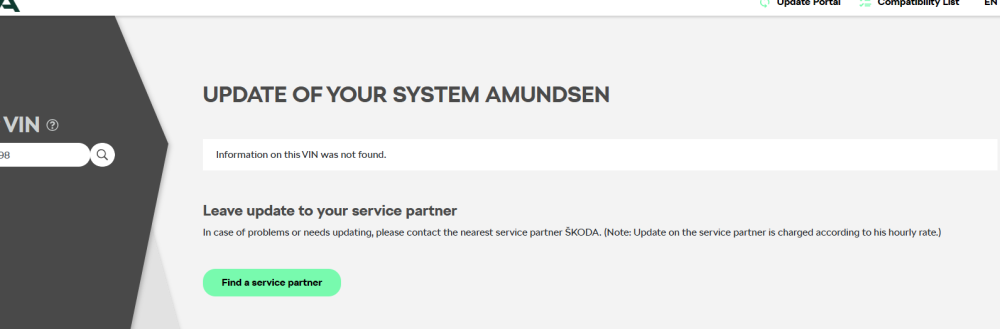
I have just checked my car's VIN, and same result 😠. I did update my vRS's SatNav in January, and repeatedly in the past. My vRS is 9 years old this year in autumn, so the cutoff seems to be 8 years. IMHO this is yet another sharp sell tactics pushing towards disposable cars after a fixed (and too short) period of time, accountants dream but really bad for environment. The previous SatNav I have used in my Skodas (and still do in the Roomster) was/is TomTom Navigator (using Dell Axim x51v PDA). After 17 years of use (first in the Mk1 Superb and then the Roomster), which is nearly double of Skoda's 8 years cutoff, I still have ~2 year old maps for it, and while it can be excruciatingly slow planning a route, the guidance and the route options are much better. Bottom line is, I no longer consider Skoda SatNav an added value for the car, if it goes out of date after 8 years, when clearly, the car can be used for much longer. It seems that Skoda has come a long way in the last decade... the wrong way that is 😞
-
Depends which headlamp model/year, but if it is projector dipped and reflector main then yes, both are H7.
-
Is the window glass original? If it has been replaced/smashed in the past, the metal gap in which the window sits can be uneven and allows too much acoustic vibration. Aside from taking all door trim off and evening out the window slot (lots of work without guarantee of success), a much easier thing that you could try beforehand is to put a couple 10mm wide x 1mm-2mm thick sponge neoprene rubber strips (sticky on one side) inside the outer window seal grooves. This will press the window more firmly against the other window seals when the window is fully up. If this reduces your noise a lot, it's a cheap fix. If not, the precut sponge neoprene rubber is cheap so little harm done other than 10mins lost to put in / pull out the strips. I had a similar problem on driver side (window smashed/replaced before I bought the car, I actually replaced the glass on both sides with original Skoda glass a short while later), except in my case it's above 100mph... autobahn runs. Now largely addressed for some years by the said neoprene strips, though still driver side marginally noisier than passenger side. I did replace the door trim and the window seals on the side where the window had been smashed, and noticed the window gap was quite uneven. In hindsight, I should have tightened it further and evened it out, but could not be bothered to take the door trim off again at the time.
-
Not sure if the wide 19in rim fits as it is very wide / high when horizontal, but you can certainly fit even larger diameter 205/55/R17 wheel (Mk3 Scout size) into the spare wheel well. I am driving on 17in "Crystal" 6jx17 alloys in this size and the spare is the same, fits just fine. Mind you, the "Crystal" alloys are only 6in wide ("winter" alloys for the Mk3 vRS), the 19in alloys are I think 7.5in wide and so 1.5in higher in the boot. But you could put a large piece of thick felt cut out around the spare wheel well to match any difference in height above the boot floor.
-
Best to remove o2 sensors after running engine/exhaust hot. Probably not safest to work on, depending on sensor location, but they do come out easier and without additional heating. I use a slotted impact socket with a breaker bar then a ratchet, impact sockets tend to be beefier/stifer than regular sockets. Main problem is getting the right impact socket that fits the sensor, a lot of them fit only thinner sensors and are not suitablle for Bosch o2 sensors which have a thicker body. Have not removed any O2 sensors on the mk3 vrs yet, but did remove a couple on other cars.
-
Is the beam really true right hand traffic driving beam (Z-beam, right hand side of the beam shining higher than the left hand side of the beam), or is it the UK beam dipped down and shifted to the right? I am hoping for the fomer, but that was the problem with previous gen AFS lights. Flat beam/no kick-up would also be OK.. Would it be possible for you to post a picture of lights shining at a wall 5m-10m from the car, with lights sent to Continental driving? It would be much appreciated, as it is very hard to get reliable info on this otherwise. Just because there is a change in the beam, it does not mean it is a correct beam, my MK3 octavia AFS HIDs being prime example with bodged road illumination on Continental beam setting.
-
With recirculation on, the air is drawn into the system via an open flap in the footwell. I can only speculate, but the extra (unwanted) smell would likely be coming from the carpet in the footwell or whatever is in the footwell ( boots etc. ) next to the flap. Assuming of course that the whole cabin does not smell like that.
-
Leak tests often omit the obvious - leaks from the fill valves, one of which is on the thin pipe you mentioned so could be the very problem you see. I have had both low and high pressure valves leaking on my Mk3 vRS, new valve inserts sorted this out, but you need empty system to do this, mine was kaput and empty also for for other reasons (seized/leaking compressor), if the system is still full of refrigerant you need to take it to a workshop where they can extract refrigerant first, then change valve inserts. There exist tools to change valve inserts without emptying refrigerant, but I did not have good experience with these. HTH
-
I've had this happen twice so far on my Mk3 vRS. restart of satnav (very long press of power-on button until you see restart screen) together with restart of the car (as in key out, then key in/ignition on) have cleared this problem. No errors recorded/readable in VCDS it seems.
-
ExpressRust brand discs and DeepGroove Pads from factory, changed after ~2 years, the next set of discs lasted ~8 years and 2 sets of pads. 100k miles. No track days, but more than a few autobahn trips as well as at least 6 trips to/from Spain via Andorra/Pyrenees (nice views and fun drives across the mountains ), so yes, the brakes did get a workout over the past 12 years. Heater motor died on the very next drive after latest return from Catalonia, I guess the airco got workout there.
-
Certainly new Octavia has 10% smaller fuel tank than the Mk3. Scala has 50l fuel tank I think like the Mk3 Octavia, current Fabia has 40l -45l depending on version. I did notice that Skoda seems to hide/omit fuel tank capacity in recent brochures other than the larger cars. For range at (moderate) speed, best cars were Roomster and Rapid diesels, good old 55l + 9l vented capacity fuel tank. From Mk3 cars onwards, the only long range non-SUV Skoda seems to be the Superb, Octavia got cut from 64l vented to 53l vented, Fabia's range got hit even worse. If only engine fuel efficiency followed...