newbie69
FREEDOM
-
Joined
-
Last visited
Everything posted by newbie69
-
Fair enough, I interpreted your comment as an objection that fitting in a hatch would not automatically mean it would also fit in an estate. Yeah I am a hatch/sedan type too. I find that body style can look particularly sporty and/or elegant with the right touches whereas the estate will always have its practicality and optimal cargo carrying abilities in the front page which is not what I'd like my car to be about primarily, if i make sense here... But we strayed off topic here, OP you're going to be fine regardless of the body style you choose
-
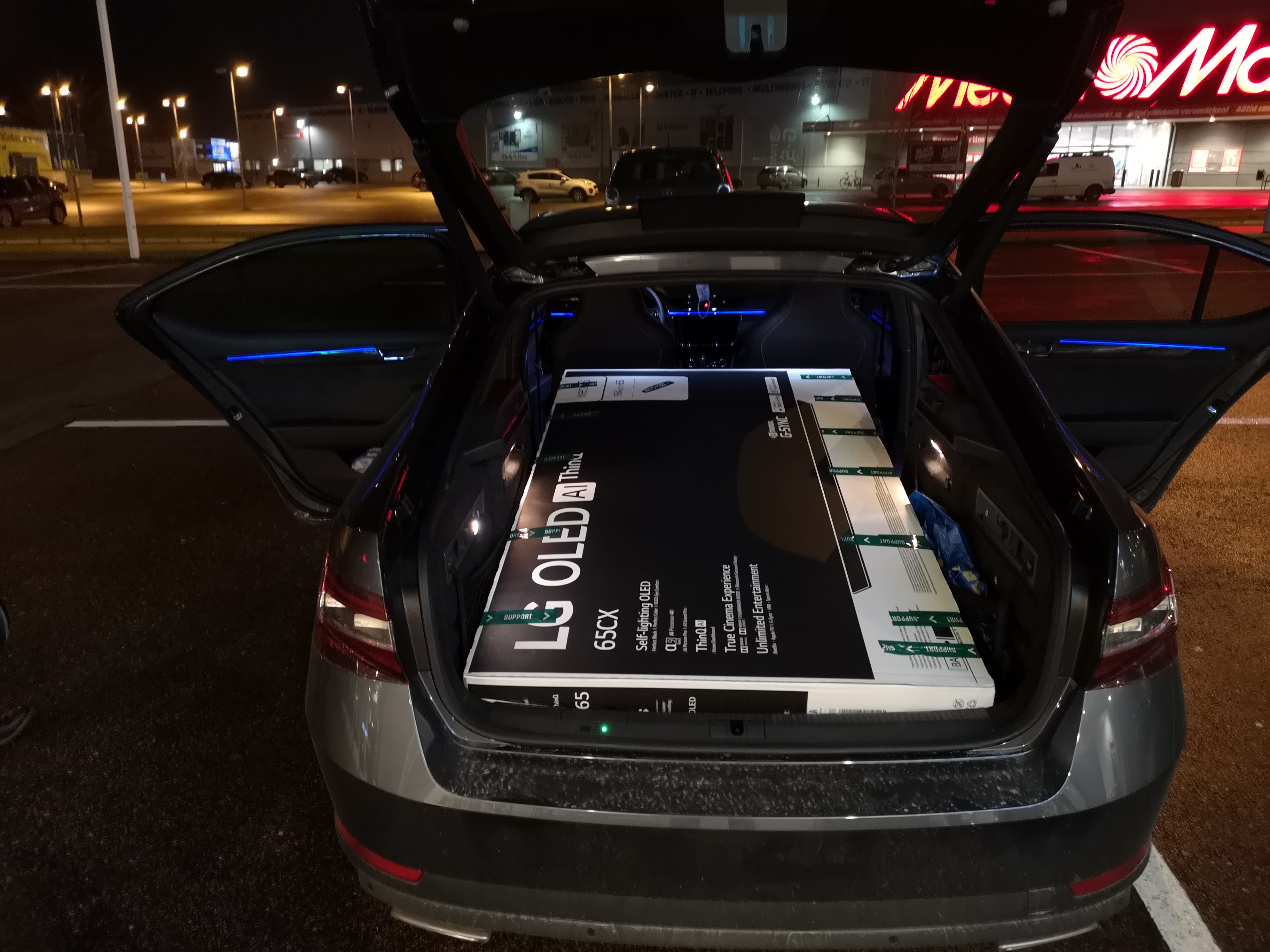
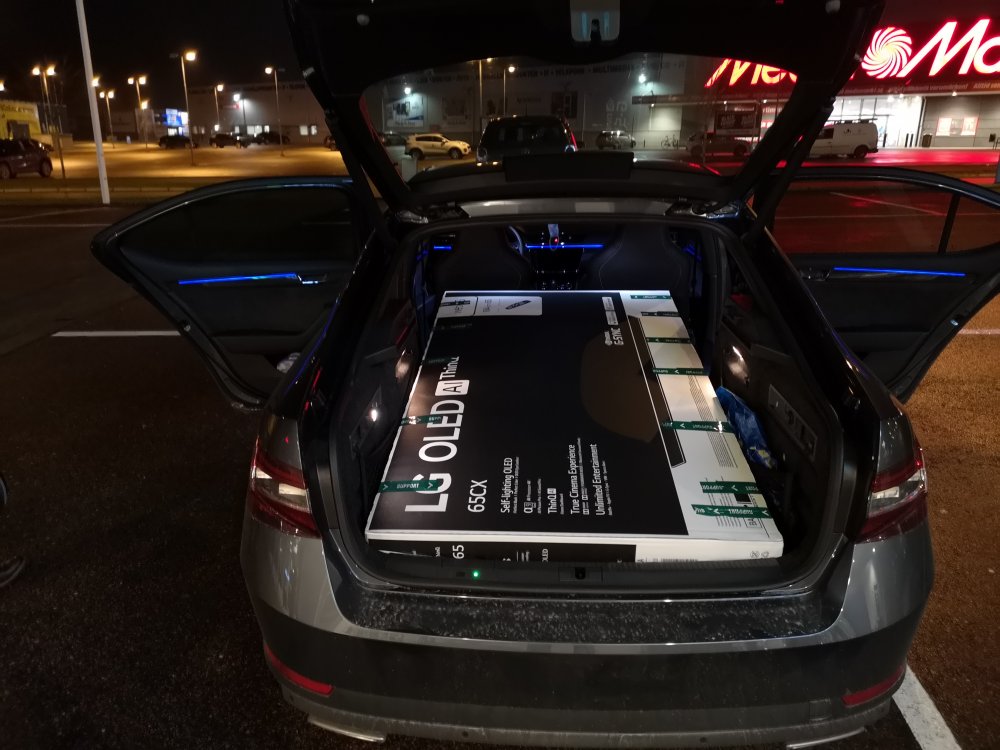
That's quite misleading. Hatch is longer by a whooping... 5mm which is probably due to bumper design differences. Wheelbase, as well as cabin space is identical in reality between all variants. Also the 1,77m long box in mine wasn't even touching the back of the front seats, there were around 20cm left if i recall right, hatch or estate would make absolutely no difference in this case.
-
Fuel pipe rattle would be my first guess if it's a 280/272 but the gas pedal should not "click". Fuel pipe rattle occurs at a certain point between 2000-3000rpm (different on some cars) especially when revs are dropping from 3K down, less so when rising. Check against this vid also: There's a TSB for that so they should be able to fix it, if it it is that indeed.
-
You shouldn't have any issues for the dimensions you mention. This was a 177cm x 100cm box, in a Superb hatch...
-
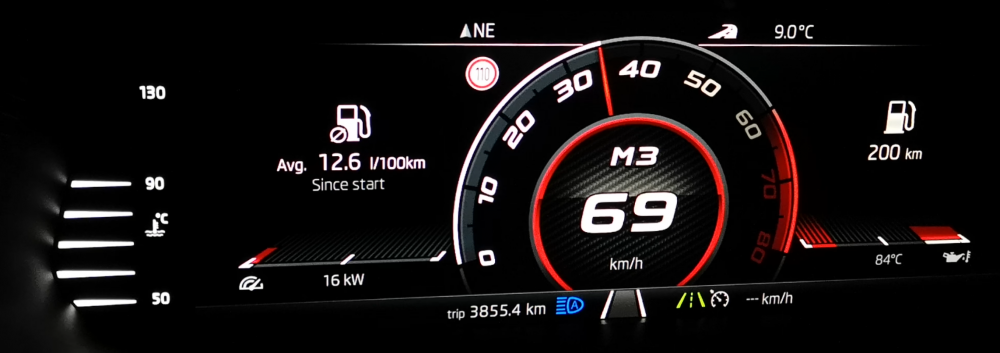
Traffic Sign Recognition
-
Chances are it's something from getting the turbo out and back in, as is usually the situation in such cases, and not a real issue, fingers crossed.
-
Why would the Superb need it more than say a Golf R estate that weighs roughly the same considering they are both running the same stock unit? The upgrade of the intercooler can be beneficial depending on how hard the map is pushing and the environment, it is a supportive upgrade that ensures full performance is achieved even in tougher conditions but it's far from the cornerstone of any map's development. Worst case I might be leaving some performance on the table especially when temperatures rise but as long as the car runs as strong and the logs are as clear as they've been so far there's no reason to assume I would benefit from one, at least from a safety perspective. I don't chase every last horse any more but I do always keep an eye on how the engine's running and run my own logs regardless of what each tuner claims. The other night, the car was hitting consistent times in repeated pulls (must have been 7 or 8) over the course of a 30min drive, no heat-soak or reduced ignition timing whatsoever. It was a cold night yes but that was the most demanding driving scenario I'd be putting the car through and it performed flawlessly. I also have access to Ethanol in the fuel stations here and traditionally, especially in the summer I usually do run a mix of up to E15-E20 if I see some knocking so I will keep an eye of-course but from the way things are at the moment, it would need quite a change to justify the need to upgrade it. Not saying it's impossible, just that the signs are so far promising. In any case, not upgrading the intercooler is in no way equivalent to say running a stage 2 map without an upgraded downpipe (that's how I interpreted your comment ) which is a big no-no. REVO would of-course recommend it as it is an extra safety for smooth operation under all possible climates (and a considerable revenue to them) but I'm lucky to be somewhere where ambient temps don't get too high or for prolonged periods of time so I could get away if the map does not turn out to be too extreme (which REVO maps are not known for being as such in general). Let's not forget this is not a real stage 2 anyway as it runs on the stock GPF downpipe... rather a maxed out stage 1.
-
Then save your time and money and ask them to flash the stage 2 map instead I didn't upgrade the inter-cooler and downpipe stays stock anyway.
-
Uhmmm, I don't know, I've moved on Joking aside, my stage 1 was set at 98+ performance mode and same for the stage 2 and didn't have any issues. But a) we do run a bit colder over here than you guys, and b) there's Ethanol 85 available in fuel stations when some help is needed with timing in the hotter months, I usually mix it to E10 or E20 levels during summer if I am to chase all of the performance.
-
You mean under 21 seconds but with some good combination of tailwind and cold weather a stock car could get into the 20s, but that's really as fast as it could ever see.
-
Again: not possible. Either tuned or on a downhill. To elaborate on this: Videos of the speedo without GPS verification are irrelevant and not representative at all, even more so on the 100-200 part which takes several hundred meters and the impact of downhille slope becomes very significant. That is if someone is actually interested in accurate numbers and fair comparisons of-course, otherwise for the pub they're fine. Now the vid above shows a 0-104 of just over 5 seconds which points to a stock car (slope has much less impact on that time), and a 104-208km/h speedo measurement of roughly 14" (without the continuous tacho view enabled it's hard to tell exactly where the 104 is), in unknown, road flatness. To provide some context, a mere -2.5% of downhill slope (which is not even such an extreme figure) means the correct time when slope is accounted for is 16" (there are calculators for this), and it could easily be even more, see where I'm getting? Plenty of stock 272 have been timed in the 100-200 run and they consistently do between16" at best and 17"-18" more often, depending on the body type and equipment, bringing the total 0-200 to a 21" at best. There may be whatever tacho videos showing 0-200 in under 20 seconds, but you won't find a single GPS verified measurement to back them up, and there's a reason for that.
-
Not possible to go below 20" in the 0-200 unless remapped, stock 272 time of the 0-200 is around 21"-22" If you refer to the video below, it is not a true/accurate measurement as it is just a stopwatch of the speedo which is is around 4% off. In the 100-200 run this equals to as much as two extra seconds, true 200km/h is around 207-208km/h on the speedo, and it takes around 2 seconds to do the 200-208km/h on the stock car as you can see. Depends on what you're coming from of-course but i find they are merely "ok" as stock, the acceleration fun is really limited to low speed flooring (assisted by the AWD), above 100-120km/h the acceleration is nowhere near as impressive. Now stage 1 is around 16" and stage 2 closer to 14", and they start to feel quick at that point.
-
I liked the looks of that one too but it's too small, both in terms of rear cabin and boot, essentially it's a raised Golf/Leon hatch. I could go down a size to the Tiguan/Ateca a or Golf/Leon estate but that's too small for our needs. Plus, for some weird reason it's more expensive than the bigger Cupra Ateca on the same underpinnings, not making any sense...
-
It would need the black badges too for that But looking great indeed!
-
Yeah, I see. That's probably an exception due to a combination of factors like setting off on minimum traction conditions, amount of steering lock etc. The Haldex algorithm takes a lot of factors into account in deciding how much it should engage the rear axle and varies it continuously. In reality, in 2 years of owning the car I have not once managed to get the ESP to flash due to loss of traction including driving in the rain, and I do have quite some extra torque than stock going through those axles too...
-
Only a couple really, but I went with this one, below a small review: Feel free to drop me a pm if you want to know more about it.
-
Don't get too fussed up about dyno numbers, they don't tell all the story and with that much torque (558Nm is A LOT!) I bet it flies now... You went with APR? How do you feel it? I'm sure it should be in the 10s in the 100-200 run. Mine didn't even get that high in terms of torque, at least from the ECU readings, seemed to be topping about 515Nm but that wasn't on a dyno, maybe there it shows a higher figure (not that I care too much really, but I have booked a dyno session later this month so I will report back with the figures shown there. Get a Dragy! That's all that counts!
-
1. Yeah but paying 1860EUR for upgrading my own turbo to a LM440 IS38 and still making just... 400bhp is kinda hard to swallow you know I'd like to see mid 9's at least. So I'm afraid I won't stop at an upgraded turbo but continue to an upgraded intercooler, a downpipe etc.... 2. You know I could troll like some people on FB groups and post just one Dragy run showing 10.1" but that was more of a fluke in the best conditions possible. I don't want to fool myself (or others) that's why I wrote that the repetitive performance is closer to mid 10s and even just slightly above that, which is of-course an amazing time as it matches a non-GPF stage 2 car with upgraded catalyst, but you know what I mean. But there seems to be something with GPF engines I have to admit. I've seen two GPF Cupras ST 4Drive (1550-1580kg depending on equipment) do 8.5"-8.8" with a real stage 2, upgraded catalyst and GPF removed from an independent tuner . Even if they are closer to 9" this is a huge time for a GPF stage 2 1550+ car.
-
It is a very efficient system indeed which has received undserved bashing by Torsen die-hards (and probably due to the fact the first generations weren't that good so the bad reputation continued on to the newer ones), but in reality it just works so well for 99% of the situations especially in its latest iteration that makes more complex systems un-necessary unless for very specific applications. That's why Audi is slowly switching to Haldex based Quattros even on its bigger cars above the A3 platform. The fact that VAG chooses to tune it towards a safer feel (minimum rear axle engagement) and not to provide some driving fun doesn't help either but as can be seen from a Haldex controller, it can also provide some fun if tuned differently.
-
I'd say it's as predictive as it can be. For example during launch control, the Haldex is fully engaged even before setting off and in general the system prepares itself based on various parameters like throttle position, steering angle, acceleration etc. to be ready for most scenarios. On the other hand there are situations that simply can't be predicted, ie. if suddenly the fronts go over ice and lose traction, there's no way to foresee that. What's important is that even in the unpredictable scenarios this latest gen is so fast in its responses that you don't ever get to feel the moment it has started to intervene, it is very seamless. Meaning nothing like the first Haldex generations that wheel slippage was required to trigger the system's response.
-
It's not technically possible for Haldex to send more power to the rear wheels as you say, at least continuously. Allowing the rear end to momentarily step out and play with some opposite lock is possible even in the dry with ESP set to Sport but it's a short-lived event as the car tends to become straight rather quickly. What you are experiencing is the natural behaviour of the Haldex when it senses that the front wheels are about to / have already started to slip (for example in a tight turn where you apply throttle or much earlier in slippery conditions): Rear axle is engaged and, with adequate throttle, since the front/rear axle ratio of turning is 1:1, the fronts are braking the car while the rears are accelerating it due to the different turning radii, in other words: the car oversteers. But don't get too excited because the way the Haldex ECU is tuned is so as to only bring in the rear axle as little as possible, just enough to correct wheelspin and understeer, but not to maintain oversteer and drift. So as soon as the car starts to oversteer and you think "wow, am i in a BMW??" the ECU will lower the rear axle engagement to bring it back to a neutral behaviour and the party is over. The above is easier to provoke on slippery conditions (snow) and of-course with more torque (remapped cars). This is where an aftermarket Haldex controller comes into play by locking the rear axle's engagement to a desired percentage up to 100% which in equal front/rear traction conditions would mean a 50-50 torque split. However even that 50-50 assumption is not always true and there can be moments where more torque is arriving to either axle due to traction differences, for example during acceleration where the front lifts and the rear dives, during drifting etc. In other words the percentage of engagement does not always guarantee a fixed torque split as that depends on the available traction from the tires. To go in even more detail, the axle weights and tire pressures come into play but it really gets too complicated beyond a certain point. I run such a controller and it is very easy to provoke the rear end to step out (in the dry) and maintain the drift for longer, it is quite fun indeed, but again, the car eventually settles. It is more useful for providing an extra level of agility during turning as you can make the rear to rotate much more easily than stock and thus help you noticeably in cornering, but it can't turn it into an oversteer, tire eating monster due to the inherent design of Haldex.
-
Current weather definitely helps, we have between 0-2 degrees here over the last 10 days, but because of that I did a 100-200 run one day before the flash and it was a 11.7" so the gains are real. I'll monitor closely as I said for possible power loss when temps get hotter but it is not worrying me that much. For starters I could add some ethanol as it is available in the fuel stations here, and run a E10-E20 mix, that should take care of timing issues to an extent. There's also the option to switch to the 97RON or 95RON version of the map (while running 98RON of-course) for a milder operation, and of-course nothing stops me from adding an i/c in the end if that's really deemed necessary, we'll see. The impressive thing is as you say the achievement of such performance and smooth operation on the stock exhaust... Probably, I will only upgrade the i/c if i decide to upgrade the turbo too with something like the LM440. Not to use it to its full potential as that would be impossible without a downpipe upgrade but as a preventative measure for the turbo. Car is our primary driver so the trouble of having it off the road for an unknown time if the turbo blows is something much worse than the upgrade cost (Can't imagine fitting any of our stuff in the wife's Corsa ) . Also because the plan is for a long road trip this summer and a couple of months being away (haven't left Sweden since summer '19...) assuming the whole situation gets back to normal-ish, so that's probably the worst place to be having a failure and looking for repairs. Not much to report about the Haldex controller as I've only driven the car to the tuner and back, and did some testing, drop me a PM about what you'd like to know in specific, I also have an idea if you're really interested in finding out how it drives
-
Intake and intercooler are requested from REVO too to hit 400bhp, i guess the meaning is we tune the map so that with intake and charge pipes it can provide 400bhp and to have it available all the time under all conditions, an I/C is needed. On mine it seems to be working for now on the stock i/c but I wouldn't be too surprised to see timing pull back and worse acceleraiton numbers in the summer so nothing new there. The real question is how the GPF cats are able to flow the gases of a stage 2 @ 1.8bar if the pre-GPF's only main cat couldn't but it's a new setup and it's normal that things move on I guess. The Mk8 R with supposedly just 320bhp is hitting mid 11's in the 100-200 as stock (consequently pushing closer to 340-350bhp in reality), and who knows where stage 1 will get it with the evo4 EA888 variant and the new turbo. I don't think you shouldn't get too upset about it! Especially since you have a strong turbo that can push 420 easily if tuned accordingly...
-
Actually, 1.8bar is the typical pre-GPF stage 2 peak boost too, nothing different here. Hits it around 3500rpm then tapers down to 1.5 to the limiter. The impressive bit is this is achieved on the stock exhaust system without any timing being pulled, let alone fault codes etc. Will need to confirm it when temps hit 20-25 degrees regarding the need for an intercooler but REVO have been testing this map for some time now so it must be within the system's capabilities. My only guess is the GPF main catalyst could be slightly less restrictive as the GPFs are also there so the work is shared, but then the overall limitation should have been the same, or maybe this is not how the main + secondary catalyst combo is working. I mean, we've seen from stage 1 already that GPF engines were making similar gains to pre-GPF somehow. We'll see how it fares in the long run.
-
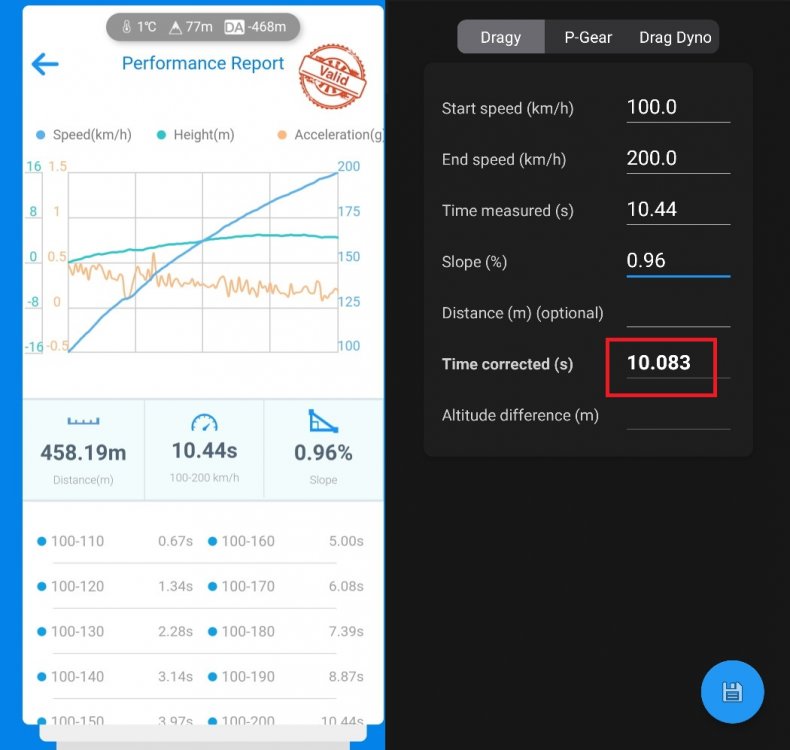
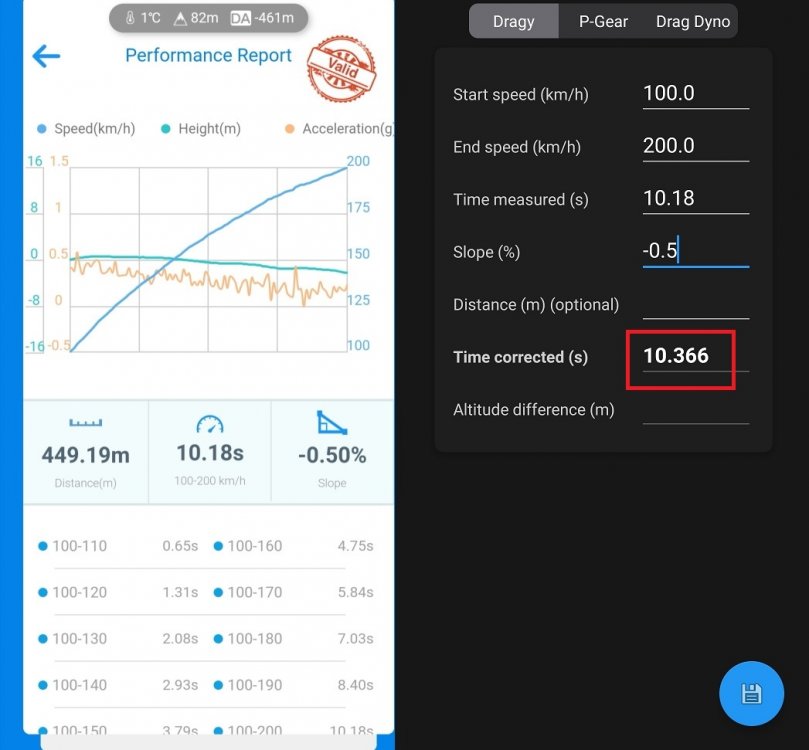
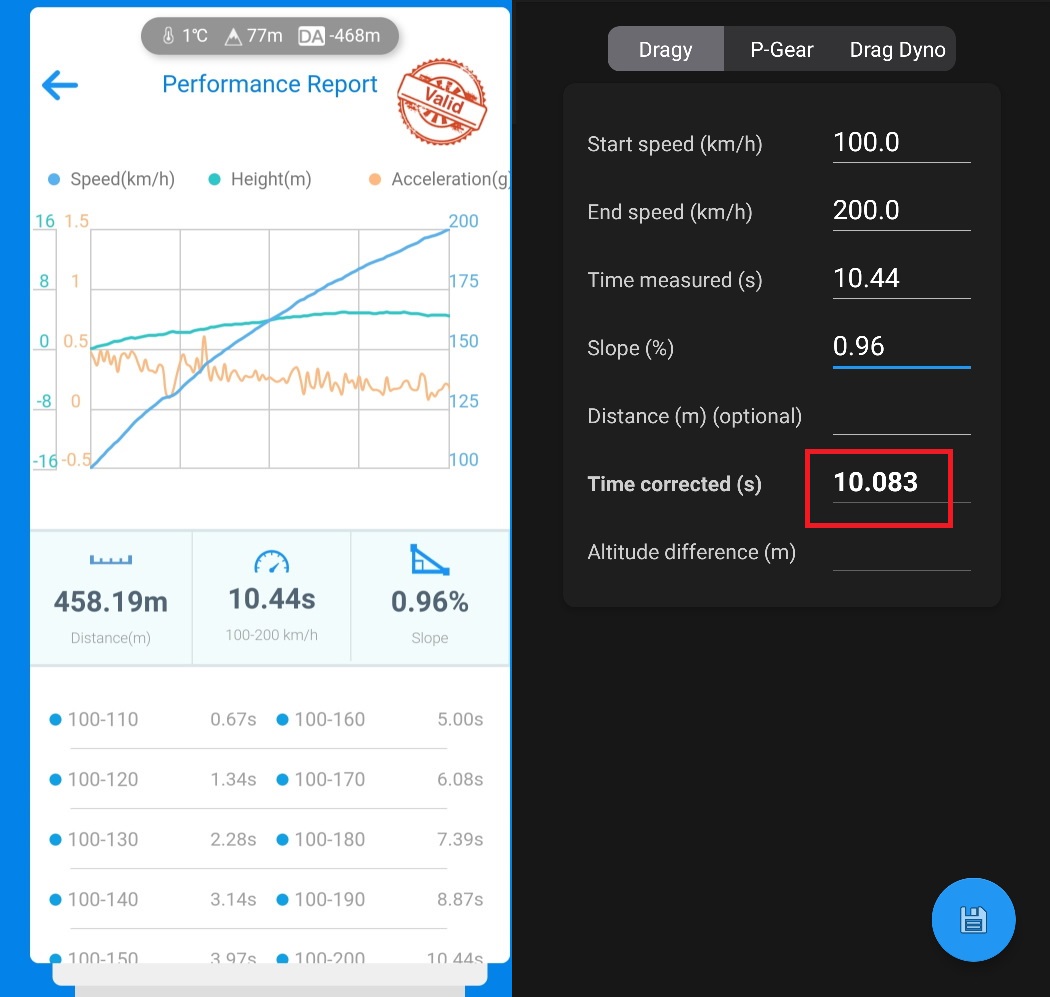
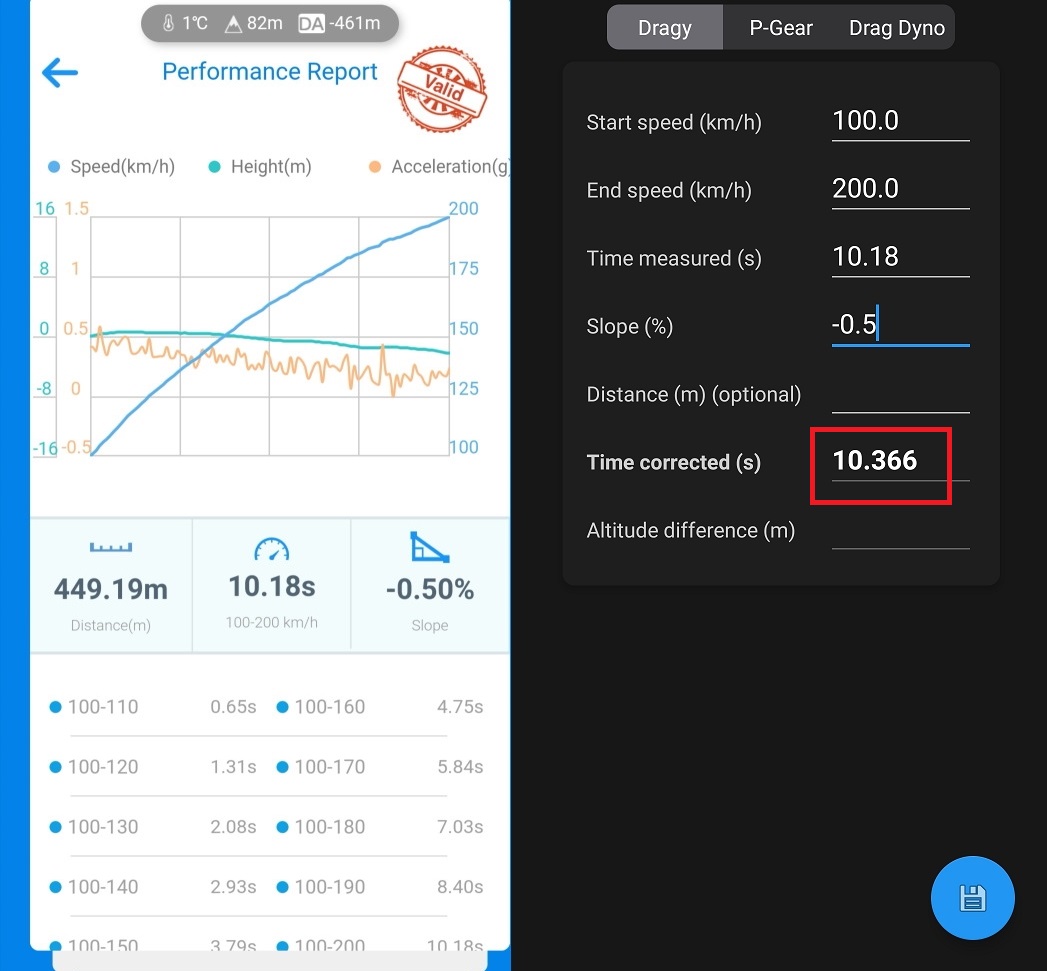
Update on this as the car was flashed with the stage 2 software last week I already had the intake mods suggested by REVO, so this was only a remap job. I didn't touch anything hardware wise (no inter-cooler or charge pipes upgraded). Reason is the GPF Stage 2 is developped to be run on stock downpipe anyway, and an upgraded inter-cooler would only prevent possible power loss from high ambient temps and heat soak that currently are not an issue where I'm based or for the type of driving I do (no extended full throttle application...) so I just went ahead. Car seems to be running fine after some logs and I will keep an eye on logs and timing as getting closer to summer in case I see a noticeable drop in performance but for now it all looks good. Performance wise I'd have been glad to see half a sec off my previous average 100-200 time of 11.7" but I was in for a surprise. The car was indeed feeling as if it pulled somewhat stronger but I was shocked to see my best runs between 10.1" - 10.3" . Subsequent testing showed a consistent average of 10.5-10.7" too which is still more than I could have wished for. For a 1630kg car with 272bhp stock, and just software, an intake, and a turbo inlet pipe done, those times are very impressive. For reference, my 360bhp/1470kg GTI before was managing 10.9-11.0" at best. Also, every stage 2 Superb 280 I'd seen so far was closer to 11", and that was with an upgraded downpipe and no GPFs on obviously so maybe the GPF catalysts are somehow less restrictive? Can't really explain it otherwise. Anyway, I have a dyno planned soon not for peak numbers but rather about the new torque curve but i can say that REVO's claims about 400bhp on the stock downpipe on GPF cars don't sound exaggerated at all. My only concern with boost now peaking at ~1.8bar (up 0.2 from 1.6bar before) is the turbo longevity so I might consider some LM upgrade options come spring time...