
nta16
FREEDOMLite
-
Joined
-
Last visited
Everything posted by nta16
-
Unless the brake servo on the Felicia is different to what I know on old British cars it is just an assist to help with reducing the amount of leg presure to the brake pedal so the brakes should continue to work but you might need to push the brake pedal sooner and harder than when the servo was fully working to achieve the same braking that you are used to on the vehicle. When the brake servos sometimes go faulty they can have other effects. Always remember that the tyres have a great deal of effect on the braking (and suspension and steering) performance which is why you always want good quality tyres kept in good condition (and correxct pressures). Old tyres even with plenty of tread depth left can be aged and gone hard with greatly reduced performance.
-
Sorry I don't know but pressumably (always dangerous) the spindle with its slot is to drive something and the original spindle is 10mm and what looks like a narrower open slot(s) than the 11.5mm, wider looking open slot(s) replacement, can't you swap in the original spindle to the replacement motor (if it fits) and see if the motor (body and fixings) fits then?
-
I'm not't a professional business wendyball (football) fan but shouldn't you be supporting the local team rather than that there Lundun team. 😁 The bottom link seems to work, manuals are in English (well German to Chinise to English perhaps if like the 'Owmer's Manuals') there's also this site's Fabia Mk2 forums for lots of info and real world advice from owners and others. - https://www.briskoda.net/forums/forum/166-%C5%A1koda-fabia/ https://cardiagn.com/2007-2014-skoda-fabia-ii-workshop-manuals-wiring-diagrams/#google_vignette HTH.
-
On the Fabia Mk3 (and other VW stop/start) generally, unless it's a sudden high drain to the battery, there are warnings of the battery getting very low, the battery has to be very low indeed before it won't start the engine. Before that often the first sign can be that the stop/start doesn't work when it should - or air-con reduced, etc., see 'Owner's Manual'. Some owner/drivers may drive and use the car and all its many and various electrical bits in such a way that the VW computer programing for the stop/start and lip service to reducing emmissions and fuel consumption keeps the battery and its computer programing around and above the about 80% battery charge much or sufficiently enough of the time not to shorten the useful life of the battery on the car. But, for many owner/drivers, particularly with models like the Fabia Mk3, won't drive and use the car and all its many and various electrical bits in such a way that fits in well with the VW computer programing for the battery to get other than a shorter useful life on the car. This is why preventative (usually slow) charging to 100% with an aspproprite charger maintainer is required to get more (often much more) useable life from the battery.
-
Some of the gimmicks on some chargers may or may not recover batteries that have got very, very low. With standard batteries, which the EFBs are, I've never needed these, often expensive, gimmicks chargers. I think the Ring maxes out at around 14.8v but never fully trust the word of some bloke off the internet, check with Ring. "Telephone +44 (0)113 213 2000 Fax +44 (0)113 231 0266 Email [email protected] www.ringautomotive.com" Instructions RSC904 - https://shop.ringautomotive.com/media/catalog/product/file/UINS_RSC90x__ALL_2.pdf
-
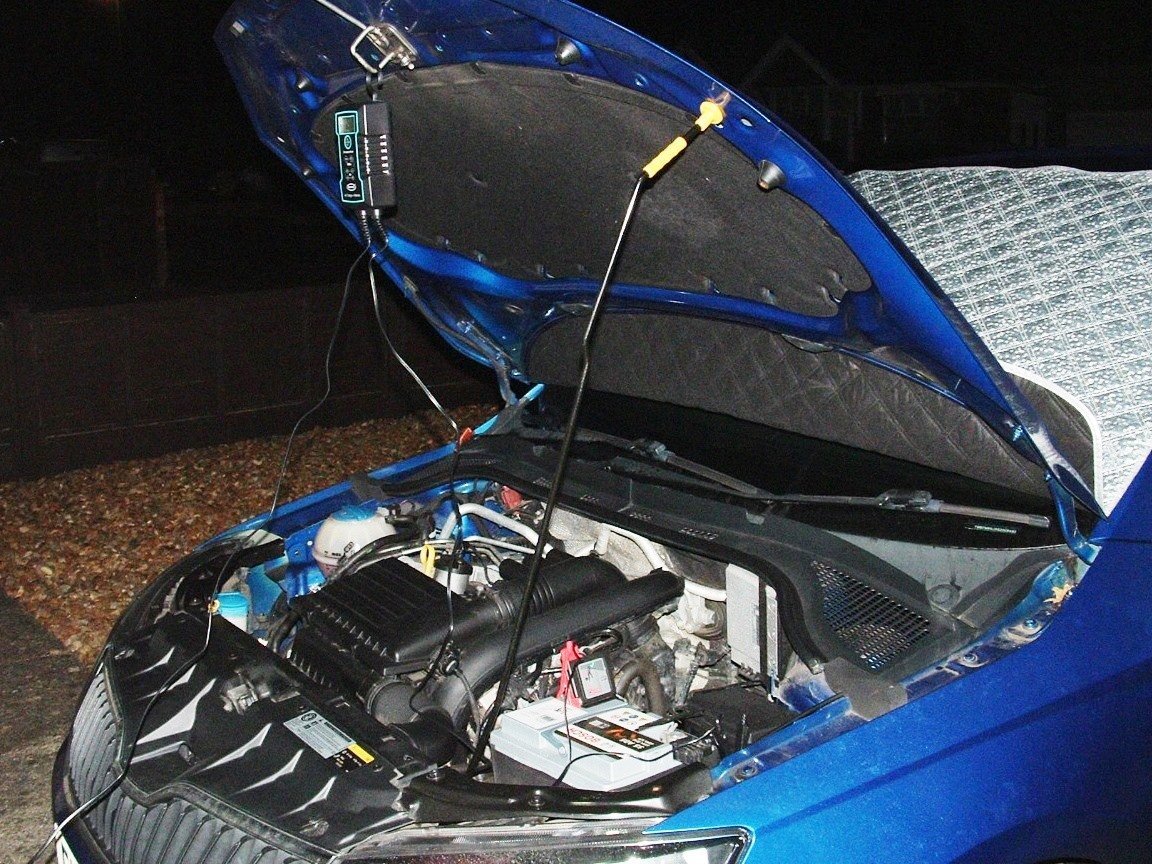
Short and practical answer for you is yes. IF you followed the battery charger instructions and did not switch the mains power on until after you had connected the charger leads up correctly and the Ring 904 is working correctly and can charge from as low as 2v then your battery is below 2v (a test with a multimeter, probes directly on battery terminal posts, would confirm this). From Ring RSC904 instructions - "ER1 (Error Code 1) appears when: 1. Battery clamps are connected incorrectly. The correct connection is Red Clamp to Positive, Black Clamp to Negative. 2. The charger is powered on before being connected to the battery (connect first, then power on). 3. The battery is completely flat. The charger requires at least 2 V to add charge; below 2 V, it will not charge." Even at 3 months lack of car use I'm a bit surprised at how low this battery might be but it does depend on on the life the battery has already endured and if there is/are item(s) that run when the engine is not. I've only seen one battery below 2V and that was IIRC below 1V on a roadside breakdown of a newer type Jag XJ that had been driven at about 5am on the coldest day of that year then shown off with heated seats on when the battery was already showing signs of being low, how it drove as far as it did is very surprising even for the massive battery it had and big alternator. I've recovered batteries below 3v but I'd not recommend their use on (modernish) German cars particularly those with stop/start and of course it depends on the life the battery has already endured.
-
Two things I would rule out are that trhey may be a fault in ther haedware or software to the OCU or something it relates to (infotainment? or elsewhere) and secondly that yes perhaps VW do have a forced (false) "end of life" type con programmed in related to time but those are only possibilities. As the battery charges from the 12v battery I would guess, don't know, that there must be some kind of measuring of this. I don't know if this post with link tin that post to general info about the OCU and an example phone of one helps you at all generally but here it is. - https://www.briskoda.net/forums/topic/523358-is-this-navigation-symbol-normal/#findComment-5850217 The following gives a shout out to @Cairus as he may well be able to give answers to your last post. HTH.
-
It's also so the battery monitor system know the battery is getting charge and it's state for stop/start operation, it avoids the earth post terminal clamp where the battery monitoring system connection is. -
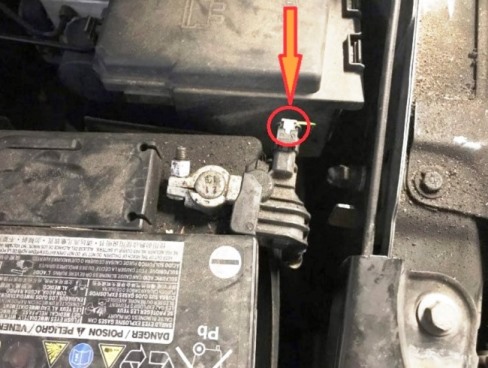
-
I'd be surprised if it isn't capacity and voltage type measurements as it's recharged off the main 12v battery - but I don't know for sure. I've no idea how in depth OBDEleven Pro goes with details but VCDS has rediculous amouts of details available so perhaps see if someone with VCDS in your area can help you. - https://www.briskoda.net/forums/topic/262215-list-of-vcds-owners-previously-known-as-vag-com-vcp-owners/#comment-3091029 And/or look in the 'Diagnostics & VCDS' forum as there are some Briskoda members that know lots about coding and computer set ups. - https://www.briskoda.net/forums/forum/23-diagnostics-amp-vcds/ HTH.
-
Good piont. The Ring charges from 2v, according to instructions, which of course is very, very low indeed so will take a couple days or more to fully recharge ("FUL"), if it can, after say 48 hours or so of charging I'd expect the battery might be as good as it gets. Perhaps enough to give more usualable service life but I would check the battery voltage after the car has been standing parked up for three or four days or after a few days of use and see what voltage has been retained and same again after a couple of weeks. You can establish battery voltage by just connecting up the RSC904 and see what figure it gives whether you actually go on to charge the battery again or not. Let us know how you get on.
-
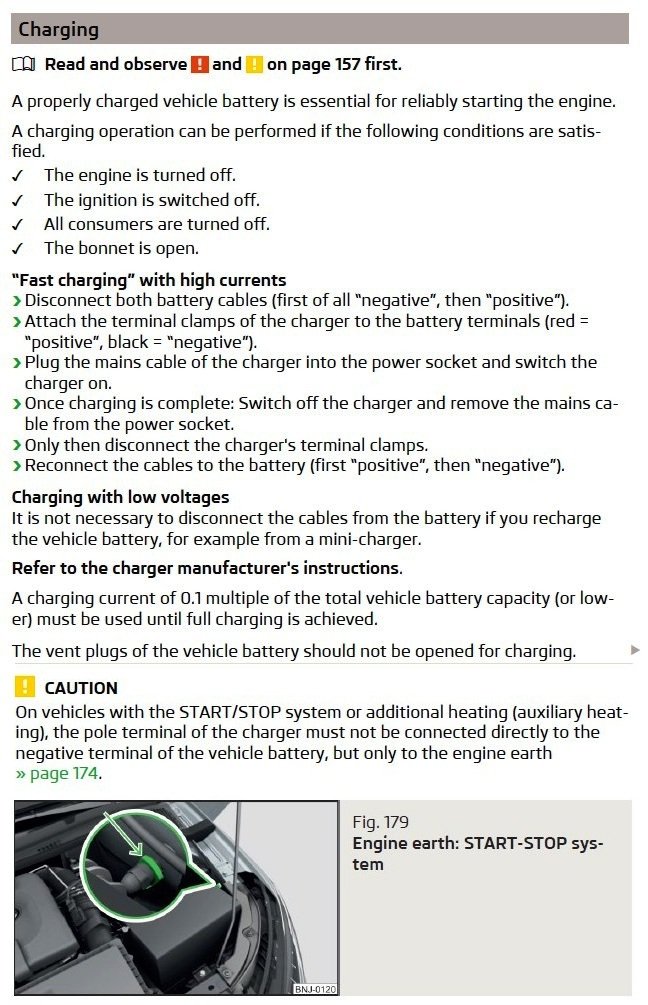
This is also in the 'Owner's Manual', as an example only. -
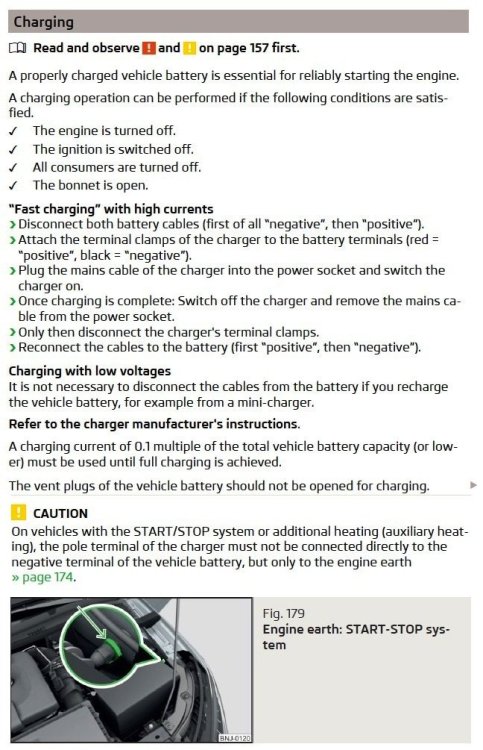
-
Tes it might be that. The replacement motor appears to have quite a few differences to the original included the fixings and their spacing, smacks of not too accorate copy which might be a difficult or impossible fit, without "modifications", even on a bench let alone out of sight, at an angle and lying awkward angle . You get this a lot with replacement parts, even those that are supposed to be "original equipment.
-
I don't know as I take no notice generally but I suppose the logos you have are a bit bland but still not totally informative and some logos might be a bit too arty to casually know what they represent so the station conformation is there below. Try some different station logos in presets 4 and 5 and see how they look. There might be someone that knows of alternative logos that are available but its not me and and the standard radio/infotainment computer programing can be truble for some so I leave things as they are and anyway if I'm driving I look at thne road and if I'm a passenger, which is the vast majority of times i prefer the radio off as my wife like you prefers music to speech radio and I don't like here choices for of car music. You could have a look and/or ask in the 'Audio, Electronics and Security' forum or in the 'Diagnostics & VCDS' forum if you're into computer stuff. Both forums are in the 'General forums' section. - https://www.briskoda.net/forums/forum/95-general-forums/ HTH.
-
Some good advice. Might be a little too over cautious and premature on parts replacement because of previous experience from leaving things a bit too much. Most servicing and maintenace and some repairs boil down to simple clean and lubricate, which should as put be included as required when replacing parts. For the bleed nipples, they will be used every two years when changing (and hopefully flushing) the brake fluid so will be tested then I'd not remove them at fear of getting crap in you can feel how easily (or not) they open and close, no need to overtighten to close. With the pistons if you are keeping on top of the "servicing" then they should last a reasonable time, obviously more serve conditions may hasten their demise. Drums used to be "serviced" or cleaned every year or 6-months, this might include handbrake and drum adjustment, lubricating and checking for wear on shoes and other parts. Some people still clean all the brakes every year 6-months ( aneighbour seems obsessed with wheels off and brake cleaning on any car that gets near his drive. Obviously can't criticize checking and cleaning brakes but I don't often clean the discs and pads brakes, drums would be another matter. I am a very rank, vey amateur, very relucant, non-mechanic type that started doing some work on my cars when I began to run out of money to pay professionals to do low quality work which I then had to finish off or redo myself, not because I was any good but I took my time and fully cared about the outcome, unlike some of those I paid. As I am so reluncant about farting about on our car(s) and don't know too much mechanical stuff I do understand why others don't want to especially with these modern plastic cars full of computers, sensors, modules, thinnest electrical wiring possible, ect., ect.. VW don't alweays use the best quality parts on their cars so you can improve on what was fitted by the factory and what they offer as replacement parts, often better quality and longevity parts than VW offer and often at lower prices than VW or their suppliers charge, go better not just cheaper, particularly on brake, steering and suspension parts (all three systems include tyres).
-
Hi, welcome. It might be my bad memory or that I don't see those station logos but they look the usual size to me ( on my wife's 2015 Fabia radio screen) 5 pre-sets to a row, three rows of 5 presets. See the illustrations in the Operating Instructions booklet. I assume you got the logos from the VWŠkoda website 'Update portal'(?). - https://updateportal.skoda-auto.com/ You may already know this but in case not, if you don't have your paper printed copy of the 'Operating instruction' and/or 'Owner's Manual' you can get a pdf copy from the VWŠkoda manuals website. - https://www.skoda-auto.com/apps/manuals/Models And to complete the set a link to the VWŠkoda recalls website (well the few they admit to anyway). - https://www.skoda-auto.com/services/recall-campaigns I hope this helps if not just say so or ask for whatever you want/need.
-
How old are the 6mm tyres, there will be a production date on the sidewall, four figures, first two are week number into the year, second two the year, and/or were they cheap hard wearing tyres? Generally the best tyres to rear for these cars I believe and now you know the noise you may still hear it if you move the (wheels) tyres to the rear. I've always found lots of noises come from the engine bay as the computer systems, components and parts do their stuff I just ignore them now and don't hear them so much when the front underside is thudding and clonking, it may be now the bearing noise has gone you can hear and concerntrate more on the other noises that were there before but masked by the bearing noise. The air-con on my wife's Fabia sometimes makes nioses, as does the compressor or alternator drive but again I've got used to them (and another reason to do a few prevetative charges with the battery charger to 100% instead of the car's 80% to give the alternator a very slightly easier life). Considering a Mk4 is like jumping out of the frying pan into the fire, save yourself some hassle and money and get a 2016/17 Mk3 - or better still a different, and more reliable, make and model. Have a look in the Mk4 section for the extra fun the extra years bring. DerekU is a Mk4 fan but will give you warts and all if you ask him for them, mention my name and you'll get a negative discount. 😄
-
A good piont, although if the electric windows (and electic sunroof) were fully closed they should be OK but doesn't hurt to reset them just in case and as a good exercise as it's so easy to do. IIRC you just push switch to fully open then to fully close and hold on the button on closed for a second or two after fully closed - but the proceddire is in the 'Owner's Manual'. After disconnecting and reconnecting the battery the only thing I can remember actually needed resting was the time of day clock.
-
They missed the bulletproof Diahatsu engines then. It was the Americians that corupted the Japanese with the dodgy Americian corporate attitudes and practices so perhaps Suzuki thought the cent-pinching VW Germans were better, and then learnt differently. I've had two Suzuki 3-cylinder enges, a 657 cc turbo which was as sweet as a nut and the 1.0 l na version that sounded a bit rough when pushed to long journeys at 70 mph but was amazingly economical even 20+ years back. The Diahatsu 4-cylinder, 659 cc turbo was also very sweet and robust it got the car to attain it's claimed top speed (not Uk road) and pulled from very low revs (1,000 rpm per 16 mph in top (5th) gear all without fuss. And again to be fair the Merc 3-cylinder, 599 cc, turbo engine was sweet and robust, though ressticted to 81 or 83 mph IIRC.
-
ETA: When the battery is charged you will probably still get a load of warning lighs/messages most can be got rid of with the following method - start the engine let it run for about 30 seconds so you can look and hear everything is OK with the engine running, turn on the air-con, blower and headlights then turn the steering wheel to full lock both ways (no need to stran this) this will let the very dumb computers know the battery is better then turn of the auir-con, blower, headlights as required if needed, because a warning remains, or wanted, go for a drive, this should clear any remaing warnings. HTH.
-
I'm sorry to hear you were ill in hospital for so long, just being in hospital so long, let alone the illness and medication, will take some getting over so build yourself back up progessively but don't rush it. Also remember if you should have to lift a battery they are very heavy, particularly the large sizes required for VWs and their stop/start systems. Forget the jump starter packs. If it can be recovered you need to fully recharge it to 100% (not 80% like the car's system does) using a suitable low amps (2, 3, 4 or 5 amps) charger maintainer following the instructions in the car's 'Owner's Manual' and instructions for the charger maintainer. This may take 24, 48 or 48+ hours to fully recharge the battery to 100% (of whatever capacity it has). You may not fully recover the battery but it may still have more useable life in it but that depends on how flogged it was previously and how well you recharge it this time. A battery charger that I recommend only because I use the previous model is the 4-amp Ring RSC904. - (link shows it as currently out of stock with Ring but I'd guess still freely available from other suppliers) - https://shop.ringautomotive.com/rsc904-4a-smart-battery-charger-maintainer.html If you've not got the paper printed copy of the car's 'Owner's Manual' you can get a free VWŠkoda pdf downloadable version from the VWŠkoda Owner's Manual site. - https://www.skoda-auto.com/apps/manuals/Models If you need any more help/info just ask.
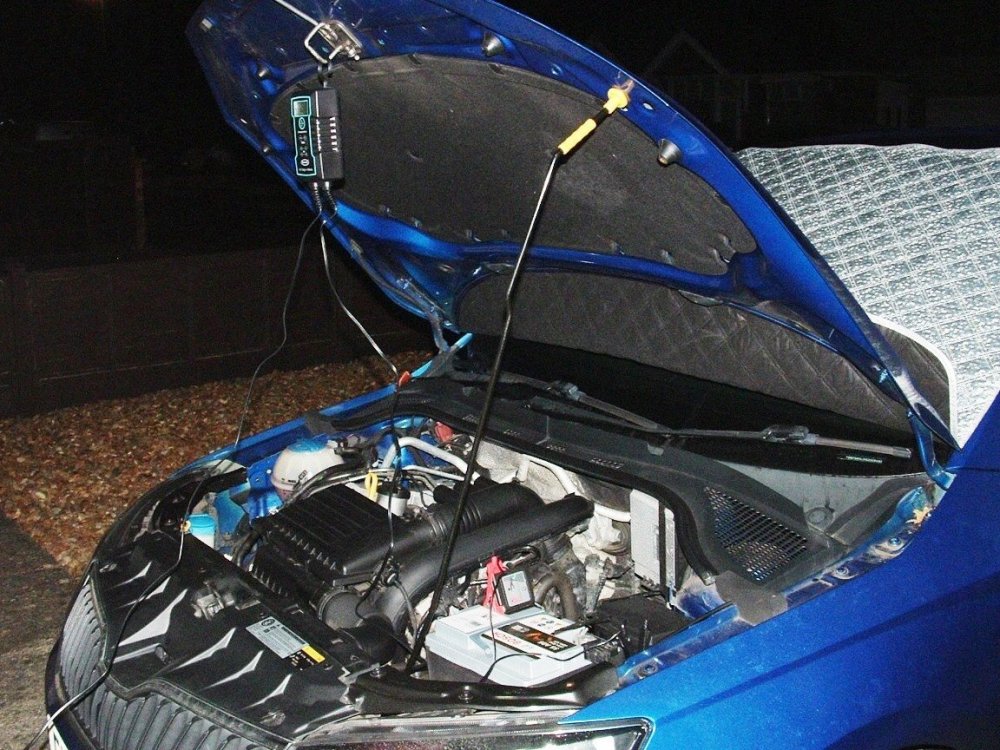
-
VW don't know as much about smaller and 3-cylinder engines as the Japanese who have been making even smaller 3-cylinder engines and lighter cars. To me the VW 4-cylinder engines have always sounded a bit rough, and I'm used to 1960s and 70s BMC/BL engines, that were designed in the 50s, so to loose a cylinder and drop capacity didn't bowed well but to be fair when my wife got a VWSEAT loan car with the 1.0 3-cylinder, as new at least, it was better than I expected.
-
From what I've learnt previously and on the forums here a Mk1 Fabia was the sweet spot, Mk2 start of the reliability decline progressing with the Mk3. German marques build and parts quality went down from the end of the last century for Mercs and not long after the start of this century for BMW and VAG. I had a mate who regularly bought new and near newVWs, BMWs and Mercs. That was my introduction to VW's stop start, a Golf courtesy car with the early system, never did I think we'd ever have such a system, or a VW product, expecially after my wife breifly had her mum's Golf Mk2, a boring, (then) overrwieght, typical German interoir design and VW tractor engine (1.6i) but at least it was reliable.
-
This is an old car so the scan results show less than with more modern cars but still worthwhile doing if available but with bearing in mind, old or new car, a scan tool is just one diagnostic tool and often doesn't give direct indications so as alaways results must be firther checked and cross referenced to be confirm and to help with further diagnois. Diagnois tools include your eyes, ears, even nose and mouth (smells) as well as using your brain and common sense which would cover the good ideas cover by the other posters.
-
Short answer, an easy - Yes. GT85 in my experience is a better product than WD-40 Multi-Use, GT85 is a longer lasting lubricant and protector, better penetrating and releasing fluid ans smells a lot better (lavender IIRC). - https://gt85.co.uk/ More info if you want it. Formerly a British invented and made product now owned by one of the large invasive Americian corporations . . . known as WD-40 Company Ltd., as one of their brands. - https://wd40company.com/our-company/our-brands/ GT85 uses PTFE, WD-40 Multi-Use doesn't. Of course PTFE is best known with teflon from DuPont, another invasive Americian formerly family owned business (not even popular in the state they helped buid for good reasons). Use whicever you please an Americian company gains from it, GT85 is better and can be used for lots of stuff and last longer than WD-40 Multi-Use. Can be used instead of silicone on the door window rubber chanels to clean and lubricate to make it easier on the window winder mechanism and electric motor.
-
AFAIK you will need to code these types of units.