OccyVRS
FREEDOMLite
-
Joined
-
Last visited
Everything posted by OccyVRS
-
If you go to an Indie garage, they can/will generally use something like Millers Oil for the gearbox, rather than the VW OE stuff. I'm getting my DQ381 done next month, and am debating between £250 for them to use Millers, or £390 with VW stuff. DQ250 interval is 40k or 4 years - remember to get the garage to do the little filter too!
-
Temperature plays a huge role in the behaviour of tyre compounds. An all-season/winter tyre will be a firmer compound that provides a bit less grip, but maintains this grip throughout a wide range of temperatures. A UHP/summer tyre will be a softer compound that provides more grip, but maintains this grip within a much narrower, and warmer, spread of temperatures. In the cold, this softer compound hardens up, reducing grip, ride quality, etc. If you're not interested in performance (dare I say that in a 1.6 Superb I'd hope you aren't!) then some all season tyres will offer better grip in colder weather and better NVH (unless they have a very grippy tread pattern). UHP tyres also wear much faster and in general offer less efficiency (and more grip). I live on the south coast of England, and run UHP summer tyres all year round. It's icy for about two days a year here, and on those days I just take it easy. OP lives in Kent, not somewhere with proper winters - and besides, I've driven in foot-deep snow with Michelin Pilot Sport 4 S on, without real issue. Heck, I've even been in a track prepped Clio RS in the ice running semi-slicks - not the best experience mind. It's a 1.6 Superb not a tuned M3 and OP isn't driving through snow drifts, or 45°C deserts. Do get a brand (rather than some Linglongs) but for your use, anything from Michelin, Bridgestone, Pirelli, Conti, Falken, Avon, Goodyear, Hankoo or Yoko will do. Black Circles is a good place to compare prices. Your location, car and driving style doesn't warrant anything special with regard to specific winter or summer tyres.
-
As the title says, what's this all about? To cut a long story short, I downloaded the app on my phone, stuck in the VIN and got as far as putting a pin into/from the car when I stopped, realising I didn't want it. I removed it from my garage and deleted the app. All I wanted was the service reminder, which was apparently on the MySkoda app. I've been into the car, clicked on Skoda Connect in settings, and it says I need to do a setup as I'm using it for the first time. I've just clicked cancel, and left it. I presume as it says I need to do the first time setup, it's not/never been used. Does this mean that Skoda Connect is not turned on on the car? Is there any way to check it's definitely not been activated? If I press either the "I" or the spanner button next to the SOS the car says it's not activated, which gives me some hope. I'm not interested in it, and don't want the car connecting to somewhere, draining the battery, being locked/unlocked by an app or whatever!
-
I had a rubbish experience with ceramic coating on the outside of the windscreen a few years ago - every time it rained and the wipers were used, the smearing was horrendous! In hindsight though, the windscreen maybe wasn't cleaned enough. On a side note, while I now don't bother with the front or rear window, I do use a spray sealant (drying aid, technically) on the bodywork, and apply it liberally to the windows and mirror glass. It's not quite the same, but it does a good job of allowing the water to bead off in the rain, and also makes future cleaning much easier.
-
Horizontally makes more sense, I can then just change seat, rather than trying lean across everything ;)
-
Only difficulty comes when I'm trying to clean the inside of the windscreen in the summer heat. I usually just do 1/3 at a time and that's worked okay. I just try and avoid grubby fingers, and then I don't need to clean it! I used to do some part time work in detailing - the hardest cars were the supercars with super low, slanted windscreens. It was a nightmare to clean the very bottom, as a squeegee wouldn't fit!
-
Garage choices are generally a google map search, followed by a visit to FB groups/forums to see what people have said. That's how I've just found my next VAG garage. I've heard good things about CLP - best thing to do is when you need some work done, give a few places a ring and compare their answers. I was dead keen on one place (and it had good reviews/feedback) until the guy on the phone tried to argue with me that there was no haled pump gauze to clean out on the VAQ diff. Shame, they did some nice hoodies!
-
YMMV - we've had an A3, Leon, Ibiza, Golf and now an Octavia from about 2009, all without any major issues. That said, they're definitely getting worse. The Audi is a 1.4 A3 just about to cross 110k - no significant issues. The Ibiza had an engine sensor go kaput a week after purchase, and while the Octavia has been brilliant, when the battery went last year it was an absolute nightmare. Older is no guarantee of reliability though. Simplicity yes, but in the case of my first car (a 2007 VW Fox), even older VAG cars can be utter piles of unreliable crap.
-
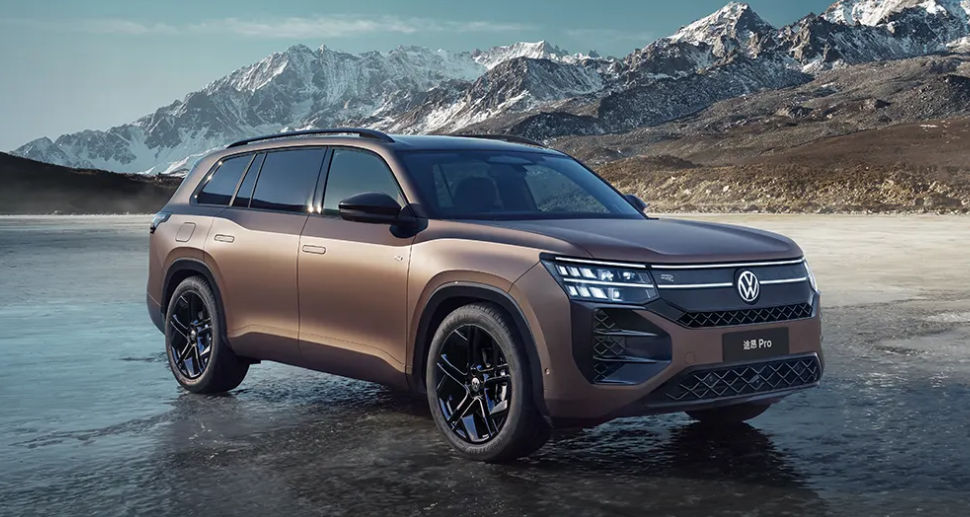
Do you know if TVS limit the torque a little, regardless? 415bhp and 560nm is quite interesting - mine peaked at 350bhp and 540nm before we took it down to a more sensible 330/490. That's an EA888.3 with some hardware and a TCU tune. Frankly I think you should be doing a TCU tune with any ECU tune, but that's just me. Anything stage 2+ I'd also be looking into some physical gearbox stuff - DSG boxes are great, but when they do go bang, they really do go bang. It is quite interesting that TVS don't mention their sintered clutches or anything, even on their stage 3/4 pages. The Golf Mk9 is en electric model, with the Cupra Leon/Formentor, vRS, etc almost bound to follow suit. The end for these cars isn't near, it's here. They did announce the EA888.5 not too long ago, so fingers crossed Cupra/Skoda/Audi will get their hands on them, as otherwise it's only available in this sack of sh-, er, joy.
-
Sorry - I was meaning that the 'replace after each removal' bolts are the stretch bolts! Good to know @Breezy_Pete, you learn something new every day. I always thought the torque was XYZ, and then you do an extra X degrees to sort the clamping force/stretch. I never really though about a fastener being 100nm, or 70nm plus 45°.
-
@N-C I think you'll be able to put some sound deadening in now! It's only some sticky back insulated foil, really. I do agree though - I'm a bit surprised I didn't think about it! Common things people do on the Leon/Octavia is to put sound proofing in the spare wheel well and under the rear bench. Many go farther and do the door cards, under the carpet, and the "cheeks" of the boot. It reduces NVH and also helps the sound system be a bit less, well, crap. The petrol vRS also doesn't have any sound proofing on the bonnet - probably a similar thing to the faulty engine covers on the Mk8 Golf/Mk4 Octavia/Leon - VW's solution was to just put them in the bin! You'll never get a car perfectly aligned - I'll get mine done, wheels balanced and perfected before a track day, only to find that everything is out the day after. It's worse on the roads, especially in the UK - every pothole you hit will throw the car off. You should, really, be getting an alignment done every year.
-
Just to add to this - you might/will find that the same tyre has different properties, depending if it's a 'regular' version, or an OE one for XYZ manufacturer. Simple version is that BMW OE PS4 are available in run flat form, but there are a surprisingly large number of other differences. https://www.carthrottle.com/news/oe-tyres-vs-shelf-heres-how-different-same-tyre-can-be
-
Anything like AG Fast Glass, TurtleWax Dash&Glass, etc will be fine - the latter is designed to be used on everything in the interior, and the AG stuff is pretty much normal window cleaner. That said, I'd personally use mildly soapy water as @numskull suggested. Glass cleaners are only used, really, for two purposes - to make it quick/easy and to remove greases, etc. There shouldn't be anything significant on the inside of the windows (nothing like road film etc etc) that soapy water can't fix. Sure, it might take a little longer if it's sunny or whatever, but I'm sure it's worth the effort. I would suggest mildly soapy water in a spray bottle, rub it a little with a damp cloth, then squeegee it off. Buff with a clean, dry cloth if needed. I'd make sure it's warmish, rather than warm or hot, and also only put a dab of soap in - remember that dish soap is anti grease, etc, which won't play well with the film if it's got an edge sticking up, etc.
-
They're the stretch bolts then. Usually things are safe to reuse as long as it's not a 'fasten to 90nm plus 90°' situation. That being said, bolts aren't expensive. I always prefer to replace the high-torque calliper bolts, but that's just me!
-
It's all taken with a pinch of salt IMO. The DQ381 has a max torque, according to VW, of around 420nm (aka the torque of a Golf R). Around what, half of these cars on the road are running a map of sorts, meaning they are likely at 500nm or more, and have no issues. I read somewhere that the reason all the new hot MQB cars have the exact same engines is both for cost cutting, and because they're all being axed after this generation, and VW didn't want to invest money in their development. What sort of power are you running? I'm guessing by now you're on different turbo, etc? Be keen to see some pics! There seems to be a fair amount of people taking Superb/vRS cars to the limits, but not many on this forum! I'm approaching 400bhp on my Octavia, which is enough - for now, anyway.
-
A good four wheel alignment should be circa £75ish - that's what I pay my local specialist (I.E. alignments are all he does). +1 for @HeavyMetalRich, taking a bit of camber off the back should even out the wear. It's also maybe worth looking at the tyre pressure? If you're not fussed about performance, there are plenty of tyres out there that are better suited to daily use. Yes, the PS4/5 offer great grip, handling, water dissipation etc, but you pay for it - both in terms of purchase price and wear per mile. Not to mention that, when it's cold and the roads are greasy, you can have quite a fun time in softer compound UHP summer tyres. Rather interestingly, most tyres will be very similar in dry performance (indeed, a worn tyre will handle better in the dry than a new one!), the differences are mainly in the wet. TLDR - like everything, you give and you get. I run PS5 (and even some SS Yoko's on track once) because for me, handling and braking is a priority over NVH and tyre wear. My car is also not standard, and I do like to have some fun with it. That said, be aware that the PC/SC7, Asy 6, etc, are all in the same category of UHP summer tyres. AKA, they will all have a higher wear and impact on NVH than other more 'all rounder' tyres. FYI Michelin PS4S (often fitted to Golf R and M140i) are the standard tyre from factory on the Ferrari 296 GTB. It is way overkill for anything with less than 450bhp that isn't taken on track. Thus, the PS4/5 is the realistic tyre for anything with a bit of power (M cars, RS, S, etc) - if you don't meet that criteria and don't care about the nth degree of turn in precision and performance, there are far better tyres for your use.
-
That’s interesting… got to be the most power going through a DQ250 across the VAG range?
-
Ultimately, it's up to you! It can't hurt to do some preventative maintenance by doing the coolant/brake fluid/DSG service - the only factor really is cost. Personally, given that it's a 1.0 Fabia, I would be tempted to leave the box for now. It's not a particularly demanding box, and you aren't putting any real power or miles through it. 5 years/60,000 miles is probably a good rule of thumb, and even though these boxes are 'sealed for life' plenty of people/places/dealers still service them. It's always nice to get these things done - changing the brake fluid and coolant especially will help prevent any stuff building up in either system.
-
Depends on the car. With some of the smaller discs (like on a Fabia) you should be able to wiggle it off, whilst anything larger you will have to remove the carrier. I'd be inclined to suggest that if you aren't comfortable removing the two carrier bolts, you maybe get some help doing the discs? FYI IIRC the caliper bolts are the 200nm stretch bolts, so you'll need to replace them.
-
Gammyleg has the dry clutch DQ200 box, which is very high mileage at almost 200,000 miles. Both the 272 and 280 come with the DQ380/381, which are superb boxes - they come in the vRS, GTI, R, S3, Cupra and more. A lot of people put well over 500nm through them with nothing more than a TCU tune. Indeed, TVS do a sintered clutch pack to take you over 900nm - they are very strong boxes.
-
I found that my current PS5 are much better in terms of wear, and perhaps a little better for NVH? I wouldn't bother with PS4 - they're the same price, and a softer compound that wears faster. I'm on 10k currently, and the front shoulders are just starting to show wear. It depends if you're interested in performance, or all round. I wouldn't run anything other than a UHP summer tyre, but I also drive quite enthusiastically and take to the track - the PS5 seem to have coped well with some tracks days. In this segment, your main options are PS5, Conti PC/SC7 and Eagle F1 Asy 6. Don't bother with Pirelli, although Bridgestone are maybe worth a look.
-
It depends what is 'way out'. I think your Superb has independant rear (?) but even then you can only really adjust a few things. For example, the caster on my car was out, which is not adjustable. Do you have a print out you can send here? Rather than a third garage, I would suggest an alignment specalist. There aren't any by you, but ATEC-ALIGN in Huddersfield are the sort of place you're after.
-
You're sure there were no signs of liquid on the outside? I wonder why Skoda went into there then... likely they read a fault code relating to the selector or something. You'll need to look at the T&Cs - you only rent the car and don't own it, so there will likely be a provision that all relating damage must be fixed blah blah (which, of course, is down to the warranty provider, Skoda, to determine). You should in theory only be charged for a cleaning bill upon return, but if the shifter area has thrown a code then that's another story...
-
-