Seasider
Members
-
Joined
-
Last visited
Everything posted by Seasider
-
I raised the seat height issue with my dealer recently and received this answer: " As for the seat and this sounds daft, but drop the seat all the way down slide it to the most rear position then lift the seat up as far as it goes then move back forward. This does make a difference on the Fabia. They don’t lift as far when they are all the way forward." I have tried this, and it works on the Kamiq too - the seat is higher. Whether it is high enough for everyone's needs, of course, depends on the individual.
-
This morning the SOS warning came up on my Kamiq. Turned off and on again and it came up again. Set off to town and after about 3/4 of a mile a message "SOS call activated", presumably meaning that the SOS system was now working OK. Ignition has been on and off a number of times since and the problem hasn't recurred.
-
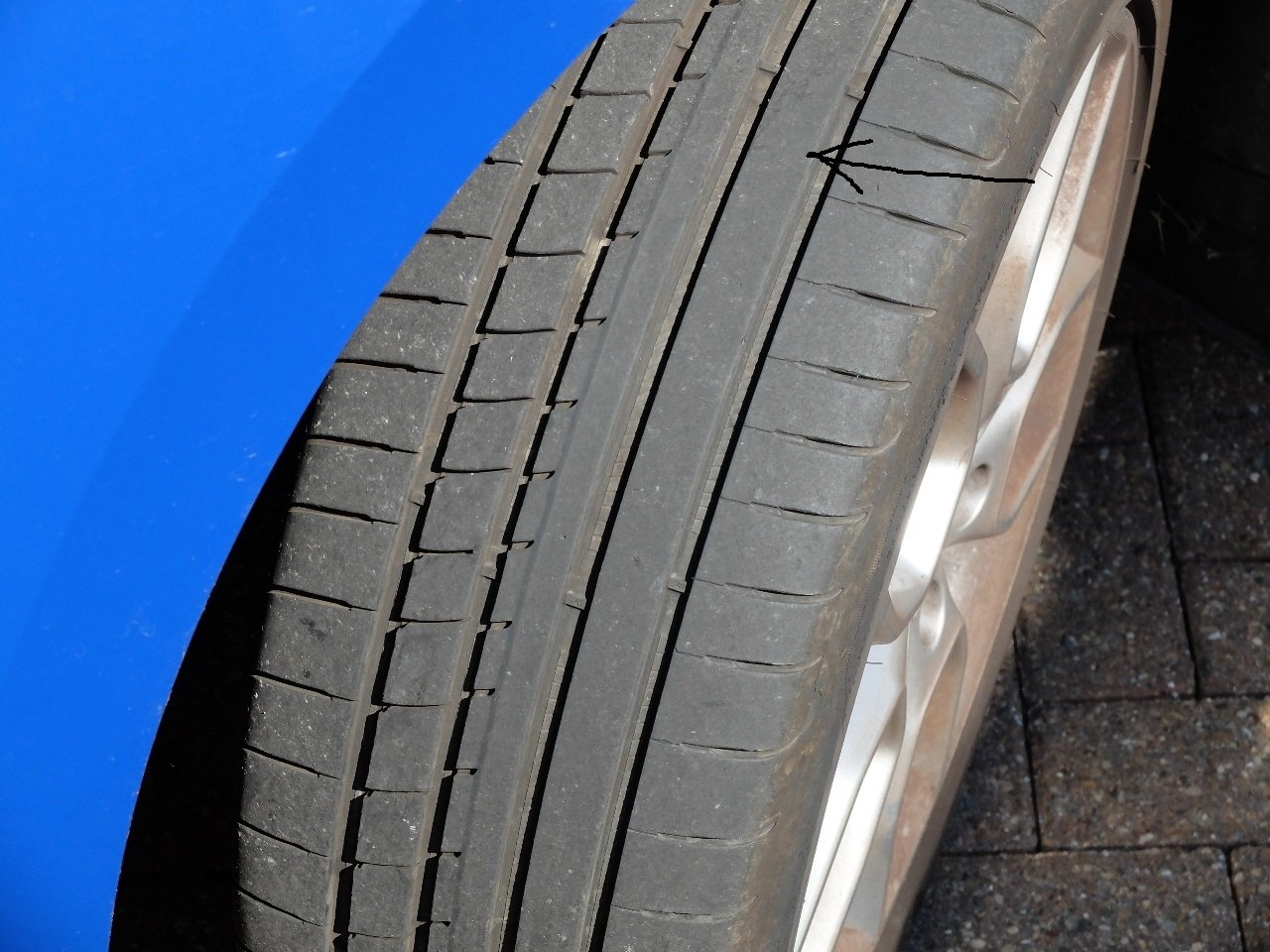
Thank you for your straightforward answer, which was what I was after, either there is no problem or there is a problem. I have never seen tyre wear like that and so, understandably was concerned and had imagined that another forum member with a Kamiq might have had a similar concern and so could provide an answer.
-
Effectively, you have posted a picture of the rear tyres, although their tread depth is, understandably, less.
-
And the sipes that were there did not extend the depth of the tread, they were on the right hand shoulder looking from the front of the car, and they are not there now.
-
Well, it has no transverse stripes now but it did have 12,355 miles ago, hence my query.
-
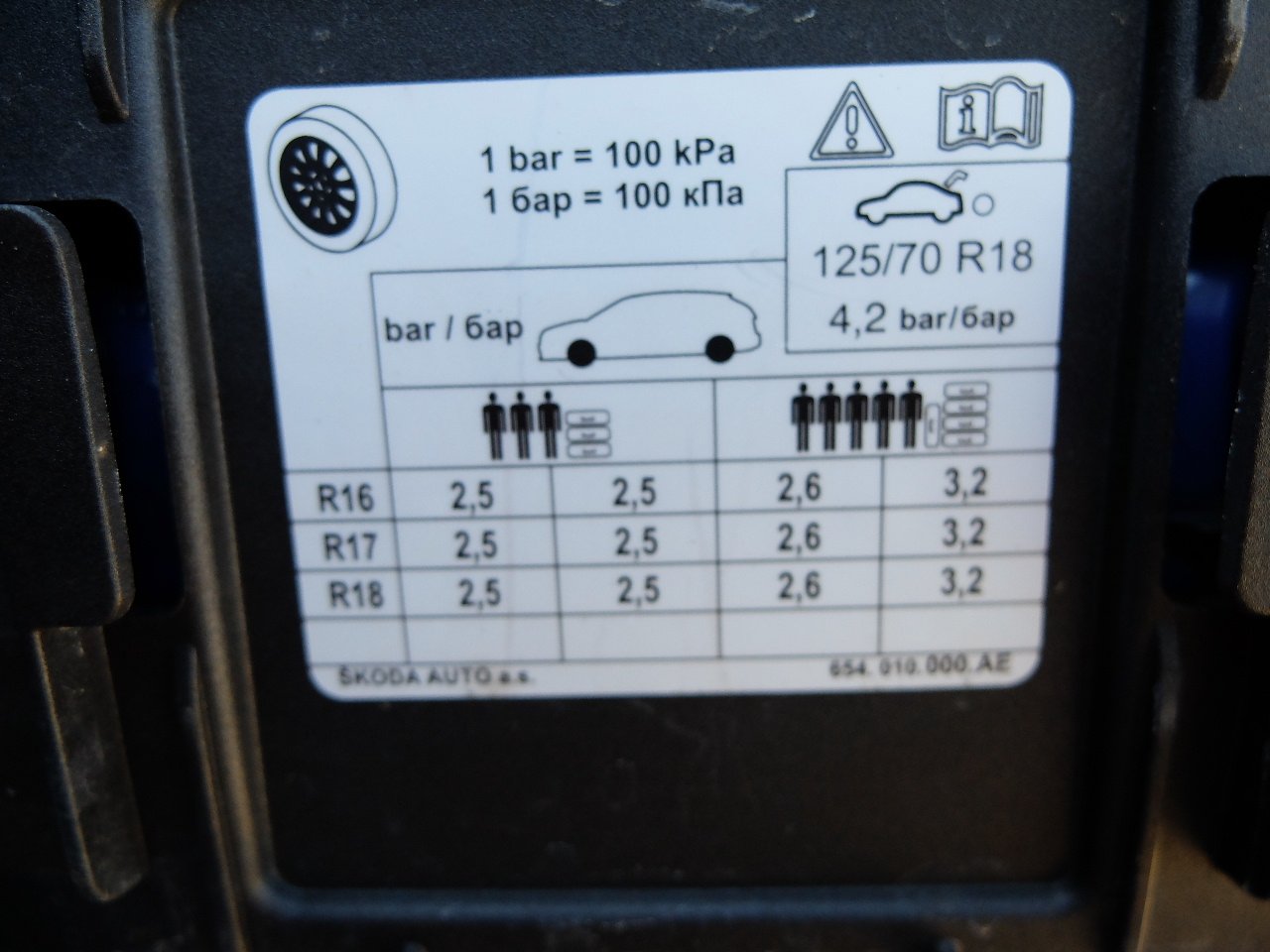
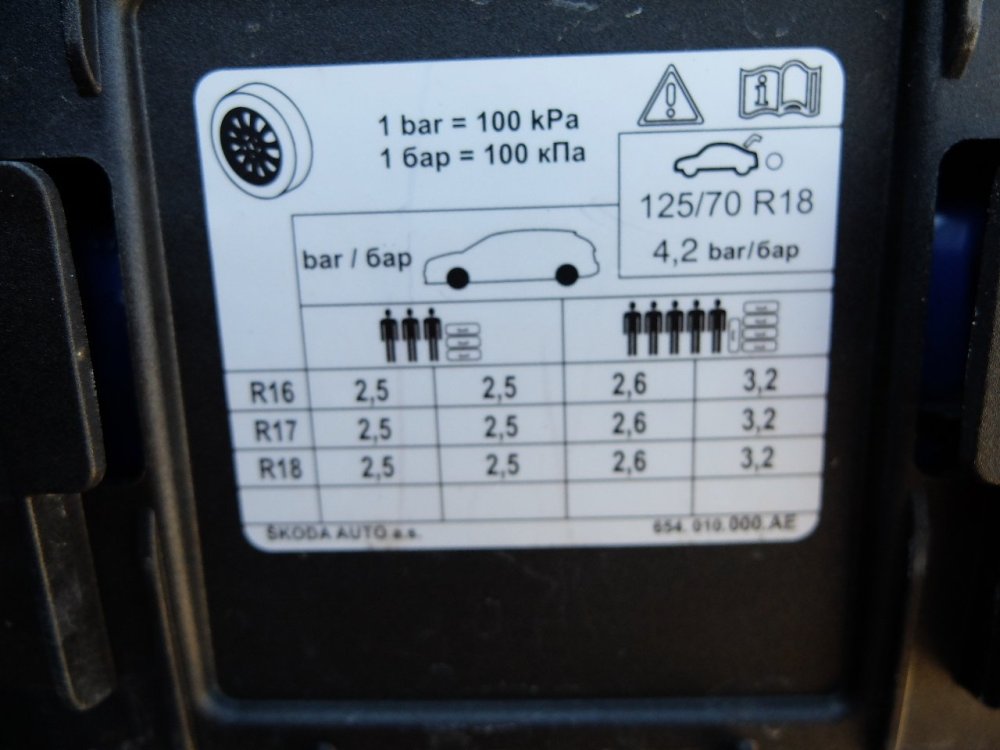
And the recommended tyre pressures as per Skoda are:
-
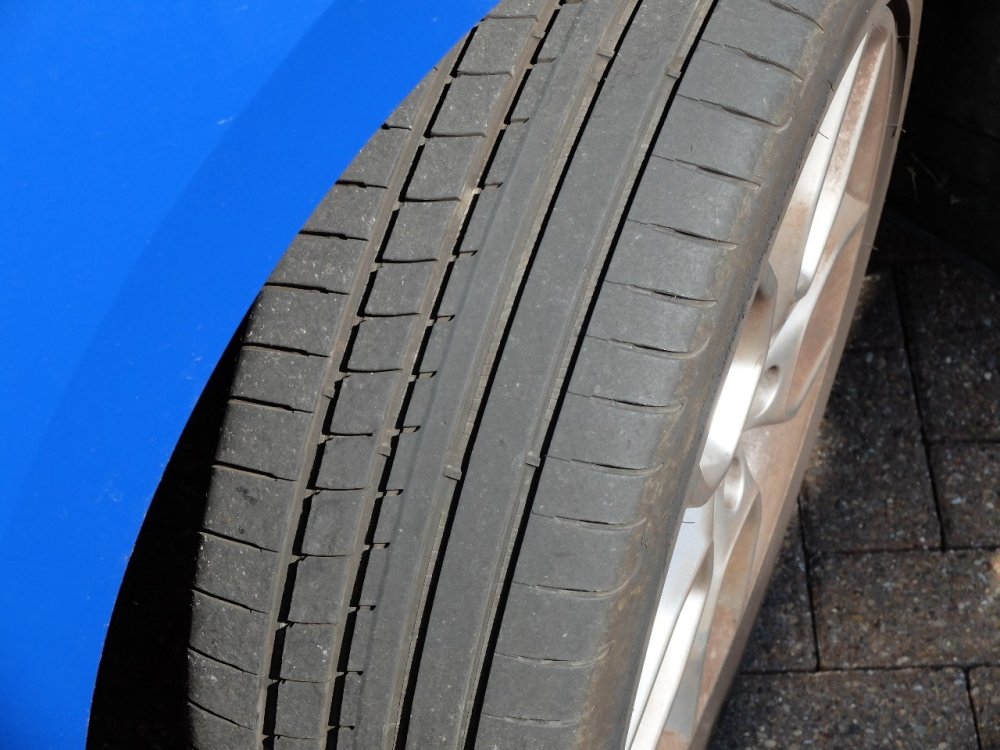
As I said in my first post, I have been following the recommended pressures of 2.5 bar and checks have consistently shown the tyres to be 2.4 to 2.5 with topping up as necessary. An exception was on a cold day the reading was 2.3, again adjusted as necessary. The area arrowed is neither higher nor lower than the other treads; my query arose because it has no tread showing.
-
Going back to the question of fuel economy, recent trip to town and back, 8 miles and 37.1mpg. Best long distance run, 101 miles at 60mpg.
-
Car bonnets have got heavier over the years because of the extra sound deadening on the underside, and possibly, too, because of higher accident protection requirements. I accept electrically operated bonnets are a bit of a luxury (although at nearly 80, it's a luxury I would be willing to pay for), but gas struts would certainly help.
-
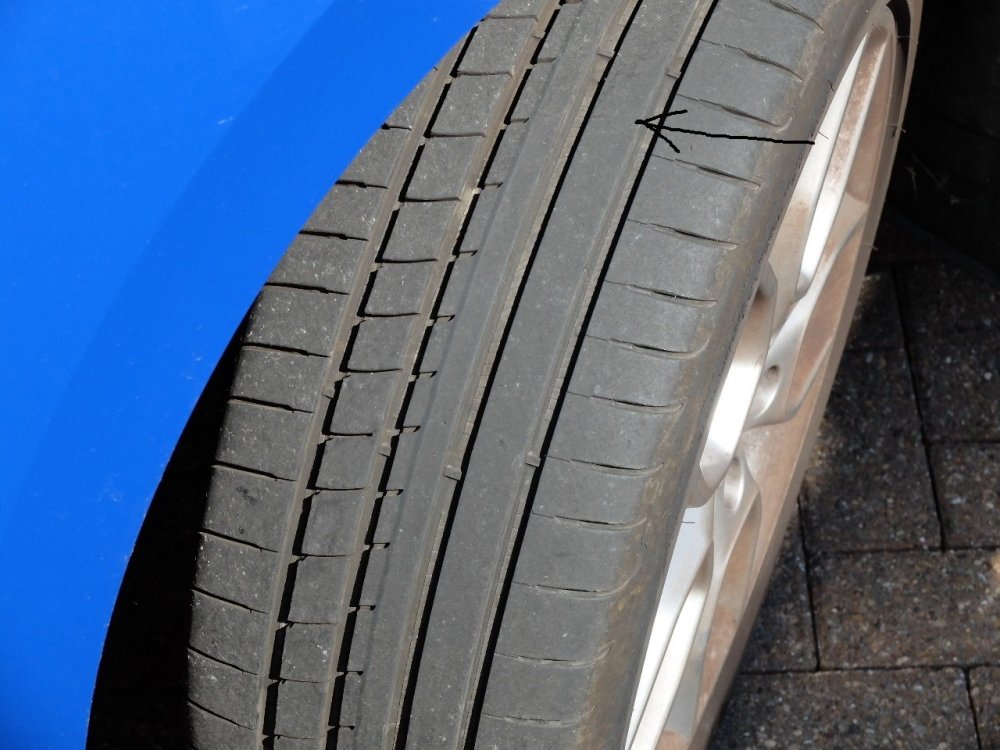
No, to the tread arrowed in the attached photo
-
That sounds a good idea. Over the years, car bonnets have got heavier and heavier. Electrically operated boot lids or hatch backs are an option on many cars, so why not the same for bonnets?
-
But it's not designated a Sport tyre; the F1 refers to the tread design - see my earlier post - and the tyre comes as standard on my SEL.
-
The top photo is nearside, the bottom offside. (I had assumed that the name of the file would appear with the image.) The wear is on the tread, not the shoulder.
-
Thanks for your comments. Cornering forces seem unlikely at the speeds I drive and as I'm on the coast, winter use seems possible, but we'll see how things go. I have passed the photos to my dealer for their comments so I will post their views here. Searches on the tyres and their wear rate haven't produced anything useful, so I asked a different question - "what is an asymmetrical tyre?" and here is the answer: "Asymmetric Tread pattern Asymmetric tyres effectively mix two different tread patterns on the outer and inner edge of the tyre to provide a dual benefit to the driver. On the outside edge, the tread pattern exhibits large tread blocks which are designed to provide good dry traction and handling thanks to a larger contact area with the road. Meanwhile on the inside edge, the tread block is much smaller to provide better wet grip, and an increased number of grooves to help disperse water on wet roads and reduce the risk of aquaplaning. This effectively means the tyre is built to provide great all-round performance in both wet and dry conditions. Asymmetric tyres can be placed on either side of the vehicle but the larger tread block must always be on the outside edge of the tyre in order to work effectively. That’s why asymmetric tyres have words like OUTSIDE stamped on the sidewall to ensure they are fitted with the tread block facing the correct way." I'd certainly noticed the asymmetric tread pattern and that the grooves on the smooth strip in the photo were fewer and much less pronounced than the other areas of the tyre (by looking at the rear tyres). Presumably, therefore, this explains, in part at least, why the grooves are now worn away completely.
-
Apologies, I meant to include that. Tyres are Goodyear Eagle F1 Asymmetric 3 and mileage is 12,355.
-
Checking the tyre pressures a few days ago on my 2020, Kamiq SEL, I noticed what seemed to be an unusual pattern of wear on the front tyres - see photos attached - and I wondered if this was usual for the Kamiq. I check the tyres regularly, both using my own gauge and the machine at Sainsbury's, and the pressures are consistent around 2.4 to 2.5 bar, although in cold weather on one occasion, the reading was 2.3 bar.

-
Yes, in the "disconnected" mode the engine disconnects from the gearbox and revs drop to 1,000, so nice and economical. Branching off a bit, it would be handy to have some sort of governor on the "disconnect" mode so speed did not go above a level selected by the driver. I have seen 70+!
-
The practice of selecting a lower gear when going downhill to slow the car dates back to the time when car brakes were not really up to the job. Nowadays, that isn't the case and so the brakes do not need assistance to slow the car when going downhill. Selecting a higher gear, saves fuel and additional wear on brakes is minimal.
-
As I've never switched it on intentionally, I've always just cancelled straight away without exploring further.
-
Yes, on your last point, I've noticed that at times it is worthwhile overriding the DSG to change up to a higher gear, but I've never received the message you mention. Also, when braking going downhill, I sometimes select a higher gear manually than the DSG would.
-
When you are confirming tyre pressures, certainly on my 1.0SEL DSG, there is a box to tick to show if you are using winter tyres. When ticked (as I found out by accident) a warning sound and message pccurr if you go over 20mph.
-
I've never experienced this except with AAC on when the car brakes and accelerates according to the traffic conditions and the setting of the AAC radar. With my previous Fabia and a Merc before that, there was surge but this was always tied in with a drop down in gear, e.g. on an incline.
-
I never use sport mode, I only mentioned it as one of the modes available. I am currently using economy and previously used normal. In hot weather, I do try to avoid using the air con at low speeds. Above 20 or so, with the windows open there is an unpleasant reverberation so I close the windows and use the air con if needed. I've never had a warning message that I recall about driving with the window down; I'll try and create the necessary conditions to get it.
-
On my 1.0 DSG SEL consumption on short runs, varies between high twenties and low forties depending on traffic, temperature, how often "disconnecting" kicks and traffic lights. It may be worth checking on the driver profile, too - is it normal , comfort, economy or sporty? Other factors affecting consumption are use of the heater and aircon; the latter will have a more marked effect on raising fuel consumption at lpow speeds and when the engine is cold.