VWD
Resident Member
-
Joined
-
Last visited
Everything posted by VWD
-
xman- there's a lot of myths perpetuated by the call centre monkeys at ISPs, who have only the screen script ,but no technical know how to act on, when trying to diagnose problems. IMHO- monkeys should be asked to refer problems to those trained to look at a problem. i.e ,an Engineer. Firstly- there's no need for a filter on all phones. I can get in excess of my ISP speed on WiFi ( with a correctly positioned router) ,with my system. I'm on an up to 30Mb connection. I regularly get in excess of this. At the master socket, I add a filter. On the BB socket, I plug in the router. That is BB sorted. On the phone side ,I plug in a socket, and rout that to terminals 2 &5 of a MASTER socket. That connects to the lots of slave sockets in my house with only a max of REN 4 in circuit. Another solution I've done is to send the BB on a dedicated pair of wires( in a proper telecomms cable) to near to the PC, filtered the BB and phone line and returned the phone line to rest of house. It's not something I've done as it means me tracing a pair from master socket to near my PC,and gettng down is easy,. These days it's getting back up. Should I find speed problems, I have have the answer to screen script monkeys. I have a length of CAT5 with sockets and cables to connect my PC direct to master socket. That's where brains and Tech know how over rides script BS.
-
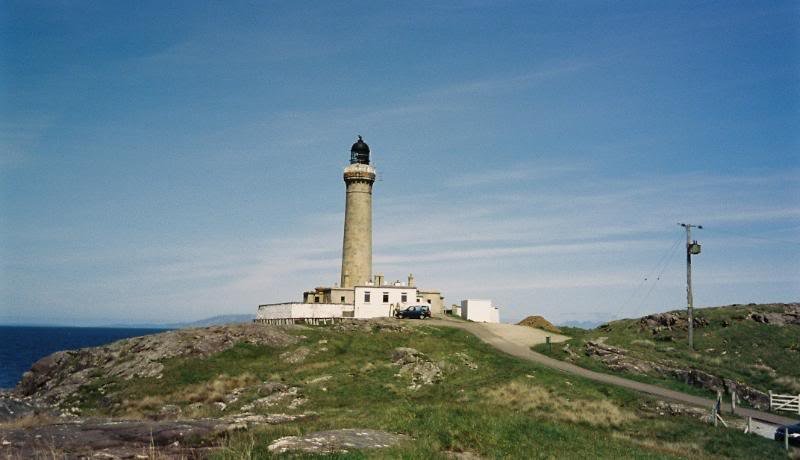
Colin, at moment I'd hold off. it wasn't so long ago that the tourist traps were protesting about tourists bring infection to their area. They'd like the income, but fear over rides that. Come any hint of a second wave, tourists will be persona non grata. For Scotland, I'd forget the 500 and look at off the grid places on the west coast. Try west of Corran ferry- perhaps down to the light at Ardnamurchan and some of the coastal places around Strontium / Salem. But beware as these are not wide roads. You will not get views like this on the east coast- if you can understand what the natives of the East Coast are saying.
-
XSR- I got into working on my own vehicles over 50 years ago. I lived well beyond the reach of the emergency services, so it was either wait a long time for a patrol or gt a manual + a set of tools and learn it yourself. Fortunately I was employed in those days by the GPO Telephones and in those days we were expected to service our vehicles. (with help from the RMT staff, where locally the foreman encouraged us to learn about mechanics ). If we showed any enthusiasm to work on our own cars, then the foreman would help us out. My training taught me to first find out how things worked. Then when they stopped working, work out what has failed. There is no difference between IT/electronics/ AUTOMOTIVE workings. It's 1- learn/work out how it's supposed to work, 2- find out what is not working., 3- work out what the fault is.
-
Techie- I use a 36 mm socket on my 1.4 TDI to remove filter and also tighten by hand, looking for leaks afterwards. But I also run a bit of sacrificial oil( about half a pint) down the filter into the sump to remove any remaining muck left in the sump, before refitting a new sump plug and refitting a new filter- but only hand tight.
-
My first method with the canister type is a bit of rag and a screwdriver. Loop the rag round filter and tighten( as in Spanish windlass), then use screwdriver as a lever to loosen cartridge, levering screwdriver against the side of the canister to increase pressure on canister. Seldom fails, but id it does, it's down to screwdriver though the metal. But with Skoda ,there's not the fun as we got with the original Mini van. The car had ( from memory) a removable grill, making filter removal easy. But the van had a fixed grill. The sump plug was on the front of the engine, so raising the front meant that the sump did not drain fully. It was possible in my leaner days to drain the sump with the car on level ground, but there was no way to get the filter out with a container underneath. So it was undo the filter nut and holding the nut tight to the filter body ,manoeuvre the canister out underneath the bumper without getting hot oil on you wrist. I tried once to refit a filed filter to the car. Then gave up and fitted it empty to disable the ignition and turn the engine on the starter in bursts till I'd got pressure. ( Pressure gauge worked wonders. Looked good on a Formica, wooden dash with an ammeter on the other side of speedo. )
-
Yep -sep -correct as usual. Found what it is called from another post
-
Little current though.
-
juanse- it might pay to try applying a bit of solder and or flux to those joints( with a soldering iron, of course). In my experience soldered joints can fail, where the wires seem in perfect contact with the solder, but a bit of heat + flux remakes the joint.
-
Sep- these tubes head off down beside where I'd imagine the injectors live. Under the bonnet on mine is a black art. I'm more of a old petrol head driver, where you've got a set of points /distributor and a coil. Chuck in an SU carb and I'm like a pig in muck. Problem at roadside- no need for AA/RAC, just a plug spanner, set of small points spanners and a decent flashlight.
-
I concur. Head bolts- I always get out the torque wrench. Even if it's a small percent out, it means that all bolts are equally tightened.
-
Known as "calibrated" wrist. . Same reason that in certain industries( electrical installation e.g.) staff are issued with torque screwdrivers. No doubt in time ,the motor trade will be required to log calibrated tools used on work and the date of calibration on customers job sheets. And on the topic of oil filter nut size - Outer canister on mine has ( from memory) a 36mm nut.
-
Lumpy idle- one good reason for converting to derv. Be it 1.4 tdi/1.9sdi or bigger brother. Although I've had a compliment from my neighbour who's a truck recovery manager. He reckons my 1.4 sounds more like a petrol than a lot of high class petrol cars. As for service kit . A bit of light reading of the service manual might prove worth while. Modern petrol blokes have it easy these days. Forget points. ( us older blokes remember that the outer lining of a fag packet was circa the right gap if you got points gap problems on the road. ) Plugs- I found that with (at least my home brew electronic ignition system points wear was negligible and plug wear was also less of a problem.Unless you had the dreaded smaller plugs. Vauxhall fitted these to early engines and Opel carried on this practice, where any small bit of muck in the engine caused a misfire, which registered on the management system. With the older Vauxhall cars, I always carried an old spare plug from last service. Swap the plug and carry on. That leaves the main important items ,such as oil and filter changes as needed ( and possibly before time). I always get car up on ramps( gets sump plug nearest the lowest point) and sacrifice about 0.5 litre of oil down the filter to flush out gunge. Possibly not needed, but I feel happier that way, especially as I reckon that car needs oil change at 10k/annually or when it needs a top up, which ever comes sooner. That leaves air filter and in the case of a derv, fuel filter.
-
JR-earth leakage was a constant problem in the North West Highlands (Scotland), many years ago. As a Telecomms engineer, a common fault was bell tinkle/bell rings, but no call. Always on the old shared service or a system where ringing /signalling used earth as a return.( earth leakage used the line return to exchange to return current to exchange earth). Cure was a bucket of water poured onto the earth spike. I used to live close to a substation and it was not uncommon to find 100vAc across the gates of my house. But back to the cheap GU10's. As per a previous post, I got fed up with the replacement procedure of the non LED 50W bulbs in my kitchen and decided to try four Poundland LED lamps in the unit. After a fw months, we had no failures so I replaced the other four with the same- 5W LED, equivalent ( certainly in light output) to the 50W ones . I can't remember when I changed over, but I know they were in the units in June 2018 when we had a kitchen refurb, and none have failed yet.
-
Amazing what a bit of comparison does. I went down the jokey route" got your renewal and wondered if someone had mixed up months?" Renewal quote of £32 dropped rapidly to just over £24. I've never had any problems with PN apart from the renewal prices. Up and down load speeds constantly over that quoted. So for the slight increase over an unknown VF connection, I opted to stay.
-
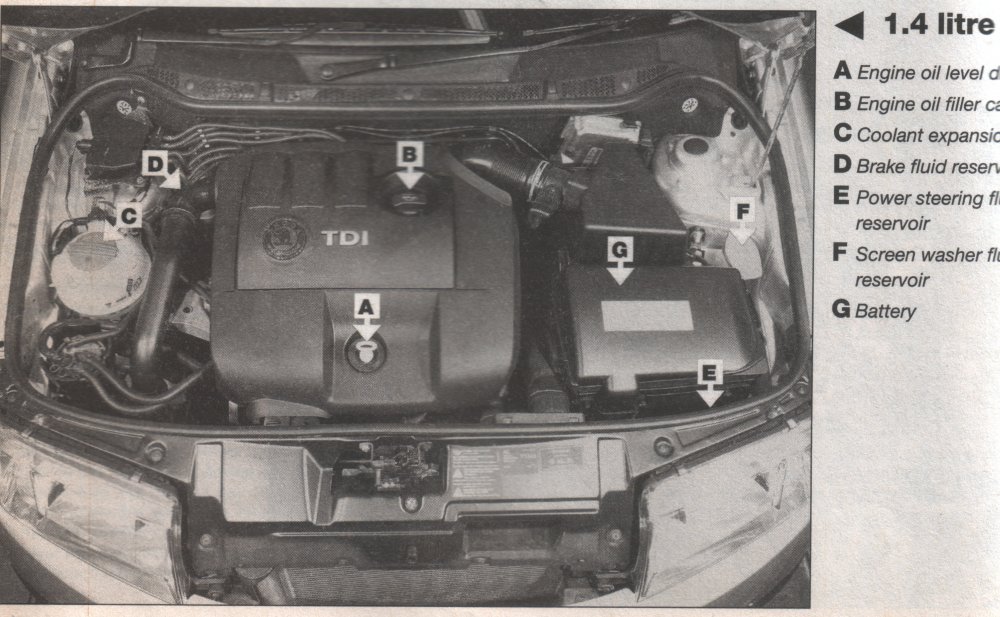
Thanks Tech1e- I had a leak( more of a large weep) , now fixed , where I had to add a bit of fluid ,whilst I fetched a cylinder. But problem is that the cables etc above the brake reservoir prevent tye old method of pouring in. I found that a small funnel inserted between the cables of ( ?????), item above the reservoir ( item D in photo) let me get fluid in without it ending up everywhere.
-
On my time on the bench at GEC we found that to inspect soldered joints, the best way was to look at them under a jewellers eyeglass/decent magnifying glass and try to move the components, whilst looking at the underside of the board for movement as this sort of problem is extremely difficult to find with the naked eye , and if in doubt apply a soldering iron to the suspect joint. But please use a low/nil leakage soldering iron to prevent damage to static sensitive components and take static precautions such as a resistive wrist strap. With older soldered joints, I've found that the solder has crystalised and the joint looks solid till you move the component. In effect you get a temporary dry joint ( possibly with a bit of flux insulating the component from the solder. This is something similar to what Network rail found on trackside soldered connections,exposed to variations of temperature and similar to a fault I once had on an old Monitor , where solder around diodes had crystalised. No real help, except on the
-
You will find as winter draws in, that you will need longer runs to get car up to temp. I've got a problem in winter with Swimbo. She smokes and has her window partially open. At shops, she leaves it partly open, and when engine is not fully hot, turning heater on to full blast only cools down the engine. It's a question of balancing engine heat output vs fan speed. I've had a diesel car run out of coolant in minus temps and not show any problems. But a tip for those in Petrols- if temp guage gets high- turn on the heater. if it gets cold, then it's panic time. But in that case, ONLY add water to top up ,WITH ENGINE running. Negates any harm to head/head gasket.
-
Streuth- that's like saying nobody sings in Wales. Old ALF(FIL) and his mates from the Dockers Club will be totally gobsmacked. I found that it was cheap and easy to get the part from local VW dealer. Order today-get tomorrow. And cheaper than on line. Skoda dealer should take note.
-
Come on then, Techie- how do you in the trade top up the master cylinder in a 1.4TDI engine bay, where the cylinder lives below the injector controls. I needed to whilst I used the car to get the bits to repair a leaky (more weepy than leak) slave cylinder on the rear. I wasn't concerned about low level due to pads, but due to leak. These days if fluid level is high, when replacing worn pads, I'd use the eezie bleed to catch any overflow. However ,a more interesting point rises. The brakes in a fabia are dual circuit . Does that mean that if (e.g.) a rear cylinder fails and looses all the fluid in that circuit that the other half will keep working ?
-
Most modern DVM( meters) are very high impedance (i.e. they do not load the circuit )and will show the no load voltage( try putting a meter on the earth point showing 12v and then connect a load e.g. a brake lamp across the meter and i'd suggest voltage will drop) . If ( with all the additional earths removed) and all rear lights switched off you get zero volts between chassis & the other point, try eliminating the circuit by looking for the light circuit which gives you a reading when operated. e.g. sidelights =no volts, but brake lights =a reading circa 12v, then it's most likely the earth for the brakelights ( most common suspect as they draw the most current and hence a greater voltage drop across any potential high resistance. ) Might be easiest to find the circuit that produces a voltage and run a wire from the earthy side of the circuit to chassis.
-
Many thanks, Lee. Looks like my next trip up to Smoggieland will involve pints at the Brambles farm or Buccaneer.
-
Might be a new fad. Turkey cooked in brake fluid. Brake fluid does burn well. I remember having to stop in a hurry on a junction leading to Marton road in an old Victor, and seeing clouds of white smoke from the rear. Turned out the master cylinder seal was leaking into the servo and brake fluid was getting sucked back into engine.
-
I'll save the baster for the turkey, as a Gunsen in reverse works as well when replacing front pads. Use as per bleeding mode, with out pressure and valve open. Excess fluid flows into bottle rather than over engine. Get the bottle positioned right and excess will syphon into bottle.
-
http://www.mez.co.uk/haynes.html A NUMBER OF DIFFERENT APPROACHES ARE BEING TRIED We are still ****ing in the wind.
-
As topic . It's the metal brake cable clip shown on the photo. I'd say ( unless you ar very lucky/careful) it's a "fit a new one on cable replacement. It's item "B" on the photo. At moment, I've got both belt & braces- the old one repaired, but I'm not happy and the cable held to the radius arm with a cable tie. Alternatively, if it's a main dealer only part, is this same on Polo. I ask as I've got a friendly /helpful VW place close by and it's a lot nearer than my local money grabbing Skoda place.