Everything posted by Papez
-
Their site is working: http://www.hpsporting.cz/tlumice_sporting.php They don't make new suspension, but still service older suspension. Well, the pickup has springs even further away and tucked under the bed floor, which is design adapted by newer VW platforms. The disadvantage of coilover design was quite big protrusions into boot space on wheel wells. It'd have been be nice if passenger models adapted it as well - the results would be more boot space and higher load capacity.
-
While I don't want to disregard work done by Skoda engineers, I have to point out fact, that Felicia already has altered kinematics compared to original design - Favorit. I wouldn't put that much weight into geometry. Skoda was happy to figure out axles that won't crack back then. 😀 On another note, the original suspension settings were severely limited by the rear axle. The rate of the rear springs was given by their dimensions and stiffness of the axle, the front had to comply with that - so I agree with Felicia suspension being comfortable, but I wouldn't call it well handling. More like barely working, but expressive and relatively safe. There's reason why track vehicles were based around Pickup with its stiffer rear axle. And also reason why I don't believe in safety of aftermarket "sport" spring and damper, with exception of HP Sporting, which was tuned for specifically for Felicia.
-
Nothing I could see/hear on a video.
-
6U0 407 307A - damping weight 6U0 407 186 - bushing
-
Ironic. Filtron was one of the filters that didn't have functional anti-drain valve and caused long interval of pressurisation. They are Mann subsidiary but I guess that they sell lower quality filters that didn't pass Mann QC.
-
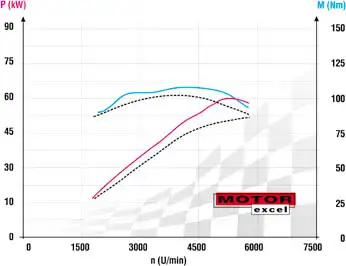
You said that the peak is at 2600RPM, that's why I posted this graph that corellates with my experience. Yes, it starts losing torque, but only starts. It never drops bellow low range torque values, and power still increases. Power is what's needed for maximum acceleration. I experienced audible vibration accelerating below 2k rpm. I wouldn't call that happy zone. Cruising at that range on lower gears was fine, but acceleration below 2200-2500 was terrible, so even efficient driving required going up to 3000RPM to avoid that lower range and get to the highest gear as fast as possible. In NVH I never found Felicia "acceptable", so it didn't matter if it was a bit noisier during overtaking. 3k RPM is a weird zone, where driveshafts start to resonate - a functional mass damper on the longer one helps significantly with that. It was actually quieter at 4000RPM than 3500 😂 Agree that it sounds terrible, but once you push yourself, Felicia becomes surprisingly quick car.
-
On paper and a fresh engine. From what I've seen and experienced in two different cars, real peak on an older engine is around 3k RPM.
-
Ocassional acceleration through the rev range with a warm engine won't kill anything - 320k here, I always accelerated all the way to the redline when it was needed and over my ownership, the consumption went down. Of course, slamming it right after start and keeping it on 3rd at 90km/h is something I didn't mean. Of course I didn't mean cruising at 5000rpm. @D.FYLAKTOS was referring to uphill acceleration which is circumstance where higher RPMs are useful. I'd say that best practice for consumption is keeping it within the green area. There's torque drop between 2000-2500, so torque at 5000 is actually higher than at 2000. If torque drops that noticeably beyond 3500, something's wrong. It's not a VW engine, useful torque range is whole RPM range 😁
-
Why? IMO the engine is useless under 3500. 😁 Max power is achieved at 5000RPM and even beyond that is higher than next gear. That's something that I liked about that engine.
-
Well, at least it has functional anti-drain valve. Some oil filters have either a bad quality or no valve at all and then it takes ages for oil pressure to build up.
-
I changed clutch at 160k, because of failed pressure plate. Cannot say if it was original, but aftermarket Valeo lasted another 160k before the car was scrapped. About the gearing linkage - the issue is usually the joint on the gearbox rod. Depending on model year, is either rubber bushing that erodes or metal inserts with o-rings that wear out. You could buy these parts in the past, but I'm not sure if it's possible today.
-
@D.FYLAKTOS thanks, do you have some more information about how they fitted the engine? Did they use a Felicia gearbox with an adaptor plate (does the Felicia 1.6 work?) or did they use whole unit from Leon? I think that'd be valuable information for @ivcars003, even though the BCB is different from the KR.
-
@D.FYLAKTOS could you post a link to the site, please?
-
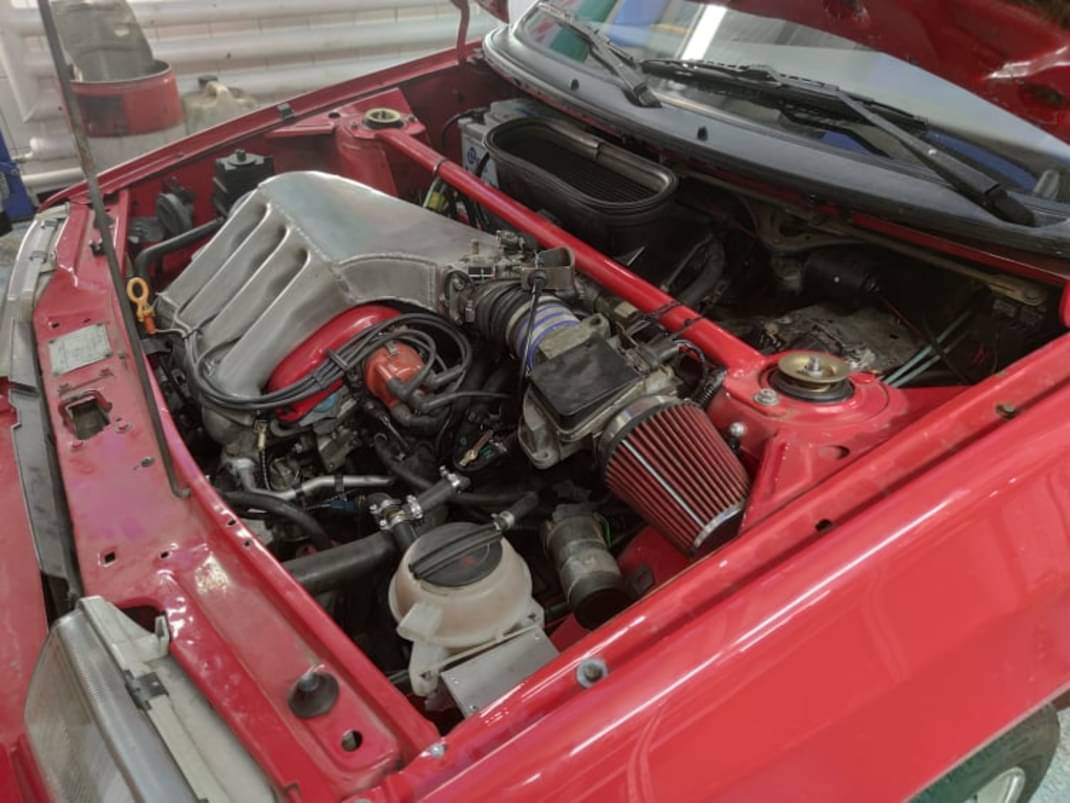
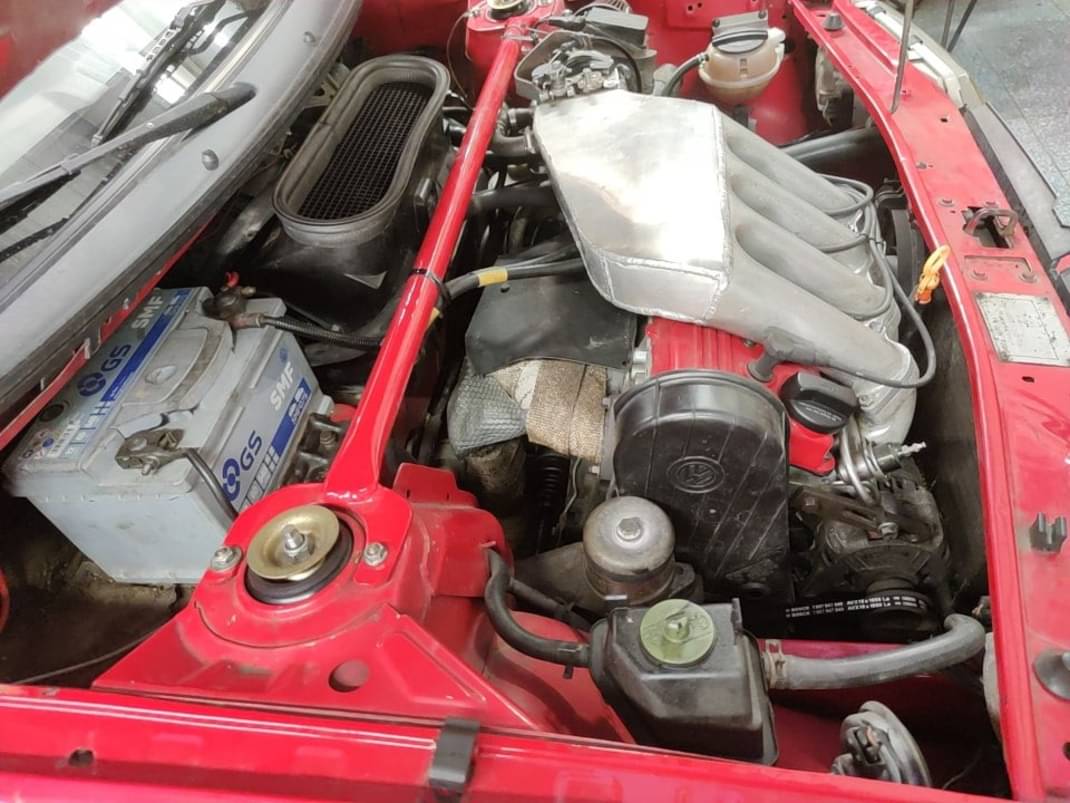
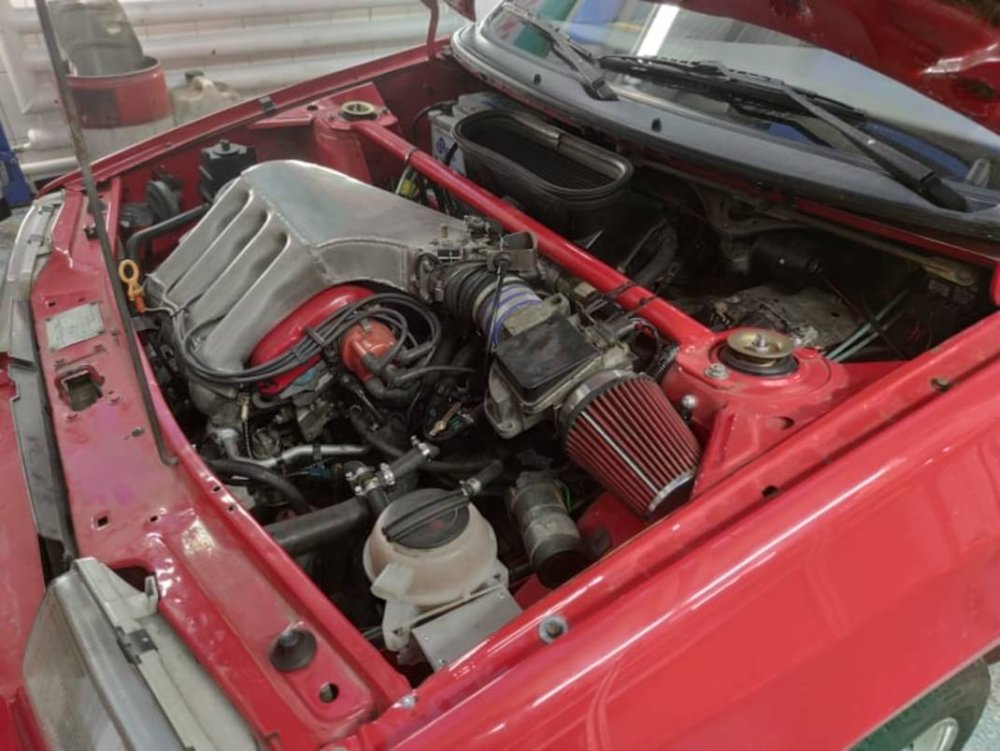
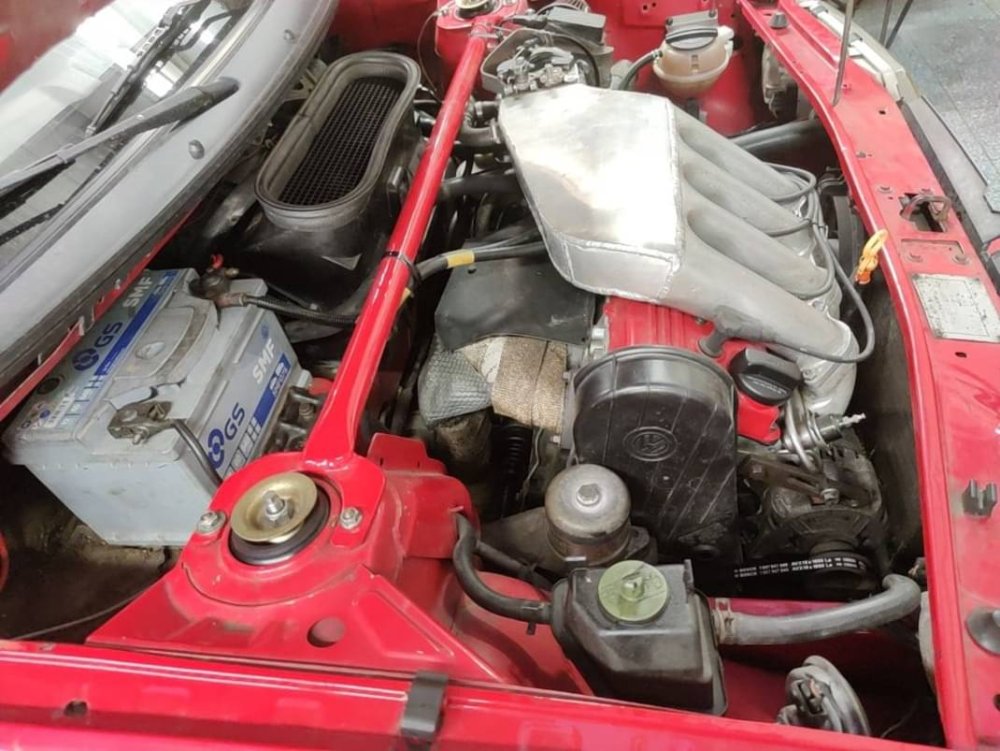
Now I remembered, I've seen a 1.8 16V Felicia photos, so I googled a bit and Heureka! https://www.facebook.com/groups/596055143820225/permalink/3967732176652488/ The description says that the intake is from ABF engine, but it apparently has welded plenum chamber to fit under the bonnet. I guess they used bits from the 1.9D engine - gearbox adaptor plate and the engine mount - to fit it in the Felicia. Not sure about oil sump. I also found this video, where they use bike carbs https://youtube.com/shorts/tLYGqozNWsA?feature=shared
-
KR would be probably similar to 2.0 from Fabia. The biggest problem is intake, as engines in Felicia are mounted angled forward, while large VW engines are slanted backwards. https://www.briskoda.net/forums/topic/105441-felicia-20-engine-transplant-thread/
-
Is there any more info available on the conversion?
-
Depending on the engine variant, there might be a difference in gear ratio (pickup being the shorter one), but for example all 50kW 1.3MPI are the same.
-
I'm not sure whether MK3 golf kit fits the rear of the pickup - unlike passenger Felicias or MK3 golf, pickup has separate damper and spring.
-
Are the engines really that rare? AEF was used in the 6N Polo, AEE and its derivatives in MK3 Golf, 6K Ibiza/Cordoba/Inca/Caddy and 6N Polo.. The engine would fit mechanically, gearbox has different mount - it can be swapped from pre-1999 Felicia. But all funs were MPI and SPI engines are not compatible with the system due to lack of the knock sensor mount.
-
No. While early fabias used a 1.4 Skoda engine and gearbox derived from the one in Favorit/Felicia, so many changes were done that the Favorit drivetrain wouldn't fit without heavy modifications.
-
I didn't realize you have a diesel - yes, one of the relays and fuse is for the 2nd speed of the fan, but I don't know which one
-
In that case, I'm not sure if it's connected through the R7 relay or directly to the battery. Have you tried to short the temperature switch connector to see if it's not a faulty switch?
-
The headlights are operated by the R1 relay. High/low beam is switched directly in the stalk lever. However, if you have also issues with the fan (I assume you mean ventilation), it might be caused by the relieving relay (X/R7) or burned out fusebox (check for dampness under the dashboard)
-
I found a video that shows the repair on an ABU engine (it should be similar to the AEE). It is also possible to change the seals without removing the head, but that requires a skilled technician
-
Is it a 1.6? These engines often ingest oil through valve stem o-rings, as they become hard over time.