Monkhai
Moderators
-
Joined
-
Last visited
Everything posted by Monkhai
-
Plan.. doubt many in gov would know what one was if it hit them
-
You are indeed correct, especially on the islands. The vehicle fueling infrastructure is pretty weak however, as even if you can fill the truck and deliver the goods, getting back again is the problem because there isn't enough infrastructure elsewhere. The same chicken and egg problem. If the governments came up with a plan for hydrogen at lorry stops on the motorways, then suddently fuel cell trucks would be much more viable. It's probably make a bigger dent in emissions too, just like fitting similar to the diesel electric trains they just purchased so they don't have to electrify the rail lines all the way.
-
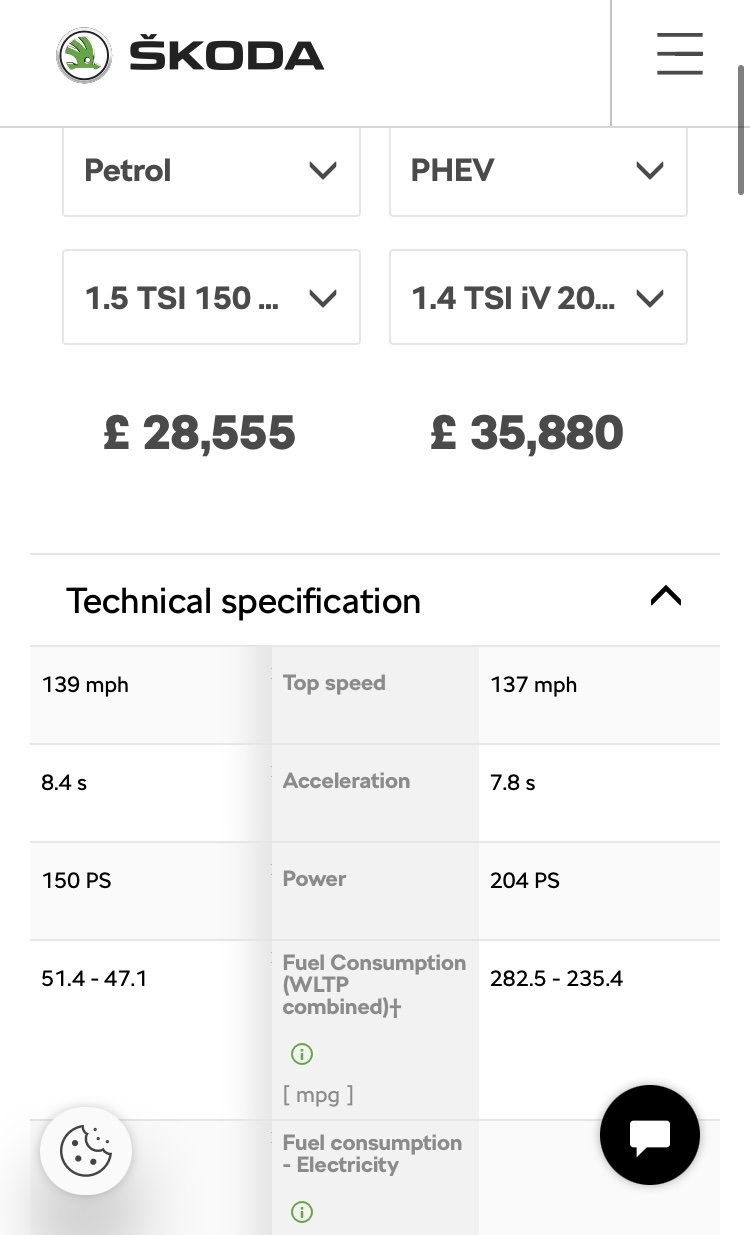
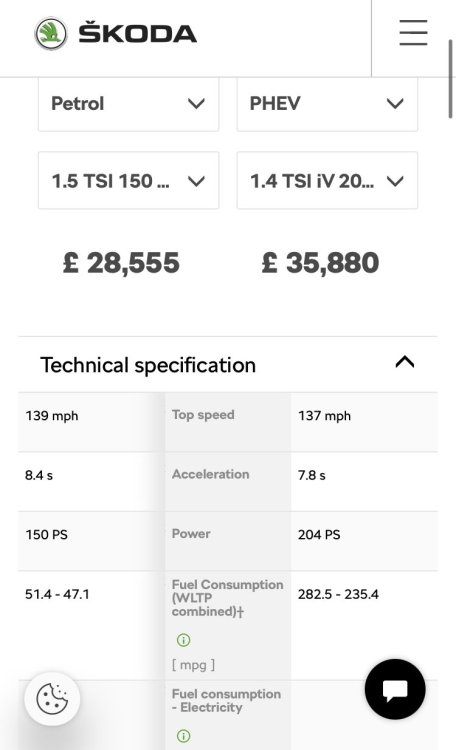
Just to answer the above as to why I chose the 1.5TSI... With the battery charged yes it might be quick It's using both in the video. 0-100 in 6.5 with batteries is great, but it's not available unless you're using both power sources, which isn't there most of the time. From the skoda data I posted above. 1.5TSI max speed = 139 mph and acceleration if 8.4s IV max speed = 137 mph and acceleration is 7.8s That's pretty comparible.
-
I think a fair few of the EV were the early ones, as deliveries are a bit sporadic. I read the MY23 change is happening about now, so I imagine they made a MY22 batch or few, then shut the lines down to move to MY23 production with a few fixes/improvements in it. Charging wise, 7kW for 40 minutes and the always be charging is a good policy, although probably harder for those taking 50%+ out of the batteries in a single stint. I really think the UK government and devolved administrations as a whole needs to spend some time and money planning and creating destination charging planning requirements, rapid charging on the motorways, possibly toll charging (to replace fuel tax) and also hydrogen infrastructure for freight etc. It would create work and growth at a time when we will probably need both. And that is a d**k move, which goes to re-inforce that we will need a combination of education of charger types and idle charges. Why buy a fast car, stick it on a 50 and leave it there for hours, when even at only 50 it would be full from empty in 2 hours.
-
There is nothing wrong with electric as a means of propulsion, but yes current battery technologies are questionable in terms of how they are produced and recycled. The problems with battery production etc still apply to hybrids as do the problems with the source of electric generation. Did they take in the emissions of servicing and replacement parts on ICE engines? I don't think batteries are great, it's what we have and personally prefer to see hydrogen fuel cell vehicles, but that requires green hydrogen generation and distribution to be put in place, which sadly are not there in this country. As for TED talks, I'm not one for them. They don't appear to require rigerous evidence (not that there is for all of this subject) nor do they appear to require a declaration of vested interests. Many presenters on many subjects seem to have a vested interest, so using a TED talk as fact isn't something I would do. The chap giving the talk you linked to works for this company, who don't have a lot of detail around what they actually do, but are texas based and consult for many industries. As such I'll take it with a pinch of salt. https://www.swri.org/who-we-are/history#slideshow-2 According to the guys profile they consult for the auto industry (OK so who paid for the research which was used as the basis of data for the talk?) https://tedxsanantonio.com/2019-fall-speakers/graham-conway/ What's funny to me is the inconsistancies. On one graph electric is lower emissions when you exclude electric CO2, but much higher when you include generation CO2, however hybrid is lower when you add in the same electric (Which is not consistent if electric is bad). The hybrid requires more CO2 to create (not shown on the latter graph) and yet the generation is so bad that the EV is eeeevil, but not the hybrid, where electric improves things. This is also based on burning coal, gas and oil to generate electric (which just doesn't happen elsewhere to the same extent). If you look at his profile he states that 64% of the fuel comes from fossil fuel in the US. So where are the data souces and what percentages would be replaced if for example you looked at other countries that are not hitched to coal/oil for electric. I mean if you look at this data from the UK from 2016 it was only around 50% then, and most of that was gas, which is far cleaner than coal and oil. https://www.energy-uk.org.uk/our-work/generation/electricity-generation.html The UK has improved it's mix since 2016 then and even a drop from 64-54% would drastically change the graphs. https://www.edie.net/renewable-generation-overtakes-fossil-fuels-in-uk-electricity-for-first-time/ So now we're at around 40% and dropping, which again changes the graphs. But what about people who use home solar and the chargers with solar on the roof? Again that's going to change the mix. Just looking at the talk and the profiles, which don't match. For example from the profile.... But the graph during that talk shows something else in terms of the miles needed to break even, pretty much double and then some. So which is wrong? I do agree emissions of manufacturing is a big deal, but at least for EV production it's come down a lot very quickly as people are using solar to power plants. That of course can apply to any manufacturing, but I know EV makers are doing this. Again power generation mix is a big deal too, but using the US, where the supreme court just ruled the EPA can't make states reduce emissions as it would affect the states and the power, coal and oil companies in those states shows it's a bad example. As renewables and other low CO2 generation goes up and where people generate their own electric, it's going to be much better. In terms of ICE vehicles, did they include the embedded costs of surveying and locating oil, simulation of the wells, extraction, refining, transport of the fuel or just the CO2 from burning it? They don't actually say, which is where my issue comes. If you're going to make points at a public talk, provide data so it can be peer reviewed.
-
Sounds to me like those 50kW chargers can't deal with the 800V system in some way. I wonder if they were not built to deliver 50kW for the entire charge, but as the 800V systems do some clever thigns when 400 is delivered they can suck 50kW for the full charge. Be interesting to find out what causes that issue and if it's a hardware trip during charge or a software lock out post charge.
-
That is exactly what I am saying yes. keep them on chargers that are 7kW or less because they can’t charge faster than that. My peeve is when they park up and leave a car all day when it’ll be full in an hour. If a hybrid uses a rapid charger as it has a ccs port, then there should be a massive surcharge and another charger after a certain time. The resources are not there to move to BEV for charging, so using a public fast/rapid charger to gain some cheap miles is not acceptable in my book. when every parking bay has 3.6/7kW and rapid chargers are a couple per floor then it’s different. FWIW I drive a diesel, have an EV on order and am put off when all the chargers are taken all day by hybrids. I’m considering cancelling and buying a new diesel. If that goes for lots of people you will never replace ice. Also the report I linked to in the auto express on emissions by an independent group makes for interesting reading.
-
Up front, hybrid drivers using the limited public chargers is a pet peeve as they block cars that need a charge to get home. I’m also sick of certain brands greenwashing hybrids as the answer to everything. Fleet wise most people I knew never charged them, and even those that did ran out of juice in 15 miles on full electric mode. To do 60 miles in a PHEV, there is no way to do that in a single stint on pure electric. I don’t think I’m missing something here but I may be. BIK wise, our company said they lost the tax relief on it and that new cars were no longer permitted. Personal BIK lower until 2025 is good to have. Is it still at 2%?
-
But it is nothing like a 2.0 for most of the time. No electrical power and it’s a 1.4 pulling an extra 300kg, which is most of the time. Even with electric it is no 2.0 as it’s about 20% heavier. My point it they are not green. If the OP is happy with the car so be it and I am genuinely pleased they are. A phev however is not a solution that is good for the environment.
-
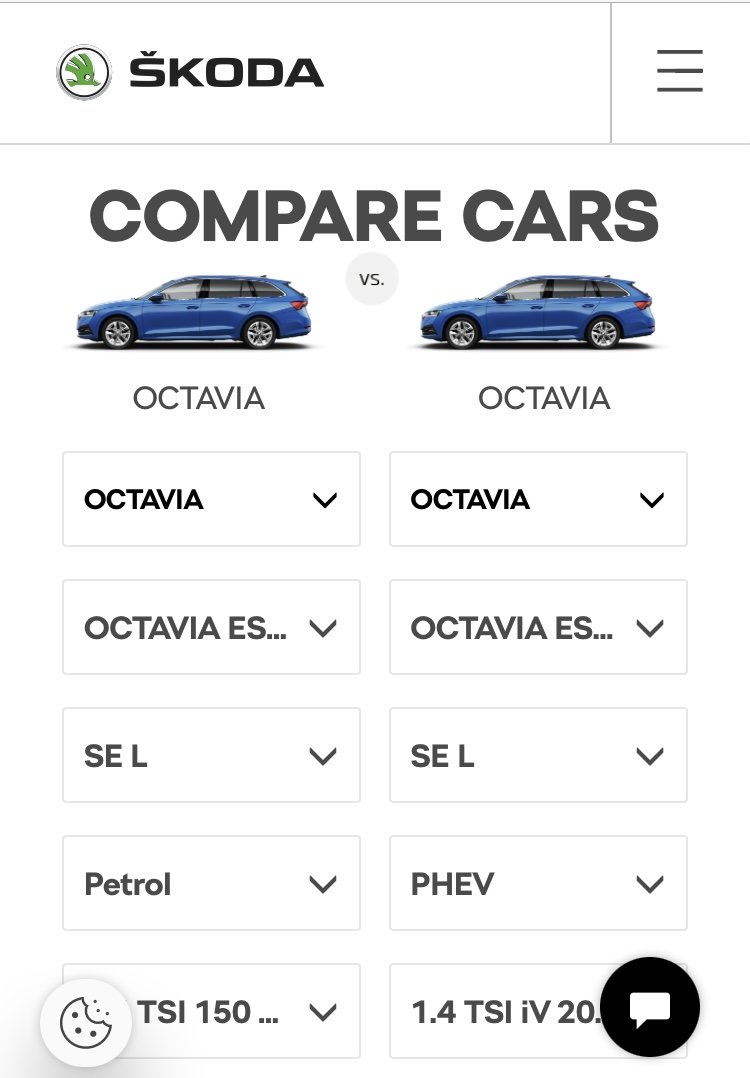
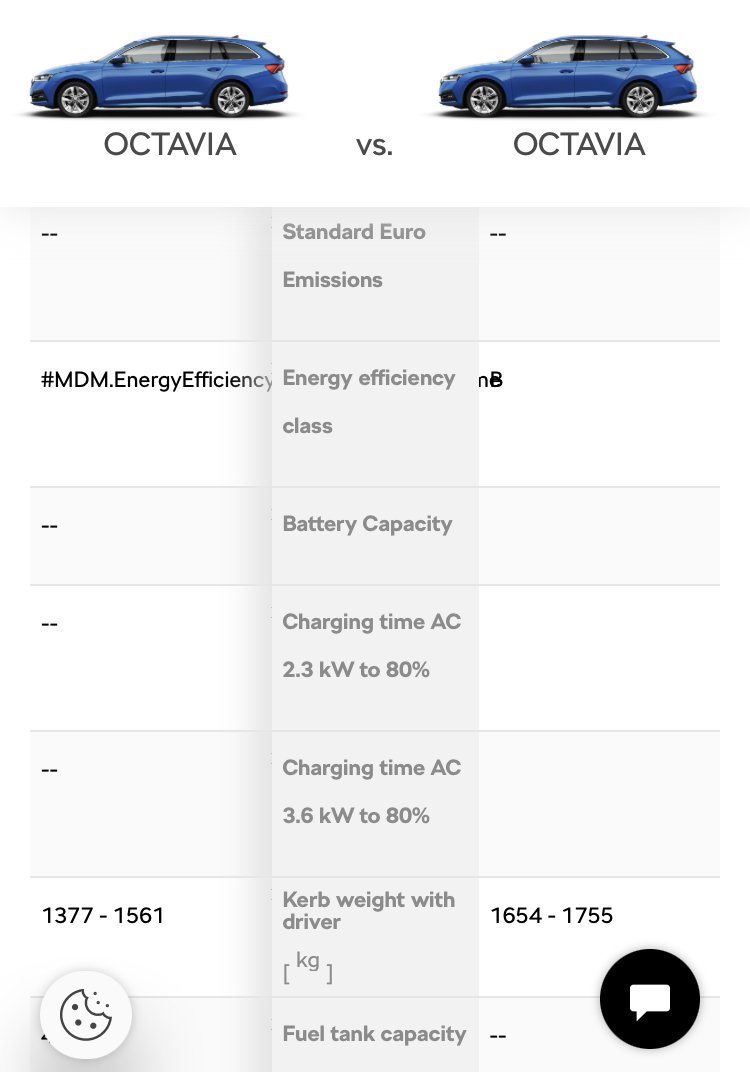
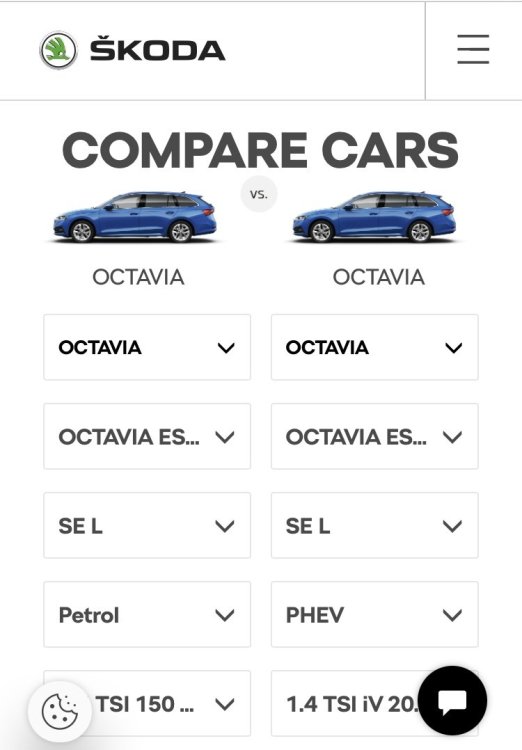
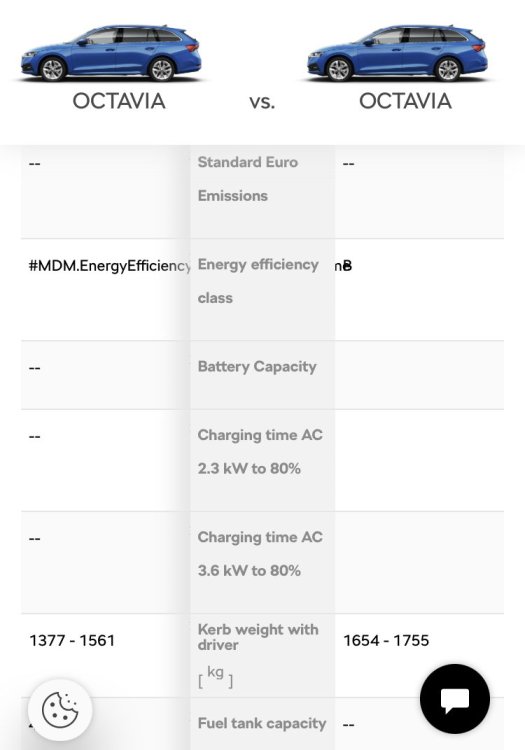
That’s fine, but an Enyaq, EV6, ID4, ID3, and many EV would all do the 120 miles there and back without needing a charge (Nearly all EV could do it with a top up at the other end). Comparing a cars mpg to an SUV mpg isn’t reflecting that gain from hybrid, but far more from the aero/mass side of it. You moving from an SUV to a car was a great move for reducing fuel costs and your carbon emissions (not Inc making the car) I understand your reasoning, I’m just saying that from an environmental point of view a hybrid makes almost zero sense. Poor MPG vs the same car without the battery, higher costs, the disadvantages of ice (fuel, servicing, road tax) and only very limited advantages of battery, but with the weight penalty. An iV is approx £32k a number of 200+ mile EV are close to that and plenty under £40k. Comparison of octavia SEL in 1.5 petrol and IV trim (petrol on left IV on right) You can see a big price jump of approx £7k and approx 300kg weight gain. £7k pays for about 35000miles of fuel even at £2/litre. The WLTP figures for the hybrid are of course fiction in the real world.
-
However that's terrible compared to a diesel, which for a long run on diesel will get 65MPG+ without doing much more than keeping it at or below 70 and looking ahead. I do agree that batteries are useful, but then if long journeys are rare, why not look at a short/long range EV for 99% of the journeys and renting an ICE vehicle for longer distance. The whole concept comes back to the same problem you currently have with all cars, which is too much weight. When on ICE you're carrying around an unused battery, if you're topping the battery up MPG tanks and if you're on battery you're carrying around a load of unused ICE and gearbox/transmission etc. The end story is poor MPG or poor range for a given amount of fuel/charge. If you look at it all, then you can find that people moving from great big heavy SUV with the aero/drag profiles approaching that of a brick to a normal car like an octy estate would make more difference than driving a hybrid SUV. Similarly people driving large cars who never need them would be better in a polo estate etc. Cars have got bigger and heavier and people have not looked at weight saving. It's huge alloys, big heavy brake calipers rather than lighter weight multi-piston designs, steel everywhere when plastic panels were used in the 80's and 90s (Citroen, Renault) and aluminium. The key issue should be weight and drag reduction to create more efficient cars, not greenwashing, by strapping a battery plus a glorified washing machine motor in an SUV then calling it self-charging hybrid technology (ICE powered you mean?). On an electric thread, it was suggested a mass based system of road tax would be a good replacement for the lost fuel duty, and I can see it would apply and help here too. I also posted this, which is food for thought... https://www.autoexpress.co.uk/opinion/354505/scrap-your-hybrid-diesel-campaign-might-just-happen I could be wrong, but I think the BIK advantage for hybrids is gone (or about to be). At which point a hybrid doesn't make sense as a company car driver any more vs an all electric ZEV.
-
Arlo was on a very good price, so that, a charger, solar panels and an extra large battery plus mounts cost far less than I’d seen just the cameras elsewhere. Playing with the trials for now and an SD card too, so come the end of the trials I can decide what to do. Obviously the cheap buy is offset by a subscription, which I imagine is what they’re counting on. As a medium term solution the Arlo is impressive, but we shall see what it’s like 6 months down the line. Pretty certain I will look to put proper wired cameras and an NVR, probably with a WiFi upgrade and some extra cabling in the not too distant future.
-
we have FTTP and I was debating if we needed a router in the way or if I could send the PON straight up… Be nice if that would just work… but I imagine some credentials checks might not be in the ubiquity box.
-
No worries, I put in patch panels when I did a couple of houses 😂👍 Are you fttp/fttc? If so what do you use for the POPoE/A or does the dream machine take the feed straight from the modem etc?
-
Currently the 800V battery systems are limited to 250kW charging (No idea if this will go up in the future with a software update).
-
Moved the yeti conversation to the yeti forum: https://www.briskoda.net/forums/topic/505186-converting-headlights-from-lhd-to-rhd/
-
So they charge a battery that drives to you and charges your battery… Add in transmission losses and you might as well just go fuel cell.
-
Stops are typically when you need the loo and that’s it, say once every 2 hours and it’s stop in and out so probably 5-10 minutes max. One customer site is just shy of 300 miles and as The didn’t know the car is at 80%… and it’s winter so let’s say remaining range is 200 miles. Assuming all chargers are free but I can only find a 100kW charger, it’s 45 minutes. The 6:00am start now becomes 5:00am Get there for 10am, then do the work and leave probably 6pm. Home at 10pm after another 80% charge. So a long day 6:00-9 now becomes 5:00-10pm. Too early for breakfast and too late for dinner at home so I better eat out all day. Imagine if there are only 50kW chargers… then it’s another 30 minutes added at each stop. If a charger doesn’t work or you have to queue you have a customer angry and asking for money back. Nobody I know in a similar role will put up with that extension of an already long dayand that’s assuming 300 mile range with 200 from 80% in winter on the motorway at 70. That is fundamentally why there is a desire for 500 mile cars, so you can get up, get there on 80% and make a single stop at the destination or on the way home. People don’t plan for expensive things breaking down at random and car manufacturers don’t design batteries to charge to 100% every day. Given lots of 350kW chargers, all unoccupied and an suitable 800V car, then stretching a break to 15 minutes and half a day on 7kW would indeed be fine. That’s the old chicken and egg though👍 But where do you cut off, 80kWh, 100kW… weight just seems fairer as 70kW battery in a steel car might not be lighter than an 85 in aluminium etc. I get your point on people needing the mass of a large battery, I just think it’s a hard cell Perhaps a per kW batter import tax. You say it’s wasteful but I’m not sure. Yes it’s less delivered energy but provided it’s from wasted low carbon or off peak who cares. On the flip side a fuel cell is simpler, uses less resources and is far easier to recycle than a battery at present. Whole life they’re probably similar, imho whatever wins wins as it’s still cleaner than ICE.
-
I figure the more the merrier in terms of wind, tidal and solar etc 👍
-
It is quite common for quite a few jobs to have to visit a site 200+ miles away at short notice. As it's short notice, you are highly unlikely to be able to get a room for the night. My diesel has often and recently got 600 miles from a tank, which enabled me to get to site, fix the issue and get home before filling up. With destination (and most) charging being in such a state, there is no way 200 miles is sufficient. That is before you take into account that a 300 miles summer range is a 200 mile winter range. If they make a car with a 60-80kWh battery, which can do 450-500 miles (or more), then you're onto a winner. That will only happen by making them low drag, lower mass (reduce body weight and also minimise the battery). If you restrict battery cars to 200 or even 300 miles, then a reasonably large chunk of drivers (those who need a diesel for range), will need an alternative to a BEV, such as hydrogen. Personally I'd be very happy with a 250-300 mile BEV and a longer range Hydrogen car. You're correct you don't need to make it solar for new builds, but I can imagine a fair few flats in build up areas adding a wind turbine might annoy the residents New build however if the land is big enough, you could stick wind in a corner, solar on the roof (PV or heat) and be in a much better place than today.
-
A three pack whilst charging is dangerous...
-
Like many other countries in Europe, you pay to use Motorways... Car tax being zero goes away and is based on some other factor (Such as weight - which after all does the damage). Use of non-motorway roads are included in your car tax Why limit it to the flat? A central battery system would also help and if you're dumping excess to a central heating system, then everyone benefits also. Electric wise you could have each flat with their own import meter, how you deal with the generation could be as simple as discounts on the service charges or and just have a single generation meter that is divided equally by the number of flats and offset from each bill. This latter option would require a government scheme, just like SEG, so it is standardised, but it's not beyond a fairly simple fix. As you say destination charging is cheap/easy and you are as you say parked up. My point was more that if people are already paying a higher rate (60p) to rapid charge and compared to ICE/hydrogen refill times are very slow, then effectively it has the effect of putting people off EV. Of course once the infreastructure was there so that every bay had 7kW+ charging, it's a different story, but until then... As for the up front purchase of battery tax, to me that is a complete no go. Battery EV are so expensive as it is that you would effectively price most people out of a car. I'd rather see a tax on miles per kW efficiency where it reflects it all.
-
I've seen quite a few places state 1 hour wifi per drink and hand out pieces of paper to allow it. Influences are unbelieveable in many places and are often just freeloaders ruining places for everyone else.
-
I'd suggest a well proven technology... ANPR and toll tags for motorways, those who do the long journeys pay the most. I think ther per mile tax is a non-starter. The rapid charger tax is possible, but I think it would be very unpopular when you already have a time penalty for using an EV long range. I think solar panels on flats is a great idea and is pretty easy to impliment. Flats have roof space, taxes are paid by the freeholders on the value of the land. - If they have solar panels on the roof to feed power to the residents and a central battery or heating system then they pay the current rate. - If they don't have solar panels on the roof then they pay a higher rate which is 5-10% higher. Watch as all the freeholders fight to get solar on the roof to avoid taxes.
-
Yes, I do hear you.... but then you could just pick up a cheaper ICE car also, such as a focus/fiesta or even some of the MG models. Fundamentally more than 8 years in to the great experiment the infrastructure is still way way behind where it needs to be. Why should a company and company car driver save on BIK and other taxes if both have not invested in charging infrastructure? If you don't have a charger but are claiming relief on taxes, then sorry but you keep paying them (Maybe at a lower rate) with that money invested in public charging. To be honest, if the infrastructure was there, such that there were any Plugin Electric bays at 7kW and 22+ was reserved for full BEV i'd be ok as they're a battery car with a 40kWh battery. It sadly comes down to there needing to be a big hit for idle charging when there are small number of chargers in dedicated bays. In the nordics my understanding is that there used to be (or maybe still is), a lot of power connectors in public car parks for pre-heating in the winter. If such a system could deliver 10-16A and was on most bays, then that would be ideal for the hybrids.