Austin 7
Members
-
Joined
-
Last visited
Everything posted by Austin 7
-
Hi If fault codes don't answer the question, I would start by getting the fuel pressures checked. It sounds like the pressure after starting may be dipping below the minimum threshold for whatever reason. A second possibility is a crankshaft or camshaft sensor, which can exhibit heat-related intermittent failure.
-
Hi The EGR and the DPF are separate systems. EGR reduces combustion temperatures during cruising conditions, which reduces Nitrogen oxide emissions, and has been a diesel engine emissions fitment for at least twenty years The EGR valve, the EGR cooler and the associated throttle body in the air intake all get gummed up by oily carbon deposits. The engine will run quite happily without it, and it can be programmed out (so that the EGR valve stays closed) without physical modifications. This is of course in contravention of UK MOT regulations. The DPF absorbs fine soot which is later oxidised ("burnt off") if you drive far enough and fast enough. If the latter doesn't happen then regeneration is programmed to kick in. The DPF can be physically removed or modified to be inoperative, and again this is not permitted by MOT regulations. DPFs are a more recent feature, but still date back 15 years. I suspect that Yeti warning lights for emissions may be triggered by more than one cause, so it would help if you had the accompanying fault code(s) read to narrow down what it is "unhappy" with.
-
It would not surprise me if farm chemicals mixed with mud and animal "output" was as corrosive as salted roads.
-
It's the sort of sound they make when the pads are almost but not quite being applied firm enough to the discs. I don't think pad wear would do this, but if the rear handbrake mechanism on one or both sides is slightly corroded it might make it stiff enough to be hard to apply fully with the handbrake lever. In my experience the Yeti system needs a firm pull and is more effort to apply than other cars. One technique you could try is to "stand" on the footbrake as you apply the handbrake. This uses the footbrake hydraulic pressure to get the pads to grip well, so the application of the handbrake lever only has to "take up the slack" and not be trying to apply the pads as well.
-
The DMF function is effectively in series with the clutch, so DMF wear/malfunction won't necessarily be accompanied by clutch slip. The DMF reduces harshness and vibration which you and your passengers will appreciate. However, it also protects the gearbox from torque peaks, which may have allowed the designers to make the box smaller and lighter than it would otherwise have to be. Only you can decide on the cost v benefit equation, but I suspect unless its a DIY job that the labour cost will comfortably outweigh that of the parts. Is a solid flywheel much cheaper than a DMF ?
-
Yes Brake Servo = Brake Booster The filter is around the rod that leads from behind the brake pedal to the booster
-
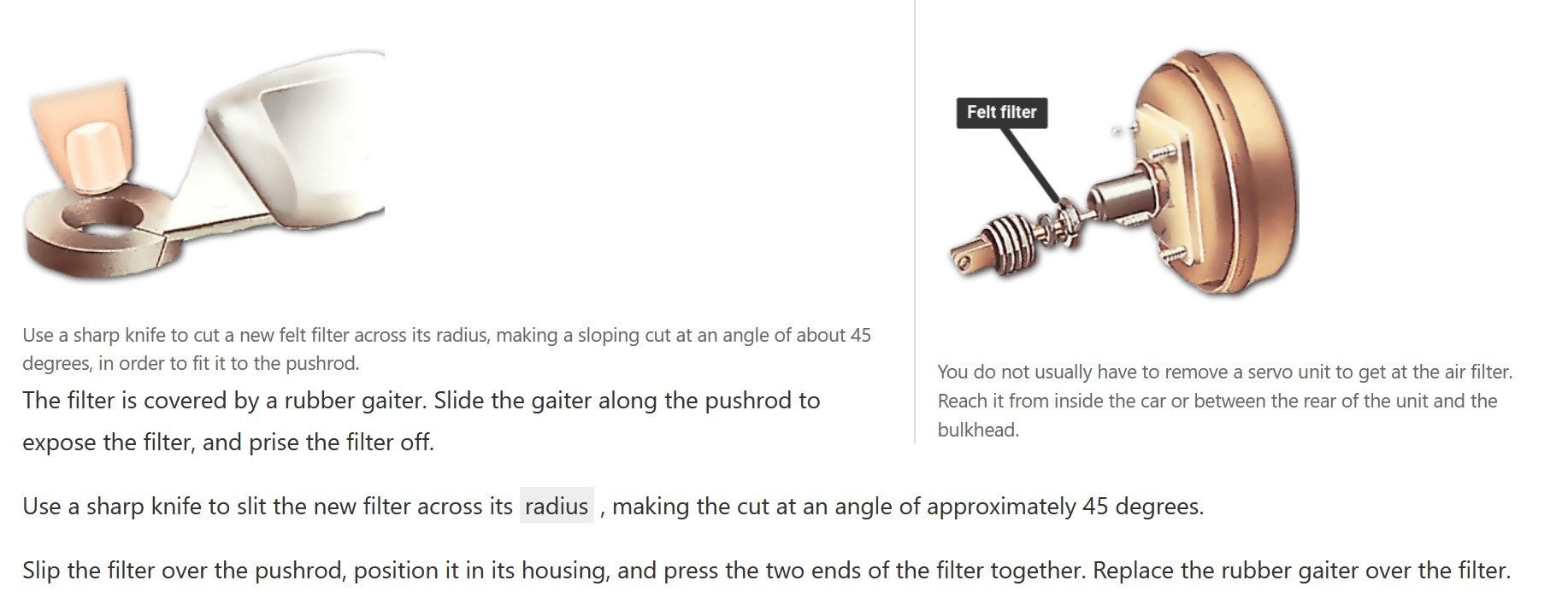
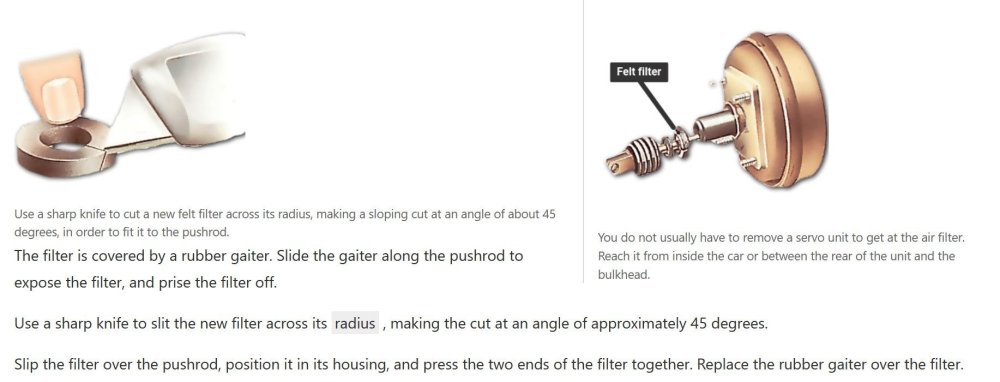
Hi Golan36 I wonder if the moan/squeak noise is air entering or leaving the brake servo ? Air is supposed to enter on the car side of the large servo piston as the brakes are applied and the piston moves forward. There is vacuum on the other side. There is a small round air filter around the pushrod inside the car. Maybe the filter is choked with dust ?
-
Hi Bosphori The single ignition coil has four HT outputs. Here are some suggestions for part numbers to search. It is up to you to double check suitable fitment Skoda Part Number 032 905 106 * (* is a variant letter, for example B or D) Bosch 00112 Bosch ZS-K 2X2 E Bosch F 000 ZS 0210 Hella 5 DA 358 000-171 Beru 0 040 402 003 In the UK these parts cost about £50 The HT cables come as a set of four Skoda Part Number 03F 905 409 * Bosch 0 986 357 844 These parts are also about £50 Some HT cables were fitted with extra protection to prevent them being chewed by Pine Martens which is a problem in some European countries. The cable next to the turbo may have extra protection from heat. All these cables have internal suppression, do not use old fashioned copper core cable.
-
Hi Don't discount the possibility that it's a wheel bearing. This gives a moaning/droning noise that gradually gets louder over weeks as the bearing wears. The pitch is proportional to road speed, and it's most noticeable at 30 to 50 mph on smooth roads when it isn't masked by tyre roar or wind noise. The noise will pervade the car and be hard to localise to one corner. Dipping the clutch and coasting won't affect it. Sometimes cornering one way will make it louder, but I found cornering to have no effect. For a 2WD car a rear bearing can be checked by jacking up one wheel and spinning it by hand. Front bearings are harder to diagnose due to driveline drag, but sometimes the vibration can still felt by holding onto the hub/spring whilst the wheel is turned.
-
Hi From what I can glean, these TPMS systems only work on the ratio between the different tyre circumferences. They have no idea what the absolute value is. So if they all increase or decrease by the same amount no warning will be triggered. The situation they are looking for is one tyre rotating consistently at a different rate to the other three. Presumably the results have to be averaged out for long enough that cornering doesn't trigger a warning, so when you set off you may not get a warning straight away. As for low battery voltage giving warnings, surely the electronic design should be robust enough to cope with such things unless the battery is completely knackered ? The supplies to any electronics should be well filtered and regulated down from the raw 12 volts. We don't hear tales of the ECU failing to start the engine when the battery voltage drops to as low as 9 or 10 volts during cold cranking.
-
Hi Factory seats have airbags and occupancy sensors. If you fit another seat make sure these are compatible, and that disconnecting and reconnecting these components does not throw an airbag error which can be costly to get reset.
-
Hi Head gaskets rarely fail for no reason. After 97K you can rule out misassembly. Gross overheating that warps the cylinder head is about the only possibility, but you would have been aware of that happening. As suggested above, the EGR cooler is a potential route for exhaust gases to enter the cooling system (e.g. corrosion pinhole from inside pipe into water jacket) and show up on a sniff test. Any sign of water in oil or oil in water ? Any sign of low compression ? A garage should be able to remove injectors and do a leakdown test on each cylinder. Given the costs involved, I would want to be pretty certain of a firm diagnosis.
-
Hi If the fault occurred when you were driving along, the battery would be under charge by the alternator and would be typically at 14.5 volts. So I'm more inclined to say a wheel sensor. Probably not a bad idea to replace your 10 year old battery before the winter anyway, but I don't think it will cure the reported problem. I have known car batteries to work well for as long as 17 years and as short as 3. Same car (not a Yeti), both reputable makes. There seems to be no way of telling.
-
Hi I agree with the suggestion above to change the fuel filter (a quick job) even if it has already been changed. The paper element may have mopped up water and be restricting fuel flow. If you have had water contamination in the fuel, the water will tend to sink to the bottom of the tank, whereas the pickup pipe will be a little bit above this level. The water is therefore likely to hang around. So best if possible to get the tank fully pumped or siphoned out, which will also give an opportunity to inspect the colour of what comes out. You can buy a length of clear hose with a squeeze bulb type pump for about £10. I doubt if a dose of (petroleum based) oil cleaner in a tankful of petrol would affect running too much, though it will lower the octane. Your lack of power accompanied by the Check Engine light is likely to be deliberate power restricion by the ECU (" limp home mode") to prevent engine damage due to a detected fault. Anything that restricts the flow of fuel (e.g. blocked fuel pipes or filter) could also reduce the amount of sustained power that can be developed, even without the light showing. I don't know why you have overheating, though driving around in 3rd gear will be rather inefficient and won't help. What does the temperaure gauge show ? Presumably you have checked the coolant and the rest of the cooling system. The chain rattle at idle may be a sign of chain and/or tensioner wear, especially in view of the high mileage.
-
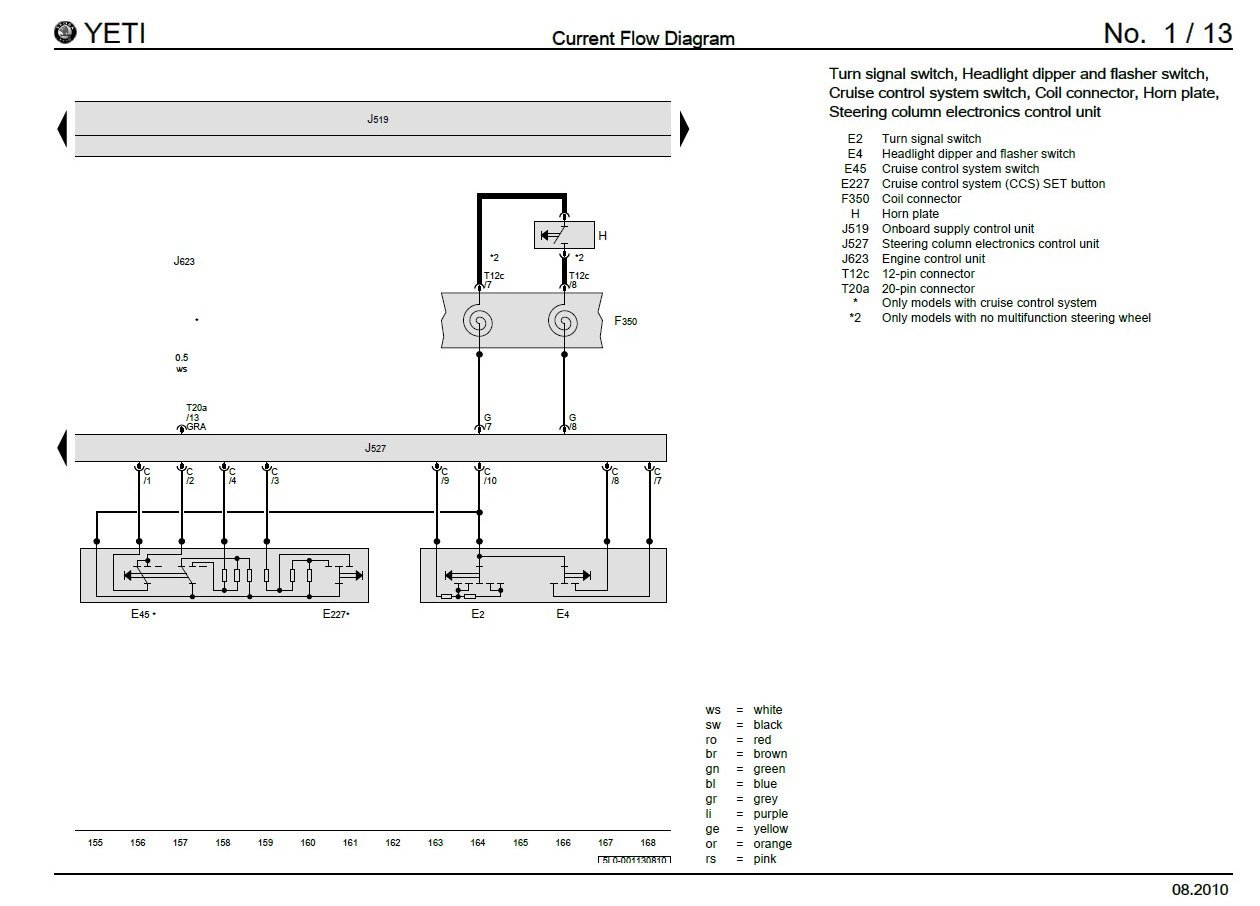
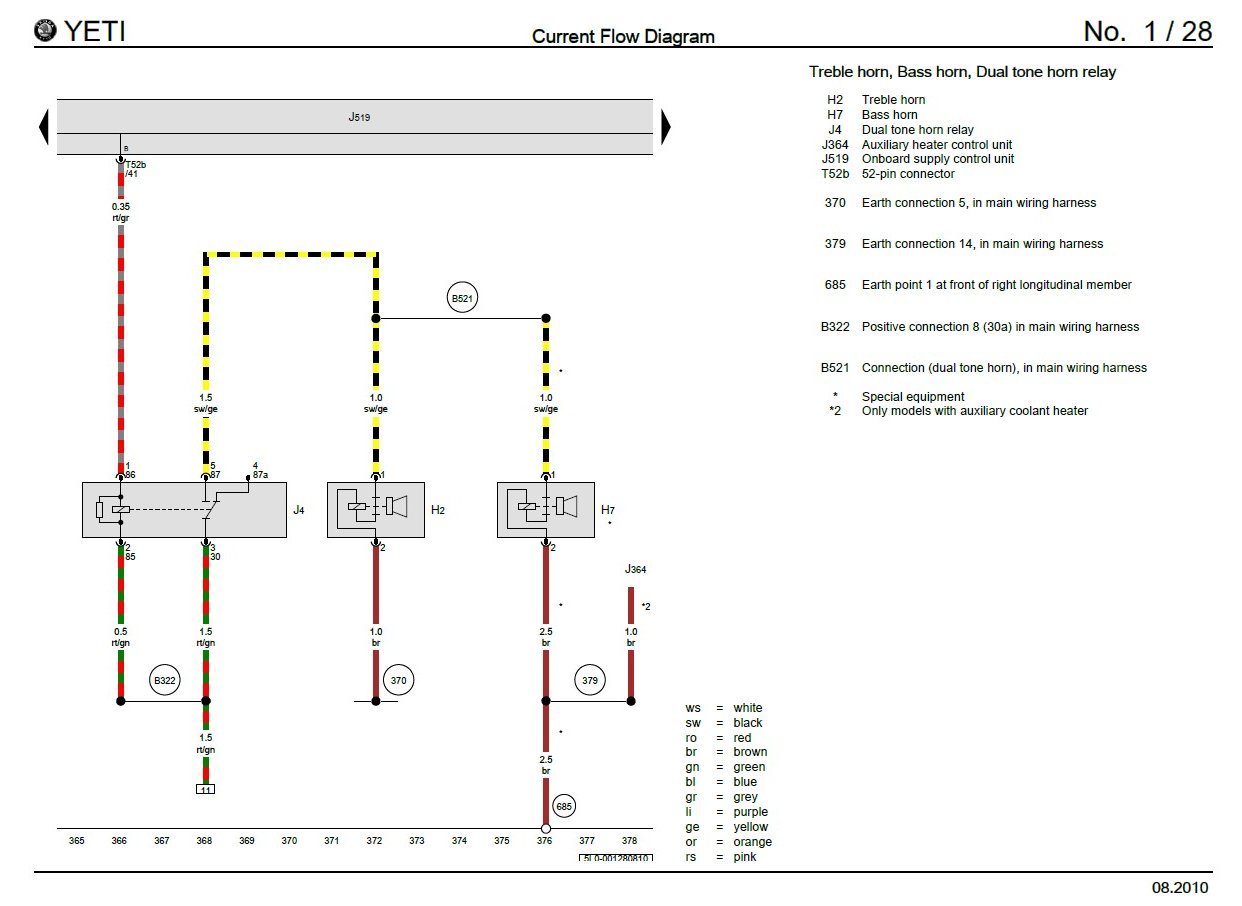
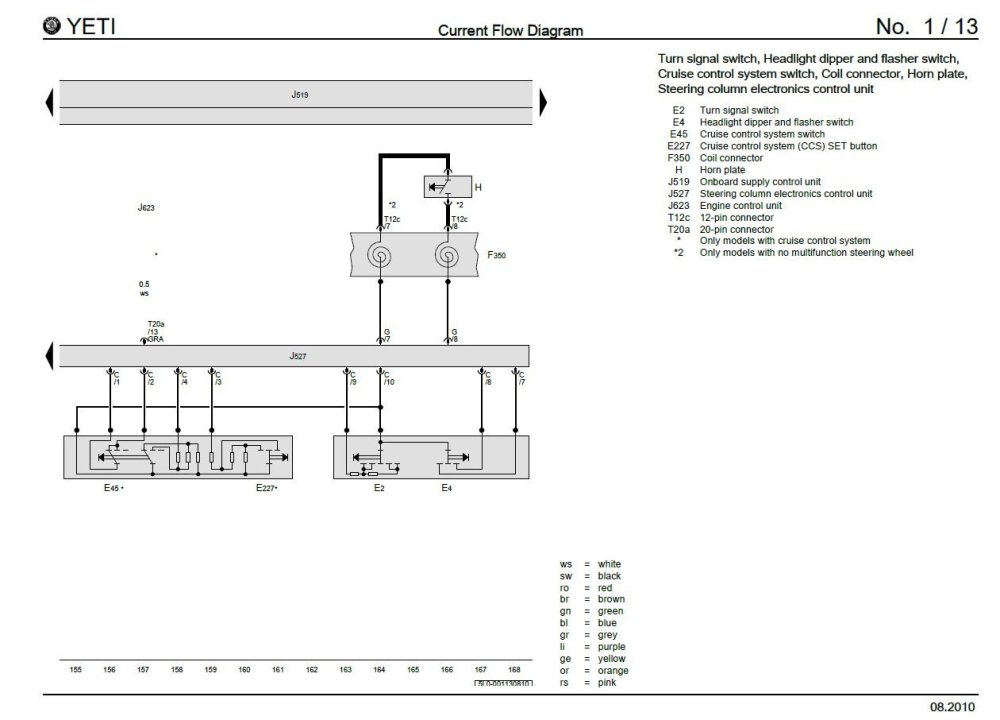
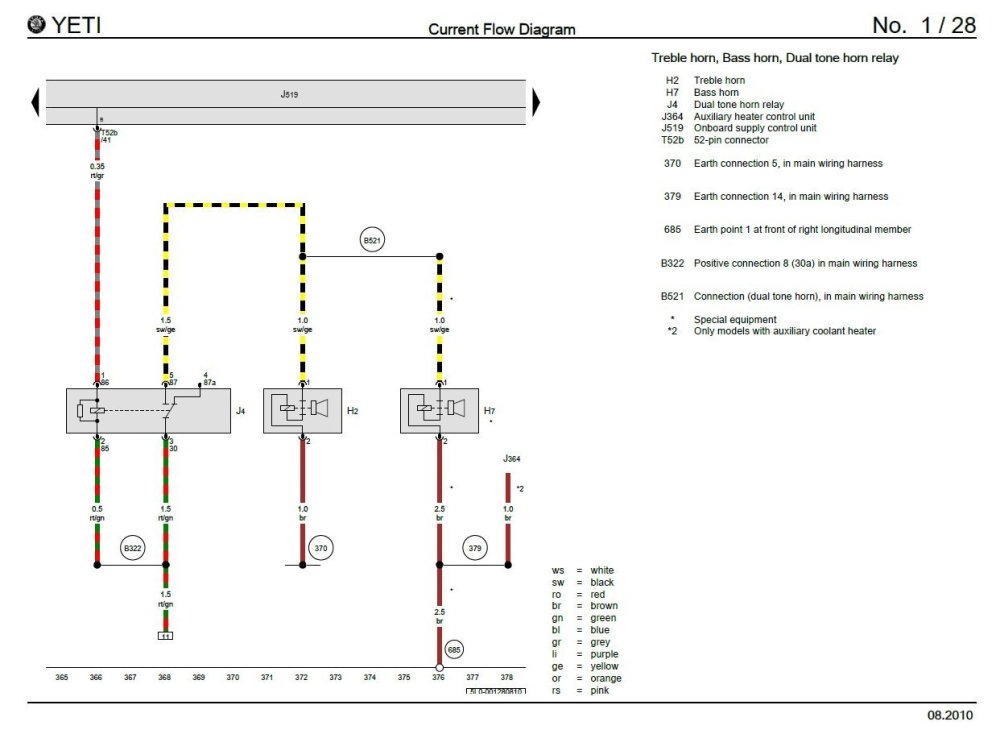
Hi When you get interaction between two seemingly unconnected electrical items, it can indicate a fault (e.g. bad joint) in something which is common to both. Sometimes this is on the supply side, e.g. a shared fused feed. However this is unlikely for the horns, as they would normally have a dedicated fuse. Altenatively, it can be a problem with a shared Ground (Earth). The system on the Yeti (and many others) is to common up multiple ground connections within the wiring loom. A common ground wire (often of bigger cross section) is then routed out to a ground point somewhere on the body/frame. There are a number of these, but each one is serving quite a few electrical items. Any unwanted high resistance due to a bad joint will cause voltage drop. When the horns are used, several amps will flow to ground, the extra voltage drop could therefore be upsetting something else connected to the same ground point. I attach the schematic for the horns, which are powered via a relay driven by the onboard supply control unit. The Treble Horn H2 grounds via Main Harness Ground connection 5. The Bass Horn H7 grounds via Main Harness Ground Connection 14, and thence to Ground Point 1, front of right longitudinal member. The horn push operates at low power levels and communicates with the Steering Column Electronics Control Unit via two "Clock Springs". I think this part is unlikely to give your symptoms, but I include a diagram. Time to check your ground points, which may only be possible by undoing them as any corrosion can be hidden from view.
-
Hi Hard to see, but I think it might be the (plastic) thermostat housing. This has an aperture that mates to a correspunding one in the block, with an elastomer seal which could have failed. On the outside are a number of stubs for coolant hoses. If it is the thermostat, this thread might be relevant:
-
Hi No harm in changing the fuel filter to eliminate it as a possibility, but I doubt this will have any effect, I suspect they are mainly fitted for countries where fuel might occasionally have solid contaminants. In the UK a fuel filter should last as long as the car. As cylinder pressures rise with opened throttle and turbo boost, the plug firing voltage increases. If the ignition system doesn't have enough reserve for some reason this can bring on a misfire under those more demanding conditions. You seem to have changed all the components but it might be worthwhile having another look at the multiway connector to the ignition coil pack, i.e. the low voltage and control side, just in case there is any corrosion or a chafed loom wire.
-
Hi I don't think the clutches or anything else in the DSG gearbox is genuinely overheating, there simply isn't enough time for heat to build up before you get the message. It's possible Skoda have arranged for the overheat message to be shown when there is any gearbox related fault code stored, which is why I suggest clearing the present code before doing anything else.
-
Hi Tien I'm assuming this is a DSG gearbox The error code may be a historic one due to the transmission controller having too low a voltage. Now that you have a new battery It would be best to clear this code before proceeding. The dashboard message shouldn't be taken too literally, I suspect the same message will be displayed for any gearbox related error. The most likely over-temperature condition is in the clutches rather than the transmission fluid, and this clearly isn't the case here with everything stone cold.
-
Hi I agree with Warrior193, it's too much of a coincidence having the cooling system drained and refilled and then the heater not working. Air lock would be my first thought. Cooling systems have got more complicated over the years, with control valves, multiple thermostats etc.
-
Hi The symbol you show is variously described as the Malfunction Indicator, Check Engine Light and Emissions Light. I believe this is partly a European legislative requirement to indicate that a fault may be making the emissions higher than they should be. Depending on the fault severity, you may also have restricted power mode to avoid engine damage, but it doesn't sound as though you have. So your fault may or may not be directly associated with the exhaust and catalyst etc. It's a bit odd to get multiple fault codes which have no apparent connection to each other, but fault codes are only a guide/starting point to full diagnosis. With the right equipment it should also be possible to read the state of other parameters at the exact time the fault code was stored - this can sometimes aid diagnosis.
-
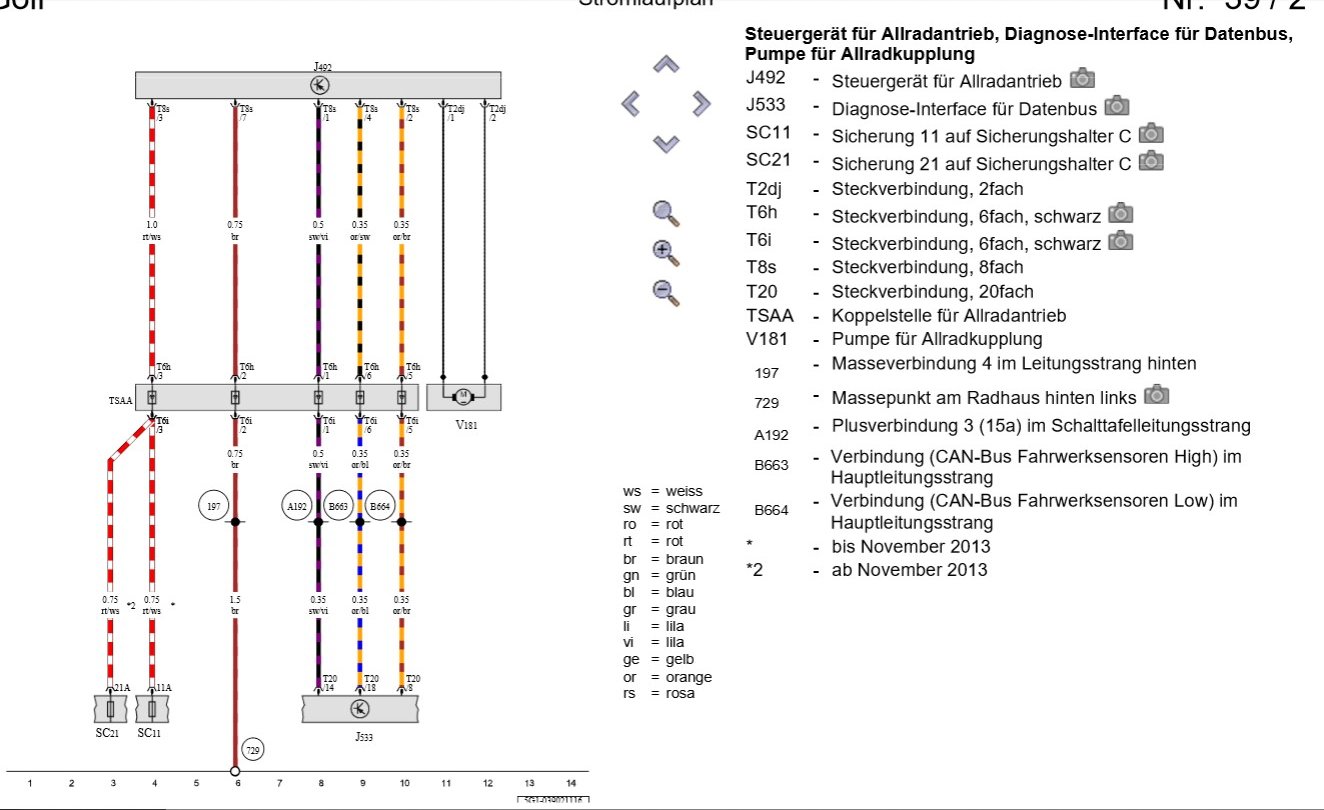
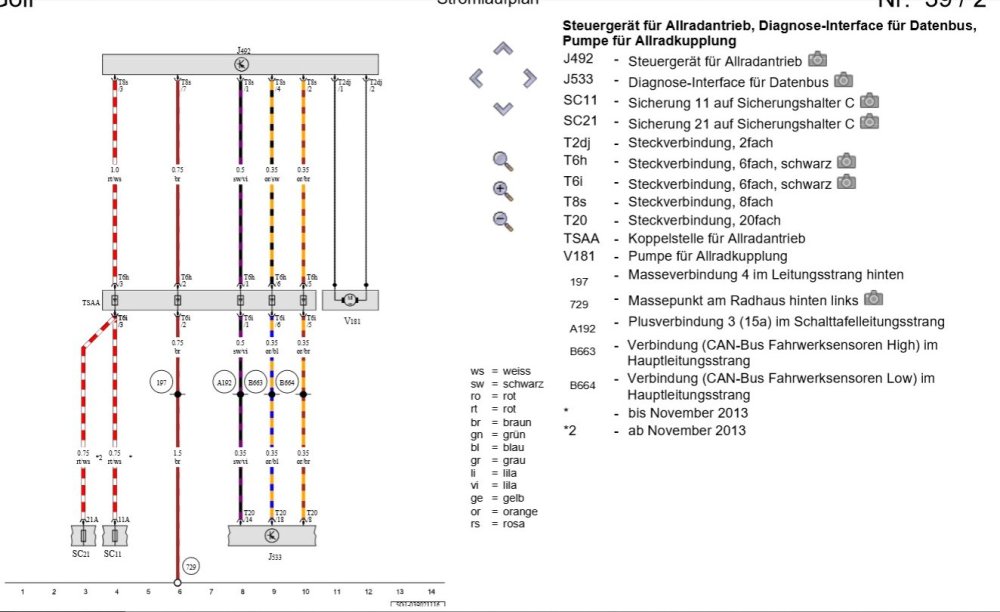
Hi I attach the self study program SSP070 for Skoda. Also, you can find some Haldex schematics here: https://www.vdveer-engineering.nl/en/information/haldex-4motion/haldex-schematics I attach a PDF of the one for the Golf 7, it's in German. Note that TSAA is the connector for the 4WD unit, and 197 is the Ground Connection in the Rear Wiring Harness. So the unit should be grounded via this wire (br = Brown, 0.75 square mm cross-section). It should not be necessary to add any extra ground wires. Another thicker brown wire goes from here to Point 6, the Ground point on the rear left frame. I suggest you check out both these wires carefully for corrosion etc. Power comes from one Fuse via a Red and White wire of 0.75 square mm, Fuse number depends on the year for this example. There are three thinner control/data wires which go the unit marked J533, the diagnostic interface to the data bus. Your vehicle may differ in detail, but I would be suprised if it is very much different. SSP 070 All-wheel drive with Haldex coupling Generation IV.pdf
-
Hi Johann You seem to have tested most things. I recommend that you double check that the Haldex unit is getting full battery volts, as it would only take about one ohm of excess resistance somehere in the feed or ground cables/connections to cause significant voltage drop and then operation problems. Even fuseholders can develop tarnish, try pulling the fuse out and putting it back a few times to clean this. I suggest you wire up an independent voltmeter inside the vehicle (with extension wires/probes) connected to the 12 volt feed and ground return at or near the connector to the Haldex. Maybe when the control valve solenoid warms up its electrical resistance increases just enough to stop it working ? Copper resistance increases roughly 10% for a 30 degree C rise. This website has some useful information: https://www.haldexrepairs.co.uk/guide-generation-4-haldex-trouble-shooting/
-
Hi If you climb a bank therefore increase the engine load you will be increasing the turbo boost pressure. Normally you would also press a little harder on the accelerator to maintain speed, but this is something you may do unconsciously. It's possible you have a small air leak somewhere in the air intake system upstream of the turbo, which will be more noticeable at higher boost. The rattling may be associated with the wastegate and its actuator and linkage on the turbo. Unfortunately, you can't really test this with the car stationary as there isn't enough load on the engine to get any appreciable boost pressure.
-
Hi You could probably drive a mile in cold weather from a cold start with no coolant at all, though I wouldn't recommend it ! I suspect you still have most of your coolant in the system, try squeezing the large radiator hoses - the "feel" will tell you if there is air or coolant inside. If still mostly full I suggest as above that you top up with the correct stuff and then use the car but keep a frequent eye on the expansion tank level and the temperature gauge. Coolant often contains a dye to help with leak tracing, can you see any pink residue around hose joints etc ? I think gasket failure is unlikely, and you would detect a misfire/lack of performance. When the original alarm went off, what was the temperature gauge showing (if you can remember) ? It's possible that the thermostat is not opening fully and restricting the maximum flow to the radiator. Maximum flow is only needed when the thermal load is high e.g. motorway driving. One failure mechanism of a wax capsule thermostat is that it loses some of its wax and then doesn't open fully. This probably won't trigger any fault codes. Clearly something triggered the original overheat alarm and it would be good to get to the bottom of that even if things seem OK now. If you ever find yourself in an overheat situation where you can't pull over promptly, it's a good idea to put the heater on maximum and use full fan assistance to take the water temperature down until you can stop safely.