
RicardoM
Resident Member
-
Joined
-
Last visited
Everything posted by RicardoM
-
If I understood it correctly, you don't have am instantaneous method of measuring/computing the SOC of the battery in the car.
-
UPDATE So far I'm monitoring the voltage on battery first thing in the morning. I have installed a cable from the battery poles that ends with a 2-pin black socket with a black protective cap and a fuse for extra safety. I tucked the socket near the front grill. You can't see it unless you know it is there. So I can use a multimeter to check the voltage without "waking up" anything. Observations so far: The first worst thing that can happen to a battery on a VAG car is driving around in a city for short trips (less than 10 km) using low electrical loads. The BCM will charge the battery only for about a minute. The rest of the time the alternator will deliver 13.1-13.5 V to the battery. Basically will stay in the so called Fuel Economy Mode. This strategy will result in discharging the battery to about 12.0 - 12.2 V in the morning thus lowering the SOC of the battery to less than 50% every day. The second worst thing that can happen to a battery on a VAG car is not using the car for more than 3 days. Depending on type of computer modules and sensors installed on a VAG car (anti-theft, proximity sensors, keyless doors, remote engine start, various convenience sensors, etc.) the battery will end up discharged. By comparison I have attached an article that describes the BCM on General Motors cars. Their strategy is far better. For instance, anything under 80% SOC will trip the alternator to start charging and reach back 80% leaving room for brake regenerative charging. VAG strategy is to lower the fuel consumption at the expense of a low SOC and short battery life. Charging System Description and Operation.pdf
-
I wonder IF and HOW the BCM knows the SOC (State of Charge) of the battery. Anyone?
-
RicardoM replied to Mohamedelbana's topic in Skoda Favorit, Skoda Felicia, Skoda Fun and Skoda FormanIs the radiator fan running all the time in that situation?
-
This looks promising.
-
Update The BMC J367 has a microcontroller inside acting as a LIN slave. It gets data from the current shunt, the thermistor, and the voltage on battery then packs it according to serial LIN protocol. I took the battery out, recharged it overnight using an intelligent battery charger with a 7-step charging current. The battery showed 61% charged at the beginning, 100% at the end. Installed the battery on the car. The voltage on battery while driving in the city couldn't be bothered to go over 13.1V, sometimes so low as 12.7V. Now I have two options: Rest assured that VW knows what is doing in terms of charging % and charging strategy to minimize the load on the engine and prolong the life of the battery. Note: original battery lasted 5 years but gave up without warning in a mall parking lot after staying 15 minutes inside the mall. Dig in by decoding the LIN bus and monitor the 3 input parameters, correlate them with the driving phase and go on from there. Your call please?
-
@Wino The battery monitor control unit J367 looks the most promising for experimenting indeed. I would be very interested to know more about its inner parts. I am tempted to go the hard way by developing an independent current monitor based on Arduino/Pi, unless I find a better, ready made logger to connect it to J367. Only when I fully understand from the logs what has the battery management under the bonnet based on recording various trips, I will choose what tweaks deserve attention. The strategy that keeps the battery undercharged to make room for recuperative braking contribution seems (for the moment) of little interest in terms of energy level recovery. My instinct is telling me the system is not contributing with more than 5% (to be generous) from total battery charge on an average driving trip.
-
That is pi$$ing me off, as I am not a big fan of modern cars, although for comfort and safety I own one. As soon as the computer modules wake up, they start chewing the battery big time. I have no possibility to know for sure what is the battery voltage first thing in the morning,as to open the bonnet means waking up all the guards of the car that draw an insane power from the battery. Where are the good old times when the only electrical load was the interior light dome when you opened the door... Furthermore, when switching the ignition key to ON, there is a big 50A spike for half a second or so... I always deactivate it, as it is a stupid technology.
-
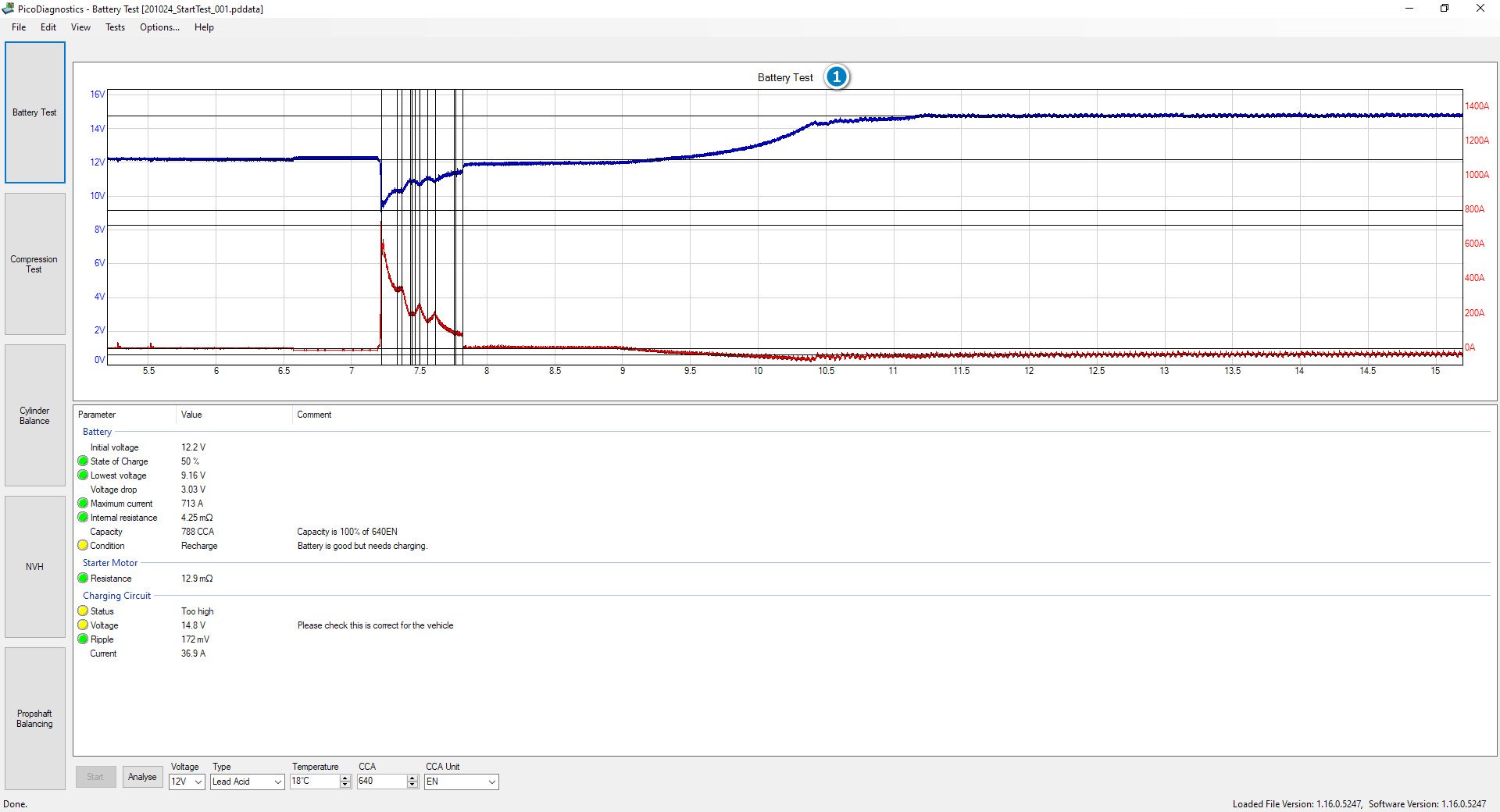
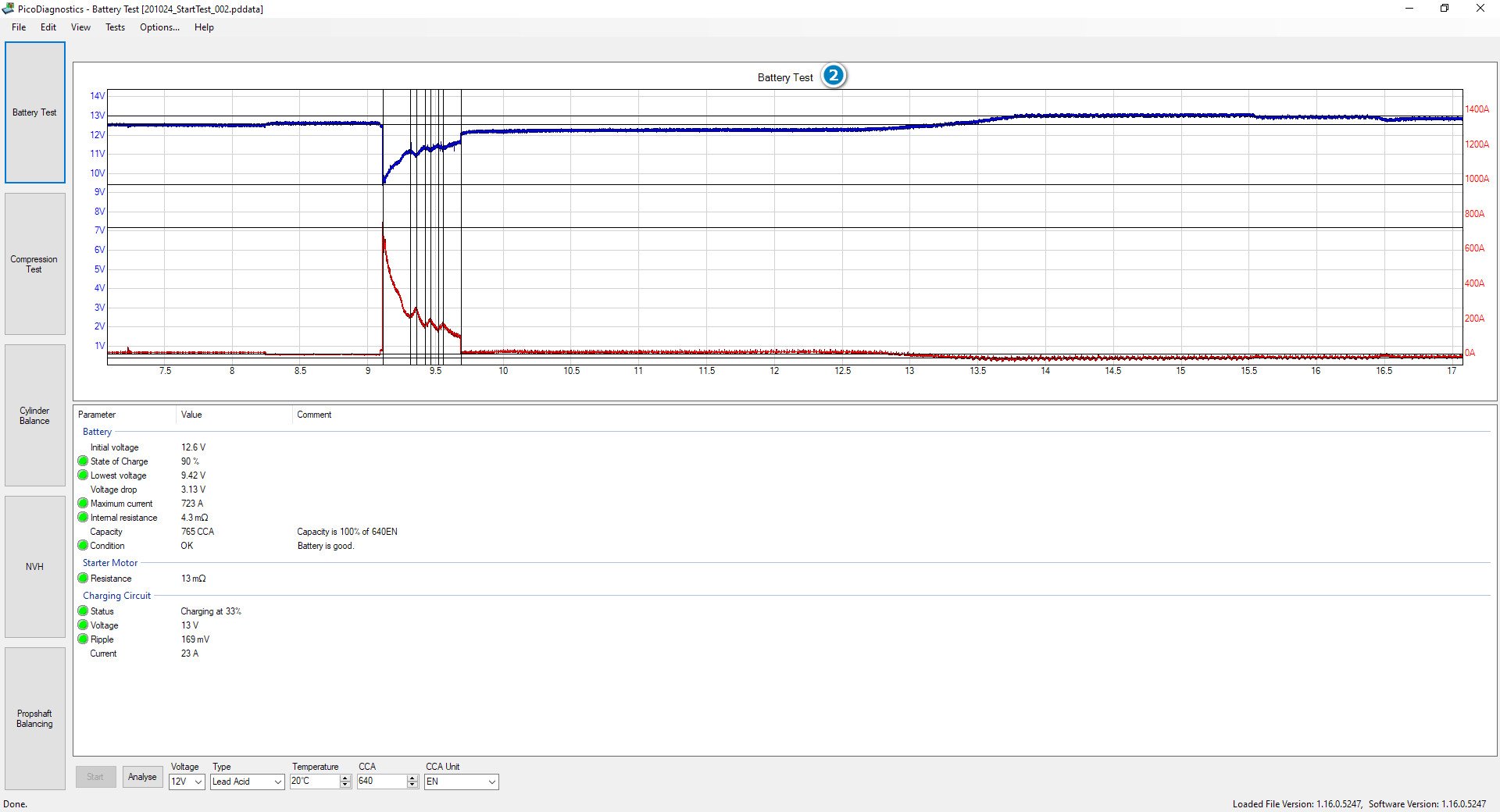
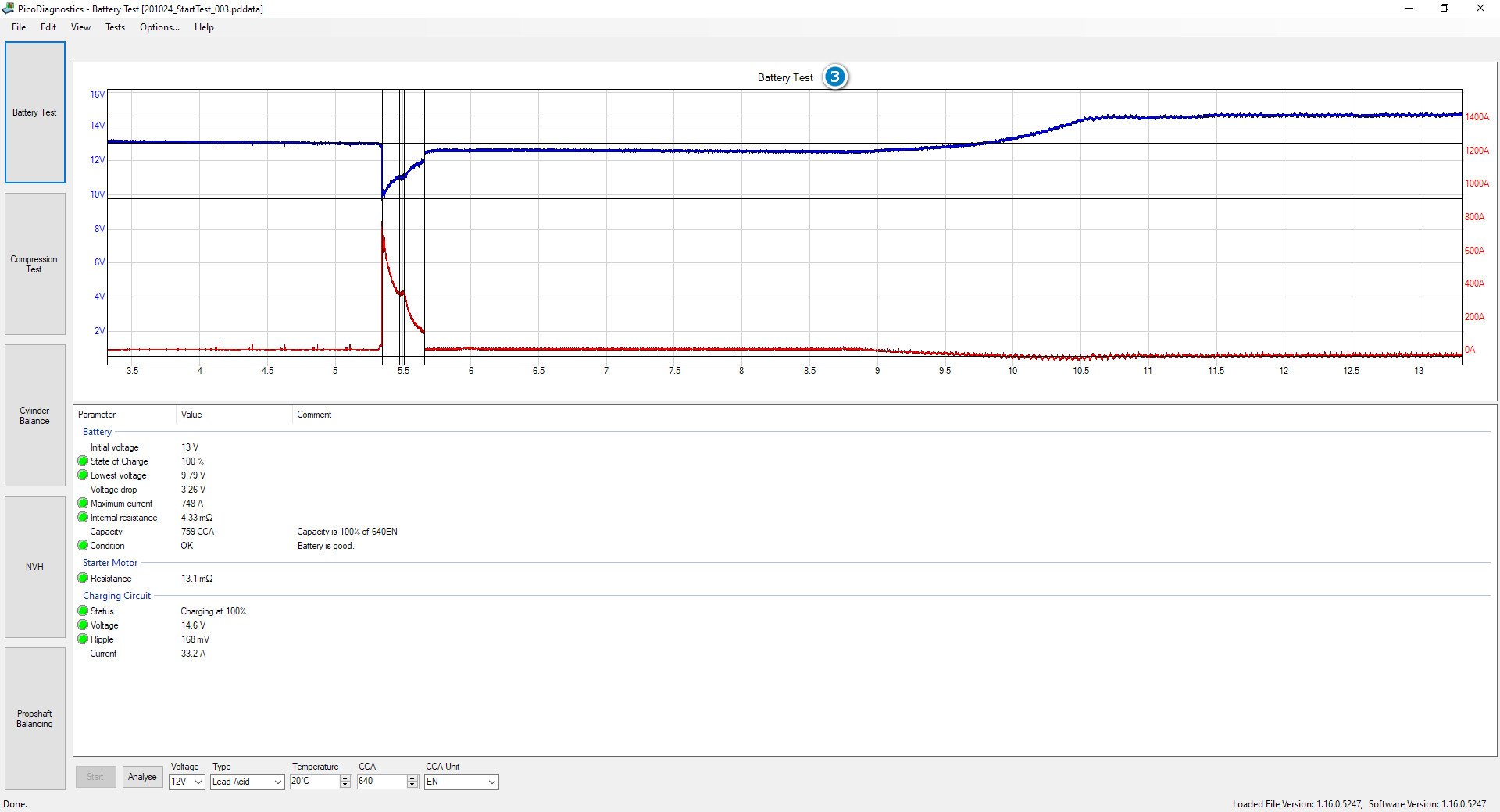
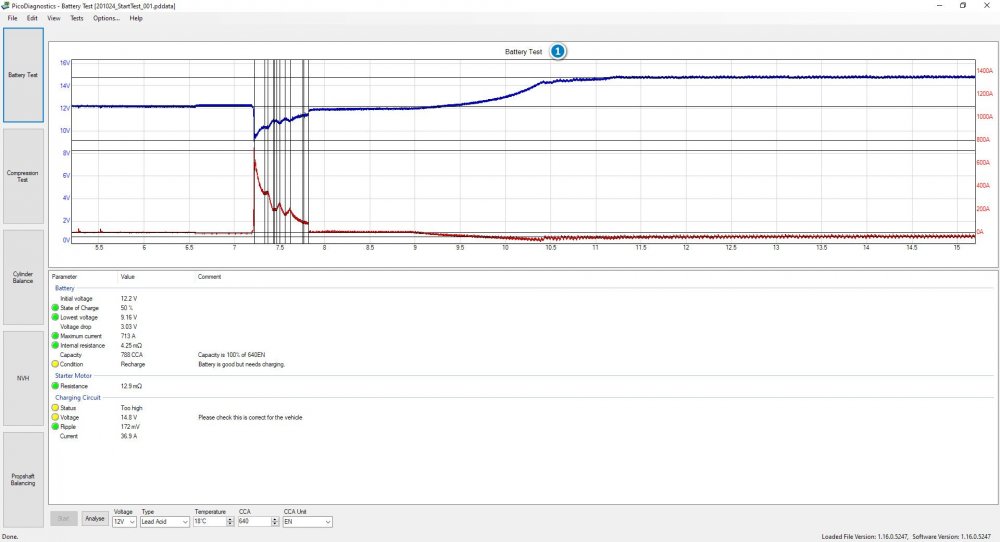
Putting it simple, I am reluctant that the battery management (BM) is doing the best job of keeping the battery fully charged. It looks like there is a charge % threshold (say 80%). Over it, the BM doesn't bother kicking in. In other words, the battery will never be 100% charged. Well, I have a USB charger plugged in all the time. It shows the battery voltage. I tested its precision and it is better than 1%. When I start the engine in the morning, the voltage goes up to 14.5-15V for some 5 minutes then it drops gradually to 13.5V. On a long trip on the highway by day, the voltage drops to about 13.1V. To me instantaneous battery voltage doesn't mean something useful in terms of battery status. I would rather be happy with a SOC (state of charge %) displayed on the MFD exactly like oil temperature, average consumption, etc. I have installed a brand new 60Ah VARTA N60 EFB battery (640A EN = 700 CCA) and I am interested in having it in best shape. Now, I have the luxury of having access to the latest PicoScope 4425A Master Kit. Yesterday I went to the car and did three specific battery/charging diagnose tests at 5 minutes intervals. I wasn't happy finding the battery voltage was 12.2V overnight. See for yourself. Comments appreciated.
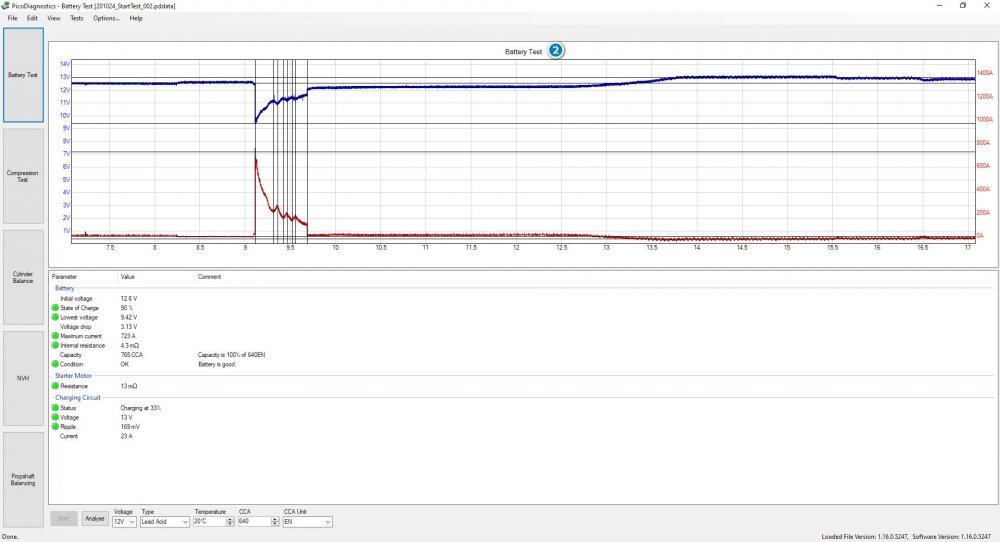
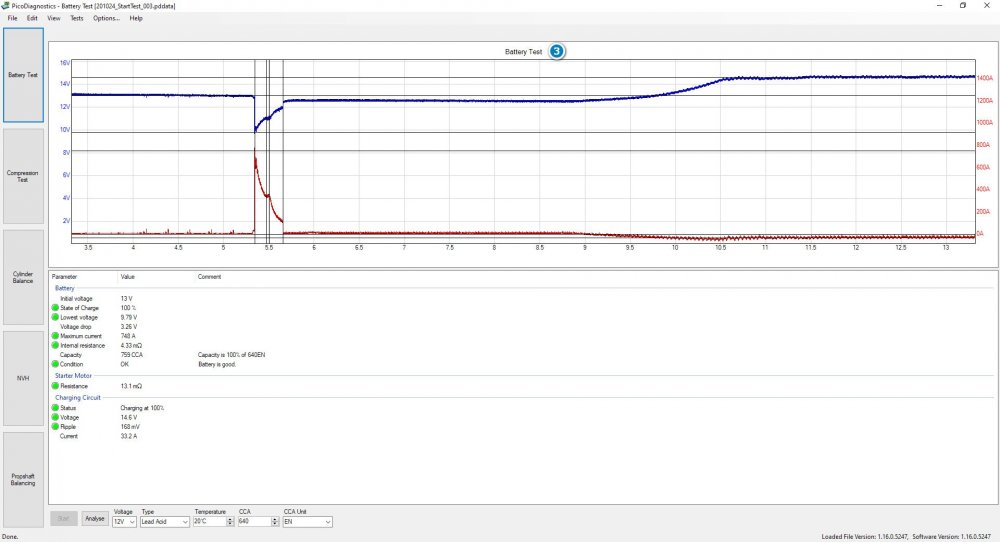
-
I just need to log the charging current of the battery to make sure the battery management does a good job. Right now my impression is that the battery does never get fully charged, even on long trips on the highway.
-
I have searched for clues (including in RossTech forum) but no luck so far. The classic measurement needs a very big shunt in series with the alternator/battery which there isn't to my knowledge. Yes. The technology is common on all VAG cars. My hopes are related to that smart charging system that knows when to tell the alternator to charge without putting a load on the engine all the time. How does it know what is the instantaneous amperage of all loads?
-
Is there any way of logging the charging current to battery from the alternator? I mean using VCDS or an alternative way.
-
It might be a master on Audi but he is rubbish on Skoda Felicia if he couldn't communicate with the ECU. As for his advice concerning the fuel pump, I wonder what it is based on... I smell rat.
-
So, the engine is the one shown in the attachment. From my experience as an auto mechanic, the engines in 3 cylinders from the VAG group have the bad habit of burning exhaust valves. Some sooner some later. It looks it is not about a design flaw but about valve guides out of tolerance. I disagree on "Compression test came back fine" part. Repeat the test when the engine is warmed up and the idle is rough. You'll get low compression on cylinder 1.

-
No registration documents? Everything is in there. Engine type is necessary to get a proper answer. Is it a 3 cylinder engine? What power? Tell us and we will go on from there. Of course you got skint by just throwing parts at your car and hoping to solve the issue. Computer faults are far from telling you what is really wrong. Especially when it's about misfire.
-
You can't swap drive shafts as a whole. They are different lengths. Side note: is the counterweight on the right shaft well fixed? Do you mean outer CV joint (left) swapped with outer CV joint (right)?
-
Not clear what you mean. About the videos: the noise is strange. Not sure what speed at does it happen. I was under the impression it happens in 1st and 2nd gear. I still think the best would be to jack the front of the car on 2 stands then start the engine, put it in gear and "drive" trying to make the noise happen.
-
I didn't mean showing live data on the MFD but being able to monitor it using VCDS. Does this forum post look familiar?
-
Thank you for replies. I have changed the first 3 digits from 059 to 060 because the new battery is rated at 60 Ah. The manufacturer code: I have entered VA0 (zero, not O) as VCDS suggested. The serial number was 1111111111 and I changed it to 1111111112. So far, so good. Although I would like to know more about live charging current, SOC (state of charge), and battery voltage, Any suggestions, please?
-
Hello I have recently bought a new VARTA N60 battery (60 Ah) because the original one (Exide 59Ah) expired. I was expecting to see a sticker on it with the BEM code that I should insert using VCDS. Sadly there is only a QR code with a number below it. Could anyone tell me what numbers should I use to code my new battery?
-
RicardoM replied to Mohamedelbana's topic in Skoda Favorit, Skoda Felicia, Skoda Fun and Skoda FormanWhy open it? You want to lose coolant and get burned? No. The cooling capacity is not enough.
-
So we established it is the left(?) drive shaft related. Maybe clutch. I would jack up the car, put it in 1st gear and rotate the left wheel.
-
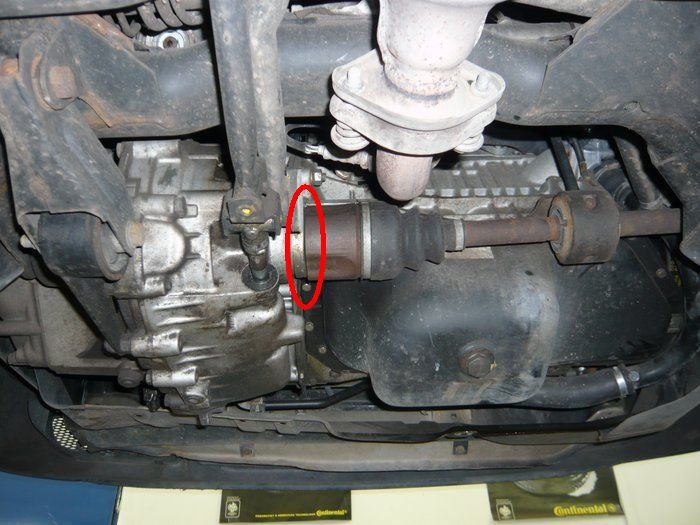
The noise as you describe it has a high pitch. That can't happen on a low frequency generated by the rotation of a part from the running gear at low speed as you mentioned. Does the noise happen if you go downhill from stop? With engine stopped, in neutral, ignition key on to be able to steer, and no traffic around you. Might be a circlip for the drive shaft not set properly in its groove. That could somehow make the inner joint rub in the marked area. Or maybe a small pebble got stuck between brake disc and brake pad? Or a stuck caliper?
-
Can you record the noise using a phone attached with a dashboard magnet base to the left wheel arch?
-
Have you checked the wheels alignment after the job? PS Good photos. Very clear and very useful for fellow members. The more, the better.