chimaera
Resident Member
-
Joined
-
Last visited
Everything posted by chimaera
-
For clarity, both the 1.6 and 2.0 TDI in the Superb 2 are common rail.
-
The short answer is that it's a bad idea. The common rail engines were engineered from the outset to work with a DMF and take advantage of the reduced vibration and shock loads it allows. As a result internal moving parts, crankshaft especially, are smaller and lighter than they'd need to be to handle a SMF, and would be at risk of breaking if you installed a DMF. On top of that it's going to be rather unpleasant from a refinement point of view.
-
It's pretty solid for about 20 cm along from the wheelarch at both ends. If you're clumsy you could fold the sill over - some support either side might not be a bad idea.
-
The connection for the fuel filler flap solenoid is inside the boot side panel. Taking that panel off is a bit of a pain. Broadly speaking it's the following: Remove D-pillar trim Remove seat side bolster (a certain amount of witchcraft involved to find the right way to unclip it - I'm sure there are videos on Youtube) Take the hooks out of the plastic trim above the side panel and remove the screws Unclip that plastic trim Pop off the tailgate sill trim Pop off the tailgate side trim Remove the screws holding the side panel in place and lift it out
-
Service manual says 180 Nm + 180 deg. No indication of what tool is needed to tighten it nor the caliper bracket screws.
-
FWD or 4x4?
-
I'm in Ireland so getting stuff from an EU supplier is an option. That said, by the looks of it by the time I'm done spending money on hardware, I'm most of the way to what I'd pay a garage to refill it. I didn't touch the system at the time, just swapped out the hub. I've seen someone mention that low refrigerant level can cause juddery noises from the compressor, so maybe it needs a regas and it'll be ok.
-
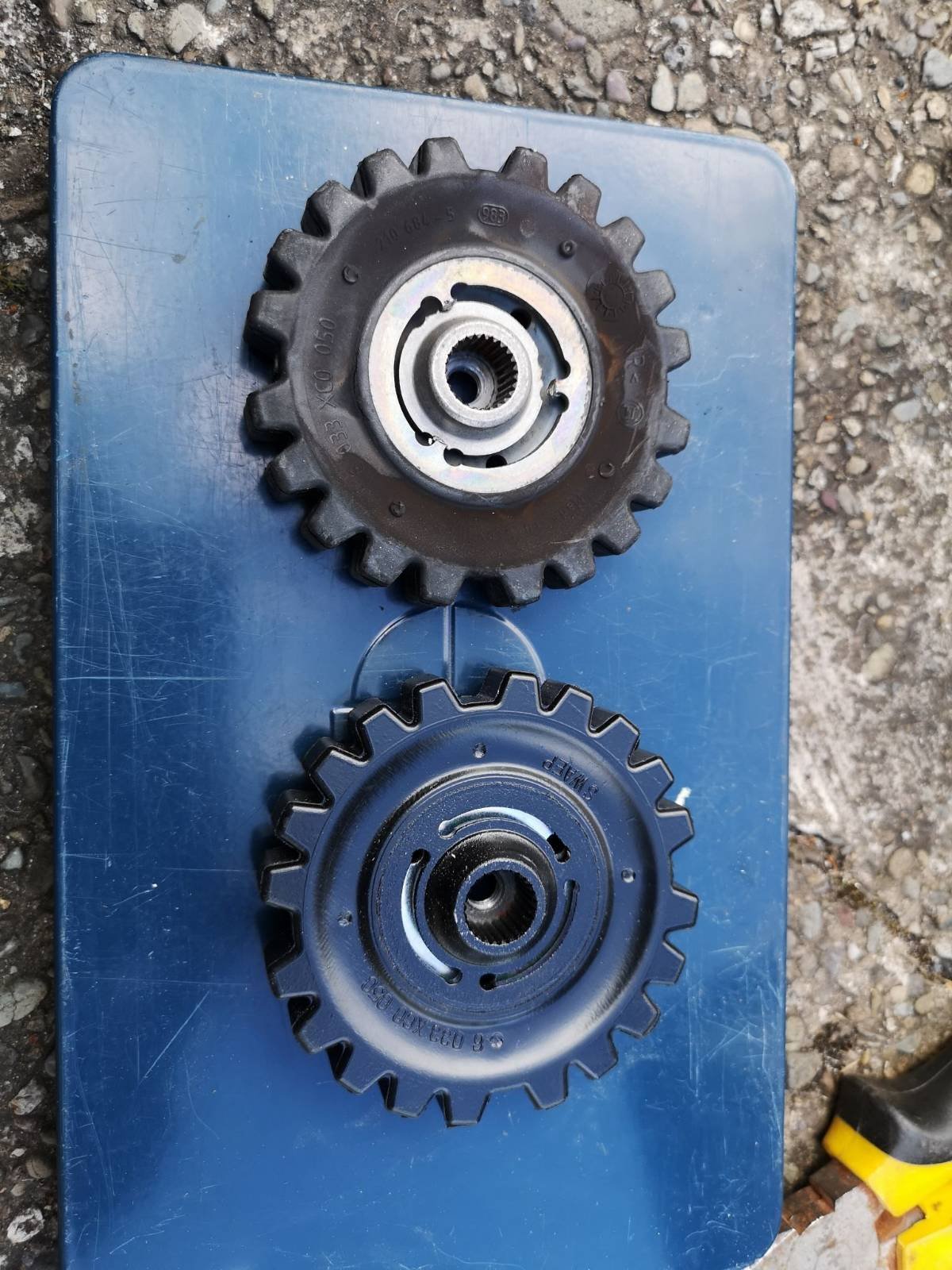
Looking for some advice here. About 2 years ago, I had to replace the hub in my aircon compressor (see below) as the frangible link had broken. Now the same thing has happened again, and I'm wondering what to do about it. The compressor has been a bit noisy (sounds like an old fridge rattling away) since I bought the car 4 years ago, and I'm wondering if this is normal or not, and whether it might be better to just replace the compressor? I'm open to DIY'ing it but I'd need someone to point me in the direction of some decent aircon service tools, and what's needed to collect the old refrigerant as it's removed (I'm reluctant to just vent it to the atmosphere).
-
It's impossible to get to the flap from inside the car. There's an outer and inner wing structure, and the filler tube and flap sit between them, with no access from inside the vehicle. The mechanism inside the lock has a tendency to bind, especially if there's no lubrication in there. The solution to the problem is to press the flap in gently while you unlock with the remote. With some trial and error, you should be able to find the right amount of pressure to relieve the mechanism and let it pop open. Once it's open, get some light machine oil onto the lock plunger and work it in and out a bit until it moves smoothly with no resistance.
-
LF9R is also known as Black Magic Pearl. I'd wager that any black metallic Superb 2 you find will have this colour on it.
-
The main thing with the rear brakes is to make sure the windback tool rotates the piston as it goes in, and doesn't just push straight back. For the slide pins, probably all that's needed is give the pins and the socket they slide in a rub down with some 600 grit emery paper and put some grease on them.
-
LF9R is a pretty common colour for the Superb so you shouldn't have too much trouble sourcing used parts. Depending on your resources, and how far the car is from home, it could be cheaper to have the car brought home on a truck and do your repairs there. It's certainly worth investigating. Also worth considering is what is the bare minimum which can get the car on the road home, even if it's a bit ugly.
-
No. It's an electronic differential lock. If the system detects understeer, it will brake the inside front wheel to counteract it, which makes the car tighten its line. I've found that when it kicks in, it can be a bit over enthusiastic and requires backing off the steering a little to stay pointed where I want to go.
-
You can jack/support it at the big attachment points of the front subframe. I generally jack it on the sills and leave enough room to slip the axle stand in beside it under the sill.
-
The only one I've found a bit tricky is XDS, on the Superb 2 at least it increases turn in quite a bit when it kicks in and you have to be ready to wind back the steering a little to stay on your line. Newer generations are probably more subtle.
-
You will probably run out of nerve before the Octavia runs out of grip, and you'll probably be going a good bit faster than is sensible for a public road at that point. I enjoy a spirited drive when I get the chance, as I suspect most here do, but that doesn't mean going around corners on the doorhandles at the limit of grip. One of my all time favourite driving days was a trip up the A470 from Dolgellau to Betws-y-Coed after collecting my Superb in Derby, going just quick enough to enjoy the car without risking a collision. You set yourself up for a bashing in your first post, wondering about the handling/grip limit. Driving right at the vehicle's limit leaves no margin for error if something unexpected happens - a kid runs out on the road, you come up behind a tractor coming out of a bend, a sheep wanders onto the road, etc. (and I would expect all of these and more as possibilities in a rural area). If you want to find out what your car is like at the limit, take it to a track day where it's safe to do so.
-
Last year, I discovered my Superb could pull 1g under braking thanks to an idiot overtaking on a blind bend.
-
Swing, Bolero, Amundsen. Make sure to get one from the same generation as the stolen Columbus.
-
I'd try tapping it upwards from underneath with a hammer to see if that can make the locking mechanism release. Another thing you could try is place a jack underneath and jack up a little: again this is to relieve pressure on the locking mechanism so that you can release it. When you get it out of the vehicle, some lubrication of the mechanism would be a good idea.
-
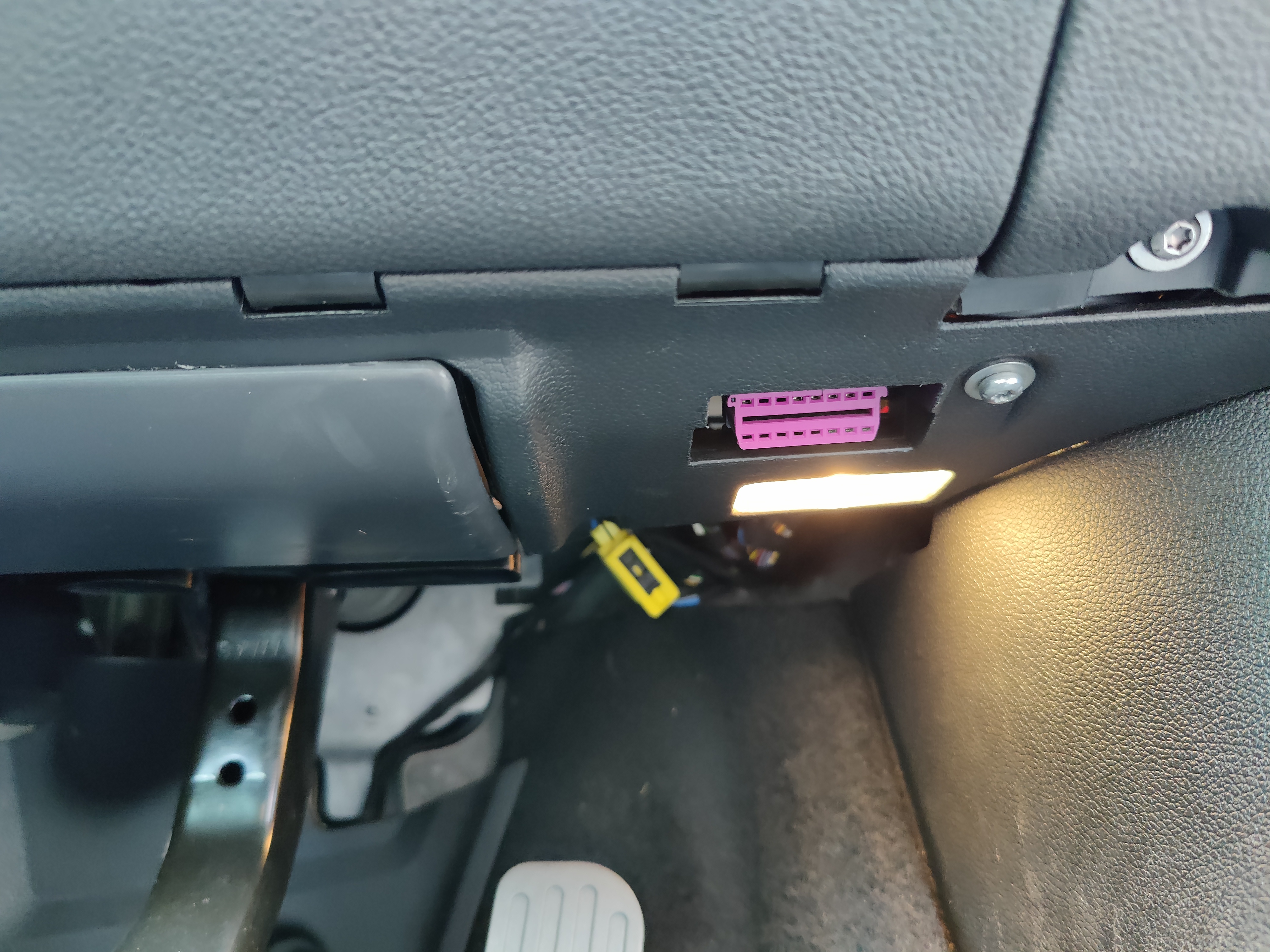
It's right down underneath the lowest panel in the dashboard. It's also purple.
-
Do you mean the diagnostic port? It's under the dash on the driver's side, to the outside of the steering wheel.
-
One is a measure of economy, the other a measure of consumption.
-
It's a diagnostic procedure that makes the controller relearn bite points and engagement points for the different control mechanisms inside the transmission to compensate for wear. More info at http://wiki.ross-tech.com/wiki/index.php/6-Speed_Direct_Shift_Gearbox_(DSG/02E)
-
If the fluid was last changed 40000 miles ago, it's due again now. Get that done first, followed by a gearbox reset, and see how you get on.
-
@CarlstonAll of this information is summarised far more succinctly in the first post of the thread I linked to 3 posts back, with specifics of how to tie it to an individual owner's car. For someone having trouble in a 4x4 model towing a caravan, weight ranges 6, 7, 8 are probably not going to be much use given the extra weight on the rear axle. You have not given any information that would help the poster identify what their car already has so that they can make an informed decision. I'm not sure where you're getting 158 mm from, there's nothing in the ride height specifications near that. The code you're looking for to identify the chassis type is the one for front damping, it'll start with G. You'll find the codes on the build sticker: one copy is stuck inside the spare wheel well, the other will be on the inside cover of the service book. Most cars sold in the UK/Ireland will have the basic chassis, Greenline cars get the sport chassis. The front damping codes for these are in the first post of my rear suspension info thread that I linked to above. You can cross reference this with the suspension geometry tables I included to see what the ride height should be. To measure the actual current ride height (referred to in the tables as stationary height), measure from the centre of the wheel to the edge of the wheel arch. The other important piece of information you need is the weight range that was originally installed on the car. To figure out what this is, you have two options: Jack up the back of the car enough to get a look at the paint dots on the springs (every spring part number has a unique paint dot code) You can cross-reference this quickly with the tables I put together for the purpose and see what the weight range is Go to https://erwin.skoda-auto.cz/erwin/showHome.do, sign up for an hour's subscription (less than a tenner), go to Vehicle Specific Information with your VIN and you'll be able to download the full build sheet for your car which will include the PR codes for both front and rear springs and dampers When you know what your current setup is, we can see what might work to improve matters. Like the OP on this thread, if you're on the original springs and dampers, they're going to be knackered anyway and in need of replacement, and replacing like for like may be enough to sort things out. If not, you have the option of going up on the weight ranges, the maximum is 14. Some 4x4 owners here have found that even on weight range 14, they still had sagging rear ends when the car was fully laden. Helper springs are the next option if this is the case.