
xman
Resident Member
-
Joined
-
Last visited
Everything posted by xman
-
Further thought, if the dash lights always comes on even with no fuel pump noise, its unlikely the ignition switch itself. Fuel pump will only operate if the pressure is too low in the lines, not sure on your diesel but on most cars it operates only briefly to top up the pressure when turning the key on and won't operate until the pressure drops below a certain level. Which leaves the immobiliser, a diagnostic scan with a capable tool, e.g. VCDS would confirm if the immobiliser is blocking Edit: forgot that the starter is a seperate switch to the main ignition so ignore above
-
Suggests its either the ignition switch or perhaps some issue with the immobiliser. IIRC the immobiliser has a pickup coil in the ignition barrel area that interrogates the passive chip in the key. From the above video you can see there is the coil connector in the outer ring, maybe try pushing that outer ring back while turning the key? Another thing to check is all the fuses are properly seated in the fusebox, I once had an issue with rear wiper that was due to a fuse not fully pushed in. Not sure if a faulty fuel pump/no fuel pressure would prevent your car from cranking, I wouldn't have thought so.
-
What engine is it? A pic showing the whole of the top would be more useful. If its still leaking from the rocker cover or even elsewhere, it may suggest the crankcase ventilation is blocked (PCV valve?) Even though there seems some evidence this is a top end leak, it needs to go on ramps and carefully examined underneath, could be sump seals, oil seperator, crankshaft seals (either end), filter housing..or something else. The amount underneath doesnt equate too well with that picture, maybe multiple leaks if the crakcase is being pressurised, which incidentally could also be due to piston blow by/problems. Should be easy to spot on a ramp with the engine running. Clean up and observe as advised earlier.
-
Perhaps I should have asked this first. So its reasonable that the battery is ok. And you need to look at that ignition switch or your immobiliser. Have you tried the spare key?
-
Did your friend use a proper battery tester that measures its performance under load, internal resistance etc? Just putting a simple voltmeter on tells you very little, a fully charged duff battery is still a duff battery. Was the previous battery on the car also an AGM battery or was it an EFB or even a standard battery? Did you recode? Forgot to ask, do the dash lights go dim or out when trying to crank (unsuccessfully)?
-
If it does have stop/start, did you recode the vehicle to tell it when you fitted the new AGM battery? Needed to change the charging profile/voltage.
-
If your car doesn't have start/stop (micro hybrid setup) then its alternator output voltage is not suitable for AGM, its too low so the battery never gets fully charged and may now be damaged/dead. Get the battery checked with a tester, free service at most garages/places that sell batteries to eliminate the obvious
-
Secret to a long battery life is keep the battery sufficiently charged all the time so if the car is stood for most of the time or used for lots of short journeys, throw a smart charger on every few weeks overnight to top it up. That will prevent or at least delay permanent hard sulphation which is the primary cause of failure in the UK. Note! For cars with stop/start, follow the instructions in the car's user manual when connecting a charger, you don't just connect it directly to the battery terminals!
-
Other sources suggest AGM batteries require 14.6-14.8 volts to fully charge.
-
I think @nta16 means swap the leads, but keep the connection coil to plugs rhe same. Not sure that lead 2 will be long enough to reach no 1. If @moshe5342still has the old leads, the easiest thing would be to test them for resistance (9k) to check they were the original reason for the misfires. From my personal experience is that if you leave the (NGK) plugs in too long (40,000 miles max) then the wear on the ground electrode on iirc cylinder 1 and cylinder 3 causes the platinum disc on them to fall off, accelerating ground electrode wear greatly. This increases the spark peak voltage, which leads to breakdown internally in the coil, initially intermittently before permanently. Spark plugs 2 and 4 don't suffer ground electrode wear because the spark voltage is opposite polarity with it being a waste spark ignition system The other common failure seen on earlier engines with unsheathed leads are the leads, especially no.3 lead would rest close to the exhaust/turboshield and fail due to excessive temperature, the internal core goes open circuit and sparks internally, increasing the peak voltage and killing the coil. Hope some of this information is useful to some
-
Seems I may have got it the wrong way round as per @Winoin any case AGM cannot be substituted for standard due to charge voltage incompatibility and associated risk.
-
You can't use an AGM battery in your car as it requires a higher voltage to charge fully, and your car being conventional without the smart alternator does not support this. Result will be undercharged battery with short life and possible starting issues. You could in theory use an EFB or EFB+ battery which is an enhanced flooded lead acid battery. Exide sell batteries with carbon boost technology which is basically an EFB in all but name, but cheaper. https://www.exidegroup.com/eu/en/product/exide-premium
-
As this is a waste spark system, plugs 1/ 4 fire together and plugs 2/3 fire together every rev of the engine. So misfires on 1and 4 strongly indicates an ignition issue rather than fuelling or anything else. Have you used the correct plugs IZFR6P7 ? Are the plugs and leads from a reputable UK source, i.e. genuine? Have you made sure the spark plug connectors are fully pushed home, they take quite a hefty push to finally get them home, especially if you haven't used any spark plug insulator grease. (No grease should be ever used on the spark plug threads) Have you at any point taken the connectors off by pulling the lead. That is a sure way to break the lead core. You can check the lead by measuring its resistance end to end, it should be around 9 kkohm. Always use a suitable tool to pull the metal cap of the connector and never pull the lead. If a lead is open circuit or not properly connected that can damage the coil due to over voltage. If you have plugs out the resistance tip to connector is 1 kohm. That leaves the Chinese coil....maybe try swapping back your old one. Good luck
-
Yes, ok I stand corrected.
-
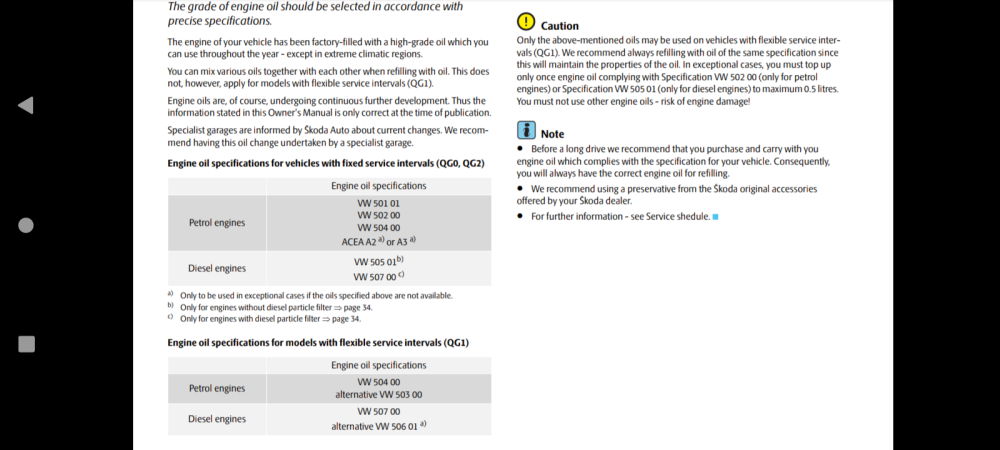
Standard 504.00 oil is 5w-30 suitable for most european climates. Standard 502.00 is what the BZG was factory filled with and is probably what it was designed in mind for and is usually 10w-40. But lots are 5W-30 nowadays. Once your car starts consuming oil, (as opposed to leaking oil), there is nothing you can do. Heavier grades may temporarily reduce the rate of consumption but will accelerate the wear. Valve stem/guide wear is a symptom of poor lubrication, poor/wrong oil but usually neglected overdue oil changes. HTP engines are not really suitable for variable/flexible/extended service regimes. Change Oil at 9,300 miles(15,000km)/1 year max. If doing mainly short journeys where oil rarely reaches working temperature for a decent length of time is classed as harsh operating condition so you should change oil sooner.
-
Where did you get your coilpacks from, are they new and genuine? Are they fitted correctly, with the pack and securing bolt fully down? Then the plugs, have you got or did you examine the old plugs, (photos would have useful) its relatively easy to check if they were worn out. Normal service life is 40,000 miles though in practice can go further. Have you checked the battery voltage is ok, greater than 12.0v. If no other error codes, then I would start to look at connectors and wiring. One thing to check is the camshaft sensor, I read somewhere that some garages remove this to refill the engine oil during service, as the normal filler is very slow to fill due to an internal plastic splash guard. Maybe not replaced correctly. Another check could be air/vacuum pipework, one item comes to mind is the stiff brake servo vacuum pipe. Check this hasn't split where there are joints, the servo, the inlet manifold and in between. Have you checked the oil level is correct?
-
I think you haven't understood me. The dipped beams are Xenon and as such are required to have self levelling. Self levelling is linked to the supspension position using position sensors attached to the front and rear suspension to work out if the car is pointing up or down. The control unit will then adjust the tilt of the beam up/down using the electric motors in the headlamps to level constantly as you drive. If you look at the link above they are connected via links, which sometimes pop off or get broken. If the bulbs are dim the most likely cause are the Xenon bulbs are worn out and reached the end of their life. Unlike halogen bulbs, Xenon bulbs loose intensity with age, just like a fluorescent lamp ( both are discharge bulbs). The other but less likely possibility are the high voltage bulb drivers/ballasts, if both bulbs are dim, bulbs are more likely.
-
Check the self levelling is working correctly and the headlamps are not pointing down. There are sensors attached to your suspension that sometimes get broken so it thinks your car is pointing upwards. Then, if happy thats ok, change your bulbs, Xenon bulbs lose intensity over time, falling off rapidly at end of life, 3000+ hours
-
When replacing a battery, it is necessary to recode your vehicle to notify it that a new battery has been fitted to reset several parameters, State of Charge SOC, Health of Charge (HOC - remaining battery life to you and me), and any change of basic battery specs such as Ah rating, and if EFB or AGM is fitted. It is a simple procedure but requires a diagnostic tool capable of this. Not doing this can lead to issues and shortened (replacement) battery life. You must use an EFB or AGM battery, standard batteries are not suitable and will have a short life. If changing from EFB to AGM or vice versa, battery coding is essential as they operate at different voltages and you will experience issues with stop/start and short battery life. For information, from my long term measurements, the parasitic drain from my cars systems when everything is shut down/ asleep is around 10mA, however many subsystems wake up briefly from time to time and there are moments when it goes up to 60mA or more for maybe 30 seconds or so, so I reckon an average drain may be around 15mA. Of course there is battery self discharge on top, this will vary with battery age, temperature and SOC. I wouldn't recommend disconnecting the battery to measure parasitic drain with a series multimeter. Risk of damage to your meter and the cars systems.
-
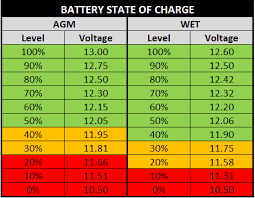
There is nothing wrong with your readings. Your car has a micro hybrid battery charging system, designed to reduce fuel consumption by allowing recuperation of energy under certain conditions, e.g. braking. In effect the system has a target state of charge of around 80% to allow energy recuperation. It will allow the battery to discharge lower, possibly as low as 60% and recuperate or charge at a later more fuel economic time. To allow this the car is fitted with an EFB or AGM battery that can tolerate low states of charge specifically for this purpose. State of charge (SOC) is tracked by monitoring current going in / out of the battery, a device integrated into the negative terminal connector on the battery as well as many other parameters battery voltage, battery temperature and monitoring of current used by consumers throughout the vehicle. The battery management system has the ability to vary the output of the alternator quickly and accurately to control the SOC. When charging the battery externally with your charger, please be aware you need to connect the negative lead of the charger to the chassis tab and NOT the battery negative terminal (see manual) to avoid the battery management getting confused as you would bypass the current sensor. When you check battery voltage you need to be aware of several things. Immediately after charging, battery voltage will be elevated due to the phenomenon of surface charge. You need to allow an hour or so for this charge to dissipate and the voltage be measured. When you open the car to open the bonnet, all the cars systems spring to life and a large current drain depresses the battery voltage. Make sure the car is closed and wait 10 mins for all the systems to go to sleep and the battery voltage to recover to a rest state before measuring. As you can see below 12.4 volts represents approx 80% SOC which is bang on where it should be. (Use the Wet chart for EFB) Also note that voltages vary with temperature, so these voltages are only a rough guide
-
Look on the can, or check the manufacturer spec sheet. Somewhere will be Meets specification VW502.00 or 504.00 Or Better still Approved to specification VW502.00 or 504.00 Here are just a few oils that meet the required specification, there are many more, check with with preffered supplier vw502.00 https://www.opieoils.co.uk/c-746-vw-50200-engine-oil.aspx vw504.00 https://www.opieoils.co.uk/c-749-vw-50400-engine-oil.aspx VW 507.00, VW 504.00, etc: Volkswagen Motor Oil Specifications Explained
-
That list is rubbish. The correct oil is one that meets VW spec 502.00 or 504.00. Where there is choice of viscosity choose whatever suits your climate or operating conditions.
-
What if you realised that you left your keys in your coat laid on the passenger seat just after it locked by itself?
-
Yes, just been out to the car to check. Same with our Fabia mk2 (passenger side) and Octavia mk2 FL (driver side) Lock cover is on the drivers side of my RHD Superb
-
I use a soft rag or sometimes just kitchen paper roll, soaked with some brake cleaner and gently wipe the offending spots away. Big ones may require softening up first.