




Breezy_Pete
Sponsor
-
Joined
-
Last visited
Everything posted by Breezy_Pete
-
I don't know what you mean by lcd? I would check the chain timing while waiting for compression test. You can do this without the special locking tools by taking out the spark plugs, setting the engine to top dead centre on No.1 cylinder then taking the cover caps off from over the ends of the camshafts near the battery box. The slots in the camshafts should be parallel to the the head/block joint, and aligned with each other.
-
Not me, that was @AGFalco's win, I just worked with what he provided.
-
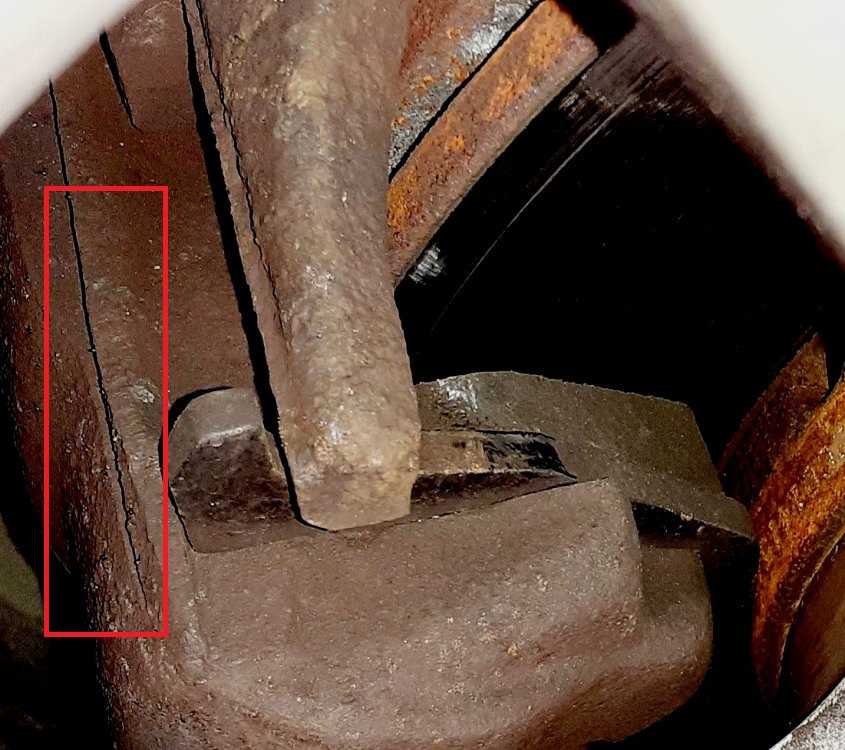
I promise you that there is no crack, you're just looking down on that right-angle feature of the casting. At the outer end of your first photo you can just make out the vertical section
-
Two different criteria bring on the radiator fan(s); coolant temperature or refrigerant pressure. Refrigerant pressure varies strongly with both ambient temperature and compressor 'effort'. Obviously at this time of year ambient temperatures are low in the UK, and it also won't take much compressor effort to chill the evaporator down, so refrigerant pressure will take a while to trigger fan activity. When was your system last recharged? Did it work OK in the summer?
-
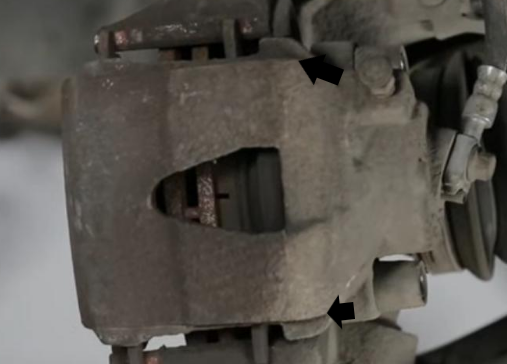
In your last image from that video we can see the vertical/horizontal edge in the casting that we were looking straight down on before, giving the crack illusion. Black arrows added to attempt to show where I mean.
-
MAP sensor power is a 5V feed on the red/green wire from engine ECU pin 96. Cam sensor uses same 5V. Will only be present with ignition on or engine running, I think.
-
Have another look at this area in daylight and maybe take another photo without flash. Assuming you find nothing remotely resembling a crack, I'd say there's no real need to get it inspected. Pretty sure it's a shadow thanks to AGFalco's input. On the other hand, various places advertise free brake checks so maybe just bung it into one of those for peace of mind, but beware of inevitable attempts at upselling if you do. Might be better taking it to a known-to-you garage who might check it free of charge anyway.
-
I'm not sure what made the noise you heard, possibly just a stone caught between dust guard and disc, now departed? As for the bar you mention going over the top of caliper and pads; there is another underneath. They are what prevent the caliper and pads being rotated around with the wheel and disc when you brake.
-
Some photos of the normal arrangement here SKODA FABIA 04 FUSE BOX 6Q0937550F | eBay Thick red wire connects battery positive clamp to underside of fusebox , black wire coming off same clamp goes to starter motor. As long as the connections at your battery positive clamp are OK, (they still look a bit 'rough') and don't get hot. it's probably not worth changing it again. That fuse panel is normally hinged onto the battery box, and has a cover over the top. You seem to be missing most of these parts, so be careful! Check that the downwards-pointing stud where the red (green now on yours) cable normally connects cannot touch battery negative post or any other metal if that fuse tray moved around.
-
The new wire looks to be nicely terminated, but would be better if it was as short as possible. It normally goes to a stud on the underside of that fuse panel instead of where it now is, which is where the alternator fuse and connection is from the factory. But if everything works, just be happy and enjoy the car.
-
That's a very good question. Can't be though, can it?
-
No, I've not suddenly had a volte-face and become an EVangelist, I just want to know more about how the dozens of electric motors in my petrol cars work, and preferably about how and why they stop working. Anyone work or teach in that area and know of a good resource for learning? Book would probably be my first choice, but online also fine. Details like why there are wirewound inductors in series with commutator brushes; what precautions need to be taken when choosing power sources, relays and so forth; whether slip-ring tarnishing can stop an alternator working out of the blue in an underused car etc. I feel I just haven't enough of a clue, and would like to rectify that. I'm not averse to learning about the latest developments but it's a more basic foundation I'm after. Thanks to anyone that can refer me in a good direction.
-
Just about to edit my last post that cast aspersions on the ebay seller!
-
Good idea.
-
Good news, well done. The car is less likely to catch fire now I think also.
-
Can't see anything else affected.
-
There should be a strip fuse in positon 3 for it on your car. It looks like someone has removed it and connected the wire straight to the busbar beyond. Cabin fuse 7 is an ignition on 12V supply to the PAS module which will also disable it, if that's easier? I'll just check what else might also be disabled with removing fuse 7, on your car, but I wouldn't advise driving without the PAS working anyway.
-
Quite possibly, maybe an alignment was done in the past and all of the adjustment done on one side, resulting in a wonky wheel, and then that 'fixed' by taking off and clocking round.
-
Important clarifications added inside square brackets, as I understand the reality to be. People shouldn't be scaremongered into thinking they won't be allowed to drive anything but EVs and hybrids on the roads ten years from now, that's just not true. After all, if you buy a petrol/diesel car in 2029 you're going to be rather cross if you can only use it for one year...
-
Very odd. The OE springs are the same on both sides, so why would aftermarket ones be different?
-
What's the engine code Leevi? (Appears on the sticker near the spare wheel) Is it the single camshaft 6-valve version or the twin cam 12-valve? A shake every few seconds sounds too infrequent to be related to engine balance, so might be a fault. Can you get it scanned with VCDS? Always good to check the brake servo vacuum hose for cracks and leaks on any VW group car. In the mk1 HTP engines the fully warmed up idle speed is specified in the ranges as follows: Engine codes AWY, BMD 610 - 830 rpm AZQ, BME 580 - 800 rpm. Does yours fit in one of these ranges? I don't have equivalent data for the Mk2 HTP versions. Don't know where @Murdockman got his 1000+ information.
-
Seems like an ideal arrangement. Probably can be checked by simply feeling for warmth with a little fingertip.
-
Looks to be 90 degrees to me.Last time I looked at the wiring to an airbag ECU, the only power feeds it had were ignition-on ones. That was on a different and much older Skoda model, and I don't have wiring diagrams for Kodiaq so can't check, unless they're amongst Arkaig's offerings? Now checked and also true in Kodiaq; probably also for all other 21st century Skoda models as what I'd previously looked at was Mk1 Fabia. So ignition on or engine running are the only times the airbags can deploy.





Important Information
Welcome to BRISKODA. Please note the following important links Terms of Use. We have a comprehensive Privacy Policy. We have placed cookies on your device to help make this website better. You can adjust your cookie settings, otherwise we'll assume you're okay to continue.