
nta16
FREEDOMLite
-
Joined
-
Last visited
Everything posted by nta16
-
Some quick points on the thread and nut issue on the Chinese motor fitting. Not your fault but I'm a little confused about so forgive me if I have misunderstood. I think it sounds like the threaded section doesn't protrude enough through the tailgate door panel, if so and all the length the dimensions of the shaft cover (sorry can't think of the correct word) of the Chines motor are the same as the original motor could it be the location or fixing of the body support bracket or the rubber insulation (which look thicker than the previous ones) are locating the Chinese motor more inside the tailgate than previous motor thus not allowing enough exposed end thread? I am unsure if you have used the 'Hex nut M20 ISO' or nut that came with the Chinese motor with additional Teflon tape - my thought is that the end nut is to securely locate the "shaft cover(?)" by clamping force and all the rubber washers are to reduce movement and vibration for wear on tailgate panel (hole) and driver's comfort (noise). The thin M20 hex nut is metric thread, assuming it has been checked to fit correctly and smoothly all the way down and back on the thread (three times) this should confirm the thread on the Chinese motor (my eyes are too poor for thread gauges) but as the thin nut is so thin and Chinese 'metal' often so soft and threads so poorly done what I would suggest is buying three of the thin nuts and try them on the thread and select to use the one that goes all the way up and down three times the easiest and smoothest and use that. Bear in mind the thin nuts could have poor quality threads but easily screwed on by fingers only so any slight catching (forget the proper word again) carefully remove that nut and put it in recycling. The way you have fitted it now may be fine and durable but I don't know I have not seen and felt it but by reading your description(and I might have misunderstood, I often do) I would prefer a different fixing arrangement. The Chinese 'metal' being as we sometimes refer to technically over here "soft as ****e)" you should not need or want to use any Telfon tape (water plumbing Teflon tape is thinner than gas plumbing Teflon tape).
-
Probably not amber (or red) triangle of doom but might be the little red light in the driver's door, if anything. Below is from here. - https://manual.skoda-auto.com/004/en-com/Models I wonder if you try pulling the tailgate open at the same time you press the remote button and hear the click if it might open. Dealership will just order a part, or less likely plug in a scan tool and not diagnosis the results but still order the same part - but if you're not paying for this as it's under warranty why not but do confirm you will not pay for plugin, parts and labour because that could be expensive and you could order the part and fit it for yourself if you wanted, or better still do the checking and simple diagnostics before ordering any parts.
-
Forget genuine Skoda or VW, they're just labels. If you've got a VRS and you drive it then why not stick with the asked for ESP Brake Fluid DOT 4 but you don't have to if you don't want to, particularly if you're taking your car on a track or towing something heavy down many steep roads, then perhaps DoT 5.1. If you want a recommendation of brand I like this (local-ish to you) British oil blending company and you can sometimes see their products on special offer prices at some suppliers (particularly when like other companies they change the labels on their bottles and cans to draw attention). You are ahead of many by actually changing the brake fluid. They're in Brighouse, West Yorkshire HD6 3DP. Other brands are available. Millers Oils ESP Brake Fluid DOT 4 LV Low Viscosity Brake & Clutch Fluid - https://www.millersoils.co.uk/wp-content/uploads/2022/10/8429-ESP-Brake-Fluid-DOT-4-LV-2.pdf DoT 5.0 (silicone) - not used in these cars You would not use 5.0 (silicone) in these cars but having had various over-priced and over-valued old cars called "classic" as daily drivers for 30+ years I've seen and heard a lot about what you can and can't and must do with 5.0 (silicone) in the cars that can use it and have read about "classic" owners that have used it for years and decades. One that discovered there was a mix of 5.0 silicone and DoT 3 or 4 in his when he drained the system. A mate who's had it it in his classics, Sunday "classic" for 25+ years and other two 'dailies' and doesn't drive any of them like the standard old-fart "classic" owners, so decades of real life experience with it. So I can say there's a lot of twaddle about on 5.0 silicone, including from some brake manufacturers, refurbishers and non-5.0 silicone makers and sellers. But as with oils and other things in life there are beliefs and people don't often change their beliefs.
-
Thanks. I am not sure many would find the thread/post but I could link to it for those that might think they are interest or want some of the information.
-
Good points about the (to me PITA) electronic handbrakes which I had forgot about (or blank from my mind) and about judging things by photos and over the internet, better made than my clumsy attempt at the same. Up to Ian to decide if and what work, if any, he needs/wants done, could be either end of what's been suggested or something in the middle. On our own cars we might do as we've suggested or we might do differently, perhaps as others have suggested, none of us are the other person, what might be right for one person may be less suitable for another person. If my wife has any concerns about something on her car that she drives it's of no matter if that something doesn't cause me concern.
-
@Rooted just seen why you were confused, I've just noticed the Vauxhall badge on the wheel, I thought they were wheels on the Picanto. 😄 Perhaps I should go to SpecSaver instead of the expensive local independent optician but I do have wonky eyes so need extra care with lenses, even if I got less expensive frame (easily possible) lenses are still expensive, few people see me in my glasses as I can't afford to wear them out. 😆
-
Hi welcome, Quick thoughts - Is it passenger door on a 2019 UK then (driver's door on my wife's 2015p) - do you mean you used the metal keyblade in the "emergency" door lock to synchronise the key and/or open doors? Didn't the alarm go off when you opened the door? What caused the boot to suddenly lock two days ago? You can open the tailgate using the screwdriver hole so it's not jammed or probably mechanical parts. > > > The boot opening switches can go duff or possibly a wiring fault to them, multimeter test on it and its wiring and connections. < < < Unless you have left the keyblade in the ignition AFAIK there's not a setting just for tailgate (boot lid). Is the little red warning light in the driver's door doing its warning sequence (see Owner's Manual)? Do you hear the click of the of the tailgate lock switch when you press the button on the remote?
-
Well it does depend on many variables with the car, it's use, your use of the car and how you use it and all the various electric items available on it. Some think every car has a button to do everything for them so they have to do very little or nothing and even if that button does not exist they expect it too. Depends where you are in Greece as to whether you use all the heating features on the car as they are high consumption items often - but the other side is that the air-con (and possibly blower motor) use a lot. Then there are the modern essentials that life cannot possibly live without, such as "smart" phones I am told (though I have managed), using lower consumption items for a very long time without the engine running can use up battery store electric. It is difficult for me to think of electric items in a car as I am more used to having very few of them. You may know that when it is very cold (nearer to or below freezing weather) that puts more demand and strain on the battery but also hot and very hot weather drains a battery and high demand of say air-con. You can look up the figures but a 20c ambient temperature the battery likes, IIRC 30c ambient has double self-discharge effect on the battery and IIRC 40c ambient double the effect of 30c (but don't trust my poor memory). So you can learn and decide for yourself when you need to check and if required do a maintenance charge with a long drive and low electric consumption or better still just use a lower amperage appropriate "smart" charger maintainer like I GUESS your Noco (too expensive for my tastes) charger is. An appropriate charger maintainer can be left on the car as a charger or maintainer, as it never overcharges the battery because it automatically switches to a maintainer charge when required. For UK I suggest preventative/maintenance/recharge, call it what you will, at the times you might do winter-"summer" (spring, autumn) tyre changes (not many do such here except in the north) - I think I stole that idea from Banner Batteries when they used to post information on their website - and perhaps after the hottest period in summer, and perhaps at Xmas to New Year break, and/or if and when required. Quite honestly it need not be that often, certainly not when both the car and battery are new but that does depend on all the variables I mentioned before. Probably better to have too much rather than too little charging, the batteries are designed for cyclical use and charging so why not. Cars that are not used much may have the maintainer connected all the time they are parked up but too long of either is a bad idea to me and a waste of having the car if you are not going to drive it. I of course don't do any of this (we call it "do as I say not as I do" over here) I just charge the AGM battery on my wife's 2015 Fabia Mk3, fitted 34 months and 23,000 miles ago, when I think it might need it which has been slightly more often than I expected but not many times and has a couple of times taken longer to reach full (or "FUL" on my cheaper "smart" charger) but at least one of those times the car and charger were outside overnight when the temperature went down to -4c. And my wife does at least two very short journeys a day many working days and sometimes no more journeys on those days. I did once see the stop/start not come into operation when I expected it to and done a charge but we usually turn the stop/start off all journeys (unless we forget). I always charge to full even though it is not necessary with the AGM battery and complex VW computer program, I do not have a tool to check level of charge and would still charge to full even if I had. If I have not answered your questions here just say and I will be more direct and concise and give you more of my opinions/suggestions to narrow things down. Actually quite the opposite if you read some of the battery manufacturers' websites and IIRC even in VWSkoda's newer models Owner's Manuals. - https://manual.skoda-auto.com/004/en-com/Models They are more fussy and careful than me about at what level to recharge, They are safe in knowing that the very vast majority of owners and others will never see or look for this information, especially those that think they already know such stuff or too ignorant or lazy to look for such information from such a source (n my personal experience of dealing with the English public and tradesmen over decades that is often electricians, mechanics, engineers, usually men, the young and the old). Battery manufacturers and other battery sellers are happy to have add-on sales of their battery chargers, also knowing the majority of the battery charger buyers will use them when the battery is very low (engine very difficult or won't start) by which time potentially the battery has been sufficiently damaged enough to never fully recover and its life probably shortened. Thank you. Not everyone realises or fully realises that there are far more viewers than the limited number of posters to a thread at the time and of course potentially in the future,. I do try to think of these other viewers, when I remember. But few people will read all my wordage which is fine, it also means that those that only want to always skim read or only looked at parts will stay away or are more easily identified when they argue about something they think they have (skim) read that I have not written or meant. I am also sometimes guilty of skim reading but much more often misreading. I used to worry a little about making mistakes but this is the internet so I worry very little about it now. Now you could help me please I might write a "guide" for basic battery charging on this site, very few will see it or bother to read it but at least it gives me somewhere to 'copy & paste' from to save my typing finger, if you say it is OK I would use your photo of your battery as an example of the numbers. I might not bother, but then I might as I have done a few others but this would be longer but more fragmented, perhaps other posts, as there is quite a lot that could be covered (all very basic non-technical stuff with incorrect technical terms and words as it won't be for those that already know or like to get all technical as that is beyond my knowledge, abilities (or caring at my age) and I can no longer edit beyond x-number of hours all the mistakes I make.
-
@D.FYLAKTOS to be fair I think it was me that was going on about carrying tools in the boot (Americans take tool much already). No car is worth what you do in those conditions. 😄In which month was that expenditure or I should say months at each. That's not very much, you can't use or drive the car much, or you're not fully fixing a Fiat. 😄 If you think that sort of expenditure is anywhere near so much never think of getting an old English car. I don't know about these two wiper motors but there is often (not always) no need to pay these silly prices just to have a certain badge/logo labelled box or bag or label stuck on to the part especially when these parts are also made for other more popular makes or models and sold at lower or much lower prices. Yes you might have to cannibalise the new to keep the original part going or to get a good fit to car, or even the whole unit is exactly the same and straight swap. I can't think VWSkoda or FIAT made actually made wiper motors or that the VWSkoda or FIAT badge/logo labelled box or bag or label stuck on would necessarily be that much better just for the label (or VW part number on the part) unless a very specific design for these (mass market, not low volume production) cars. You two love your cars and that's fine but you can be a little realistic with yourselves, we will tell no one if an unseen rear wiper motor isn't spot concours original (and any replacement isn't original to the car after leaving the factory). Having put that you can't really moan about any expenditure on any car as even the worst most (monetary) valuable car in the general scheme of life is just a lump of metal and other bits. Certainly not worth risking getting knocked over for, with your tools in the boot you can drive elsewhere to do work like that, don't you get a lunch break so you can do it in that underground car park, with age should come some wisdom (if you can remember it by then),
-
It's rough at the Pole. SpecSavers or not I can see your problem with your Picanto - it's those flash wheels. 😁 My Suzuki Cappuccino would need clearing after only a week of standing sometimes (proper 3-pot turbo engine). If I remember I'll put up the neglected Ren-No! brake discs, if they don't fog up the camera (not phone) lens, they're mountain road automatic handbrake and downhill assist, never mind Schodder the French are so "simply clever". 😆
-
Off Topic (ish) warning (and back on-topic at end) @Rooted they're almost baby's bottom smooth. 😄 Only this afternoon my neighbour's son took away the car I was driving every three week just really to clear the rust of the brakes to stop them seizing up again (through lack of use). I also had to keep an eye on the very small old (smaller) sized battery and use one of the chargers to keep it alive. Not a heavy VW car or VW stop/start, so small battery, small alternator and small starter motor all very easily capable despite the lack of use over the years (decades) and lighter components than the VW stuff of course. Ended up driving it a dozen or so times round the block (about 2.5-3m) and three weeks later 15m round trip to properly warm the engine a bit and get stuff moving and used, then three weeks later round the block and so on. 2005 Kia Picanto, 28kmiles from one owner new, I moved it to park it when three weeks old and I didn't need to touch the accelerator or brake pedals just let the shadow of my shoes fall on them and until the front callipers were changed (about 18 months ag IIRC) the brakes remained as sharp, only the aftermarket replacements of callipers took a little of the sharpness away still excellent brakes. I found that cheap little car more fun and better to drive than my wife's 2015 (creak, creak underside, various engine noises) Fabia Mk3 and my other neighbour's car that I drive a (5k-mile) 23 plate Ren-No! Nissan. I've been 'invited' to continue look after it (I've done a few little bits on it and gave it another good external and doors/bonnet shuts polish last week) at it's new home three-miles away (I went to school with the son) but I turned down the 'invitation'. Another 71 plate neighbourhood car that had been standing for 6-weeks, I asked my wife to drive round the block to clear the rust off the disc as I wasn't insured for it. It started fine and the lights were bright. 😄 Stupid electronic handbrake fitted, manual gears luckily, so heavy foot breaking only, 20 times round and nowhere near enough, 15m/gallon use and only half a gallon left in the tank so a fuel top up and night time empty dual-carriageway driving required to possibly clear some more (but it's been standing more since then) . I tried fully charging the battery on the car with my 4-amp "smart" charger but after a long time still not full joy so the next week I took the battery off the car to try in the shed with a secret weapon but still no full joy and the battery is fully glued shut so it's a knackered cell at least. Did mean I could refit the battery hold clamp and terminal connector better than the Dealership that had last messed with them but one post was badly scored so the clamp had to remain over closed up. Proof that the car has only been touched by the Dealership. 😞 Be interesting when the Dealership comes up to collect it for the MoT (and perhaps annual service) particularly if my wife isn't able to take it for a cleaning run of the rusty brakes, I think an Advisory might be optimistic then, definitely be a quote for new brake parts regardless from the Dealership which might embolden them to quote for other things as yet unknown. Well see mid-April (earliest booking from a couple of weeks ago, what cost of living crisis).
-
@ianjohnston - I forgot to put, take any % worn or left figures with a large dose of salt, I can only guess they are done by (biased) eye estimations, one time my wife had to remind a chap I had only recently replaced the front discs and pads. Tyres tread depth is another area of wide interpretation for them, the old service tick sheets could be amusing and more so when compared against previous sheets, one time the tread on some tyres increased between two tick sheets despite the additional mileage the car had travelled and the recorded tread variance on the non-existing spare wheel was interesting, to be fair a couple of times it was noted that there wasn't a spare wheel.
-
At least it scratches up the discs to a shine and gets rid of the surface rusting we get down here in the relatively balmy, if damp and wet, winters here in the East Midlands / (West) East Anglia region of England (north to Lunduners). 😊
-
I have not got a wiring diagram to remind me what terminal 30 is and where but I have seen those that are into electrics give it importance, I am not clever with maths and things like electric (or anything much really) so my simple mind thinks, depending on the electrics running on the car (the gods that are the computers and their programs of course) plus I cannot think or know what else a 2019 car would have running electrically but if very low and engine not under load then the less the battery needs charging the better as it has plenty/sufficient - but of course that does not allow for for faults and errors. You are obviously way ahead of me, cleaning the OBD (that name I could not think of at that time so put diagnostic, that is my poor memory) port before I thought of it only one example. 950 does sound to me high for a modern car but my wife's 2015 Fabia Mk3 4-cylinder 1.2 TSI engine has all sorts of noises from it at various times as the computers do their stuff (whether I want them to or not) and the idle revs can be high for a while some of it I think is explained by the following link but may not be directly or indirectly similar to your issue (stuff VW do not want customers to know, or cannot be bothered to tell them, or only discovered by customers or dealerships, who tell them ) so only follow the link if you want. - https://www.briskoda.net/forums/topic/504258-a-tsb-from-skoda-on-cold-start-behaviour-with-12-tsis-something-that-dealership-employees-should-be-able-to-explain-to-customers
-
It's your brakes THE most important thing on the car so if you are unsure of them then get them checked by someone good (and honest where possible) and ask for more information on them. Mileage and age are a very loose measure, as with other items on the car their wear depends on the use (or lack of) and how the car is driven some drivers get through brakes, tyres and clutches more frequently than others. Also if parts are replaced it does depend on the quality of those replaced parts as to their wear and longevity (poor in the case of VWSkoda front dampers for 2015 Fabia Mk3 I've found). The wear of one part, set of parts, components or systems can also depend on the condition of other related parts, systems and components. For example tyres are an important, and often overlooked, part of the braking system (and steering and suspension) even if they have lots of tread on them they can be aged and worn and possibly lower quality than is available. Note an MoT test is only to check the vehicle meets the statutory standards to one person's opinion at one point in time only it doesn't mean the car is as good as it could or should be or that it its bad. You only had advisories. Dealerships will only quote for replacements on such things and may just be looking for more chargeable work to do. At least one Briskoda poster (certainly not me) does preventative cleaning and lubricating of the brakes to prolong the brakes parts life but I doubt it's the type of work a Dealership would do well but still charge a lot of labour (and perhaps materials) for. The discs do seem a bit marked up in those photo (might be smalls grit stones from a drive or road perhaps(?) or not and other cause(s). If you have loads of "meat" on the discs and pads and all are worn evenly and they are good (or reasonable) quality perhaps never know from internet or photos for sure) a clean and lubricate might be good - but I'm not a mechanic or expert in anything. I wouldn't know a Kodiaq if it ran me over but my wife's Fabia Mk3 had the easiest discs and pads replacement I've ever done in my limited experience of doing such work other than the front Fabia Mk3 discs and pads which were even easier so perhaps you might want to research checking the pads and discs for yourself and even perhaps replacing them yourself IF they're anywhere near as easy as for the Fabia Mk3 that way you at least have someone you ought to be able to trust looking at it and perhaps doing the work. Doing the work will involve borrowing or buying the necessary tools if you don't have them. Buying the discs and pads if required at lest gives you the choice of options. I bet others might say just drive the car and see what's said at the next "service" and/or MoT.
-
There are a few differences, that is how these Chinese copies tend to be, they or the car often need some modifications to get them fit properly or well but as long as they work (test the motor before trying to fit it) and they continue to work reasonably for a reasonable time you can accept it. Some can work well for a long time, some faulty or don't work straight out of packaging or within minutes, hours, weeks or months of being fitted or actual work, it's all a bit of a gamble, quality testing and assurance seems to be a thing of the past with such items. NOS if still around, or used refurbish or repaired original items can often be much better for performance and longevity - but then, not always. Perhaps this will outlast the car. 😊
-
ETA. Have you cleaned the diagnostic port on the car and VCDS lead plug connections? As with the multimeters, you should always test any testing equipment before conducting tests to confirm they are working correctly. Though I have no idea how you would do that with a VCDS machine, other than making sure you have the latest updates installed (but if they are anything like Microsh1t they can introduce more programming problems that it resolves). And are you saying 950 on a warm engine by 'water' temperature or oil temperature, what consumer electrics were running at the time, what other items from programs were operating at the time, what should the revs be?
-
ETA. Have you cleaned the diagnostic port on the car and VCDS lead plug connections? As with the multimeters, you should always test any testing equipment before conducting tests to confirm they are working correctly. Though I have no idea how you would do that with a VCDS machine, other than making sure you have the latest updates installed (but if they are anything like Microsh1t they can introduce more programming problems that it resolves).
-
Much of car servicing and maintenance and even many repairs often boil down to clean and lubricate. You have already found the benefit of cleaning (and perhaps securing and protecting the electric connections) even deleting error codes is a form of electronic cleaning so you may want to consider further cleaning, see later. I don't think there is an engine earth cable but I could be wrong. Is 950 really that high for the revs, how accurate is the VCDS reading - I don't know but what you have to consider is you are dealing with computer programs and physical parts and components if you think they are always extremely well designed and made and always function perfectly I have some financial investments I would like to show. (I am joking.) VW has very complex intertwined computer programs (and over intrusive to me) that are designed to get the best out of all the systems on the car and particularly to get the very last tiny bit out of possible fuel consumption and reduce emissions (ignoring everything they have put on the car against this and they can't cheat as much as they did previously). These computer systems sometimes have to do unexpected stuff to meet all of the various requirements of running the car in such a way. Now they have one cylinder less to do this and they don't have the heritage of others with 3-cylinder engines (the 4-cylinder were rough enough in my personal opinion). Also you have a "smart" alternator and a battery charging program along with loads of other computer programs making their demands so I am not too surprised the figures vary (but I don't know VCDS or ever used one, look to be a horrible presentation of a computer program to me, something from the previous century but I know those that use it like it). Using something like the VCDS is useful and sexy but as already proven going with the basics like clean, secure and protected electric connections (and wires) must not be neglected - a couple of posters have mentioned things like the throttle body and pedal why not look at physically cleaning and lubricating the pedal and if required cleaning the throttle body then resetting them with the VCDS. I forget, did you actually fully recharge the battery with an appropriate battery charger or just rely on driving the car for the alternator to do the work? Personally not having a VCDS I would have started with a spray cleaner lubricator on the pedal, check battery clamps connections then using an appropriate battery charger maintainer following the instructions in the Owner's Manual and charger instructions, got the battery fully charged and see how things went and further investigations as required - but that's me, I'm not that interested in working on cars particularly ours. Good luck, keep going and let us know how you get on, you already have some progress.
-
Sorry I thought I made it clear but sorry obviously I did not, yes what they have put is correct - "(AGM) with absorbent glass fleece (or "mat") ". AGM is fleece, AGM binary is a different type of battery that AFAIK you would not be offered when entering your car details on a supplier website. I've never seen a binary AGM battery when looking for car batteries so I've no idea what is on their label but I don't think you need worry about getting one without a good search specifically for one. The first bullet and link is to give conformation, and lots of other information if wanted, that you 'code' as "fleece". Second bullet and link is to confirm what AGM, fleece and mat(t) mean and give more information, if wanted. Not many companies actual give information about their products now and the internet generally has become sales over information, information that was previously available no longer is. In the video there is an illustration of what the binary battery internal looks like which you can compare with your info from Continental. But - You do not need to follow up on any of this information as you have the correct AGM battery and know the correct term for the 'coding' (there will be several reasons why the binary alternative is available on the 'coding' machine but you would need to ask the 'coding' machine supplier or VW exactly why, good luck with that task. Your English is great, my explaining and English are what are lacking. My warning was to do as you have done and that is not to take anything you read or see as being necessarily correct and to check and do your own research. Obviously you have to decided how much needs to be done or is worth doing for whatever the subject is. You should get very good use and life out of your new battery but remember the basics, even if new or newer a battery is just a store so you can deplete or empty the store (constant parasitic drain, heavy use, faulty charging system) so some time in the future, possibly year(s) you may want to check the battery and do a preventative charge with a your Noco (or perhaps a very long drive with low electric consumption). If you revive your old battery, to any extent, it may show you and confirm the benefit of using a battery charger maintainer when required. Cheers.
-
You do need to check any information you get from any source, old bloke or any other, off the internet, car or any manufacturer's website, catalogue or data bases all have errors and omissions (especially old bloke on internet). Try to cross reference any info with a couple of other reliable sources if you can. I'm not saying Continental have put anything wrong, just for next bit(s). - "According to various sources of information, including numerous car scans & threads on Ross-Tech, "Fleece" is for standard AGM batteries, "EFB" is for standard EFB batteries, & "Wet" is for standard lead acid batteries, as these settings are used at the factory. The setting of "Binary - AGM" is apparently for specialist "Bipolar AGM" batteries! Also the drop down list is from VCDS & not generated by your car's BCM, therefore, your car may not support all the options on the list, & the BCM will reject the value when you tell it to accept it!" - https://www.golfmk7.com/forums/index.php?threads/how-to-retro-fit-a-bigger-capacity-battery-to-a-mk7-golf.320084/ "AGM means absorbent glass mat and refers to the fine glass fiber separator between the positive and negative plates that helps absorb all the battery acid. AGM Batteries are advanced lead-acid batteries." - https://www.yuasabatteries.com/resources/guides/agm-battery/ What is a bipolar lead battery? - CBI Battery 101 series - https://www.youtube.com/watch?v=S2UxCIqdj2Y
-
Hi, welcome. If you've not already done so you could try searching or asking on the 'Skoda Yeti' forum. - https://www.briskoda.net/forums/forum/151-skoda-yeti/ Obviously you'll have wanted to clear the basics, proper servicing, maintenance and perhaps the further cleaning of the engine and fuel delivery as well as the DPF being reasonably clear. Timely changes of engine oil and filter and air filter and other engine servicing and maintenance. If you have any scan reports they can be useful. And if you have any warning lights or messages (or constant error codes). Good luck.
-
Sorry, I can't remember so would have to look it up in notes or web search, so you might as well for yourself as it would be just as quick. I can tell you VW call the setting Fleece or fleece for AGM battery (referring to the battery innards) and that's what you want to set to. Others may be able to remember chapter and verse the difference of Binary and Fleece. Your battery is 760 (EN) cold cranking amps (CCA), the EN relates to the spec system used for this measurement, you can get info on the different test systems if you want but as in the Binary you don't need to know the difference if you don't want - as long as you enter fleece (or Fleece). Same as you don't need to know about the old BEM code unless you really want.
-
A good point was made earlier that the battery may already be beyond full revival or even reasonable use revival. But having the existing battery as fully charged as possible using an appropriate battery charger does mean the car can be reasonably used until a new replacement battery is fitted, or another battery charger maintainer recharge is required. Sod's Law these things happen around holidays or other times when things are a lot less convenient. ETA: and posters have put on here that they used the car with a battery that must beyond full revival for months or many months perhaps with some or more battery charger maintainer rechargers. There are so many variables to the use of the vehicle and use/abuse of the battery.
-
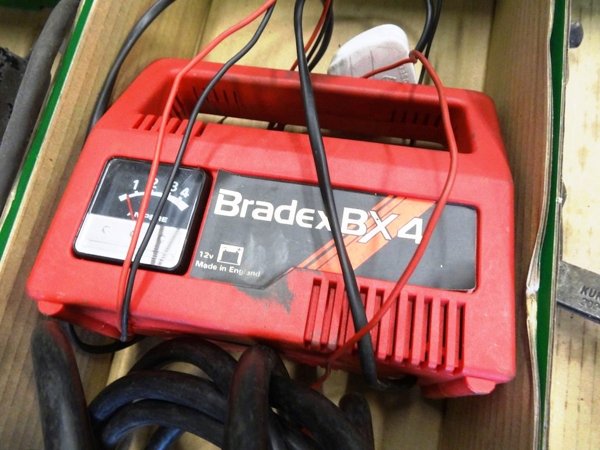
I've done the same and revived "dead" car batteries. Some of the modern chargers (for 12v battery) won't even try at battery below 6v or 7.2V or 7.5v or even higher IIRC but you can get round that in the way you have and a couple more ways with these so called "smart" chargers (maintainers) to fool them into trying or get the battery to a point where they will try. An image oft t'net of the cheap plastic 30+-year old Bradex B4 I sometimes use, the needle gauge is very useful and I can tell within 2-10 minutes how low the battery actually is and looking at the needle again in 15-45 minutes later if it might take hours, overnight or day to charge.