pikpilot
Members
-
Joined
-
Last visited
Everything posted by pikpilot
-
I don't have solution but I do have some questions. When you "So every now and then the boot will become a right arse and sometimes pop open and other times just refuse" I assume you mean that it just releases the catch to enable you to lift it? Or does it pop completely open like some models? You said "as soon as I’ve popped the boot from the inside and pressed the button" . Could you please give more details of the button location as my 12 plate 1.6L does not appear to have this. Do a search on this forum as I have read in past threads about micro switch failures in the unlock unit and bad adjustment of the catch. You can use the search facility on this site or use Google with Briskoda Octavia 2 before your search terms.
-
Yes, there is always a new version coming along! He has some G13 so no reason why that can't be used. The coolant tank is marked with top up with G12.
-
Go with the G13. This is the latest version and what the garage put in my 1.6L car when they replaced the water pump. The total capacity of the coolant is 8.6 litres and a minimum is that this be 40% concentrated G13. The back of your 5l container will show concentration against protection temperature. This info is in your car handbook. If you need one, you can download it from the sticky up the post page. I would remove the bottom radiator hose to dump the old coolant.
-
I do not intend going any further as this is a one off event due to long term little use during current restrictions. The contacts etc. were probably bridged by moisture/water and for only a few days and so unlikely to have produced any corrosion. In your case I would dry out the interior of the car as I did and then do more unless there is a permanent problem. My car has climate control and I make full use of that to keep the humidity around 80% (factory setting and not adjustable.) This works well even on rainy days to remove any misting very quickly. It does that by using the very cold air from the air con to condense water vapour out from the incoming air before passing the air to the heater and then into the cabin at your set temperature. Some people who have never had climate control can think it is wrong to run the air con even in winter, but even in cars with manual control, the driver's handbook can still recommend the use of air con to demist the windows. If you have climate control in your car I suggest you set it to AUTO, or push the AC button, then set the temperature control to your liking. Only one small disadvantage is that the outlet air is cool (but dry) until the engine warms up. The Mk 2 Octavia does not have a clutch for air con engagement but instead the compressor is engaged all the time. However, the stroke of the pistons is varied by a swash plate that can control piston displacement from zero to max. This makes a huge difference in efficiency compared with the older bang bang method of modulation. I cannot detect any increase in fuel consumption with it on, except during the hottest summer days.
-
See my post in the thread "Green clock with arrow and left indicator light on dash when lights on"
-
See my recent post at the end of the thread above: "Green clock with arrow and left indicator light on dash when lights on"
-
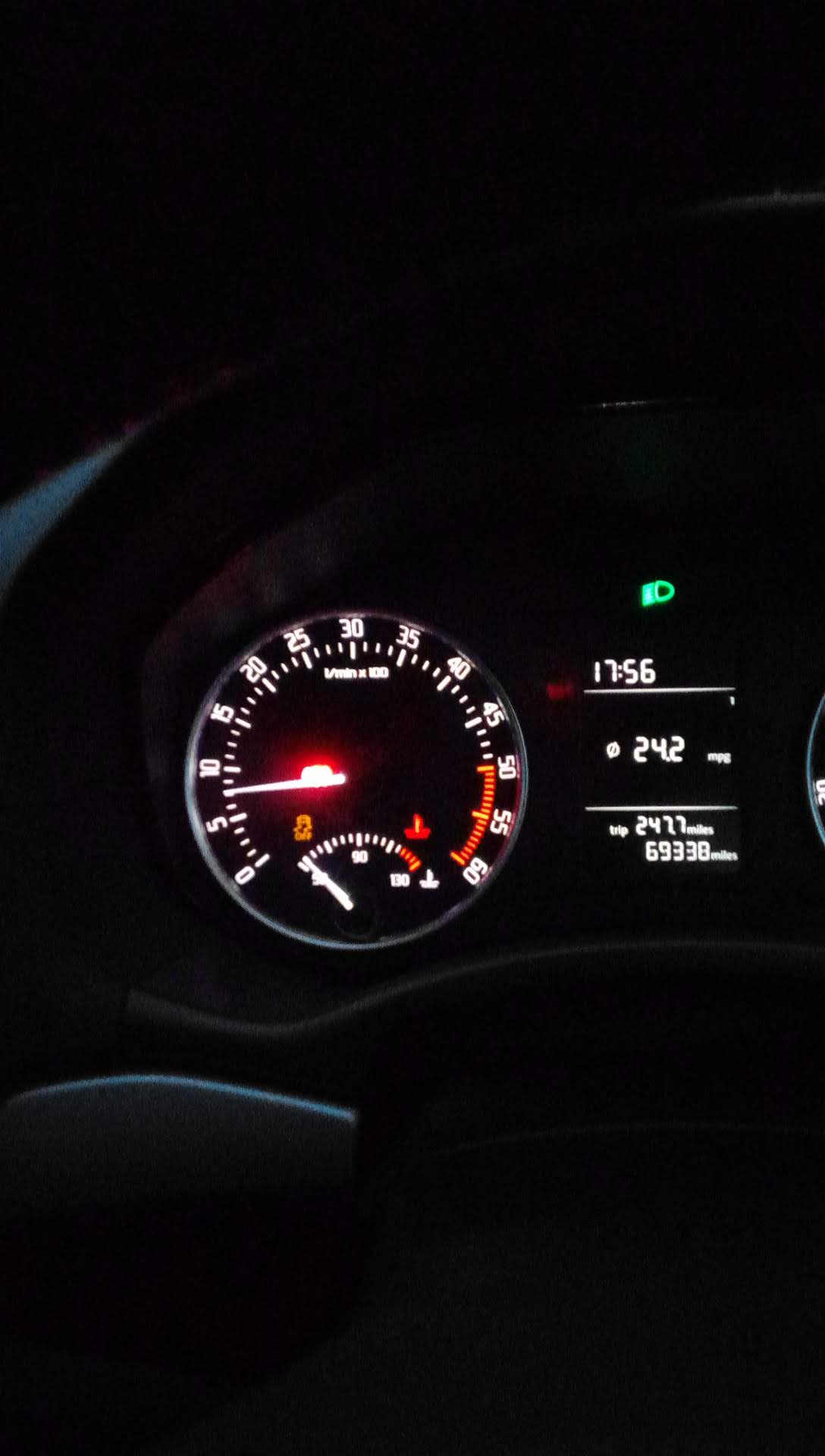
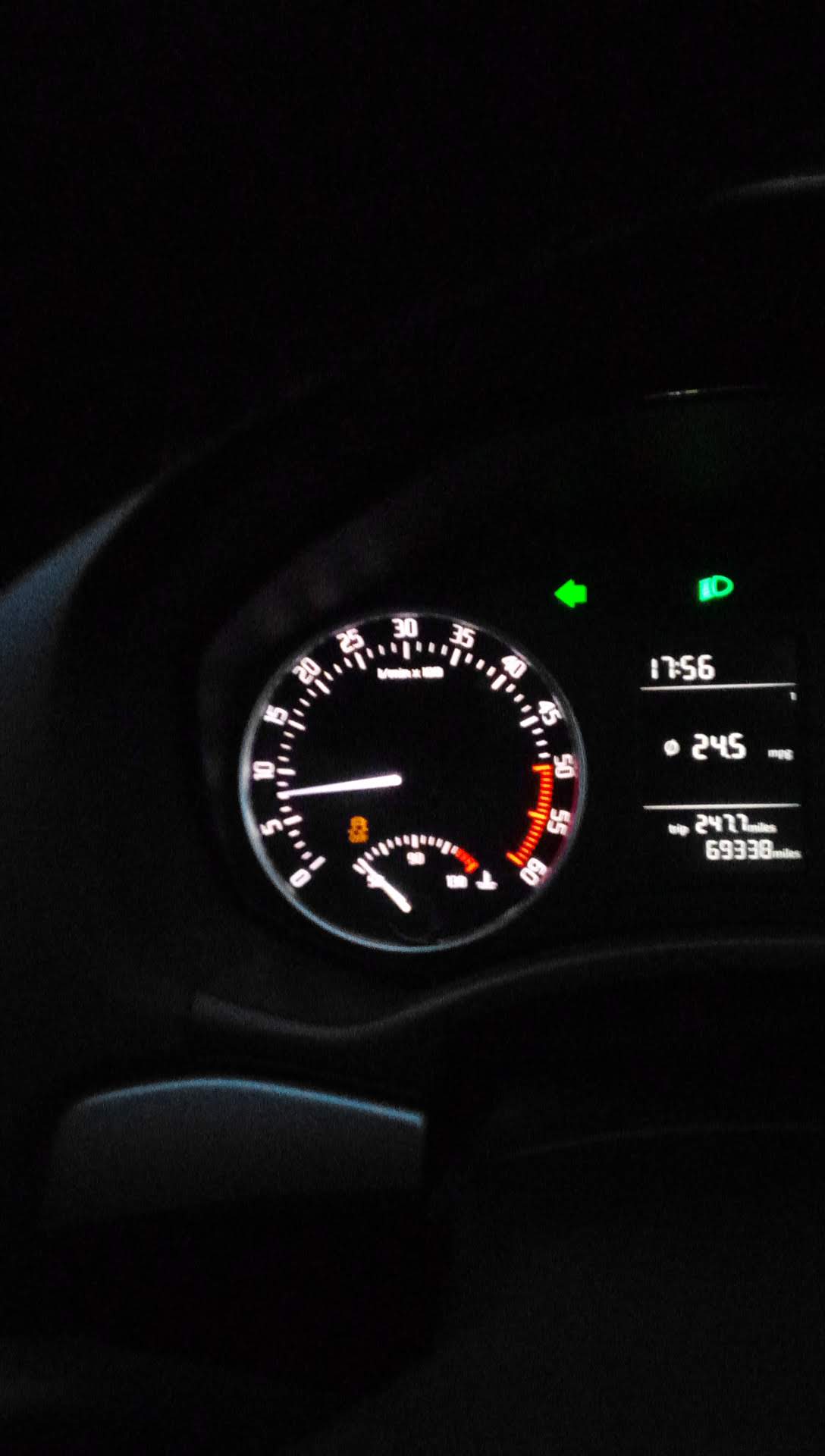
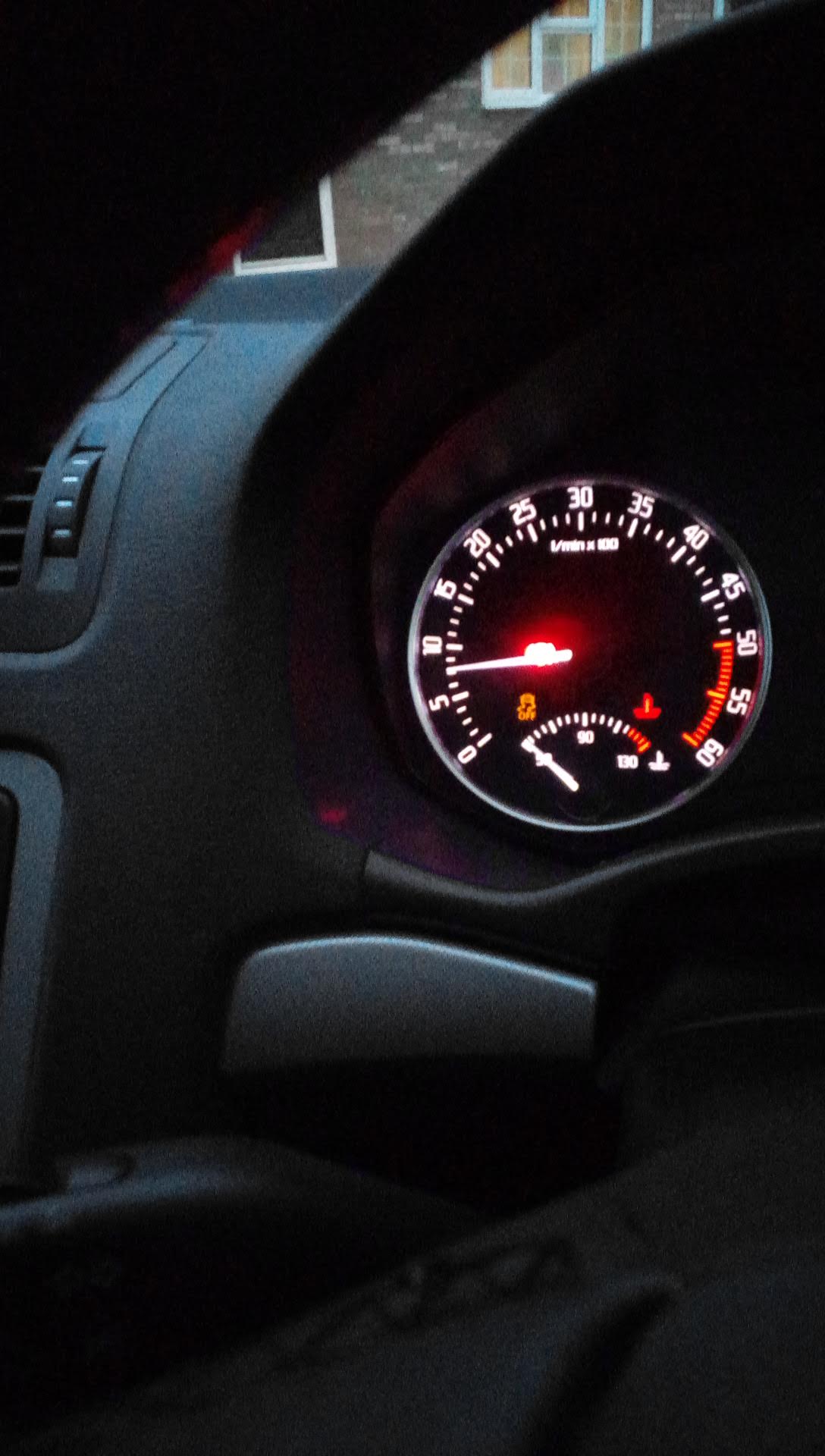
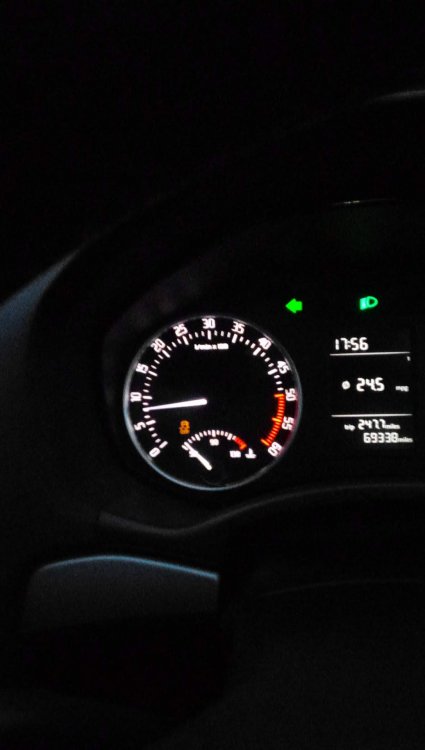
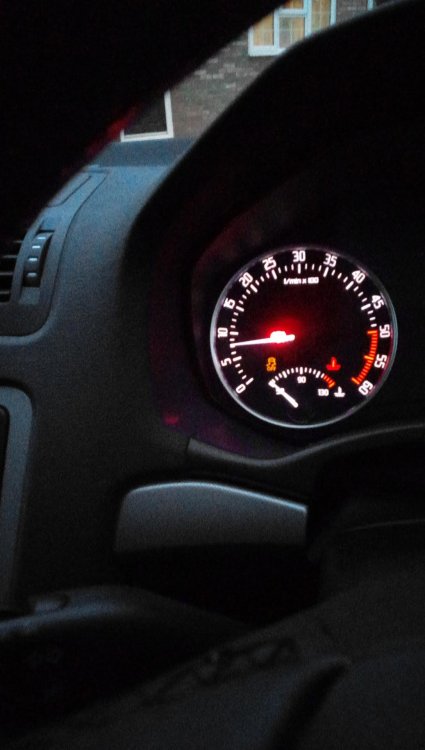
I had exactly this and more at the end of last week. With handbrake on, ignition on and lights on I got the ASR and red coolant over temperature warning on dimly. With handbrake off, ign on and lights on I got the LH turn light and ASR dimly lit. With lights off and handbrake on I got the ASR and over high coolant lights still on. This problem was after a week of strong wind and rain and a long time of no use. I suspected it was water somewhere as the whole car was "steamed up" as soon as I closed the door and was reluctant to clear with a fibre cloth. [My car never normally has condensation as I use the climate control even in winter to keep the humidity low] So, the fix: First I left the bonnet open for the whole of a sunny day in case it was water around the ecu - no change Secondly, on the dryer sunny day of Saturday, I left all the windows open with the car locked. When I checked in the evening everything was back to normal and has stayed that way. Conclusion: I believe the very high humidity, (perhaps I have water leak somewhere) resulted in water droplets forming across terminals in the electronics inside the car. See photos for details. Note the camera aperture is set to make the dim light more visible.
-
You don't say what year your car is but most have note in the handbook saying that when you change the battery in the remote you may have to re-synchronise the key fob. It then goes on to say how to do it. If you don't have a driver's handbook, you can download a copy from the sticky post in the postings list. Both keys will start the car because they only use the passive chip in the key fob to supply the immobiliser code.
-
When I had a driver's door controller replaced, the Skoda garage had to recode it. I would not rule it out.
-
It is just a warning that you have a fault code stored. Use a reader or have a garage do it for you.
-
Irrespective of what is causing the problem, until you fix the cause you can still close (or open) the window as follows: Press the window switch until it "bounces" (finger protection) then within 2 seconds press and hold the switch again. This is normally shown in the driver's handbook.
-
Did you check for corrosion around engine bay fuses and connections as previous post? If not, you may have disturbed something to make a temporary good connection. Same applies to other wiring near the battery.
-
The display as you have is the default. As your kms/hr display does not also have a mph ring, to meet EU regulations they have to show the mph elsewhere. They chose to use the location you showed. This is the exact opposite of the UK spec cars where the speed ring only shows MPH and the small digital display shows kms/hr. Annoyingly this solution is just so VAG can avoid having to dual mark the speed ring in kms/hr and mph, like other manufacturers.
-
As suggestion above and check for corrosion around the engine bay fuses and fuseholders.
-
Aldi had a code reader on specials this weekend. If you're quick you may still find one. It is a simple combined reader and decoder aimed at people who do not have dedicated software to do the decoding. [Suggest you buy some food when you are in there to avoid breaking lockdown rules]
-
For a comprehensive answer take a look at: https://www.eeuroparts.com/blog/dual-mass-flywheel/#:~:text=A fully functioning DMF will,clutch and apply the gas. Basically, you look for judder when you put the transmission under medium load or listen for noises when idling. Can also be felt as a judder when accelerating.
-
Failing dual mass flywheel?
-
On starting if it detects a wrong or no immobiliser chip in the key it will allow you to start the engine then it will stop up to 10 seconds later. It will also bring up an immobiliser symbol on the display. Another possible cause is the sense coil or its wiring has failed. It is located around the key barrel in order to read the chip in the key.
-
Your handbook is likely to have the procedure. For my 2012 model it says: Synchronising the remote control If the vehicle cannot be unlocked by actuating the remote control system then it is possible that the code in the key and the control unit in the vehicle are no longer synchronised. This can occur when the buttons on the radio-operated key are actuated a number of times outside of the operative range of the equipment or the battery on the remote control was replaced. This means it is necessary to synchronise the code as follows: › press any button on the remote control key; › pressing of the button means that the door will unlock with the key within 1 minute. Try this then. Follow the procedure then lock the car with that key, then unlock again with the pushbutton. Once the remote locking is working you will be able to start the car. The other common procedure (not in the handbook) works only to clone to one key to a working key.
-
I wonder if your mirror has been replaced before and the wrong one fitted? I never got to see mine with the mirror out as the Skoda garage got it out in the end. However, I do know there are two plastic tangs that push into the two pairs of metal clips shown at 11 o'clock and 3 o'clock in your top photo.
-
The car handbook for my car gives the lever/wait three seconds procedure and uses the word activation. However, there is another activation procedure before that for cars sold in the UK before DRLs became common. This additional one time activation can be done through the diagnostic port by the garage, or using VCSD or using the Carista app and now some others. I used the Carista app.
-
You can use one 30A fuse if the sub load cables are rated at 30A too. Another cause of wiring fires is when a small load is connected to a cable with a large rating and fuse but the sub load has only small cables. One example is where the 30A supply of the cigar lighter has a plugged in load which has a small cable with no fuse. This is the reason why you should always use a plug with a fuse in the tip (typically a glass fuse of 1A or less) to supply things like cameras and external navigation units such as Tom-tom (or use a lower current fuse in the cable). The cable and internals of such low current devices will burn before they will blow a 30A automotive fuse. As I said before, fuses are there to protect the wiring. You cannot then extend the cable with smaller wire without adding a fuse to protect that smaller wire. That includes the hidden small cables and circuits in electronic equipment. However, the manufacturer will usually have a board mounted fuse on small loads such as a radio to avoid burning the printed circuit boards. These are to protect the unit itself. You still have to protect the cable as shorts through cut and chaffed insulation will cause melting of the cable unless it has an appropriate fuse in circuit.
-
Although two cables can be put in parallel, they should be both be connected to the same double rated fuse. So, yes, you need a 30A piggyback to match the fuse position you are using and secondly you need to use a fuse position that is rated for the current. Don't forget that your chosen position in the fusebox will see the sum of your load current plus the current in the other fuse at that location so you can only use a piggyback if you will not exceed the limits of the upstream fuse. So ok if you use say, the cigar lighter fuse as that is intermittent use. You can understand now why it is normal to run a 30 A cable from the tow bar socket directly to a dedicated fuse in the engine bay fuse box if you intent to supply a caravan which has high electrical loading.
-
Yes you use one of these, and for small loads such as a camera this way to go but not if you have a large current such as 30A. It is important that all cables between the the 30A load and the battery which see 30A have to be rated for that. Just connecting the piggyback connector to a random fuse position could overload wiring elsewhere, or more likely, blowing a lower current fuse further upstream. Your best bet is to find a circuit that is already rated for such a load, such as the aux supply/cigar lighter and piggy back on that. Your driver's handbook/user manual that came with car will tell you which fuse number and its location. These change with model year and trim level. Make sure that you buy the correct type of piggyback fuse holder for the fuse position you want to use. The one in your link is for a mini fuse rather than the more common larger style. Also, if the wire on the piggyback looks small (like the one you showed) it is not likely to rated for continuous 30A.
-
NEVER run an unfused cable. Many car fires are caused by amateurs running a cable from the battery or other sources in the car without a fuse to protect the cable. You have the cable in the right place now so it is just a matter of connection to an appropriate fuseholder that is not being used. By appropriate, I mean one that is capable of the full current you want to take and has the necessary switching - for example, do you want it to be permanently live, only available when the key is in the ignition, or only when the ignition is on or engine running? Fuses are grouped in the fusebox in this way. Many auto electricians run the trailer wiring to a spare fuse position in the engine fusebox. What you cannot do is run the cable directly to the battery. The fuse is there to protect the cable, not the load. Fuses to protect the load must be at the other end of the cable and lower rated. If in any doubt, get an auto electrician to finalise the wiring.