Everything posted by Breezy_Pete
-
Skoda dealership garage or general one? If it's the former they may have some info on record if it's a sufficiently common fault (but they are unlikely to admit to that, more likely to say "never seen this before" even if they had three the same yesterday).
-
Yep, no problem.
-
https://erwin.skoda-auto.cz/erwin/showHome.do
-
I fixed the fuel gauge on a workmate's Fabia at lunchtime by reflowing the joints on the infamous green connector of the cluster. Couldn't see anything wrong with the naked eye even assisted by reading glasses; but under the microscope I could see 8 or 10 joints that had cracked and showed movement when waggled.
-
I'll have a count-up of my rivet supplies this evening, if I have plenty left over after finishing this door, we could maybe come to some deal with mailing some out?
-
Yeah, it's the way you wrote it before, to my eyes makes it sound like you're saying people don't often overtighten them, which didn't seem right.
-
Did you mean that to be the other way round?
-
I just do them up to 20Nm like it says on the side of the filter (genuine ones anyhow). Never had any trouble undoing. Saves guessing. My hand-tight may be very different to the next guy's.
-
That's a new one on me. Why? https://www.moneysupermarket.com/car-insurance/what-is-car-insurance-fronting/
-
Yes, OEM are 30mm socket I think - from memory - aftermarket/pattern parts could be anything.
-
Do you know how old the battery is? Do you own or can you borrow a battery charger? Those observations only make any sense if the numbers are swapped. With those numbers swapped, it does suggest a poor connection between alternator and battery. Clean up both positve and negative cable terminals. The (earth/negative) one that connects to the starter motor mounting bolt would be my first suspect. Do not do anything with the alternator's positive lead before disconnecting either battery negative or the fuse end of that lead.
-
Electronic Control Unit
-
Not if there's a bad connection between alternator and battery, or if the battery itself is in poor condition. Is it the car's original battery? (Skoda part number on top surface usually suggests this, few people replace with genuine).
-
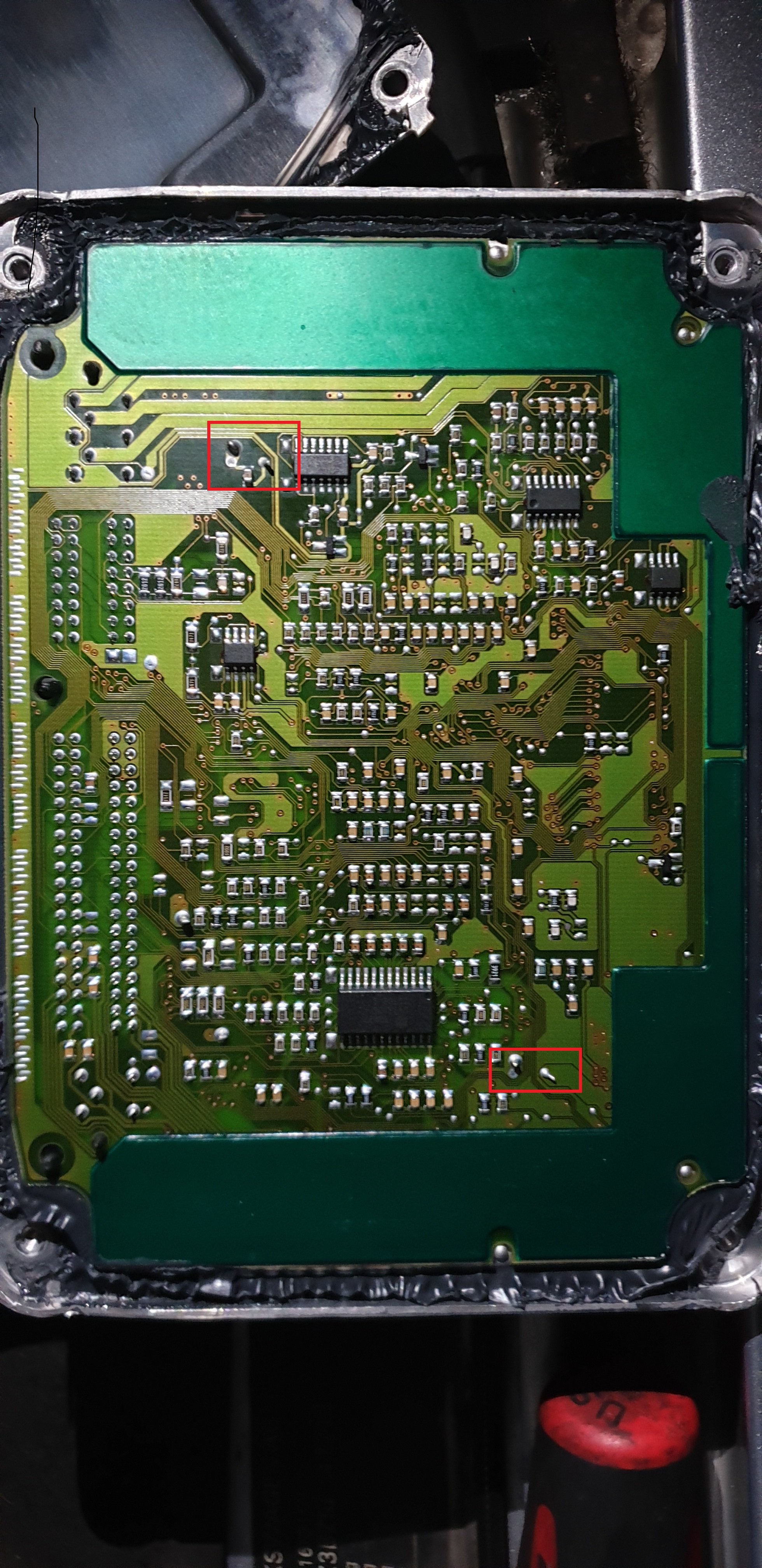
Get some close-up photos of the joints inside those red rectangles, and it should be reasonably easy to see any cracked joints on a big screen.
-
Nowhere near enough evidence to blame alternator yet. Recheck voltages, charge battery fully, check again.
-
What is their standard oil? Does it meet 507 00 spec? The latter is all that matters really.
-
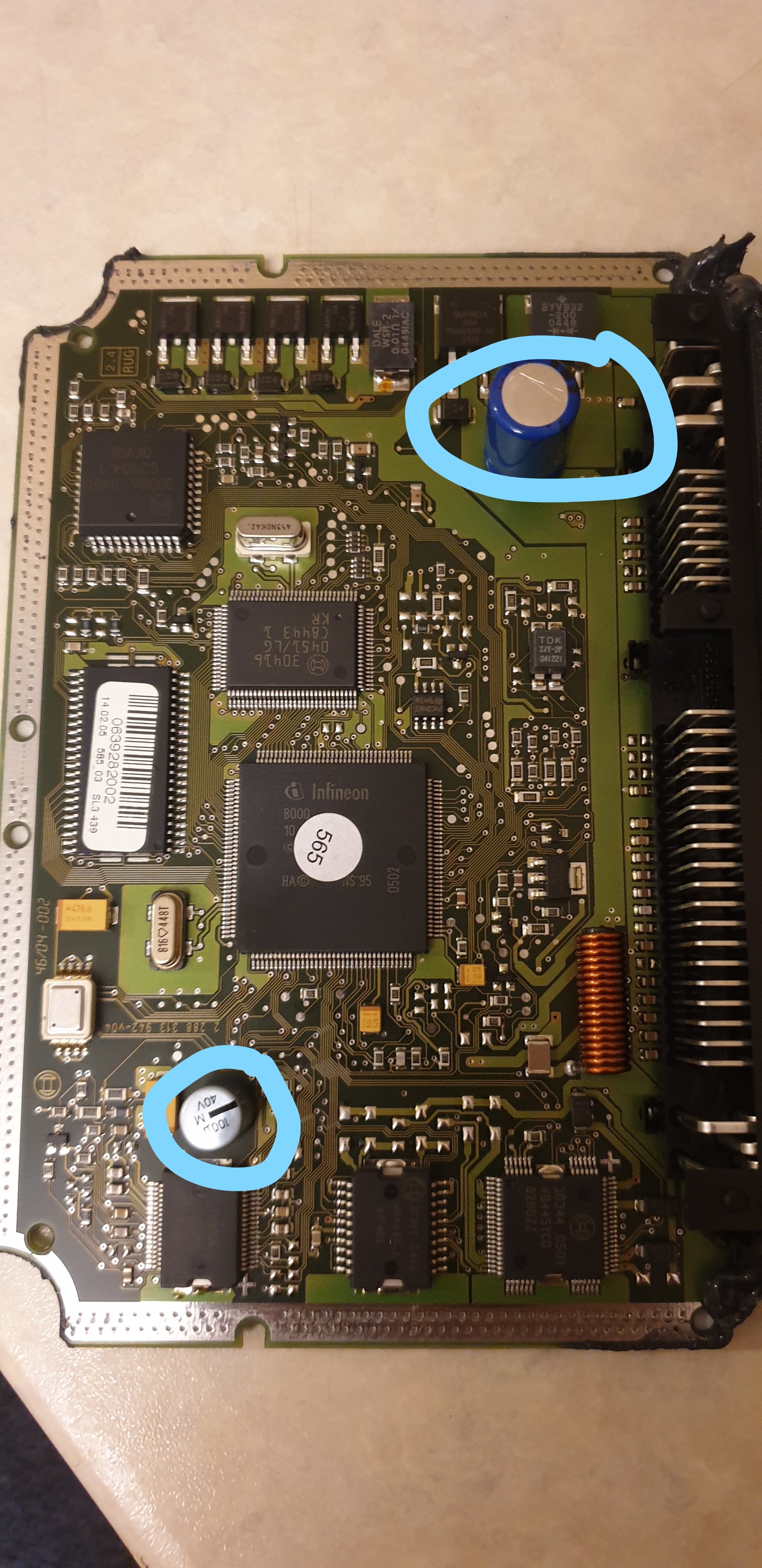
Photos, top and bottom sides, marked up with what seem to be the '2 main capacitors' and their solder joints.
-
The -AH part number is a correct superseding number from the -AA; so that shouldn't be any problem. Have you checked the fuse for the ignition switched supply? Fuse 7 in cabin fuseholder.
-
Yep, sticks out towards battery.
-
Only if the engine is run at >1500rpm for a while. (Possibly with bonnet closed too).
-
Oil pressure switch.
-
Possible but very rare thing to have trouble with. Can you do a compression test?
-
@Dorf Depp that fuse appears to be a permanent 12V feed to the engine ECU, so could be expected to cause major trouble if it wasn't conducting well. Check that the new fuse doesn't feel loose in the sockets, or you could soon be seeing the same thing happen again. (Loose/bad/dirty/resistive contacts can generate excessive heat).
-
Looks like that cylinder has had a loose spark plug in at some point, judging by the debris on the thread. What do the other two look like?
-
Yeah, that's it, but you didn't need to remove it from the engine, just to block that little hole in the cover while the engine was idling, to see if it made any difference to engine running.