
RicardoM
Resident Member
-
Joined
-
Last visited
Everything posted by RicardoM
-
There is no way the original clutch lasted 190K km. More like 90K-100K km. 60K km for an aftermarket, not OEM clutch is about right. But it depends on many factors. Load, driving style, terrain, environment, etc. About the customer's problem: I suspect the gear linkage. It is very common to get sloppy. Not addressing it quick usually results in gearbox issues (synchros, gears). So I would not condemn immediately the clutch. Maybe the clutch cable is not well adjusted. As for the reliability of 1.6 gearboxes, they differ only in gear ratios. Not well known issues if maintained properly (oil) and driven properly. PS: when you say "customer" should we understand that you own a repair shop?
-
I reiterate my invitation to everyone willing to add value to this topic to post his car's paint code (not just the marketing name of the paint) and a clear, well lit photo of the car. This way we will build a great visual database for future reference.
-
Felicia with carburetor owners from Ukraine are invited to share the review of their car for knowing how many such cars are there, how do you handle buying parts, and what issues you have during winter.
-
Motor Oil Bible.pdf
-
Hey Mike. Still going strong? You are in your 70's IIRC? About the battery. The ECU will be fine, meaning that you will not destroy anything, other than the "learned" values for an optimum fuel mixture at various loads on the engine, various environment values, and many other parameters that make the engine run smooth and non polluting. I recommend cleaning the throttle body followed by its reset.
-
What brand did you use? How much did it cost?
-
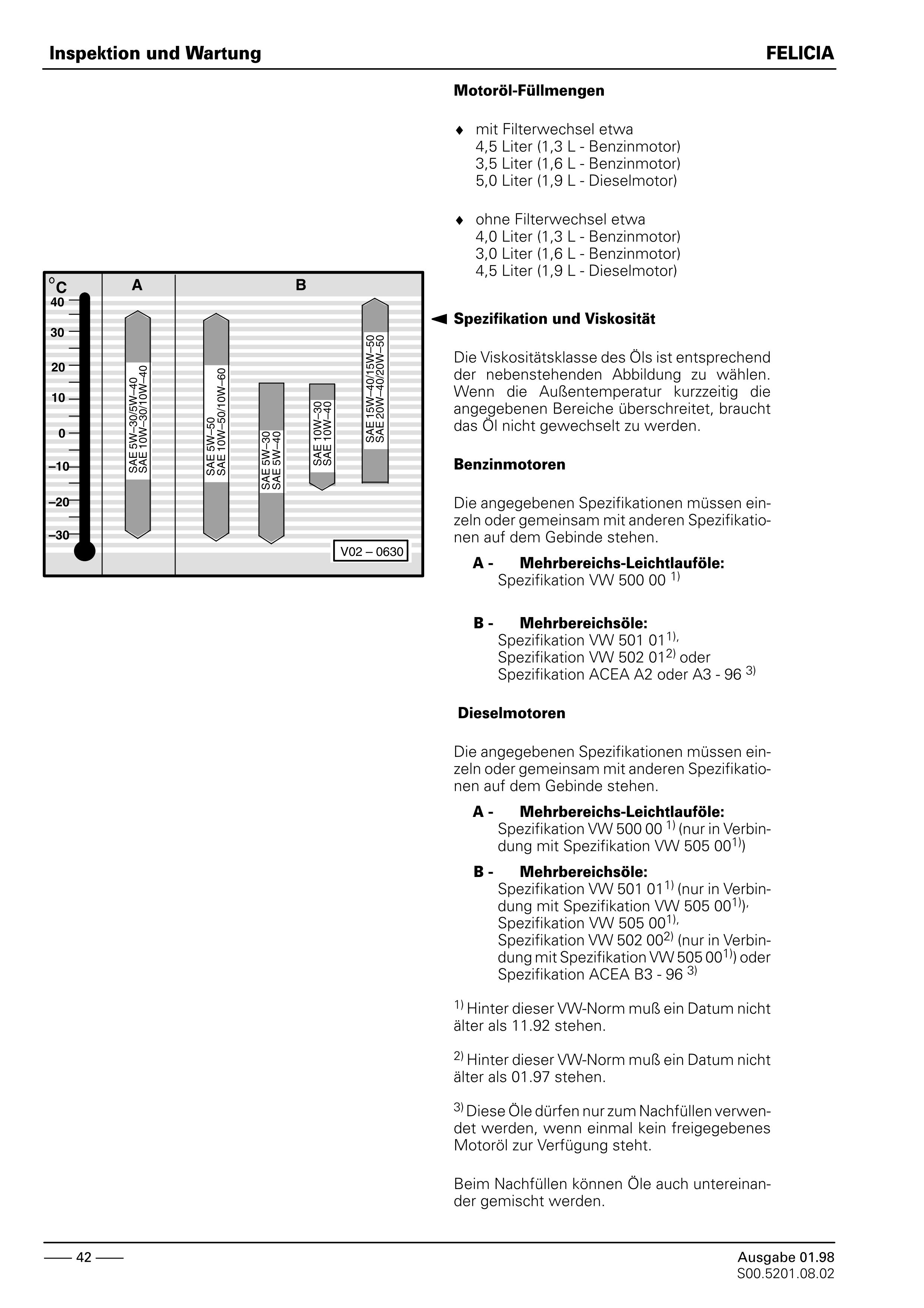
The diagram is made to confuse the hell out of people. To me it is useless, and the single reason I posted the "last version" of it is that you mentioned my initial diagram was issued before your owner's manual edition. So rest assured that what you know about oil engines now is enough to allow you select the best engine oil for your car. My conclusions about this (futile) endless topic are below. They will allow you to choose the perfect compromise for your engine lubrication. First, you have to respect the PERFORMANCE LEVEL recommendation of the manufacturer of the engine oil. In our case, it is the VW standard. Then you have to choose the SAE viscosity grade (xW-y) of the engine oil x refers to the viscosity grade at lowest, constant winter outside temperature (WOT) in your area. An empirical formula is this: x = WOT + 35. y refers to the viscosity grade when the engine is running at its optimum temperature (roughly 100°C). Since Felicia has not an oil radiator to compensate for high engine loads and high summer outside temperatures (SOT), y must be correlated with SOT. Again, an empirical formula is this: y = SOT. That is about it. I would not beat this subject to death or lose sleep for scientific details. If you want to keep your Felicia engine happy, drive it without beating it to hell and change your engine oil as often as your pocket allows. Remember you are not driving a rally car, but a small family car which put a smile on our face for being reliable, easy and cheap to maintain. Here is a video that explains what I wrote above in more detail.
-
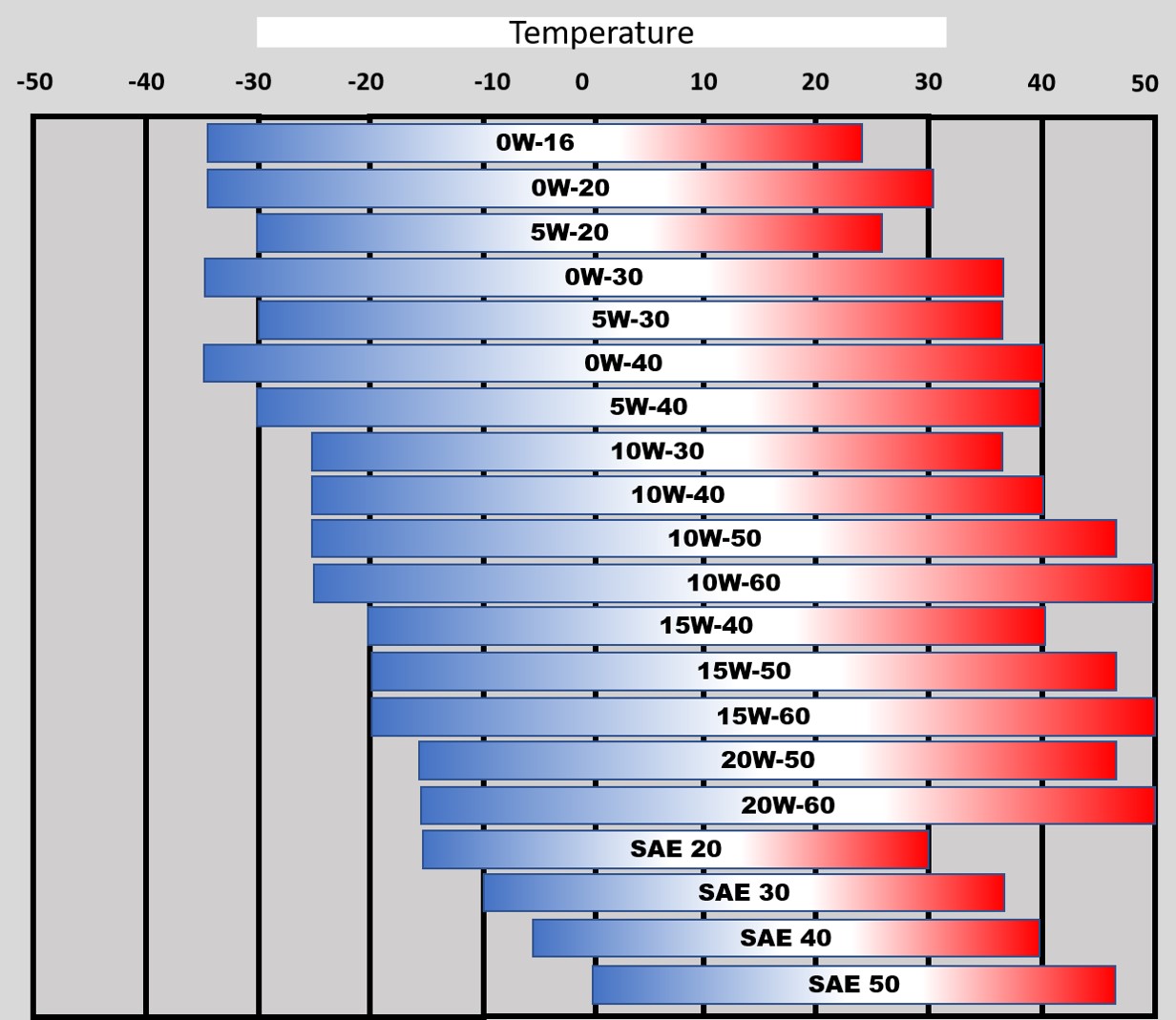
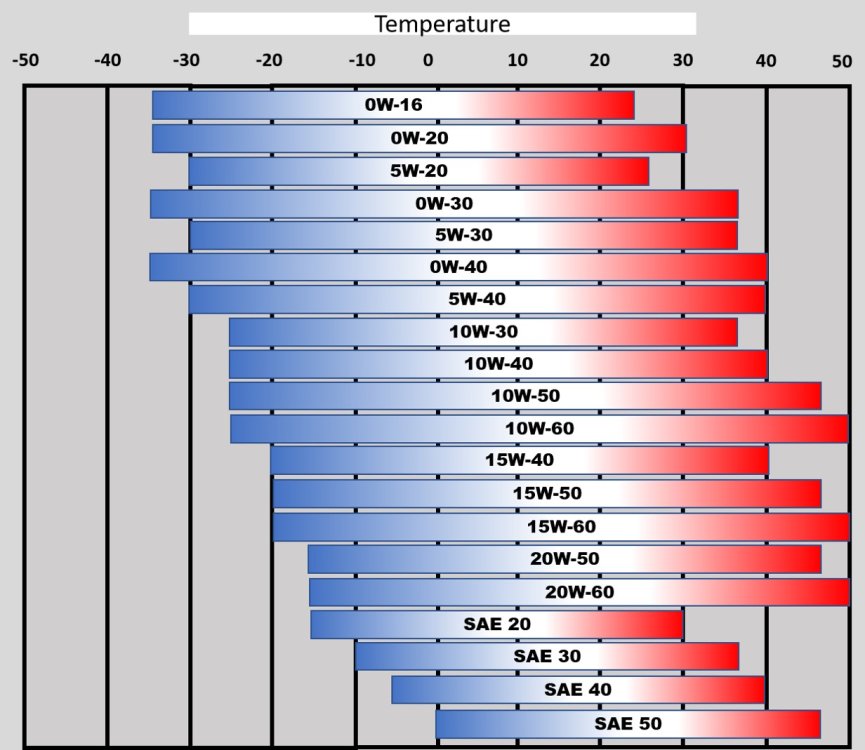
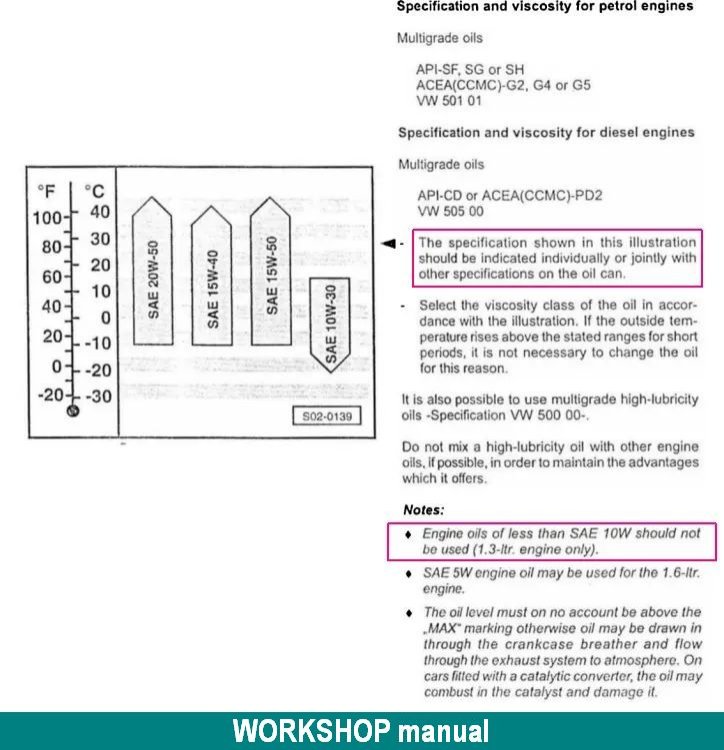
Actually you are reading the diagram wrong. Yet, you have the excuse of trying to read a difficult/confusing diagram. Not sure who was the genius who drawn that mess, but you can't draw two or multiple viscosity engine oils into one single temperature interval. When I say "temperature interval" I refer to the minimum and maximum temperature for a given oil where its viscosity allows easy engine starts and decent lubrication. A better understanding of optimum temperature intervals function of the SAE number is the one below.
-
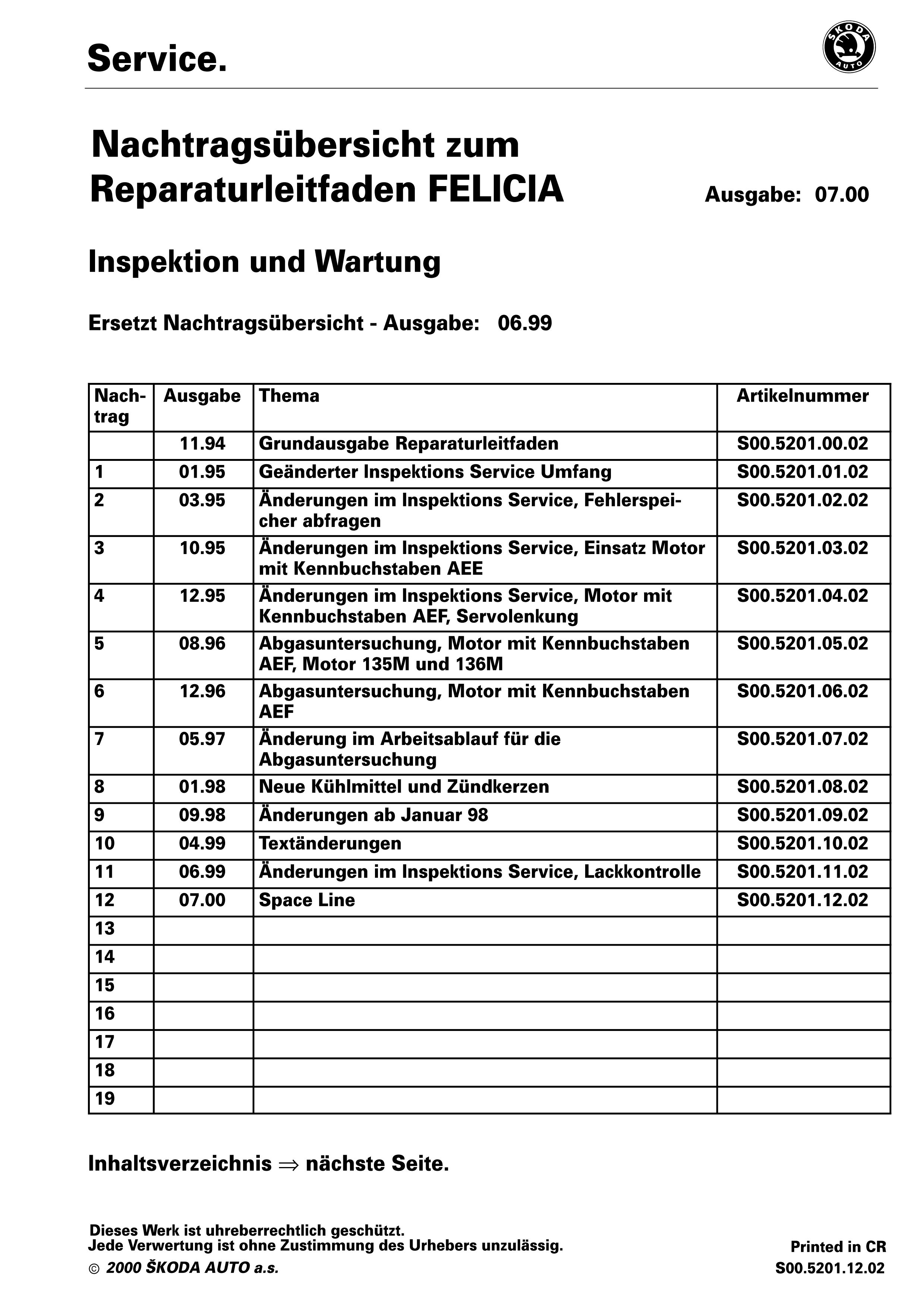
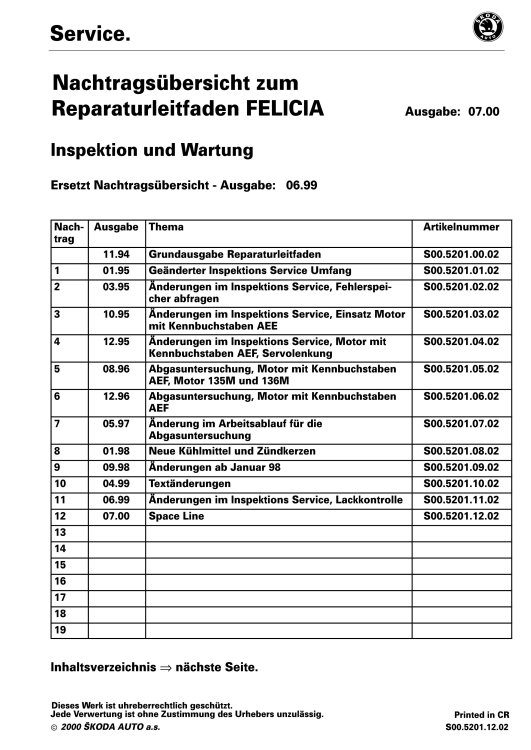
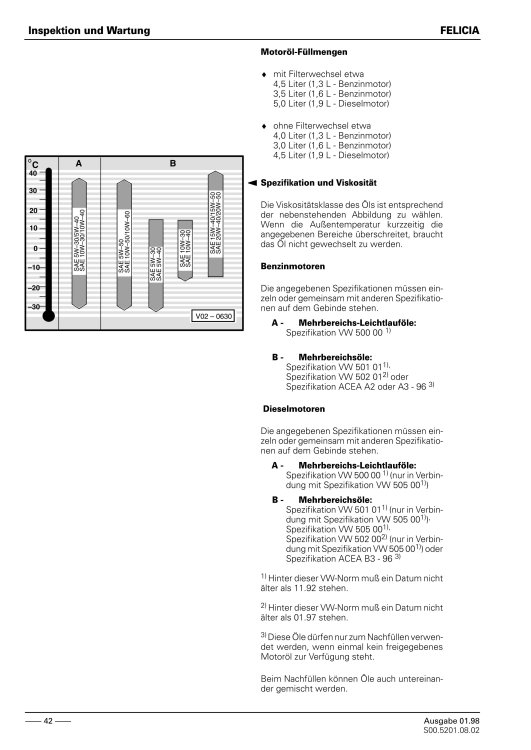
The newest Felicia Workshop Manual is dating from July 2000. It is the German edition. I have attached the editions update page and also the page about engine oil.
-
It's called interpolation.
-
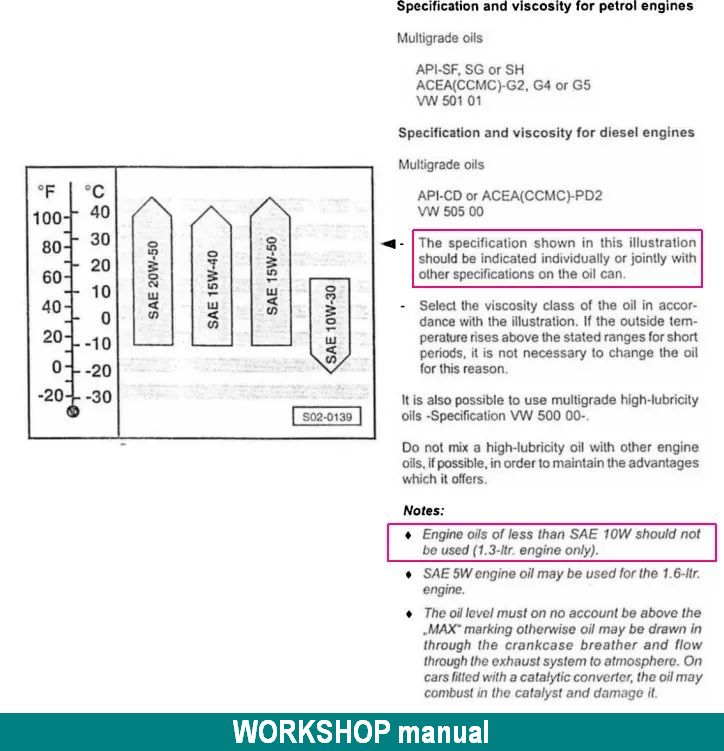
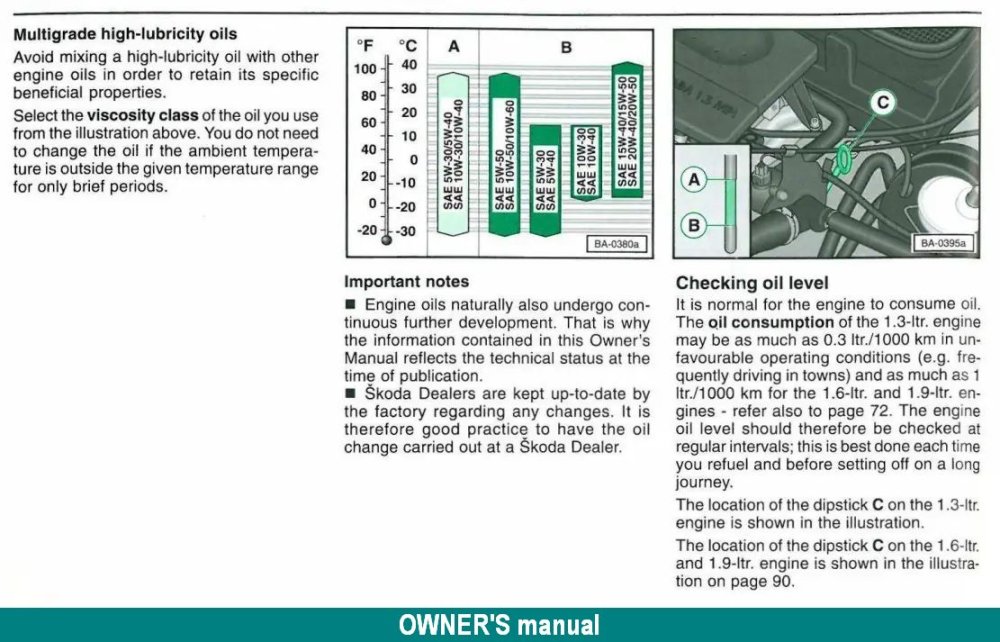
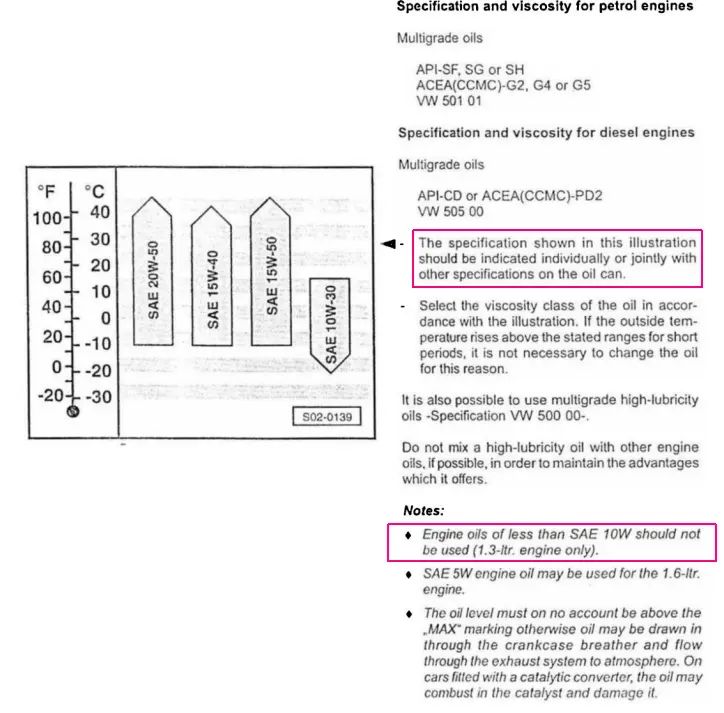
A 10W40 multigrade oil is designed for outside temperatures between -20°C and 40°C. I quote from my previous replies "Skoda chose mineral oil 10W40 for most countries having a temperate weather". I didn't say anything about mediterranean or tropical weather. Furthermore, I have attached a screenshot from Skoda Felicia Workshop manual. You will find interesting notes that I emphasized in red. Remember that Skoda dealers' recommendations from year 2000 take into account two things: 1st: Felicia's engine was designed for cheap, mineral oil (to keep maintenance costs low and also because it is not a performance engine), and 2nd: temperate weather was different in temperatures range than today. Felicia workshop manuals are above Felicia owners manual, also I had the occasion to exchange technical information about my Skoda Felicia with numerous Skoda mechanics in VAG dealerships when I worked in Europe. The engine on my Felicia 1.3 is running strong with high compression at 180,000 km and I used 10W40 mineral oil till 2010-ish, then 10W40 semi-synthetic oil till today. Any full synthetic oil IN FELICIA engines has two visible disadvantages: leaks around all seals and also "boils" in the engine oil sump, then the vapors are sucked through the PCV hose into combustion chamber where they are burned. The mineral part in the semi synthetic oil FOR FELICIA prevents those 2 issues. PS. I hope that our friend JR will find my reply satisfying for his sarcastic demands.
-
Again, remember this section is about Skoda Felicia. Any example about other cars, bikes, trucks has no relevance to this section or what I've commented.
-
Let's get back to the specifics of Skoda Felicia engines. We are talking about Felicia here, right? They were designed to be small family cars, with low maintenance and operation costs. The engine metallic parts, the seals, and the lubrication system as a whole have been designed for a moderate mechanical load. A Skoda Felicia is not a performance car by any stretch of imagination. The selected engine oil had to comply with the design of the engine, so Skoda chose mineral oil 10W40 for most countries having a temperate weather. By no means Felicia was designed for Siberia or Sahara. The difference between a mineral oil and a synthetic oil is that the mineral one is (by oversimplification) what comes from the petrol in the ground, without additives, while synthetic oil has human made additives that help extending the oil stability, lubrication efficiency, washing capabilities, and many more. Those are not marketing lies, except maybe for cheap, no name brands. Fully synthetic oil is not good for Felicia engines. I will not enter into details why, but remember what I said in the beginning. The engine was designed for mineral oil. Using a semi synthetic oil has the advantage of both worlds.
-
Skoda factory recommended at that time (1994-2001) to use mineral engine oil 10W40 for petrol engines. Since the oil technology evolved a great deal, I invite everyone to use a semi-synthetic engine oil 10W40 for petrol engines. You will have no issues at all. It is not rocket science, unless you have too much free time, too much worries, or you want to split hairs.
-
How good are you (or a friend) with using an ohmmeter? The idea is to check the resistance of the coolant temperature sensor when the engine is cold and hot, respectively. I am talking the half part of the sensor that feeds the ECU input.
-
Your car has the issue know as "hot start problem". Since according to you, the car starts well when the engine is cold, but fails to start when the engine is hot, the logical conclusion is that it is temperature coolant related. Of course, there might be other causes, but for now, this is the issue at hand. About the engine code: Felicia came in 3 flavors: 1.3 and 1.6 on petrol, and 1.9 on diesel. Which one is it?
-
Are you sure that you bought the correct coolant temperature sensor? There are many aftermarket sensors that have the correct collar color, but an incorrect thermistor resistance range. By the way, update your profile with the engine code of your car. Only the year of manufacturing is not enough when you are asking for specific help. Also mention some history of the car and tell us how the fault started to happen. Was it sudden? Was it slowly getting worse? The more info, the better.
-
Each pin in any connector can be removed with the proper tool.
-
Try to see if the coolant temperature sensor is working. Never change parts unless you diagnosed the fault.
-
Stick to the car manufacturer recommended parts.
-
Oops...
-
You didn't write in your profile what type of engine your Felicia has.
-
Do you know how to diagnose an alternator and its internal components? Because I have the feeling you're guessing, not testing.
-
You should visit a big car scrapyard that allows you to visit and take what you need. I am sure you'll get a decent replacement from Russian or VAG cars.
-
Stretch the hole😎