Everything posted by aubrey
-
-
-
On my old 2007 Roomster bleeding from the ABS ports didn't help. Been there, tried that. You need to do the ABS Bleed Procedure with a suitable OBD Scan Tool. An OBD scan tool that does that ABS bleed function, as you know VCDS does too. I did my 2007 Roomster with VCDS. I had to have all 4 wheels off as the procedure on that asks for rear bleed screws to be open too. My newer 2016 Yeti only asks for the fronts. I had a pressure bleeder hooked up as I did the VCDS procedure. The procedure runs asks for bleed nipples to be opened, runs the ABS Pump, asks for 10 pedal presses and repeats that a few times. At each step it waits for you to click to confirm you've done your bit. Finally saying Done. There are some videos on YouTube if you look.
-
That's how all normal brake fluid changes are done. Yes the fluid does mix a bit and that little bit of un-refreshed fluid doesn't matter. The only time you need to do an ABS bleed is when you have got air in the ABS. I did because I let my reservoir run dry doing a brake bleed and sucked air into the system. Only realising when air splattered out the bleed screw and not fluid, completely my fault, and also when you fit a new ABS unit because the replacement unit would have air in it when installed. I always use a pressure bleeder when doing my brakes.
-
Also to add "Isn't the pumping hard with the engine off just depleting the servo vacuum though, nothing to do with compressing the air in the system by ramming more fluid in?" Yes, I'm sure it is. But the differance is the ABS unit is off. I can only report the symptoms I had and I think it is because the ABS pump is not in an active state, valves in it closed etc. I can only report what happened in practise until someone with confirmed knowledge tells me why. The thing is if it was seals in the master cyclinder then the same seals would let by with the engine off, yes I can see more foot pressure needed as you'd have no servo assist but the pedal would not be rock solid with hard pressure even with the engine off.
-
-
I got air in my ABS unit once and I can confirm it causes a soft pedal. The pedal can be pumped hard with the engine off but would sink soft as soon as the engine was started. A little engine start sink is normal, an inch or so due to the servo, but I mean much more than that. Normal brake bleeding won't help but a VCDS ABS bleed procedure immediately cured the issue. You say you've refitted an ABS unit, I would not hesitate in saying you need to do the ABS bleed procedure on it. It is not only VCDS that can do that, many OBD scan tools can do ABS Brake Bleeding.
-
Is there no-one on the Briskoda VCDS map local that can help you ? I'm in NE London for example and I would.
-
Why not just copy the coding off your current unit before you disconnect it. Then you can recode as was ? You'd have the current coding on any VCDS scan if you have one saved.
-
On my 2016 Yeti the original EFB Battery was failing after 4 years. The stop start was never kickimg in by 2020, so 4 years. Replaced it with a Varta AGM battery and that is still going strong 6 years later.
-
Are you reading an increasing voltage on the Octavia Battery, measured with a jump lead disconnected. Could the battery be bad, possibly a single cell, and as you say not taking any charge ? Are your jump leads thick high current ones or the thinner core variety ?
-
I agree no one has offered any evidence either way. However I still prefer to play safe and do the coding. No-one has ever said doing the coding is bad in any way.
-
Also Topdon Carpal looks interesting but I've never personally used that. Looks good value though.
-
OBD11 or Carista would be cheaper
-
No idea really. I changed mine to a Varta AGM. so I had to code that due to the change of battery type to AGM. I have VCDS. I'm sure any like for like would do. So EFB+ and 70AH. I don't want to get into brand arguments and does paying more give better value when comparing working life. I'm sure you can go with their recommendation. If not coding then ensuring EFB+ and 70AH is more important for you.
-
See what it says on https://www.tayna.co.uk/ You should code a new battery to the car. That basically means plugging a suitable OBD device onto the car to tell the BMS (battery monitoring system) the battery has been changed. But if you buy like for like or very similar, like your current is EFB+ and 70AH then it is not so important. So swap battery as you would on any old car, a few warnings lights you'll see on battery change will clear themselves after a short drive.
-
-
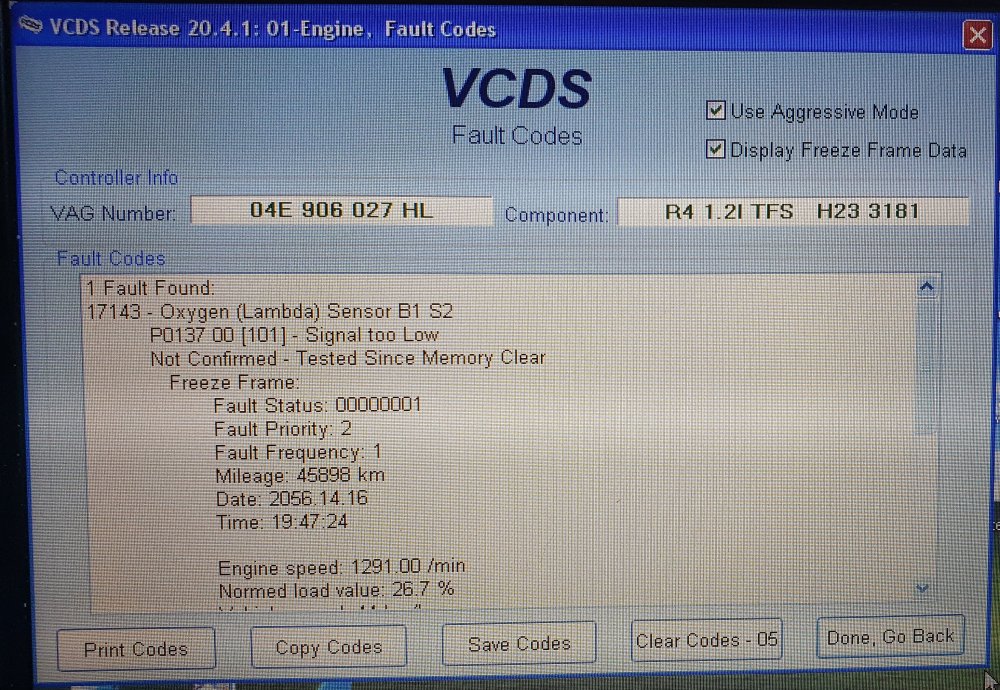
The sesnors are around £130 and screw in like a spark plug. How can they be £400+ ? I've had S2 one fail on my Yeti, the post cat sensor, replaced it with an OEM one from TPS and no further issues for years now. Is the car showing Oxygen Sensor B1 S1 or B1 S2 as a fault code ? I hope it was an OEM one you replaced it with.
-
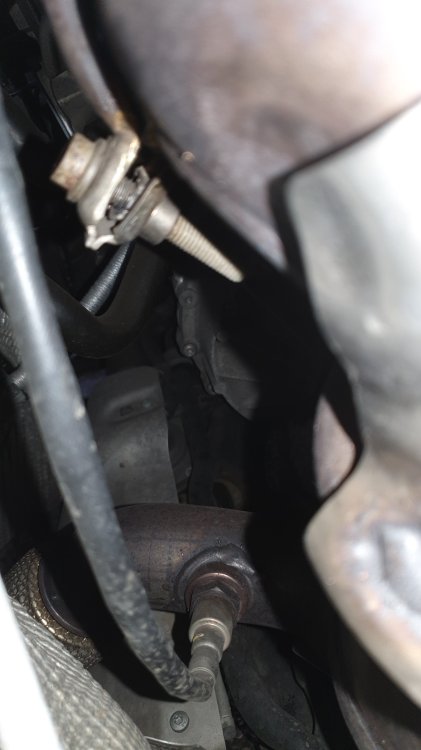
Had to change this on my 1.2 Yeti. Yes underneath but not too difficult to get to. I just drove one wheel up a driveway onto the edge of a high kerb. Could then crawl under and remove. They can be tight, so a good soak in penetrating oil helps and a hot exhaust can help too. I used a lamda sensor socket to remove it, which is a deep socket with a slot along the side to put the cable through. I replaced with the VW Part from TPS and fault code cleared. No problems for 4 years since
-
You should change the serial number even if the battery type and Ah match. Changing the serial number resets the BMS to a new battery. But you're right it will probably be fine to just swap if Ah and battery type match. I have always put the battery change date in as the serial number, just means you can always read it later to see when you installed the battery. Many others just change from 00000001 to 00000002 etc. At the end of the day it is just change the serial number that matters, not what you change it to. So your choice if you want to pop by just message me but if battery type and Ah match then it may not be so necessary. Your change from 68Ah to 70Ah I don't feel is that different and as you say they're both AGM.
-
Where about in Essex are you ? I live in Newbury Park, Ilford. If you pass by I could code your battery in for free. It only takes a few minutes. Your Bosch Battery looks the same as the Varta one I fitted to my Yeti in 2020. I also changed to AGM, so the big coding difference for me was EFB to AGM.
-
You'd lose your clock time and trip mileage. No problems with the radio, it identifies itself to the dash module automatically. You will have some fault lights on reconnection, but don't panic as a quick drive round the block with some lock to lock steering turns and they'd clear themselves.
-
Just code in the new battery to whatever you purchased. I changed my original Yeti battery to a Varta AGM from Tayna when I swapped that out in 2020. Your choice of battery purchase but just tell the BMS, i.e. code it, whatever you decided on. Ah, battery type and a serial number change.
-
An LED would test 0.5v on diode test. I'm sure you could track trace and continuity check back a driver IC. It is rare for leds to fail though. The leds look surface mount, so you'd have to remove that white surround to test and trace. Are there any faults present when scanned ? Just wondering if there was a reason to kill the led.
-
I would do the ABS Bleed Procedure. I have done that on ny Yeti and you only need access to both front brake bleed nipples. This resulted in a much firmer engine running brake pedal than before the ABS Bleed Procedure. So both front wheels on axel stands with wheels removed. It is an easy procedure but you need a few litres of brake fluid in a pressure bleeder. The rear wheels can be bleed normally after the ABS Bleed procedure is completed.