Leaderboard
-
.jpg.3745ef413bb0c636456d024dfd5d2fd7.jpg)
Evolution13
Resident Member21Points3,201Posts -
Lee01
FREEDOM20Points36,936Posts -
lol-lol
FREEDOM12Points16,146Posts -
Graham Butcher
FREEDOM9Points6,934Posts

.thumb.jpg.9dd3f612ba7f13d10be5c518d3c8d255.jpg)


Popular Content
Showing content with the highest reputation on 18/04/26 in Posts
-
2 pointsForget all about EV people like James and Kate, and the other EV bloggers etc, I'm talking about the battery designers and specialists in battery technology, not people with vested interests in just EVs. Is my mobile phone, or my laptop, also an EV? No, but what they all have in common are batteries.2 points
-
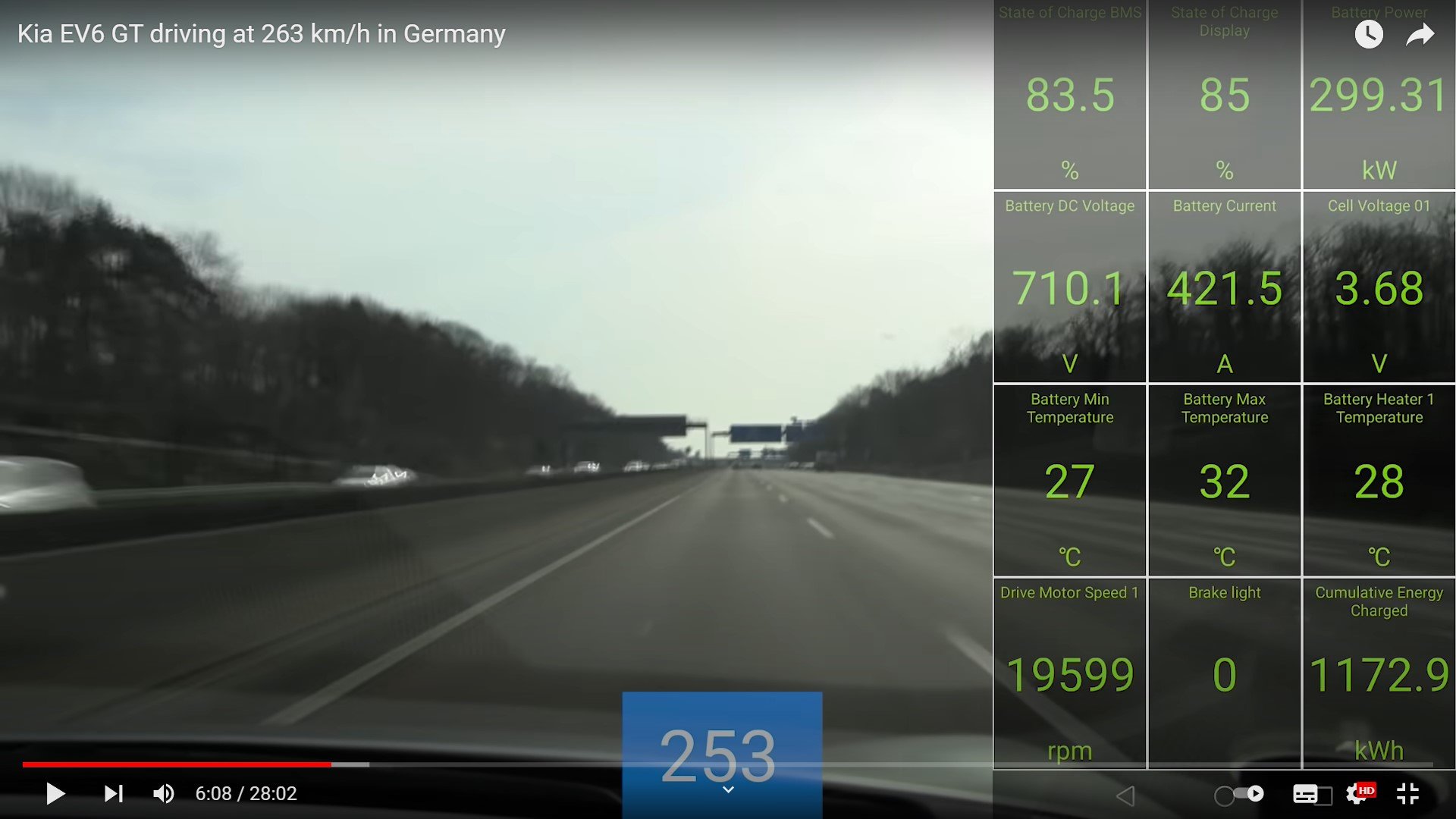
2 pointsThe State of Charge car display is not the actual state of charge of the battery but a level that the car manufacturer wants to tell you. True levels can be seen in Apps tapping in to the OBD port, Carscanner being a notable one. The car's Battery Management System is a better indicator than car's SoC % i reckon. So with my Scenic not even mentioning reduced performance to 11 miles past 0% SoC being shown is a better indicator and such messages are there to ensure the car is not damaged and results jn warranty claims. I might get my own battery report on the 5 and Scenic just before potential hand back and that will influence my decesion whether to keep either of the cars. I don't expect the rare occasional charging to 85,90,95 ir 100 % if running it down to 15,10,5 or 0% to have hurt the battery pack. More important not to leave the battery very highly charged or very low for days on end rather than dipping down or charging up high. Occasional full charge needed to carry out battery cell balancing operation.2 points
-
Updating this thread after I've done the job in hopes this can help someone else in the future. Replaced both rear calipers, on Autodoc I filtered by "TRW" brake system and then chose TRW-branded ones - these were correct. And in fact they were refurbs of the OEM part that I pulled off the Octavia - happy days. Cost a bit more than other manufacturers, but going OEM never hurt anybody. I spent a lot of time looking at what size banjo bolt/washer size is needed - nothing official online, the ones in the Halfords variety pack I bought looked too skinny (ID 12mm OD 14mm) - I was right, the washers I pulled off are ID 12mm OD ~17mm. I used ID 12mm OD 18mm Thickness 1.5mm washers - these worked fine. Don't go less than 17mm OD or the washer will be thinner than the flange of the bolt. Also found it difficult to find a torque spec for the banjo bolt, you'll see anywhere from 20nm-40nm online for other makes of cars with 10 or 12mm bolts. I went by feel balancing "will this leak" with "will this snap", while also firmly tapping the bolt head with a ball-peen to seat the washers. Checked the torque after and both are coming in at around 35nm. No leaks and the driver's side disc is now wearing down properly so that's solved the binding!2 points
-
2 pointsDo not stick close to a lorry though, in the eddy, back far enough to see both sides mirrors. A tall enough one to be where the power meter in the car can drop right down. Where if raining you still do not need wipers on. Just maybe do not do it in Scotland where it might be a high value load in the dark. (Alcohol.) they might just call the police thinking they are being followed for a highjacking. When you are just trying to get home without a charging stop. Happened twice to me on the A96 and A90, Aberdeenshire late night time. PS, Megabus and Citylink Coaches and Ember EV ones are good enough on the 70 mph Average Speed Camera routes to tail. Quite an energy saver getting behind one of those. On the West Coast McBurney HGV,s through 60 mph Average speed camera stretches. Amazing how the Posted Passenger car speed limits and irrelevant to the speeds they can carry.2 points
-
2 points@lol-lol it really is amazing just much more efficiency you can get if you stick close enough to a lorry.2 points
-
2 points
-
2 points@Evolution13 I agree, location, location, but just not here. We have 2 large park-and-ride sites with a capacity of 2,300 spaces, and the number of charging bays between them is just 8, 4 at each location. That's a percentage of 0.003478%, so very slim chances of getting a spot on one of them, I would say. So this location is clearly not anywhere as good in the provision of charging at park-and-ride sites as those around you, I would suggest. For instance, if it were me, popping into town, instead of travelling just 1.5 miles to a car park, I would have to go 4 miles in the opposite direction to the park and ride, then ride 4.5 miles back into the centre – not really ideal, is it? Then I have that journey back again to get home. Hardly very planet-friendly or helpful for congestion, etc., is it?2 points
-
1 pointInterestingly when I started work a LONG time ago at Dowty in Cheltenham I was put up in a B&B at John and Betty Cleeveley's house... John being the founder of Cleevely Motors and who's sons took over the business and subsequently also started Cleeveley EV's.1 point
-
1 pointJoined you today with a 2010 Yeti, which will be my daily driver. It has replaced a well worn but 2 year trouble free Alfa 147. Couple of bits it needs, but drives very well. Let the fun begin!1 point
-
1 pointI always have with turbo charged engines and always will. The fast idle is perfect timing from start to allow time to spool up before driving. I then always spool back down again for about the same time before turning the engine off again. I also have a pedal box in mine and have done from basically new. Transforms the response of the car. Removes the lag which I found made the car feel gutless when trying to merge into traffic or negotiate junctions etc.1 point
-
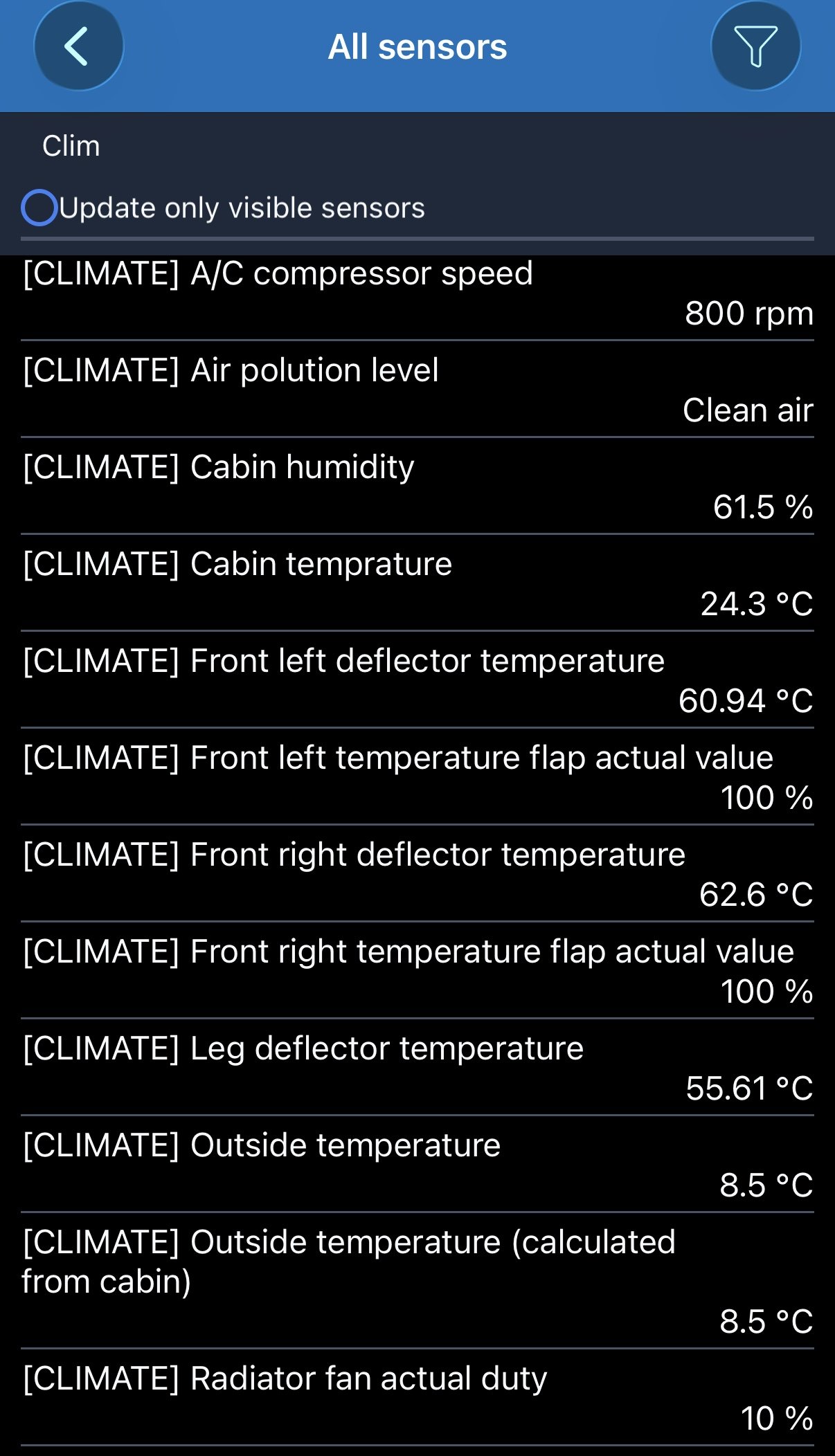
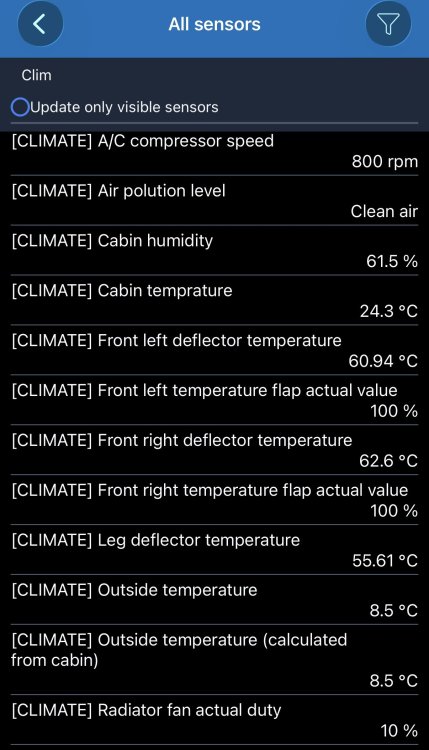
Sorry for the delayed reply. Finally got round to having a look at this today. I followed your instructions and did a full flush, and new heater core + new header bottle and now I have toasty warm heating on both sides!!! Thank you so much for taking the time to post. Even though the old core was still getting hot, it obviously wasn't getting sufficient flow to heat the air. Just to add to your instructions, I found getting someone to hold the car at approx 1.7K revs sped up the recirculation quite a bit. Screenshot attached showing temperatures compared to before!
 1 point
 -
Thank you so much for that detailed answer, I'm now getting a good list of specific things to check rather than me just driving around and feeling the vibes. :)1 point
-
1 pointAll the experts that I have come across all seem to agree that you get optimum battery performance if you stick between the limits of approx. 20% and 80%, meaning that the range is already effectively reduced to just 60% of whatever fanciful claims they were making in the brochure. That translates into the need to plan at least one charging stop on longish trips, each way, thus adding to both cost and time taken to do the trip, and that is without the extra time required to maximise the range by attempting to sit in the slipstream of buses or trucks at speeds in the 50 to 55 mph range. Allowing a battery to get ultra low can considerably shorten its life expectancy, and the same is equally true if allowing it to charge above an 80% SOC level. Now if you're the driver of a company car and you know that you're going to be getting another new replacement car at the 3 year period, then all the above means bugger all to you as it is never going to come back to bite your arse; it becomes someone else's problem when the battery fails, needing £thousands to replace it with a new one. Even my brand new mobile phone has an upper limit built in of 80% SOC and switches off the charging once this level is reached. When battery gets into the lower regions of below 20%, it goes into low power mode and starts to shut down some services to conserve the battery. Indeed my also brand new laptop also has the same battery management control built in, and it will not go above the 80% level, regardless of how long I leave it on charge, and it also shuts down featured when it gets below 20% level. So I would say that by allowing your car to get to that level, you are actually playing with fire which could potentially hit you extremely hard in the trouser pocket department one day. It is also reasonably true of ICE cars by the way, once the low fuel warning light comes on, it is best to refuel ASAP, regardless of the cost as allowing the tank to get really low, also allows the sediment that slowly accumulates in the tank, to get sucked into the engine, where it could cause serious problems. Incidentally, there is zero issue with brimming your fuel tank on an ICE vehicle.1 point
-
1 pointWhy crap if you know you can make that extra ten or twenty miles past 0% in a Renault, Nissan or TESLA and said yourself a whole heap of time and cost and get home earlier ?? As I said I would and could not do it in our Mini Cooper and don't think it would allow it but some marques do and hence another reason I am a Renault, Nissan, Dacia fan. Will look at the Mitsubishi Eclipse when arrives which seems to be from the Ariya / Scenic parts bin but presumably be 4 wheel drive and have yge same sub 0% ghat other Alliance cars do. It's there, use it to save money and time !1 point
-
The vRS was never available with the TSI engine and AWD system. If you wanted this, you would need to go with the Golf R Estate, Cupra 300 ST or, if size wasn't an issue, an S4 or Superb 280. The TDI was available as an AWD car as there were no other clashes with other VAG brands. Frankly, I'm suprised they allowed the Cupra to be AWD.1 point
-
What a bargain. And it’s cleaned up really nice. The wheels and the stance certainly suit it.1 point
-
1 pointIndeed, just getting use to it as Scenic is first car I have had with it. Thought I would do a trip / power measure reset on the R5 journey with low battery and the energy consumption report leapt up to 9 miles per KWh. Thought that was on the high side of what was really possible and it did settle down to about 6.5 which I was still pleased with. Maybe there should ve consistency with battery reserve size. ICE cars sem to have about 1.5 gallons ie 7 litres which should take one about 60 miles. EV may or may not go a mile, ten, thirty miles beyond zero SoC and thank Byorn Nyland for doing hundred or probably thousands of hours of testing to show us EV users what to expect.1 point
-
Easly done with carscanner, didn't had to choose other dataset version, just changed interior button option to allow open and close while ignition on and off. Closing with button pressed, opening tap button1 point
-
1 pointJust okd enough to remember the introduction of the 55 mph speed limit in the US in the 70s to preserve ftek stocks. Amazing that vehicles generally fave not improved that much that a new 55 mph limit is being discussed for this oil crisis. Some get it wrong that aero drag is a square ratio of drag to speed when it is in fact a cube ratio. Tyre hysterysis / drag is a square ratio. But travelling at 55 makes as much as a 20% to as much as 50% difference in some vehicles. Plus the aero assistance of a bit of drafting but just don't like to get too close, something like 20 -25m I think hs close enough.1 point
-
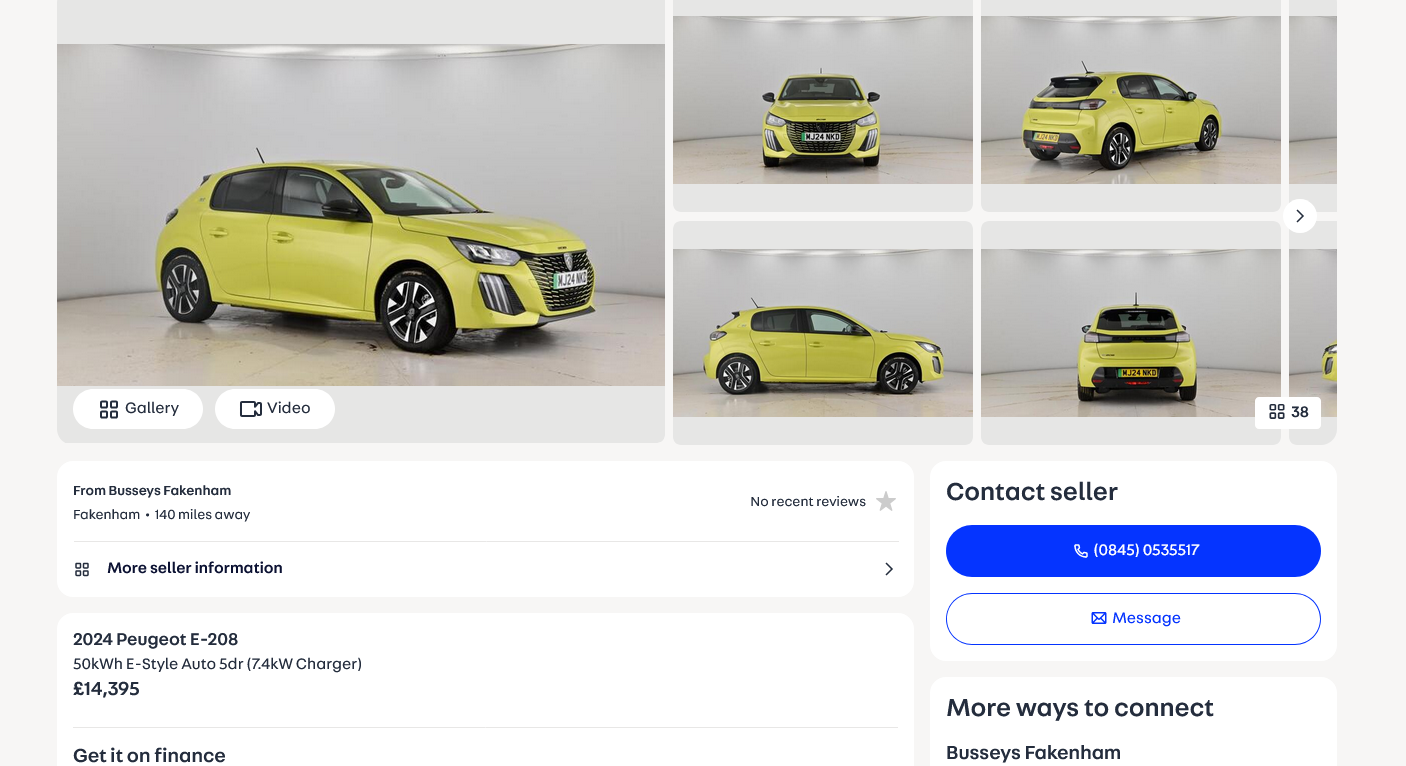
1 pointe-208 @ a good price. Just people need to be aware even though the improved battery capacity still only 48.1 kW usable (previously 46.3) and the 7.6 kW AC max charge speed not 11 kW. Maybe not an issue for many. Stellantis issue still as far as suspension, drop links and crap brake components.1 point
-
1 pointGood in an emergency but i don't think I would lose all my boot space on the off chance of needing to charge at 9-12mph1 point
-
1 point@Graham Butcher 2011- 2025, Millions of public money squandered on Contractors poor performance. That is one way to look at things. But that Is Charge Place Scotland chargers from the 32 Councils and the likes of SEPA. That system is being done away with and SWARCO running the back shop and having the Maintenance Service is the largest area of Scotland. SWARCO will be doing Contracts, but under much closer Scrutiny. So as far as being Stranded without chargers. COMMERCIAL CHARGERS & Providers are providing RAPID & Ultra RAPID chargers, reliable and with Call Handlers that are efficient unlike SWARCO,s call handlers for Charge Place Scotland. I hardly use them because i am tight, do not have subscription so go for Cheaper Charging. But until you plug in you do not know if running instead of at maybe 45 kW they are at 12 or 26 kW with a 40 or 60 min max charging time and a £2 or £5 minimum charge. Or a higher tariff on the 1st kWh. So now for trunk route travel and some more off trunk routes there is TESLA (cheap) Ionity, MFG, Osprey, Arnold Clark, Porsche etc etc. As to Slow known as Fast AC chargers, all around the Scottish Mainland.1 point
-
1 pointFor those planning to live in their current house for many years to come they are choosing the path to go big on solar on the roof and batteries. I am planning to move in a year or so therefore want all my solar generation and batteries portable so I can take them with me. Boils down to what deal and personal finances on the monthly payments and also taking into consideration energy running cost, insurance and servicing. Monthly payment is usually the biggy and stands out as the annoying one. Renault 5 deal felt good as it was on a 0% finance deal and the option to buy I think it going to be attractive at the end of the PCP. Energy running costs are now negligible and I find servicing about half to a third of the cost of my previous ICE cars and my insurance is low and gone down again this year. My Scenic monthly is quite high and I am considering what to do with that in terms of partly paying off the PCP or trying to trade it in if I can get a good price now EVs are in greater demand with the ongoing fuel crisis for ICE cars. I could get a new Scenic for about £100 a month less than I am paying due to Renault lowering their prices and the fact the Scenic, like the 5, gets the bigger £3,750 discount, battery packs now being built in Poland or France, on new buys which will effect second hand residuals of course. My bank, Lloyds, sent me an email saying they could see I was paying Renault finance each month and could offer me a cheap load but it was only 5.7% when Renault did me 4.9% so not tempting. So EV running costs continue to go down and if one does go down either of the two routes to generate and store one's own electricity and use that then it is an option to further insulate one's self from price hikes in energy and fuel going down the track. I choose to continue to develop my "portable" battery storage and portable solar arrays. Could even take portable batteries in the car as Bjorn Nyland does when he does his zero miles test ie run it until completely out of juice, or actually BMS says no more. He is using a pair of 2 KWh Ecoflow units but this area is improving all the time and I think portable units with 3 KWh + output and 4 KWh storage are coming out so carry 8 KWh will become easy. Looking like Q3 energy prices wont be too bad which is a relief and keeps the EV running costs way down, as Elvis would say.1 point
-
This is great info. Thanks so much. I’ll let you know how I get on 😎👍🏻1 point
-
1 pointIs that a Diesel? What gearbox? Best be sure the car is all welI first, serviced, new plugs if a petrol, air filter, running on E5 99 ron super unleaded. looked at your location since you did not say. APR, REVO, and local tuners to you are going to be the 'simply clever' people to use. With a Dyno is a good idea, to know what they actually give you extra with their Remapping. If you get 200 bhp i doubt you will see a Golf with 220 bhp, or 300bhp plus disappear in your rear view mirror.1 point
-
1 pointSo councils / local authorities and particularly in England might be dragging their heals. There are towns and cities that are nor welcoming in passenger cars and parking might be expensive. Hence Park & Rides. There is supposedly a drive to Net Zero and Decarbonising. So the Tories played at it & Westminster played at it and had a morutorium on Wind Turbine in England. There will always be those that are unwilling to change there habits and think driving is the only way. Personally i have been on a bus twice in the past 30 years and never on a train. Been on Trams though and parked and rode. Trams were damn expensive... Even with a Blue Badge parking in Edinburgh City Centre can be very difficult to get.1 point
-
1 point
-
1 pointYes the XLR is very good. I have mine in Race+ - throttle like a hairline trigger. Muuuuuch better. The diesel to petrol comparisons do also flag the torque/power comparison. When I had the car remapped, the biggest difference was noticeable at higher speeds and not throughout all performance. It wasn’t until the intercooler and larger charge pipes made a noticeable increase all through the rev range.1 point
-
1 pointIt is actually difficult to go back to 2WD after you got "pampered" but the more controllable - but certainly also tracherous - all-wheel-drive.... I have noticed the 280 does it best in the mid-upper range of the rev counter. And I now drive it in "manual" like ... all the time 🤨1 point
-
1 pointCould be a failing bearing/ABS sensor/ABS ring or wiring. From memory the car uses info from ABS sensor to work out if a tyre is flat. Maybe worth getting it scanned in case a fault code is stored or if faulty which wheel/wheel sensor it is Alasdair1 point
-
Maybe a dirty poor connection but if the pipe was disconnected it may have affected vacuum operation. Hope its one of those one of faults. Alasdair1 point
-
1 pointI'm also planning to redo the music, I bought a subwoofer under the seat Nakamichi NBF10.2A but haven't had the time yet. Here's a speaker kit if that would help you. Kit for O41 point
-
1 point
-
Thought I'd add to this thread for the next person who might try to remove the trim. Just completed a dashcam with rear camera install on a 2014 Superb. btw thanks for the exploded diagram davidj241 (from 2012). When removing the bottom trim my biggest tip would be to ensure to start prising away from the joint section (where the plastic rivet is) between bottom and top trims. The trim pulls away easiest if you imagine hinging from the boot-lock end, something which I learnt too late. If you prise away from the lock end first (like I stupidly did) toward the wiper then the locating pins in the centre will deform and jar the trim against the upper trim - which is what happened to me. You can free up the clips around the bottom of the tail gate (6 clips), as well as the 2 clips along both edges, but leave the middle ones (under the rear screen) until you have prised apart the plastic riveted section. The best way to visualise is that the trim fits back on easiest by locating the boot-lock end clips first and then hinging from there. Have a close look at the exploded diagram and notice the direction the clip holders near the wipers go. Good luck. John1 point
-
0 pointsI always start and go straight away - I'm not convinced it does any harm - my neighbour on the other hand sits with his Range Rover ticking over for up to 10 minutes before departure, claiming it prevents premature wear........?0 points