


Leaderboard
-
Lady Elanore
FREEDOM16Points25,083Posts -
Gaz
FREEDOM6Points7,889Posts -
AnnoyingPentium
FREEDOM5Points5,684Posts -
Graham Butcher
FREEDOM5Points6,934Posts




Popular Content
Showing content with the highest reputation on 29/07/26 in all areas
-
3 pointsToday I learned... ... My Fabia has TWO off-side rear side light bulbs!!! 😒 Having nothing better to do today (well, nothing vitally important, anyway) I decided to check all the connectors to see if there were any loose wires or corrosion on the pins etc that might be causing extra resistance, since each light cluster was showing a working bulb. Thankfully I started on off-side rear, because, after removing the light cluster and separating the connector, I used a multimeter to check continuity. I looked at the different colours going to the bulbs and saw one that had black and brown wires, which I checked and they were OK. Then I happened to notice that there was another bulb with black and brown wires. I took that one out and, lo and behold, the bulb was blown!! I have no idea why I didn't spot this before when I was checking them, the only thing I can think of is that, having checked one (which was OK), I simply didn't consider the fact that there might be another one. Anyway, I replaced the blown bulb and, Huzzah!, I stopped getting the faulty light warning. So if anyone ever has this issue again and finds this thread, check BOTH bulbs...! 😳3 points
-
3 pointsI've known mine to lock/unlock as I'm washing it if I have the key on me, take the key away though and it stops. The only other time I've experienced this was after my MOT last year, when for a day afterwards my car would unlock itself and the alarm would trigger. Went away on its own though after a day and I put it down to maybe they'd disconnected the battery or something during its MOT and not reconnected it correctly? Not sure. But worth checking on the health of your 12v battery I'd say.3 points
-
3 pointsShowed this to a mechanic friend of mine and he diagnosed it as the OAP (overrunning alternator pulley) bought a replacement pulley for £60, a Sealyey pulley removal tool for £30 and had it off and replaced in about an hour. Would've probably been quicker if it hadn't been so hot! Also had to use a longer Torx bit than the one in the kit as the original (now discontinued) pulley was significantly longer than the replacement. Easy enough to do except maybe a bit of a hassle getting enough leverage with the alternator in situ but, frankly, couldn't be a**sed taking it off! Done about 300 miles since with absolutely no issues and engine sounds sweet. Thanks for the replies and advice 🙂3 points
-
Yes they pulled the plug for good but we did get three more extra years by swapping over from Traffic Master to Inrix. It was useful like yesterday long queues at road works in a rural area. Inrix would have told you and marked up the area.2 points
-
2 points...But that's the whole point of tyre rotation - reposition them before the wear pattern get too set.2 points
-
1 pointThere are no 1.0 TSI Citigo,s in Europe, only South America with a bigger fuel tank. So 60 or 75PS MPI,s. It is a VW UP! to get a Turbo.,1 point
-
1 pointI went London - Gdansk last year and what I learnt. Wheel must be quickly accesible in the boot. Not under floor and luggage. Good to have thick playwood (on the soft surface when jack is sinking) When sticker says 3 bar under heavy load pump it to 3 bar kokosal. Dont be affraid the tyre will blow. The worst is overheating sidewall at low pressure 2 bar and then blow. Torch or LED lamp on the legs is must have. I bought normal factory alu wheel and same size tyre fo 60 pounds and another steel for 40 pounds. New tyre 205/55 16 was 60 pounds. buy normal size wheel.

 1 point
-
1 pointWhen stuck in a never ending spiral, it can never reach an end…1 point
-
1 point
-
1 point
-
1 pointThe point I think the video is making is, are we just replacing one problem with another before we have thoughlly tested things out. Are we just adding another form of pollution while still continuing the former? We will still require oil and plastics, so drilling will still be done. Should we have invested more in looking at ways to scrub the harmful emissions from burning fossil fuels while simulatously looking at other technologies at exploring their potentials? So we don't just lurch from discovering that petrol has major issues, then the same again with diesel, and we already are aware that Lithium has some major undesirable effects etc. The post is not a downer on EVs and praising fossil fuels, it's taking an alternative look at devlopments and questioning everything. Just maybe we should all be thinking this way, because that is how progress is made, it is not made by just following like sheep what a few people are telling us. We need to think outside of the box.1 point
-
1 pointYes, but with the way I drive, that would mean rotating every 1,000 miles. I’m not paid enough to do that!1 point
-
1 pointDepends on the pressure of the more air. Then sidewalls and if XL (Reinforced or not) So maybe lose some supposed sportiness of the handing for more comfort, or roll.1 point
-
1 pointIs generating electricity and using it for transportation while being able to reduce burning fossil fuels like coal, oil or gas to generate it a mistake? Is planning for reducing the emissions of road vehicles and other transportation a mistake? Is letting people just put out as much pollution as they wish going to be continuing within Europe a sensible thing?1 point
-
1 pointMany faults can cause LIMP mode... With 4 YETI's in the family 2012,2015,&2x2016. My bet's on the coil-pack (as long as you've tested the Ignition-Leads & Spark-Plugs are still good). Just be careful that you 've checked your engine model CBZ shown above is the older 105hp & the newer 110hp is usually CYV.1 point
-
1 point
-
Doesnt take much to leak especially exhaust into coolant. Hopefully pressure test comes back good and a new gasket cures it. Alasdair1 point
-
1 pointCould be an ABS wheel speed sensor! when problematic the car goes in to limp mode!1 point
-
1 point
-
1 pointWhat size and make of tyres are you planning to fit to the 17"-diameter wheels? The 18"-diameter wheels fitted as standard to the Fabia 130 carry 215/40 R18 tyres, whereas the tyres fitted when a Fabia Mk4 has 17"-diameter wheels are 215/45 R17. I wouldn't have thought that dropping the wheel diameter from 18" to 17" and fitting tyres that have the same width but a 45 'height' (rather than a 40 'height') would offer a worthwhile increase in pothole protection. For that you'd need to go to something like 215/60 R17, but that would look odd and there might be under-wheel-arch clearance problems with the 130 model.1 point
-
These cars are generally EFB or EFB+. AGM batteries are often only in more expensive, or larger cars (with larger engines that need to be turned over). The SOS unit won’t be a paralytic draw. I suspect the battery is knackered - mine went after three years. I’m very kind to it now and regularly charge it. Get it drop tested at a local garage - don’t bother with Halfords, they’re most often a bunch of clowns, with increasingly fewer exceptions.1 point
-
1 pointIt’s also worth saying, regarding tyre rotation, that this isn’t always possible. My Octavia has standard geometry, but even then, the front camber (at least with the driving it sees) has a reasonably significant impact on tyre wear patterns. I wouldn’t put my fronts on the back. I’ll be getting two new rear soon, and those tyres will be going on the front. The front will be binned. There is a good 4-5mm on the outside shoulder, but I’m below 3mm on the inside shoulder. I’ll probably run them until autumn as the car doesn’t really go anywhere at the moment, and it’s nice and dry.1 point
-
1 pointLiterally anything would be more useful than this. If we’re talking about the subframe bolts, note that these are stretch bolts and should really be changed.1 point
-
1 pointIf you've the time, and facilities, it's worth switching you tyres front to rear regularly (say every 6 - 7,000 miles). Tyre wear varies from wheel to wheel. This maximise the life of each tyre and ensure that the tyres wear uniformly. For uni-directional tyres, it's rears to fronts and fronts to rear - keeping the tyres on the same side. If you've got non-directional tyres you can cross the rears as you move them to the front (OR to NF, and NR to OF), but keep the fronts on the same side as you move them to the rear (OF to OR, NF to NR). As you say "Each to their own and live and let live etc", but you've got to 'live' to achieve that (as do your passengers, family members and other road users!). Tyres are arguable the most important safety equipment on any vehicle.1 point
-
1 point
-
1 pointAs above, generally my fronts wear quickest so when it comes the time to replace them, the rears go on the front and the new ones go on the rear. I want the front to give way first so the best tyres go at the back. Always the same make/model and only ever the 2 on the same axle. That is entirely my choice based on what I choose to believe etc. Each to their own and live and let live etc1 point
-
1 pointIf its any help I have been using comma oil for years from tractor/forklifts to fabia/octavia and many more cars. Never had a problem and it lasts. Generally a reasonable price and readily available. Alasdair1 point
-
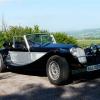
A Dolomite Sprint, just around the corner from my house: Gaz

 1 point
-
Stats suggest the most stolen car in England at the moment is a Fiesta, and in fact the luxury brand cars you expect to get stolen count for much smaller number of thefts. Suggested reading (although article is from February this year) https://www.whatcar.com/news/the-most-stolen-cars-in-the-uk/n211621 point
-
1 pointThanks for the suggestion Travs. The reason that I've posted on Briskoda with a hiatus over the colder time is to do with my health. It has been playing up irrespective of hot or cold weather. Regards R1 point
-
I do have another angle that I'd like to give on this (and it comes from personal experience). If a car thief is determined enough to want your car, then the best way to secure your car is to secure your house. Put all the kill switches, immobilser devices, faraday boxes/pouches you like, if they are determined enough to want the car they'll try and get in for the key, and beat any immobilser code out of you. Before the vRS I had a Cupra Atec VZ1. After about a month with it two masked guys tried to break into the house for the keys. We have anti-snap locks fitted to our house and they gave up as soon as they realised they couldn't snap the cylinders off. About 20 minutes later a Golf R Estate was stolen from only a few hundred metres away from a house without anti-snap locks. They were in and out within seconds. If you have a vehicle with KESSY like we do, the best security for your car is security for your house.1 point
-
1 pointIf yours is 1.9tdi BXE engine or similar there is a black plastic vacuum valve on EGR cooler at rear of engine below/near EGR valve. My old Seat with same engine used to put EML on and code was insufficient flow. I cleaned EGR but randomly would still come on. The plastic valve was sticking. looks like this It could also be the egr cooler is choked. I also had problems with random warning lights coming on and no codes and it turned out to be cluster needed removing and contacts cleaned then reseated. Worked it out when DPF light came on and theres no DPF. Alasdair.1 point
-
0 pointsYou're doing a pretty fine job of misrepresenting what I'm saying. I never said that we are doomed or anything like it; this is you misunderstanding things. Correct me if I'm wrong, but you do have an EV and also a BEV, so what is it with you? Having a foot in both camps rules you out from being a green warrior who never misses a chance to point out to anyone who will listen that BEV is the only way of cleaning up the environment and saving the planet. I have said that as an electrical engineer, I have a greater understanding of electricity than a lot of people, and by the same token, being an engineer, I don't suffer from a closed mindset. I remember one of the professors at college telling us all that it is only when you begin to learn something and you gain knowledge that you actually realise just how little we actually know. He went to explain just what he said actually meant, which was that the true engineer does not just accept what he has been told but wants to learn more about why something behaves in a particular fashion. What if we change the circumstances? How does that behave then and so on? This is how discoveries are made and modern inventions have evolved from true engineers. If no one questions the status quo, nothing changes, and that is why we are not all still walking, cycling or horse riding; someone thought differently and tried something. Anyway, back to the hydrogen topic, all I actually said was, "Well, that's a possibility, but that too has serious complications in its use, storage and can be extremely dangerous when things go wrong, plus it also consumes massive amounts of energy currently to produce it." All of which I said is 100% true; it does indeed offer great potential. For a start, it is extremely plentiful; it is the most plentiful element in the universe. It is currently the most difficult one to handle and control; being lighter than air, it has to be bonded to something else to keep it from floating away. Hence, water is the richest source of it. Its atoms are so small that they can escape through most materials, so it has to be stored either at extremely high pressures or at extremely low temperatures, both of which make it difficult to store and also consume more power to store it. It also demands tremendous amounts of power to separate from water, making it overall less efficient than other means of energy. However, once those problems have been resolved, it is a very clean energy source, as its byproduct is water. So to recap then, I never implied anything about its fire capability or that we are all doomed, merely pointing out that it is one possible solution, but it is not currently at a stage for mass adoption and is not without its own significant problems.0 points
-
0 points^^^ Here we go again then Fire Danger. We will ignore the lack of reported issues where Hydrogen is already produced and used for Transportation on land and at sea. So lets do nothing then. Stay as we were. Waiting for the new technology. In less than 6 posts we are back at being doomed! PS. Have you notices @Graham Butcher how much wasted electricity generation there is now in the UK as not enough storage or transmission capacity and even though Wind & Solar in Scotland can produce many times more electricity than the National Grid wants or can handle? The BEV,s used as a means of Storage for excess production is getting no place fast. Have you noticed the cost of liquid and gas fuels due to matters around the world? Hydrogen Hubs for Low Carbon Transport are still being planned around Scotland.
 0 points
-
0 pointsBlue sky thinking out of the box, maybe while taking psychoactive drugs. Lets hurry up and develop these nuclear powered vehicles & until then ban all cars for personal use. No point rushing into things.0 points