.jpg.f3785e57441e9f8c93a0ec812c4445c7.jpg)

D.FYLAKTOS
FREEDOMLite
-
Joined
-
Last visited
Everything posted by D.FYLAKTOS
-
Amazing ! https://www.briskoda.net/forums/uploads/monthly_2023_05/64297cb0-b348-46f7-a2d6-7564acf124d1photo.thumb.jpeg.1ba8083cd3c3712791494788c35050cc.jpeg A fuse box wouldn't be better? Moisture,rain etc can cause you problems.
-
Beneath that cover are 2 relays, open it remove them and spray with contact cleaner (with No Oil). In the past one of these relays caused me problems, the 1st day made a delay for the radiator to start and the 2nd day didn't let the radiator start at all and i had an overheating.
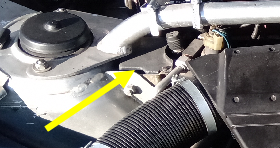
-
Why would you want to make your car a "lab animal"? The Brake Fluid Is Black: What Does It Mean? If you open the car’s brake fluid reservoir and you notice black or brown fluid. So what happened to your car? We’re sorry to say that black brake fluid is a sign that your fluid is highly contaminated. When this happens, the braking system’s ability to pressurize is reduced and brake performance may be affected. Besides, black brake fluid means that the rubber gasket has deteriorated and the liquid in the tank is too old and needs to be replaced. In fact, it turns out that brake fluid contaminants are attacking the rubber seals and washers. The black color in the liquid is the carbon particles from the rubber pads. Why does brake fluid turn black? Many drivers said that black brake fluid is caused by its age. It’s a true opinion. Like other fluids, the brake fluid will degrade after a long period and it needs to be replaced. After a while, your brake fluid will accumulate enough contaminants and cause the color to begin to change. This changeover will change from clear/yellow to a darker yellow, and when brake fluid is brown or black, this can seriously affect the braking system. Inside the brake system is the brake fluid tank. From this reservoir, brake fluid travels its way from the cylinder to the car’s wheels. If you frequently step on the brake, the brake fluid will get contaminated faster. And even if you don’t drive as hard, as its feature, your brake fluid will still build up contaminants over time. The second cause of discoloration in brake fluid is the deterioration of some parts in the brake system such as rubber brake lines, the gasket on the auxiliary cylinder, or the wheel. Because brake fluid is corrosive. Even though brake system components are designed to resist such corrosion. If not serviced or cared for properly, these parts will show signs of wear and tear. At this time, the microscopic pieces and soot of the rubber will follow the path to penetrate into the brake fluid. Discoloration as well as reducing the effectiveness of the fluid. https://carfromjapan.com/article/car-maintenance/brake-fluid-is-black/
-
From another source. VW SKODA TRW Wheel Brake Cylinder BWD268
-
So let's read what the Mini Cooper drivers (not Americans) say about it: https://www.theminiforum.co.uk/forums/topic/275028-dot-5-brake-fluid/ Among them:
-
https://www.corvetteforum.com/forums/c3-tech-performance/4724682-help-finding-seals-compatible-with-dot-5-brake-fluid-please.html Selection of EPDM Elastomer in Brake Hose Application for Improved Brake System Performance https://www.sae.org/publications/technical-papers/content/2010-01-1885/ Here is a ''study'' ,Rubber fluid compatability reference https://www.parker.com/content/dam/Parker-com/Literature/O-Ring-Division-Literature/ORD-5700.pdf I don't know if Model: Škoda Forman LX - W/LPG Year: 1993 has EPDM.
-
Strenghts: 1) It has a high boiling point since it does not absorb water. Therefore, there's no so-called wet boiling point. 2) Doesn't absorb moisture. 3) Doesn't remove paint. 4) The viscosity is more stable over the extremes of temperature. 5) With the exception of some formulations used in external boots, silicone brake fluid is compatible with all standard brake components. Drawbacks: 1) It's hard to pour without entraining air bubbles-hence an application will generally have a softer, spongier pedal feel. 2) It doesn't absorb water, so any water already in the system accu-mulates in the lowest point of the system and stays there, causing rust. 3) Glycol fluids begin to compress near their boiling points, whereas silicone fluids begin to compress at around 300-350 degrees Fahrenheit. 4) Additives in the fluid can vaporize at comparatively moderate temperature, increasing the spongy feel. 5) Silicone fluids expand significantly when hot. 6) Silicone fluid is functionally incompatible with systems that have held glycol-based fluids for any length of time, requiring flushing and seal replacement (there are counter opinions on this, which state that the modern silicone formulations are in fact compatible with only a flushing, rather than a complete reseal). The actual DOT specification requires chemical compatibility, so as far as that goes, the two fluids won't cause reactions if used in the same system, but they certainly won't mix, either. 7) It's pretty much incompatible with anti-lock brakes because the silicone fluids tend to be more viscous, which can cause problems with the timing of the pulses that are intended to work with the thinner glycol-base fluid. This sometimes leads to damage of the ABS valving. The rapid pulsing necessary to anti-lock functions tend to cavitate the fluid, as the tiny bubbles collapse and coalesce into larger ones, and then collapse and reform into smaller ones. This tends to counteract the ABS effect and can diminish the actual effective braking. This condition also heats the fluid and can lead to even more sponginess and possible damage to the ABS controller. Thirdly, silicone brake fluid tends to foam when expressed from a small orifice under pressure, reducing its hydraulic effectiveness greatly. https://www.jalopyjournal.com/forum/threads/whats-the-negative-of-silicone-dot-5-brake-fluid.185724/
-
Few months back i changed the brake fluid, one mechanic insisted that the systhem ''pump-start draw of old fluid-simultaneously add new fluid-after a while the whole system has the new fluid with no bubbles'' is ''new'' and ''better'' than other ways. I never convinced that this kind of flow can remove any remains of air from all the system. I said ''NO'' and i left, i went to another giving him strictly orders to do the change with ''Old fashion way'' which means 2 person, one is pressing many times the pedal and the other degassing etc.
-
I am not sure that @R_Blue has car with ABS Model: Škoda Forman LX - W/LPG Year: 1993 I have seen it in the Army, the previous driver (soldier) mixed Hydraulic oil (red colour) with other and the final result was something like beige. Every NCO was pointed this to us plus everybody cursed that soldier for what he has done. The door was working but it was a matter of time before they ''flush'' that mix and replace it wirh the proper (because everybody knows the concequenses if something is broke). DOT 4, DOT4 racing, DOT5.1 yes but DOT5 for us here means ''Military'' mainly https://dot5brakefluid.com and not every day use for moder cars.
-
I wouldn't take that risk, the Dot 5 must not mixed with Dot 4. Can you "flush out" perfectly the whole system from Dot 4 before you turn to Dot 5? I wouldn't make my Felicia as "test animal" just to save some money from brake fluids changes. Is there a quarantee that your Dot 5 will last as long as you have your car? I am saying that because i have heard about "lifetime" and "no need to change them" steering wheel fluids even for coolants.
-
Are made from Brass?
-
D.FYLAKTOS replied to Seanconsidne's topic in Skoda Favorit, Skoda Felicia, Skoda Fun and Skoda FormanA relative thread about a pickup restoration in the same area.
-
If it's a warm day, high rpm for long time, load in car etc so what's the problem for the radiator to work for at least 45 seconds for few times when the temperature is 95 'C ? This shows that the engine is ''pushed'' a bit. The bad thing is when the radiator works for may minutes without stopping.
-
You could paint the calipers with another ''fancy look'' colour (heat resistance). They look good with the (aluminium colour) rims.
-
Some times my english don't help me, for sure it has as i show it. It happened to me few years back, i had a ''squeaky noise'' in national way only, not in city roads. The problem was on the base of the square wire, by mistake i had put in the past some silicone oil inside the ''nest'' and in high rpm the wire was trembling. Another time that white (like Teflon) clip wasn't secured 100% (it's twist and click procedure) and i had a noise that something was ''coordinated'' but when i removed the panel both of these problems solved.
-
Maybe a plug problem, not proper contact or a pin has corrosion of damaged cable.
.thumb.JPG.a21c9dd495a36885e9633df02b52baea.JPG)
-
Coolant level is OK? Have your mechanic made a ''pressure test'' to see any leaks?
-
4 piston calipers fit to them?
-
Skoda 105 120 130 135 136 front brake calipers left right NOS https://oldtimer-shop.eu/wp-content/uploads/2021/11/1446-3_3.jpg https://oldtimer-shop.eu/wp-content/uploads/2021/11/1446-3_1.jpg
-
The General Purpose does not works all the times, the rust can be removed with Vinegar or Coke (when the object can be submerged) or a Rust Penetrant product or desolved with Paint Remover (Spray or Gel). If you don't want to use torch use a powerful Heat Gun in the second scale (1800 W and 650 'C).
-
You are right but a standard air filter box (02:27) can work even with a turbo 195 Hp Although some guys do it different (01:26)
-
I don't think that he is going to do a ton of job and then sell it, who's gonna buy it except if it's a ''crazy'' guy which likes something ''unique''? Privates sometimes buy project-cars but only if they have the knowledge, car sellers very often refuse to buy them and many times make derogatory comments because: 1) they don't know 2) they trying to lower the price too much. Many Americans spend even 2-3 years building a car (usually Muscle Car) but "it's for Lifetime'' as they say.
-
I use this when it's time for extra ''outside'' fuse, no problem with water-dirt etc. After many-many tests with many kinds of air filters-POD's (sponge-gauze) etc i returned to the factory air box with K&N filter with the tube that brings fresh air inside from the grille. With all the other patents i had noise plus hot air from the engine bay to ''feed'' them.
-
Skoda Favorit custom dash cluster I have also found this: https://phexsys.rajce.idnes.cz/Katalog_grafiky_-_Felicia/ Here are some other for Felicia. https://phexsys.rajce.idnes.cz/Felicia_gauges/ Do you like them?
-
No swap engine. https://www.skoda-storyboard.com/en/press-releases/skoda-felicia-kit-car-1995-the-next-chapter-in-an-international-success-story/ The most significant changes compared to the production car were under the bonnet: When ŠKODA MOTORSPORT was developing the ŠKODA FELICIA KIT CAR, the team not only had the tried-and-tested OHV engine with a capacity of 1,300 cm³ at its disposal but also an engine with a higher 1.5-litre displacement. It was with this engine that the car was ultimately homologated. Twenty-five years on, the outputs of 136 and 156 hp may seem modest, but the engines were both reliable and light. Since the competition at the time mostly opted for two‑litre four‑cylinder engines, the cars from Mladá Boleslav and their drivers truly had their work cut out on the international rally circuits. The specialists at ŠKODA MOTORSPORT used the technology of the time to its full potential; the engine’s pistons and crankshaft were forged, it featured OBR multi-point fuel injection, Bosch injectors, Jenswey throttle valves, Champion spark plugs and specially designed sports catalytic converters that did not reduce performance. In Mladá Boleslav, it became clear that the vehicle needed a more powerful engine if it was to be a regular winner in its class. Thanks to the brand’s existing affiliation with the Volkswagen Group, the designers were able to use an OHC four-cylinder engine with a 1.6-litre displacement and multi-point injection, which also made its debut in production vehicles with the winged arrow at the same time. Volkswagen itself had never used the engine in racing, so ŠKODA MOTORSPORT in Mladá Boleslav was almost entirely responsible for developing it. The pistons, connecting rods and crankshaft of the cast-iron four-cylinder engine were forged, and a new camshaft was used for valve timing. The resulting output of 174 hp meant an increase of eighteen brake horsepower compared to the heavier 1,500 cm3. The greatest advantage of this engine, however, was its wider power band.



.JPG.62bd931d0e20e220197f43d31ceb4725.JPG)