
R_Blue
Members
-
Joined
-
Last visited
Everything posted by R_Blue
-
Did you forget this? Actually inspired by your work.
-
Oh no! HGF repair work was my first topic in the forum. I did it very carefully and adhering to every rule. I used new bolts, best quality head gasket, even my torque wrench was new. The head surface was professionally machined & cleaned. The car had never overheated after that work. I made it 100% guaranteed to not to happen again. Upgraded radiator (Felicia 1.6), top notch coolant diluted only with distilled water. To properly monitor the system I have replaced the temp gauge with a digital one which you can read exact temperature values. Also it has a warning feature. (For coolant overheating but that never happened). I wasn't expecting a HGF in at least 60K Kms. I also did a lot fine tuning the engine. Especially the ignition. Now the car can maintain 110-120Km/h on highway. (With LPG) There is no white/blue smoke. Oil on dipstick is very clean. No coolant loss. No oil in coolant. I hope it's not HGF. You are right. Very close. Good idea. I was going to check valve rocker clearances. When the valve cover is open, I'll try that but with only using a little force. I don't to break a bolt head now. The oil bubble on the surface is spreading very slowly. I think there is a tiny cavity between the layers of the head gasket. The oil might be leaking with capillarity rather than direct internal pressure.
-
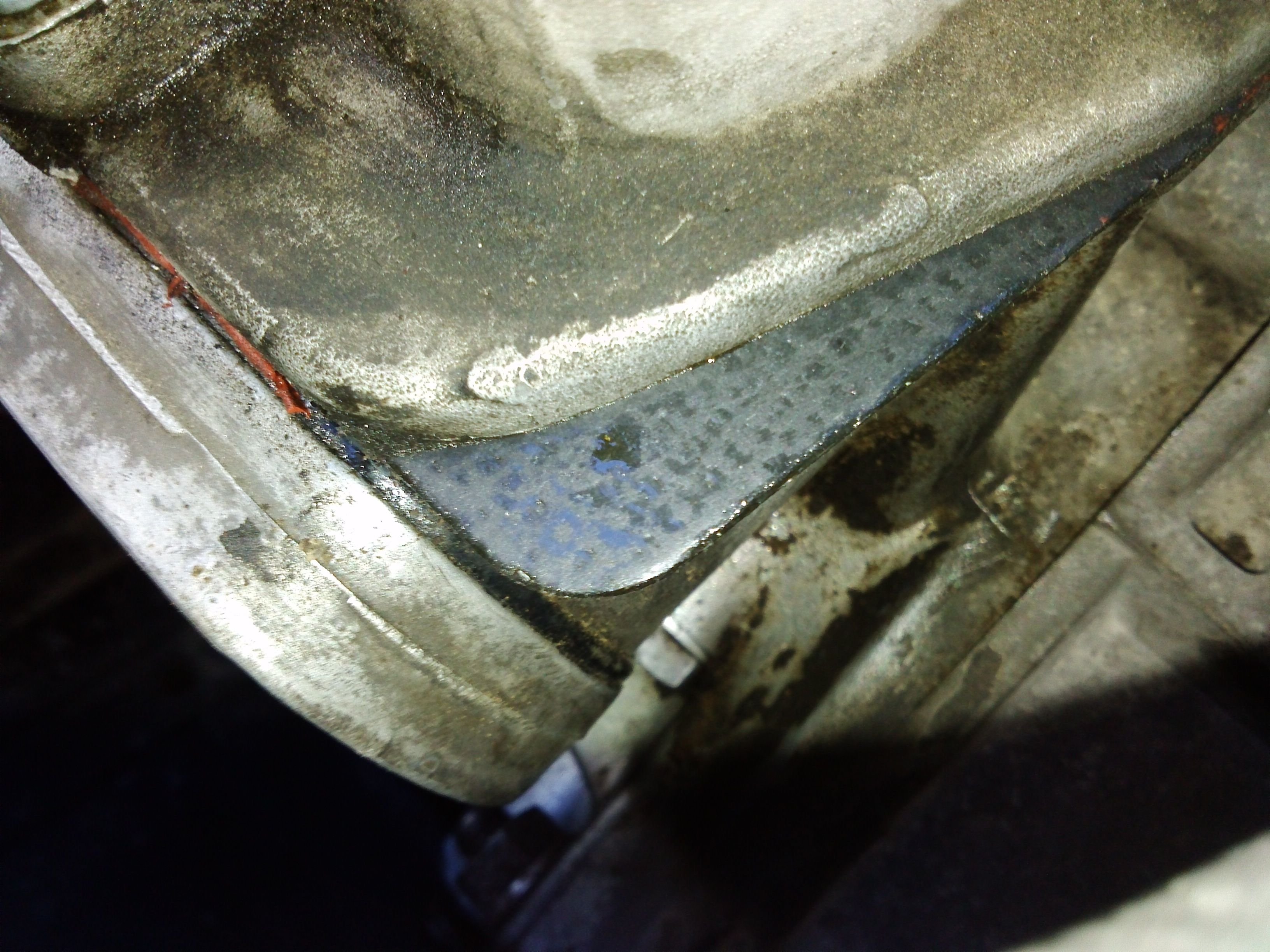
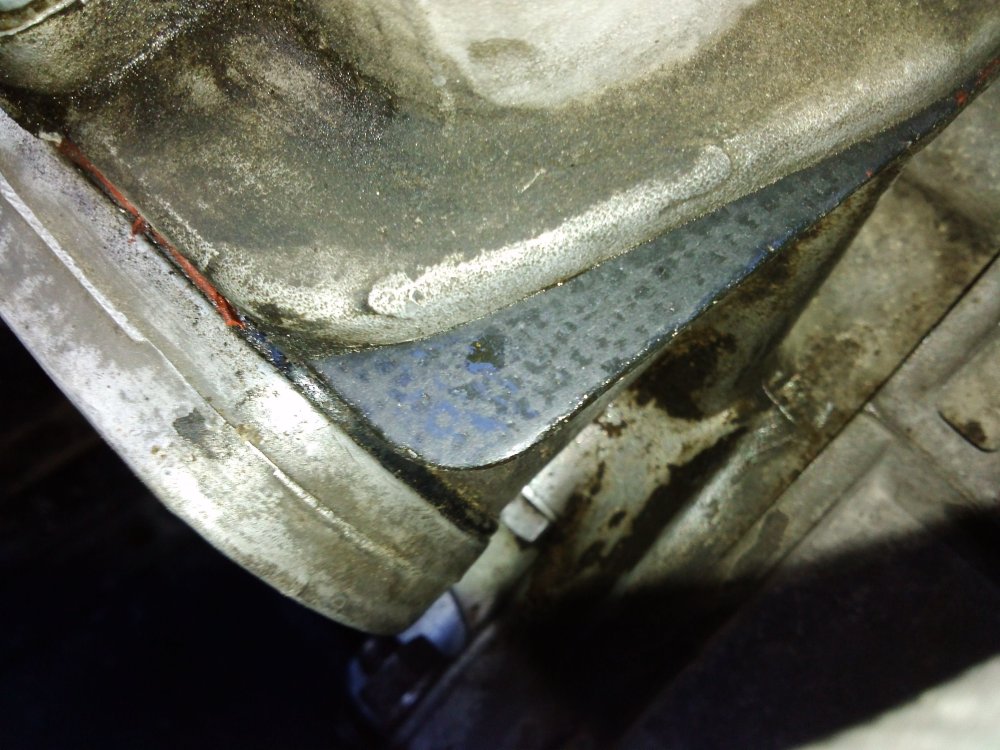
I think I've found the source but you won't believe it. I started to clean oil contaminated areas to check for new leaks. I've also replaced oil pressure sensor washer, cleaned the area around it etc. I started the engine to see if there was any leak around the oil pressure sensor. There was none. After I stopped the engine something peculiar drew my attention. That's what you see in the picture above. A small isolated bubble of oil on the head gasket surface. I checked and made sure it's not dripping from above. I wiped it and started the engine again and watched the area closely. Oil is coming from inside of the very head gasket itself. WTF? Is that even possible? The oil bubble starts as a small dot, and continues to spread on the area. It's just like there is a cavity inside the head gasket and somehow pressurized oil finds its way to this exit on the surface. Is that technically possible or am I imagining things?
-
Thanks to @D.FYLAKTOS there is a picture in one of the links. You can see the retaining plate in the picture above. You slide it away from the speedo cable and pull the cable upwards. Sometimes the drive gear stays inside the gearbox. Under normal circumstances, you can pick it up easily using your fingers. From what I've read from previous posts, some users try to undo the speedo cable by twisting it. That's the wrong way to remove it. Because forcing the cable causes the drive shaft to strip the gear's center causing it to drop inside the gear box. @RicardoM says, if it's plastic, no problem but if you drop a metal gear inside of your gearbox, the car is out of order until that gear is removed from the gearbox. Don't worry if you somehow damage and drop it inside the gearbox. (PLASTIC ONLY!)
-
Could you add a picture please?
-
Thanks! Good to know.
-
Wow! That's looking good. I'd also apply some black silicone sealant to cover the gaps between rubber fittings and the plastic hose. Good work. I'll probably use your design. Mine is completely destroyed. 😞 Wrapped with electrical insulation tape.
-
That's great news! Good idea. So this was all because of the worn metal bar at the rear left side? https://skoda.7zap.com/en/cz/favorit+form+pickup/fav/1990-107/6/609-609000/#7 No:7 ?
-
@zeka95 Let us know how it went.
-
@zeka95 From what I've found browsing the web, inline rear brake limiters are not specific for our cars. The are other cars from the same era that use inline brake limiters. I've found some other users complaining about rear brake bias problems. Inline brake limiters, (I mean this part: ) have internal moving parts, o-rings and springs. I've found out that local mechanics "fix" this by removing rear brake limiters and making a direct connection to the master cylinder. The easy way to make it in our car is, buying a new master cylinder intended for Favorit pickup. Please, check this picture carefully: This is from my car and you can clearly see the brake lines are connected directly to the master cylinder. The master cylinder is a Favorit pickup model. Please check this message here: From what I've learned, when there is a problem with in-line rear brake limiters that could not be fixed and a replacement is not available, mechanics do this fix. I don't know how rear breaks react with these limiters. Maybe the "lagging" you described is the normal operation and the other side is acting faster than it should, thus creating the bias defect. - Be absolutely sure there is not any air in the brake lines. - You can always check rear cylinder for defects. They are basically two pistons placed opposed to each other, sharing the same tube. There is a spring in the middle. The outer rubber boot is holding the pistons in their place. The pistons should move smoothly in their place. Signs of friction means, corrosion in the tube. - Check the back plate! It's not just for protecting the rear brake parts. It is also an anchor point for inner mechanisms. If it's bent, rear brake problems may arise. - Try to remove and try to check inside of the brake limiters. There are o rings and springs inside. If they are damaged, this will affect rear brake balance. - As a last resort, you can buy a Pickup master cylinder and connect the rear brake lines directly to it. This setup was on my car when I bought it. It didn't cause me a trouble so far but this is a Forman. I have an additional permanent weight too. (LPG tank) On a lighter Favorit, disabling brake limiters may cause trouble. Rear wheel lock when braking may cause you to lose control of the car. Do this only as a last resort to pass the MOT. (If your MOT rules allow this. Are they only controlling brake power difference between wheels?) Try to find an alternate solution for limiting the rear brakes after the MOT. (Maybe beam axle controlled limiter from Felicia?) I checked for the older rear brake setup. The mechanism is different but they are also "self-adjusted". You can only adjust hand brake bias from the bottom of the hand brake lever. I must remind you that, I'm just a normal car owner like you. @RicardoM is the master mechanic here. Maybe he can offer more if he is not busy. As a last note, please be careful. Brakes are very important for your and other's safety.
-
This is my first car. For example, I know what is a vehicle snorkel is. (There is an example on the Land Rover picture above) The air box extension in our cars is going into the front bumper for fresh cold air. I knew, if water reaches bumper level, that means wet air filter and immediate engine stall or worse, engine sucks water and gets hydro-locked. So I thought, if I find myself trapped somewhere that I have to go through water which is high enough to reach bumper level, I must disconnect the air box extension first to make air intake higher. But this is a simple knowledge. What you wrote above is a well written, detailed, in-depth explanation that gives you a live experience feeling when you think about it. Which is very valuable for me.
-
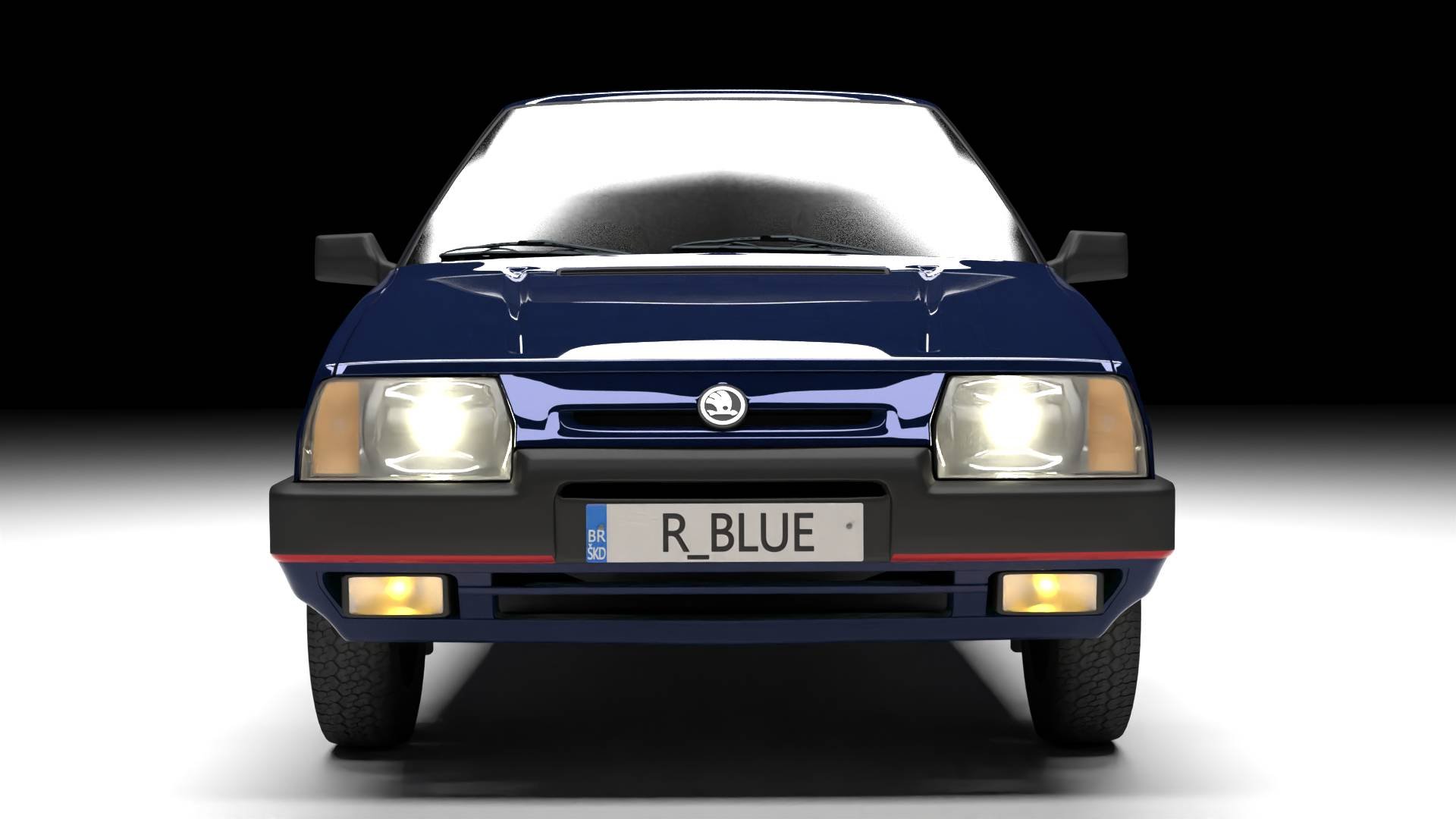
This is my car's color but there are two codes here. Are they the same 4690 and 4710?
-
@nta16 This was my first flood experience with a car. I have no one around to show me the ropes. I keep every advice as a precious gem. Thank you.
-
@Papez is right. You'll need whole beam axle from 93 and above cars. Also you will need new stub axles to begin with. Brake balance issue is a real pain in the a**. Because after every time you disturb the brake fluid in the lines to make a change you have to take the air out. After testing and replacing something all procedure starts over from the beginning. If I were you I'd check brake lines going to rear for visible damage. The brake lines can be easily crushed if you drop the car from a curb. If you can't find visible damage, start testing from the easiest and cheapest parts. That being the rear cylinders. You mentioned: You mean rear right is acting late even after the cylinder change? There might be a problem with inline brake limiters attached to the master cylinder: Before buying anything, you can test them by replacing one with another to see if the problem shifts from one side to the other. Remember, every time you make a change on brake lines which compromises brake fluid sealing, you must bleed the system properly. Also don't buy expensive parts until you are %100 sure that you have found the faulty part.
-
I'll update this when I find more clues about the issue.
-
I think @KenONeill is referring to this: Quoted from: https://www.mgownersclub.co.uk/mg-guides/saloons/mg-metro-turbo
-
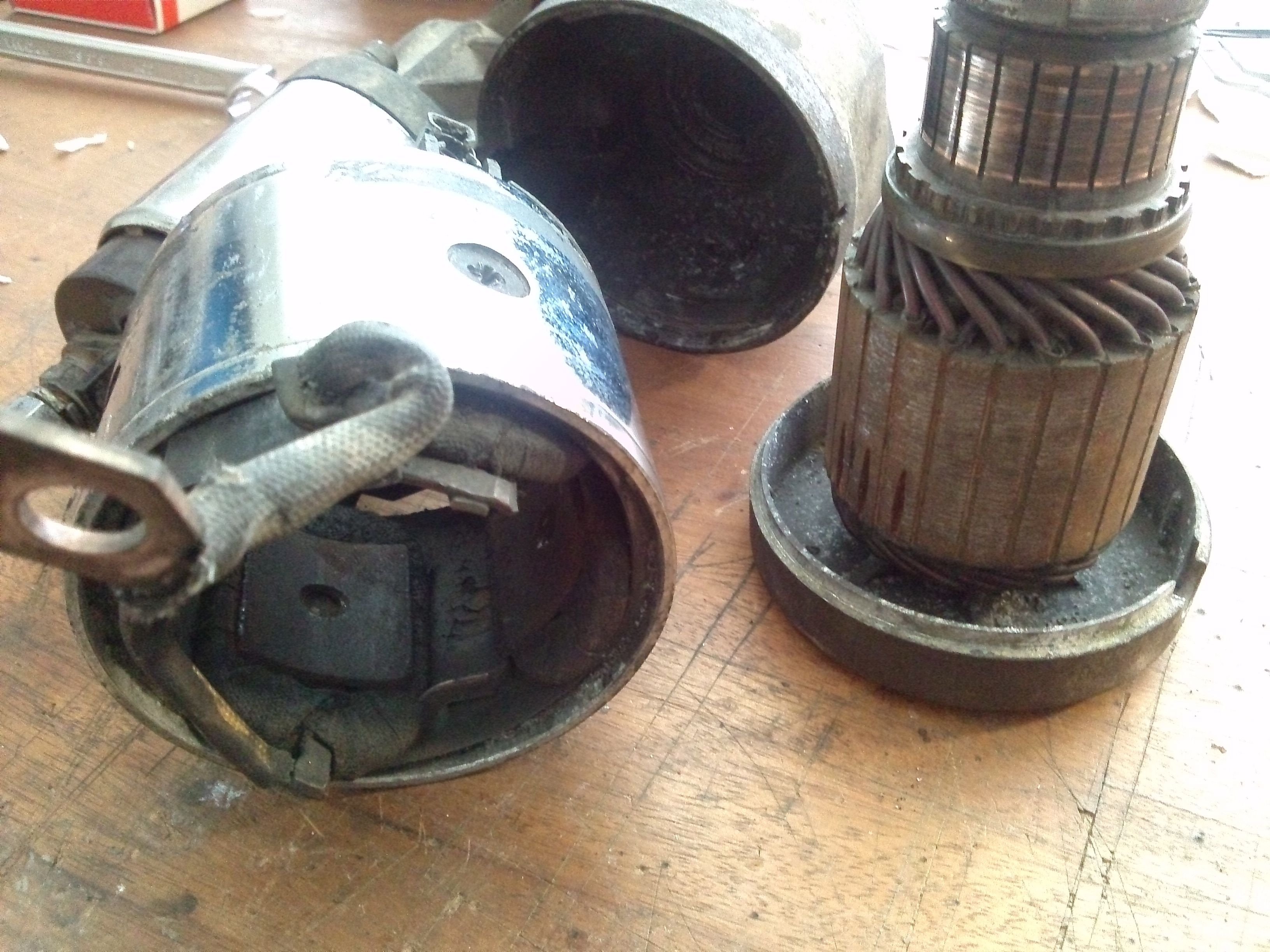
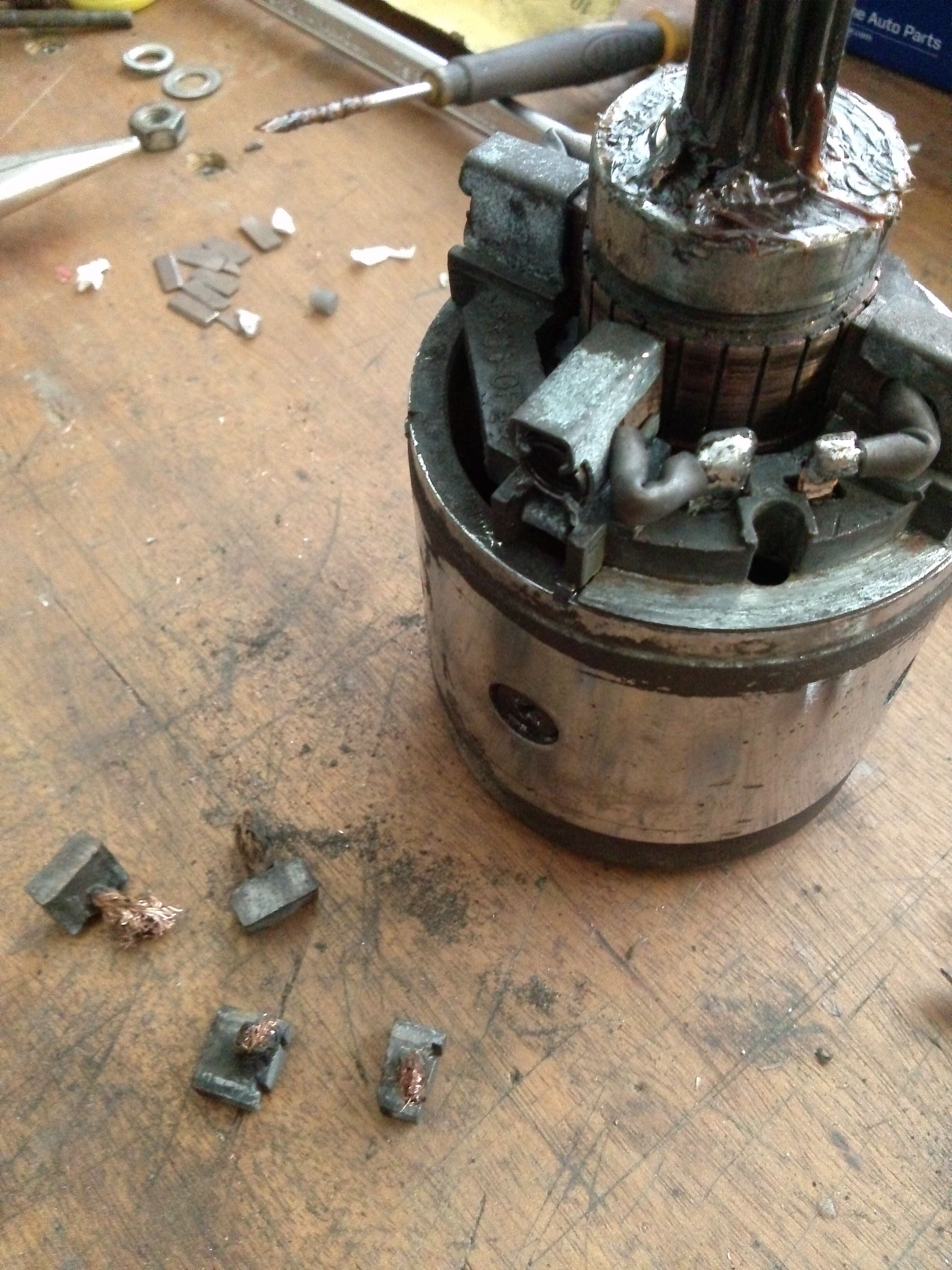
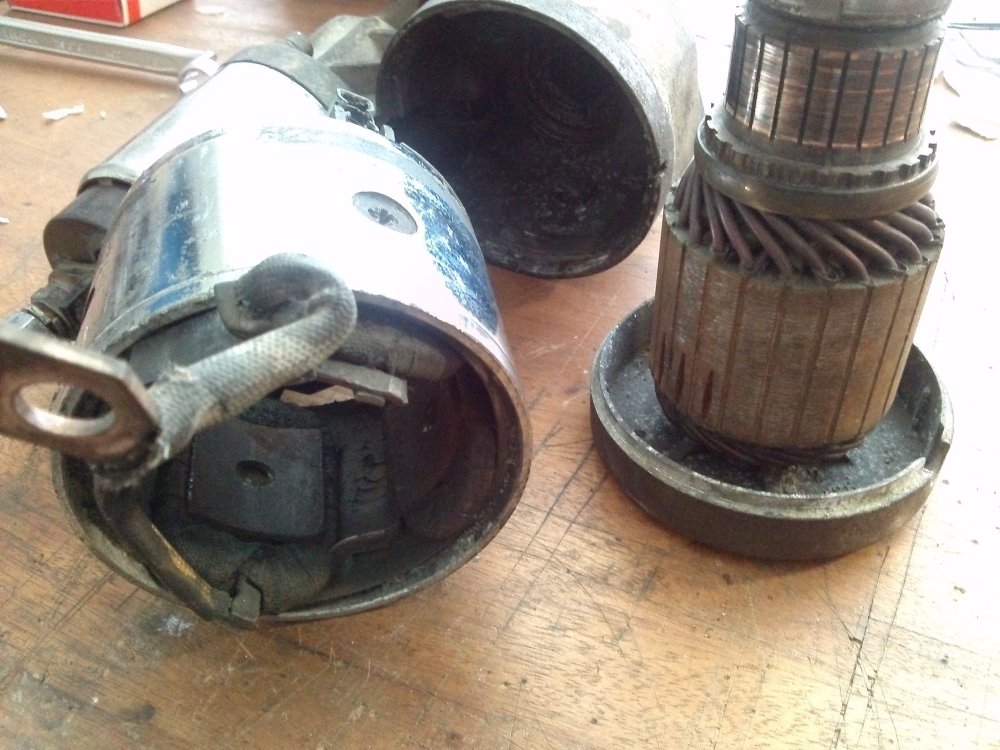
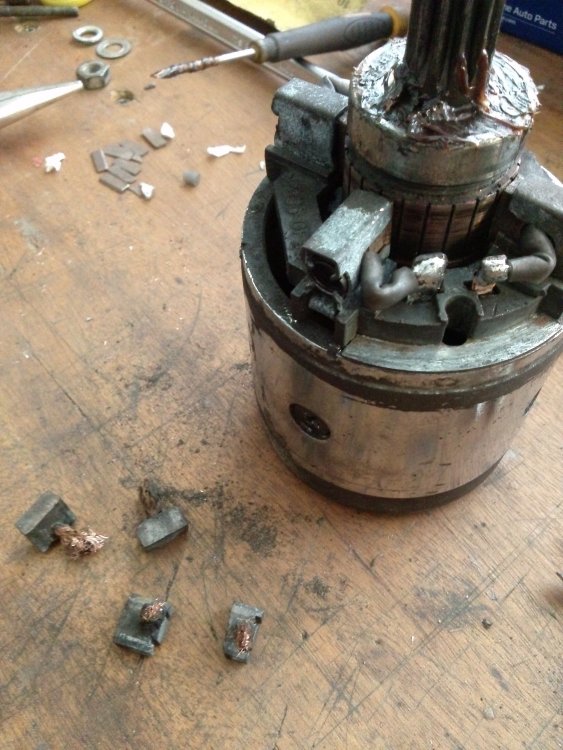
This topic is becoming like a checklist for engine bay safety. So, I saw your well pictured engine bay problems and raise it with a fresh video. This happened last week: Result is: Abnormal level of rainfall happened last week. Ordinary roads turned into rivers. Many cars were stranded on the roads. I had to take the car out that day. I used the most unaffected roads but I couldn't escape all. The starter motor was working after the water riding but it sounded strange. Next day, it wasn't working. I had to push the car to start it. Engine bay was pretty dry and had no sign of water residue but after removing the starter motor, I had my SURPRISE. It was filled water. 😞 It took the weekend to clean, dry the whole starter motor and change the fouled carbon brushes. This starter motor is a Felicia 4 brush type. Probably you have something similar. Opel Corsa 4pcs. carbon brush set fits after cutting from both edges. Code Rx120. High power solder iron is needed. Fav. based vehicles have their engines placed low. This is good for lower center of gravity and handling but try to avoid water bodies at all costs. Even seemingly not so high water could get into your starter motor. 😞
-
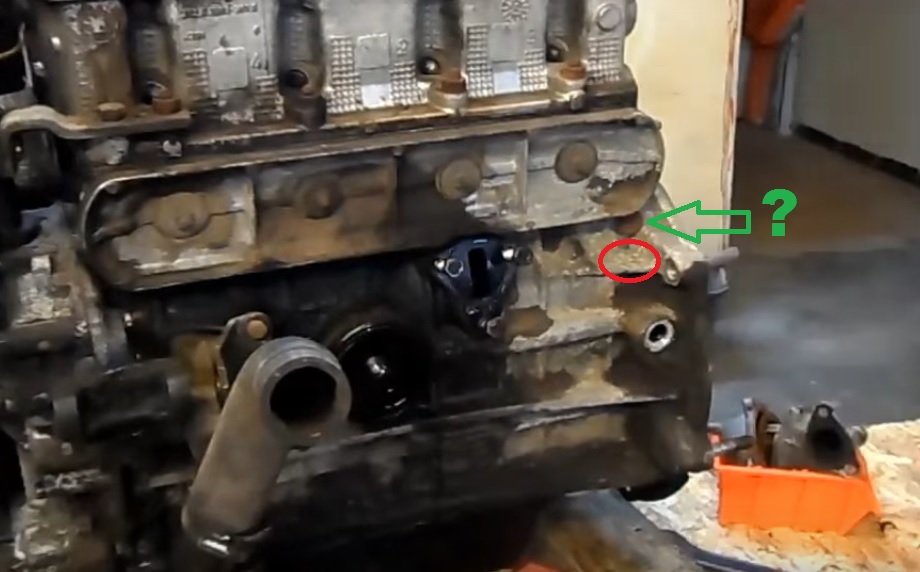
@D.FYLAKTOS , @Papez , @nta16 thanks for the info but that means bad news for me. I'm sure there is oil on the surface. (Red circled area) I wipe it and it comes back. Is it possible to have a crack on the engine block? Should I worry?
-
It is always fun and interesting to discover how the engineers overcame the challenges of their time with unique designs which are forgotten now.
-
Could you please explain what is the purpose of the bolt pictured above? (Marked with green) I have oil in the red circled area. I'm %90 sure it's coming from that bolt. I have a new cam cover sealing rubber. I've installed it using liquid gasket too. I also have new cam cover nut seals too. Can I remove that bolt? Is it holding something important inside? Or maybe is it a plug?
-
I dug this too sometime ago. From what I've heard, some people had used low pressure small diesel turbos for this engine. Like from old ISUZU pickups from 90s. They say those turbos are cheap too. Also, from what I've heard, installing a turbo ON a carburetor wouldn't work. So they were installing the turbo between the carb. and intake manifold, using custom made adapters. So the turbo would suck from below the carb. They call this Alpine style. It is claimed that all this work is done over standard manifold and carb.(with adjusted jets) for minimal cost but take this with some salt because I've never saw a picture or any other info about this. Just someone's words.
-
A very explicit explanation. I hate when mechanics act like that. A Škoda mechanic may know everything about every Felicia but not every small detail and habits of your car. You know better how your car drives, what sounds it makes and how it behaves under certain conditions. If some thing is out of ordinary, you'll notice and they should listen to you. So, people who have tow bars could forget its presence when making parking maneuvers. Never thought about that. That's good to know. Your Trusty could suffer more severe damage from a protruded jeep towbar. They make it longer on SUVs which carry external spare tire behind. That can really cause severe damage even with a light "touch". People should remove their tow bars when they are not in use. I also don't understand why everyone wants SUVs nowadays. %99.9 of SUVs on the roads today never roll on the dirt other than, maybe, one side of a narrow patio. They carry around all that extra weight around without a logical reason. Back in the time I remember seeing true off-road vehicles covered in mud. I mean true off roaders like a Land Rover Defender. Back in the time those vehicles were owned and operated by people who really needed them. The people who lived in rural areas or who had to work in the field without proper roads. I remember Camel Trophy too.
-
and I didn't buy an in-line sensor housing after reading that. You possibly saved me from lots of trouble.
-
Me too but thanks to your informative post about your own experience, I'll secure the cap too. In my engine setup, the thin hose exiting near the oil cap is connected directly to the intake manifold. I thought this thin hose's duty is directing sump area gasses to the intake manifold. Maybe its different in MPI setup? Another lucky day. 🍀 I find first hand experiences very informative for taking preventive measures. Your posts like this make me wish you had a Felicia with a carburetor.
-
It is mentioned in here: It was a part used in one of the highest BHP 1.3 naturally aspirated Favorit engine. Good find.