Leaderboard
-
MikeTheThinker
FREEDOM35Points8,538Posts -
AnnoyingPentium
FREEDOM21Points5,684Posts -
skomaz
FREEDOM15Points11,421Posts -
.png.391eb0542b140436ebc57f3e50f692a4.png)
Rustynuts
Resident Member13Points6,232Posts




Popular Content
Showing content with the highest reputation on 08/11/21 in all areas
-
5 pointsAfter 4 years with EV, I don't think range anxiety is a thing once you get to know the capabilities of your car. But public charger anxiety is real: is there one working, is there one available, have I got the right app, etc. So I agree, an ICE car is still needed for longer journeys just because EV efficiency drops at high speed and the poor public charging infrastructure. Everything else about EV ownership is brilliant. I think range extended (via ICE or other means) EV make a LOT of sense. As transitional vehicles while the infrastructure catches up. (NOT PHEV's, it has to require plug-in and has to be electric motor driven only to make sure the car is used as EV majority of the time) Eg. a 50kWh EV would cover vast majority of most people's daily needs, giving 150-200 miles real world range. A small 15kW range extender would allow hours of driving at motorway speeds making charging mid-journey a thing of past just like driving 600+ miles diesel. (it allows 10 hours driving at average speed of 65mph => 650 miles) Key thing is to change people's perception of needing hundreds of miles of range. You only need enough to cover daily requirement (also build millions of overnight chargers anywhere people park their cars overnight). It's pointless to switch to EV and carry around 100kWh of heavy batteries, due to the massive embedded carbon built into the batteries and the inefficiencies from the added weight. High speed efficiency is king, adding bigger and bigger batteries to SUV-bricks does not sufficiently reduce our climate impact.5 points
-
4 pointsFurther worked example using Benbecula. Population ~2_000, vehicles ~1_000, total public chargers 4. Fuel pumps 8, and even if someone's at each pump at your chosen forecourt they'll be moving in ~10 minutes tops.4 points
-
3 points
-
3 pointsI've made provision for EV-driving guests to charge at 13 amps/3kW with minimal effort or cost to me (calling that a derogatory-sounding term like 'granny charging' seems rude and likely to discourage rather than encourage people to facilitate EV use). Maybe I'll live long enough to use it on an EV of my own one day, you never know.3 points
-
3 pointsAn outfit called Anderson, who make home charging points reckon a third of UK households don't have a driveway or garage to install a chargepoint on. However, it varies significantly, with only 1 in 6 (16%) in the countryside not having somewhere, rising to 60% in major towns and cities... Also London accounts for 78% of ALL on-street chargers... so you can guess what that means for the rest of the country, let alone places like Scotland!3 points
-
3 pointsJust because there is electric everywhere... Doesn't mean you can charge at a usable speed off it. Out in the town and country (Eg away from big cities with better transport links already), it's charge at home or the motorway network, with an occasional charger at a supermarket/hotel if you're lucky. EV wise, it's definately only going to be one car of two that goes that route, with the other going diesel and either FWD or AWD. No chance whatsoever you could give up ICE totally here.3 points
-
3 pointsI think he's in cloud cuckoo land there with that one at the moment! Current guidance for workplace charging points generally specifies 5% to 10% pf spaces tops - and many of those are for future provision and won't have charging statins for years yet3 points
-
3 pointsI have this morning received a call from the Service Manager at my dealer advising me that they have received a new 'Instrument Cluster' from Skoda. I take it they mean a virtual dashboard. The car is booked in for 22nd November for this to be installed. Just hope it works! Disappointingly this is the first contact I have had from the dealership regarding this matter despite them being copied in on some of the emails.3 points
-
3 pointsThis is what needs to be solved before owning ONLY an EV will be a viable option for many people especially those living 'out in the sticks' - it's all about range, range, range (apologies to Phil & Kirstie of Location, Location, Location).3 points
-
2 pointsWell driving one of the current popular EV vehicles is generally pleasurable, the quietness, the instant acceleration but range anxiety is a factor with all of them I would have thought even Long Range Tesla Model 3s and P75s and even P100s etc as they do not do the 400, 500 or 600 miles we get on many of our ICE cars. That said the two ideas that the fuel can cost next to nothing and one is making journeys with almost zero pollution is very satisfying to me. I just tripped over the 1000 mile mark in a little trip to St Andrews football ground in Birmingham and then back to Worcester and the onboard computer is still showing a fairly good range considering late autumn cool temperature driving..... zoe-dash 7-11-2021.jfif So getting a projected range of around 218 miles, down from 238 miles when it was warmer in early September and a lot less than the 260 I was seeing on A road runs in the warm weather spell in mid-late September. Learning where the free and cheaper charge points are but total running costs are overall cheaper in the Zoe EV than in Octavia I had and that is with all the advantages of a fuel card. Just need my employer to consider charging my fuel card to an EV charge card with Gridserve and/or even Tesla when that network become available to all EVs in the UK as appears to be the intent ! Still got a ICE backup but only using that when the EV is not practical to use on those long fast journeys when charging would be difficult.2 points
-
2 pointsQuite…. TBH EV weigh loads and comparing a 208 to an SUV is a bit of a joke. The lithium and cobalt in batteries is horrible for both the planet and people. Hydrogen fuel cell vehicles would probably be better in terms of weight etc, especially when full of fuel 😂😂 So why am I considering one? Too many ULEZ in the places we go combined with plenty of 1mile journeys for SWMBO.2 points
-
2 pointsEV's do brake and still have brakes. 1.6 Tonnes is significantly heavier than, say a Clio at 1.2tonnes. A Kodiaq is not a reasonable comparison against a sprat like the Zoe. However, A Mercedes EQC 4matic might be but is nearly 3 tonnes. The take away is ALL tyres result in NEE emissions, even expensive Michelins and they emit more the heavier the vehicle. As for mis-information - I think you'll find the ERV Evangelists are just as bad. Don't get me wrong - I drive a mild hybrid and will switch to EV as soon as they suit my lifestyle but I don't fall for some of the bull**** that is spouted about them and I have a habit of questioning and looking at the bigger picture beyond the end of my confirmational biased nose. 👍2 points
-
2 pointsClearly you do not understand the Oxbridge system... ALL degrees from Oxbridge, whether sciences, engineering or otherwise were historically BA's and then MA's. as they have only recently switched to using other nomenclatures for certain areas of study. Sad that you use your lack of knowledge to denigrate others.2 points
-
2 pointsSorry - that's a bit too much of an EV 'love-in' piece for me and, interestingly, the 'article' referred to is nowhere to be seen on Transport and Environment's NGO website... which makes me wonder about it's veracity given the number of other articles on there... Correction - I've found it - it's actually just an 'opinion piece' and not a full on study... so no evidence to back it up... Electric vehicles are far better than combustion engine cars when it comes to air pollution. Here’s why - Campaigning for cleaner transport in Europe | Transport & Environment (transportenvironment.org) I say no more...2 points
-
2 pointsApologies - it's a factor of 1000 times more particulates from tyres than from exhausts (I must have held the wrong number in my head as I typed!): Press Release: Pollution From Tyre Wear 1,000 Times Worse Than Exhaust Emissions — Emissions Analytics Even more reason to charge heavier vehicles and EV's for increase NEE emissions... Despite what lol-lol "cannot see"...2 points
-
2 pointsGot an email to confirm that mine is ready for collection. Asked confirmation that all pending campaigns were done prior to collecting it so I guess I should have it very soon.2 points
-
2 pointsI found this guide really useful a few years ago when I got my first DSG car.... https://www.vwroc.com/forums/topic/11881-understanding-and-using-your-dsg-box/ It helps to explain how and why the box does what it does.......2 points
-
2 pointsThat's 8 fuel pumps for all 1000 vehicles. While the 4 public charger only need to service estimate of ~167 vehicles (1 in 6 stat from skomaz posted earlier).2 points
-
2 points@lol-lolhas forgotten that Scotland does not have reliable Mobile Phone or Internet or even radio reception on some roads and routes in Scotland to even get Road Traffic Alerts. Transport Scotland really is a joke, then the gent that is in charge of the EV Charger Network is sadly a bit deluded in my opinion and experience. To me it is like a Transport Scotland , CPS / Swarco eVolt love in. The Transport Minister and First Minister need to go on a road trip doing the driving and charging themselves if they do drive. Also the co-leaders of the Scottish Green Party.2 points
-
2 pointsIt is wrong to assume that: A. People have the infrastructure available locally to effectively and conveniently own an EV car. B. That people and business owners can afford to install said infrastructure for people to charge their electric cars. C. That people are able to check an internet-enabled device to know of a non-functioning charger on their pre-planned route while travelling said route. I do not wish to come off as aggressive. I am merely stating observations.2 points
-
2 points@lol-lolwhen you have a few days free you should take a trip north and see how you get on at some on or off the CPS network, those on the Electric A9, & chargers or off the main routes for Hub charger stations. Plenty slow chargers about if you have the time to hang about waiting at them if that is not where actually want to be. If another £12 million at least of publics money is being thrown at SWARCO / EVolt this year it really needs to show some improvement over the ridiculous set up they oversee now. PS I Email ZapMap regularly about new chargers still not on their system but in operation and ones a long time out of service, nothing changes. As for the CPS map, that is just rubbish. Months now i have told them a charger 1/2 a mile from me is showing another 1/2 a mile from it's actual location. There are ones exactly the same around Scotland yet they communicate with them by SIM card and their staff maintain them so know where they are.2 points
-
2 pointsPlus I'm sure they'll find a way to charge BIK on it too.2 points
-
2 pointsDisclaimer: I do not own or can afford an electric car, so this is merely simple observations from an ICE-only owner. You may disagree if you do so wish, I just wish to provide my insight on current electrification measures. Nonsensical ramblings I have produced should be taken "with a pinch of salt" because sometimes even I forget what I'm rambling about. I live in the sticks as such, Ayr, SW Scotland is a rough approximation of my location, I don't wish to give out more. There are five Electric Vehicle charging points about 5 miles in the nearest village/small town, which are often out of order, or being absorbed by council vans constantly so do not provide a consistent service that one could rely on. I shop at an Aldi supermarket "in town", which is 12.5 miles exactly according to my Fabia's computer, it has no charging ports, neither does the Lidl across the road (and then some). My only way of charging an electric vehicle at this point in time, without inconvenience upon myself, is to park it where I park every Wednesday to go to University, or to get a home charger, as my car requirements dictate that it needs to always be ready for me to "get in and go" where the situation requires. So certainly, I do not live hundreds of miles away from human civilisation as you said, but I felt that it was critical to mention that being in a rural farming/ex-mining community can provide a little hinderance for myself when the infrastructure is so limited at the moment. Until I have the means and finances to procure an electric car, then I will drive what I can afford in the most environmentally conscious way possible. That is all.2 points
-
2 points"Thanks for the info, maybe I should consider purchasing a more up-to-date car sometime soon...." I had a perfectly decent Octavia but changed to a Karok 2 years ago. I wish I had stayed with the Octavia the so called improvements outlined above and many more are IMHO completely unnecessary and can be a pain in the arse. Warning lights flash up for no apparent reason, blades of grass are detected as a hazard, keyless entry, electric handbrake, the battery is kept on low charge so that charging can occur on braking and the overrun. good for emissions but not so good for the life of the battery and much moe. All these complications are bound to mean more problems for cars that age, OK if you keep a car for 3 years or so not so good for those of us that prefer to buy ouright and keep for 10 years at least.2 points
-
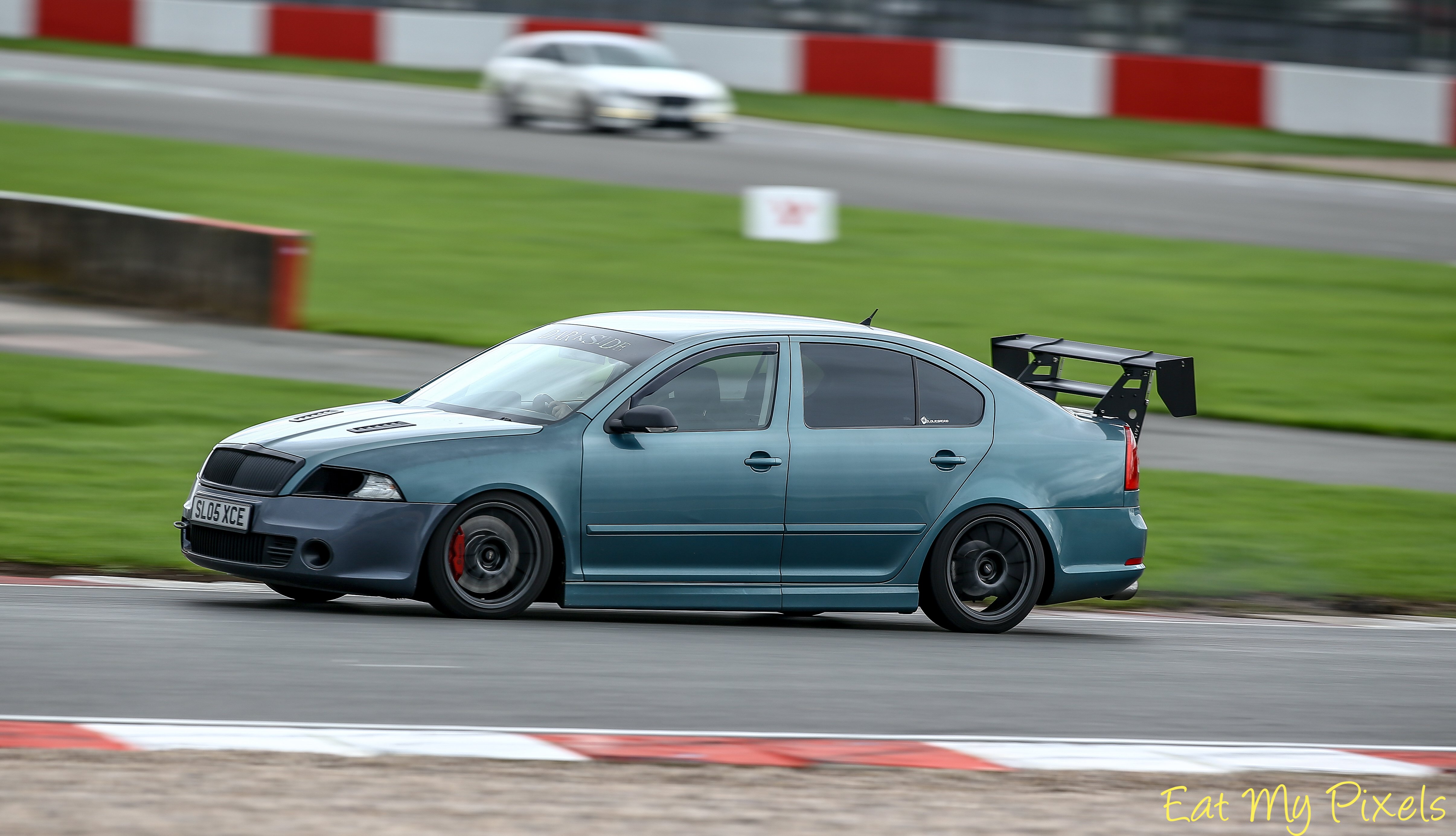
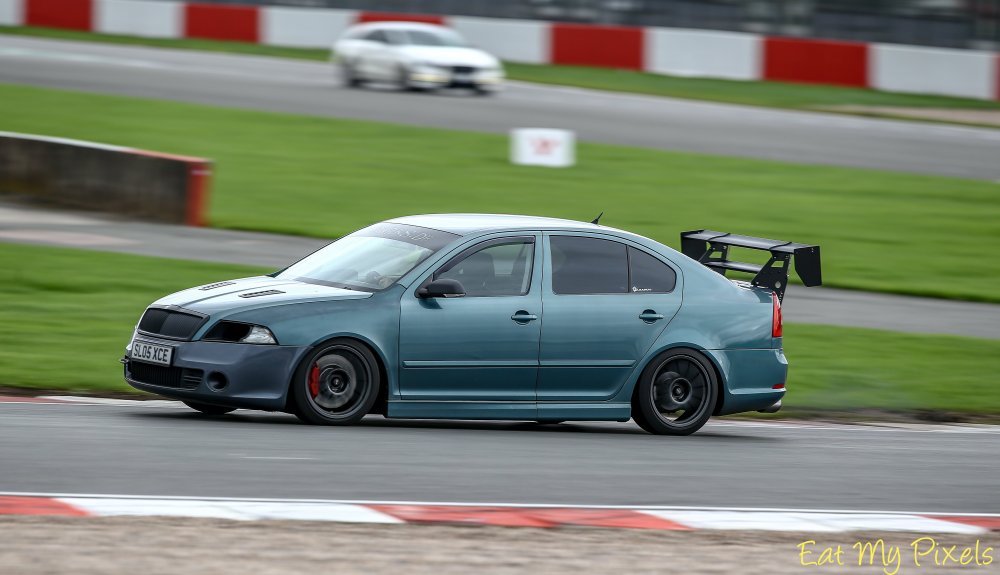
Track day successful. Didn't blow up or slide off. But got black flagged on the first outing for being too loud.
 2 points
 -
Probably old news to most but today I found out you can restart the engine by a very slight turn of the steering wheel, sorry if this is old news but it beats touching the accelerator pedal! 4 days of ownership and loving the car….1 point
-
1 pointCan you say "rolling bomb"?1 point
-
I'll post you some over. Someone clearly loved it enough to look after it and keep it on the road for as long as they did. The SDI is in the same tax bracket as earlier TDI and the vRS cars here at £155 for the year. I reckon that Fabia will last longer than either of us to be honest. Aye I was reading that when it was around, but I'd like to see if anyone else can replicate similar. You can probably make the wee thing smoke like hell too. I'd be interested to see if there's a mild power increase too!1 point
-
Exhaust part numbers are here (view on computer not phone to see all info) exhaust pipe with catalyst - Fabia(FAB) [EUROPA 2005 year] (7zap.com) The last 8 digits of your VIN will tell you if it's the first item 1A or the second. The far right button with side-to-side arrows will list aftermarket equivalents. New genuine are going to be impossible to find and/or impossibly expensive. 2nd hand parts are likely to be in poor condition. For the avoidance of possible confusion sources, F >> 6Y-54260 000 means for VINs up to and including this number (work from the right hand end of your VIN to see if the last 8 digits are more or less than this). F 6Y-54260 001>> means from this number onwards. To make any sense of the dates in the 'data model' column, remove the leading '20' from each.1 point
-
Measure the voltage with the wires connected to the mirror heating element, it should then read close to zero volts with the switch in the off position and something a bit less than 12v with it on the heating position. What you are probably seeing is a small control current to detect if the element is working or not or short circuited.1 point
-
Thanks for confirming the size. That makes sense, ill get some twin wire with some decent outdoor grade insulation on it so it doesn't get damaged by the frost I've got some heat shrink butt connectors, and I'll heat shrink over that aswell, I'll keep cutting it back untill it's undamaged and go back to the sensor from there. Luckily the little rubber mounts on the cable come off so I can put it on the new wire and keep it tidy. thanks for that, hopefully the weather holds off on Thursday when I'm free1 point
-
1 pointThere was a forum member (BossFox) on here who did a 4x4 conversion to a Citi-Go....which is only slightly smaller than a MK1 Fabia.. Darkside developments got the car eventually & fitted a diesel engine..1 point
-
1 pointThe additional PMs is only for additional weight as I understand it and taken as a whole I cannot see that a little EV like mine is producing similar PMs to an average ICE car, particularly diesel emissions, and brakes is another area as we tend not to use brakes to slow down in an EV but we use regeneration. I have read a few articles on this and here is, I think, I well written and balanced appraisal of it.... (Feel free to add your recent scientific source on the issue).... https://epha.org/electric-vehicles-and-air-pollution-the-claims-and-the-facts/ It sounds like we need some better tyre constructs. A recent Zoe test had the car go 424 miles in standard tyres and 475 on special tyres, quite a difference. ----------------------------------------------------------------------------------------------------------------------------------------------------------------------------------------------------------------------------------------- Electric vehicles and air pollution: the claims and the facts 1.EVs reduce pollution from brake and tyres On brake pollution, conventional internal combustion engine (ICE) cars mainly use disc brakes to slow the car down, which emits particle pollution. In contrast, EVs use “regenerative braking” as it restores braking energy back to the car’s battery to power the car. This process reduces the need to use the brakes and therefore reduces particle emissions. On tyre pollution, EVs have heavier weight compared to ICE cars and, according to some reports, this extra weight increases wear and thus particle pollution. Yet, EVs are mostly fitted with special tyres designed to cope with the heavier weight of batteries to ensure that they do not wear out too quickly. More studies are needed to measure particle emissions from tyres, especially from EVs, but all road vehicles, including heavy SUVs, are to blame for tyre pollution. 2. EVs reduce particle pollution Focusing on ‘primary’ particle mass (PM) emissions, i.e those particles which are emitted directly from the exhaust, tyres and brakes, should not lose sight of ‘secondary’ particle pollution. These particles form in the air due to other pollutants such as nitrogen oxides (NOx), hydrocarbons (HC) and ammonia (NH3) emitted from the tailpipe. Like primary particles these ‘secondary’ particles also contribute to PM2.5 (particles smaller than 2.5 microns) and PM10 (particles smaller than 10 microns) pollution, thereby causing poor air quality. According to a recent study by the Organisation for Economic Co-operation and Development (OECD), these secondary particles can contribute up to 29% of the total PM emissions of a car. Most importantly, the OECD study found that when all particle sources associated with cars are counted, including secondary particles, EV cars contribute less PM2.5 and PM10 than diesel or petrol cars................................... In conclusion, EVs do not produce more pollution than fossil fuelled cars. On the contrary, they eliminate emissions from engine exhaust and significantly reduce emissions from brakes. The evidence on tyres is more mixed. However, claims that EVs create more particle pollution due to tyres are misleading as they ignore their overall air quality benefits. Particle emissions should not be used as an excuse to slow down the transition to zero emission mobility. Instead, regulations should address pollution from brakes and tyres to ensure that emissions from these sources are reduced for all road vehicles.1 point
-
1 pointIf they start doing that then they need to start charging EV's for all the additional PM2.5 emissions from tyres. A recent Emissions Analytics survey showed tyre PM2.5 'emissions' (ie Non Exhaust Emissions) were 5 one thousand times higher than the test vehicle's exhaust emissions over the same journey. However, A typical EV SUV is 2.5tonnes to 3 tonnes vs around 2 tonnes for ICE vehicle and, as an example for cars, a Nissan Leaf is 1.7 tonnes vs 1.4 tonnes for a similar sized ICE vehicle. Factor that in and EV's create more NEE's and should therefore be being charged for the additional NEE pollution they cause...1 point
-
Using the VIN might show if the Fix is still outstanding.1 point
-
1 pointDoes that include car parks "remote from the property" like I had in the Western Isles in the 40%? There was no, repeat no way to charge an EV at that location without running a charging cable across a public road, footway or both. My neighbour who had a Nissan Leaf had to resort to parking on the footway (illegal in itself), and running a cable across the footway and through her living room window. And, for the benefit of the English, Chargemap shows exactly 2 chargers within walking distance, both at the local hospital.1 point
-
1 pointHi Chris , I copied everything that was there after I unzipped it, using "7 Zip", just checked and yes "Package.SList" is there.. I went from 19.11 to 21.7 on mapping1 point
-
1 pointWell I am in the range 3.5 miles per kw to 5 miles per kw at the moment. Not been anywhere I have to pay but I am looking forward to maybe using the Rugby charging where they have a dozen 350 kw chargers, yes I can only charge at 50 so it seems like overkill and I was hoping they would do a half bank of 22 kw AC chargers maybe at 25 p a kwh as surely these are cheaper as no AC to DC is required with the 10% or so loss in power. If I was doing less that 3 miles per kwh I would consider using a ICE instead but we have only been down to 2 C so far so nowhere near that the range is getting below 150 miles. https://www.gridserve.com/2021/04/30/electric-highway-opens-uks-largest-high-power-motorway-charging-site/1 point
-
1 pointAs the public chargers in Ayrshire North, South East and West are going to be costing to use the amount of chargers are going to increase. Kilmarnock has good facilities. The price that is going to be charged means an economic ICE vehicle will be cheaper to run. Especially in winter.1 point
-
1 pointThe EV using a lithium ion battery is very similar to any other lithium ion device we have ie our smartphones and rechargeable headphones and not actually as bad as common car batteries...... What annoys me a bit is, as with George, miles of range seem to disappear as each degree lower it gets, with the Zoe they come back again when it gets warmer so one takes it all with a pick of salt. If one can heat the battery by a bit of driving then some if it can come back as the interior of the car gets warmer and the battery pack gets warmer. Different battery tech ie the Lithium Metal Polyimide we used in our cars and now on Mercedes buses like the battery to be toastie bit like the diesel engine being left to idle to keep the jacket water temperature up. The car manufacturers each do their own bit of nanny state if telling the car operator only half the truth. I would rather have amps and volts and a measure of Joules in the battery, the real figure ie the 55 kwh 200 MJ that it actual has and show the real data and perhaps saying that 10 or 20 MJ become temperature locked or something like that. Instead the range meter comes up with it guess each time I switch it one or phone the car up on the Renault App. I would rather the raw facts but that would not suit most I guess but I have been a student of thermodynamics for the last 45 years thru OND and degree level. With half a million charge points by the end of this decade and few places more than a dozen miles from a bank of points plus advanced rental of that point, for a few pence, nearly everybody should be happy.1 point
-
1 point
-
1 pointThat's a bold statement which I don't believe is correct of the majority of car drivers in the UK - yes current EV drivers either knew or have learnt it, but I strongly believe that the vast majority of the public have no understanding that battery capacity and hence EV range will be reduced when it's colder - and will not be pleased when they find out the hard way!1 point
-
In the UK they do not do one. The only one I can think of would be the VRS 4wd TDi. It might be badged differently in the rest of world.1 point
-
1 pointThe problem is not the display brightness (that is a separate setting), but the camera "brightness" (another setting in the Park Assist settings menu, also adjusted automatically by the camera or software).1 point
-
1 point
-
1 point
-
1 pointMost metallic knocks will be drop links. Main culprits are top mount balljoints and drop links. For what its worth the lower arm is easy to do and will need doing if it hasn't been done1 point
-
It will be your toe bushes - the inside ones of the arm where the coil spring sits https://www.ebay.co.uk/itm/293518585672?hash=item4457122f48:g:chgAAOSwu6tedIY~ powerflex bush No10 will be the ones for toe https://powerflexstore.co.uk/skoda/octavia-mk2-1z-2004-2012/powerflex-rear-lower-spring-mount-inner-octavia-mk2-1z-2004-2012-pfr85-510/1 point
-
1 pointOkay, now I'm convinced, you guys are crazy. You drive on the road like it's formula 1, measuring braking distances...1 point
-
1 pointWouldn't waste your money! Let's say you've left it unlocked, well you'd be mistaken to think you could lock it using the app but you can watch it get driven off!1 point






.thumb.jpg.f83a46b9b3c0d976b9dbffbb523c9874.jpg)