Breezy_Pete
Sponsor
-
Joined
-
Last visited
Everything posted by Breezy_Pete
-
Which end is the problem, at the connector that goes onto the injector, or at the connector that goes onto the engine ECU?
-
Exhaust valves are more commonly found to be the problem on these engines.
-
115bhp I'll have you know. 😆 Not sure I'm brave enough to take it to high revs just now. Supposed to be driving to Bassenthwaite ( ~280 miles) with 3 passengers on Thursday. If it plays up again between now and then I think they'd better take their own vehicle.
-
Belt was done in 2020, but only 10 or 15k miles ago. Can't see it running as well as it did straight afterwards if there was a timing issue.
-
Knowledge and experience much appreciated @J.R..
-
Joined a very slow-moving queue at a roundabout just after leaving work. 'Engine' started making a nasty clatter each time I crept forward. Sounded nasty! Panicked a bit but thought, I'll see what happens when I get going again, if I make it round. It was good as gold. Even seemed a bit pokier than it has been recently. Scary minute or two and I'm a bit baffled as to what happened. Are those the circumstances when a DMF would clatter if everything was cold? Don't like that idea much. Prefer some dubious idea like some chunk of carbon loosened during EGR clean might have got involved with one intake port and caused a misfire in that cylinder? Any thoughts, pretty please?
-
Do a compression test. Don't be surprised if cylinder 1 shows low compression. 6-valve single cam or 12-valve twin cam 1.2?
-
-
Before you buy anything, have a good long look at the starter solenoid cable. These tend to fail gradually just where the wire comes out of the connector's strain relief. Insulation cracks then the copper strands gradually turn to dust with atmospheric access. May be that hitting the starter just jiggled this enough to temporarily make better contact.
-
You'll need to pay for one or other of the memberships shown here, in order to list in the classifieds: Membership Options (Freedom) - BRISKODA
-
Have a look at the belts by removing the top cover, but I doubt you'll see anything worrying. I wouldn't bother if I were you, those belts and associated bits will be good for a lot longer. Did the water pump get changed last time? Would you do the work yourself if you did change it? (Changes the economics of it greatly).
-
Less impressively, I hoovered ours for what felt like a very long time yesterday. It was filthy.
-
The connector is at/through the firewall, pretty much impossible to access cabin-side and a bunch of work to get to in scuttle on engine bay side.
-
Google to the rescue "skoda fabia abs wiring loom splice" found it, no sweat. Halfway down this page: ABS Warning light - Page 3 - Skoda Fabia Mk I (1999-2007) - BRISKODA
-
Another user a few years back (7!) discovered a splice in the (rear ABS) wiring somewhere under the rear door, which had corroded due to 'traditional' water ingress through carrier seals. Can't remember the username just now, but there are such splices here and there in the wiring looms, where wires are 'crimped' in with others and then taped over. More vulnerable than continuous insulated wires. I may remember as I wake up more through the day.
-
Lift up the rear seat squab, and you'll see it coming up and in there. From there I think it heads along the bottom of the door orifices, under the trim.
-
ABS module is just below engine ECU. Can look up wiring info tomorrow if you like, but it's probably in the circuit diagrams contained here:
-
-
VIN can be discovered by entering your reg number at chipex.co.uk and reading from the resulting URL at the top of the page (may need to scroll across the length of it). Also visible through windscreen from outside, just below passenger side wiper, generally.
-
The person giving the answer may not have understood the possibility of it being a poor translation.
-
Hysteresis, I expect. I'm sure you're familiar with the idea, but for anyone not, this describes it in the context of microswitches https://my.avnet.com/abacus/resources/article/understanding-micro-switches-and-hysteresis/. Oil pressure switches and thermoswitches are variants of the above, I think. You tend to see more than one number quoted in both cases, a 'turn on' value and a 'turn off' one.
-
I would suspect the window motor module/its connections local to itself, even if the window is working fine from the switch. The 'key turned in lock' signal goes via the window motor, and isn't simply passed through it. You may be able to see traces of green corrosion residue on the right-angled adaptor bit that takes the loom connector wiring down onto the circuit board if you carefully unclip it from the top of the motor There are long fork-like prongs that connect to a board-mounted male connector, and these seem to suffer from condensation mediated corrosion, both of the contacts and under the black plastic body. Unlike some posters on here, I tend to believe that a careful visual inspection of the door loop wiring is generally all that's required, broken wires are usually very obvious. Replacing the timing chain on one of these engines is more likely to cause problems than prevent them, in my opinion. It's a big, tedious job with lots of opportunity to knob up. Keep the oil fresh/young and never park it on a slope in a gear which would tend to make the engine rotate backwards if the handbrake allowed a little movement.
-
Pressure switch is on gearbox end of the engine, by the looks of this vid (see at around 1:30). Green plastic body with single wire connection. https://youtu.be/3XXI-kpis4c?si=5NGqHCpaU-5dgx0F Any traces of oil inside the detached connector would have me replacing the switch, part number is 03C 919 081.
-
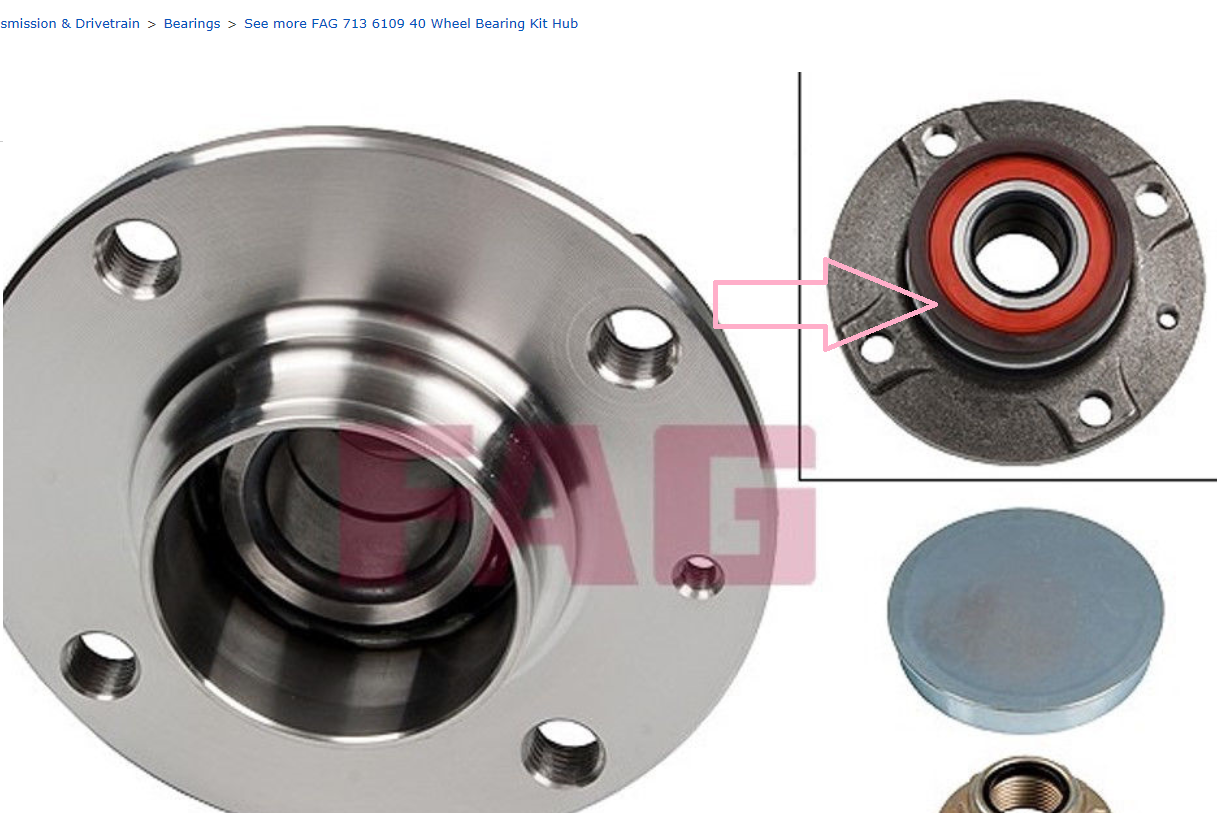
Ah, I think I know where I was going wrong. The one I was comparing photos with was a front bearing, which looks different. I think the following pic is a rear one, looking like yours:
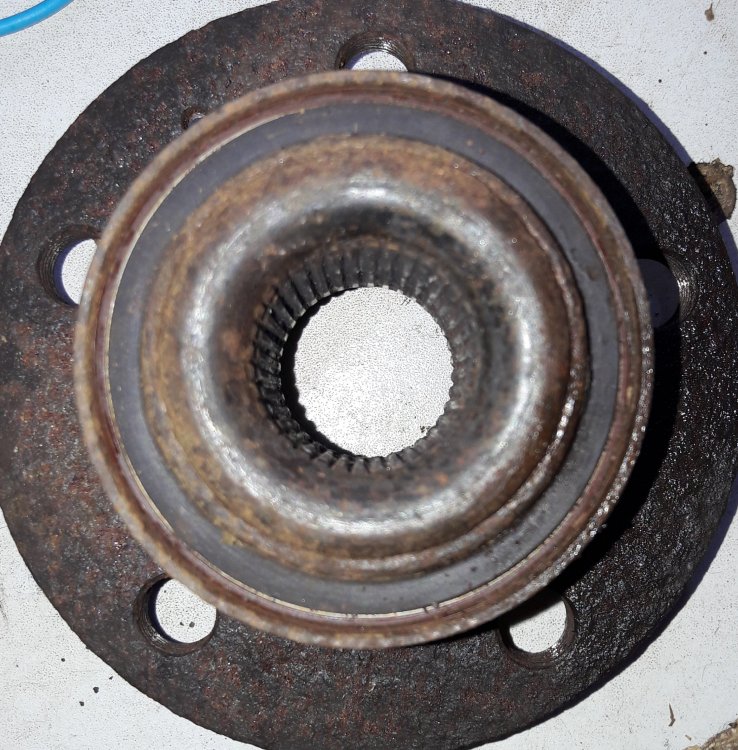
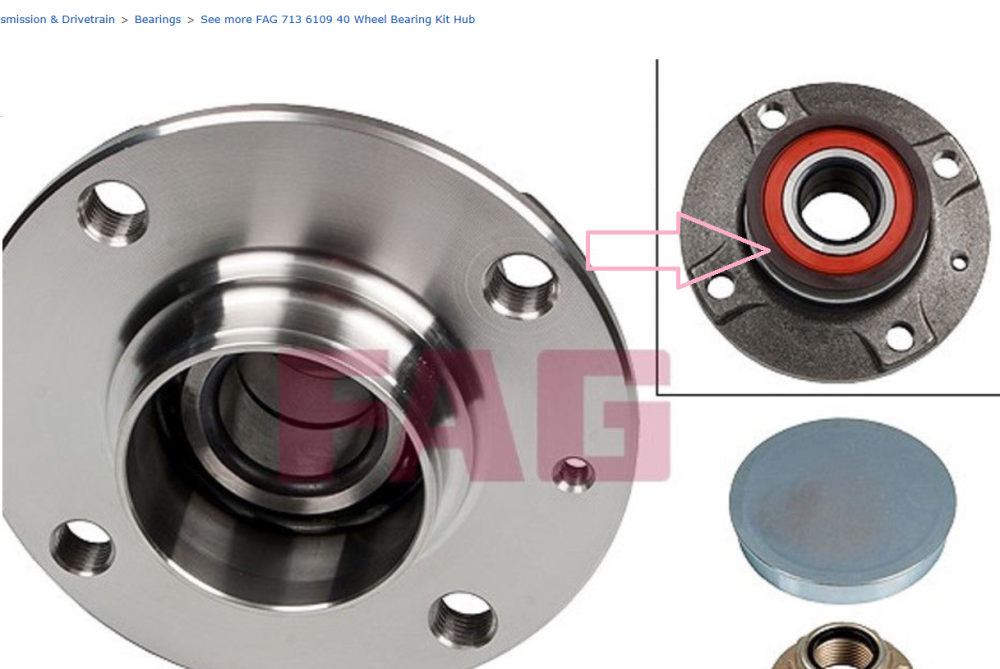
-
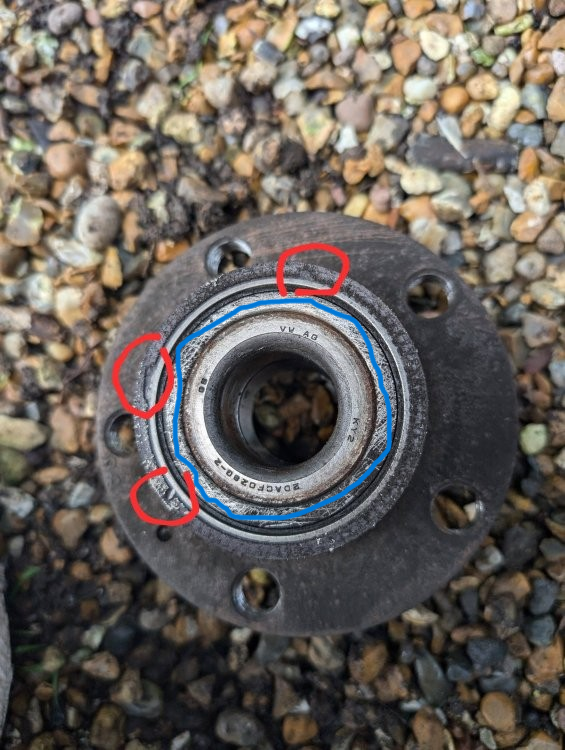
Pretty sure the magnetic bit is inboard of your markings/damage. The bit I've scribbled in blue on: Edit, nah, ignore, see following posts